Home Blog Page 82

DIRTY ROTTEN ENGINES: Cat’s Suzuki 800 Twin

0

A number of the most popular, most beloved 2-stroke engines in snowmobile history were actually grossly inefficient and EPA dirty.

They simply had to go in an effort by the OEMs to clean up their total corporate average emissions. I call these engines “rotten” because that’s what they’re doing – rotting – in older sleds while the pricey tooling used to cast their myriad pieces literally rots away.

PART 3: Arctic Cat’s Suzuki Case Reed 800cc TBI Twin

This throttle body–injected twin was a staple on Arctic Cat’s engine menu for almost 15 years.

The engine’s hallmark was unquestionably its bulletproof reliability. Some said you could push a ZR 800 out the backdoor of a C-130 cargo plane at 20,000 feet and the big Suzie would land on its wheels and start on the first pull.

Power, in the early days of the 800, was 100-percent industry competitive. However, as the years rolled on the engine didn’t get the necessary tune-ups it needed to stay at the top of the 800 class.

One not-so-nice feature of the big twin was its fattish response at engagement and its unrepentant production of thick exhaust smoke – warm or cold.

The 800’s throttle body injection system was the culprit. Because fuel was scavenged into the crankcase and oil mixed in the fuel rail, too much oil-rich, unburned fuel made it out the exhaust port.

If the EPA guidelines had never been set out, this engine could easily have been modified to make the most power in the biz. Why? There was so much lube getting into that engine it didn’t matter how lean you set it up, it would survive.

In its day we used to joke, if you left this engine idling too long you’d have to send out a search party to find it because it would have vibrated the sled right off the trail and into the woods.

Still, no hardcore green underwearer will ever say a bad word about this iconic and extremely popular engine.

DIRTY ROTTEN ENGINES: Ski-Doo Series III SDI

0

A number of the most popular, most beloved 2-stroke engines in snowmobile history were actually grossly inefficient and EPA dirty.

They simply had to go in an effort by the OEMs to clean up their total corporate average emissions.

I call these engines “rotten” because that’s what they’re doing – rotting – in older sleds while the pricey tooling used to cast their myriad pieces literally rots away.

PART 2: The Ski-Doo Series III SDI

This engine doesn’t fit the description of dirty at all! As a matter of fact, when it first appeared in the early 2000s it was the cleanest 2-stroke ever built and gave snowmobilers mega-hope the 2-stroke would always be viable.

This, despite the EPA’s graduated system of gauging air pollution emitted from snowmobiles, culminating in a final and very tight CO2 and hydrocarbon goal line by 2010!

Ski-Doo’s SDI twin had an illustrious career powering a legion of ‘Doos including the ZX platform and the original REV. These engines were – in their day – the envy of the industry.

Rotax actually was the first to deliver “in-port” fuel injection rendering the crankcase completely dry.

The SDI was way ahead of other 2-stroke engines in the biz and, frankly, the industry reeled when Ski-Doo put the SDI 600 out to pasture in favor of the all-new Rotax E-TEC Direct Injection 600 powerplant.

Using two injectors running sequentially above and below one another in the transfer port, the SDI was exceptionally fuel-efficient and delivered smooth response without gurgling or sneezing when cold.

Truly an iconic mill is now rotting. So sad – but I regularly control my emotions with a quick pull up Kevlar Lake on an E-TEC 850.

DIRTY ROTTEN ENGINES: Fuji 488cc Twin

0

A number of the most popular, most beloved 2-stroke engines in snowmobile history were actually grossly inefficient and EPA dirty.

They simply had to go in an effort by the OEMs to clean up their total corporate average emissions. I call these engines “rotten” because that’s what they’re doing – rotting – in older sleds while the pricey tooling used to cast their myriad pieces literally rots away.

Buck-up! That’s an expression my Dad used when I needed to get tough! There’s hope, sno-mo-groupies and it’s not all bad news!

My list of dirty, rotten engines includes some of our all time faves! In virtually every situation where one of these engines was relegated to the scrap pile, the sport has benefited with a new and better engine that’s more powerful, more efficient and thus able to propel our coveted Snow Bullets even faster and more efficiently up Kevlar Lake.

PART 1: Fuji 488cc Liquid Cooled Piston Port Twin

This engine powered a record-breaking number of Indy 500 variant models and is rumored to be the sport’s all-time most popular engine.

For sure, hundreds of thousands of these simple, mid 80’s-horsepower twins were built from 1989 through the early 2000s by Fuji Heavy Industries in Japan to Polaris engineering specs.

There was no reed-valve induction, no exhaust valves – just simple, straight-forward, tractable, piston port power – and incredible reliability!

The 488’s success was inextricably tied to an Indy chassis free of rolling friction, built out of aluminum (including the bulkhead) and had a P-series clutching duo transferring power that was the envy of the biz at that time.

For sure a much-loved engine that’s definitely missed.

On a lighter note, the Cleanfire SDI engines that replaced the 500 Fuji have helped us a great deal with post partum depression.

TITAN VS XTREME

0

I’m truly intrigued with the opportunity to compare two of our 2020 Press Fleet rides as soon as they arrive here at Supertrax/Snowtrax World HQ.

You’re wondering what two sleds are intriguing enough for me to bother writing this column, right?

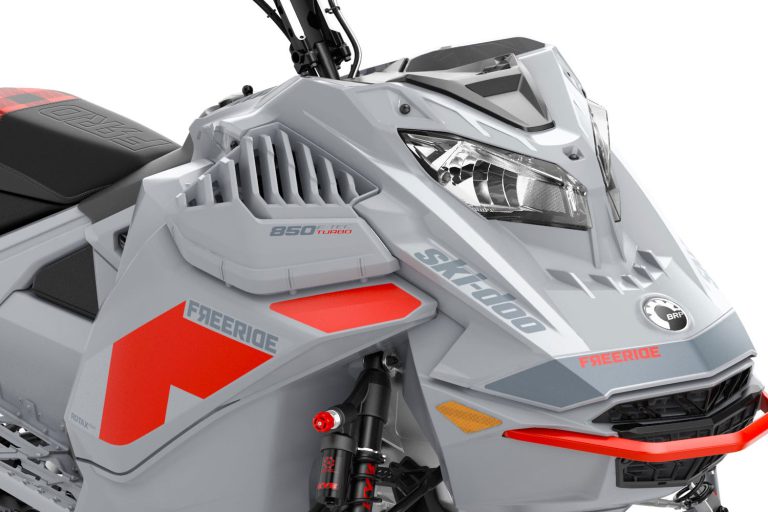
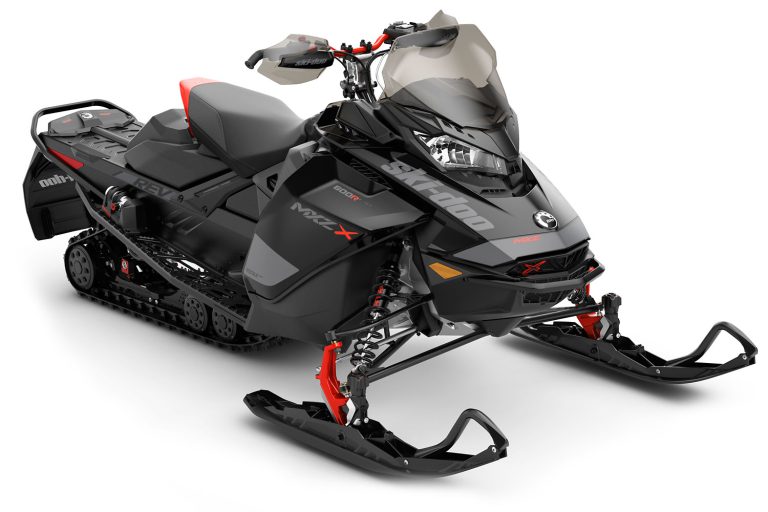
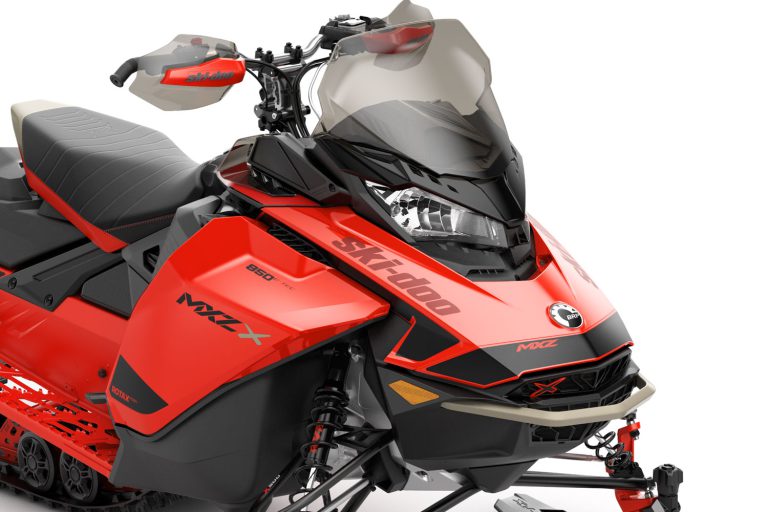
Here goes: …drum roll… the new Ski-Doo Expedition Xtreme and the Polaris Titan XC.

These two rides are very comparable and represent the emergence of a new segment, the Utility/Sport genre.

It’s no secret when Polaris introduced the Titan two years ago, Ski-Doo became ferociously protective of its sole ownership of the segment. Until then, Ski-Doo had had the only entry in the class with the former Expedition 800 E-TEC – a re-branded Lynx built in Finland. Enter the Ski-Doo G4-based Expedition 850 E-TEC Xtreme.

TITAN

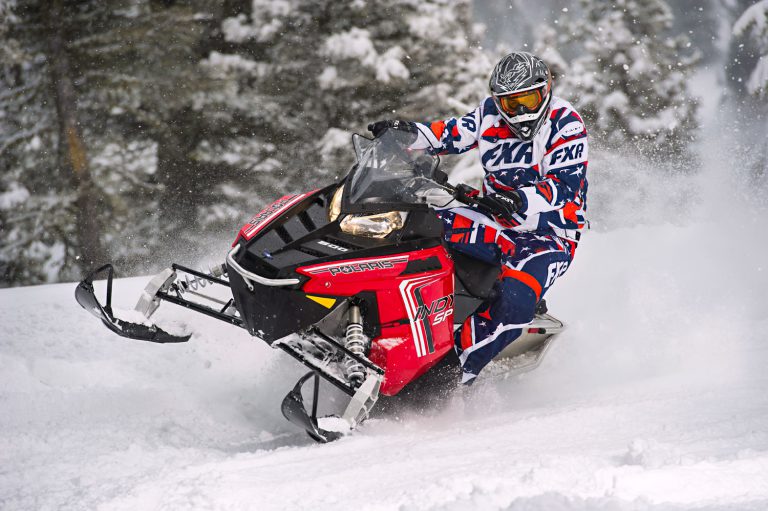
The Polaris Titan is a formidable snowmobile that can provide any recreational snowmobiler both trail performance and deep snow fun while being fully capable of towing an ice fish hut down the lake.

We’ve been saying this since the Titan arrived and I’ll say it again here – today’s snowmobilers want snowmobiles that can do more than one thing.

The Titan heightened this awareness and delivered a multi-purpose snowmobile that required no excuses and little compromise. The Titan is fast down the lake and fun to trail-ride all day.

One thing it is especially good at is keeping the rider warm – even with the sporty low XC windshield. Another thing the Titan does with near unequalled prowess is haul two people and a plethora of touring gear in real comfort.

EXPEDITION XTREME

The Ski-Doo Expedition Xtreme is an equally impressive ride. The Double XX can satisfy the demands of both performance trail and off-trail riders as well as utility users.

Make no mistake about this – under its hood there’s fire-breathing 160-plus horsepower Rotax E-TEC 850 twin and it can capably propel the XX to heroic velocities.

Top speed is in the 140 to low 150 km range (85 to 90 mph) and the sled can easily achieve those velocities with two riders aboard.

Ski-Doo has gone the extra mile making the XX more palatable to the masses by developing a new 20-wide track producing less “thrumming” noises on hard pack.

Frankly, we’re wondering at this point if the Grand Touring will continue to be a viable platform with the Xtreme so capable at hauling two (when fitted with the twofer seat).

QUIRKY

The only quirk both these new sleds are unable to rationalize is the extra-wide tunnel. When you first swing a leg over a 20-wide sled you’ll notice your legs are pushed apart as a result of the way-wider tunnel. The sensation is a bit weird at first then it usually goes away. Sometimes it doesn’t.

I’ll attempt to entertain you with a walk-around of the Titan when it arrives very shortly. I might even do a repeat walk around on the XX and include the Titan – just for perspective.

Stay tuned!

QUESTIONS ABOUT 600 2-STROKE ARTICLES

0

Thanks to all our readers for checking out our recent series on the 600 2-stroke engines currently available in the marketplace.

It’s impressive to read the comments you’ve added to the articles and pretty awesome how much of an understanding snowmobilers have of the function of the different 2-stroke systems out there: E-TEC, DSI and SDI.

Let me deal with a few of those comments:

1. Yes, it’s true, the new 600R Rotax is the most recent engine offered in the 2-stroke class, superseding the original E-TEC introduced in the 2008 model year.

The basic principle of how E-TEC works is the same on the original Series III 600 and the new 600R.

Due to its centered mounting position in the new G-4 chassis the new engine had to be much narrower. This was accomplished through the use of a flat stator.

There’s more, subtle refined tech to allow the 600R to run a safe 125-horsepower – however, E-TEC is E-TEC and its snowmobile adaptation has been around for over a decade.

In the article our target was to try to describe in the most general terms how Ski-Doo’s Direct Injection system works. Even though the OEMs are constantly updating and upgrading technology the 600R E-TEC uses a similar basic operating principle.

2. We referenced liquid cooled cases and it’s true, neither the 600 or 600R uses this crankcase cooling setup, instead both versions use the super-grease system we referred to in the article.

This grease is permanently sealed into the bottom end bearings. That system has proven reliable on the original series III 600 but 800 series III E-TECs were a riskier proposition.

This has to do with the kind of sustained high RPM 150 plus HP engines are subjected to. Because of the increased power output of the old 800 versus the original 600, larger bearings were required which require more lubrication and cooling.

Rotax uses liquid cooled cases on the new 850 – along with pinpoint oiling. All E-TEC engines (and SDI engines) use electronic detonation sensors. They are mandatory equipment on E-TEC engines which run exceptionally lean.

3. This one refers to the fact that in a conventional 2-stroke the piston is compressing fuel every stroke and not every other stroke as mentioned. To clarify, every time the piston moves to top dead center – that is once every rotation of the crankshaft, the spark plug fires.

Compression occurs every time the piston moves to top-dead-center. Remember, as the piston rises, fuel and air are being introduced into the crankcase with carbureted and throttle body injected 2-strokes. To be clear, a fresh mixture is always moving into the crankcases as the piston rises.

This fuel is then pushed up the transfers as the piston falls. When the rising piston closes off the exhaust port the fresh charge which entered the cylinder from the transfers has pushed out the burned charge into the exhaust pipe.

Once the exhaust port is closed the fresh charge is compressed and then lit-off by the spark plug at top dead center. The piston then travels downward and a fresh charge moves up the transfers as the piston falls starting the whole remarkable process over again.

The reason the EPA is tough on 2-strokes is due to the uncontrolled movement of unburned fuel and air out the exhaust port before the rising piston closes the port off.

This unburned mixture is still a consideration on SDI engines although SDI “in-port” injectors dramatically improve emissions.

E-TEC engines – which do not inject fuel into the combustion chamber until the rising piston closes the exhaust port, are the cleanest 2-stroke engines in the business.

Consider this: The E-TEC injector has only 15 degrees of crank rotation after the exhaust port is closed, to inject a fresh charge of fuel.

It’s worth noting tuned expansion chambers (pipes) and exhaust port modifiers both have a profound effect on 2 stroke snowmobile engine efficiency.

4. Yep, the slot-injected Cat 600 has been around longer than I thought. I gave it about five years but it’s actually about seven. My apologies.

2020 Indy XCR 850 vs 2020 MXZ XRS 850

0

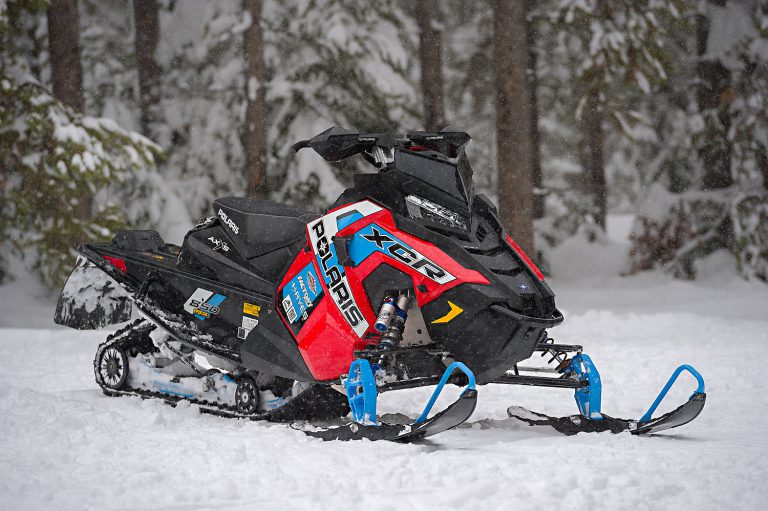
AJ takes two of this season’s top performance sleds out in the snow and goes over in detail all the features of each offering his opinions and feedback following our spring evaluations and actually getting some real world seat time aboard these two rockets after an early snowfall.

Subscribe to our YouTube Channel!

600 2-STROKES: Ski-Doo 600R E-TEC

0

Ski-Doo first introduced E-TEC Direct Injection technology to the sno-mo-industry in 2008. Originally developed in Austria by Ficht, BRP bought the former Outboard Marine Corporation (OMC) who owned Ficht and proceeded to adapt the technology to snowmobiles labeling it “E-TEC”. Up until this time the system had only been used on Evinrude outboard engines.

Here’s how E-TEC 2 stroke Direct Injection works:

FIRST, THE CONCEPT

Direct injection (DI) differs from all other 2 stroke induction systems in that absolutely no fuel enters the engine’s crankcase. The throttle bodies allow only air to enter the engine’s bottom end.

While air is pumped upwards to the combustion chamber via conventional transfer ports oil is pinpoint injected onto the rod bearings and piston skirt. This oil slowly migrates up the transfer ports and is ultimately burned.

Since so little oil is involved as a result of keeping fuel out of the scavenging process (which would normally wash down the bearings) there is almost zero smoke and odour associated with the system. Because fuel is injected so late in the 360 degrees of crankshaft rotation, virtually no unburned fuel escapes into the exhaust system.

UP TOP

E-TEC’s hallmark feature is its electronic voice coil injectors externally mounted on the cylinder head over the combustion chamber.

Voice coils use a similar process as stereo speaker magnets to produce pulses of fuel to the cylinders. The injectors pulses take fuel from relatively low pressure to over 2000 psi in less than the blink of an eye.

The voice coils literally hammer fuel into the cylinder with each pulse. The sled’s ECU (computer) adjusts the stroke of the voice coil injector pin to meet the engines demands determined by the ECU.

The “magic” of the E-TEC system is this. To ensure no unburned fuel escapes out the exhaust port the voice coil injectors are able to introduce fuel into the combustion chamber after the exhaust port is closed.

With only 15 degrees of crankshaft rotation left before the spark plug lights off the compressed fuel and air virtually no fuel escapes out the exhaust port.

Other than a higher cost to manufacture compared to other 2 stroke SDI injection systems there’s no downside to E-TEC. BRP is able to deliver the cleanest running, highest efficiency, low emission 2 stroke engines in the biz as a result of E-TEC’s sophistication.

One more E-TEC benefit is easy starting. Due to its high pressure injectors and high voltage electronics, an E-TEC engine only requires a 120 degree rotation of the crankshaft to start it. That’s why the revolutionary “SHOT” electric start system is possible. E-TEC atomizes fuel so efficiently the engine lights-off with only a tiny bit of crankshaft movement.

The new 600R engine with E-TEC sets the bar very high for snowmobile power and performance as well as efficiency and cleanliness.

600 2-STROKES: Arctic Cat’s 600 C-TEC2

0

Although it’s been around for nearly five years, Arctic Cat’s Dual Stage Injected (DSI) 600 is the most recent of the new-age EPA-friendly 600s in the snowmobile marketplace.

In order to understand the difference between DSI and SDI, you need to have an understanding of what is happening inside a 2-stroke as it moves through its cycles (see Part I), keeping in mind the position of the piston as it moves upward and downward closing and opening the exhaust port.

The general idea is to get the exhaust port closed off by the piston during compression and ignition and open again immediately after ignition to exhaust the ignited gases.

STAGE 1

Unlike Polaris’ SDI system, Cat’s engine locates the fuel injectors on the side of the cylinder and not inside the transfer or boost ports.

Also, the engine’s pistons have vertical slots machined into the side (skirt) facing the injectors. As the piston and slot passes through its cycle to bottom dead center and then proceeds upward again to the top of the cylinder, the injector sprays fuel onto the top of the piston.

It then proceeds to top dead center and is ignited (DSI has already mixed a small quantity of oil into the gasoline in the fuel rail).

Two things have been accomplished here: First, a very lean and relatively pure fuel charge has been delivered to the combustion chamber and, second, enough oil is present in the fuel charge to lubricate the piston rings and cylinder walls.

STAGE 2

As the slot passes the injector and the piston moves upward toward top dead center, at higher engine speeds the injector continues injecting gasoline (mixed with the aforementioned oil already pre-mixed in the fuel rail) through the slot where it targets the piston pin and top rod bearing. Because gasoline has a cooling effect, this also keeps crankcase temperatures low.

Meanwhile, oil is being pinpoint-injected onto crankshaft and lower rod bearings and is precision regulated as required by the ECU and the DSI’s electronic oil pump located in the oil reservoir.

Two more benefits have been accomplished in this second stage: 1. Adequate lubrication of the bottom end and 2. A cooler crankcase.

Despite the very good lubrication qualities of DSI, because it runs very lean, the engine still uses a knock sensor warning the ECU to slightly retard the engine’s timing if combustion chamber temperatures rise too high and cause detonation. Once again, the knock sensor operates so subtly you’d never be able to detect it working.

Special Note:

Some have asked the question: “What about the transfer ports? Does DSI even need them?”

The answer is, “Yes, absolutely!” Remember, the throttle bodies are still delivering air to the crankcase and the positive pressure of the descending piston is transferring the necessary oxygen to the combustion chamber via the transfer (boost) ports so the whole combustion process can work. DSI is mostly about fuel delivery but air delivery is normal 2-stroke science.

600 2-STROKES: Polaris Cleanfire 600

0

It seems like all you ever read about is the technology that goes into the industry’s 800 and 850 max-performance 2-strokes.

The truth is, the 600 twins from Ski-Doo, Polaris and Arctic Cat are huge sellers and probably deliver the most consistent and reliable power in the industry.

We’re going to do a 3-part report on the most popular 600s and attempt to relate how their technology differs and why.

PART 1: POLARIS CLEANFIRE 600

We’ll start at the beginning with the Cleanfire 600 because it’s been around for the longest time (mid 2000’s) and has continued to perform admirably, consistently delivering power in the 125-hp range. Polaris set the bar high with this engine and drove both Cat and Ski-Doo to come up with technology that could deliver clean 600cc power at the same level.

The Polaris Cleanfire relies on Semi-Direct Injection (SDI) technology that means fuel is injected not directly into the engine’s crankcase like a conventional EFI 2-stroke, but rather, into the transfer port.

Regular 2-strokes

Using conventional 2-stroke theory, transfer ports are designed to “transfer” the fuel charge from the bottom end (crankcase) up to the top of the piston, into the combustion chamber so that on the ignition (power) stroke, the compressed charge is lit off by the spark plug. This ignition explosion forces the piston downward.

After this happens, the positive pressure in the crankcase caused by the descending piston drives the unburned fuel charge back up through the transfers at the same time the other side of the piston passes by the exhaust port leaving it open.

The whole system is designed to allow compression (compression stroke) every other rotation of the crankshaft as the exhaust port is closed off by the ascending piston.

Conventional 2-strokes allow a lot of unburned fuel to enter the exhaust and the EPA is not satisfied with this old-style technology, deeming it unclean. That’s where SDI comes in.

Cleanfire Differences

Cleanfire SDI injects the fuel charge into the transfer port while the pressure from the descending piston is driving crankcase air upwards to the top of the piston.

The precise location of the injector inside the transfer (also called a “boost” port) allows oxygen and gasoline to be mixed at a particularly lean ratio – thus the clean-burning nature of the SDI. It’s one of the reasons why Cleanfire engines have such a sharp exhaust note – almost like a race engine that has been jetted very lean.

Bottom end lubrication comes from “pinpoint” lubrication where minute quantities of 2-stroke injector oil are precision pumped via an electronically controlled oil pump onto critical bearing areas in the crankcase.

Residual oil is transferred to the top of the pistons as the engine cycles so there is adequate lube for the cylinder walls and piston rings. At the same time, the crankcase is getting sufficient lubrication and is kept cool without the need for liquid-cooled cases.

With Cleanfire running such lean mixtures, the use of a an electronic “knock sensor” is required to retard the timing as combustion chamber temperatures rise or bad fuel is detected. These sensors are so advanced and so fine-tuned, the timing changes are almost imperceptible to the rider.

The sequential nature of the fuel injectors ceases somewhere above 5000 RPM and the ECU tells the engine to inject fuel every stroke as the bulk of power is being demanded. It’s at these higher RPM levels that full lubrication is needed the most and the electronic oil pump compensates.

BIG MOVES

0

These enlightenments are based on opinions gathered from staffers who spend their days propagating fiction and/or truth at the water cooler in the well-lit Supertrax/Snowtrax, fully deodorized research center.

WHAT SKI-DOO NEEDS

It’s pretty clear Ski-Doo has a near-stranglehold on market share in the snowmobile industry. The brand’s success is so profound it makes the suggestion it might actually need something a little risky.

Not too risky, though, so we’ll run with this thought: The G4 chassis is bristling with interesting and functional new technology. The G4’s engine selection is the most diverse and broad in the industry. The rMotion skid continues to be the benchmark for trail ride quality.

I digress. Here’s what Ski-Doo needs: Stop merely tweaking the G4’s regularly re-invented RAS double A-arm front suspension and produce a system that will rival the undisputed handling leader, Polaris.

Ski-Doo does so much that’s right, however, this one issue – front suspension handling on trails – continues to be less effective than Polaris’ AXYS IFS.

WHAT POLARIS NEEDS

This might be the easiest OEM suggestion. Polaris needs a 4-stroke. Clearly, Polaris has been on a roll the past four years netting the brand increased market share.

The success of the new Indy XC chassis with Pro CC suspension and legendary Polaris IFS up front has been pulling buyers back to the North Star brand.

Why? Because the sled works. The new 850 Patriot mill has set a new benchmark in the 2-stroke performance stakes and does it with less vibration than many 600s. These notable accomplishments have come without the presence of a single 4-stroke model.

So, if Polaris can grow in the face of a formidable competitor like Ski-Doo, which owns the 4-stroke market, why does Polaris need a 4-stroke?

Clearly there’s an increasing group of established enthusiasts who buy 4-strokes from the other three OEM’s on a regular basis. These buyers are now entrenched in the 4-stroke paradigm and will stay on 4-strokes for the rest of their riding days.

Don’t forget this reality. The best way to gain market share in this biz has been and continues to be targeting buyers from your competitors. Need I say more?

WHAT YAMAHA NEEDS

Yamaha needs more 2-strokes. Yep, that’s what I said.

Clearly the rebranding of Arctic Cat’s Norseman 600 DSI 2-stroke utility/sport ride created quite a stir with Yama-loyalists. The number of views generated from that article on supertraxmag.com was crazy.

So what exactly would be the right 2-stroke sled to intro? No question, no doubt, a rebranded Arctic Cat 800 M series with Alpha suspension.

In the same way Polaris has been doing what it’s done in this biz without a 4 stroke, Yamaha has been doing what it’s done without a mountain specific ride.

Like the 4-stroke market, the mountain market is simply too big to not address. The question begging to be answered is this: Does Yamaha need to build its own 800 engine or could it use Arctic Cat’s new SDI 800 twin? Yamaha does own a proprietary 2-stroke Direct Injection system called Yamaha High Pressure Direct Injection (YHPDI) and I have little doubt the company could spin out an 800 2-stroke twin in its sleep.

Having said all this, we think it makes more sense to get into the mountain genre with a rebranded AC engine and chassis and enjoy sales success before committing to a full-on Yamaha-built, 800 2-stroke.

WHAT ARCTIC CAT NEEDS

No doubt about it, Cat needs an updated rear suspensiion for its trail-based 129 and 137 ProCross models.

The venerable Slide Action skid used in these models has provided excellent ride sensations over the years but what has to be accounted for is this: The first ProCross sleds with this skid were delivered to the market in 2012. By my calendar, that’s eight years. In this business that’s simply too long without an upgrade.

For sure, the Slide Action front arm concept has been copied in the industry by Cat’s competitors, particularly on race sleds, and it’s proven the setup is a great idea that works and works well.

However, in the current marketplace, both Ski-Doo and Polaris have made huge strides with each of their rear suspension systems. I can’t imagine there isn’t a prototype skidframe sitting on a bench in Thief River Falls and ready to go.

With guys at the controls of Arctic Cat engineering like Brian Dick, a man who knows suspension and understands obsolescence, we gotta believe something interesting is in the wings.