Home Blog Page 83

A RANT ABOUT THE YAMAHA-CAT MIXTURE

0

So why is everybody so bugged because Yamaha uses Cat technology on most of its sleds? Frankly, we haven’t heard too many Arctic Cat fans going berserk because Cat uses Yamaha 4-strokes in some of its sleds!

Let’s go back a ways and look at some of the shared technology the industry has utilized over the recent past. For decades, Arctic Cat used Kawasaki and Suzuki engines in its snowmobiles and everyone was as happy as a clam.

One of the longest running and most popular engines in the history of snowmobiling was the Indy 500 2-stroke twin. That engine was unashamedly built by Fuji Heavy Industries of Japan. This is the same company that owned, built and ran Subaru – not even a snowmobile manufacturer, for crying out loud!

In the case of Yamaha, here’s a company that has put a huge amount of trust in a North American manufacturer employing American citizens and located in a small northern town called Thief River Falls, Minnesota. Furthermore Yamaha has entrusted that company to cradle its most precious commodity: Its jewel-like 4-stroke engines!

Not only the above but those two companies have proven they can work together in lock-step to build a better quality product at a competitive price that can benefit two distinct bloodlines of customers. This is something you just don’t hear about very often in any field and it’s really quite impressive – especially when there isn’t a lot of snowmobiling taking place in Japan.

I know, you’ll argue it’s not the same with engines; it’s different because the old Yamaha sleds were way better. But is it really not the same – and were the old sleds really better?

I remember some complaints about those sleds being too heavy – or certain sleds being out-of-date – or not changing fast enough year-to-year.

This manufacturing agreement has allowed Yamaha to have fully current, up-to-date technology, tested, tried and true and built by Americans in America where a lot of snowmobiling takes place, thank you!

Looping Mont-Laurier Quebec

0

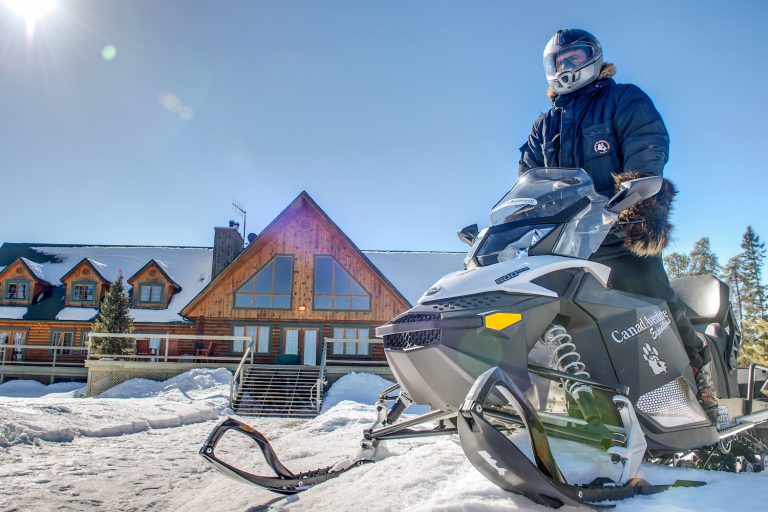
Several winters ago, while saddle bagging through Quebec’s Laurentides Region, our crew overnighted in Mont-Laurier. I remember being very impressed with trail access into the town and the snowmobile-friendly feel of the place.

I’d also heard about the nearby Montagne du Diable, Devil’s Mountain. So when the time came last winter for a Supertrax destination article about staging day rides from a Quebec location, Mont-Laurier was a top choice.

The Town of Mont-Laurier (pop. 13,799) is located centrally in the Province of Quebec in what’s known as the Upper Laurentians. The Laurentian Mountain range extends from the Adirondacks in New York State and runs north of and parallel to the St. Lawrence River.

For those trailering in, Mont-Laurier is only 187 miles from Massena, NY and 238 miles from Burlington VT. It’s also 160 miles (250 km) northwest of Montreal and 134 miles (216 km) north of Ottawa, most of it uphill.

ABOUT THE TRAILS

We quickly discovered why Mont-Laurier and area is such a popular snowmobiling destination. Such renown starts with reliable and lasting, elevation-generated snow that averages 137 in (350 cm) each season. This wintery phenomenon enables over 1,560 mi (2,512 km) of well-maintained snowmobile trails, including several exceptional day loop options out of Mont-Laurier.

WHERE WE RODE

For our day ride visit, we looped north one day for lunch at Pourvoirie Meekos (Regional Trail 319) after checking out the Kiamika Reservoir (Local Trail 253).

Another day we circled east to The Town of Nomininque on Trans Quebec Trail 63 and took in the Chutes du Lac-Cunières (Local Trail 221).

Then we embarked on a third day’s ride westward to the Baskatong Reservoir (Regional Trail 322), Chutes du Windigo (Windigo Falls – Local Trail 228) and the must-see Devil’s Mountain (Local Trail 229).

Devil’s Mountain is the area’s premier attraction for snowmobilers. As the second highest elevation in the Laurentians after Mont-Tremblant, this peak features a panoramic south-facing lookout complimented by basic refreshments at the rustic relais perched on the mountain’s edge.

MORE RIDING OPTIONS

Each one of the loops we did could range from about 125 miles to more than double that, depending on which trails you choose. Most of these routes follow forest access roads and old logging corridors, which make exploring the Laurentian uplands even more of a treat.

Meanwhile, for those with more time, or who enjoy even bigger miles and wilderness riding, a network north of Mont-Laurier known as the “Wood Runner Trails” offers several longer circuits serviced by remote outfitters (“Pourvoiries” in French).

STAGING DAY RIDES

One of the major benefits of staging day rides from one location is not having to search for new lodging every night. Another is not having to pack up and leave each morning. But best of all is finding one location, for both town and lodging, that makes returning after a memorable day’s ride even more enjoyable. And that’s what we experienced in Mont-Laurier and at the Comfort Inn.

The Comfort Inn Mont-Laurier is located at the east end of town on the main street, Boulevard Albiny Paquette (Highway 117), beside Trans Quebec Trail 63.

Snowmobiles are allowed to travel on the south side sidewalk, so there’s good access to the same services available to automobiles along this thoroughfare.

Local residents are generally very welcoming of snowmobilers riding here, stepping aside or offering warm smiles. Meanwhile, snowmobile access to all the area trails and loops is just north or east of the Comfort Inn.

Mont-Laurier isn’t the only snowmobile-friendly town in Quebec. And Laurentides is only one of their eight regional choices of snowmobiling destinations. But both are top-notch examples of what makes La Belle Province so special. And why so many touring riders choose to snowmobile from Mont-Laurier in Laurentides again and again.

What’s more, this three-day adventure is an ideal choice for those wanting to take advantage of Quebec’s Free Weekend on January 18 & 19, 2020. And for those who love both snowmobiling and downhill skiing, why not combine them into one fun-filled family vacation? Mont-Tremblant is only 65 miles (105 km) down the road from Mont-Laurier!

Where We Stayed:

Comfort Inn

Get More Info:

Snowmobile In Quebec

Tourisme Laurentides

Quebec Federation of Snowmobile Clubs (trail permits & online map)

Mont-Laurier Snowmobile Rentals

The Top Four Ski-Doo Snowmobiles for 2020

0

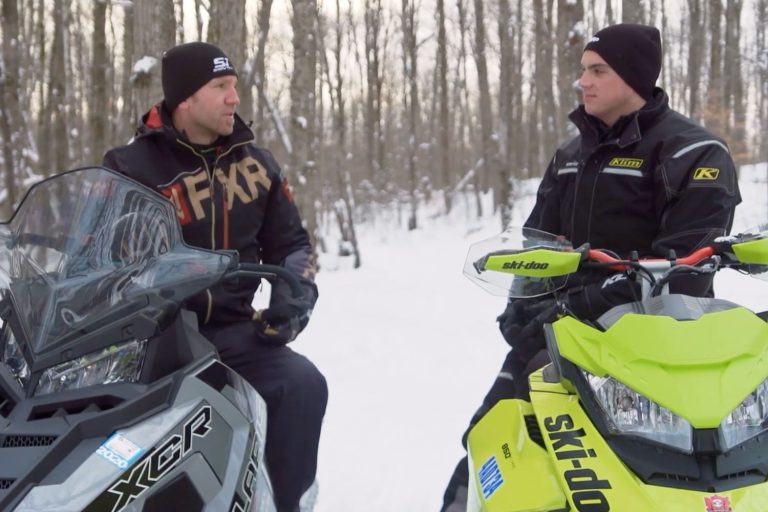
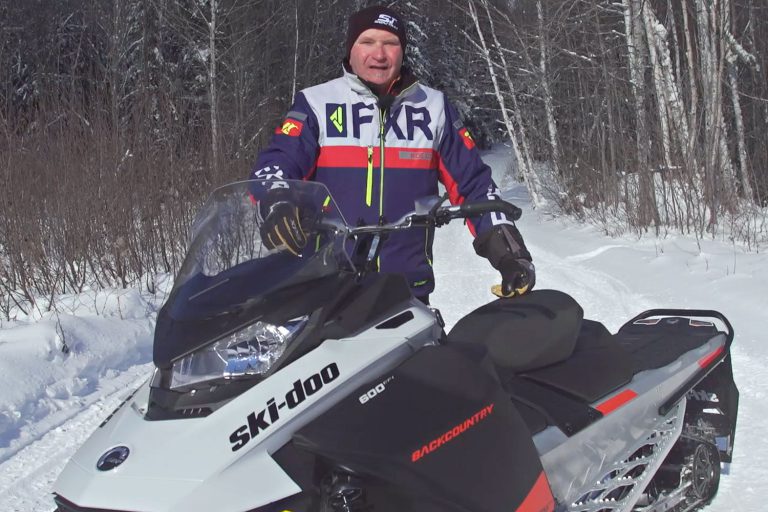
Motorhead Mark Lester takes a look at the top Ski Doo models from the following four product category: Performance Trail, Off-Trail, Mountain and Utility.

Subscribe to our YouTube Channel!

SKI-DOO VS POLARIS

0

It’s clear as crystal Ski-Doo is the snowmobile market leader right now.

Ski-Doo hasn’t missed a beat since the original 2003 REV hit the ground and stole number one sales and market share laurels from Polaris. Up to that time Polaris had held nearly a two-decade-long stranglehold on snowmobile sales market share.

In the late 1990’s, Laurent Beaudoin, then Top Gun of Bombardier (which included the aviation and rapid transit businesses at that time) and son-in-law to the iconic J. Armand Bombardier, had made it clear he wanted Number-One status back in the Ski-Doo camp.

As the story goes, Bombardier Recreational Products CEO and powersports visionary, Jose Boisjoli knew he needed two things to happen to satisfy Laurent Beaudoin’s call to arms and to elevate Ski-Doo back to leader status – something the company had lost in the early 1980s.

First, he knew he needed a game-changing snowmobile. The REV platform was that game changer, so much so that over the next few model years every OEM moved to imitate the REV’s now industry-standard “rider forward” ergonomics.

The second thing Boisjoli needed was for the current market leader to fall asleep. In what will go down in sno-mo-history as a strange aligning of the stars, that exact thing happened.

For reason’s too complex to delve into here, Polaris didn’t have the “next big thing” in its repertoire and was slow to respond to the arrival of the REV. Back in 2003, Boisjoli got his “two things” and, as they say, the rest is history.

BACK TO TODAY

In case you hadn’t noticed, Polaris has kept its head down while on a mission to increase market share. The company’s passion for these laurels appears to know no bounds.

Polaris has innovated engine designs, engine technology and has re-invented snowmobile suspension twice in the last ten years. The company has identified competitive areas it can “own” as Polaris distinctives, and bolstered those strongholds on an annual basis.

Specifically, those areas are:

1. Deep-snow performance leadership
2. On-trail handling leadership and
3. The lightest weight on virtually every sled it produces in every segment.

To see how far Polaris has come this decade is doubly remarkable, considering it does not have a 4-stroke snowmobile. We believe this may be about to change soon. Consider this: Ski-Doo sells more 4-strokes than Arctic Cat and Yamaha combined. That’s a lot of snowmobiles!

Despite this, Polaris has actually been gaining market share. Most importantly, for now it has grown its 2-stroke business rapidly.

The recent launch of the 850 Liberty engine has been nothing short of impressive. The new Indy XC platform with Pro CC suspension has brought back considerable numbers of former Polaris faithful who had drifted to other brands.

DOUBLE DIP

In our humble opinion, if Polaris brings a 4-stroke engine to the party, the company will be fully weaponized and ready to do nose-to-nose battle with Ski-Doo in every segment right down to the last sales contract.

My headline question was “Who is the competition?” I think it’s safe to say Polaris is Ski-Doo’s competition and even though you’ll never hear those two OEMs complain about gaining market share from Arctic Cat or Yamaha, it is clearly double-dipping when one of them gains it from the other!

At this point Ski-Doo knows it cannot take its enviable leadership position for granted. A wise marketing Guru once said to me: “Number One is not a destination, it is a journey!”

SMALLER OUTPUT TURBOS

0

When the word “turbocharged” comes up in snowmobile conversations these days, it always seems to imply maximum horsepower – no compromises, no exceptions.

This fact is no more evident than when Ski-Doo introduced its 900 ACE turbo last year. There was much conversation about its 150-hp output being inadequate compared to the 180 to 200 range the SideWinder and Thundercat were delivering.

We recall conversations asking: “Why would Ski-Doo put all that work into building a turbo sled when it’s already going to be overshadowed by the competition?” Another comment was, “Who’s going to want a turbocharged sled making 150 horses when you can buy a lighter 2-stroke that makes 160-plus?”

Good questions – and completely logical. However, a year later and the sales numbers seem to indicate there are a lot of snowmobilers who want a turbocharged sled making power in that range. The 900 ACE Turbo has been a huge success and looks like it’s here to stay.

To put this conversation in perspective, you need to look at where turbocharged snowmobiles have come from. Back in 2004 when Arctic Cat first introduced the T660 turbo, that tiny 3-cylinder engine only produced 110-hp from 660ccs.

Those specs sound pretty anemic compared to what is offered these days, but the truth is, that sled was an incredible performer and was an absolute blast to own and ride.

Some of its success was tied to the throttle lag it had and how much fun it was to feel the surge from that big boost of turbocharged air compression when you laid on the throttle.

No, we’re not suggesting sleds need turbo lag to be appealing but that definable surge from about 60-horsepower up to 110 was a real trip and made the experience fun!

A couple of years later, Polaris came out with a turbocharged 750 twin and it, too, was a ton of fun to ride. This one used an “overboost” feature that took the engine from 135-hp up to about 160 for a very brief time as the turbo’s boost was raised for quick acceleration.

The fact is, those two sleds were extremely appealing and had a ton of pull in the marketplace.

We’re wondering if turbocharging Yamaha’s old 500cc Phazer 4-stroke twin might produce a stir in the market, too.

That engine made about 80-hp stock and even if it was boosted to somewhere around the 110-hp mark, would there be a lot of riders who wanted a lighter 4-stroke that made that kind of power? We think there might be!

2020 Ski-Doo Renegade X-RS 850 Test Ride Preview

0

Here’s another look at what’s ahead from Ski-Doo leading up to the start of the 2020 SnowTrax season! Motorhead Mark goes into detail in his review of the Renegade X-RS 850 ETEC! Be sure not to miss Mark’s full TEST RIDE, which is coming up this season on SnowTrax TV!

Subscribe to our YouTube Channel!

WHAT’S NEXT FOR YAMAHA?

0

A question looming large at the Yamaha camp is: “What’s next?”.

It’s pretty clear Yamaha has improved its inventory position the past two years and is now back to marketing what appears to be a fairly full line-up of sleds for MY 2020.

For sure the return of the rejuvenated Viper, a mainstay of the brand’s product profile, signals Yamaha dealers have moved out unsold, non-current inventory and are back to selling current year sleds.

Great. Next challenge for the Big Y: We hear Yamaha regularly talking about the difference in the DNA of comparable Arctic Cat models and Yamaha branded models.

This DNA difference is important to both Yamaha and a legion of their faithful who take pride in the iconic brand and wouldn’t switch to something else if they were hit on the head with a 2×4.

Here’s where we think Yamaha could increase it’s own unique DNA and even further distance itself from the Arctic Cat brand: Rear suspension.

Yamaha has a high degree of expertise and has enjoyed significant success with skidframe designs over the past 15 years. In fact, late in the life of the Apex, there was a variant produced with a made-in-America rear skid.

Truth is the iconic, gone-but-far-from-forgotten Apex had a near-legendary rep for superb rear suspension ride quality. The Apex used a highly unusual single coil-over shock out back that delivered amazing comfort and control along with respectable weight transfer.

What was even more remarkable about the Apex skid (and later used in the Vector) was its ability to deliver stellar ride quality while mounted under admittedly heavy snowmobiles. To a large degree the single shock Apex skid made the sled feel lighter than it actually was.

There’s little doubt in our minds that its time for more Yamaha DNA to enter its re-branded sleds. It’s no secret the “Slide Action” 129-inch skid used in the bulk of Yamaha’s sleds is the elder statesman of suspension designs.

The reality is, it’s still competitive and that means there’s good in the design. In fact, virtually every racing sled uses a similar sliding front arm.

Yamaha has a stellar record of producing quality ride performance. It might be time for the brand to leverage some of the technology that defined Yamahas of the past decade.

We have little doubt a re-birth and freshening of the Apex rear suspension in upcoming Yamaha models would be received with uproarious applause at Yamaha dealers across the snowbelt.

ROGER SKIME – THE GODFATHER OF CAT

0

All four current snowmobile manufacturers have a unique story to tell – much of it embedded in racing and the application of technology that worked on the track adapted to production sleds.

Names like Hetteen, Johnson, Takada, Houle, Bombardier and Beaudoin instantly recollect memories of inventiveness and design pioneering reaching as far back as the 1950s. Something new and revolutionary was created in those days – and those men made it work! We owe then a great debt.

Another name synonymous with snowmobiling is Roger Skime. Roger is still around today, very busy working at his second career, ranching. He recently retired after a long and prosperous career with Arctic Cat and just a few weeks ago there was a party in Thief River Falls for him celebrating his many years of influence on snowmobiling. I’ve had the pleasure of knowing Roger for over 30 years and both my brother Mark and I, have nothing but respect and awe for him.

In 1962 Roger was a wet-behind-the-ears young engineering student who ventured into an Arctic Cat warehouse one day and simply picked up the tools to lend a hand helping Edgar Hetteen nail together wooden snowmobile crates for shipping. He was looking for a job, said he would be willing to do anything and was promptly hired. He didn’t last long building crates.

Roger quickly moved through the plant learning various jobs on the line and soon became a self-confessed snowmobile “nut”, constantly dreaming new ideas and concepts to make the vehicles lighter and more efficient. When he wasn’t thinking about snowmobiles he was out riding them, all the while figuring out new ways to make them function better on snow.

This passionate drive for innovation and improvement became Roger’s calling card. His ideas were not only heeded at Arctic Cat but deeply respected by the people who worked with him – even by the competition.

The fact is, at first, Roger didn’t get hired as an engineer but it soon became obvious his greatest contribution would be in that field. His experience working on the line on conveyor systems gave him the idea to allow snow to become a lubricant thus eliminating the need for bogey wheels in the suspension. Roger invented the slide-rail skidframe and although that one was a hallmark, he developed a menu of other innovations over his many years at Cat.

Roger never dreamed up an idea he wasn’t willing to try out himself. There was no CAD-CAM in those days, just trial and error – and although he took advantage of tech advancements and modern digital engineering tools later in his career, he still rode – a lot – and was never satisfied with an innovation he didn’t personally think “would make that sled a better snowmobile”.

I clearly remember one day, sometime in the early 2000s, being at an Arctic Cat intro near Thief River Falls. The press was standing around a Cat trailer waiting for the next event. Suddenly an agile looking rider came across the snow covered parking lot where the sleds were staged, driving what appeared to be way too fast. At the last second, the rider calmly slid the sled sideways and landed it perfectly parallel in a line of precious, one-off prototype sleds standing waiting for our approval.

We looked at each other wondering if this renegade test rider would get called out for being so reckless. He took off his helmet and, you guessed it, it was Roger. He was probably close to his sixties but he could ride like 20-year-old snocross racer. He came over to greet us and told us how he had just figured out something about the sled that was bugging him and knew how to fix it now.

That was Roger. We’ll miss seeing him at Arctic Cat events and getting his inimitable feedback on the industry. We’re glad he’s got a little less on his plate these days but snowmobiling is so much poorer with his retirement.

Congratulations, Roger.

2020 Enduro 900 ACE Turbo Test Ride Preview

0

We’ve got another sneak peek of what’s ahead from Ski-Doo leading up to the start of the 2020 SnowTrax season as Motorhead Mark gives his review of the Renegade Enduro featuring the 900 ACE Turbo engine! Like we said, this is just a taste of the full TEST RIDE, which is coming up this season on SnowTrax TV!

Subscribe to our YouTube Channel!

HYPERSLED ENGINES: What’s With Cat’s New 800?

0

We got some flak for not giving enough info on the 2020 Arctic Cat 800 twin a couple of weeks ago. Some of our keen-eared readers and viewers (yes, we read your feisty retort, Jamie) pointed out we weren’t giving the right details on the new, revised 800 Cat is offering for the upcoming model year.

Frankly, unearthing particulars on this high-profile change has been like sifting though a South American archeological dig in search of proof of the existence of a Yeti!

Rather than focus on the “why” behind the change to the 800 (this info is even harder to get than the other), we’ll try to spill what we’ve learned about the “what”.

First, although the 2020 800 engine is still referred to as a CTEC-2 engine, it no longer uses the classic Dual Stage Injection system found on the DSI 600 and the 2019 800.

Just to refresh, the concept behind Dual Stage or “Slot Injection” centers on a vertical slot being cut into the side of the piston on the injector side.

The slot is exposed to the fuel injector long enough to allow gas to be sprayed under the piston and onto the bottom end rod bearings and upper piston pin on each cylinder.

At high RPM as more fuel is required, on the power stroke, the fuel is injected through the slot and travels up from the crankcase via the transfer ports to the top of the piston and secondly, is injected directly onto the top of the piston as it passes by the slot. Pinpoint oil distribution lubes the bottom end bearings.

This injection design has proven to be extremely reliable on the 600 and it was pretty much a no-brainer Cat would use the same design on the 800 – and they did.

However, for 2020, Cat has gone with a different design altogether for the 800. This year, the pistons do not have slots and the injectors are mounted inside the transfer ports. Engine programming is set up so the fuel is injected in sequence during the power stroke so the fuel is jetted to the top of the piston where it’s ignited and the crankcase is left relatively free of unburned gasoline.

Depending on how Cat has chosen to program its ECU, you could call this new set-up Semi-Direct Injection or SDI. As you know, Polaris uses SDI on all of its performance 2-strokes including the 600, 800 and 850. This is where the guessing will begin, ladies and gentlemen.

We’re wondering if Arctic Cat, knowing the new standard in big-inch engines was now 850ccs, did the engineers face challenges with an SDI 850 design and instead opt to build an all-new SDI 800 version with the intention to bring out a new SDI 850 a couple of models years down the road?

Based on what we’ve been able to find out so far, we’ll likely never know. However, apparently the performance of the 2020 800 is excellent and in no way gives quarter to the SDI 800.