Home Blog Page 81

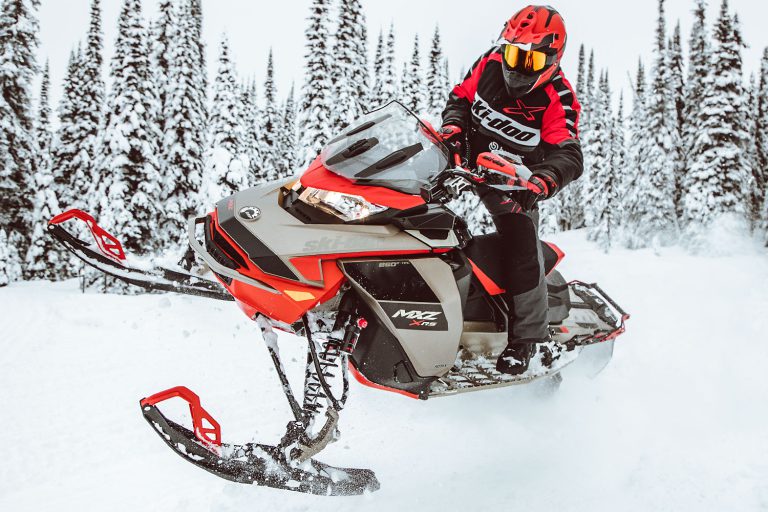
2020 POLARIS INDY XC 137

0

SnowTrax TV’s AJ Lester Shares His Opinions on the 137-inch Indy…

AJ, you rode the 129-inch version of the new Indy XC quite a bit last winter. Give us some initial impressions of that sled, say, in comparison to the Pro-Ride RUSH or Switchback at the beginning of the season. How did it hit you when you first rode it?

AJ: I was impressed with the 129’s instant comfort and ride-ability without the need to set the suspension up perfectly for your weight. This was and had become a requirement for the Pro-Ride external shock suspension. The XC is good to go for a wide variety of riders’ weights and will also smooth out small, medium and large trail bumps without needing to go underneath and adjust clickers or spring preload.

At that time, did your strong impressions of the then-new 850 twin overpower your impressions of the new Indy platform?

AJ: I’d have to say the engine and chassis were both home runs, but yeah, I couldn’t help but be blown away by the exceptionally strong performance of the 850. It floats like a butterfly and stings like a… Polaris!

Thinking back, is there anything you would have changed about the Indy XC 129 last season?

AJ: Honestly, I can’t think of a single thing I don’t like about that sled! I like to think I’m pretty unbiased and there are truly very few sleds I can say this about, but the Indy XC is perfect the way it is and this is coming from a guy who had yellow underwear for a good part of my life due to my racing history.

ST: Is the 2020 137-inch version just a logical progression for the Indy, or is it the real deal – and better than the 129? How does it work in powder compared to other crossover sleds?

AJ: I think it is the logical progression from the 129. It has to be. However, with that said there is no reason it’s not still the real deal. While we knew right away a 137 would be next, it’s not just a “me too” sled. It’s every bit as good as the 129. In fact if you’re running a bit more fresh snow, say on lakes or riding over heavier snowpack, the 137 puts the power to the ground more effectively and reduces track spin. Keep in mind, with the 850 you could spin any length track pretty much at any time but the increased grip of 8-inches more track lets the Indy accelerate harder and grab better.

How would you rate the differences in ride compliance between the 137 XC and the 129?

AJ: If you’re a corner to corner, trail shredding, ditch banger then 129 will be your jam, but honestly for those of us who cruise wider, more open trails and are looking for a bit better big bump compliance with slightly less aggressive cornering ability, the 137 is a great choice. I feel the rear end ride is not incredibly different, but there’s better bump bridging and acceleration with the 137 and maybe a bit better cornering with the 129. That’s pretty much the big difference I see. Some of our testers here felt the 137 definitely rode better than the 129 but honestly, they’re both really close.

You’ve always been a big fan of Polaris’ handling. Did you feel like there was a handling penalty with the longer track?

AJ: There will always be slightly reduced steering precision when you increase track length and/or lug height. There has to be; it’s physics. However, with the much closer sized sleds of today at 129 and 137 as apposed to 10 years ago running 120 and 136’s, the differences are truly harder to feel and the handling penalty of a longer track is less obvious.

What track depth would you consider ideal for the 137? Would you keep the same track on the 600 as on the 850 or 800?

AJ: I’m a fan of the Ice Cobra at 1.352. It’s a great all-around track that lets you not only grip like crazy on hard packed or icy surfaces but also gives that little extra bit of lug to power through deeper snow should you encounter it. A 1.25 lug is fine for a 600, but I do find some reduced performance when you go with that heavier pre-studded track and deeper lug with the 600 rotating it. My choice would be 1.25 on the 600, and the Ice Cobra with the 800 and 850.

How different is the 850 compared to the 800 – really?

AJ: How different are apples and shoulder rockets! As far as I’m concerned, that isn’t even a comparison! The 850, man… this is the kinda engine your momma warned you about. The 800 is a great powerplant, and I still really enjoy it, but the 850 is a fire breathing dragon just waiting to destroy every snowflake in your path. Up top, down low and in the midrange it just flat-out outperforms the 800.

What do you think of the XC’s riding position, controls and instrumentation. Is there anything you’d change?

AJ: Riding position is excellent, comfortable and is long day, high-mile comfy while still allowing you to stand up and ride through really brutal, worn-out weekend moguls. The controls and instrumentation are detailed and right where you need them and work well with intuitive gauge interactions. I still can’t believe Polaris is the only manufacturer offering a GPS. Isn’t this 2020? Hands down, the best gauge ever and a worthwhile upgrade not just to fulfill some random tech craving (and, trust me, it’s a fun addition and comes in handy), but also exceptional for resale value!

Give us three gob-smacking positives that hit you and three negatives – no matter how big or small.

AJ:

POSITIVES:

1) Best engine in the business (Patriot 850).
2) Best front end suspension with most precise steering.
3) Incredibly well-thought-out design ranging from appearance, to rider comfort to under-hood accessibility.

NEGATIVES:

1) As a critic, this is the hardest sled in the business to find fault with.
2) The 850 is only Snow-Checkable, so in-season buyer = out of luck.
3) Having to disappoint your friends who thought “they” had the best sled.

THREE SEASONS IN ONE

0

It’s been a long haul for our readers who reside in the US Midwest. Before last winter’s near record cold and snowfall and thus a long riding season, there had been five so-so winters in a row for the US heartland.

In Canada, particularly in the province of Ontario, we’ve had some duds and some winners in the same time span. Before you assume that’s because we’re way up north and should expect lots of consistent snow, consider this: The heartland of snowmobiling on the east side of the Great Lakes in Ontario, New York and Quebec is mostly located parallel to or just south of prime riding areas in Michigan, Wisconsin and Minnesota. The Great Lakes send a lot of snow to us here in the east.

In terms of attitude and overall enthusiasm for snowmobiling, we’d have to rate this fall as strong. The response to early-order programs was, across the board, exceptional.

With the Midwest having a strong snow season last winter, motivation to early-order a new ride was so strong it set records. As history has shown, time and again after a good winter, particularly one that goes late into March and early April, the manufacturers are pretty much guaranteed a strong early-order sales season. That’s exactly what happened in virtually every market where snowmobiles are sold.

With the OEMs claiming they have varying degrees of unsold inventory for sale this fall it’s interesting to ponder what will happen next. “Next” is the in-season sales season. It’s the second segment of the three part snowmobile yearly sales cycle.

Once we get to mid-December “show me” buyers enter the market. This is the third part of the sales cycle. These buyers don’t care about last season’s snow but would rather patiently wait until they see how the current winter kicks-off.

Believe it or not, these buyers are, for the most part, western deep snow types. What’s really interesting about this phenomenon is this: The mountain market is now the largest single segment in the sport. This means the OEMs have to “ball park” mountain sled production numbers to a higher degree than the “trail” segments and can end up with crates of unsold sleds if winter begins late or is less than heroic out west.

Ski-Doo, for the first time in many years, has some non-current inventory it has been successfully selling this fall. It will be interesting to watch what effect this will have on 2020 model fall sales. Ski-Doo’s Spring Break early order program was a huge hit last spring.

Arctic Cat’s “build to order” posture has to be causing dealers heartache without access to any current model year sleds to sell this fall while Polaris looks to be pretty clean of non-currents and you can bet they built long on mountain models as demand for the RMK series is at a fever pitch out west.

Yamaha swallowed the bitter pill a year ago and built short in an effort to clean house and move non-currents out the door. From what we heard it’s done just that and is selling 2020 sleds without the distraction of unprofitable year-old models.

Inasmuch as the fall sales season for flatland sleds is pretty much guaranteed to be strong, the mountain market will ultimately have the final say as to whether model year 2020 is a success.

The good news for the OEMs is this: From a weather perspective the western marketplace is considerably less volatile than the eastern flatland market. In other words, it traditionally snows with more consistency out west than in the east.

If the western market responds to good early season snow, the sno-mo-biz should card an excellent year, despite Arctic Cat not playing in the same game for MY 2020.

Early season programs across the board were highly successful so model year 2020 is already off to a great start.

SNOWMOBILING TRENDS HAPPENING NOW

0

Snowmobiling is unprecedented in its introduction of ground-breaking technology and use of engineering ideas other powersports mediums only dream about applying.

What’s happening in the auto industry has a tangible effect on what’s going on with snowmobiles. Same with the electronics industry; it’s no accident we’re seeing increased digitization used in the instrument packages offered on snowmobiles, and even the availability of things like GPS and cell phone app compatibility.

There are bigger trends happening. BRP recently announced it is building prototype 100-percent electric versions of its Sea-Doo watercraft and Spyder street roadster.

In a recent post on mainstream media, the company made it clear it will be building prototype all-electric Ski-Doo snowmobiles in the near future potentially for use in ski-hill applications and probably, national parks.

This response is clearly driven by the auto industry’s drive to perfect and market electric cars and trucks. Whether you agree with the demise of fossil-fuel powered transportation or not, this line of thinking is being pushed big-time by pseudo-scientists and politicians. It’s a trend that exists and is being jammed down our throats in a big way.

Clean and green electric power is a trend we gasoline addicts cannot buck – and it’s just not wise if we bury our heads in the sand and ignore it.

Yes, we can produce all the arguments about how environmentally clean our sport has become in the past decade, but governments only interested in getting re-elected continue to try to sell us on the fact that all fossil-fuel powered vehicles are tremendously evil and we need to be going electric.

So far, we haven’t had a chance to actually try out an electric snowmobile. A company you’ll be hearing more about, Taiga, actually plans to build a couple thousand of them this year – and we’re betting they work surprisingly well.

Another completely different trend we’re seeing – and it’s exclusive to the snowmobile business – is increasing consumer demand for price-point sleds.

There’s an awareness among newbies interested in getting into the sport that it’s expensive. This is entirely true and is a pretty major roadblock in getting the boundaries of the snowmobile market to increase.

If the market has come to a place where only those who are seasoned, experienced enthusiasts are prospective buyers, then our marketplace is only going to get smaller.

So far, the OEMS have not wholeheartedly responded to this trending line of thinking, but they need to! We need sleds that are cheap, fun and offer the full snowmobile experience at an unprecedented low price.

Yes, there are a couple of sleds that do this – the baseline, and unchanged for years, 600 Indy and Ski-Doo XP Sport series sleds are examples – but both companies hide these sleds at the back of their product brochures and refuse to promote or glorify them lest they become too popular and outsell their pricier, more fully equipped models.

There are very inexpensive ways to offer these sleds with already-developed suspension and driveline technology that would tempt first-time buyers or those who have been out of the sport for a while, to invest.

You could argue the industry is already moving this direction with sleds like the EVO, SnoScoot and ZR200; however, it’s different. Those are snowmobiles designed for an already-entrenched market and are never sold into a vacuum – meaning there’s always someone else in the family with an adult-sized full-meal-deal sled.

There are choices to make and ideas to be followed-up as pressure from world-wide trends become more visible. I just hope they never bring out a self-driving sled. That would really suck!

Everything YouNeed To Know About Ski-Doo’s pDrive Clutch

0

Motorhead Mark Lester is in the SnowTrax TRAIL TECH shop giving an overview of Ski-Doo’s unique clutch system – pDrive.

Subscribe to our YouTube Channel!

2-STROKE OIL CONSUMPTION

0

If you’ve ever owned a Ski-Doo E-TEC you were likely really surprised at how little oil the engine was consuming over the course of a day or even a week’s riding.

I remember my first experience with a low-emissions 2-stroke the first time I rode it. I checked the oil tank and started to panic. “Surely, I’m going to ruin this engine. Something must be wrong with the oil pump – or an oil line must be blocked – because it just isn’t using enough oil at all.”

The fact is 2-stroke oil is a pretty amazing substance, sticks like glue to wear surfaces and mixes with gasoline very uniformly and rapidly.

In pre-mix situations you can go as high as 100 to one gas-to-oil ratio with some oils and not damage your engine. Seems almost ridiculous!

With Semi-Direct and Direct Injection engines there’s very little gasoline introduced into the crankcase – in some cases, none. As a matter of fact, an E-TEC engine’s crankcase is pretty much sealed-off from the engine’s combustion chambers when it’s running and there’s only fresh, clean air allowed by the throttle bodies into the bottom end which is immediately transferred via transfer ports to the top of the engine.

This is one of the reasons the engine uses so little oil: When there’s no gasoline washing down or diluting the oil going to the crankshaft and rod bearings every stroke, the lube stays on those bearings way longer.

With an E-TEC engine or a Polaris Cleanfire SDI, the oil is “pin-point” injected in minute proportions directly onto those bearing surfaces. Piston rings and wrist pin lube is also delivered by the oil pump.

The point is, very little oil is needed on those engine parts because gas isn’t mixing with the oil and washing it off the bearings and up the transfers. As a result you don’t use as much oil as the old days of carburetors and mechanical oil pumps.

Less oil consumption makes a great case for the newest electronic oil pump technology that links up with the sled’s ECU to determine how much oil is demanded by the engine at whatever particular RPM it’s running.

These new “smart” oil pumps are a big part of the reason the newest-gen 2-strokes can run so oil lean.

Ski-Doo’s Turbocharger on the 900 ACE Turbo Engine

0

Motorhead Mark Lester is in the SNOWTRAX TRAIL TECH shop delivering an overview of the ROTAX turbocharger on the 900 ACE Turbo engine.

Subscribe to our YouTube Channel!

DIRTY ROTTEN ENGINES: Cat’s Laydown 700 Twin

0

A number of the most popular, most beloved 2-stroke engines in snowmobile history were actually grossly inefficient and EPA dirty.

They simply had to go in an effort by the OEMs to clean up their total corporate average emissions. I call these engines “rotten” because that’s what they’re doing – rotting – in older sleds while the pricey tooling used to cast their myriad pieces literally rots away.

PART 5: Arctic Cat’s Laydown 700CC Suzuki Twin

This uniquely configured 2-stroke twin powering a legion of FireCats beginning in 2002 was one of the most mysterious motors ever introduced in this biz.

This weird engine, with the intake and exhaust on the same side, shouldn’t have run this fast. Engine gurus claimed the intake charge was actually shooting directly at the crank cheeks which were spinning the wrong way to aid induction.

We suspect the same thing that propelled the legendary Fuji 500 Polaris was at play with the Firecat. What, you ask? A highly refined drive system and chassis that was exceptionally friction free.

FireCat 600s (a variant of the 700) would regularly tow competitors’ 700s while the 700 FC could go past competitive sleds so fast down Kevlar Lake the vacuum in their wake would pull the hoods off all challengers.

Maybe we’ll never know the real reason behind this engine’s dominance; or, maybe, like one OEM told me – it wasn’t a 700 at all but rather a 750 and nobody ever bothered to measure the thing. Now rotting but never forgotten.

THERE’S MORE MUCH LOVED, DIRTY, ROTTEN ENGINES TO COME SO STAY TUNED!

DIRTY ROTTEN ENGINES: SRX 700cc Triple

0

A number of the most popular, most beloved 2-stroke engines in snowmobile history were actually grossly inefficient and EPA dirty.

They simply had to go in an effort by the OEMs to clean up their total corporate average emissions. I call these engines “rotten” because that’s what they’re doing – rotting – in older sleds while the pricey tooling used to cast their myriad pieces literally rots away.

PART 4: Yamaha’s SRX 700cc 2-stroke Triple

This nimble triple delivered top-end power that was nothing short of insanity when you pulled the trigger.

I think Yamaha got fed up with delivering less than industry-standard power output during the 90’s and someone on this side of the pond faxed Hamamatsu with instructions to build the baddest triple 2-stroke the sport had ever seen. This engine was a good answer to the industry question: “Do we really need a bigger engine than a 700?”

It used triple carbs, case reeds and triple pipes and introduced detonation-fighting knock sensor technology to the sport in the late 90’s that just dared the owner to lean the fuel mixture out.

Pretty clearly – in fact, undoubtedly – the SRX moniker experienced 100-percent redemption with the intro of this lake shredding, drag race dominating engine.

Committed Yama-fans still get tears in their eyes and bury their hands in their mitts when the topic of the 700 SRX triple comes up for discussion.

It was the last of a great run of high performance 2-strokes for Yamaha and we all know what happened to the 700 and every other 2-stroke in Yamaha’s repertoire soon after: The 4-stroke arrived in 2003 and the rest is history.

THE ULTIMATE SNOWMOBILE BUCKET LIST FOR QUÉBEC THIS WINTER

0

Take a moment, close your eyes and think of the most beautiful winter landscapes you could possibly imagine!

What you’d be imagining would look like Québec’s majestic Percé Rock, or maybe, the breathtaking Chic-Choc Mountains.

There’s never any shortage of exciting adventures and things to see when you visit Québec in the winter! The biggest thing is the amazing snowfall; it’s unlike any other place in North America! Trees covered top to bottom with it, snowmobile trails built on feet-depths of it.

There are more than 20,500 miles (33,000 km) of groomed trails in the province – all are safely routed and well-marked with clear trail signage.

The people? They’re great! Warm and friendly hosts who fully understand snowmobiling and go out of their way to make you feel comfortable and welcome.

Here’s the best part: You can ride Québec’s awesome trails for free the weekend of January 18 and 19, 2020!

Take a moment and check out Québec’s online APP: iMotoneige. There are more than 800 member services on the APP, all accessible by snowmobile trails. By using it, you’re able to view trail maps and put together all the info you need to plan the best snowmobile tour you’ve ever taken!

Here are a few of the places you should visit this winter:

Bas-Saint-Laurent – Gaspésie Snowmobile Tour (Bas-Saint-Laurent – Gaspésie – Côte-Nord)

Do you like sea views and quaint, comfortable inns with cozy rooms and great cuisine? The Bas-Saint-Laurent Gaspésie Snowmobile Tour is famous for excellent snow-depth, perfectly groomed trails and the scenery along the way is nothing short of breathtaking!

If you start in Rivière-du-Loup, follow Trans-Québec trail #5 (TQ5) it will take you through the mountains and you’ll experience magnificent vistas all along the St. Lawrence River all the way to the Gaspé Peninsula. Along the way you’ll get to see the unforgettable Percé Rock and the beautiful Chic-Choc Mountains.

With its snowy forest trails and frequent sighting of wildlife, this tour is what snowmobilers dream about!

Photo Credit: Gaspesie Bas Saint-Laurent

Monts-Valin (Charlevoix – Saguenay–Lac-Saint-Jean – Québec City & area)

The Monts-Valin mountains are simply spectacular! Snowmobilers flock there with the first snow, often in November, and don’t leave until late spring. The trail network is exceptional, snowfall is guaranteed, maintenance is constant, services and accommodations are plentiful!

Discover the 5 Summits circuit that runs through the Monts-Valin mountains. You’ll be riding amidst five different peaks at an altitude of more than 770m (2,526 feet), offering an incredible view of the Saguenay-Lac-Saint-Jean region, and the breathtaking Saguenay Fjord in particular.

From certain spots on the trail, you can see a multitude of giant wind turbines generating power in the Parc des Laurentides, Lac Saint-Jean and the city of Saguenay.

One of Québec’s most famous landmarks, accessible by trail and located in La Malbaie in Charlevoix is the incomparable Fairmont Le Manoir Richelieu hotel. 5-Star all the way – and absolutely unforgettable!

Photo Credit: Saguenay

Ski-Doo Adventure – Fairmont Le Manoir Richelieu (Charlevoix)

You’ll start your adventure at the stunning Le Manoir Richelieu hotel, located along the beautiful St. Lawrence River. In partnership with Nord Expe, the BRP Experience Centre offers different types of Ski-Doo snowmobile tours of one-half day to four day’s length on Québec’s beautiful trails.

The first thing you’ll experience is the incredible depth of snowfall, then you’ll immediately begin to see some of the most pleasing, pristine winter landscapes in North America. From there, where you want to go and what you want to see is up to you.

There are Ski-Doo adventure packages for all skill levels and it’s even possible to have customizable journeys. Learn more here: brpexperience.com.

Mount Saint-Magloire (Centre-du-Québec/Chaudière-Appalaches)

Here, you can easily ride loop trails without leaving the area or journey across Chaudiere-Appalaches to connect with other regions. Trails are meticulously maintained and all routes and signage are clearly designated.

The view at the top of the observation tower in the Massif du Sud regional park at a height of 3,000 feet is spectacular! On a clear day, you can even see the mountains all the way up to Maine, including Mount Katahdin. This magnificent viewing opportunity is located on trail 549.

Photo Credit: Mont Saint-Magloire – Massif du Sud – Tourisme Chaudière-Appalaches

The Montagne Noire at Saint-Donat (Lanaudière-Mauricie)

This region has been a snowmobiler’s must-see for generations offering hundreds of spectacular trails and unique inns and resorts featuring cozy rooms and excellent dining.

Riders can take a scenic trail at altitude that weaves to the highest points of Saint-Donat. Stop at lookouts with breathtaking views of the area. Feed birds directly from your hand – and don’t forget your camera!

Photo Credit: Lanaudiere Mauricie

The Montagne du Diable (Devil’s Mountain) (The Laurentians)

You can self-guide your ride on groomed trails here for hundreds of miles or book a guided tour to discover some of the many unique, hidden sights of the region.

The Relay at the top of Devil’s Mountain is the most popular meeting place for snowmobilers passing through the Upper Laurentians.

Long located at the very summit of Montagne du Diable, this restaurant-bar offers a thrilling ride to the top and the view when you get to the summit is a must-visit.

This definitely should be on of your primary destinations in this area. It truly feels like some kind of snowmobiling paradise!

Photo Credit: Montagne Noire – St Donat

The Pontiac Railroad (Outaouais)

This abandoned railway, groomed laser-smooth, allows you to take your snowmobile on the new bridge crossing from Ontario to the western part of the Outaouais Region. This formerly active railway, originally called the PPJ, was converted in the late 1970s into a 92 km (57 miles) multi-purpose recreational trail.

Discover the rich heritage of a part of the region well worth getting to know. You’ll see the longest covered bridge in Québec, a lumber baron’s estate, as well as the Chutes Coulonge Park with its magnificent canyon and a unique historical railroad museum.

Fourrure Grenier (Abitibi-Témiscamingue)

Snowmobiling is a cultural experience in Abitibi-Témiscamingue and here you’ll find hand-crafted accessories designed specifically for riders.

Why not make a stop at Fourrures Grenier, a family fur business, and buy yourself warm fur accessories such as boots, mitts and hats of exceptional quality? You’ll remember it for the rest of your life!

To get there take Trail 93 and then turn onto a local trail. You can also visit the manufacturing plant at Barraute or you can always stop at Val d’Or, where there’s a boutique very close the Hôtel Continental Centre-Ville.

There’s a long list of snowmobile-friendly inns in this region offering great cuisine guaranteed to give you relaxing comfort after a day of riding the region’s impeccable trail system and taking in its majestic scenery!

Photo Credit: Hugo Lacroix – Abitibi-Temiscamingue

Link: fourruregrenier.ca

Festival Folifrets Baie-James (Eeyou Istchee Baie-James)

This region is famous for its incredible volumes of snow! It goes without saying the grooming is always flawless here. The fact is – and always has been – you can plan your trip with confidence knowing you’ll have excellent riding.

The Festival Folifrets Baie-James is a unique snowmobile competition held for over 50 years in Chibougamau, in the Nord-du-Québec region.

Two major events are the hallmark of this event: the “Randonnée du Président”, with nearly 650 participants, and the cross-country, a 345 km (215 miles) endurance race that welcomes some of the best recreational riders in Québec. The whole city vibrates to the rhythm of the festival during the event’s ten days! Plus, there’s $40,000 in cash and prizes to be given away!

Photo Credit: Festival Folifret

Link: festivalfolifrets.com

For more information on snowmobiling in Québec go to snowmobileinquebec.com. The easy-to-navigate website acts as the perfect ambassador to every region and your personal assistant for planning your ultimate snowmobile adventure.

DIRTY ROTTEN ENGINES: Cat’s Suzuki 800 Twin

0

A number of the most popular, most beloved 2-stroke engines in snowmobile history were actually grossly inefficient and EPA dirty.

They simply had to go in an effort by the OEMs to clean up their total corporate average emissions. I call these engines “rotten” because that’s what they’re doing – rotting – in older sleds while the pricey tooling used to cast their myriad pieces literally rots away.

PART 3: Arctic Cat’s Suzuki Case Reed 800cc TBI Twin

This throttle body–injected twin was a staple on Arctic Cat’s engine menu for almost 15 years.

The engine’s hallmark was unquestionably its bulletproof reliability. Some said you could push a ZR 800 out the backdoor of a C-130 cargo plane at 20,000 feet and the big Suzie would land on its wheels and start on the first pull.

Power, in the early days of the 800, was 100-percent industry competitive. However, as the years rolled on the engine didn’t get the necessary tune-ups it needed to stay at the top of the 800 class.

One not-so-nice feature of the big twin was its fattish response at engagement and its unrepentant production of thick exhaust smoke – warm or cold.

The 800’s throttle body injection system was the culprit. Because fuel was scavenged into the crankcase and oil mixed in the fuel rail, too much oil-rich, unburned fuel made it out the exhaust port.

If the EPA guidelines had never been set out, this engine could easily have been modified to make the most power in the biz. Why? There was so much lube getting into that engine it didn’t matter how lean you set it up, it would survive.

In its day we used to joke, if you left this engine idling too long you’d have to send out a search party to find it because it would have vibrated the sled right off the trail and into the woods.

Still, no hardcore green underwearer will ever say a bad word about this iconic and extremely popular engine.