Home Blog Page 80

YAMAHA ANNOUNCES 5 NEW MODELS FOR 2021!

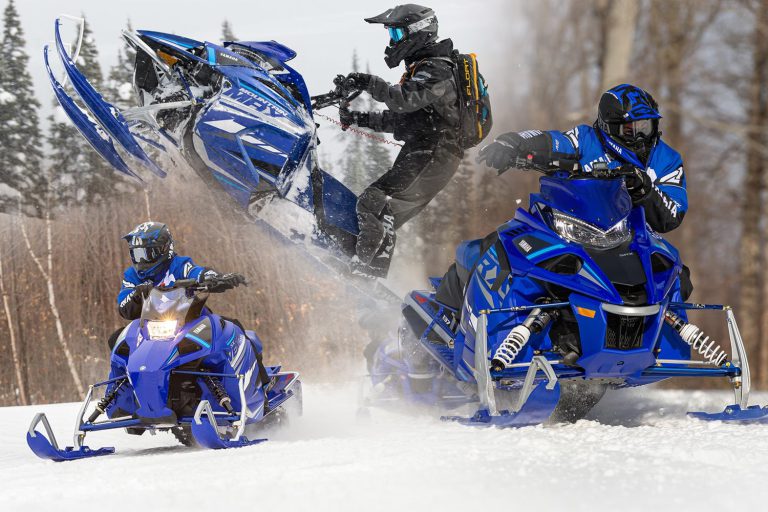
Yamaha is expanding its snowmobile lineup for 2021 with five exciting all-new model additions. These snowmobiles are aimed at attracting new and returning customers to the Yamaha brand with an emphasis on light weight, value and of course….FUN!

Please visit the 2021 launch page here for Canadian users and here for American.

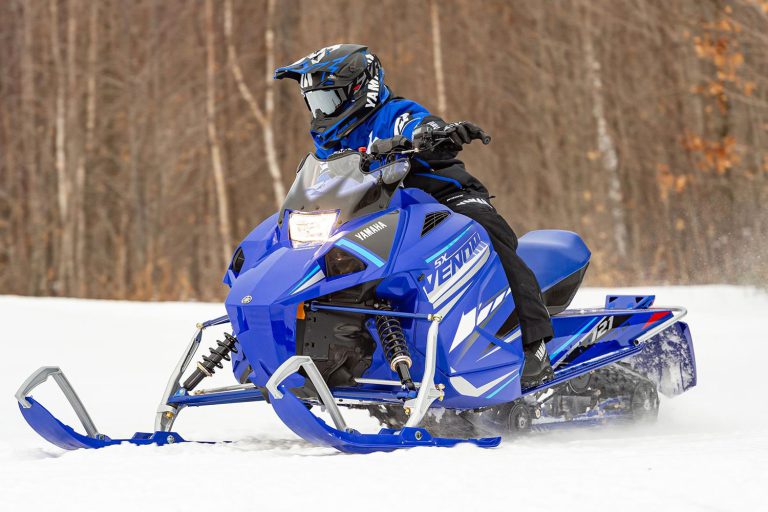
Leading the way are the Venom, Venom Mountain and Transporter Lite – the types of snowmobiles families have been clamoring for.

Each of the 400 series snowmobiles employs a sporty 397cc, 60+ horsepower, electronic fuel-injected, liquid-cooled two stroke housed by a super lightweight chassis.

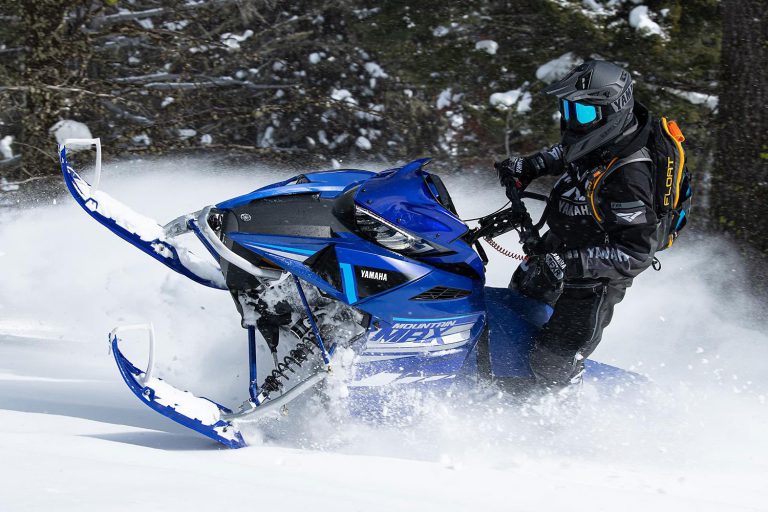
Venom puts power to the ground using a 121” Camso Hacksaw track with 1” lug, while the Mountain version receives the same industry-shifting Single Beam Mountain Suspension found on larger models wrapped by a Camso Challenger 146” track with 2” lug and Yamaha Mountain Skis.

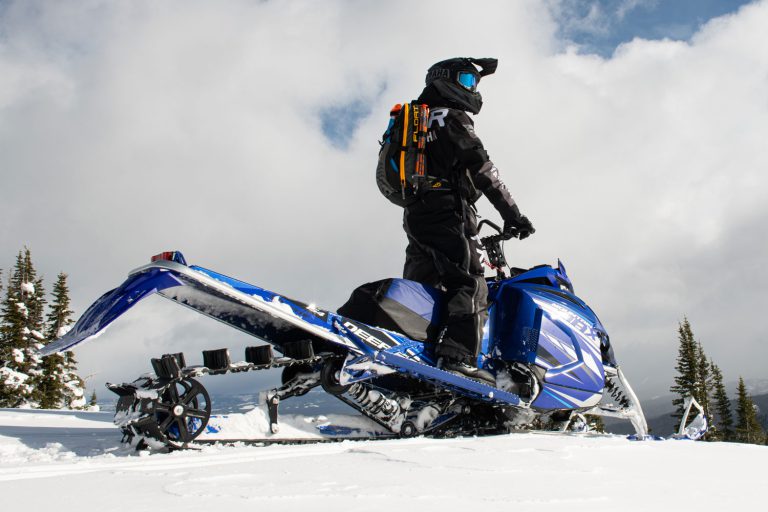
Transporter Lite works with the same engine and chassis as the Venom Mountain, but a utility focused suspension with flip-up rails gets you from point A to B. Also included with Transporter Lite are a 1.6” lug on a 146” Camso Cobra track and a practical rear storage rack.

The all-new 400 series are a throwback to a time when modest size, ease of operation and affordable price tag were the key attributes riders looked for. Well look no further. For trail, mountain or work, Yamaha has the snowmobile step up you’ve been waiting for in the 400 series. Affordable, family fun in snowmobiling is back.

Yamaha’s LE models return for 2021 and, this year, they are headlined by a familiar name in the Mountain Max LE 154 and Mountain Max LE 165.

Boasting a 794cc battery-less fuel-injected two-stroke engine, the Mountain Max models utilize the venerated Single Beam Mountain rear skid. The advanced skid features a single pivot and single rail that results in much more flexibility and a precise balance point, all while reducing snow collection and weight. Riders can manoeuvre the snowmobile very effectively in deep snow.

On top of that, the Mountain Max models come equipped with LE upgrades like Fox QS3 front and back suspension, lightweight brake disc, tunnel bags and special Yamaha Racing blue colour scheme.

The only other LE that gets the Racing blue colour scheme is the indomitable Sidewinder SRX. The SRX continues to cement its legacy on lakes and straights across the snowbelt. The SRX returns as the most technologically advanced snowmobile in the Yamaha line with Fox iQS electronic suspension to complement the Yamaha Genesis 998 Turbo, and one of the most important refinements for 2021 in the Yamaha Stryke Single Keel Ski for improved handling.

The Stryke ski helps find the elusive balance between lightweight steering feeling and precision handling. The ski uses adjustable spacers to further enhance steering response and customization. The new Stryke ski can be found on all Sidewinder, Viper and Venom trail series snowmobiles.

Yamaha is offering three other LE models in the Sidewinder L-TX, X-TX and B-TX models that come in dynamic ink blue and orange colour scheme with special LE features like 20” tunnel bags, upgraded Fox suspension and lightweight brake discs.

Yamaha’s in-season GT line returns with the customary taller windshield and upgraded suspension, along with other touring amenities like heated seats and visor outlets that sophisticated long-distance snowmobilers will enjoy. For 2021, the GT series consists of the Sidewinder S-TX, L-TX and Viper L-TX units sporting a rich black and regal gold colour scheme.

The SE line is comprised of the 2021 Sidewinder L-TX SE in frost silver and jet orange graphics, while the Sidewinder X-TX SE is geared for the more off-trail minded customer than its LE cousin with 2” lug and Yamaha Mountain skis.

Yamaha’s utility lineup is expanded again for 2021 with the addition of the Transporter Lite offering a smaller displacement two-stroke option.

The Transporter 600 becomes the Transporter 800 with a new 794cc engine for more off-trail capability and pulling power.

Yamaha’s Japanese-built VK540, VK Professional II EPS and RS Venture TF models return, offering reliable snowmobiles across the two-up utility and touring spectrum with features you won’t find anywhere else, like electronic power steering (EPS) in the four-stroke models.

Last and certainly not least are the youth series of snowmobiles, the Snoscoot and SRX120R.

The electric-starting Snoscoot and SRX120R offer the perfect introduction to the snowmobile lifestyle for new riders. And with the launch of the new Venom, there now exists the ideal step up for Yamaha riders to stay with the brand for years to come.

The Spring Power Surge program launches along with the snowmobiles today. Customers interested in Yamaha Snowmobiles can receive the best deal of the year by placing a deposit on the Yamaha of their choice between March 9 and April 18, 2020. Fantastic offers include extended warranty, aggressive financial options, snowmobile covers and guaranteed delivery.

Yamaha’s 2021 snowmobile line offers new snowmobiles in key categories, model refinements and a strong Spring Power Surge program for a busy spring deposit season.

Complete model information is available at Yamaha-motor.ca or Yamahasnowmobiles.com
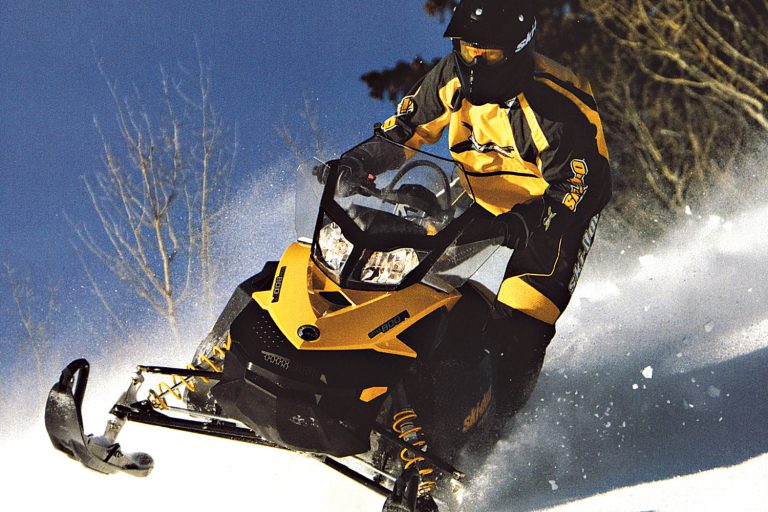
THE GOLDEN DECADE: WEIGHT REDUCTION

0

We can’t help but think the decade from 2000 to 2010 brought about the greatest changes in the snowmobile industry and was the most revolutionary time span in snowmobiling’s history. This series explores some of the most revolutionary advancements this sport has ever seen…

WEIGHT REDUCTION

The trend toward weight reduction had begun to a limited degree in the late 1990s and throughout the ’00s the OEMs were talking a good weight game but it was going slowly as far as big, bold leaps toward significant weight reduction were concerned.

One day in late 2008 a heavy package from Ski-Doo arrived by courier at Supertrax World Headquarters. Inside were barbell weights totalling 50-lbs. What the…?

A note was attached announcing that this was a demonstration of how much weight Ski-Doo had taken out of its newest snowmobile, the MX-Z XP.

When we finally got to touch an XP – and ride it – we were pretty amazed at how effective its boasted weight reduction was at improving the overall demeanor of the sled.

Ski-Doo had employed every weight reduction method imaginable in every aspect of the sled – drive system, suspension, bulkhead design – using lightweight materials, combining functions of components and eliminating overuse of fasteners and unnecessarily complex parts and pieces.

Ski-Doo shouted from the rooftops it was by far the lightest snowmobile ever and it worked immediately. Suddenly buyers of all brands were comparing their potential purchase to a Ski-Doo XP.

The bar was set and there was no returning. Going forward, every OEM was forced into dreaming new ways to make their products lighter. Naturally, when things are lighter, power-to-weight ratios get better and the fastest-sled wars heat up. The whole XP deal started a new way of thinking in the snowmobile industry!

First Look at The 2021 Yamaha Snowmobiles!

0

AJ’s got the inside scoop on all the new 2021 Yamaha sleds including the introduction of the SX Venom line and the return of the Mountain Max name putting Yamaha officially back in the 2-stroke game with products serving the mountain market. He also provides an overview of Yamaha’s new STRYKE single keel trail ski.

Subscribe to our YouTube Channel!

2021 YAMAHA SX VENOM

Surprise! The new Venom is pretty much a carbon copy of Arctic Cat’s BLAST introduced earlier this season!

Although that revelation won’t go down in snowmobile history as one of the most momentous new-model announcements ever, it is an important step for Yamaha.

Why? Because the Venom is a 2-stroke! This means there are several 2-stroke sleds on Yamaha’s 2021 model menu in more than one category.

Yamaha’s new Mountain Max sports a 794cc Semi-Direct Injected twin and the Transporter Utility sled also gets this engine replacing last year’s 600 Transporter (not available in 2021). Yamaha also added a Transporter Lite featuring this same 65 horse 2-stroke and a Venom Mountain as well.

This is big stuff from the company that pledged 18 years ago to go all 4-stroke. Yamaha stuck to its word for a long time but now has succumbed to the pressure from its own super-loyal customers to include some 2-strokes in its brochure. Good on them for responding, too!

This is good because it gives us media types something to talk about and inevitably compare to the competition.

We won’t compare the Venom to the BLAST because, well, it is the BLAST. However, if you’re a Yamaha customer, it really fills a gap in the showroom – both in claimed horsepower output and in price.

This 400cc 2-stroke single (yes, it only has one cylinder) makes about 65 ponies, is liquid cooled – not fan cooled – and is placed in a pretty sophisticated and slightly downsized Arctic Cat chassis. The sled is lighter, more nimble than expected and has gutsy throttle response down low.

At the recently completed media shoot held in Montana in late February, our team of test riders, to a man, agreed both the BLAST and the Venom were two of the “most fun” sleds at the event.

No, it wasn’t about power – not at all. It was about the ergonomics, agility, handling and personality. Our guys pretty much described the riding experience as … er, a blast!

Now this is where a potential problem may crop up. We all agreed this was a great snowmobile – maybe one of the best in the last few years – however, its pricing seems a bit steep for a 65-hp sled.

If you’re a Yamaha person and recall the now discontinued 500cc Phazer 4-stroke, the pricing of the Venom and that sled are very close. But the Phazer made 80-hp.

Even accounting for inflation, and the fact that one ride could convert a vegan over to pulled pork, this is a pricey sled in this category.

We’ll be watching to see how the faithful respond to the Venom. Without question, it’s a lot more sled than we expected. It might just be less than enough sled at the price they’re asking.

2021 YAMAHA MOUNTAIN MAX

The intro of more Yamaha branded, 2-stroke sleds built in Thief River Falls, Minnesota has deep and far-reaching implications. From our vantage point, we think all those options are good!

Less than five years ago the thought of Yamaha allowing its world-renowned brand to be attached to anything with a 2-stroke engine would have been, well, unbelievable.

Yet, here we are staring at two more 2-strokes festooned with bright and bold Yamaha insignias everywhere! This, my sno-mo-friends, is bonafide news!

THE IMPLICATIONS

My focus here isn’t so much on the two capable 800 SDI powered single-slide-rail suspended Mountain Max rides but more on what this means for Yamaha, its dealers and customers.

It’s no secret the deep-snow, vertical sled market is the hottest place to do biz right now. Once considered only a sales volume sliver with a weird bent, the mountain specific marketplace represents at least 25-percent of the total snowmobile industry and arguably as much as 30 percent for some OEMs.

Yamaha’s entry into this market with two exceptionally capable 154 and 165 inch variants means Yamaha dealers no longer have to show the door to so many potential customers.

GUTSY MOVE

We’re standing and applauding this move. We think there’s been a deliberate strategy in play for a couple years at the Big Y – all while targeting this move for MY 2021.

Two years ago Yamaha pulled out of the mountain market and retired 4-stroke models in this segment. That was the easy part. The trick was to clear the decks of too many unsold vertical 4-strokes before jumping into the 2-stroke mountain market.

Yamaha was bold when it swallowed the bitter pill and cleared non-currents by limiting production the past two years of almost all its models.

WORTH IT

By patiently clearing the decks of unsold units and in particular, unsold 4-stroke mountain rides, Yamaha has virtually guaranteed a successful launch of its new 2-stroke Mountain Max sleds. With showrooms cleared out, Yamaha dealers will order-up these new 2-stroke verts – and we think they should.

Yamaha didn’t just toe-test the 2-stroke Mountain Max with a scaled back intro of current, deep-snow tech. Instead, the company went to the top drawer and brought the latest, most innovative, single slide rail, side-hilling suspension to the party.

REAL DEAL

Let me put it this way: In virtually every comparable way, the new Mountain Max products are not just competitive but are exceptionally capable. As a result – these sleds are worthy of a serious look by any skill level mountain pilot.

There’s something very interesting about the single beam design from a marketing standpoint. According to our capable staff riders and other vert specialists we trust, the single beam design has the broadest range of appeal among all OEM competitive rides. Simply put, a single beam skid can take a neophyte to hero status faster and easier than competing designs.

POWER

While the competition has bigger displacement engines in MY 2021, the Mountain Max line up uses a capably potent, 800cc semi-direct injected (SDI) powerplant boasting oh-so-close-to-165 horsepower. So, you ask – is the engine 165-hp or not? We suspect “or not” but only by a very small margin.

THE BOTTOM LINE

Yamaha isn’t messing around with the intro of two new 2-stroke mountain specific rides. When the history of snowmobiling is written, model year 2021 will need a full chapter on Yamaha and its determination to shoulder into the full-on, lucrative and serious vertical marketplace!

POLARIS LOCK & RIDE FLEX

0

Polaris has redefined accessory integration so you can redefine your ride. Lock & Ride Flex enables multiple configurations to easily add storage and passenger seating to your snowmobile with one simple click.

Push to Secure. Lift to Release. No Turning. No Twisting.

SNOWTRAX TV 2020 – Episode 11 Sneak Peek

0

Coming up on the next episode of SNOWTRAX TV…

We tag along with Bruce McDonald and learn of the different ways he’s modified his existing snowmobile for accessing and working around his remote wilderness camp and then give him the opportunity to try out Ski-Doo’s Expedition Xtreme and evaluate its ultra versatility as a “doo” everything sled.

Then Luke gives us a close-up look at the 2021 Polaris snowmobile lineup featuring the all-new Matryx Platform including the VR1, Indy XC Launch Edition and Switchback Assault 146 along with the brand new 650 Patriot engine.

Then AJ sits down with Ski-Doo’s Product Manager Jimmy Cote to explore the new RAS X and rMotion X suspension available on the 2021 Renegade and MXZ snowmobiles. We also take a look at the new 600 EFI engine available throughout the budget conscious Sport lineup.

THE GOLDEN DECADE: SUSPENSION FOCUS

We can’t help but think the decade from 2000 to 2010 brought about the greatest changes in the snowmobile industry and was the most revolutionary time span in snowmobiling’s history. This series explores some of the most revolutionary advancements this sport has ever seen…

SUSPENSION FOCUS

The arrival of new suspension technology dramatically affected snowmobile ride quality in the Golden Decade.

Yamaha introduced its revised single shock skidframe in the 2006 Apex and it set the industry on its ear. In the first years of its use in the Apex and later in the Vector an Ohlins skid shock and a remote, tunnel mounted compression adjuster was used. The system was slick and the sled delivered a ride still considered a benchmark in the industry.

Ski-Doo continued to produce variants of their SC series skids in the Golden Decade and then intro’d what would re-define snowmobile suspension ride quality – the iconic rMotion. rMotion continues in full production to this day and there’s little doubt this masterfully engineered suspension is the standard by which all others are measured.

Polaris stuck with its Indy Edge-derived twin shock rear end throughout the Golden Decade until it shifted the paradigm with the first Pro-Ride external shock system later.

Arctic Cat dabbled with some suspension tweaks to a long-in-the-tooth skidframe that employed Torque Sensing Link technology and high quality Fox shocks.

The net effect was the company did not have a class leading rear end design until the innovative ProCross chassis with its Slide Action rear arm emerged in 2012.

THE GOLDEN DECADE: 4-STROKE SLEDS

We can’t help but think the decade from 2000 to 2010 brought about the greatest changes in the snowmobile industry and was the most revolutionary time span in snowmobiling’s history. This series explores some of the most revolutionary advancements this sport has ever seen…

DEVELOPMENT OF 4-STROKE SLEDS

When Arctic Cat introduced its latest innovation in 1999, the ZR-based Yellowstone Special, no one was sure it was a viable idea.

The sled was a conventional 2-up sled that looked, except for a deep gray paint job, exactly like a Panther. However, shoehorned under the hood was a naturally aspirated (EFI) 660cc 4-stroke 3-cylinder Japanese automobile engine.

The sled used conventional Arctic Cat CVT clutches and although it only produced about 60-horsepower, turned out to be a pleasant, comfortable conveyance.

Most noticeable was its lack of power, but in the pre-EPA days owners loved the fact it sipped gas and didn’t require 2-stroke oil. There was absolutely no exhaust smoke and the media claimed this engine was so durable “it would probably outlast the snowmobile chassis it was planted in by 20 years.”

Arctic Cat’s new 4-stroke started a landslide of experimentation by the competition to get onboard with super-clean 4-stroke power. Within a year every OEM had at least one 4-stroke on the drawing boards and soon after put them into production.

The 60-hp Polaris Frontier, Ski-Doo’s V-1000, and by 2003, Yamaha had made the bold proclamation it was going to build nothing but 4-stroke snowmobiles.

THE GOLDEN DECADE: RIDER FORWARD

We can’t help but think the decade from 2000 to 2010 brought about the greatest changes in the snowmobile industry and was the most revolutionary time span in snowmobiling’s history. This series explores some of the most revolutionary advancements this sport has ever seen…

RIDER FORWARD

No other event more vividly describes the Golden Decade than the advent of Ski-Doo’s REV snowmobile. First introduced in model year 2003, the earliest version of the REV looked incredibly different than anything ever seen on snow. Doubters went crazy proclaiming it would never be successful.

The REV positioned the rider far differently than before. The seating position was higher and moved forward about eight inches, the handlebars were situated more forward and the rider sat with his back upright and knees bent at 90-degrees – almost exactly like sitting on a motorcycle or ATV.

The intro of the REV was a bold, gutsy move captained by BRP CEO, Jose Boisjoli. The only known fact limiting Ski-Doo’s exposure in the final decision to go all-in with the REV was that the new layout really worked!

With the rider seated forward, handling and ride were noticeably better, the rider was much more comfortable and sitting-to-standing transitions were far easier than with a sit-down sled.

Saying it was one thing, but Ski-Doo had already proven how much better the REV’s layout was on snocross tracks for a full season before production models entered showrooms. In those few months of competition, the REV proved unbeatable and those who sampled it vowed to never go back to conventional rider positioning.

Within three years the whole industry moved ahead with rider-forward snowmobiles in nearly every class.