Home Blog Page 71

OFSC Safeguards Trail Data to Protect Trails, Groomer Operators, Riders & Landowners

0

Earlier this week, Bombardier Recreational Products (BRP) announced the release of a new navigation app for its 2021 Ski-Doo snowmobiles named BRP GO!, which has caused some confusion among Ontario snowmobilers. The Ontario Federation of Snowmobile Clubs (OFSC) would like to clarify this concern.

During a sales conference in February of 2020, BRP indicated that BRP GO! would contain OFSC trail data. At the time, BRP and the OFSC did not have an agreement to share trail data.

Since spring, the OFSC and BRP have engaged in ongoing dialogue regarding opportunities to incorporate OFSC snowmobile trail data in BRP’s new app.

The OFSC has had similar, but as yet unresolved discussions with Polaris over the authorized use of Ontario trail data on its Ride Command App.

Although discussions with BRP have been productive, the OFSC has not been able to come to an agreement that would enable BRP to move ahead this season. The principal issue is that technological barriers associated with BRP GO! fail to address safety and risk management concerns particular to Ontario snowmobile trails regarding the presentation of real-time trail data and information – a serious shortcoming identified by the OFSC for the protection of its trails, groomer operators, riders and landowners.

Of note, the OFSC did offer BRP and other OEMs the opportunity to display the OFSC Go Snowmobiling Ontario app on their devices, which was refused. As a result, the OFSC declined the opportunity to share our data to BRP for this season but committed to continue to work with BRP to find a solution for next year.

The OFSC understands that technology, snowmobilers and connectivity are progressing at a rapid pace and we encourage this development for the benefit of everyone involved in the industry. We remain hopeful that in time, BRP may be able to find a solution to their issues and ensure the consistent and timely delivery of authorized Ontario trail data and information.

It is essential for rider safety and land use securement that trail changes appear on these apps in real-time. This capability is especially important for the coming winter, given the high potential for Flex Trail changes in some public health regions.

For over 15 years, the OFSC Interactive Trail Guide (ITG) has been the sole source for snowmobile trail availability information in the province. Ontario snowmobilers are accustomed to viewing the ITG for accurate trail updates and safety information.

The OFSC is committed to ensuring that the distribution of ITG data through all websites or apps remains consistent.

The OFSC wants to reassure Ontario snowmobilers of our continuing intention to seek resolution to the data sharing issue, provided that all concerns are successfully addressed.

For the only accurate and complete trail data authorized for this season, the OFSC invites snowmobilers to download the Go Snowmobiling Ontario App Free or PRO version in Android or iOS, available December 1st.

The Ontario Federation of Snowmobile Clubs (OFSC) is a volunteer led, not for profit association that provides the voice for organized snowmobiling in Ontario. OFSC snowmobile trails managed by 200 community based, member clubs generate up to $3.3 billion in economic activity in the province each year.
OFSC.ON.CA

2-UP TOURING IS CHANGING

0

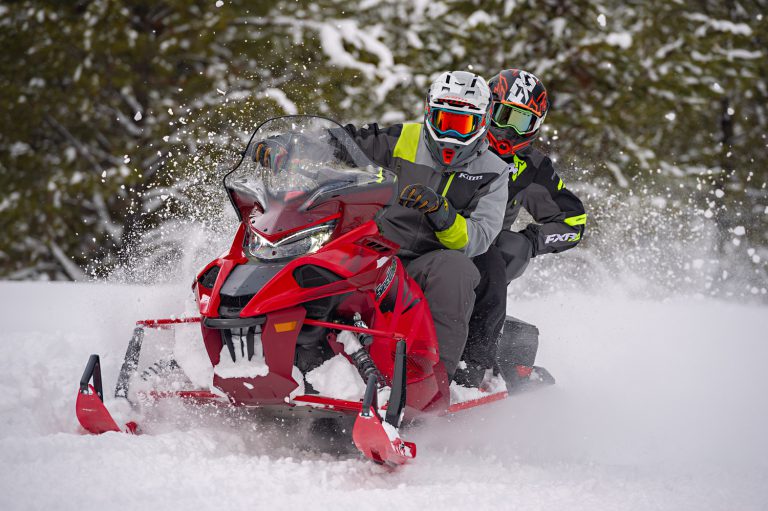
It was the early 1990s when snowmobiling decided it was time for an all-out, tailor-made dual passenger snowmobile to come to the market.

The earliest purpose-built 2-uppers were Arctic Cat’s Pantera and the Ski-Doo Grand Touring, based on the PRS “bull-nose” chassis. These sleds had unique features for that time – a backrest and a comfortable 2-passenger seat with handholds and footrests.

The idea was to give the long-distance passenger a nice place to sit where they had good vision without the fear of falling off the back should the driver suddenly forget someone else was “back there”.

As other OEMs rapidly got onboard, track dimensions became established at the 137 to 144-inch length and more amenities were added. 2-passenger-tuned suspensions, plusher, raised seats, more elaborate backrests and passenger hand warmers became the norm. Even storage space was upped and some models sported classy, well-engineered luggage equipment.

The last few years we’ve observed the manufacturers have started to put less focus on these 2-uppers and there are fewer pure touring models in the sales brochures than there have been in the past.

Yamaha and Ski-Doo lead the fray with the most 2-up selections, but Polaris and Cat (this year there are almost no 2-passenger touring-designated models from Cat) have vastly reduced the number of 2-place sleds they offer.

This trend is interesting because, in our observation, there are just as many riders as ever out there on the trails who are riding with spouses and children aboard.

Obviously, consumers are keeping these sleds longer and not visiting showrooms to shop for replacements enough to justify the OEMs investing in new technology. Perhaps the fact there’s been a big trend toward offering 4-strokes in these models may have caused consumers to get extra lifespan out of them so the necessity just isn’t there to buy a new one every couple of years. Dunno.

The result seems to be going in two directions.

First, there are a number of sleds being offered that have long tracks and excellent floatation that can be equipped with an accessory 2-up seat and other touring features. Although the sled is being marketed as a single passenger trail/boondocker, it can also be a good 2-upper.

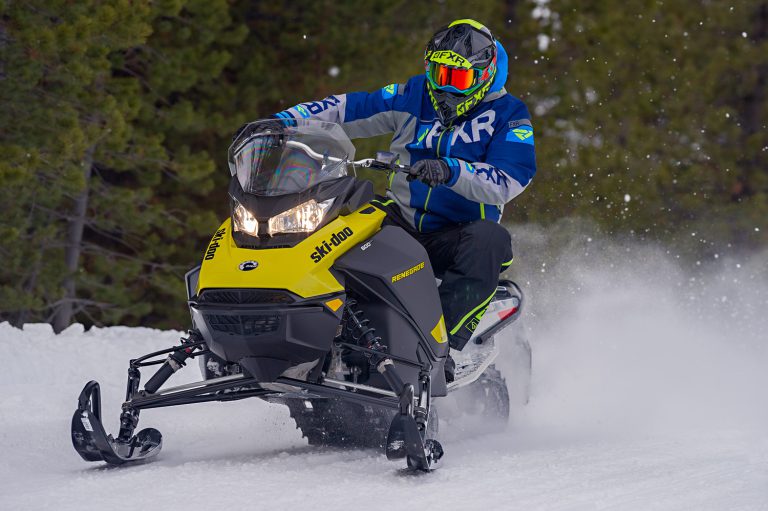
The Indy Adventure is a good example of this type of sled, as is Yamaha’s SideWinder S-TX with a 146-inch track. Likewise, the Ski-Doo Renegade Enduro can be converted into a 2-upper taking advantage of its 137-inch track and air suspension.

As good as these sleds are, however, they do not fit the old profile of maximum comfort on long distance tours for the second passenger.

This brings the second trend into focus.

Quickly evolving snowmobiles like the Polaris Titan and Ski-Doo’s newly revamped Expedition SE and LE series are providing ultimate comfort for two riders and yet have really good handling, ride and performance for long distance touring.

Yes, these sleds were once utility stump-pullers but both Polaris and Ski-Doo have evolved them to the level they fit the touring category like a new pair of doe-skin FXR gloves. They even look really good with aggressive styling and cool paint and graphic treatments to amp up their sex appeal!

With 20-inch-wide tracks and an abundance of onboard storage, they are truly tempting tourers and are quickly overcoming the stigma that would make someone point and them and call them workhorses.

They just aren’t. They are premium 2-up snowmobiles that easily exceed the narrower, shorter 2-uppers we rode a decade ago.

WILL THE 650 START A NEW CATEGORY?

0

After riding the new 650 Patriot twin, we have little doubt it will dominate what was once the 600 class. Simply stated: The competition will have to go bigger to catch up.

So, supposing that Arctic Cat and Ski-Doo come with new 650cc twins in a year or two. Where will that leave the trail class we’ve all come to love so deeply? We say this because the Patriot 650 has the kind of power that makes it pretty competitive with some three or four-year-old 800s. It’s that fast.

Once there are three 650’s available – maybe even four if Yamaha continues its trend toward offering 2-strokes in its line-up – there will be an incredibly large power gap between anything 650 and trail sleds that make tamer power in the 80 to 95-hp category – still a popular power range.

True, the existing 600 class sleds already spread the gap pretty well with engines cranking out about 125-hp on average. However, strong sales of Ski-Doo’s 95-hp 900 ACE 4-stroke tell us there’s a big demand for sleds producing 95 to 120-hp. Some riders will confess they just don’t need more power and actually prefer the output of sleds below 100.

We’re wondering if the future may see a return to the 500 class. Not long ago these were capable, price conscious sleds without a lot of the new electronics we see today – items that inevitably drive up the retail prices.

A good example is the 600cc Sport series Ski-Doo has come out with this year. These sleds don’t have all the bells and whistles – no exhaust valves, simple throttle body EFI and minimal computer tech – but you get a cheaper sled that looks like a more powerful one and generates an honest 80-hp.

Although we personally think maybe that power range might be a bit low, it opens the door for Ski-Doo’s competitors to give you a bit more – both in net horsepower and maybe even a few tech tricks like reeds and mechanical exhaust valves.

Maybe even an 80-hp 500 would do the trick. In days of yore that was pretty much what a carbureted Indy 500 or a Twin Spar 500 Cat brought to market. Frankly, we recall Yamaha and Ski-Doo had pretty potent 500s back then, too.

Resurrecting sleds in a lower performance range certainly isn’t a common trend in snowmobiling. Usually, it’s all about bigger and more powerful. However. We honestly believe there is plenty of room – and demand – for sleds producing power in the above ranges.

We also wonder if the new 650, since it’s so quick, may actually take away some of the 850’s customers. A 650 this powerful really changes all the rules. We’ll see what happens.

THREE SLEDS WE WONDER ABOUT

0

What are we wondering about? Well, the three sleds we’re looking at are pretty good as is and we’re trying to look down the telescope and figure out how they can be improved – and, if they can be – when?

The three we’re looking at are: The present Ski-Doo G4 850 series, the 9000-series turbo Cats and Yamaha’s SideWinders.

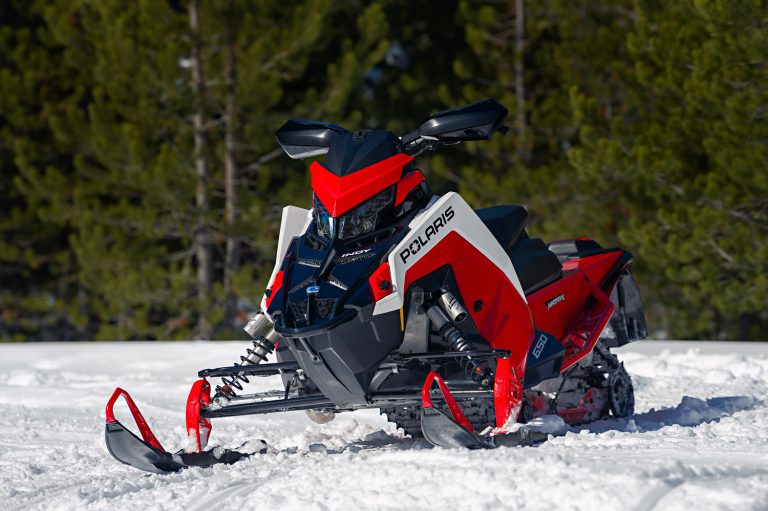
We didn’t list any Polaris models here because this year is the year of the all-new MATRYX. It’s pretty obvious Polaris will start to evolve all of its models off this most recent platform and although it will likely take five or six years to get to completion, the company will whittle down the number of platforms it currently is using to either one (MATRYX) or two (AXYS & MATRYX).

However, looking five or six years down the road with the others is a more complex appraisal.

We’ll start with the G4. There’s a lot of love for any Ski-doo built on this platform and the improvement over the former XS and XP chassis is pretty palpable.

This year Ski-Doo addressed some handling shortcomings by redesigning and widening the front end and modifying the rMotion skid to pretty much eradicate any doubts about Ski-Doo handling – at least on premium models.

We have to ask (it’s what you want us to do), however, if this is enough to carry the fascination with Ski-Doo for many more years? In a nutshell, where does Ski-Doo go from here?

Other than the front end mods, the G4 is pretty much the same sled as it was last year – and the year before that. It’s tough when your product is good enough that it’s a challenge to improve it!

We think a direction Ski-Doo could be examining is a complete restyle of the plastic on the G4 chassis. Non-Dooers are pretty critical of how it looks and although that’s a subjective opinion thing, a dramatic restyle would surely turn some heads.

The two turbos on our list are built in the same factory and, although the engineering teams are separate, there’s a lot of tech info shared and decided on between the two.

Yamaha is easier to critique. We think the best thing Yamaha could do to assure sales success would be to make the SideWinder and the 9000 more distinctly different.

This certainly seems to be what hardcore Yamaha enthusiasts are saying – loudly. Basically they’re calling for more Yamaha and less Cat. What shape that would take we’re not sure, but Yamaha has some very good technology gathering dust on shelves in Hamamatsu. Why not use it?

Cat has a bigger responsibility since it would appear to be defining the direction of two companies – Arctic Cat and Yamaha.

We think the biggest direction Cat could be going in is the development of a completely new platform. Once again, there’s nothing wrong with the ProCross chassis, it’s just been unchanged for a lot of years. Whether a new platform would carry over to Yamaha is a very good question.

In fact, it could be one way of making the two companies model line-ups more distinctive. Cats on the new platform, Yamaha on the old one. Who knows?

WINTER MIGHT TASTE A LITTLE DIFFERENT

0

There’s no lack of enthusiasm surrounding this snowmobile season. Sales of new sleds have been heroic and most dealers are sold to the bare walls.

Used sleds are in such high demand several dealers we know have waiting lists. For those on the waiting list, better get ready to spend inordinately high sums for a good, late model ride.

So it would seem there’s a ton of riders (and possibly many new riders) chomping at the bit to head out onto the trails and enjoy some freedom from the city and the constant COVID threat. That’s good and for the most part, in most jurisdictions, the trails will be opened and groomed in line with past year’s timing, depending on winter’s arrival, of course.

Here’s one thing that isn’t so easily understood or guaranteed as we stare down the beginning of the 20/21 season: Food. Maybe more specifically, “on-trail services”.

In a number of North American jurisdictions restaurants are only allowed to open on a reduced capacity basis or to provide take-out food service. Where we ride, this likely means bring your lunch. During a normal season, popular on trail pit stops are most often packed to the walls with hungry, cold and in-need-of-a-washroom sledders.

If what appears imminent materializes this winter there will be a run on the OEM’s factory luggage and backpacks. It’s also going to be important for snowmobile clubs to increase the number of comfort stations at trail heads.

So get ready to pack some power bars, a sandwich, some bottled water and a thermos of coffee in the event your lunch destination is lined up out the doors.

There might be an upside to this challenge. What about food trucks at trail heads and busy trail intersections? They could provide enough extra food service to get everyone topped-up with a burger and fries and warmed-up with a hot drink.

A thirty-below day might present some challenges but we’re snowmobilers and we are tough, right?

WHY IS THE NEW POLARIS 650 SO FAST?

0

We needed to do a little research on why this engine so wildly outperforms the rock solid 599cc Polaris engine the company has used for the last decade or more. One thing to keep in mind is this new engine is all-new and Polaris didn’t just bore out the old 600 to make it a 650.

Frankly, the 650 is a clean sheet of paper. Polaris started over with a whole new design (for a 650 twin) and it shows up with the dimensions of the engine. The still-in-service 600 has a 77.25mm bore and a very short 64-mm stroke. The 600 is very oversquare by even 2-stroke standards and loves to rev but compared to the new 650, its torque numbers seem a bit anemic.

Polaris actually reduced the bore on the 650 over 3-mm to 74.8-mm (compared to the 600) but increased the stroke 10-mm to 74mm. Thus, the 650 with its longer stroke generates the level of torque you’d usually experience with a bigger displacement engine.

This further backs the Polaris claim this engine is “built on 850 architecture”. Actually, the bore/stroke dimensions on the Patriot 850 indicate an 85-mm bore by a 74-mm stroke for a total of 840ccs. The rest of the details of the 650 closely mirror the 850.

You’ll note the stroke numbers for the 650 are exactly the same on the 850… 74mm. This is no accident and it’s one reason the free-revving 650 feels much bigger than a 650. It’s square dimensions, with a fairly long stroke and almost the same bore diameter help it deliver juice in the 135-hp range.

This “long stroke” twin makes impressive torque numbers and you don’t have to ride it far to feel that torquey power delivery in the seat of your pants.

Unquestionably, Polaris has had to revise clutching and gearing to make the most of this kind of grunt in a mere “mid-size” engine. However, it really works and one ride will sell you on the difference.

A snowmobile engineer, now retired, once told us about the mystery of some 2-stroke engines. He told us “some engines simply outperform their displacement. You can work and fret over a new engine and it just won’t make the kind of power it promised from its engine size. However, another one will surprise you completely. It will outperform every competitor and if you reduce it by 50ccs or up the displacement another 50ccs, it becomes a complete dud in its category.”

Thus, this new Polaris engine is already starting to prove it’s surprising buyers utterly and completely!

LOGIC BEHIND A SINGLE-CYLINDER SLED

0

We’ve heard so many varying opinions on Arctic Cat’s decision to deliver a single cylinder BLAST this year, our collective heads are spinning!

First, let’s clarify something important: The BLAST couldn’t possibly be more aptly named. Simply stated, it’s a genuine blast to ride and our platoon of test riders last January at SNOWSHOOT in Montana, to a man, came away impressed with it. Actually more impressed than they were with some very high-end, high tech sleds they rode there.

Why? Our riders told us it was incredibly maneuverable and felt as light as a feather no matter whether it was being ridden in powder or on trails. Although a few felt it would be nicer if it was, say, 70 to 80-horsepower instead of its claimed 65, the majority felt it’s power range was perfect – especially considering the type of rider it’s targeted at.

This liquid cooled, counterbalanced, 397cc EFI 2-stroke single has machine gun throttle response and almost no vibes considering the size of its piston. Very important to its torque delivery is an electronic 3-stage exhaust valve. It also uses an electronic exhaust pipe sensor and detonation sensor to adjust timing on the fly to keep emissions low.

Power is driven through a CVTech PowerBloc primary and a matching Invance secondary – quickly becoming known as the best clutch combo for sleds in this horsepower range. What you may not know is this primary clutch design requires virtually no maintenance and is so cheap to purchase in the aftermarket, you can pretty well trash it and install a new one in five or six years – probably longer.

The BLAST also comes with electric start and reverse on most models.

We expected this engine to be hugely undersquare (piston stroke longer than bore diameter) but Cat has obviously relied on its 3-stage exhaust valve setup to keep the torque numbers high. As it is, the engine has an oversquare 85mm bore and a 70mm stroke. These dimensions are important because they mean this is a single that likes to – and can be revved.

Okay, enough about the BLAST’s tech details. What the heck made this relatively small displacement single cylinder sled so appealing to our hardcore, power obsessed riding group?

Why the interest now? After all, there have been a few (very few) single-lungers in the biz over, say, the last 20 years.

You need to go back a few decades further and realize that there was a time when single-cylinder sleds were the most common configuration in the snowmobile business. Many snowmobilers cut their teeth on this type of sled and those initial thrills have never left them.

What makes the BLAST so appealing is the fact it’s in a really good, up-to-date, full featured chassis. You can immediately tell from its looks this is a trimmed down ProCross chassis with weight taken out of the track, tunnel and skid-frame (it uses an uncoupled skid and a one inch-deep, 14-wide track and there’s no swaybar up front).

The net effect is agility and nimbleness from the driver’s seat and an engine that feels much larger than it is when you’re playing in deep snow or running trails.

If going back in time to another era is what it takes, the BLAST is a winner in every area – and especially in today’s market.

600 EFI, 600 ETEC or 900 ACE?

Dear Motorhead –

I am planning to buy a new Renegade and I have been watching your videos on youtube – thank you.

I am trying to determine which engine is best for me – 600 EFI or the 900 ACE.

I mostly ride in trails and considering the power to weight ratio, I would think the performance (power) would be the same.

Since you have ridden both, could you please comment?

Thank you,

Jim

Thanks for your inquiry!

I am going to assume you are comparing the 600 ETEC Renegade and the ACE 900 Renegade. Your reference to “EFI 600” would indicate the new “Sport Series” Renegade but there is no Sport Series ACE 900. That would be like comparing apples to oranges.

Comparing the non-turbo ACE 900 and its 95 HP to the 600R E-TECS performance is not reasonable. While the 95 HP ACE is a torquey and fuel efficient engine it is no match for the 600R E-TECs 125 HP.

The 600 E-TEC is also considerably lighter than the 4 stroke ACE 900. Throw in this reality – the 600R E-TEC is among the most fuel efficient snowmobile engines in the market.

The 900 ACE engine would be better on fuel at slower speeds and the 600R ETEC would be better at mid to WOT throttle settings.

In case you are comparing the new 600 EFI Sport Renegade with a 900 ACE Renegade the Sport EFI Model with its lightweight 2-stroke and 85 HP power output would likely equal or better the 900 ACE for performance but the EFI 600 would not be as fuel efficient as the 900 ACE or – for that matter – the 600R E-TEC.

Remember this adage – it has always been true and remains true to this day – light is right!

Motorhead Mark

EXPANDING THE SNOWMOBILE MARKET

0

If there was ever a year to expand the snowmobile market, this is the one.

Frankly, after the numbers are tallied this year, it’s strongly suspected the snowmobile marketplace will have experienced some pretty impressive growth.

Many riders who haven’t been using their sleds or who have gotten out of the sport are either dragging their old blisters out of barns or shopping the internet to find something – anything – they can ride this winter.

The reason? They’ve been cooped up for months, and all plans for a cruise, southern holiday or a month at the spa have disintegrated. There’s been little money spent or set aside in advance for airline tickets, hotels, resorts or for condo rentals in the southern or island sunshine this winter.

Yes, there is unemployment and there are social issues that may restrict universal spending, but, fortunately, the snowmobile demographic tends to be quite mature, wealthy and secure. So where is the money going this winter? You guessed it; it’s going onto the snow.

We’re not just making a stab in the dark here. We’ve been observing a marked increase in the sale of all recreation vehicles since last April. Used stuff is really in limited supply and most dealers are sold out of new equipment. ATVs, Side-x-Sides, PWCs, boats, motorcycles – you name it. Supply is short and demand is high!

This year brings a gold-plated opportunity for the OEMs to get new snowmobiles into the hands of hungry consumers. Certainly, what 2021s are built now is pretty much all they can supply. However, next year is a different matter. We think the spillover demand for new equipment for the 2022 model year will be staggering. Why?

Simply, there’s no guarantee society will be 100-percent free from the pandemic by next season. Although we’re hoping (praying) it will have ended, it’s going to take some time for consumers to get enough confidence to go back to the sunny-holiday mentality.

Even if it ended by the beginning of snow season this year, we think a multitude are not going to take any chances travelling south and, besides, getting back into it, they’ll likely re-discover snowmobiling is an incredible blast!

What should the OEM’s response be to this development? First, to their credit, the response has already begun. We believe the demand for value priced sleds will go off the Richter scale next season. Ski-Doo has already introduced a down-priced line-up of Sport rated 600 EFI sleds that will be in increased demand next year.

Sleds like Arctic Cat’s Blast, Yamaha’s Venom and the Polaris EVO are more on-target than ever. All four OEM’s should consider adding more of this kind of value priced equipment to their brochures.

Summing it up, it’s almost like a reverse engineering of what has made snowmobiling work the past couple of decades. For years it’s always been about more power, more displacement, faster and faster.

This current situation may open the door to a new way of perceiving snowmobiling. Both new and rejuvenated enthusiasts may demand tamer sleds that are warm, comfortable and priced low.

Yes, inevitably performance will eventually enter into the equation. Right now though, it should be all about meeting the needs of a newly reborn marketplace!

EVER INCREASING LUG DEPTHS

0

Ten years ago trail sleds were pretty much locked into 1.25-inch lug depth tracks on any sled from 600ccs up. Today, with the availability of 160-plus horsepower 2-strokes and 180-plus horse 4-strokes, lug depth numbers are increasing into the 1.5 to 1.6 inch deep tracks.

It’s not a complete lock using these depths, as many manufacturers are still offering base equipped sleds with 1.25s or less and bidding you to early-order a new sled with the deeper numbers as an option or at least a swap-out on credit for the stock 1.25 with an upcharge for the deeper one.

After being exposed to these deeper tracks for a few years, we can really see the value in going deeper. The benefit goes beyond mere acceleration and traction and actually extends to far better braking. Yes, there’s actually a safety upside to having a deeper track – and it’s immediately noticeable.

On trail sleds or even on Crossovers, it’s a fact there is a slight penalty in top speed for going to a deeper lug depth. A 1.6-inch track weighs more and uses more power to rotate versus, say, the one-inch lugged track on Yamaha’s SRX.

Why? In order to support the extra lug depth 1.6s have more laminations and tend to resist rotation more than a 1.0 or a 1.25. Another issue is “packing”. These deeper lug tracks actually pack the close-off panel at the front of the tunnel with air which generates measurable parasitic drag and consumes HP.

Since the 1.0-deep SRX is built for the sole purpose of impressing your riding buds out on the lake with the sled wound out to its maximum, yes, there is the deficit of not being able to quite get the extra two or three mph your friend’s one-inch deep SRX is getting.

However, on the trails, you’ll likely run away from the stocker unless it’s fully studded. Once again, they’ll be adding considerable mass with steel traction equipment, so it may be a draw.

The decision high performance trail riders are forced to make is this: Do I want maximum top speed on packed powder lakes – or do I want maximum acceleration due to stellar traction on the same surface?

If you’re riding on ice – forget about it! Even a 1.6 won’t stick that well; the only solution is to go with a full set of studs.

With Crossovers, it’s a different situation. Most are offered with minimum 1.35 to 1.6-inch tracks and the whole idea is to get the best trail use while getting the sled to work adequately in powder. Top speed isn’t a priority.

If you’re thinking about upgrading your Crossover to a 1.75 or even a 2.0 track, you need to give it some serious consideration. Although you’ll gain some sweet bite in powder and be able to climb more like a vert sled, that extra track depth will tear up the trails you’re riding and not put you in a love situation with your grooming club.

Yes, you will gain a lot of extra deep-snow traction and bite from a 1.75 or up track, but you will get more slider wear on minimum snow-cover surfaces like lakes and hard-packed trails.

Once again, your decision on what track depth to invest in is up to you. It all depends on the type of riding you do and what kinds of surfaces you ride on most.