Home Blog Page 63

600 EFI, 600 ETEC or 900 ACE?

Dear Motorhead –

I am planning to buy a new Renegade and I have been watching your videos on youtube – thank you.

I am trying to determine which engine is best for me – 600 EFI or the 900 ACE.

I mostly ride in trails and considering the power to weight ratio, I would think the performance (power) would be the same.

Since you have ridden both, could you please comment?

Thank you,

Jim

Thanks for your inquiry!

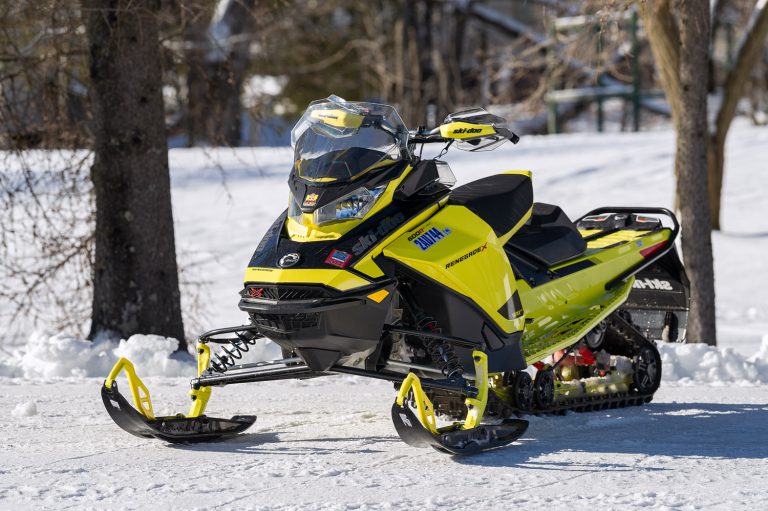
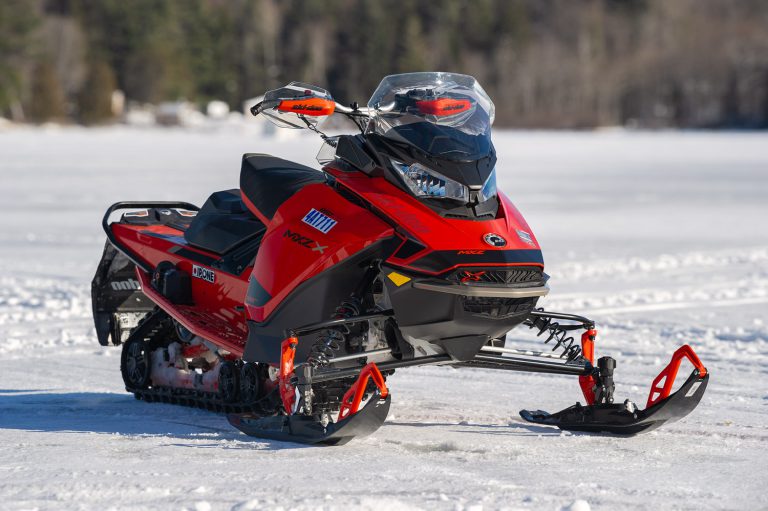
I am going to assume you are comparing the 600 ETEC Renegade and the ACE 900 Renegade. Your reference to “EFI 600” would indicate the new “Sport Series” Renegade but there is no Sport Series ACE 900. That would be like comparing apples to oranges.

Comparing the non-turbo ACE 900 and its 95 HP to the 600R E-TECS performance is not reasonable. While the 95 HP ACE is a torquey and fuel efficient engine it is no match for the 600R E-TECs 125 HP.

The 600 E-TEC is also considerably lighter than the 4 stroke ACE 900. Throw in this reality – the 600R E-TEC is among the most fuel efficient snowmobile engines in the market.

The 900 ACE engine would be better on fuel at slower speeds and the 600R ETEC would be better at mid to WOT throttle settings.

In case you are comparing the new 600 EFI Sport Renegade with a 900 ACE Renegade the Sport EFI Model with its lightweight 2-stroke and 85 HP power output would likely equal or better the 900 ACE for performance but the EFI 600 would not be as fuel efficient as the 900 ACE or – for that matter – the 600R E-TEC.

Remember this adage – it has always been true and remains true to this day – light is right!

Motorhead Mark

EXPANDING THE SNOWMOBILE MARKET

0

If there was ever a year to expand the snowmobile market, this is the one.

Frankly, after the numbers are tallied this year, it’s strongly suspected the snowmobile marketplace will have experienced some pretty impressive growth.

Many riders who haven’t been using their sleds or who have gotten out of the sport are either dragging their old blisters out of barns or shopping the internet to find something – anything – they can ride this winter.

The reason? They’ve been cooped up for months, and all plans for a cruise, southern holiday or a month at the spa have disintegrated. There’s been little money spent or set aside in advance for airline tickets, hotels, resorts or for condo rentals in the southern or island sunshine this winter.

Yes, there is unemployment and there are social issues that may restrict universal spending, but, fortunately, the snowmobile demographic tends to be quite mature, wealthy and secure. So where is the money going this winter? You guessed it; it’s going onto the snow.

We’re not just making a stab in the dark here. We’ve been observing a marked increase in the sale of all recreation vehicles since last April. Used stuff is really in limited supply and most dealers are sold out of new equipment. ATVs, Side-x-Sides, PWCs, boats, motorcycles – you name it. Supply is short and demand is high!

This year brings a gold-plated opportunity for the OEMs to get new snowmobiles into the hands of hungry consumers. Certainly, what 2021s are built now is pretty much all they can supply. However, next year is a different matter. We think the spillover demand for new equipment for the 2022 model year will be staggering. Why?

Simply, there’s no guarantee society will be 100-percent free from the pandemic by next season. Although we’re hoping (praying) it will have ended, it’s going to take some time for consumers to get enough confidence to go back to the sunny-holiday mentality.

Even if it ended by the beginning of snow season this year, we think a multitude are not going to take any chances travelling south and, besides, getting back into it, they’ll likely re-discover snowmobiling is an incredible blast!

What should the OEM’s response be to this development? First, to their credit, the response has already begun. We believe the demand for value priced sleds will go off the Richter scale next season. Ski-Doo has already introduced a down-priced line-up of Sport rated 600 EFI sleds that will be in increased demand next year.

Sleds like Arctic Cat’s Blast, Yamaha’s Venom and the Polaris EVO are more on-target than ever. All four OEM’s should consider adding more of this kind of value priced equipment to their brochures.

Summing it up, it’s almost like a reverse engineering of what has made snowmobiling work the past couple of decades. For years it’s always been about more power, more displacement, faster and faster.

This current situation may open the door to a new way of perceiving snowmobiling. Both new and rejuvenated enthusiasts may demand tamer sleds that are warm, comfortable and priced low.

Yes, inevitably performance will eventually enter into the equation. Right now though, it should be all about meeting the needs of a newly reborn marketplace!

EVER INCREASING LUG DEPTHS

0

Ten years ago trail sleds were pretty much locked into 1.25-inch lug depth tracks on any sled from 600ccs up. Today, with the availability of 160-plus horsepower 2-strokes and 180-plus horse 4-strokes, lug depth numbers are increasing into the 1.5 to 1.6 inch deep tracks.

It’s not a complete lock using these depths, as many manufacturers are still offering base equipped sleds with 1.25s or less and bidding you to early-order a new sled with the deeper numbers as an option or at least a swap-out on credit for the stock 1.25 with an upcharge for the deeper one.

After being exposed to these deeper tracks for a few years, we can really see the value in going deeper. The benefit goes beyond mere acceleration and traction and actually extends to far better braking. Yes, there’s actually a safety upside to having a deeper track – and it’s immediately noticeable.

On trail sleds or even on Crossovers, it’s a fact there is a slight penalty in top speed for going to a deeper lug depth. A 1.6-inch track weighs more and uses more power to rotate versus, say, the one-inch lugged track on Yamaha’s SRX.

Why? In order to support the extra lug depth 1.6s have more laminations and tend to resist rotation more than a 1.0 or a 1.25. Another issue is “packing”. These deeper lug tracks actually pack the close-off panel at the front of the tunnel with air which generates measurable parasitic drag and consumes HP.

Since the 1.0-deep SRX is built for the sole purpose of impressing your riding buds out on the lake with the sled wound out to its maximum, yes, there is the deficit of not being able to quite get the extra two or three mph your friend’s one-inch deep SRX is getting.

However, on the trails, you’ll likely run away from the stocker unless it’s fully studded. Once again, they’ll be adding considerable mass with steel traction equipment, so it may be a draw.

The decision high performance trail riders are forced to make is this: Do I want maximum top speed on packed powder lakes – or do I want maximum acceleration due to stellar traction on the same surface?

If you’re riding on ice – forget about it! Even a 1.6 won’t stick that well; the only solution is to go with a full set of studs.

With Crossovers, it’s a different situation. Most are offered with minimum 1.35 to 1.6-inch tracks and the whole idea is to get the best trail use while getting the sled to work adequately in powder. Top speed isn’t a priority.

If you’re thinking about upgrading your Crossover to a 1.75 or even a 2.0 track, you need to give it some serious consideration. Although you’ll gain some sweet bite in powder and be able to climb more like a vert sled, that extra track depth will tear up the trails you’re riding and not put you in a love situation with your grooming club.

Yes, you will gain a lot of extra deep-snow traction and bite from a 1.75 or up track, but you will get more slider wear on minimum snow-cover surfaces like lakes and hard-packed trails.

Once again, your decision on what track depth to invest in is up to you. It all depends on the type of riding you do and what kinds of surfaces you ride on most.

WAS THE MATRYX NECESSARY?

0

I guess the question we’re asking here is this: Did Polaris really need to come up with a replacement for the AXYS?

Frankly, the AXYS, powered by the company’s 850 twin, was and still is a huge force to be reckoned with. When it comes to mountain and powder-targeted sleds, this combo is pretty much unbeatable – even in 2020 – when comparing weight, power and handling to any of the competition.

However, although it won’t be this year, certainly at some time in the future Polaris’ vertical sleds will undoubtedly become Matryx-based snowmobiles.

Looking at it on the surface and trying to draw conclusions on why the Matryx was introduced in what seemed to be the middle of the AXYS platform’s hayday, we’ve had to give the answer a lot of consideration.

Frankly, we’re pretty sure it didn’t have anything to do with handling or riding flaws with the AXYS. It’s pretty much at the top of the industry in those categories, especially when it comes to handling. It may be a skinny second to Ski-Doo’s rMotion when it comes to ride quality – but it’s certainly not far off the mark in head-to-head comparisons. The shortage, if any at all is likely due to calibration, not some inherent shortfall with the AXYS chassis.

When you look at weight, it raises more eyebrows. The AXYS is still the industry leader for lightness. Maybe the Matryx is a tad lighter (not confirmed yet) but the AXYS RMK and Assault 144 have led their categories in lightness for a few years decisively taking that advantage away from Ski-Doo.

Here’s what we’re thinking. Polaris has been on the hunt to increase market share beyond Ski-Doo’s stranglehold since before SD’s G4 chassis was introduced. Looking into the crystal ball, we believe Polaris felt by the end of the G4’s run, any new Ski-Doo (G5?) could possess the lightness and handling upgrades necessary to possibly equal Polaris.

Keep in mind, it’s always easier to raise the engineering ante when the model of what you want to exceed is clearly before your eyes. This was the case with Ski-Doo. It could see where it needed to go and would potentially be able to come with a Polaris-beater any time before the AXYS was finished its run.

Same goes for Arctic Cat. Cat’s mountain and deep snow sled program has been very aggressive, and Polaris knew it wouldn’t be long before there was a new ProCross II chassis coming out of Thief River Falls. Undoubtedly, it would be as light as the AXYS, would handle as good or even better and ride with the same level of comfort as the G4 or the AXYS.

Sure, the difference wouldn’t be blinding and the AXYS would still be competent, but how many riders might walk away from Polaris showrooms and buy something just as good – maybe even better – from Ski-Doo or Cat?

It’s all about planning and taking aim at the competition. Not necessarily where the competition is right now – but rather – where it’s going to be a few years down the road! Thus the Matryx!

ABB and Taiga Partnership

0

Global e-mobility leader ABB has partnered with Taiga Motors, maker of electric powersports vehicles, to expand sustainability to off-road vehicles across North America and Europe. ABB will offer its safe, reliable and compact Terra AC wallbox and Terra DC wallbox charging stations.

The global powersports market delivered record-breaking sales this year and is expected to continue growing rapidly with a compound annual growth rate at over 6% between 2020 and 2026 according to Global Market Insights. But this growth may take an environmental toll because snowmobiles are one of the few vehicles that do not require a catalytic converter, a device that reduces the amount of harmful pollutants from a vehicle.

The absence of this converter leads to disproportionate emission levels to the point where electrifying one snowmobile can have the same environmental impact as electrifying more than forty cars.

Canada-based Taiga Motors is heralding a new era of electrification for off-road vehicles with the world’s first production electric snowmobiles and personal watercrafts. By eliminating noise pollution and reducing the vehicles’ environmental impact, this partnership leads the way to a sustainable future at a time when countries have increased regulations at national parks, lakes and trails worldwide.

ABB will enable Taiga Motors to bring reliable and effective charging solutions to its customers. For recreational vehicles, the two key factors are ensuring power and performance, which are both fulfilled by Taiga Motors’ electric offerings that feature more torque and faster acceleration.

ABB lays the foundations for a future of safe, smart, and sustainable mobility, accessible by everyone, everywhere by providing charging solutions that meet the needs of the next generation of electric vehicles. Its e-mobility solutions form an important part of ABB Electrifications ‘Mission to Zero’ initiative, which supports carbon reduction with solutions which use less and cleaner energy.

This partnership will encourage adoption of EVs across North America and Europe by making it easier for recreational riders and fleet operators to charge their off-road vehicles at marinas, ski resorts, popular trails, and even remote riding areas such as the mountainous backcountry.

ABB’s charging stations, designed to work in harsh weather conditions, are a perfect fit as these vehicles will be operated in some of the most extreme environments.

Since entering the EV charging space nearly a decade ago, ABB has driven sustainable transportation forward having sold more than 17,000 DC fast chargers in over 80 countries across the world. With its entry into the electric off-road vehicles charging, ABB remains committed to driving innovation in the sector.

“We are excited to play an integral role in making the rollout of the world’s first off-road vehicles a success while reinforcing our commitment to sustainability,” said Frank Muehlon, Head of ABB’s global business for E-mobility Infrastructure Solutions.

“We envision a future where riders can explore the great outdoors without transporting fuel. Renewable powered batteries can be placed in remote areas to provide off-grid charging, so adventurers can simply plug in and go further than ever before,” said Samuel Bruneau, Chief Executive Officer and Co-Founder at Taiga Motors.

Taiga Motors will begin delivery of its electric snowmobiles for fleets this winter season and will increase next fall. Deliveries of its Orca electric personal watercrafts will begin next year during spring. This partnership will support the transition to more sustainable outdoor adventures by providing a turnkey solution to customers.

ABB (ABBN: SIX Swiss Ex) is a leading global technology company that energizes the transformation of society and industry to achieve a more productive, sustainable future. By connecting software to its electrification, robotics, automation and motion portfolio, ABB pushes the boundaries of technology to drive performance to new levels. With a history of excellence stretching back more than 130 years, ABB’s success is driven by about 110,000 talented employees in over 100 countries.

Taiga Motors was founded in 2015 by a group of engineers that believed there should not exist a compromise between exhilarating powersport pursuits and sacrificing the environment. Taking on one of the most challenging vehicle segments to electrify, Taiga has pushed the frontiers of electric technology to achieve the extreme power, weight and thermal specifications required to outperform the high performance but polluting 2-stroke engine. The result is the world’s first electric snowmobile and watercraft designed from the ground up that is faster, more reliable, more efficient & better connected to the great outdoors.

taigamotors.ca

Ski-Doo EFI Technology

Dear Motorhead –

Correct me if I am wrong, but “Ski Doo” never made an EFI injection system on a 2-stroke. Old technology. No surprise there.

Troy McDonald

Troy!

Thanks for your comment. It concerns me when I realize I’ve been around long enough to remember not just landmark sleds of the past but obscure ones as well.

To answer your inquiry Ski-Doo (with Rotax) did develop and produce a sophisticated (for its time) EFI system which was fitted on the Rotax Rotary Valve 580cc twin cylinder engine and stuffed into a PRS chassis variant called the “Formula Plus EFI” or more specifically the “Plus EFI”.

The sled or more appropriately, the EFI system, was a one hit wonder living as a very limited production (I believe one per dealer – late release) powerplant. It disappeared faster than it arrived.

I may stand to be corrected here but I’m pretty sure the EFI system was developed in cooperation with Mikuni. This was a departure from the JECS systems both Polaris and Arctic Cat used at this time. Oh, what time are we talking about? I believe the “Plus EFI” was officially a 1992 model.

We had a Press Unit here at Supertrax and found it to be a nice improvement over carbs – except for one problem – the system was riddled with glitches which further undermined Ski-Doo’s reliability reputation they were working intently at improving in the early 90’s.

Everybody who rode the Plus EFI had at least one return trip on the rope. Ski-Doo never fiddled with EFI again until the arrival of the Semi-Direct Injection SDI 600 and 800 Rotax Series III engines in the early 00’s.

There’s more to the arrival of EFI on snowmobiles that’s interesting. I think I’ll write a column soon on how costly the patent infringement settlement was between Ron Chastain – owner of Injection Research Services (IRS) and Polaris. It is an interesting 30 year old tale.

Motorhead Mark

HOW LONG SHOULD A 2-STROKE LAST?

0

Thought I might try and answer, from personal experience and observation, a burning question that appears to be weighing heavily on the minds of our loyal followers. The question? How long should a 2-stroke snowmobile last?

Before I delve into this complex question and gift you with one of my highly-informed diatribes, I need to make one caveat clear. The word “last” is a little ominous when discussing anything related to snowmobiles. For our purposes I will suggest “last” really means: “before significant jing needs to be spent”.

If we’re talking the two most popular segments in the sno-mo-2-stroke market, the 600 and 800 class, we’ll jump into the 600 class first. A current garden variety 600 twin engine in the popular trail/sport category can deliver up to 12,000 miles (19,000 kms) of reasonable use.

Reasonable use includes using good quality injector oil, regular servicing of the exhaust valves and annual clutch maintenance. Clutch maintenance, although not specifically engine maintenance, can affect the performance and longevity of a 2-stroke mill.

Are there exceptions to this mileage threshold? For sure! In fact, I’ve seen lots of 600 2-strokes with more miles than I’ve posited. For the record, I’ve seen less.

Do 800’s live longer or shorter than 600’s? Here are some issues: There have been some 800 class engines that live considerably longer than others. Take Arctic Cat’s 800 EFI Suzuki, laydown, backwards twin from a few years back. This engine is virtually indestructible – with few exceptions. Suzuki has a stellar rep for building long lasting, durable engines – both 2 and 4-stroke. If you can stand the smoking these anvils are known for, you can get huge miles out of one. How many miles? Maybe 15,000 (24,000 km) or more.

At the other end of the spectrum is Ski-Doo’s Series III 800 2-stroke used through the 2016 model year. These engines were notorious for kicking cranks out when the PTO (left side) bearings’ sealed Isoflex lubrication dried out or leaked out.

I’ve commented on these engines usable life spans many times in Supertrax Magazine. When one of these motors gets to 6,000 miles or 10,000 klicks you must re-lubricate or replace the PTO side crank bearings. To do this in a meaningful way most often requires major engine disassembly. If you don’t do this necessary work, you’re playing a game of sno-mo crankshaft roulette.

Do snowmobile 2-strokes need to have rings and pistons replaced every 10,000 miles? Not necessarily. A thorough look-see at the motor through the exhaust port and a standard compression test not to mention your seat-of-pants evaluation of power, acceleration and piston slap (rattle) will expose a wealth of information.

Keep in mind that the mileage thresholds I’ve mentioned here are also good for evaluating chassis wear. Any sled with more than 10,000 miles on the odometer should have the drive axle, jackshaft and chaincase bearings examined carefully. Replacing them at the 16,000 klick mark (IMO) is good preventative maintenance.

While performing this kind of chassis service at these mileage levels, take a look at the skidframe tires and bearings. Tires are prone to blow out from bearing failure once you pass the 10K mileage level. Trust me – it’ll almost always happen on a WOT run down Kevlar Lake.

No doubt I’ll receive lots of disagreeing hate mail from this brief and highly generalized article. Fine. However, there really is no magic number for how long a 2-stroke will last. What is for sure is this: You will, without any doubt, enjoy longer, trouble-free service from your 2-stroke if you look after it.

SKI-DOO’S G4 RENEGADE GOES DOUBLE XX

0

***ADVERTORIAL***

There’s no doubt Ski-Doo loves acronyms and, in particular, acronyms using the letter X. Let’s look at the latest variant of the now well-known and respected G4 platform.

The newness is not just sizzle but bonafide triple A steak. Let’s deal with the Renegade first. Take your Renegade X and X-RS models and mix in new technology called RAS-X IFS, rMotion X skid and TS-X adjustable skis.

Visit skidoo.com for more.

In a very tangible way, these new elements alter what we’ve come to expect from the G4 Renegade X and X-RS platforms. For MY 2021 these improvements are only available on X and X-RS models.

The new, wider RAS-X Renegade front end alters the roll center of the G4 chassis and in doing so lowers the center of gravity of the sled making it feel more planted when pushed to the center of a turn. The result is vastly improved initial turn-in and stronger bite up to and beyond the apex.

The new version of rMotion X takes the cornering forces the chassis is processing and manages them more effectively with laser-level posture as power is re-applied on corner exit.

Visit skidoo.com for more.

The completely redesigned TS-X tuneable skis provide dramatically improved bite on varying snow surfaces without constant fiddling to compensate for minor variances in grip. This newly minted ski is now the perfect match for the G4 chassis with the aforementioned “X” improvements.

We were able to dial-in carbide depth easily and experience a much wider range of adjustability with each subsequent click of the TS-X threaded adjusters.

Without doubt Ski-Doo’s rMotion has been the benchmark for snowmobile suspension response. You’ll be happy to hear the new rMotion X swallows trail junk with the same appetite it’s had the past ten years.

Visit skidoo.com for more.

If you wish to dial-in more weight transfer, the Renegade’s all-new front torque arm provides a simple-to-tweak, eccentric lower mounting fixture.

Maybe the most profound difference in the new “X” G4 package is front end handling and bump absorption. We found the RAS-X IFS to be exceptionally linear and stable, displaying no nervousness on high-speed trails while producing a confidence-inspiring response to steering inputs.

Put it this way: If you currently ride a G4 Renegade you will immediately discern the improvement in overall handling and suspension response the new RAS-X, rMotion-X and TS-X skis produce.

Check out the full line of Ski-Doo snowmobiles at skidoo.com.

WILL POLARIS EVER RACE ITS NEW 650?

0

This fall there’s been scuttle in the biz that Polaris has done something terrible with the introduction of the 650 Patriot. In fact, some are crowing the 650 has no future because it can’t be homologated for 600 class snocross and XC racing.

Okay, here’s something to chew on. Snowmobile racing, in particular, sno-X racing, is not driving consumer snowmobile product sales or designs like it did a decade (or more) ago.

There was a day when the argument against a 650 might have gained traction because snocross competition wouldn’t allow a 650. Today, the importance of sno-X to the real world of selling consumer sleds has been severely diminished.

At the same time, racing, as a sales influencer, began to lose importance, extreme deep snow riding exploded on the snowmobile landscape. Today’s marketable heroes have names like Burandt, Kuster and McClure. Younger demo riders see themselves high-marking a bowl, cornice jumping and gliding handlebar deep in powder – even if they ride east of the Mississippi. Go figure.

An argument against a consumer 650 based on the aforementioned rationale doesn’t work. To prove this point Polaris just introduced a new 600 race engine, currently being homologated for sno-X and XC racing purposes.

Polaris’ new 600R racing engine is literally, a cannon, and will be more than adequate to hold down the company’s enviable position in these two racing disciplines.

So there you have it – Polaris will race a new hot-rod 600 and consumers will have full, unfettered access to the new Patriot 650.

The move to a 650-size engine will be accepted just as quickly and with as much enthusiasm in the consumer marketplace as the move to 850’s has been in the top performance market. Racing will go on using 600cc engines for as long as there is racing.

The consumer marketplace, not linked to the degree it was to racing, will see a move to 650cc engines. And yes, in all likelihood, Ski-Doo will follow this trend with its own brand new 650!

SKI-DOO AND ARCTIC CAT BURY THE AXE!

0

For those of you who regularly read SUPERTRAX Magazine you may have seen my editorial opinion piece in the most recent issue

The topic was the ongoing legal battle between Ski-Doo (BRP) and Arctic Cat (Textron) surrounding an infringement by Arctic Cat on a Canadian patent.

The patent covers the pyramidal frame and bulkhead (engine cradle) and is owned by BRP. The Canadian Federal Court ruled in favor of Ski-Doo and last spring Arctic Cat was notified by the Court it could not sell any snowmobiles in Canada with the aforementioned pyramidal frame design.

Oh, yes, there’s the small issue of multiple millions of dollars awarded to Ski-Doo for every sled using the design going back to the mid 00’s.

I’ll cut to the chase. As of late last week a press release from Arctic Cat/Textron appeared here at SnowTrax/Supertrax World HQ boldy announcing a deal had been cut and an agreement consummated that will immediately allow Arctic Cat and its Canadian Dealers to resume sales again and deliver ordered sleds to dealers and to foaming-at-the-mouth early-order AC retail customers.

The collective sigh of relief emanating from Arctic Cat snowmobile dealers across Canada could be heard all the way to Thief River Falls, Minnesota.

Interestingly, this same situation cropped up a few years back between Arctic Cat USA and BRP. The issue was ruled on in the US judicial system and AC won. We’ve been told BRP’s US patents were not as airtight as the Canadian patents covering the same technology.

As a result Arctic Cat likely assumed it would win the issue in Canada and Ski-Doo likely knew Arctic Cat wouldn’t. Doesn’t matter. The deal has been struck and we couldn’t be happier.

The terms of the settlement are not known to the unwashed general public and media at this time. However, we’ll take a little stab here regarding an item that Arctic Cat has and BRP might just want.

A little bird (not a Cat) told us this story. It’s no deep, dark secret Ski-Doo may have looked at bringing its European Lynx snowmobiles to the North American market. A big clue was this: Arctic Cat refreshed its North American Lynx trademark just a few years ago. After many years of being moth-balled, the company even offered a domestic Lynx model to draw a line in the snow.

We gotta think when AC heard SD was sniffing around North America evaluating a Lynx introduction on this side of the pond, Cat’s legal counsel got a phone call to made sure it had boiler plate rights to the Lynx handle.

That’s how stuff in the sno-mo-biz works.

There have been lots of deals cut going back 25 years on licensed technology owned by the four OEMs. We wouldn’t be shocked to find out sometime in the future the Lynx trademark got thrown into the settlement between these two manufacturers.

In the meantime its good to know Arctic Cat can do biz in the Canadian market again and these two respected powersport OEMs can stop throwing copious amounts of jing at this contentious, energy and resource depleting confrontation.