Home Blog Page 64

BRP AND CAT REACH GLOBAL SETTLEMENT

Bombardier Recreational Products Inc. (“BRP”) (TSX: DOO; NASDAQ: DOOO) and Arctic Cat Inc. (“Arctic Cat”), a Textron Inc. (NYSE:TXT) company, have reached a global settlement of the ongoing intellectual property disputes between them.

Under the terms of the confidential settlement agreement, the two court cases still active between the parties in the US and in Canada will be dismissed.

Among the matters resolved is the dispute related to BRP’s rider-forward patents and Arctic Cat’s full-size snowmobiles with pyramidal frame designs.

As a result, Arctic Cat and its Canadian dealers will be allowed to immediately resume the sale and delivery of its full lineup of snowmobiles in Canada.

Arctic Cat and BRP have pledged to continue to work together for the betterment and expansion of the snowmobile industry for all riders and associations.

About Arctic Cat – The Arctic Cat brand is iconic in the powersports industry, with nearly 60 years of designing and manufacturing leading snowmobiles, side-by-sides and ATVs that are renowned the world over for their power and performance. Arctic Cat snowmobiles, side-by-sides, ATVs and affiliated products are designed and manufactured in Thief River Falls, Minn. by Arctic Cat Inc., a Textron Inc. (NYSE: TXT) company that operates as part of Textron’s Specialized Vehicles business.

For more information, visit: arcticcat.com.

WHAT IS ARCTIC CAT UP TO?

0

Talking to Arctic Cat owners recently is like looking into the eyes of a human question mark!

There’s absolutely no doubt there’s a lot of love for the brand – and that attitude is completely justified.

Cat has been dealing out winners lately and sleds like the Mountain Cat line and the RIOT Series have proven to be way more than just competitive. The newest 800 2-stroke using Semi-Direct Injection is both clean and surprisingly powerful. The 4-stroke 9000 series is… well… pretty darn incredible!

Then there’s the Blast line-up. Cat has covered some serious bases here with both pricing and enough variations to cover a lot of the gaps in the marketplace.

It looks like the company is on a roll – at least with what it’s offering product-wise.

Suddenly, there’s a weird decision in a lawsuit that stifles Cat from selling the majority of its sleds in Canada. Arctic Cat had already been to US court on this and had gotten an “all-clear” on selling there. You’ve no doubt read all about it – especially if you happen to be an Arctic Cat buff.

So where does the company go from here?

We think Arctic Cat has had a new chassis design in the works for several years. It doesn’t take a rocket scientist to figure out the company could see the writing on the wall that its spar design (for lack of a better term, pyramidal design) was under legal attack from the competition and in fact had been undergoing court challenges for a considerable time.

Knowing how snowmobile engineers react, we’re absolutely positive there have been numerous Cat prototypes being tested without the spar design, likely since the middle of the previous decade.

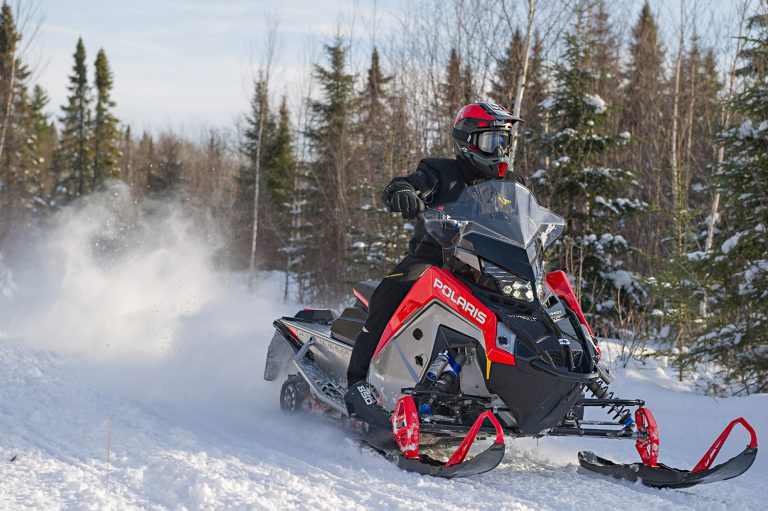
Is it possible to build a decent snowmobile chassis without using pyramidal structure? Just ask yourself if the Polaris Indy works as good as a Ski-Doo G4. Most who have ridden both, feel it works better.

From a handling perspective, Polaris snowmobiles have been the leader for several years – and that doesn’t just mean better than Ski-Doo; it also means Cat.

The fact is, the pyramidal design may not be the ultimate way to design a snowmobile platform. Not sure about that, but it’s worth considering – and the Polaris design seems to be proving it.

What we’re saying is this: Here’s an excellent opportunity for Cat to introduce a new way to build a snowmobile. Knowing many of Cat’s engineers personally, I’ll guarantee they aren’t just throwing up their arms in frustration and saying it can’t be done!

The fact is, it likely already has been done – and the company’s marketing department has simply been waiting for the right time to introduce a new and more legally acceptable Arctic Cat platform.

That timing may have been moved forward but you can be sure those chassis geniuses in Thief River Falls have been on it a long time!

5-STAR SLEDDING IN CHARLEVOIX

0

Rarely does a specific hotel earn universal recognition as a must-visit snowmobiling destination – a place that draws trail riders like a magnet because it’s so remarkable, so unique, and so memorable.

Among this elite handful, the Fairmont Le Manoir Richelieu is second to none.

My Kind of Place

I well remember my first visit to Le Manoir Richelieu by snowmobile. We cruised along a tabletop Local Trail 124 until we glimpsed the St. Lawrence. But our surroundings remained as wild and remote as if we were still riding Charlevoix’s backcountry highlands.

Then without warning, we rounded a corner and were astonished to see a massive castle-like structure ahead, dominating the cliff ahead. This is my lasting, larger-than life impression of Le Manoir Richelieu, the world class hotel that’s become a very special home-away-from-home for many snowmobilers.

Where It’s At

The Fairmont Le Manoir Richelieu is located in the heart of Charlevoix, a region equally impressive for its abundant snow, superb trails and long-lasting winters. What’s more, eons ago a gigantic meteor-strike gave Charlevoix mountainous terrain whose panoramic views are the perfect backdrop for this stunning hotel.

The best way to get to the Fairmont Le Manoir Richelieu is by snowmobile. Trans Quebec Trail 3 parallels the St. Lawrence and runs the length of the Charlevoix Region. As the halfway point, La Malbaie is surrounded by local trails that combine with Regional Trail 378 to make several good day loops for staging from this remarkable hotel.

Meanwhile, the regions of Saguenay (to the north) and Quebec (to the southwest) offer extended riding opportunities connected to Charlevoix. So visiting snowmobilers have the option of basing out of Le Manoir Richelieu for multiple day rides, or stopping there overnight on a saddlebag tour. But don’t short-change yourself…

Great Facilities

I’d highly recommend at least a two-night stay for the full Manoir Richelieu experience – you simply can’t take it all in during a single night! Amenities include a heated outdoor saltwater pool and hot tub, plus indoor pool, hot tub and sauna, and Moment Spa. Additionally, there’s gourmet dining in several restaurants, ice skating, snowshoeing, acres of property to explore and, connected by a tunnel, the Casino de Charlevoix. And don’t forget the snowmobile rentals, direct trail access to heated and secure indoor sled parking! And, although there’s no on site fuel, a gas station on Local Trail 64 at nearby Clermont is handy to all the rides we did.

Charlevoix Trail Riding

Best of all, our 4-night stay at Fairmont Le Manoir Richelieu included three primo Charlevoix day rides, each different, but all on incredibly easy-going trails. We planned each of these itineraries to get us back to Le Manoir Richelieu early enough each day to indulge fully in its decadent pleasures.

Day Ride One

One counter-clockwise ride headed southwest to Baie-Saint-Paul for lunch and fuel. This is about a 200-km loop, travelling Trans Quebec Trail 3 outbound and Regional Trail 378 inbound. It includes several panoramic views riding through the hills above Baie-Saint-Paul down towards the St. Lawrence River.

Day Ride Two

Next, we swung north on a 260-km clockwise loop to L’Anse-Saint-Jean for lunch and fuel, then east along the Saguenay Fiord to Baie-Sainte-Catherine and back to La Malbaie. On this ride, Trans Quebec Trail 83 running north from Trans Quebec 3 is without a doubt one of the best sections of trail in Quebec. Plus, don’t miss the Mont À Pein lookout along the way. Meanwhile, Regional Trail 383 travels parallel to the Saguenay through some steep hills and valleys. Just east of L’Anse-Saint-Jean, a couple of local trails head north a short distance for views overlooking the fiord.

Day Ride Three

On the final day of our stay, we explored virtually every local trail surrounding La Malbaie for about 120 kilometres of riding. This trip included lookouts at Montagne de la Croix de Clermont, Mont Therèse-Casgrain and Promontoir du Lac Gravel. We topped up at Saint-Fidèle on Local Trail 34, and for this shorter ride, we took snacks for lunch so as not to spoil our appetites for our dinner feast back at the hotel.

Lasting Memories

They say a picture’s worth a thousand words. No doubt those included here speak volumes about what makes Charlevoix a special place, and why the Fairmont Le Manoir Richelieu has become its own snowmobiling destination.

As the hotel’s mission statement, posted in the lobby says: “We always endeavour to turn fleeting moments into lasting memories.” So for those in search of the ultimate snowmobiling destination, I’d say to the region and the resort: “Mission accomplished.”

Where We Stayed

* Hotel Fairmont Le Manoir Richelieu, La Malbaie

More Information

* Snowmobile Quebec

* Tourism Charlevoix (region trail map)

* Quebec Snowmobile Federation (permits, interactive trail map)

SKI-DOO 600 EFI FOLLOW UP

0

This response is in regards to comments posted by one of our viewers Larry Vanni on Mark’s walk-around video: FIRST LOOK! 2021 Ski Doo Backcountry 600 EFI Sport

Larry says,

“Mark, several times you mention and emphasize the term “fuel injection” as if it were the early 1990’s and it’s revolutionary. Is it so shocking Ski-Doo came out with a fuel injection engine engine 30 years after it was introduced? If so, maybe you should state that, but one would think it’s a step back. Granted the FI may have replaced carbs, but its still a step down from the techy Ski-Doo SDI has to offer, so I don’t understand your uber excitment. If I didn’t know who you were in the video, I’d belive you worked for Ski-Doo. Please don’t try to BS us with sleds, because many of us like you have been riding for over 40 years. Just the facts man, that’s my motto.”

Mark’s response:

Larry!

Appreciate your response to my YouTube walk-around on the new Ski-Doo 600 Sport models. Your comments lead me to believe something got lost in the communication so for the record, let me clarify what I was getting at when I referenced the variant 600R engine in the Sport is “fuel injected”.

My point was this – Ski-Doo hasn’t produced a pure EFI inducted engine (not SDI or E-TEC) in a long, long time. Am I impressed by the re-emergence of this two decades old technology? No. What I am impressed with is the lengths Ski-Doo has gone to get the MSRP down on these high value snowmobiles.

I would wager that if the former moth-balled SDI system could have been adapted to the 600R engine that it might have been the most cost friendly system for this price sensitive sled. One would assume SDI tooling is more than paid for. However, that is not what Ski-Doo did.

I doubt EPA compliance was high on this project either. Ski-Doo must have a butt load of EPA credits from all the 4 stroke and E-TEC 2 strokes they’ve built.

So, just to make the point crystal clear – I don’t work for Ski-Doo and I am not jumping up and down about Ski-Doo’s EFI system. What I am impressed by is the new Sport’s MSRP. The entire industry including most OEM branded dealers, has been crowing for a decade for a high value, low buck entry level snowmobile that can actually pull its own weight down a lake. Using a proven, low cost – albeit old – design for induction was smart.

The new Sport Models are just that.

IS A LIGHTER 4-STROKE POSSIBLE?

0

We’ve been paying attention to comments from SNOWTRAX viewers and SUPERTRAX readers for about ten years now about the reasons they wouldn’t consider a 4-stroke over a 2-stroke sled.

It pretty much always comes down to the same thing. The belief is that 4-strokes are just too heavy. A very common comment is this: “I’d buy a 4-stroke the day they build one as light as a 2-stroke!”

This is actually a very revealing comment. What snowmobilers are really saying is they love the reliability, torquey power delivery, longevity and low maintenance costs of a 4-stroke but are hung up on one single thing: Weight!

Although it seems like an insurmountable barrier to break through, we have an uncanny confidence in snowmobile engineering teams’ abilities to solve problems like this one.

Here are a few possibilities we’ve been researching:

EXOTIC MATERIALS:

Exotic doesn’t necessarily mean overly expensive. Chemists have been experimenting with sophisticated plastic composite materials that resist heat absorption – and when combined with nickel-aluminum or steel cylinder liners in a snowmobile engine – can end up being very light and still durable. Magnesium is another possibility here – even an alloy of titanium.

TECH:

There are already prototypes of a very lightweight digital cylinder head being tested that will eliminate the need for conventional valve gear and heavy camshafts and bearings as we currently know them. Instead, a system of solenoids activates fuel flow into the cylinders and efficiently controls combustion electronically.

FEWER CYLINDERS:

Although we love the sound and smoothness of three and four cylinder 4-strokes, big-inch twins have less parts and can deliver a lot of grunt. The idea of increased torque at lower RPMs instead of spinning engines at 10,000-plus revs has something to say about heat generation, too, especially when you’re considering using different materials than steel or aluminum in an engine.

MONOBLOCK DESIGNS:

One of the most popular and durable snowmobile engines of all time, Polaris’s Xtra-Lite triple used a one piece cylinder casting with little space between its cylinders. Most 4-strokes use this configuration today, but there are still weight-saving possibilities that could be applied here.

FRONT END WEIGHT REDUCTION:

Remove more front-end weight from the snowmobile itself, not just from the engine. The most common gripe with 4-stroke sleds is that they “feel” heavy over the skis. Perhaps by repositioning parts on the front half of the sled so the weight balance is more centered could alleviate this phenom.

This actually brings up another interesting discussion: What if a manufacturer designed a purpose-built 4-stroke snowmobile from the ground up – instead of the current trend to simply adapt a 4-stroke engine to a sled originally designed to house a 2-stroke?

Food for thought.

THE MYSTIQUE OF A LONGER TRACK

0

Strangely, most snowmobilers who ride trails these days seem to consider a 137-inch track a complete necessity.

It wasn’t long ago the first sleds out the showroom doors were the 120 and 121-inch length models that could pivot on a dime and run whooped-up sections of trail with the skis lightened just by moving your body position a few inches on the seat.

Arctic Cat was first to universally offer a longer 129-incher on its trail models and was eventually followed by every other OEM. This track length offered the best alternative – decent deep snow capability along with almost undetectably compromised turning.

Today, many trail riders deem even a 137-incher is too short to meet their needs. Thus, the newest breed of Crossovers are all equipped with 144 to 146-inch tracks. Has something happened to the trails? Is no one grooming anymore; so everyone has to be ready to ride in powder? Of course not!

What has happened is a giant marketing trend toward convincing the consumer they need to look like a mountain rider.

Back when a 121 was the hot ticket, the buyer image was of a snocross-style or cross-country rider who leapt huge spans of air or ran ungroomed ditches at incredible velocities. This image has worn through considerably the last few years and now average riders see themselves as back-pack wearing, shovel-toting vertical experts – even if they live two thousand miles away from any mountain, let alone one with snow on it. Most don’t even own a back-pack or a shovel.

I know those comments sound pretty harsh – but snowmobile enthusiasm is a constantly evolving phenomenon and it really shows how important it is that potential buyers see themselves a certain way. Does this mean we’re all just a bunch of lemmings hypnotized to do exactly what the OEMs bid us to do?

Honestly, I don’t think so. I think the image has evolved into long tracks mostly because of economics. With the high price of sleds due to the high level of technology they have today – snowmobile consumers simply demand more range from what their sled can potentially offer. Even if a pure trail rider buys a 137 or a 146-inch track and rarely or never goes off-trail with it, at least the potential is there if they ever need to.

Also, viewing things from an economic perspective, whenever it comes time to sell a long tracked sled a few years down the road, the used-sled appeal of a long track will reach far more potential buyers.

Don’t get me wrong – I’m not saying that all trail riders who buy long-tracked sleds are fooling themselves, trying to fit some kind of subliminal image the marketing departments have foisted on them. I personally know a number of long track owners who ride trails and also are very good powder riders, loving nothing more than to take their sleds into the abyss and at least, flatland and foothill ride in the deepest snow they can find. I think those numbers are actually growing.

The other side is, the OEMs have done a fantastic job with the ride and handling of longer sleds. Frankly, we’ve been very pleased to discover how well even a 146 can turn and steer on hardpack compared to a shorter tracked version. Uncoupled suspensions have been tuned and calibrated to the level they perform very close to what a short track can offer.

The simple fact is: There just isn’t much you have to give up by going long.

THE FUTURE OF TURBOS

0

This is a question we’ve been asking around Supertrax headquarters for a couple of years now.

It’s interesting how turbos have become a staple of the snowmobile industry for about a decade – and their use on 4-strokes has become expected and accepted by the market in a big way.

Sleds like the original Arctic Cat 660 Turbo, late 2000’s Z1 Arctic Cat Turbo, Yamaha SideWinder, Polaris IQ Turbo and the Ski-Doo 900 ACE Turbo have been around a while and there’s no doubt the market is fascinated by the kind of power and torque you can get from sleds of this ilk.

Strangely, in the big picture, reliability hasn’t been much of a problem.

Ski-Doo has opened up new avenues of thought by actually going into the turbocharger manufacturing business and producing its own line of turbochargers for the PWC and ATV biz as well as for the 900 ACE snowmobile engine.

Frankly, this kind of investment can only mean one thing: There will be more Ski-Doo turbos coming in the future.

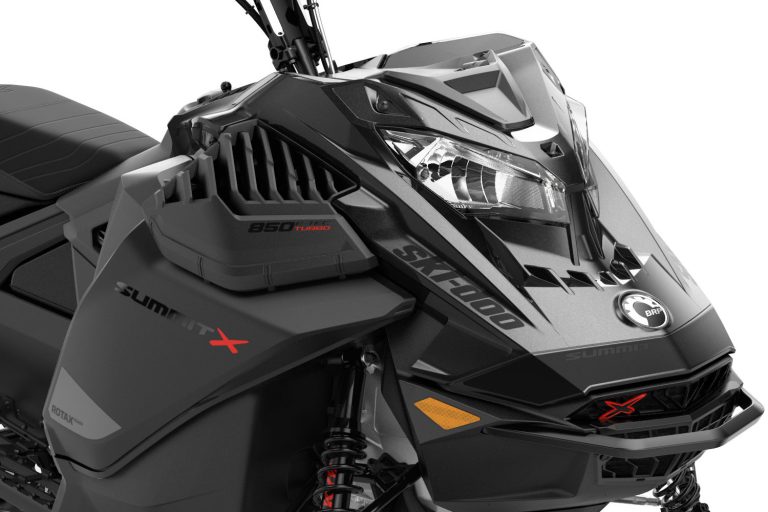
One harbinger of what’s to come is the application of a turbo to the 850 E-TEC 2-stroke in the Summit late last year. It’s the first of its kind and poses some interesting possibilities.

What possibilities? How about the introduction of medium displacement 2-strokes that can make the same power as big-inch 2-strokes. How about turbocharged 500cc 2-strokes that produce 160 ponies? There would be significant fuel savings at play and even with a beefed up bottom end and increased weight from a turbocharger and its plumbing, these sleds could still be light.

The torque upgrade from using a turbo on a small engine would make it feel very similar to a big-inch cousin at trail speeds. Maybe the extra torque generated from a small displacement turbo-2-stroke would actually exceed that generated by an 850.

It’s inevitable that fuel costs will continue to rise over the next ten years and the EPA will be focusing on the low hanging fruit of the recreational vehicle industry to “save the world” just like it did from MY2000 to 2010.

Thus, the automobile industry has relied on turbocharging to power small displacement 4-cylinder engines in lieu of V8 and even V6 powerplants.

What makes us think the snowmobile industry is exempt?

There is one caveat the engineers will need to deal with. Apparently, turbocharged 2-strokes do not currently meet EPA standards for certification and Ski-Doo has had to use EPA credits to get its turbocharged Summits into showrooms.

This could mean a trail-based 2-stroke turbo MX-Z would need to use a catalytic converter in order to be clean enough to certify.

That’s only a possibility if the creative minds at Ski-Doo don’t come up with another idea – and I wouldn’t bet against them!

BEST 10-YEAR-OLD SLEDS: RENEGADE 600 OR 800

0

We’ve selected four 10-year-old sleds we think would be good choices to look for as used sled buys this winter. We’ve deliberately chosen sleds with longer tracks to more accurately reflect the type of riding enthusiasts are doing in this decade.

One advantage is we’ve been able to make our selections based on the track records of both performance and reliability these sleds have exhibited down through the last ten seasons. Take a look and let us know what you think!

2011 SKI-DOO RENEGADE 600 OR 800 137

MARK SEZ:

These second generation REV Renegades were really good, lightweight snowmobiles with impressive power-to-weight ratios with either a 600 or 800 Rotax E-TEC underhood and the 137-inch rMotion skid delivered an incomparable ride at that time. Handling was okay, but not world shaking.

Overall it would be hard to find a better used ride provided you locate a low mileage copy. Here’s what I mean specifically. The Series III 800cc, cylinder reed Rotax was a sweet runner with E-TEC induction. Everything remained good with this engine until the 10,000 klick or 6000 mile threshold was reached.

Once past this mileage tally the PTO (clutch) end of the crankshaft had a habit of spitting its bearings out of the cases. If you must go over the 10K/6M threshold then confine your search to the Series III 600 E-TEC or an 800 that has had a rebuild. The 600 has a much better rep at that age than the 800.

The use of a 16-wide track has mostly disappeared from today’s X-over market, however, the 16 x 136 Camo-sneaker used on this vintage of Renegade was highly effective. These Renegades could easily pop on top of six fresh inches on Kevlar Lake and deliver a ton of sno-mobility.

Keep in mind Ski-Doo has been number one in the biz for more than fifteen years. This means there should be a good supply of these desirable sleds for you to choose from when shopping for a 10-year-old ride.

KENT SEZ:

I fully agree with Mark’s choice of the Renegade. These were great crossover sleds because they were so light and had the benefit of a 16-inch-wide track. Their shorter 137-inch length still had incredible floatation and really good off-trail handling because of the 137 track width compared to the competition using 141 and 144-inch tracks. Both the 600 and 800 E-TECs were strong running, reliable engines in both powder and on groomed trails.

There are lots of Rennies and 15×120-inch MX-Zs from this era still on the snow and you should have a good selection of used ones to choose from. Like Mark says, try to find one with less than 10,000 K on the odometer, if possible.

BEST 10-YEAR-OLD SLEDS: TURBO LXR 128 OR EXT 144

0

We’ve selected four 10-year-old sleds we think would be good choices to look for as used sled buys this winter. We’ve deliberately chosen sleds with longer tracks to more accurately reflect the type of riding enthusiasts are doing in this decade.

One advantage is we’ve been able to make our selections based on the track records of both performance and reliability these sleds have exhibited down through the last ten seasons. Take a look and let us know what you think!

2011 ARCTIC CAT TURBO LXR 128 OR EXT 144

MARK SEZ:

Arctic Cat pioneered turbocharged snowmobiles. It’s been nearly 16 years since the first 660 Suzuki car engines, complete with teeny-weeny little turbos, were somehow shoehorned into a modified ZR sit-down-ergo chassis.

Following the T660 era the move to insert a purpose-built 1056cc even firing parallel twin avec turbocharger in the new Twin Spar chassis was completely in character with the bravado Arctic Cat displayed at this time in sno-mo-history.

These sleds were out-of-the-box crotch rockets the aftermarket immediately modified to deliver way, way more than 200 ponies. Unfortunately, these modified Suzuki powered sno-missiles experienced amazing – sometimes heroic – ejection of drive belts along with secondary clutches and belt guards when honing a lake at WOT.

I personally had my left foot compressed by a 100-mph secondary pulley flying around under the hood of a Twin Spar turbo. The noise was similar to 35 flying ball bearings inside a galvanized garbage can.

The good news is this: If you can find a used Twin Spar Turbo that hasn’t been chipped and/or the waste gate modified you can own a sled that’ll give a new Pro Cross Arctic Cat Thundercat Turbo a good run.

While it is wise to use boost judiciously – that means not holding the sled wide open for 90 seconds at a time – you can still zoom past the C-note with your hair on fire. Speed is speed and horsepower is horsepower. Despite being 10 years old these sleds are revered for their top end and acceleration to this day.

KENT SEZ:

I mostly agree with Mark’s choice here, mainly because the big 1056cc Suzuki 4-stroke twin was so reliable.

However, an easier-to-find and equally reliable answer would have been the 2011 F8 using Suzuki’s famous 800 twin. The fact is, this 800 was the most trouble-free and reliable 800 of this era.

Yes, it smoked like a radio emcee and had some faults like excess vibes and not the best gas mileage but it could take abuse and outlive the competition’s 800s on the long haul.

It also made that particular Cat chassis feel reasonably light – especially lighter than the bulky Twin Spar Z1Turbo.

BEST 10-YEAR-OLD SLEDS: VECTOR LTX GT

0

We’ve selected four 10-year-old sleds we think would be good choices to look for as used sled buys this winter. We’ve deliberately chosen sleds with longer tracks to more accurately reflect the type of riding enthusiasts are doing in this decade.

One advantage is we’ve been able to make our selections based on the track records of both performance and reliability these sleds have exhibited down through the last ten seasons. Take a look and let us know what you think!

2011 YAMAHA VECTOR LTX GT

KENT SEZ:

This may be a bit of a rare find because there weren’t a lot of them sold with a 137-inch track; most were the vanilla Vectors with a 121. Back in the day, Supertrax argued the Vector LTX was more of a long distance trail sled than a crossover because of its 4-stroke weight.

Probably true, but ten years later, who cares? You’re going to be buying a sled this old for its condition and its reputation for reliability. That’s where the Veck delivers in spades!

Yamaha kept building this sled for a long time after 2011 and probably the sum total of all the years it was offered adds up to a significant number of them still being available.

They were as tough as anvils and built to last and the later EFI 1049cc Vector models like this one were fuel efficient and strong running triples. They used KYB piggyback gassers up front with clickers and a single KYB gasser in the Monoshock RA136 skidframe with an adjustable damping dial on the tunnel to fine-tune the ride. There was also a 1.5-inch-deep RipSaw out back.

These sleds rode great, were reasonable handlers despite their extra mass and the 1049 never failed to impress.

Any Vector from 2011 is a safe buy and we can almost guarantee it will still have a lot of great service years ahead of it.

MARK SEZ:

I have to say I apologize to all our manly, hairy chested readers for allowing my eyes to well up with tears while discussing this iconic Yamaha.

Here’s where I lost control of my otherwise steely emotional posture – it was when Kent mentioned the single shock 136 inch, remote adjustable rear skid. Why Yamaha walked away from this amazing – and I do mean amazing – rear suspension I’ll never know.

The left side tunnel mounted compression clicker was not just slick – it was the best idea ever for rear suspension adjustability. Vecks rode like moguls were just puffy white clouds flowing between its skis. A truly remarkable sled.

I must mention the 1049cc triple 4-stroke used in every Vector model. This engine is pretty much the same piece of Yama-reliability and performance as we see today in new Viper models. The engine delivers immediate and crisp throttle response from engagement to full whack and is still easily the nicest running quad-stroke in the biz.

One issue you will no doubt uncover relating to this sled is its resale value. You will find these high quality, made-in-Japan Vectors command a sizable premium over their competition. Take cash – and happy hunting!