Luke takes a quick minute to talk to Sebastien Hanssens, Marketing & Communications Lead for Widescape about the development WS250 stand-up snowmobile following Luke’s first ride aboard this unique machine.
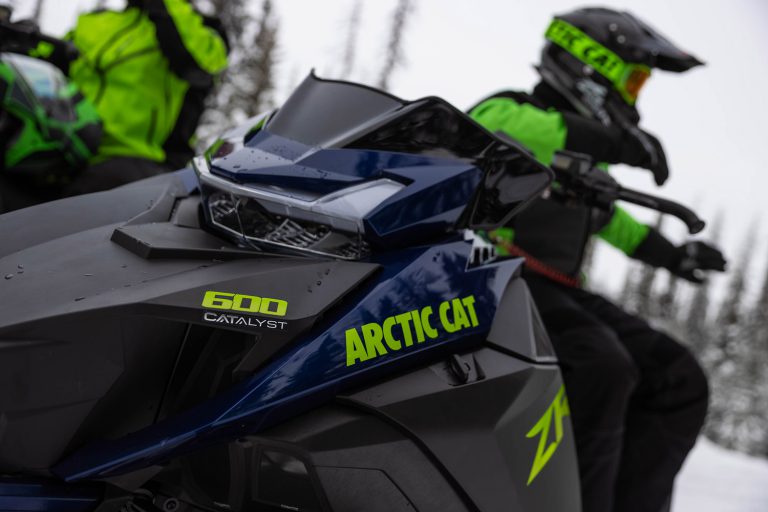
There’s big buzz circulating about Arctic Cat’s new-for-MY2024 CATALYST platform.
Although it won’t be seen in showrooms this year, a real flesh-and-blood prototype was exhibited boldly at Hay Days in September. If you log onto Cat’s website, you’ll see a complete array of photos of the new sled and, wow, is it ever a beauty!
So, Cat has let the CATALYST out of the bag early (something that almost never happens in this biz) and created a ton of hype for a sled that is going to take a long time to actually park in your garage. Apparently, the plan is to release the sled with the current CTEC2 600 DSI 2-stroke twin under the hood – and who knows what other engine iterations will follow in the future.
This big news is certainly accomplishing what Arctic Cat intended – it’s putting the spotlight squarely on Arctic Cat and creating curiosity and expectations from not only Cat hardcores but other snowmobilers riding other brands.
We’re wondering what prospective Yamaha buyers are thinking about all this. For instance, does the current CATALYST platform accommodate any of Yamaha’s bread-and-butter 4-strokes? Is there room in this chassis to jam a 4-stroke triple, turbocharger and all the turbo-associated plumbing? Was the CATALYST designed to fit the steadfast 1049cc Viper engine or the 998cc SideWinder engine without a turbo? If not, will most future Yamaha’s be 2-strokes?
Although that last one seems unlikely, we can certainly envision all future Yamaha mountain sleds using the much lighter, belt-drive Catalyst chassis equipped with whatever 2-stroke engines that become available. Maybe a couple of completely rethought freestyle and crossover Yamahas will be coming down the pipe, too. Makes sense.
Here’s a thought: What if the CATALYST chassis was originally designed to accommodate a second, wider front bulkhead and bodywork that would fit 4-stroke triple variations more comfortably.
We’re absolutely certain Arctic Cat doesn’t want to give up on the Thundercat and all of its fans! Yeah, it would be expensive, but in this marketplace you’ve gotta do what you gotta do!
All this guessing gets our pulses pounding but we need to temper our enthusiasm with the fact Yamaha likely won’t be making this kind of product transition until at least MY2025.
In snowmobile years that seems like an eon but the wind is rising and the leaves are rustling, so who knows where this will all go?!!
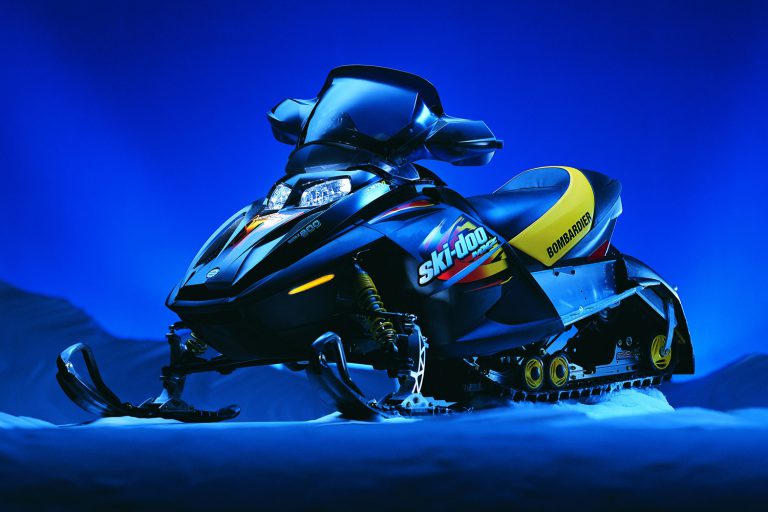
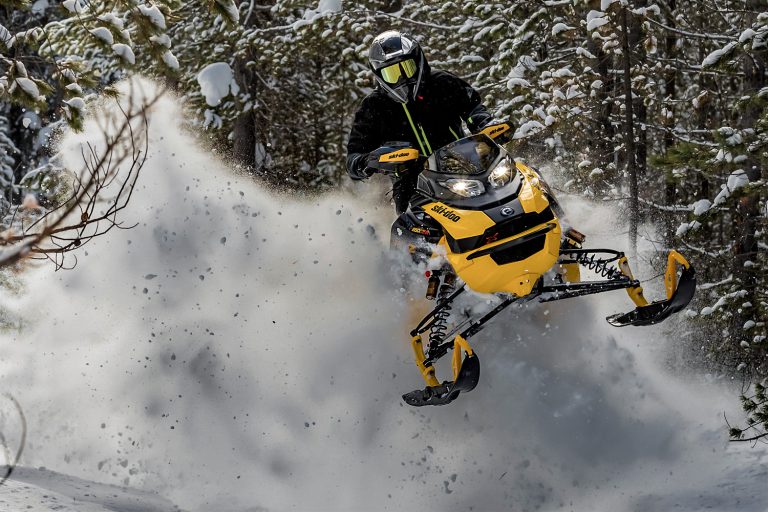
Ski-Doo went all-in when it released the new Gen5 platform for use in the 2023 MX-Z Blizzard.
Finish quality has been amplified as has the reduction in noise, vibration and harshness (NVH) in the new chassis powered by the now-iconic 165-hp Rotax 850 E-TEC twin.
The Gen5 Blizzard arrives with a new engine mounting system and it effectively erases chassis vibration to make this sled’s incredible smoothness possible.
The Blizzard uses the industry benchmark 129-inch rMotion X rear suspension. This skidframe delivers the best ride in the business and ever since the X changes arrived two seasons ago, it has allowed the new Gen5 to corner laser level with nary a hint of inside ski lift on corner exit.
With quality shocks up front and in the rMotion X skid, Blizzard pilots can reach new heights of driver control as both the front RAS X suspension and the rMotion X skid respond intuitively to varying trail conditions. There’s really only one way to describe the Gen5 Blizzard’s ride quality – supremely plush!
Gen5 ergonomics take riders to a higher echelon of all-day comfort utilizing a centered, aerodynamic rider pocket. Aggressive vented running boards and a flat-top seat provide confidence-inspiring grip when attacking tight, technical trails. The rider can easily move around on the Gen5 in response to any terrain while always maintaining complete control.
Rotax E-TEC direct injection power is the industry standard for lightweight, emissions-clean 2-stroke engine performance. Better yet, the 850 extrudes its formidable thrust all the way from engagement to wide-open throttle. Furthermore, both fuel and oil consumption are class leading.
Ski-Doo’s breakthrough Gen5 chassis melds perfectly into the popular Blizzard 129-inch trail platform bringing improved rider comfort, improved handling and dramatically reduced vibration while presenting a seamless, clean body profile snowmobilers will definitely approve of.
Don’t know exactly how our readers and viewers are feeling about this but I suspect you may be feeling pretty good about the prospect of even more turbocharged 2-stroke trail sleds.
The old adage the upper end of the snowmobile market lives by is still in full vigor: “Nothing exceeds like excess”. Simply put, if one OEM lands a new ride with more power, then it’s never long before more jump in.
We predict precisely this will happen in the 850 2-stroke segment. Ski-Doo does not let anyone mow its grass and the arrival of the 850 Indy Boost is all about cutting grass – Ski-Doo’s grass.
Frankly, we’re a little surprised everyone was surprised at the Indy Boost’s arrival. The deep-snow-targeted development of the Patriot Boost mountain engine probably ran up a large-esque invoice. Taking the Boost package to the trail segment would utilize more Patriot Boost engines than the RMK does in the deep snow market.
Winning! Sounds like the Indy Boost is not only a rocket ship trail sled but the basis of a solid business plan. The development cost of the Boost Patriot engine platform is getting paid back way faster now Polaris slid it into the Indy VR-1.
The question remains whether Ski-Doo will continue to point its turbo-hungry buyers toward the current 900 ACE Turbo R powerplant or will the company slide the Rotax E-TEC 850 turbo used in the Summit into a MX-Z G-5 platform? Knowing how serious Ski-Doo is about meeting its customer’s expectations we have to think there is something 2-stroke, trail oriented and turbocharged in the works.
Before you get your checkbook out, keep this in mind: I’m dealing in pure conjecture driven by decades of experience watching the market leader do just that – lead.
Ski-Doo was adamant two years ago, when the Rotax 850 Turbo was revealed, it would not and would never use the engine in a trail sled. Interestingly BRP was also adamant the original turbo 850 would not be tweaked to increase peak HP. Rather, it would capably maintain claimed HP up to 10,000 feet elevation. One year later, guess what? The latest 850 Rotax Turbo increases peak HP. Hmm?
Polaris claims the Patriot Boost delivers 10-percent more peak horsepower at sea level using just 3 pounds of boost. That’s arguably 180 ponies. Polaris is standing behind the Boost 850 with a full, factory backed warranty.
Can Ski-Doo and Rotax do something similar? You bet your carbides they can.
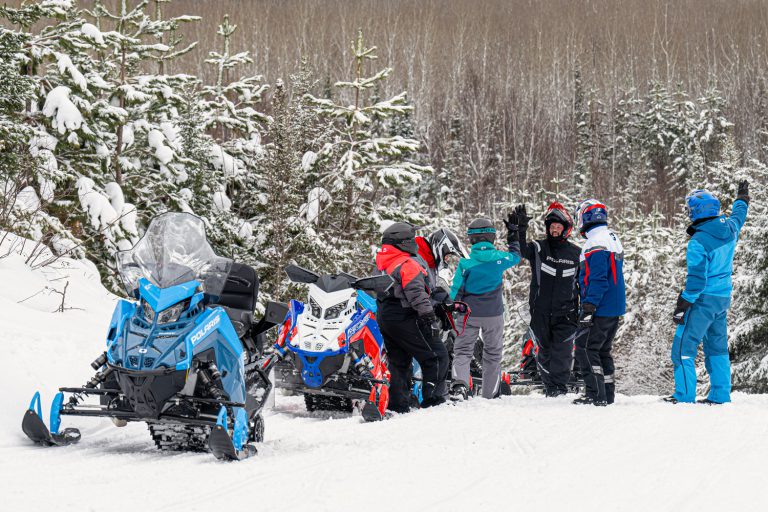
Here’s the best news snowmobilers have had in a long time! Everyone knows it’s been tough for snowmobilers to travel to their favorite destinations the past two winters. Most riders have been restricted to riding loop routes close to their cottages or cabins instead of planning big-mileage trail rides taking them to completely fresh destinations. This winter, Québec is ready to welcome thousands of snowmobile adventurers!
Québec in the winter is unlike any other place in North America! Incredible, scenic vistas and meticulously groomed trails are all part of the landscape. You can expect trees covered with mounds of the white stuff, fences covered to the top of the posts and snowmobile trails measuring in meter-depths.
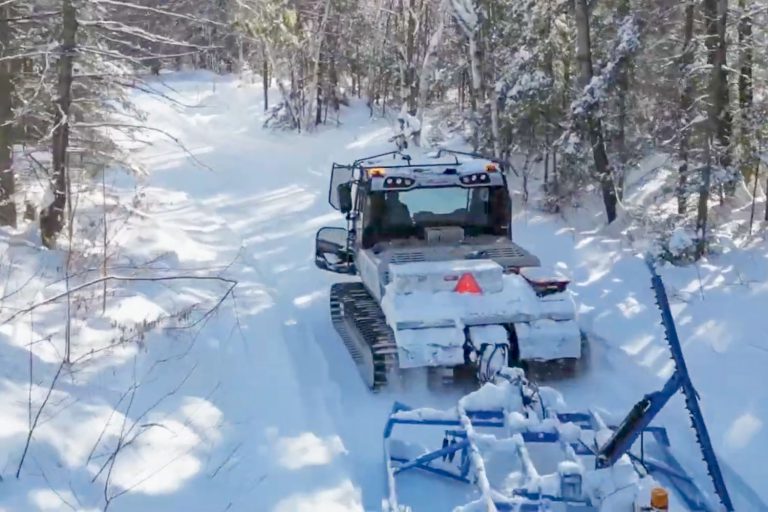
There are more than 20,500 miles (33,000 km) of groomed trails in the province – incredibly, all are safely routed and well-marked with clear trail signage. There are hundreds of quaint, cozy places to stay and even more great places to dine, all accessible by snowmobile.
Take a good look at this list of must-see regions and winter tourist sites in the province. These places need to be top-of-mind with every snowmobiler.
Eeyou Istchee Baie-James TQ/M.Dupuis
Visit Mastigouche and Rouge Matawin Provincial Wildlife Reserves
Both the Mauricie and Lanaudière regions – Authentic Québec – are easily accessible from the major population centers of Montréal and Québec City and offer fantastic amenities for snowmobilers. This includes rides through two beautiful provincial wildlife reserves (Mastigouche and Rouge-Matawin). Great eating, great overnight stays and scenic lookouts along the way to snowmobile-friendly places like Saint-Donat (Trail 33) and a long list of other cozy, comfortable destinations catering specifically to winter visitors.
Cross by snowmobile from Ontario to Abitibi-Témiscamingue via the Outaouais region using either of two bridges in the Pontiac region.
You can self-guide your ride on groomed trails through the Laurentians for hundreds of miles or book a guided tour to discover some of the many unique, hidden sights of the region. You’ll climb to the top of the famous Devil’s Mountain or “Montagne du Diable” (Trail 13). It is one of Québec snowmobiling’s most visited landmarks and a well-known meeting place for snowmobilers passing through the Upper Laurentians. After a thrilling ride to the top, the view from the summit is breathtaking.
One of Outaouais region’s best snowmobile dream experiences is riding the Pontiac Pacific Railroad along FCMQ Trail 43. This abandoned railway, groomed laser-smooth for 92 km (57 miles), takes you onto the new bridge crossing from Ontario to the western part of the region. You’ll also see the longest covered bridge in Québec (The Marchand Covered bridge ), one of the largest deer yards in the province (Pourvoirie Club des Douze) and the beautiful Chutes Coulonge when you ride Trail 43.
There’s a huge variety of wide, frequently-groomed trails in this part of the province: Valleys, hills, woodlands, wildlife reserves – plus welcoming accommodation for snowmobilers.
Both these districts are easily accessed from Ontario. The trail grooming is always flawless in the Eeyou Istchee Baie-James region but there are other great reasons to visit here: Awe-inspiring scenery, a magnificent network of groomed trails and a long menu of inns, motels and dining stops to make your tour memorable. The Festival Folifrets Baie-James is a unique snowmobile competition held for over 50 years in Chibougamau, in the Eeyou Istchee Baie-James region.
There’s a long list of friendly inns, open all winter in Abitibi-Témiscamingue region offering great cuisine guaranteed to give you relaxing comfort after a day of riding the region’s impeccable trail system and taking in its majestic boreal landscapes! Snowmobiling is a cultural experience in Abitibi-Témiscamingue and this is where you’ll find handcrafted accessories designed specifically for riders. Also, the Rouyn- Noranda’s winter festival takes place every January (Trail 93). You’ll always feel welcome in this region and easy snowmobile accessibility to many amenities makes this a super-convenient place to tour.
In Centre-du-Québec and Chaudière-Appalaches you can easily ride loop trails without leaving the area or, if you want a longer trip, you can venture across Chaudière-Appalaches to connect with other Québec regions. Located just across the border, you’ll find affordable accommodations adapted specifically to snowmobilers.
There’s a diversity of trails here and the trails offer spacious, open views without a lot of traffic. Drink in the forest, mountain and river scenery.
The view from Mont Saint-Magloire (Trail 549) at the top of the observation tower at 3,000 foot in Massif du Sud regional park is nothing short of spectacular! On a clear day, you can even see the mountains all the way to Maine, including Mount Katahdin. Trails are meticulously maintained and all routes and signage are clearly designated everywhere in these regions.
You’ll experience some of the most beautiful winter landscapes in North America when you visit Charlevoix! You can start your adventure at the famous, 5-star Le Fairmont Manoir Richelieu hotel or any of the many great bed & breakfasts, inns and hotels in Charlevoix region. There are some really good snowmobile touring companies located here, too, and you can contact them before your trip and make arrangements. There are exceptional panoramas to be experienced along the St. Lawrence River.
Québec City offers lush accommodation, renowned gastronomy and vibrant big-city life – still close to snowmobile trails!
Discover the Summits of Monts-Valin circuit trails running through the Monts-Valin mountains (Trails 93 & 328). You’ll be riding among four different peaks at an altitude of more than 770m (2,526 feet), offering an incredible view of the Saguenay–Lac-Saint-Jean region, and the breathtaking Saguenay fjord in particular.
Snowmobilers flock here with the first snow, often in November, and don’t leave until late spring. The trail network is exceptional, maintenance is constant, services and accommodations are plentiful!
Unforgettable Vistas Unlike Any Other in North America!
If you’re looking for dramatic sea views, quaint, comfortable inns and fine dining, Bas-Saint-Laurent, Gaspésie and Côte-Nord – Québec by the Sea – are places you’ll want to go this winter! The region is famous for rugged elevations, perfectly groomed trails and the scenery bordering the Estuary and Gulf of St. Lawrence.
Start in Rivière-du-Loup and follow Trans-Québec trail #5 (TQ5). It will take you through the mountains where you’ll experience magnificent views along the St. Lawrence River all the way to the Gaspé Peninsula. Enroute, you’ll see the legendary Percé Rock (Trail 5) and the dynamic Chic-Choc Mountains. With its snowy forest trails and frequent sighting of wildlife, this tour is what snowmobilers dream about!
Chart your route when you’re planning at home, using bonjourquebec.com. Here, you’ll find information about each of the regions in Québec, the top trails to visit, all information you need to know before going and way more!
Step #2:
Download the iMotoneige App onto your smartphone and then go to the interactive map available online on the fcmq.qc.ca website. This detailed map includes snowmobile routes and hundreds of on-trail services like lodging, restaurants, parking, repair services and attractions you can take advantage of.
Step #3:
Before you leave home, don’t forget to buy your Québec Trail Permit! Every permit is sold online, so you can already have it displayed on your snowmobile before you leave home. Buy your permit at: fcmq.qc.ca. You can also check the above FCMQ website to learn about any COVID restrictions that may apply this winter.
Step #4:
Québec’s provincial snowmobile federation, the FCMQ, has an official Certificate of Secure Hotels (look for the “Secured Hotel” icon on the iMotoneige App and the online interactive map). Those qualifying hotels must have security features for snowmobiles such as: A locked garage, locked enclosures, free snowmobile security chains, video surveillance systems or security guard service.
After Polaris pulled the sheets off the new S-4 4-stroke twin scheduled for service in a number of Polaris snowmobile platforms in MY 2023 we immediately loaded our next bullet.
What About Dynamix? Clearly, Polaris and Ski-Doo are in an intense season of competitive product intros. There’s little doubt Polaris has evaluated Ski-Doo’s (and Can-Am’s) Smart-Shox semi-active suspension control system.
Dynamix is fully developed and, more importantly, highly effective on numerous RZR SxS off-road models in MY 2022. Sliding the entire system including myriad sensors, electronic controls and sophisticated switchgear onto the MATRYX platform should be – mostly – a no- brainer. Okay, it does take a lot of fertile brains to develop active suspension.
Ski-Doo has had ridiculous success with its Smart-Shox option. How successful? Smart-Shox availability was sold out before Spring Break concluded last April. Truth is, if you had the opportunity to try a Smart-Shox equipped MX-Z or Renegade you were likely overwhelmed by the tangible improvement the set-up delivers.
Frankly, we think Dynamix and Smart-Shox for dirt-destined off-road vehicles is impressive but Smart-Shox on a Ski-Doo is more impressive than on a Can-Am. We would expect the same degree of effectiveness from a Dynamix system tweaked for snowmobile use.
For those who may not be up to speed on exactly what semi-active suspension is about, let’s discuss it briefly. Ski-Doos with Smart-Shox have accelerometers on the front ski shocks. If you look closely at the front suspension of a G-5 Ski-Doo, you’ll see what looks like another sway bar drop link. It’s not. It’s a linkage connected to a sensor (accelerometer) that reads both velocity and the amount of movement of the right and left front suspension when encountering terrain. The info is passed to a Smart-Shox specific ECU which responds to suspension movement by stiffening or softening the front suspension shocks damping. It doesn’t end there. The ECU talks to the rear suspension front arm and rear arm shocks simultaneously and makes them ready for whatever terrain the front IFS just swallowed. Another accelerometer is attached to the rear shock for exactly the same purpose as the front suspension sensor.
All of this whiz-bang techno sophistication produces what we at SnowTrax and Supertrax have proclaimed is the hands down best ride quality of any snowmobile built today. Ski-Doo developed the Smart-Shox system and KYB produces it. Polaris Dynamix was developed in tandem with Fox.
With Polaris intent on continuing a market share battle with Ski-Doo, we have to think the next big thing for them is the adaptation of its SxS Dynamix suspension technology to its snowmobiles.
Let’s get in front of some of the more important details surrounding the Arctic Cat Catalyst platform. There’s lots new. Some things are subtle and others are revolutionary.
Belt Drive
Just for the record (because we respect the techo-knowledge of our readers and viewers), when we say belt drive we mean the final drive from the jack shaft to the drive axle. The CVT belt is in its traditional location. The move to belt drive is smart. The entire Catalyst project had lightness as one of its foundational tenets. Ditching the chaincase, cover, chain, tensioner and other assorted fasteners, not to mention the need to dump the chain oil when changing tracks, is quite simply, a huge win. Snowmobilers will remember Polaris has used a similar belt drive on specific RMK models.
Light Weight
The Catalyst has gone through a major dietary process and it extended to every piece of the sled. The belt drive is a big contributor to the claimed 10-percent weight loss. Anecdotally, we suspect the 10-percent number translates to almost 50 pounds. The new one-piece front bulkhead saves weight and lowers the overall parts count.
The new composite fiber running boards are lighter than aluminum and provide improved grip. The sled’s wiring harness has been rationalized to save one pound. The overall reality of weight loss is seen in the blanket reduction of actual bodywork and chassis dimensions. The sled is simply smaller overall. The Catalyst uses substantially fewer fasteners – which one-by-one, add up to weight savings.
Gas Tank
This feature intrigues the fertile minds here at Supertrax/SnowTrax world headquarters. The new fuel tank is shaped to reduce fuel sloshing. The idea here is that when you accelerate, a flat bottom fuel tank allows the fuel to surge to the rear and the opposite effect is true under braking. By designing the fuel tank to resist for and aft sloshing means the sled will be more stable under all riding conditions. Cool idea.
Centralized Mass
For sure, every engaged snowmobiler has heard of this fundamental chassis design principle. By moving the jackshaft, drive axle and crankshaft centerline closer to one another and, more importantly, slightly rearward, the gyroscopic effect of rotating mass from the three spinning shafts becomes more easily managed by the rider.
Also, positioning this group of parts closer together – which comprise a substantial amount of weight – the sled flies straighter, stays level and corners more predictably. The rider effectively becomes more a part of the sled. This design cue is in play in both Ski-Doo’s G-5 and the Polaris MATRYX.
ALPHA
The M-Series Catalyst uses Arctic Cat’s unique, proprietary ALPHA single beam skid. While the setup is lighter in actual build weight there’s another important detail at play. The ALPHA skid sheds snow more efficiently than any other vertical-specific snowmobile.
Arctic Cat makes a lot of hay about this as the more snow the skid carries, the heavier it becomes is in real-world riding conditions. Truth is, this is a legit weight carving feature.
That’s a round up on the Catalyst for now. There’s still more to talk about and we’ll be doing just that in the near future.
Depending on who you speak to, this sled was either a no-brainer for Polaris or a completely off-limits concept for Ski-Doo.
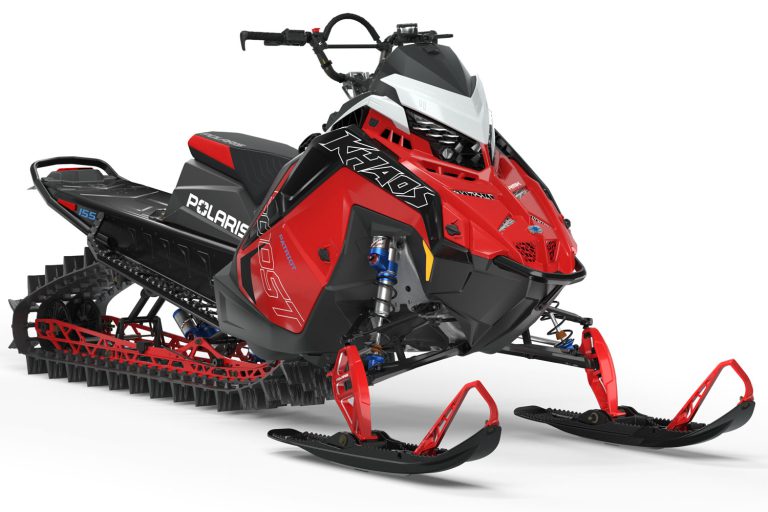
Here’s what it is. The Indy Boost is the ultimate power-play snowmobile employing the use of the sport’s first trail-targeted, 2-stroke turbocharged engine.
Don’t misunderstand me here – I am fully aware Ski-Doo was the first to build a production turbocharged 2-stroke snowmobile. What is important to understand is this: From the day Ski-Doo pulled the sheets off the Turbo Summit and we feasted our eyes on the sweet Rotax 850 turbo, Ski-Doo made it abundantly clear there would be no trail MX-Z/Renegade version. In fact, we (the team here at Supertrax/SnowTrax) were instructed to not speculate about or talk up such a vehicle. Hmm?
So, what happens next is the stuff of legend you can tell your kids twenty years from now. As if oblivious to the realities of Ski-Doo’s proclamation that a 2-stroke turbo Rotax would never see an MX-Z sticker on its hood, Polaris invites us to ride the 2-stroke, turbocharged Indy Boost targeted directly at the lake honing, power crazed flatlander market.
I can tell you as one of the very first members of the media to pull the trigger on the Boost in remote Cook, Minnesota early last winter, the ground shook. The reality of a factory built, 2-stroke, turbocharged, warranted trail snowmobile designed to increase sea level power of the formidable Liberty 850, not just replace power lost to altitude like the Summit Turbo, is really big news.
Yes, there are turbocharged trail snowmobiles in the market. Yamaha and Arctic Cat both offer formidable turbocharged 4-stroke powered sleds which perform at insane levels. What’s different with the Indy Boost is weight. The sled is significantly lighter and more nimble to flick around on trails. In fact, the turbo system is so effective at building power, the sled reacts to a handful of throttle like you were just rear ended by an earth mover. Seriously, the rules are simple: sit down, shut up, hang on.
No doubt about it. The Indy Boost is a game changer. It demands little to no compromise from the rider. It handles like a MATRYX which is to say it has the best handling qualities in the biz. It can be ridden sensibly on all-day trail rides without fatiguing the rider. When it’s time to send the rest of the crowd home and shorten-up Kevlar Lake, everything you need is under your right thumb.
The snowmobile landscape has seen quite a shift the past two seasons to include two full-on turbocharged 2-stroke engines – one from Ski-Doo and one from Polaris. There may be something going on here.
Ski-Doo has been offering multiple 4-stroke turbo engines the past four years. These ACE 900 turbos have been delivered with 130 to 180 HP. Their acceptance in the marketplace has been overwhelming.
Arctic Cat and Yamaha have offered 4-stroke turbos since the early teens, and for the record, Arctic Cat has sold a ton of turbocharged snowmobiles going back to the mid 00s.
Polaris is last into the 4-stroke game with the new, normally aspirated S4 powerplant. The interesting issue with this engine is its mirror-like image to the 998cc Pro Star Turbo used in the crazy popular RZR off-road SxS product line up.
Let’s say it this way: Can it be much of a stretch for Polaris to turbocharge the S-4 (tonight?) and increase output to an RZR-matching 180 ponies?
With the aforementioned realities easily identified with but a glance at some of these engines, we think it’s safe to say there is strong potential for more turbocharged offerings in both 2 and 4 stroke configurations.
Most likely to appear has to be a trail version of the mighty Rotax 850 E-TEC Turbo twin presently offered in the Summit. With Polaris now offering a flatland turbo 2-stroke, the gauntlet has been thrown and we can’t imagine Ski Doo will not pick it up. Sea level horsepower would likely exceed the current Rotax ACE 900 4-stroke turbo’s output by at least 10 ponies.
We think these two engines: the Turbo 850 2-stroke from Rotax and the new S-4 4-stroke from Polaris will see turbocharging aimed at flatland trail-oriented buyers.
Clearly the Pro Star 998 Turbo in use now could be shoe-horned under the Indy Matrix hood with minimal development cost and maximum benefit.
That being said, Ski-Doo could have a 2-stroke 850 Turbo Renegade by noon tomorrow if it put its resources behind it.
Again this year it was a momentous early-September Minnesota Hay Days. The crowds looked typically gargantuan while exhibitor counts were still, post COVID, a little down. All in all, the annual pilgrimage of thousands to the Sno Baron’s Hay Days facility was absolutely worth the effort.
Here’s what I feel was the most important event at this year’s Hay Days. Arctic Cat’s unveiling, an entire year ahead of a production model arrival, of its new Catalyst platform. Why do I believe this was an important move?
Pretty clearly by everyone’s estimation, including open admission by the Arctic Cat Engineering and Marketing teams on site, the company has been taking it on the chin the past two seasons. The legion of green-under-wearing faithful has been extremely vocal about their dislike for what AC has been doing to their dealers and not doing to their beloved snowmobiles.
Again, to its credit, the Thief River Falls team got in front of this reality at Hay Days. Let me tell you, it was both smart and refreshing to hear them be 100-percent transparent with the crowds who jammed in to witness the unveiling of the first all-new Arctic platform since 2012. To be clear – there is lots new on the Catalyst.
The sled’s arrival speaks volumes about the continuing viability of Arctic Cat snowmobiles. The new Catalyst represents a multi-million-dollar investment in the new sled and the associated technology it brings with it. Textron must have blessed this investment by the TRF braintrust because the cash didn’t come from a piggy bank. This entire project speaks to the mentality the snowmobile purchase cycle runs on. An arguable 11-year silence (as far as a new platform goes) from TRF is at the root of Arctic’s market share numbers.
The Hay Days intro of the new Catalyst platform breaks with all known traditional product launch timetables. In an effort to prevent obsoleting current 2023 product, this new sled normally would have been kept under wraps until at least January with a top-secret press-only intro and then a complete consumer unveil for early Cat Cash spring orders in March.
The fact AC ignored longstanding traditions tells me a couple things. First, the Cat cognoscenti are listening to the noise coming from the faithful and don’t want to upset them to a greater degree than they already are. Frankly, if you bleed green you have good reason to be optimistic about the future of Cat.
The only way Arctic Cat could effectively stem the tide of swing purchasers moving to other brands was to do precisely what it did – show the new stuff now. If the existence of a new chassis sends some current buyers back to their dealer for a refund, so be it. As it sits right now Arctic Cat is experiencing the beginning of a momentum shift like it hasn’t seen in at least 5 years. The new Catalyst is not sizzle – it is steak. I am stepping out in faith that when we get to pull the trigger on this chassis it will be as good as AC says it is and work as well as the innovative technology it possesses promises.
To say a lot is riding on the new Catalyst platform would be the understatement of the year. Actually, let me update that. It would be the understatement of the decade. Arctic Cat’s dealers and the loyal greenies who have hung in with the brand should be pleased.
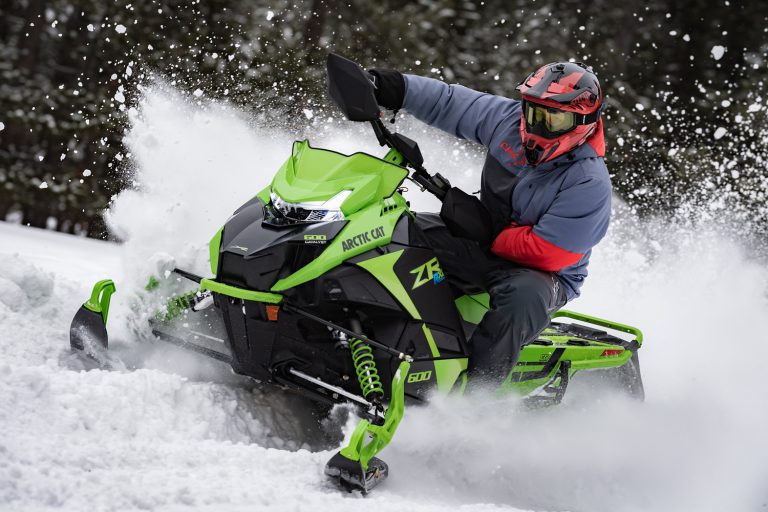
Having reported all these good things, there are a couple realities still to be navigated. If you were paying attention at the Hay Days intro you will remember the three Catalyst models unveiled were – a ZR 137, a RIOT and an M-154 – all powered by the familiar (and effective) Dual Stage Injection (DSI) 600cc domestic-built, 2-stroke twin.
There is not another Catalyst engine option available for the 2024 model year. Common sense would dictate there has to be another power option in the works. At Hay Days, AC did say there’s a “bigger engine” on the way in 2025.
Hats off to Cat’s Thief River Falls team for getting in front of the core issue that has been contentious and frankly, not productive for the company. Specifically, the issue of no new product for too long. I believe Arctic Cat is definitely on the right track. Stay tuned.