For as long as we can remember “fun” when it comes to snowmobiling always refers to mega engine performance: Bigger displacement, bigger horsepower, the turbocharging of already blistering fast engines, life-altering top-end speeds and blinding acceleration.
Yes, you’re right, we’ve pushed this imagery for years and have been dead-guilty of poo-pooing snowmobiles that have less than the maximum amount of power under their hoods. The fact is, we’ve been driven by your demands as much as by ours.
Snowmobilers love power and it’s one of the reasons sales are so strong amongst sleds that meet that somewhat narrow, power-hungry criteria. Power is something every snowmobiler craves and it’s the reason why you see grandmothers ordering brand new turbocharged touring sleds.
Okay, no guilt trip here. We love power, you love power – even grandma tourers love power. So, what’s wrong with that? Nuttin’, is what!
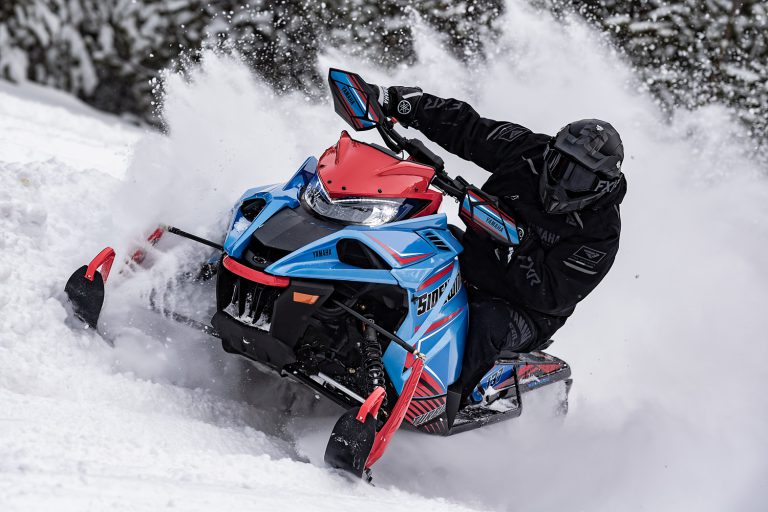
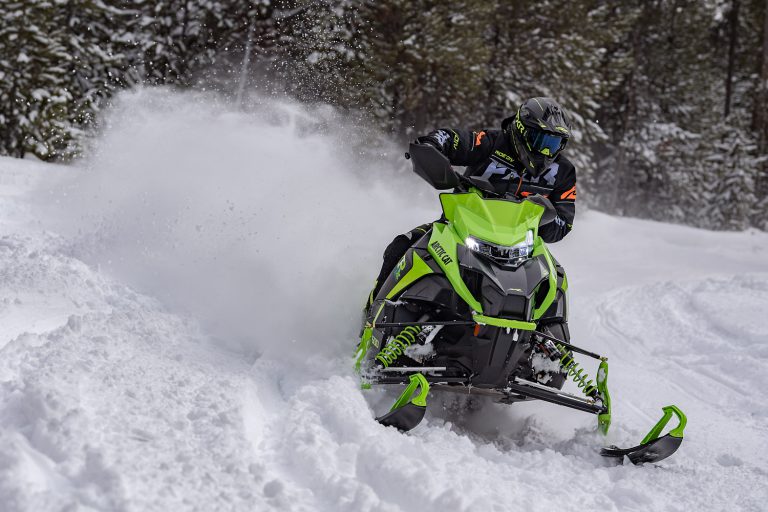
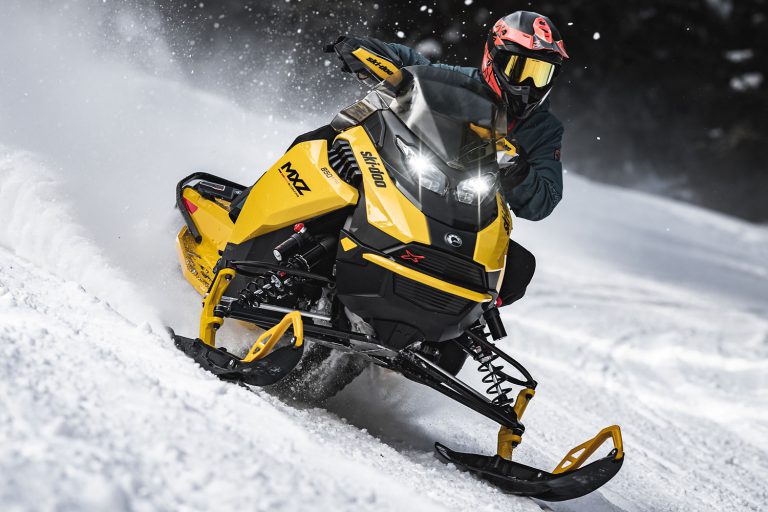
Just to blow-out your perspective though, have you tried out any of the new generation of lesser engine performance sleds out there? I’m talking sleds like the EVO, BLAST, MX-Z NEO and Yamaha’s SXVenom. Wait! Keep reading! We have a point here.
Yes, all of these sleds max out at about 65-horsepower, even less – and that isn’t enough power to cause concussive cranial acceleration or induce nosebleeds. No claim has ever been made that this is the intention of these models; rather their whole reason to exist is about “fun”.
No, we’re not talking about the kind of fun you have hitting triple digits out on a lake or blasting past your buddy’s kitted turbo SRX. As a matter of fact, the aforementioned sleds absolutely will not deliver the same level of fun when ridden with big-inchers and hypersleds.
We’re talking about a different type of fun that includes riders of all different ages and varying experience levels on power matched equipment experiencing snowmobiling together. We’re talking about fun that includes challenging your skills to ride in deep snow without climbing a near vertical precipice, to outhandle your buddies on a local snowmobile trail at legal speeds and to do all this while sipping tiny amounts of fuel.
The fact is, when you’re on the trails, riding any of these snowmobiles is every bit as much fun as riding a hyper-powered sled on the same terrain. Any trail speed you give up – and, surprisingly, it isn’t really that much on tight trails – is gained back in the gobbed-smacked realization you’re actually going a lot faster than you expected.
Each of these sleds is offered with excellent chassis engineering, decent suspension tech and enough comfort features to make a long day’s ride achievable. The very fact an experienced rider can toss any one of them around with abandon, makes them even more appealing.
They’re light and nimble, with agile handling that just dares you to have maximum fun. A seasoned rider can ride with a less experienced spouse or one of the kids and have an incredibly enjoyable day of giggles, whether riding on-trail or off.
Yes, back at work on Monday your macho image around the water cooler might take a hit, but you can find comfort in the fact you have experienced all that snowmobiling has to offer – and what you experienced was unembarrassed, unbridled, no-excuses “fun”!
By now you’re familiar with the Polaris snowmobile recall affecting some 230,000 Polaris MATRYX, AXYS and certain Pro-Ride models manufactured and sold since MY 2013.
Our last update on this issue contained pretty broad strokes of information designed to notify Polaris owners of the affected models Polaris has imposed a stop ride/stop sale order on and that the company was working at full speed to announce a fix, a time table and how to find out if your Polaris was part of the Stop Ride/Stop Sale communication.
As of October 20th a validated repair is available initially on an allocation basis. Owners of affected Polaris snowmobiles have been notified repair kits are available including repair instructions, and training materials.
Dealers have the ability to order repair kits now. Initially kits will be shipped to dealers on an allocation basis. If you are not sure if your snowmobile is included in this recall because you’re a second or third owner you should contact your local authorized Polaris Snowmobile dealer and have your snowmobile’s VIN (Serial Number) in hand.
If you received notice from Polaris your snowmobile is included in the repair you should immediately contact your authorized Polaris Dealer and arrange a time for this free service to be done to your snowmobile.
Under no circumstances should any owner attempt to perform this work. It must be done by an authorized Polaris dealer.
Equally important is not attempting to run your snowmobile – even to load it to take to your dealer for the recall work. If you absolutely must run the engine fill the snowmobile with fresh gas before attempting to start the engine.
As well as implementing the fix on the past model snowmobiles identified here, Polaris has addressed this issue on MY 23 Snow Check snowmobile models currently in production. Shipping of these new sleds resumed in October.
The message hasn’t changed much since our last update on this issue. However, with the repair kits being assembled and shipped regularly, as parts come available, the goal line is now clearly in sight.
About five years ago Ski-Doo had an interesting byline associated with the company’s marketing and advertising. Remember this: “What’s New Is What’s Next”? When I first read that catchy byline I paused for a moment to digest the real meaning of the phrase.
Go ahead and do as I did and you’ll get to the same spot. The byline is 100-percent accurate. What’s new in the sno-mo-biz is precisely what is next. There’s little doubt some of the stuff we’ve seen on the ground for model year 22 and 23 is definitely “new”.
From a technology standpoint you’ve got semi-active suspension with Ski-Doo’s Smart-Shox technology. A similar system that’s a little less developed right now is available from both Arctic Cat and Yamaha. Electronic “connectivity” is increasing every year. Polaris 7S and Ski-Doo’s latest nav system are pushing the envelope of what a cold weather recreational vehicle like a snowmobile can do when technology is integrated. Turbocharging is rampant in the sport right now. When it comes to boosted induction, nothing is more interesting than the Polaris Indy VR1 Boost 2-stroke turbo for trails and Ski-Doo’s 850 2-stroke turbo for the vert market.
Okay, that’s a quick trip around the “whats new” technology aspect of snowmobiles circa 2023. I have more thoughts on what’s next – actually what’s next from the big vantage point. So, seriously – what is next?
We have 180 to 200 horsepower production snowmobiles equipped at the factory with turbochargers. These sleds eclipse the performance of aftermarket modified sleds popular just five years ago.
We have mountain sleds with 3-inch lug, 175-inch tracks, which in the hands of an experienced pilot can literally climb until you run out of mountain. These sleds – in many cases – are unstoppable.
We have a growing fleet of entry level sleds which appear to be carrying lower prices with each subsequent introduction. There is truly remarkable value and credible trail performance in these targeted-at-newbies snowmobiles.
So, here’s my question: What’s the next big thing? Honestly, it’s getting harder to predict where we might be going through the next decade. Let me say this first. I am convinced at this writing electrified sleds are not the next big deal. They will and are entering the market but until they can go 175 miles (280 kilometers) without a charge this method of powering a modern sled will remain useful only to specialized operators.
What’s really happening is this. The snowmobile marketplace is among the most “mature” off-road businesses. Snowmobiles have been around for a long time and OEMs have been able to respond and develop a plethora of variant snowmobiles and ground-breaking tech. Snowmobile makers have been doing this – as I said – for a long time.
Look at emerging SxS off-road platforms and you’ll see segment breaking vehicles are introduced regularly. That’s because the SxS marketplace is still very young. There are lots of places for OEMs to insert new and innovative, targeted products.
So, what’s next? Maybe you have some thoughts on this topic? If you do let me know what you think is next for the sno-mo-biz.
As factory turbocharged induction continues to spread in the sno-mo-biz, you have to accept the reality a substantial number of high performance snowmobile buyers may have some anxiety about laying down copious jing for this technology.
What do I mean by anxiety? For years hypersled buyers have been satisfied to accept that if you trade-in your EFI 600 on an 800 you will go faster. Same goes for trading in your 800 for an 850. More cc’s equal more power equals more speed up Kevlar Lake. Simple.
The equation is different today. Yes, the 4-stroke turbos currently in play from Ski-Doo, Arctic Cat and Yamaha have been generally easy to understand by shifting the power metric to horsepower rather than cc’s. Ski-Doo has offered the ACE 900 4-stroke turbocharged triple in 130, 150 and 180 HP variants. Pay more and you get more HP. Again, simple.
Where it gets complicated and maybe a little scary is when aftermarket tuners tweak these 4-stroke turbocharged triples with the use of a waste gate controller.
This is pretty standard stuff in the automotive aftermarket and for the most part the guys who own sno-mo-4-stroke turbo powered rides know what they’re getting into. In the case of the Yamaha triple turbo used in both the SRX and the T-Cat there is a high degree of confidence in the durability of these engines even with a tweaked waste gate controller.
So, with more turbos being offered than ever before in this biz do you want to jump in and do a waste gate modification or have someone else do this kind of steroid injection on your shiny new Sno-Bullet? It’s widely accepted that high performance sled buyers are the most prolific modification buyers.
Truthfully, back in the day, the modification of choice for power crazed snowmobilers was an aftermarket exhaust system. I don’t mean an aftermarket silencer affectionately referred to as a “can”. Cans are still very popular and relatively easy to install. I’m talking about the installation of full-on dual and triple expansion chambers.
Sadly, the aftermarket pipe business has all but disappeared mostly because of across-the-board implementation of EFI, SDI and DI fuel delivery along with EPA emission mandates. Thankfully, there’s an easier and relatively cost-efficient way to get more power if you’ve got a turbo: An adjustable waste gate controller.
With the recent arrival of factory-built turbocharged 850 2-stroke twins, the plot thickens. These engines from Ski-Doo and Polaris deliver righteous performance with little weight penalty and no discernible drive-ability issues whatsoever. They both produce 165 to 170 (arguably) HP without turbochargers and when using what amounts to a very small amount of boost – just three pounds on the Patriot Boost Indy – those three pounds of boost push available HP upwards almost 15 percent. Not an insignificant number.
Will the aftermarket produce waste gate controllers for these new generation 2-stroke turbo engines? Yep. In fact, this work is likely underway right now. The aftermarket will never shy away from an opportunity to tweak new technologies and offer the public instant HP.
Truthfully, if there’s anything to fear about turbos or turbo-enhancing mods in this proliferation of turbocharged power for snowmobiles it’s this: Manufacturers Retail Suggested Prices. The new fleet of turbocharged snowmobiles (both 2-stoke and 4-stroke) are among the most expensive sleds we’ve seen in the history of the sport.
We get asked this question a lot: What can I buy that delivers really good performance for trails (and maybe some off-trail riding) that won’t break my bank account?
The nature of the question has to pretty much eliminate top performance sleds like the SideWinders, Thundercats, Mach Zs and any of the 800-850 2-strokes. These sleds sit at the top of the price charts and pretty much rule out anyone on a tight budget from buying one – especially a new one.
So where do you go if all your buddies are driving sleds like these and you’re finding it impossible to keep up? Where do you go if you still want the latest platform, better-than-average suspension and best-possible handling?
There are a couple of places to look and it all depends how much you’re willing to compromise to get solid performance at a bargain price. First place you’ll need to check out is the 600-650cc selection out there. Yes, some of the midrange 4-strokes like the Viper and 130-hp Ski-Doo turbo are decent deals, too, however, there is a price limit here and most of these cost more than their 2-stroke counterparts in the same chassis.
The performance level of Ski-Doo’s 600R, Polaris’ 650 and 600 and Cat’s 600 DSI 2-stroke twins fall into the 125-135-hp range and definitely produce enough power to keep your friends with bigger displacement sleds in full view.
Let’s look at these sleds – not in their premium form with all kinds of bells and whistles added to the top line models in the brochure – but rather at the minimalist versions with decent, functional shocks and less electronic stuff.
First, Arctic Cat: The Cat offers its Dual Stage Injected 600 twin. There is no baseline 600 at all and this pretty much eliminates the ZR 6000 from this comparison. Not to say buyers wouldn’t be happy with these choices: it’s just you’ll have to ante up an extra couple grand over the competition’s pricing on more value-tagged models available in their line-ups.
Next, let’s look at what Ski-Doo has to offer the more impoverished rider who still has an addiction to speed. Ski-Doo covers a lot of bases with the 600R E-TEC engine and the company’s top-line sleds like the XR-S and X-series models offer a ton of electronic and shock upgrades. These sleds are good value – if you can find the extra coin to buy them.
However, if you’ve taken a good look at the Adrenaline (137) and Blizzard (129) versions of the MX-Z and Renegade you’ll be surprised how much you get for a lot less than the aforementioned premium model Ski-Doos. Both the front and rear suspensions have been upgraded to match the more expensive ‘Doos with the latest X-series engineering. The only difference is in the dampers but they still use extremely well-calibrated, although less adjustable KYBs – and have a ton of built-in features that make them super-appealing.
The good news is the price has been kept as low as possible and that means a lot more jing left in your pocket. In some markets that can add up to about two grand in savings – for a really good, competitive sled!
Polaris now offers its 650 in a bargain-priced sled, the Indy SP. Its power and torque – especially when evaluated from the seat-of-the-pants, puts its drivability rating mighty close to some 800 class sleds from the past. Pricing puts it below Ski-Doo’s Renegade Adrenaline and MX-Z Blizzard 600R.
Our final rating of the Polaris SP and the Ski-Doo Adrenaline and MX-Z Blizzard clearly makes the value choice hard to decide on. You’ll pay a few hundred more for the Ski-Doo variations but you’ll get all the latest stuff. On the other hand, with the SP you’ll get a very competitive sled that can still compete against the big guys. Your wallet; your choice.
AJ gives you a detailed look at the 2023 Arctic Cat BLAST XR 4000 Touring featuring the 65 horsepower, 397cc single-cylinder EFI 2-stroke BLAST engine, 2-up seating, a 146-inch track and a 40-inch wide trail width front end.
If you’re predisposed to mostly flatland snowmobiling, an important new, 2023 Polaris powerplant may have slipped by you this past spring.
Here’s the skinny: Polaris is offering – in limited numbers – a 900cc normally aspirated, factory modified Patriot twin. The engine is completely spun off the current 850 Patriot twin architecture but has myriad factory modifications that produce a 7-percent improvement in peak HP and a nearly 20-percent jump in peak torque. These are not inconsequential numbers.
Without getting bogged down in techno-details, let’s analyze what Polaris is up to with this mostly unprecedented move. First, Polaris is obsessed with maintaining its market share lead in the deep snow market. Offering this one-of-a-kind factory mod (basically a hillclimb powerplant) engine to the masses gives Polaris a leg up on the competition (Read: Ski-Doo) in the top hillclimb classes.
That’s not rocket science and this bald faced, unapologetic introduction of a mill using a plethora of CNC Billet machined parts is a calculated investment in the continued strong equity Polaris and its RMK brand hold in the western market.
Okay, are you good with this analysis so far? Here’s where we step off the obvious path and think about the future. If Polaris can mass produce these 9R engines in sufficient numbers and offer a full factory warranty, we have to believe there’s more up the Polaris corporate sleeve.
Last time I checked it was made crystal clear to me that if you build more of whatever you have expertise building, something called “economies of scale” kicks in and makes every unit you build more profitable as you build another, and another and another.
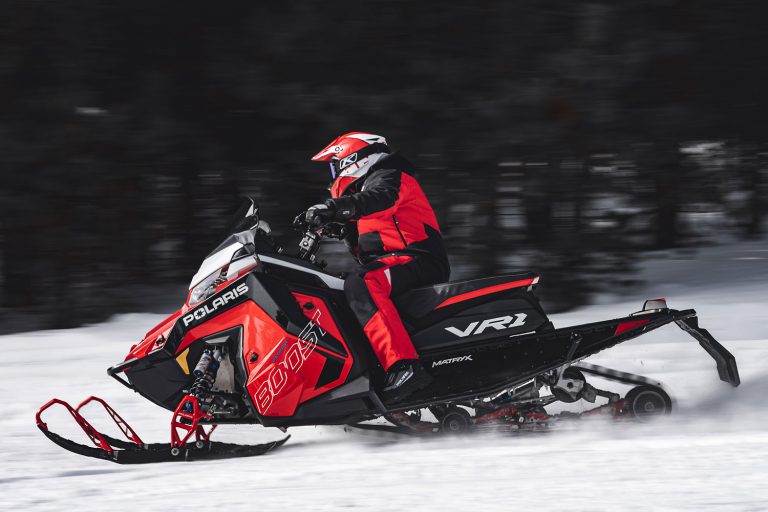
Would flatland, trail and boondocking buyers be interested in the 9R to power their MATRYX Indy VR1, Indy XCR or Matryx Assault? Ah, yes they would. Hands down, running away they would! In fact, we think the perfect place for the 9R to go next is in an XCR variant – the XC-9R.
The improvement in throttle response from a low inertia crank and flywheel are enough to put you in front of your power crazed buds on normally aspirated 850 Patriots. What about nose-to-nose down Kevlar Lake with an 850 Boost? We estimate the 9R will step out on the Turbo for the first 100 to 150 feet but then the enormous power of the now fully boosted turbo fights back with a ridiculous surge of bare-chested thrust. Keep in mind, an XC-9R would be at least 20 pounds lighter than the Boost Indy VR.
If all this takes you deeper into your speed induced psychosis – we’re with you. If we were Polaris we would look very seriously at leaving the big switch on at the end of the Osceola 9R engine production line for maybe 20 minutes a day – for a couple weeks, then merge those engines with a full-on ditch-banger-ready XC-9R Matryx .
Polaris could dream up any kind of MSRP they want for this new model as long as they kept the total numbers relatively low and Snow Check-only available. After all, only a year ago most snowmobilers wouldn’t have believed Polaris would take the 850 Boost to the trails.
There’s a lot of stir amongst 4-stroke fans about the outright audacity of Polaris introducing a big-inch 4-stroke twin this year. Doesn’t Polaris know that all performance and semi-performance 2-strokes should be triples?!!
Yeah, a bit tongue-in-cheek but isn’t it true that the strongest selling, longest popularity has come from 4-stroke triples like Yamaha’s 1049 and 998 and Ski-Doo’s ACE 900?
If you compare the sales of just those three 3-cylinder engines over the last five years, the numbers would likely eclipse all of the 4-stroke twins and V-twins ever offered in a snowmobile – all time!
So, what’s the fascination with triples? On the negative side, there’s a lot more complexity and moving parts in a triple (hmm, about 30-percent more, I’d say, compared to a parallel twin). This adds up to extra weight and even some physics challenges with a long crankshaft rotating at high RPM whose centrifugal force is trying to turn 90-degrees against the sled’s line of momentum. None of that seems to matter. It’s really about two things: smoothness and sound.
If you need proof, reach into your memory banks and recall when Arctic Cat offered a Suzuki-built 4-stroke twin (both EFI and turbocharged) in the current ProCross chassis. The twin was as reliable as Abe Lincoln and made enormous power in its turbo version.
The 1170cc twin was also a really good powerplant without a turbo – but Cat had trouble getting snowmobilers to believe in it. Apparently, it didn’t sound good enough.
Gotta admit, when the company swapped over to the 1049 triple in the ZR and the 998cc turbo for the Thundercat, it immediately got snowmobilers juices flowing. The banshee wail of either triple powering down the lake at full cry was unmistakable – and unforgettable!
I guess my point is this: None of this is about technical superiority. Twin cylinder 4-strokes such as the jewel-like Phazer 500, Polaris’s old Weber 750 – even Ski-Doo’s dimunitive 600 ACE twin, did the job they were intended for and often overachieved in their applications. None of them set sales records.
The triple cylinder sound and smoothness thing is an interesting phenomenon. Back in the day, 2-stroke triples like the original Thundercat and Mach Z held center stage and compared to 2-stroke twins displayed almost no vibes through the handlebars or running boards. The exhaust note those engines made quickly was dubbed by Supertrax: The National Anthem of Snowmobiling!
So, what happened to all those 2-stroke triples – the same ones that made enormous, high-revving power? Well, they got replaced by torquier, lower revving 2-stroke twins! Go figure.
Not saying the same thing is going to happen with 4-stroke snowmobile engines but Polaris with its new S4 twin has gone away from the even-firing design (Suzuki 1170 and Weber 750) and gone to a more conventional alternate-firing layout. This means the two cylinders fire at 270/450-degrees, one, then the other. The sound is much cleaner and has a delicious exhaust note.
We’re quite used to this new Polaris S4 engine, having sampled it in various horsepower outputs in the off-road biz, and it’s very responsive, versatile and responds well to turbocharging. It also has a really sweet exhaust note – and that should just about do it for snowmobilers.
Now, Dasher! Now, Dancer! Now Prancer and Vixen! On Comet! On Cupid! On Donder and Blitzen!Now dash away! dash away! dash away all! These famous words spin ’round your head on one awesome trail after another. It’s a dream come true to ride such a never-ending abundance of wide, sweeping, scenic trails – and they just kept on coming, in and around Canada’s newest sledding playground – the Christmas Mountains of Northern New Brunswick.
Last March, our crew trailered to Edmundston, staging from there for a four-day, saddlebag tour. We’d heard that the Christmas Mountains are fast becoming a New Brunswick go-to destination and wanted to see what it is has to offer.
Dreaming The Ride
Little did we know that there’s much more to the Christmas Mountains than first meets the eye. The project had a soft launch for the winter of 2021, just in time to mark the 40th Anniversary of the New Brunswick Federation of Snowmobile Clubs (NBFSC). But there’s also a remarkable backstory to the Christmas Mountains – a real eye opener about how to create an extraordinary snowmobiling destination. Here’s the story behind the story…
Top notch signage at every intersection.
Ross Antworth, now retired General Manager of the New Brunswick Federation of Snowmobile Clubs (NBFSC), wanted to bring the Black Hills of South Dakota home. After a 2007 visit to this iconic snowmobiling area, Antworth envisioned transforming a series of north-central New Brunswick peaks in the remote interior, into a must-visit destination in Eastern Canada. But along with the NBFSC, it took a host of committed partners and stakeholders, including First Nations and all levels of government, about 15 years to bring the Christmas Mountains dream to life.
Christmas Mountains Assets
That achievement couldn’t have happened without a confluence of prior events. Topography provided a solid foundation thousands of years ago, positioning Northern New Brunswick as far north as Saguenay Quebec or Cochrane Ontario. Geology contributed a sub-range of the Appalachian Mountains so the New Brunswick interior benefits from the colder climate of higher elevation. Both of these factors combine to deliver a must-have for a great snowmobiling destination: long, cold, snowy winters for early and late riding, often to the end of April.
The forestry industry added its own important contribution in the mid-nineties, when it began building logging roads in these north-central mountains. The resulting network of corridors and bridges, engineered to support the weight of logging trucks, provided an invaluable trail framework for the newly envisioned snowmobile destination.
Then around 2010, the “Northern Odyssey Tour” was introduced as a new snowmobiling experience in Northern New Brunswick. It’s an exceptional snowmobile adventure anchored by Edmundston, Campbellton, Bathurst and Acadian Peninsula. Still going strong, the Northern Odyssey provided a network of trans-provincial trails with numerous connections to towns, services and amenities, that helped open the remote interior access for trail riders.
Centrally based groomers keep remote trails smooth.
What’s In A Name?
Let’s not forget Arthur Wightman. A New Brunswick member on the Canadian Permanent Committee on Geographical Names, Wightman was also a major contributor to the Christmas Mountains project. In 1964, he named ten previously unidentified peaks in north-central New Brunswick. Somewhat whimsically, Wightman dubbed them with Santa and his reindeer in mind: Mount Dasher, Mount Dancer, Mount Prancer, Mount Vixen, Mount Comet, Mount Cupid, Mount Donder and Mount Blitzen, plus Mount St. Nicholas and Mount North Pole.
Wightman’s naming was inspired by the 1823 poem quoted at the outset of this article, whose memorable first line is “‘Twas the night before Christmas, and all through the house…”. Apparently, Rudolph, who wasn’t popularized until 1939 in the holiday season song “Rudolph the Red-Nosed Reindeer” missed out on a summit of his own. Located near Mount Carleton, the highest in the province, these peaks soon became collectively known as the “Christmas Mountains”. Little did Wightman know that his fanciful monikers were destined to become a very special snowmobiling brand 57 years later.
The Hub Concept
Fast forward to more recent times. Many important building blocks for a “Black Hills” style destination were already in place in New Brunswick. But the question was: How to bring them together and optimize their collective value? A great place to start was with some of the attributes that have helped make the Black Hills successful. So in 2013, the NBFSC commissioned renown Trails Work Consultant, Kim Raap, to write a report called the “Snowmobile Trails Development Plan”.
That plan described how snowmobile operations in the Black Hills revolve around the Hardy Work Center. Run by the US Forest service, this historic collection of two log cabins, one logshop/garage and two modern garages, is located in the remote heart of the Black Hills. It’s used by employees of the State of South Dakota in the winter to maintain snowmobile trails.
The centralized concept in a remote area enables a more effective and efficient grooming operation with dedicated groomers and paid operators stationed on site. From this hub, groomers can spoke out regularly, doing one-way passes on runs that loop back to base. And with groomers & operators centrally located, grooming surrounding trails is their only priority and occurs more frequently.
If the machines were individually based miles away at various towns, keeping these remote trails smooth wouldn’t happen as often. Also, it’s much easier for groomers at a central base, closer to their grooming runs, to undertake early and late season grooming, when surrounding access trails at lower elevations don’t have enough snow.
Photo Credit: Al Fletcher
Show Us The Money
Several years later, the province recognized project progress when the proposed “Christmas Mountains Snowmobile Network” was designated a “Signature Trail” attraction in the New Brunswick Trail Action Plan. This document rated the Christmas Mountains project as 90% ready to meet the Signature Trail criteria of being strategically located, safe to ride and sustainable into the future.
Soon after, a multi-million investment transformed the existing operational base for the staff of Mount Carleton Provincial Park into a contemporary New Brunswick equivalent of the Black Hills’ Hardy Work Center. The New Brunswick government funded two new groomers located at this new hub, and trained staff to operate them for the winter months to take the grooming load off area snowmobile clubs.
A new fuel depot now keeps the groomers running (and provides gas daily for visiting sleds), while a magnificent new warm up facility is open daily (until 11 pm) with bathrooms and WIFI for winter visitors, plus store & snacks (open Thurs. to Sun). Several new park bridges were built to accommodate the new groomers, while new warm up shelters now offer rest stops on Christmas Mountain trails.
Gateways & Access
As our crew did, riders can access the Christmas Mountains from several gateway staging locations: In the west, from Edmundston (180 km via NB12 & 19) or Plaster Rock (115 km via NB23); from the east via Bathurst (129 km via NB19 or 23); or to the south from Doaktown-McNamee (184 km via NB58) or Miramichi (212 km via NB52 & NB23). And true to their Christmas theme, several hundred kilometres of new trails are shown in red on NBFSC print and online maps. The trails are named Prancer, Dancer, Vixen, Comet Cupid, Candy Cane and North Pole (once again, latecomer Rudolph didn’t make the cut).
Meanwhile, ride-in lodgings for the Christmas Mountains are located in Saint-Quentin (53 km northwest on NB19), Nictau (50 km west on NB23), Roger’s Lake (80 km east on NB23) or north at Island Lake Lodge (60 km on NB19) & Sugar Camp (80 km on Trail 301). The closest accommodations to Christmas Mountains trails are Serpentine Lake Lodge (on NB58) and Governor’s Wilderness Resort (on NB23).
A Work In Progress
The Christmas Mountains is a dream coming true. But it’s still a work in progress. Developing Mount Carleton Lodge into a 7-day a week winter operation for food service and winterizing existing their accommodations, would be beneficial. Having both a Christmas Mountains trail map and background info mounted on wallboards at Mount Carleton Lodge would help build visitor interest. So would “Welcome to the Christmas Mountains” billboards on every trail leading into the area to promote its status as a go-to destination and let visiting riders know they’re arrived.
One other valuable asset of the Black Hills hasn’t yet been officially realized in the Christmas Mountains – an integrated backcountry riding component. With Crown Land prevalent throughout the 52,000 acres of Christmas Mountains, plenty of legal opportunities exist for powder riding. Remember all those logging roads I mentioned earlier? Many are now unmaintained, endless corridors where local backcountry enthusiasts already get their ya-ya’s out. But so far, visiting riders are left to discover backcountry opportunities on their own, whereas designated and promoted areas (and guided rides) would solidify the Christmas Mountains’ growing reputation as powder central.
Riding The Dream
Regardless, 15 years after Ross Antworth brought a dream back from the Black Hills, the Christmas Mountains now provides an outstanding trail riding experience – early, late or anytime in between. It’s a natural complement to the Northern Odyssey, albeit a destination all its own. Areas towns and remote operators are already reaping the rewards from a notable increase in ridership to the area.
Many other snowmobiling regions could use the New Brunswick playbook to help create their own special destinations. Yes, it’s truly Christmas all winter long in Northern New Brunswick – so now’s the time to start planning your Christmas Mountains adventure ride this winter!
Don’t know if you’re finding this as your reality or not, but the need to listen and watch the news (and be very discerning about what news medium and provider you follow) has never been more important than it is right now. Many in the powersports media are being overwhelmed with questions about the Internal Combustion Engine’s (ICE) future.
Over the past two years we’ve commented on virtually every aspect of the potential for a legitimate electric snowmobile. Supertrax/SnowTrax has been 100% honest with where we think this might be heading. Continuing on this theme, I have detected a subtle but nonetheless tangible softening of the previous posture that proclaimed: “everything ICE powered is going electric”.
Contributing to this slight but measurable shift is Toyota’s totally transparent endorsement of Hydrogen ICE powerplants. Frankly, it is refreshing to see a giant OEM claiming the Hydrogen ICE is oh-so-close to becoming legitimately viable as a zero emissions powerplant. This is great news for not only the auto industry but all industries facing the shift away from ICE power.
Look up the reams of info on this subject and you’ll see just what the potential is for Hydrogen ICE’s in the not too distant future. Frankly Hydrogen power could obsolete battery/electric power in a heartbeat and have huge positive implications on the nasty toxic waste issue surrounding mining the minerals to make lithium-ion batteries and discarding batteries now in use and in production.
So that’s one voice standing in the wilderness proclaiming scientific fact. What else is being said about battery/electric power?
The general media has been handwringing regarding the realities of electric car range numbers in cold weather climates. There’s little doubt the range numbers being tossed around in the media are virtually all warm weather climate derived without the vehicles A/C running.
Only a week ago I read a report that virtually trashed the current range claims gradient with this bald-faced admission: Current range claims are all at least 10 percent too high when operating an electric vehicle in a 20F environment.
Okay, that doesn’t sound too terrible. But get this: The article went on to say that if the heater is run the numbers are nearly 30% too high! Ahh, just sayin’, but who is going to drive their car on a 20F day with the heater off?
From crazy comments like the last one to emerging technologies like hydrogen power, to pictures of line-ups at California electric “recharge stations” as a result of too few places to recharge versus the number of electric vehicles in service in California, the boiler plate argument “it’s all going electric” has an increasing number of holes in it.
Honestly, the over-indulgent attitude proclaiming electric/battery power will obsolete ICE has been overstated to a large degree from the early days of electric automobiles. I think we’re in for some eye -opening new ideas that may be immeasurably more suitable to our off-road, cold weather market snowmobiles.