Home Blog Page 216

HOW USER-FRIENDLY ARE TODAY’S SLEDS?

0

It was less than ten years ago the snowmobile industry was concerned about new people having the inclination to get into the sport.

The feeling was that because sleds required some unique aptitudes to ride and enjoy, only a very small percentage of the populace would be interested in getting involved. The accusation was that market growth was limited by the machines themselves.

It was really true, actually. Back then many sleds were carbureted and required a special ritual of using a tricky enrichener or choke to get them fired and then they burbled and stuttered until they were warmed up, belching smoke all the way.

EFI has completely cleared up this problem and made starting, warm-up and idling a mostly smoke-free no-brainer.

Suspension compliance has really been stepped up and with rider forward ergonomics putting less stress on riders’ backs, the days of hammering along trails until you were so exhausted you just wanted to get home, are over.

Same with handling. The OEMs have placed a tremendous amount of focus on keeping the steering feel as light as possible so beginners don’t have to feel like they need to be bench-pressing school buses to turn the bars.

Yamaha’s power steering is an ideal fix that has a lot of appeal to the novice rider.

Last, sleds are much warmer and more comfortable than they used to be. Air management around the rider, both warm air from under the hood and the air passing along the outside of the sled and around the riding compartment allows for warm feet, hands and no rapid drops in core temperatures when the thermometer drops.

Seat heaters, warm windshields and thumb and handwarmers have been perfected to make the riding experience way better.

Today, you can invite the most city-fied person to take a first ride on a sled and be sure they will be comfortable and not offended by the experience. Pretty good progress.

WHAT’S THE MAXIMUM POWER?

0

Today’s most powerful 2-strokes are putting out between 155 and 163 horsepower and Arctic Cat’s 4-stroke 1100 Turbo makes a claimed 177-ponies while Yamaha’s Apex delivers 162 naturally aspirated stallions.

This is serious horsepower and with the built-in chassis lightness of many of these sleds, their power-to-weight ratios are crazy good.

We’d be the first to admit that snowmobilers (ourselves included) are pretty much addicted to power but, honestly, you have to eventually ask the question: “How much is too much?”

A few years ago Ski-Doo offered a 1000cc SDI 2-stroke that eclipsed the 175-hp mark and it was a pretty big hit for a couple of years.

At the time Ski-Doo’s other big-inchers (800 PowerTeks) were making power in the 138 range and the 1000 seemed like the gateway to big-time muscle.

Now with an E-TEC 800 putting out a pretty honest 162 in a way lighter package, we wonder if the maximum 2-stroke power ratio has been reached.

Then there’s those turbocharged Arctic Cats! These extremely durable engines can be amped up to almost 300 reliable horsepower if you tweak the turbo system.

Yamaha has long been turbocharging Apexes and Nytros and, with mods, you can get these engines up into the 250 to 300 range, too.

This is crazy power but whenever there’s a demand, the OEMs seem to step up their game and meet their customers’ expectations.

Can we even be so bold as to suggest that someone may come with a from-the-factory turbocharged sled that makes over 200 ponies?

It seems almost ludicrous, but we run out of fingers and toes when we count up the people we already know who would put greenbacks down to get a sled like this. Hmm.

SAE Snowmobile Challenge for 2013

0

The Snowmobile Challenge for 2013 will be held March 4-9, 2013 at the Keweenaw Research Center at Michigan Technological University in Houghton, MI.

This year 21 teams have registered for the event – the most ever in the history of the event!

The members of the International Snowmobile Manufacturers Association (Arctic Cat, BRP, Polaris and Yamaha) are proud gold level sponsors of the event. Staff from all of the manufacturers will be involved in the event and many serve as judges and reviewers of the many activities.

The SAE Challenge includes such activities as:

1. Endurance run from Houghton, MI to Copper Harbor
2. Technical presentations regarding emissions and design presentations
3. Subjective handling event
4. Acceleration test
5. Scientific testing for emissions levels and sound

Further information on the Snowmobile Challenge can be found at www.mtukrc.org.

RIDE IMPRESSIONS: 2013 RUSH PRO-R 600

0

We’ve had a chance to put some miles on three very different 600 2-strokes so far this winter and the results are pretty interesting.

The candidates are the 600 RUSH, the 600 Indy SP and the new XS MX-Z X. Here’s Part III…

After riding the Indy SP we just had to ask ourselves: “Would we pay more to ride a RUSH?” With that question burning in our brains we approached the RUSH with a very critical attitude and came away feeling that, yes, it is worth the extra bucks to own a RUSH.

Why? First of all, this sled feels completely different than the Indy. The rider sits taller in the saddle and the back end flat-out works fabulous.

The gauges are better and the whole riding experience is a step up from the Indy. Even though the Indy is completely acceptable, we felt there was a pervading sense of quality about the RUSH that made it feel like it was well worth its price.

Somehow, the RUSH feels more substantial and handles the bumps with a tad more confidence than the Indy.

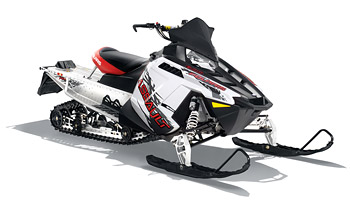
Certainly, the high speed, deep stuff is well in control with the Pro-Ride back end and the marriage of that external shock skid to the Polaris non-parallel A-arm front end has been perfected beautifully.

We love the way the RUSH transfers and explodes itself out of the hole on acceleration. You can have wheelie contests with this sled and win!

RIDE IMPRESSIONS: 2013 SKI-DOO 600 MX-Z XS

0

We’ve had a chance to put some miles on three very different 600 2-strokes so far this winter and the results are pretty interesting.

The candidates are the 600 RUSH, the 600 Indy SP and the new XS MX-Z X. Here’s Part II…

The newest version of the 120-inch MX-Z is a real step up from the former XP.

The ergonomic changes are immediately noticeable when you ride it. Most certainly, its biggest asset is rMotion.

We’ve said it before and it bears repeating: This skidframe is the very best in the business and sets the standard for everyone else to match.

You can ride over crushing trail junk and not even feel it. It never comes close to bottoming but uses almost all of its travel to deliver amazing plushness even when ridden very aggressively.

There’s never a sense this back end is “packing up” at the bottom of its travel – just a great, smooth ride that always keeps you in control.

The 600 E-TEC is still an amazing powerplant delivering great mileage and impressive power.

Frankly, we can’t tell you which engine’s performance is better here – the 600 Cleanfire or the E-TEC. They are both great mid-sized mills.

The combo of ride and power with this MX-Z makes you wonder why anyone would ever need more.

GET PREPARED BEFORE YOU RIDE

The Ontario Provincial Police (OPP) and the Ontario Federation of Snowmobile Clubs (OFSC) are reminding riders that a snowmobile can quickly take you away from areas where services, communities and emergency assistance are easily accessible or available.

Responsible snowmobilers take charge of their own safety and well-being by preparing their sled, gear and equipment before the first ride of the season.

In addition to getting properly trained and knowing the law, there are other factors to consider when getting ready for safe snowmobiling:

Service Your Sled – Avoid breakdowns that can leave you stranded by having your sled professionally serviced before your first ride.

Carry a Repair Kit – Ensure that you have either the sled manufacturer’s tool kit or one of your own on board, including owner’s manual, spare belt and spark plugs.

Inspect Your Gear & Equipment – Make sure that everything still fits and works properly, and that nothing is missing before you head out.

Prepare for First Aid – Pre-assembled first aid kits can be found at outdoor stores and online and so can information about first aid courses.

Get a Survival Kit – Any unexpected day or night spent out in the cold will be easier with assistance from a good survival kit, found at outdoors stores and online, including information about winter survival courses.

Go High Tech – Devices like GPS, cell phones, satellite phones and SPOT Personal Trackers can be very useful in avoiding or dealing with emergency situations.

Contact Companions – Snowmobiling is more fun with riding buddies, and safer too, so avoid riding alone by getting in touch with friends and family who can join you on the trails.

your familiarity with your sled’s safety manual and the Safe Riders messaging on the OFSC website ofsc.on.ca/safety.

The OPP is committed to saving lives on Ontario’s highways, trails and waterways through the reduction of preventable injury and death. Initiatives are developed and delivered through the Provincial Traffic Safety Program. Visit opp.ca for more information.

The OFSC is committed to proactive leadership in promoting safe, responsible riding, on and off Ontario snowmobile trails, by building safer snowmobiling knowledge, attitudes and behaviours through rider education, safety legislation development and enforcement. For more information, visit ofsc.on.ca.

RIDE IMPRESSIONS: 2013 Indy 600 SP

0

Three 600s To Go! We’ve had a chance to put some miles on three very different 600 2-strokes so far this winter and the results are pretty interesting. The candidates are the 600 RUSH, the 600 Indy SP and the new XS MX-Z X. Here’s part I…

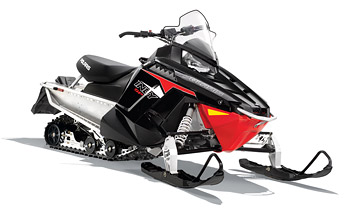
When you ride the Indy you can’t help but be impressed with its lightness.

This sled actually feels lighter than the MX-Z (it isn’t), but its steering is so flickable and its responses in the corners are so intuitive it just feels like a feather on the trails.

Even the view over the windshield and the ergonomics of the driving compartment deliver an impression this sled is smaller than the other sleds (it isn’t).

This writer’s first take was “this thing feels like your riding a fan-cooled sled”. Of course one dip into the throttle and you know for certain your not.

The Indy hauls booty and that Cleanfire mill is a real powerhouse in this chassis. Very fast, very responsive on the trails and much, much more than we expected.

Although the back end isn’t as good as a RUSH or especially the MX-Z with rMotion, we felt the ride was completely acceptable.

The front end is nothing short of magic!

How About A Brand New Vintage Sled?

0

It’s impossible to deny the growing interest in vintage iron and the number of sled projects people are getting involved in to restore and resurrect sleds from an earlier era.

The number of vintage snowmobile races, ride-ins and shows is increasing every year and the old stuff, particularly the sleds from the pre-80’s period with leaf spring front suspensions, are becoming more common out on the trails.

Eventually we need to ask the question: Are these sleds having any effect on the new stuff we’re seeing in showrooms?

It’s kind of a reverse engineering concept and, honestly, it’s really impossible to negate the technology advances we’ve seen in the last thirty years.

Also, there are so many EPA and government conformities today, the OEMs couldn’t very well go backwards with what is currently on the drawing boards.

One obvious change we’ve seen the last couple of years has been paint schemes to commemorate popular sleds of a bygone era. Polaris, on its Pro-R series sleds, has offered a unique 1970s and ’80s TXL red, white and navy blue paint scheme and it’s been a big success.

In 2012, Arctic Cat presented a black and gold minimalized paint scheme for some of its ProCross sleds reminiscent of oval racing Cats of the 1970s. This, too, was a popular rendition. Is a paint job enough, though?

We’ve heard rumors the manufacturers are so aware of the growing interest in vintage snowmobiles, there’s been consideration given to offering a limited edition, mid-performance model with a leaf spring suspension, carbureted powerplant and styling similar to popular models from a time when sleds were, lighter, simpler and way cheaper.

Obviously, the numbers built would have to be small but the logic is that because the snowmobile has reached such a high level of perfection, many potential buyers would be attracted to a sled like this that offered new millenium reliability and the cache of those older models. Price would be a huge factor.

Interesting conversation, but would you consider buying a brand new leaf spring sled like this?

RIDE IMPRESSIONS: 2013 Polaris RUSH 800 Pro R

0

Now that the snow has arrived pretty much everywhere people snowmobile we’ve had a chance to sample a few 2013 sleds.

As you’ve read, we’ve been very impressed with the 800 Cats but also have to give kudos to the Polaris RUSH 800.

Although the sled doesn’t appear grossly different from last years version, the product people have been busy getting all they can out of the RUSH rising rate rear suspension to get it closer to Ski-Doo’s rMotion.

This year’s RUSH has stepped up considerably (again) and its performance over trail chop and deep whoops at trail speeds is even better than last year’s vastly improved Pro-Ride.

Keep in mind there are two advantages to this style suspension: First, there’s very little chance of bottoming it if it’s set up right for the rider’s weight.

Second, this back end transfers like no other sled out there. It will lift its skis on command and carry a “wheelie” for a long way if you keep the gas on. This feature enables the sled to get out of the hole and accelerate hard way past its midrange.

It only gives up a bit to the competition at the top end but this 155-plus engine is a beauty to ply and runs extremely smoothly for a big-inch 2-stroke. Clutching is superb, just as it was last year and the handling is absolutely premium.

Certainly one of the nicest handling snowmobiles we’ve ever ridden. Its neutral turn-in and predictable oversteer lets you get the tail out and stay deep into the flipper on exits. Just so intuitive and fluid you can’t believe it.

As this is being written we’re testing some of the other 2013’s and will continue to report our findings. Stay tuned!

ISSUES WITH MXZ RENEGADE 800r

Dear Motorhead:

I just purchased a 2009 MXZ Renegade 800r. It has only 300 miles on it so it’s essentially brand new. I’m a long time Arctic Cat rider and this will be my first Ski-Doo model.

I’m interested on your take about this particular sled and if there are any hiccups that I should be aware of.

Thanks,

Dave

Thanks for your email!

Wow! You certainly scored a sweet deal on a ’09 with only 300 miles!

This is a really good snowmobile with exceptional power (over 150 HP). The only downside of this engine is the relatively heavy throttle pull which was alleviated when the mill went E-TEC two seasons ago. Fuel economy will surprise you and oil consumption is equally good.

If you ever blow a belt pay strict attention to any cording getting wrapped around the PTO stub of the crank behind the fixed half of the primary sheave. These motors have been prone to PTO crank seal failure from debris left after a belt explosion. The sled is not predisposed to belt failure but you know it can happen.

The rest of the sled is pure XP – light and nimble. I would suggest you add the extra, outside carbides to the skis if not already there.

Pilot 5.7’s on XP’s can be nervous but settle exponentially when the optional outer carbides are fitted.

Great sled – have a great winter!

Motorhead Mark