Home Blog Page 78

SNOWTRAX TV 2020 – Episode 4 Sneak Peek

0

Coming up on the next episode of SNOWTRAX TV…

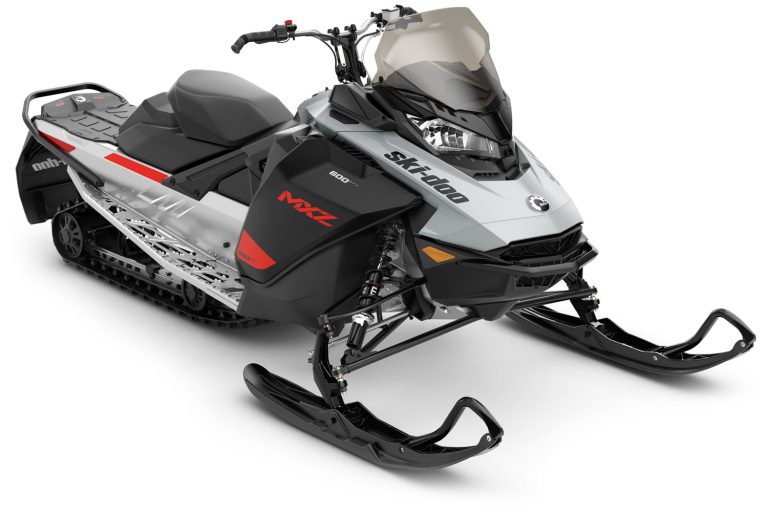
AJ drags the 2020 Backcountry Xrs into the TRAIL TECH shop to make it a little bit more family friendly while preserving its macho appeal with the addition of some key accessories from Kimpex. Key to its multi-use transformation is the popular Seat Jack from Kimpex which includes heated hand grips, adjustable backrest and an RCA outlet which can accommodate the passenger rider’s heated helmet shield.

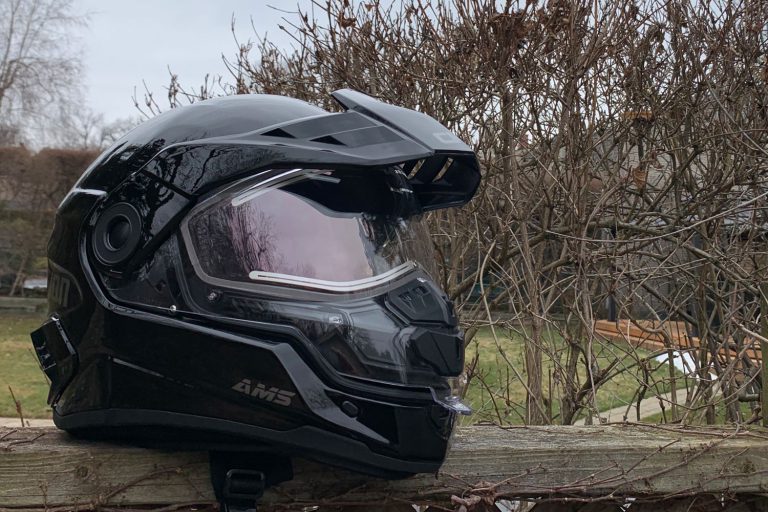
Further adding to its trail-ability, AJ installs a set of Kimpex RUSH style skis along with Kimpex Rouski Gen3 retractable ski wheels which make steering easy while at the same time protecting your skis and carbide runners from premature wear. Rounding out the transformation are some additional accessories to aid with visibility and comfort along with a review of the CKX Mission helmet with all new AMS technology.

Then AJ turns his attention to EVOlutionizing our Indy EVO to keep up with the growth spurt of our junior sled-head. With the purchase of the EVOLUTION kit from Polaris your mid size Indy EVO can be easily transformed to a larger full-speed 550 Indy.

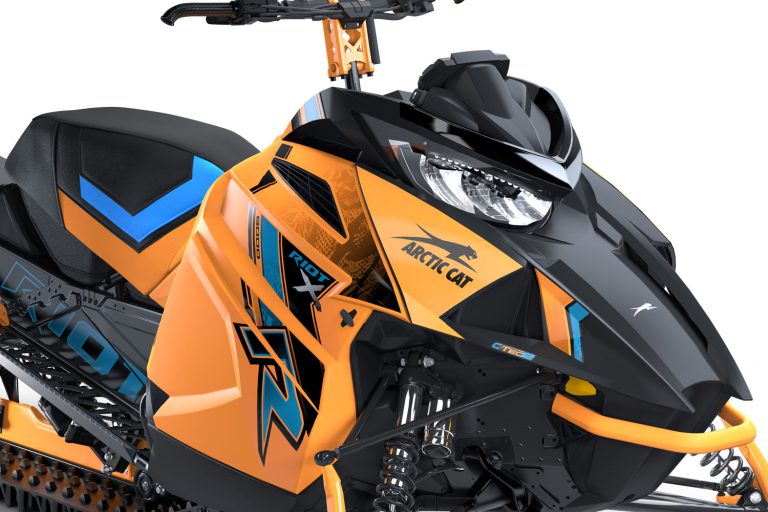
Finally in TEST RIDE, Luke ventures deep into the backcountry with Arctic Cat’s 2020 RIOT X 8000 and pushes its limits to see if it can really conquer any challenge.

MBRP QUIET SERIES TRAIL EXHAUST

0

Finally! An aftermarket exhaust company has answered the call trail riders have been begging for. Introducing MBRP’s Quiet Series exhaust for the Polaris Patriot 850 and Ski-Doo’s 850 and 600R E-TEC equipped sleds.

Key to the Quiet Series design is a decibel equivalent aftermarket exhaust which is packaged in a slick looking oval shape 304 Stainless steel and TIG welded body.

The new 430Q for Polaris and 132Q for Ski-Doo snowmobiles go further and shed 6-pounds off the stock mufflers while delivering a 1-horsepower increase in power.

Substantial R&D and Dyno testing focusing on increasing maximum flow while damping sound to stock levels as well as delivering weight savings along with an increase in horsepower were all key metrics which absolutely had to be met.

After testing both exhausts we were totally blown away at how close in sound the new Quiet Series exhausts are to stock. MBRP informed us that while the Polaris exhaust is just a tad louder than stock they were able to match the decibel level for the Ski-Doo 850 and 600R E-TEC engines.

What’s more impressive is the enhanced exhaust note and crisper throttle response. Both exhausts really come to life past 3/4 throttle and generate that signature and pleasing MBRP exhaust note which enhances the deeper tone of the engines while keeping the sound level at trail friendly levels.

Both the 430Q and 132Q come with a limited 2-Year warranty protecting the consumer from manufacture defects. While it is still important you check with your local authorities on rules and regulations on using an aftermarket exhaust, we are happy to say that MBRP is paving the way to a trail compliant exhaust that delivers on performance.

For more information on MBRP’s full line of products visit: mbrp.com

UNDER-ACHIEVERS FROM THE PAST: ARCTIC CAT TRAIL CAT

0

Down through the history of snowmobiling there have been snowmobiles built that fell short of expectations. At that time, the idea behind them seemed good – but the execution just didn’t pan out…

ARCTIC CAT TRAIL CAT

By 1979, because Polaris had nailed the market with the intro of the IFS Indy, the competition had become fully aware independent front suspension was the wave of the future.

There was no going back – but Polaris had such a jump on the market with its technology, it was going to take some time for the other sled-makers to catch up with IFS tech of their own.

Arctic Cat, always keenly aware of what was going on sixty miles down the road, knew it needed to meet customer expectations with an IFS sled of its own. Furthermore, what if Cat’s sled took things a notch further and offered long travel suspension?

There were hints of something new and exciting going on in Thief River Falls and in late 1978, the revolutionary Trail Cat was revealed. Its fresh bodywork had a completely new look, towering over the Indy – and was maybe even a bit longer.

Its deep, plush seat hinted at rider comfort and its skidframe with dual external shocks, hung out below the running boards like a Blizzard 5500 MX – not a sled you would want to imitate.

Engine choices were a 340 in 1979 and a 440cc fan-cooled twin was added in 1980. Both had oil injection, another first for AC.

As soon as availability was announced, one of our staff ordered one, took delivery, rode it twenty miles and immediately put it up for sale.

He told us “his mother could swim faster than that sled” – and although it rode pretty good, it’s single radius rod IFS had more bump steer than a steak house.

Plagued by track noise (it used a cleated metal grauser track) and requiring such huge amounts of track deflection he felt the thing was going to derail at any second.

A lot of tech guys and barnyard mechanics attempted to make the Trail Cat perform and handle, but its weight, unstable IFS design and anemic power just never delivered to the level the market thought it should.

UNDER-ACHIEVERS FROM THE PAST: 1978 KAWASAKI INVADER

0

Down through the history of snowmobiling there have been snowmobiles built that fell short of expectations. At that time, the idea behind them seemed good – but the execution just didn’t pan out…

1978 KAWASAKI INVADER

Yes, Kawasaki was in the sno-mo-biz – beyond supplying engines for Arctic Cat.

The company set the market on end in 1978 when it introduced what was arguably the best looking production snowmobile ever built (up to that point).

The Invader was just drop-dead sexy with a dramatic wedge shape and beautiful Japanese fit and finish. The metallic blue and silver matched-die-molded hood and belly were pleasing to the eye from every angle.

It’s no secret the Invader’s bold and beautiful shape impacted the soon-to-be-released Yamaha SS440 and the 1981 SRX 440. Under the hood were beautiful Kawasaki-built 340 and 440 liquid cooled, reed valve inducted twin-cylinder masterpieces.

The engine employed a never-seen-before mounting system that held the engine from the sides, allowing the entire powerplant to be radically lowered deep into the sled’s belly.

Advertising hype included line drawings indicating the top of the cylinder head was actually below the top of the seat. So innovative was the Invader the competition had to take notice and were rightfully concerned this new-OEM might be one-upping the establishment.

Despite what would become known as an effective and reliable drive clutch and what appeared to be a low friction involute drive track and shallow angle-of-attack skidframe, the Invader never delivered on the promise its looks boldly proclaimed.

When push came to shove and the new Kwacker headed down the lake for a full pull, the flagship 440’s performance couldn’t match the Invader’s undeniable good looks.

Almost four years later the Interceptor 550 arrived on the scene and Kawasaki got some revenge. That sled was fast, crazy fast in its day. Unfortunately, Kawasaki had already had enough of the sno-mo-biz and the accountants made it pack its tent after the 1982 model year.

UNDER-ACHIEVERS FROM THE PAST: 1980 YAMAHA SS440

0

Down through the history of snowmobiling there have been snowmobiles built that fell short of expectations. At that time, the idea behind them seemed good – but the execution just didn’t pan out…

1980 YAMAHA SS440

Here’s another failure to meet expectations set by a multi-jillion-dollar ad campaign. In 1980 Yamaha had the sno-mo-world by the tail.

The Yamaha name was synonymous with innovation, reliability, unequaled fit and finish but maybe not so much with performance. The venerable Exciter and Enticer series sleds were the meat of the company’s product line and the Exciter 440 with its 48-hp fan-cooled, single carb 440 twin was the trail sled to own.

In 1980 Yamaha wanted to leap-frog the competition with the intro of the SS440, an all-new sled powered by an axial fan-cooled 440 twin producing an unremarkable 50-hp – only two more ponies than the EX440 it was destined to replace.

In similar fashion to the ’89 Mach 1 dilemma, the SS440 sold like ice cream at a July parade – before the snow landed. Once in the hands of a legion of new buyers the SS 440 couldn’t keep the old-school EX440 in sight. Screams of foul from the faithful who bought into the marketing hype could be heard all the way to Hammamatsu.

The problem – almost unbelievably – was the track’s angle of attack and the actual motion of the skidframe tightening the rather heavy-ply track as it moved through the skid’s travel. What is still the most involved and had-to-be most expensive in-season recall in the history of the sport was launched in January of 1980.

The fix included a completely new skidframe made with aluminum extrusions, a new front drive axle and a new track. The time required to do the fix was hefty and dealers reluctantly obliged, but the work was so involved they lost money doing the recall on every SS they sold.

So, here we go again – the SS 440 was a slick piece of snowmobile engineering and design that, in the beginning, couldn’t live up to its marketing hype.

2020 Backcountry XRS 850 vs 2020 Switchback Assault 800

0

AJ’s got two of the top off-trail sleds parked side by side giving you a full overview and all the details of each and sharing his opinion of two sleds. No ride footage here, but tons of opinion and details based on actual seat time aboard both. Stay tuned for full reviews of these two sleds (including ride footage) coming up this season on SNOWTRAX!

Subscribe to our YouTube Channel!

UNDER-ACHIEVERS FROM THE PAST: 1989 SKI-DOO MACH 1

0

Down through the history of snowmobiling there have been snowmobiles built that fell short of expectations. At that time, the idea behind them seemed good – but the execution just didn’t pan out…

1989 SKI-DOO MACH 1

Through the mid 1980’s Ski-Doo had been largely relegated to the back row of the high performance snowmobile market without a big bore, multi-cylinder response to the ridiculously popular Indy 600 and 650 triples and the Wildcat 650.

The hype surrounding the intro of what was billed as the answer to Minnesota’s dominance of the market was this sled: The 1989 583cc Rotax twin powered Mach 1.

Let’s get something straight about this painful story – the Rotax 583 was not the problem – but rather the chassis, and in particular, Ski-Doo’s second-only foray into the world of involute track drive (only the Citation LS 250 utility sled had involute drive at this time).

Some kind of “us versus them” disagreement between the accountants and the engineers in the design of the involute drive skid left the Mach 1 with so much track friction the sled would literally “nose-over” like you pulled the chute at 90 per.

The angle of attack on the Mach 1’s slide rails was so abrupt, track friction was creating parasitic drag on the scale of a scalp lice infection.

The really tough part for Ski-Doo during the Mach 1 fiasco was the large number of units that had been pre-sold for MY 89.

Expectations of the yellow faithful were high when they lined up expecting to tow their bud’s Indy 650 down Kevlar Lake. Instead, the Mach 1 in its first iteration, was unable to beat an Indy 500.

I remember the ultimate insult from a friend who had just blown past the Mach 1 I’d been riding with his Indy 500. He said: “Hey, there’s nothing really wrong with that sled – except the advertising”. Doh!

The next two years, Ski-doo made changes to the track and skidframe and performance improved commensurately.

Full Test Ride of The 2020 Polaris Indy XC 137

0

AJ evaluates the 2020 Polaris Indy XC 137 powered by the 850 Patriot engine to see how well it delivers on ultra performance and trail versatility.

Subscribe to our YouTube Channel!

UNDER-ACHIEVERS FROM THE PAST: PRE-1976 ARCTIC CATS

0

Down through the history of snowmobiling there have been snowmobiles built that fell short of expectations. At that time, the idea behind them seemed good – but the execution just didn’t pan out…

PRE-1976 ARCTIC CATS

This one is a bit fuzzy because, in our opinion, all of Cat’s offerings in this period had great bones.

The company had always put performance first and really hadn’t built any ugly sisters throughout the 1960s and 70s. Sometime in the ’70s Arctic Cat went exclusively to Kawasaki-supplied engines.

So, why include the pre-1976 Arctic Cats on this under-achiever list? Here’s the rub: Although the chassis design was excellent and often ground-breaking, Cat chose an engine supplier that failed to deliver reliability.

Yes, we’re talking about the Kawasaki years. Those otherwise excellent Arctic Cats were plagued by engines that disintegrated and spat out crankcase seals like used-up chewing gum.

We’re not sure what happened with the original design of those engines because Kawi has always had a pretty good reputation for building strong, reliable powerplants – but in this application it became a problem that took a few years for Cat to overcome.

Eventually, the company completely dumped Kawasaki and went to Suzuki for its engines. After 1976, those Suzook powered models were bulletproof and soon re-established Cat’s reputation.

This is one of those manufacturing nightmares difficult to control when you’re farming out major components. It also underscores how adapting other forms of technology like motorcycles to snowmobile use, doesn’t always work.

Ski-Doo Summit 850 Turbo First Ride Impressions

0

AJ breaks down his impressions of the brand new 2020 Summit 850 ETEC Turbo after riding it all day long in huge epic powder in West Yellowstone.

Subscribe to our YouTube Channel!