Home Blog Page 61

WHEN WILL WE SEE A NEXT-GEN SKI-DOO?

0

What we’re asking here is if the current Gen-4 will be replaced now that Polaris has come with its new MATRYX platform?

The reason we’re wondering if there will be something offered beyond a potential Gen-5 (a G-5 and a G-6) is a bit more technical.

Since its introduction, one of the Gen-4’s hallmarks has been the mass centralization of the company’s 2-stroke engines in its bulkhead.

When the 850 E-TEC was first announced, it was fascinating how Ski-Doo had redesigned the conventional 2-stroke so the engine was much narrower – particularly by using a “flat” stator so the engine could be positioned more to the middle of the sled. This was a pretty big innovation at the time and was deemed to solve all handling problems because now the sled was designed with weight distribution perfectly in balance.

Certainly, the design of two Rotax 2-strokes since the 850 reflect the same narrow design – the 125-hp 600R and the 80-hp EFI 600.

We’re pretty convinced Ski-Doo will stay with this “centralized” design innovation on all future 2-stroke platforms – thus, a new Gen-5 with these above listed engines under the hood will likely be similar in layout to the G4. We would gamble there will be a body-plastic restyle but not much else.

Whether or not the engine positioning change cured all handling ills is still up for debate and is really a moot point anyway since Ski-Doo has already brought out a new “X” design front end for MY2021.

The Gen-6 concept is all ours – and just addresses a problem we’ve been mulling over. It’s this: Ski-Doo’s strong selling 4-stroke line-up, comprised mostly of the ACE 900 EFI triple and the turbo version of the same engine, doesn’t appear to utilize the same science as the 2-stroke G4 chassis.

The 900 ACE 4-strokes are comparatively wider (at least 30-percent) compared to Ski-Doo’s 2-strokes and have different front bodywork that includes wider belly pan “jowls”, obviously to accommodate the extra width of the triple. The unofficial nickname for this 4-stroke design is the “Wide-Body”.

Although these Ski-Doo 4-stroke sleds are decent handlers, we can’t help but think the centralized weight theory simply doesn’t apply the same way it does in the 2-stroke twins.

Thus said, we’re wondering if we’ll see a different version of the current Gen-4 based 4-stroke sleds – similar to the XR concept that housed the now-deleted 1170cc triple – intended to be a more 4-stroke specific design. We’ll call it the Gen-6.

Perhaps a “Gen-6” design will allow Ski-Doo to better apply its centralized mass theory to a 4-stroke.

You’ll also recall how the former XR series Ski-Doos were introduced a full year after the XS 2-stroke models. We’d guess when (and if) a Gen 5 lands, it will be a year or two later before we see a “Gen-6” 4-stroke chassis.

BANNING GAS-POWERED SLEDS

0

A recent news story in Canada has Francois Legault, Premier of the province of Quebec (for our US readers, that’s similar to a state Governor), posturing to ban the sale of internal combustion engine powered on-road vehicles by 2035.

His rationale is the same as every other blinkered politician: Save the environment. To the Premier’s credit, Quebec is rich in low environmental impact hydro-generated electricity.

Of course, this has to be framed with the reality that the incredible amount of land mass flooded many decades ago to provide a reservoir for waterfall turbines to generate said power, created what would today be considered an environmental apocalypse. Oops, can’t do anything about that now.

I digress. Consider the fall-out from such a drastic, unwise move. First off, the reason electric cars are selling in higher ratios in Quebec compared to other Canadian jurisdictions is the abundant government subsidies (rebates) buyers receive, both provincially and federally.

These subsidies, if they remain in place, are monetarily unsustainable when you extrapolate their cost over the total Quebec auto market – not just a few percent of the market.

In the meantime the money your neighbor received toward the purchase of the Tesla in his garage came from the taxes on your purchase of fossil fuels for the internal combustion engine propelling your car.

Here’s where I want to touch on how this kind of move by government can have a cascading, detrimental impact on many other industries, not the least of which is the powersport and snowmobile tourism biz.

It’s no secret the number of gasoline retail outlets in pretty much every jurisdiction across North America is shrinking. In urban areas this isn’t a problem but in the rural and isolated places we ride our sleds, it is already a problem.

With an impending ban on gas powered on-road vehicles you can bet the number of gasoline retailers will shrink rapidly in Quebec, particularly in rural markets.

Yes, there will be an aging fleet of gas-powered vehicles for at least a dozen years after the ban, however, the trend will be to reduce fuel distribution and increase electric re-charge locations.

I need to say this about the ever-increasing predisposition of politicians to get ahead of themselves when it comes to electric transportation.

The three critical barriers to widespread replacement of fossil fuels with electricity haven’t changed in the last decade and frankly there hasn’t been much progress on any of them.

They are:

1. Range
2. Time to recharge
3. Availability of recharge retailers

For the record, we think the team at Taiga have been completely realistic with the development and targeted use of its new electric snowmobile models. Taiga is up front with its assertion its sleds are a better idea when it comes to rental fleets in places like West Yellowstone.

Snowmobile rental units are used on a completely predictable daily route by rental operators. Even mountain sled rental riders would be able to spend a day on a deep snow Taiga and have enough power to get home.

What isn’t about to happen in our sport until progress is made with the aforementioned three barriers (all three, not just two or one), is widespread consumer acceptance of electric powered sleds.

In the automotive world there are more than a few disillusioned electric car owners who have discovered they simply cannot get “there and back” without a hugely time consuming “fill up” with electricity. With an on-road electric vehicle the consequences of “running out” are relatively simple – get a tow to a charging station. With an off-road vehicle? Big trouble.

For snowmobilers and pretty much all powersport enthusiasts who don’t see themselves buying an electric powered off-road vehicle, Quebec’s move to all electric powered cars will create havoc.

With an inevitable reduction of gasoline retailers as a result of the sale of only electric cars, powersport enthusiasts will be stuck with carrying copious amounts of fuel when they ride in Quebec.

For the record, there’s no way a charging infrastructure supporting remote locations where off-road activity occurs year round, would be monetarily practical.

The cost for Level 3 charging stations capable of recharging an electric snowmobile to 80 percent in approximately 45 minutes (this is the fastest system available for electric powered vehicles) is huge.

Consider if just 5-percent of the sleds on trails in Quebec were electric powered. What would a local pit stop for lunch look like when six, eight or ten electric sleds needed charging to get home?

Don’t misinterpret what I’m saying here; I am in no way against electric powered snowmobiles. I think the integration of the current technology Taiga is pioneering and at the forefront of developing makes perfect sense. Ski-hill maintenance sleds, rental fleets and commercial operators like pole line and pipeline companies would all benefit from electric powered sleds.

If the big three detractors to electric powered off-road vehicles can be eliminated in the next ten years, then integration, not legislation of these vehicles into the market can provide an interesting alternative to current internal combustion powered sleds, ATVs, SxS and dirt bikes.

However, as it sits right now there’s a ton of work necessary to take electric power to the consumer off-road marketplace.

Snowmobile Helmet Safety Lights

0

Glenn Welch, President of Welch Manufacturing Technologies, Ltd., BITEHARDER’s parent company, has just announced that they have teamed up with Lenn Johnson and LJE Products, to market their “Snow-Dust-Buster Helmet Lights” under the BITEHARDER name.

“LJE Products helmet lights have proven their effectiveness over the past few years in helping to reduce accidents due to poor visibility on the trail”, explains Welch, who also went on to say, “the helmet lights fit perfectly with BITEHARDER’s continued commitment of bringing products to the market that improve the safety of snowmobiling.”

“We are very excited about the opportunity to work with BITEHARDER and be a part of their product line that keeps snowmobilers safe”, states Johnson, President of LJE Products and developer of the lights.

Using super bright LED technology, the helmet safety lights, which mount to the back of your helmet, improve visibility in all riding conditions including night riding, snow dust, snow storms, and fog, where often times your snowmobiles tail light is not visible.

Installation is simple, with no tools required. Power adapts from your helmets electric shield. Don’t use an electric shield? Power them independently using your snowmobiles accessory plug.

Made from the highest quality components available, for years of trouble-free operation, the lights come in five different colors – red, amber, blue, green and pink, allowing users to match their equipment, and easily identify other members of your group/family.

Sold under the name “BITEHARDER Helmet Safety Lights”, availability for the 2020/2021 season will be through BITEHARDER’s website and Amazon. Pricing for all color variations is $39.95 (U.S.) and $49.95 (Canadian).

As with all products sold by BITEHARDER, the helmet safety lights are included in their “Better Traction – Better Trails” program, where 10 percent of all sales are donated back to the state or province the sale originates from.

Founded by Glenn Welch in 1989, Welch Manufacturing Technologies, Ltd., a New Hampshire based company which specializes in the fabrication of machined components for the military, satellite, and commercial aerospace industries; developed a patented system of diamond coated tools for sharpening carbide traction products on snowmobiles. Since its introduction in 2013, BITEHARDER Products have revolutionized snowmobile performance and safety with “repeatable traction performance” all season long. Welch holds a B.S. degree in mechanical engineering from Northeastern University. An avid snowmobiler, he enjoys riding in New Hampshire and Canada where he logs more than 3,000 miles per season.

For more information about helmet safety lights, BITEHARDER’s “Better Traction – Better Trails” program, or their complete line of carbide traction sharpening tools and accessories, visit biteharder.com, or on their YouTube channel.

HOW LONG SHOULD A 4-STROKE SLED LAST?

0

A few weeks ago I penned a piece responding to the burning question: “How long will a 2-stroke last?”

I’ve been following your comments and there is a definitive group making impressive 4-stroke longevity claims. I’m excited to hear accounts of huge klicks amassed on many 4-stroke rides.

For the record, I would not disagree 4-stroke snowmobile engines, on average, will go more miles than a comparable output 2-stroke before needing a major overhaul. There are a lot of reasons for this but suffice it to say the reality of much larger 4-stroke displacements required to generate power comparable to a 2-stroke has something to do with the “less stressed” lives these engines are living.

For sure, the very nature of the 2-stroke versus 4-stroke argument is rooted in a pressurized oiling system on all 4-strokes (either dry or wet sump) versus a total loss oil delivery system on 2-strokes. When carefully analyzed and compared, the average 2-stroke delivers a pretty small amount of oil to critical engine parts.

This is why high performance snowmobile 2-strokes all use roller bearing crankshafts. Roller bearings can live in a low oil environment. Plain bearings? Not so much.

The inescapable reality is this: 4-strokes get better lubrication at all temperature and RPM levels. Oil is important – very important – and its abundance in any 4-stroke to 2-stroke comparison pretty much tips the scales in favor of a 4-stroke having superior longevity.

Before 2-stroke lovers send hate mail, I need to say this: The quality of today’s full synthetic 2-stroke oil has made a huge improvement in those engines’ longevity, too.

On the other side of the ledger consider this inescapable reality: The cost to maintain and the cost to rebuild a 4-stroke. Its one thing to envision your 4-stroke sled lasting 50,000 klicks (30,000 miles) but in order to get to that mileage, what was your investment? For sure, you likely paid more in the beginning for a 4-stroke powered sled.

Simply put, if you compare apples to apples, except for engine choice (2 versus 4-stroke) a 4-stroke invariably commands more jing when new. The need to perform an annual engine oil and filter change is a consideration as is a valve lash adjustment every couple seasons.

Finally, if you do crest that lofty 50,000 klick (30,000 mile) threshold and its time for a rebuild, look out! The cost to rebuild a 4-stroke will make your eyes water compared to a 2-stroke.

Am I saying a 2-stroke snowmobile engine makes more sense and is cheaper to put big miles on its odo? Nope, not at all. Here’s what I will say. Don’t keep your 4-stroke until it has tens of thousands of klicks on it.

In the same way a 2-stroke’s resale is negatively affected as the odometer climbs, so will your 4-stroke sled’s resale rise and fall with the odometer – understanding the 2-stroke will fall further.

The difference is how much use (miles) you can rack up before dipping into your wallet for a 4-stroke rebuild. That somewhat elusive number is critical in calculating the 4-stroke payback equation.

THANKS FOR YOUR SUPPORT!

0

As the powersports media continues to rationalize and thin out (specifically snowmobile media) SnowTrax Television continues to grow in popularity, viewership and influence.

We are very thankful for this and owe a debt of gratitude to you, our loyal viewers of SnowTrax TV and those prolific participants on all of our social media platforms.

2020 marks our 27th year of producing SnowTrax TV. SnowTrax is the longest running, independently produced snowmobile show and hands down the most watched snowmobile show in North America.

We can safely state we are the most watched snowmobile show in the world – there’s nothing else in the free world with the viewership of SnowTrax TV.

Nielson ratings are the gold standard in the television industry and steadily and consistently verify SnowTrax’s position in the powersports media world as the leader in the snowmobile category.

To be more specific, SnowTrax has a viewing audience of more than 3.9 million. What’s more, the SnowTrax YouTube channel continues to be one of the most popular snowmobile channels with over 73,000 subscribers. It seasonally generates views topping 4.5 million worldwide.

Our secret to achieving this success is no secret at all. It all revolves directly around you, our incredibly loyal fan base and your appreciation of our honest, informed opinions.

We have been listening to you for decades now and it’s our solemn commitment to continue bringing you what you want: The most experience-tempered and opinion-anchored information in the snowmobile media.

Whenever we survey our viewership, we pay strict attention to what you like and don’t like about SnowTrax. We discuss your comments and criticisms in great detail. Not surprisingly, one of the most consistent and re-occurring comments from our viewership is your desire for more head-to-head shootouts along with more of our first impression walk-around videos. You’ll be happy to hear we agree and will oblige!

After all, one of our hallmark creeds here at SnowTrax is to produce content that will provoke a response from our viewers. Here’s what I mean. Our staff rides snowmobiles – a lot – to generate opinions and gain knowledge of the traits, good and bad, of every sled we report on.

Naturally, you can get a brochure about your fave ride online or from a dealer if you only want length, width and height info. On the other hand, we make sure what we say is based on hands-on experience with the sleds we cover.

Our goal is to equip you with the best knowledge and advice possible so you can have confidence when you lay down your hard-earned cash for a new ride.

It would be an understatement to say we value your comments and feedback on all our social media channels. We cherish your responses – and, yes, even the ones that disagree with us.

The only kind of response we don’t value is hit-and-run abusive remarks. Thankfully that’s only a tiny percentage of the feedback we get every season.

For the record, we get tons of requests for opinions on sleds you’re considering buying. So you’ll know for sure, we sincerely attempt to answer every one of them personally. We take you seriously because we are in the enviable position of being able to ride pretty much everything that’s new.

Frankly, it is our highest privilege to share our thoughts with those viewers who are laying down substantial jing for a new sled and haven’t been able to go for a test ride. We get great satisfaction when we hear our comments helped you with your purchase decision.

Finally, in 2020 we lost our ability to get face-to-face with many of you at national snowmobile shows like Hay Days and Snowmobile America. We consider it an honor to meet you and hear your stories about the sleds and the sport we all love so much.

Last, we would be remiss not to mention how thankful we are for our loyal sponsors. Without them we would not be able to bring our fans new content year after year.

So while some snowmobile marketers have commented TV isn’t as relevant today as it once was, SnowTrax TV continues to squash those comments with the imposing strength of a loyal, rabidly enthusiastic fan base that identifies with snowmobiling’s largest media platform, SnowTrax TV.

A brand new season of SnowTrax TV returns to the Outdoor Channel (USA) and OLN and Sportsman Channel (Canada) the week of December 28th 2020.

Leave us a comment and what you would like to see on SnowTrax TV.

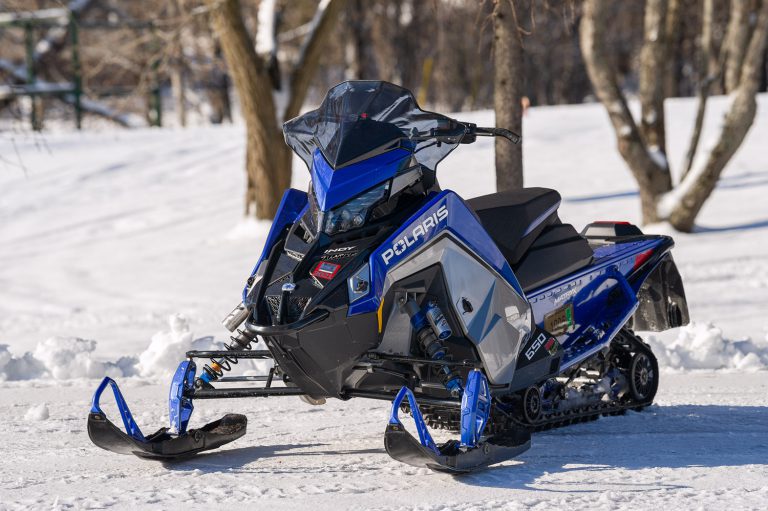
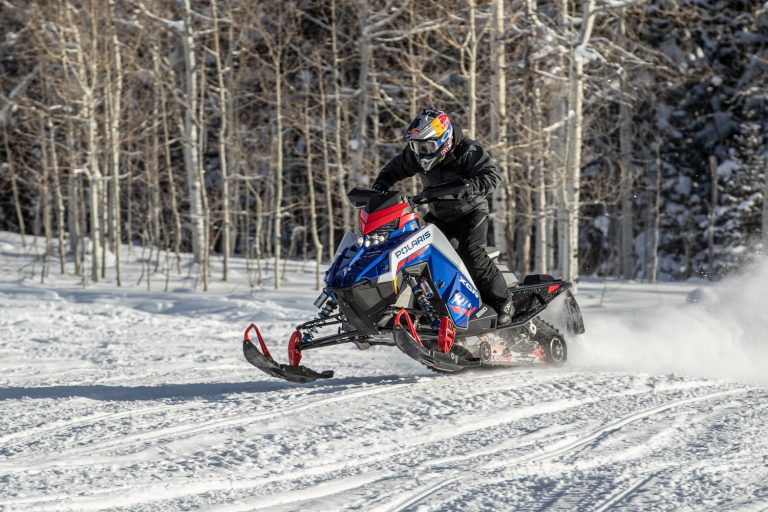
2021 POLARIS SWITCHBACK ASSAULT 144

0

We wanted to take a closer look at four very popular 2021 snowmobiles in order to rate them. We’ll be posting details and opinion over the next few days and we’d really like to hear feedback from you on whether you agree or disagree with our appraisals.

These four crossovers will comprise a significant number of snowmobile sales for each of the companies offering them. They are – in no particular order: The 2021 MATRYX-based Polaris Switchback, Ski-Doo’s Backcountry X-RS, Arctic Cat’s RIOT and Polaris’ AXYS-based Switchback Assault.

We’ll be looking forward to your comments!

Probably everything that could be said has already been said about the AXYS-based Polaris Switchback Assault.

It originally began as an 800 and then graduated to SDI Patriot 850 power and just kept getting better. You can still buy the sled in MY 2021 despite the fact all the hype has moved to the new MATRYX-based Switch. You won’t be sorry if you pick up what is likely the last AXYS version.

Honestly, Polaris didn’t need to upgrade this sled – it’s that good. Its 144-inch track is a wee bit shorter than the current popular 146-inch length everyone else is using but it’s still so light its deep-snow floatation is legendary – and even better if you upgrade the stock 1.35-lugger to a 1.6.

On the trails it rides with the comfort of a trail sled and turns and handles like a freshly honed razor blade.

There’s something about this sled that, when you’re riding it, it just feels right. That goes for both powder excursions and trail forays.

It probably has much to do with the SW’s very low weight but, somehow, Polaris got the mass and weight-positioning equation spot-on! The balance here is as near to perfect as any sled we’ve ever ridden.

Speaking of balance, we’ve always felt this sled bridges the gap between on-trail and foothill riding the way a crossover is intended to function and, in its prime, really was the standard everyone else needed to catch up to. It actually excels in both venues and not every competitor can claim that.

Combine this excellent chassis with that trumpeting 850, lean on the throttle and just plain hang on! There’s no performance disappointment here, no unkept promises!

Things we didn’t like about the AXYS Switchback? … Nuttin’!

2021 ARCTIC CAT RIOT 8000

0

We wanted to take a closer look at four very popular 2021 snowmobiles in order to rate them. We’ll be posting details and opinion over the next few days and we’d really like to hear feedback from you on whether you agree or disagree with our appraisals.

These four crossovers will comprise a significant number of snowmobile sales for each of the companies offering them. They are – in no particular order: The 2021 MATRYX-based Polaris Switchback, Ski-Doo’s Backcountry X-RS, Arctic Cat’s RIOT and Polaris’ AXYS-based Switchback Assault.

We’ll be looking forward to your comments!

We’re writing about the plain vanilla RIOT here because we feel it meets the requirements of a true crossover a bit better than Cat’s RIOT X.

This one uses the ARS II trail spindles and better skidframe calibration for riding trails. Its best asset is its 1.6-inch-depth track – just deep enough to handle grip on trails with exceptional braking and still good enough to mole your way through powder. Best of both worlds, really!

Cat’s SDI 800 is a sweet, rapid responding engine that limits smoke output, burns nice and lean and gets up on the pipe quickly when you massage the go-handle.

Its TEAM clutching using the BOSS roller secondary has proven to be spot-on both for trail riding and in the powder.

Suspension comes with Fox 2.0 ZERO 3-position adjustment on the rear arm and 1.5 ZERO QS-3s at the skis. Although the skid is not coupled, ride results are exceptionally good – and it cleans out well in sticky snow when you’re in deeper stuff.

This sled, with wide spaced A-arms up front, turns in really well, is not negatively affected by trail junk and handling is oh-so-close to the AXYS-based Switchback Assault 144.

Probably the only negative we can come up with here is that the bones of the ProCross platform haven’t been changed in a long time.

This is a pretty lame observation really, because Cat has been continually improving this chassis both for on-trail and off-trail use for a number of years.

What they have here is a real contender and a sled we’d ride all winter with a big smile on our face.

2021 SKI-DOO BACKCOUNTRY XRS

0

We wanted to take a closer look at four very popular 2021 snowmobiles in order to rate them. We’ll be posting details and opinion over the next few days and we’d really like to hear feedback from you on whether you agree or disagree with our appraisals.

These four crossovers will comprise a significant number of snowmobile sales for each of the companies offering them. They are – in no particular order: The 2021 MATRYX-based Polaris Switchback, Ski-Doo’s Backcountry X-RS, Arctic Cat’s RIOT and Polaris’ AXYS-based Switchback Assault.

We’ll be looking forward to your comments!

Regular readers of Supertrax International Magazine know exactly how we feel about Ski-Doo’s Backcountry X-RS 850 E-TEC crossover.

This snowmobile is the hands down best deep snow X-over in this segment. Why? Because its oh-so-close to a full-on Summit mountain ride. In fact, this BCXRS could chase down a few credible full-on vert roosters based on its 146-inch shoe, mountain depth lug and Summit ergonomics. The Backcountry X-RS wins if you’re talking ultimate deep snow prowess.

Unfortunately, the class the Backcountry plays in is not about just one thing – and herein lies the disparity. By its very nature, the Crossover class is about doing more than one thing – and doing both those things really well.

As we said, if we were to compare the BCXRS to a group of mountain sleds it would in all likelihood score very well amongst that genre. However, when you put it ski-tip to ski-tip with the X-over competition, in particular the Polaris MATRYX Switchback Assault 146, the BCXRS isn’t the best sled in this class.

Before sending hate mail and because repetition is the law of emphasis, we’ll repeat our earlier assertion: The class the Backcountry is targeted at is definitively dual purpose in nature. It’s called the crossover class for good reason. Players here must do more than one thing really well.

We’ve covered what the BCXRS does really well – deep snow, off trail riding including lower elevation vert navigation. In these situations and these alone, the BCXRS is way hard to beat.

Where it isn’t so hard to beat is in the other half (or more) of the use parameters sleds in this segment are (supposed to be) designed for. More specifically, trails.

The Backcountry’s narrowed up IFS is not the latest RAS-X trail setup but rather a more mountain biased compromise. The cMotion uncoupled skid is excellent in deep snow applications but can’t be compared to Polaris’ IGX crossover skid’s ride on whooped out, high speed trails. Same when it’s compared to the RIOT’s ride.

The combination of Polaris’ variable castor trail IFS with the plush and balanced IGX out back and more dual purpose oriented ergonomics is unbeatable on trails and still dawg-gone capable in deep snow. All of sudden Ski-Doo’s overbalanced desire to own the crossover segment based on deep snow prowess, actually holds the BCXRS back.

Ski-Doo claims (and I mostly believe them) they listen to their customers to come up with sleds that are exactly what their customers want. We get that. However, listening to customers who have two completely different sets of expectations for just one sled requires asking a very unusual set of questions.

A crossover that absolutely rips the pow, but is less than expected on trails isn’t answering what the buyers of X-over rides are asking for – in totality.

Consequently, this segment may possess the most difficult-to-understand buyers in the entire sport.

2021 POLARIS MATRYX ASSAULT 146

0

We wanted to take a closer look at four very popular 2021 snowmobiles in order to rate them. We’ll be posting details and opinion over the next few days and we’d really like to hear feedback from you on whether you agree or disagree with our appraisals.

These four crossovers will comprise a significant number of snowmobile sales for each of the companies offering them. They are – in no particular order: The 2021 MATRYX-based Polaris Switchback Assault, Ski-Doo’s Backcountry X-RS, Arctic Cat’s RIOT and Polaris’ AXYS-based Switchback Assault.

We’ll be looking forward to your comments!

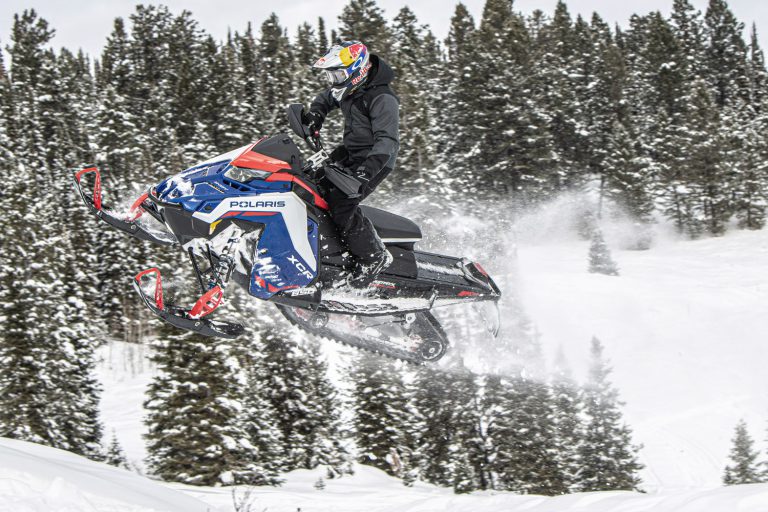
We won’t mix any words here. The current AXYS Switchback Assault has been the hands down best X-Over ride in the biz. When Polaris pulled the sheets off the all-new MATRYX-based Switchback Assault 146 earlier this year we were both pleased and a little nervous.

It’s been more than five consecutive seasons Polaris has held court over the X-Over category with the current AXYS-flavored 144-inch ride.

We didn’t need to be nervous. The new MATRYX Switchback Assault raises the bar again in this increasingly popular segment, improving deep snow navigation – partially due to a new two-inch longer 146-inch rear sneaker.

There’s more to the MATRYX Switchback Assault 146 than flotation, though. The new platform’s ergonomic package presents the hands-down best standing, sitting or otherwise riding perch ever offered in this sport.

The seat is now tapered in a pyramidal shape near the front and uses a new, just-grippy-enough seat material. The bars fall naturally into your gloves whether sitting or standing.

Fore-aft chassis balance from a rider-forward perspective, continues to be near-perfect as a result of Polaris singular understanding a rider can actually be seated too “far forward”.

Trail riding performance is better than the current AXYS Switchback. Trail carving and hard-pack snow forays on lakes are exceptionally rewarding.

The Patriot 850 engine delivers diesel-like torque making the lightweight MATRYX chassis supremely flickable in deep pow and while side-hilling. The sled feels light because it is light. However, the new platform produces uncanny snow-mobility with nary a sniff of belt heat.

An incredibly welcome feature the new MATRYX brings to the X-Over market is copious amounts of both underhood and underseat storage. We mention this because of your (and our) persistent screams of frustration over little or no storage on virtually all new sleds.

Try a 10-gallon, heated cavity behind the Switchback’s digital dash – fully able to swallow ten pairs of goggles and a generous underseat trunk as well!

THE JOY OF REBUILDING

0

It’s fun to watch the accelerating interest in vintage sleds. Sure, you’d expect the vast majority of people immersing themselves in restoring older snowmobiles would be “old guys” – snowmobilers who once rode these sleds decades ago and have fond memories of what snowmobiling was like “back then”.

Although that is somewhat true, it’s not completely accurate. When you go to swap meets and vintage shows it’s surprising to see how many of these collector sleds are owned by 20 and 30-something-year-old enthusiasts and how many relatively young people are shopping for used parts to complete a vintage project they’re working on.

The biggest draw toward vintage restoration is the hope of actually getting to ride the sled once you’re finished restoring it. There are countless organized ride-in events across the snowbelt every year (can’t be sure there’ll be too many this winter) where hundreds of classic sleds gather to swap stories and long-lost parts – perhaps even go for a ride with other collectors.

Failing the opportunity to visit events like these, it’s just a flat-out blast to get together with a bunch of other vintage junkies and go for a 30 or 40-mile tour, maybe to a specific destination, maybe not. The joy is in the riding.

So why are so many sleds being resurrected from junk piles and turned into fully operating examples of the past?

We think it has a lot to do with the hands-on mechanical work you can do on these sleds without great amounts of technology or electronic tools required to get them in shape. In contrast, today’s sleds are pretty complex and just tearing into one can be pretty daunting for a garage engineer.

The old stuff was painfully simple – carburetors, point ignitions – maybe a few with CDI boxes or oil injection – basic primary and secondary clutches, no electronic exhaust valves, digital gauges or onboard computers.

Purchase prices are cheap and availability is still pretty good- especially if you can score a barn find where the sled has been kept indoors and away from the elements for many years. Western Canada and the Midwestern USA have plenty of old vintage stuff stashed in garages and sheds waiting for someone to talk the owner – or descendants of the owner – into selling.

We think there’s a new trend starting in vintage too. As the leaf spring stuff gets harder to find, we’re pretty sure the demand for older IFS sleds will begin to increase. Sleds like the early to mid-‘80s Polaris and Arctic Cats and strut Yamahas like the SR-V and the Phazer will become attractive projects. Later versions of the first Ski-Doo MX-Z from the ‘90s, now pushing thirty years old, also make great restoration projects you can really enjoy riding once they’re finished.

The best thing about these more recent classics is that parts are readily available on sale from companies like Kimpex or from the back shelves of dealers who simply have to dust off an old box of goodies they’ve been babysitting for a few decades.

Companies like CVTech have complete rebuilt engines sitting on shelves waiting to be shipped for a lot of these sleds.

The best part is these more advanced oldies have much more evolved technology when it comes to suspension and clutching, making the finished ride experience a lot nicer for the owner.