Home Blog Page 60

MIDRANGE TRAIL SLEDS: 2021 POLARIS INDY SP

0

The big question is this: How much power do you really need?

Sure, a lot of snowmobile shoppers would argue, “If you’re in for a penny, you’re in for a pound”; meaning if you’ve got your wallet out, why go for a 95-130 horsepower sled if you can spend a few more bucks and get a 160-200-hp one?

The hard truth is this – and it’s challenging to get power-hungry buyers to fully understand what we’re proposing here – not everyone wants or most certainly, needs more than the 130-hp ceiling this line-up offers.

Here’s a look at some of the most popular (and largest selling) trail sleds that fall splat into the middle of the power wars.

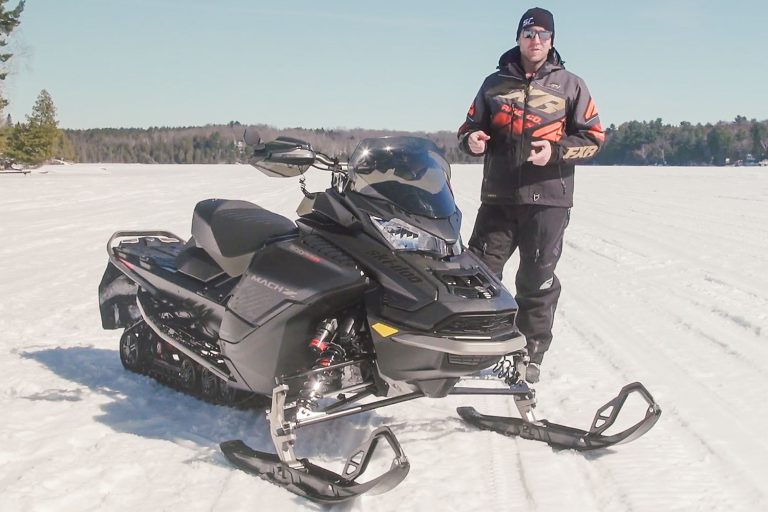
2021 POLARIS INDY SP: Real Value is Tough to Overlook!

There just isn’t much not to like about the Indy SP. Frankly, if this was the only Indy Polaris offered, it would still be very competitive with other sleds in the 600 class.

As it is, it’s been relegated to being a bargain priced sled that relies more on its bottom line than on its prowess as a great trail sled.

Furthermore, it’s been upstaged by the new MATRYX models and even sleds like the AXYS-based Indy XC and XCR.

The SP is built on the AXYS platform and comes in two track lengths – 129 and 137. Either one performs exceptionally well and combines lightness with great handling and a stellar ride.

Out back, the SP uses non-adjustable IFP gas shocks in its coupled ProCC skid-frame and the same gassers up front.

The tried and true Cleanfire 600 resides under its hood. This Semi-Direct-Injected 2-stroke twin is a strong performer and combined with Polaris clutching, delivers an honest 120-plus horsepower, EPA clean stats and good fuel economy. It even has a decent stock windshield.

Talking specifications with the SP is pretty moot until you’ve ridden it. Handling is razor sharp in either length chassis, the ride calibration is extremely good and the sled has a great “feel” from the handlebars.

The combination of clutching, engine power and the AXYS chassis is well-matched and it makes an even stronger point for shopping for this sled when you consider you’re saving hundreds of dollars compared to the next rung up on the Polaris ladder, the Indy XC 600.

Furthermore, price comparing the SP to a Ski-Doo MX-Z TNT reveals a saving on the 129-inch Indy SP of $1,100 CDN and $600.00 USD. This is pretty substantial considering these two sleds are the base models for each brand and are very similarly equipped. Just FYI, there is no base sled comparable from Arctic Cat.

It’s hard to walk past a sled like the SP that offers so much at such a reasonable price. It’s almost as though Polaris planned it that way!

MIDRANGE TRAIL SLEDS: 2021 Ski-Doo MX-Z 600R

0

The big question is this: How much power do you really need?

Sure, a lot of snowmobile shoppers would argue, “If you’re in for a penny, you’re in for a pound”; meaning if you’ve got your wallet out, why go for a 95-130 horsepower sled if you can spend a few more bucks and get a 160-200-hp one?

The hard truth is this – and it’s challenging to get power-hungry buyers to fully understand what we’re proposing here – not everyone wants or most certainly, needs more than the 130-hp ceiling this line-up offers.

Here’s a look at some of the most popular (and largest selling) trail sleds that fall splat into the middle of the power wars.

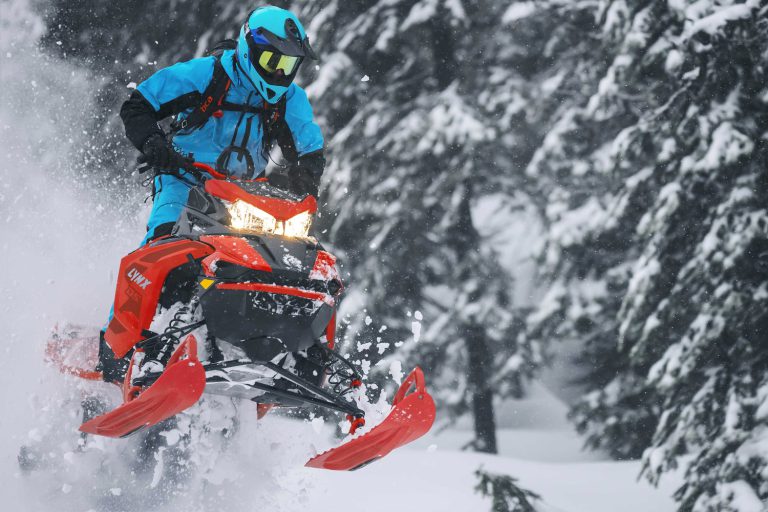
2021 Ski-Doo MX-Z 600R: Solid As A Rock!

The 129-inch version of this platform is sweet. Its 129-inch track allows the sled to pivot quickly and give agile feedback at the handlebars.

Although the MX-Z isn’t a whole bunch lighter than its 137-inch Renegade counterpart, it feels that way, and the fact is, this sled is light enough it can handle powder forays nicely even with a 129. The 137-inch Renegade is actually more of a dual-purpose crossover than the deep snow Backcountry.

It’s nearly impossible to be critical of the 600R E-TEC engine. This potent, 125-hp twin starts instantaneously, sips fuel and oil, never spews a wisp of smoke and generates muscular, linear power all across its considerably wide power band.

pDrive clutching is spot-on and with rollers running both the primary and the secondary, you just know this sled is maximizing its power. Upshifts are quick and consistent and backshifting is flawless.

Cap the benefits off with proven-excellent rMotion out back and a selection of gas shocks ranging from non-adjustable to multiple settings for both compression and rebound and, depending on the model MX-Z you choose (TNT, X or X-RS), you can pretty much dial up any suspension setting imaginable.

This year, the premium X and X-RS MX-Z and Renegade models come with Ski-Doo’s new, wider RAS X front end – and it makes the upgrade to those models worth every penny.

Perhaps the only concern with either the Renegade or the MX-Z is the fact Polaris is nipping at these sled’s heels with its new 650 Matryx.

Since the G4 chassis has been mostly unchanged for a few model years (yes, there’s been steady improvement), left unchanged, the buying public may be tempted to wander next year.

MIDRANGE TRAIL SLEDS: 2021 Arctic Cat 6000 R-XC

0

The big question is this: How much power do you really need?

Sure, a lot of snowmobile shoppers would argue, “If you’re in for a penny, you’re in for a pound”; meaning if you’ve got your wallet out, why go for a 95-130 horsepower sled if you can spend a few more bucks and get a 160-200-hp one?

The hard truth is this – and it’s challenging to get power-hungry buyers to fully understand what we’re proposing here – not everyone wants or most certainly, needs more than the 130-hp ceiling this line-up offers.

Here’s a look at some of the most popular (and largest selling) trail sleds that fall splat into the middle of the power wars.

2021 Arctic Cat 6000 R-XC: Shocking Shock Value!

The first thing you notice about this sled is that funky notch cut out of the seat at the seat/tank juncture. That notch is a dead giveaway this is a serious cross country-ditch banger.

Although it appears to be a full-on race sled, this is actually a full production sled, not produced in limited numbers. It replaces the RR-series Cats that were very popular but takes things up the ladder a bit with more serious shock equipment and more aggressive valving.

The X-RC’s strongest feature is a set of Fox QS3 Kashima coated compression and rebound adjustable piggyback shocks front and rear (yes, all four shocks!).

These shocks are absolutely top drawer and comprise a significant value. We’d hazard there are likely no better shocks offered on any snowmobile model from any company in the business right now.

The R-XC uses Cat’s coupled, 137-inch long sliding front arm skid-frame and recently tweaked ARS II front end. In combo with Cat’s trail-targeted skis, this sled knifes trails and hard-pack like a Ginsu.

At a claimed 126-hp, the slot-injected 600 twin provides plenty of power and very rapid throttle response at nearly any point in its power band. The usual Cat clutching, provided by a TEAM primary and a TEAM/Boss roller secondary squeezes every ounce of power out of that 600 and makes riding the R-XC pure joy.

The best part is Cat did not go overboard with suspension calibration and by using QS3 technology, allowed you to set the compression damping as hard or soft as is needed for the type of terrain or the speed you’re riding.

Those three settings are noticeably different and allow this serious sled to perform equally well as a trail sled or as a ditch runner, with just minimal clicker adjustment.

It’s amazing, but the 6000 R-XC – which appears to be all about racing – actually can fulfill the needs of a pretty wide range of riders. It certainly falls in line with the Polaris XCRs and Ski-Doo’s X-RS models.

NEW INNOVATIVE TOW-BEHIND TRAIL GROOMER

0

Luke provides an overview on Homestead Legacy’s new product that solves the problem of worn-out feeder trails on your personal property or on land you have permission to access with your snowmobile, ATV or Side x Side.

Subscribe to our YouTube Channel!

MIDRANGE TRAIL SLEDS: 2021 SRViper L-TX GT

0

The big question is this: How much power do you really need?

Sure, a lot of snowmobile shoppers would argue, “If you’re in for a penny, you’re in for a pound”; meaning if you’ve got your wallet out, why go for a 95-130 horsepower sled if you can spend a few more bucks and get a 160-200-hp one?

The hard truth is this – and it’s challenging to get power-hungry buyers to fully understand what we’re proposing here – not everyone wants or most certainly, needs more than the 130-hp ceiling this line-up offers.

Here’s a look at some of the most popular (and largest selling) trail sleds that fall splat into the middle of the power wars.

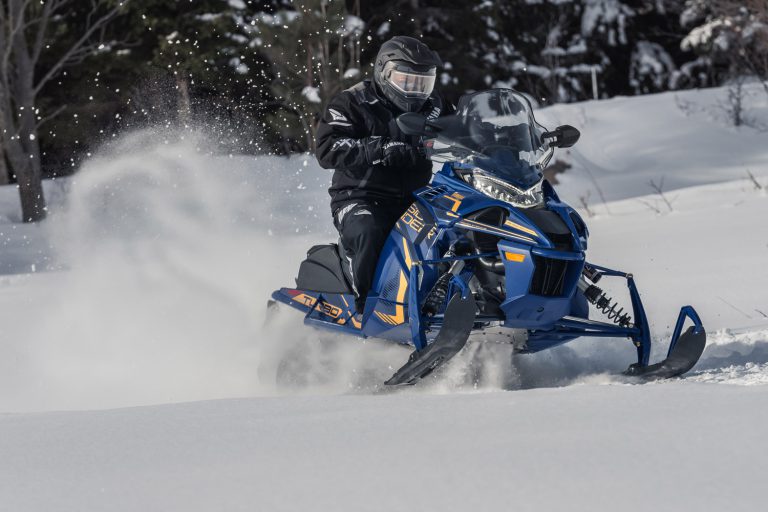
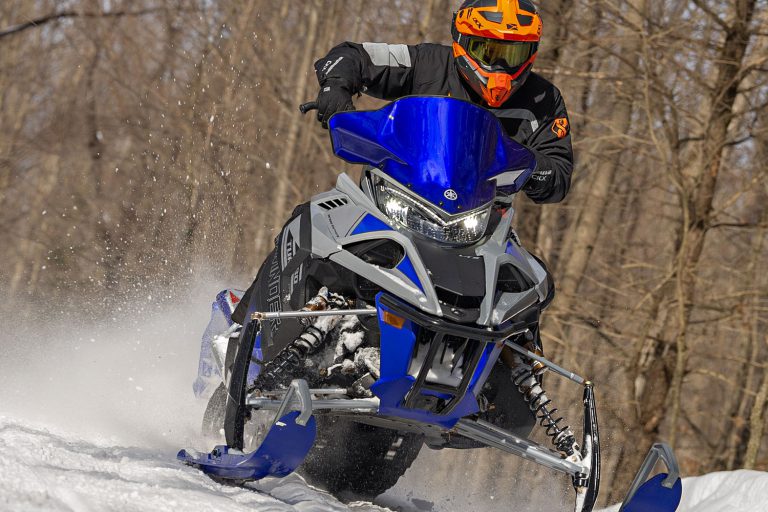
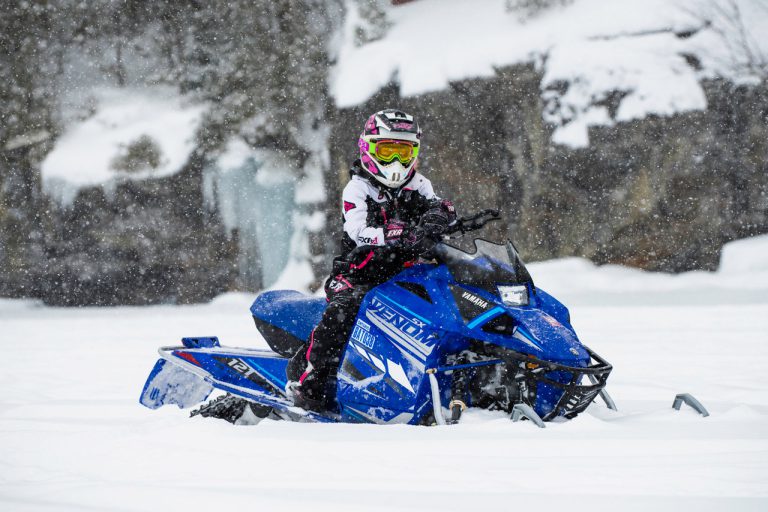
Yamaha SRViper L-TX GT: Feels Even More Like A 2-stroke!

Yamaha has stepped up with improvements to the Viper. This model had remained mostly unchanged. The updates are welcome and show Yamaha is committed to the Viper paradigm.

Not that a lot needed changing. This sled always produced nice linear power and the combo of the SR chassis with a 1,049cc 4-stroke triple was about as close to magic as you can get with a 4-stroke.

By remapping the ECU, Yamaha has delivered something that feels broader than the 130-hp the 1049 claims. This change, along with offering only a 137-inch track (no 129), has brought new life to the Viper. QS-3 shocks were added, a heated seat and a brand new pair of skis.

The new Stryke skis are very big news and have virtually eliminated darting and hunting on hard-packed surfaces. More importantly these new skis completely eliminate understeer providing predictable initial turn-in and apex biting control through the center of turns. The Stryke has hit the goal-line dead-on.

Last year the Viper got fresh, new easy-to-remove bodywork and an aesthetic makeover to amp up its appeal.

This sled is a longterm keeper and that 1049 triple has acquired a reputation for heroic durability. There are no complaints about belt longevity or any other mechanical deficiencies.

The main thing is, this is a truly fun sled to ride long distances. It’s quiet while producing a compelling, throaty exhaust cadence.

It’s undeniably good on gas, rides nicely, handles good and has all the benefits a 4-stroke offers in a sled that feels like a 2-stroke.

Keep this in mind as well – there’s no other comparable to it in the marketplace.

Arctic Cat Supports AIARE to Commemorate Rob Kincaid

0

To commemorate Rob Kincaid and his passion for safety in the backcountry, Arctic Cat is supporting The American Institute for Avalanche Research and Education (AIARE) by offering a custom, Kincaid-inspired 2021 M 8000 Mountain Cat ALPHA ONE 165 ATAC.

All proceeds from the donation-based sweepstakes will go to the Kincaid family and AIARE to continue avalanche safety initiatives.

The Wild West Customs-built sled is based off a Kincaid original design that he considered his dream sled. It features a unique Octane Ink wrap and loads of premium accessories and upgrades.

Enthusiasts interested in the sweepstakes can visit AIARE’s official sweepstakes webpage for more information.

Donations start at $25 up to $2,000; the higher the donation, the more chances to win. The sweepstakes runs from Monday, December 14, 2020 at 10:30 a.m. EST through Monday, March 1, 2021 at 12:00 a.m. EST.

AIARE will announce the winner and take questions about avalanche awareness on Facebook Live on March 1 from Kincaid’s hometown of Victor, Idaho.

Links will be posted on Arctic Cat social media when available so stay tuned for more information!

MIDRANGE TRAIL SLEDS: POLARIS INDY MATRYX 650

0

The big question is this: How much power do you really need?

Sure, a lot of snowmobile shoppers would argue, “If you’re in for a penny, you’re in for a pound”; meaning if you’ve got your wallet out, why go for a 95-130 horsepower sled if you can spend a few more bucks and get a 160-200-hp one?

The hard truth is this – and it’s challenging to get power-hungry buyers to fully understand what we’re proposing here – not everyone wants or most certainly, needs more than the 130-hp ceiling this line-up offers.

Here’s a look at some of the most popular (and largest selling) trail sleds that fall splat into the middle of the power wars.

POLARIS INDY MATRYX: New, Improved and Faster!

It looks like Polaris intends to own the midrange trail class of sleds this year. The company’s selection of sleds powered by either a 600 Liberty 2-stroke or the new and much talked-about Patriot 650 actually comes close to exceeding the total of all sleds from every other OEM in this class.

The MATRYX is at the top of everyone’s inspection list at dealerships this year. For its debut year in this category Polaris has offered two models on the MATRYX platform and they’re both available with choices of 129 and 137-inch tracks.

The premium MATRYX is the VR1 and it comes with all the new MATRYX amenities: A new and dazzling digital instrument layout with a GPS you don’t need a cell phone to operate, a new and more powerful headlight, auto-adjustable hand and thumb warmers and cavernous storage in more than one location on the sled.

The seating ergonomics have been rethought (rider sits lower and seat is narrower at the front), there’s new bodywork offering better underhood ventilation and wind protection for the rider and the biggest deal of all: A completely new 650cc Patriot 2-stroke twin based on the bones of the Patriot 850!

The VR1 differs from the Indy XC Launch Edition in that the Launch’s gauge features are a bit more in line with last year’s Polaris Indys (you can still upgrade if you like) and the shock package. Otherwise all the good stuff remains: Storage, bodywork, 650, hand-warmers and headlight.

Back to the 650 Patriot engine. This SDI 2-stroke has changed all the rules with its giant upgrade in both horsepower and torque. Simply, there is no comparison to it in the midrange class.

Many of our riders felt it was so strong it could actually affect sales of the Patriot 850. Not likely this year with so many dealers sold out, but still a pretty strong endorsement of this new engine.

The VR1 uses Walker Evans WER Velocity rebound and compression adjustable shocks and the XC Launch uses compression adjustable and rebuildable WE units all around.

It should be noted that Polaris has also been tweaking and tuning both the front end and the Pro-CC skid-frame to deliver ride and handling improvements compared to the already-stellar AXYS platform.

Sure, you want one, but the sad news is supply. There probably just aren’t enough at dealers and everyone who could possibly buy a MATRYX early, did so. Better get in line for next year.

TRACKJACK – GETS YOUR SLED UNSTUCK

0

We’ve all been there. Your snowmobile track digs a trench and you’re hung up, not moving. Yup, you’re stuck. Now you’re in for some serious grunt work and heavy lifting at the very least.

Depending on where you are and who you’re with, this situation can even be dangerous. A few years ago, David Wright and his young son Luka were snowmobiling in Northern Ontario near the Quebec border when their sled got stuck in deep snow. Conditions were frigid with no cell service and the nearest town a long way away.

Working alone and with his son to worry about, it was nearly two hours of exhausting work in the freezing cold before the machine was finally back on the trail. David was spooked, to say the least, and couldn’t help thinking “what if he couldn’t get un-stuck”?

The next day, David set out to buy the tool needed to lift the back end of his sled the next time he got stuck but to his surprise, nothing on the market existed. So he and his two boys took the initiative and designed one themselves.

David had several objectives in the design process:

1. It should easily lift the back end of a stuck sled
2. It should conveniently be assembled and dissembled
3. It must be conveniently carried on a sled
4. It needs to be cost-effective

The result was a tool his son coined as a TRACKJACK. Save your back, use a TRACKJACK ($145 CAD/$113 USD).

For more info – www.trackjack.ca

2021 Digital Display Overview: BRP Connect vs Polaris 7S

0

AJ’s in the TRAIL TECH shop giving you a detailed overview of the BRP Connect Display compared to the Polaris 7S display outlining the key features of each and what each one is capable of.

Subscribe to our YouTube Channel!

4-STROKE VALUE

0

If you are a regular follower of this insightful forum here at SnowTrax TV and Supertrax Magazine you’ve no doubt read some or all of our opinion pieces on what the market, during a worldwide pandemic, looks like.

I won’t belabor the point here – the market has been crazy for both new and late model snowmobiles through the entire fall sales season.

People want to go snowmobiling this winter and are prepared to lay down serious jing to achieve that goal. What’s really interesting to me is the amount of cha-ching sellers are asking and buyers are paying for late model snowmobiles.

I won’t even comment on the prices buyers are paying for the limited number of new MY 2021 iron. Let me qualify this description. There are almost no new unsold snowmobiles in the market either side of the border. If you can find one, how much are they selling for? Full pop, my friends. And everything else that can be charged on top of it.

So here’s an observation that Yamaha owners in particular will be happy to learn about. 4-stroke sleds are undeniably leading the way in resale value.

Recent data indicates two-year-old Yamaha 4-stroke models are bringing up to ninety percent of original MSRP. That’s good news for Yamaha owners and even better news for Yamaha dealers looking for late model Yamaha trade-ins.

One might be inclined to say this kind of resale value is COVID linked and isn’t sustainable. Maybe… but here’s what we think. Sure COVID is playing a part in all powersports product values, however, the sustained escalation of Yamaha 4-stroke snowmobile resale prices looks to us like a trend. Lets face it, 4-strokes bend the life span curve of the modern snowmobile in a pretty profound way.

Simply put, 4-strokes last a long time. Check out the asking prices for 2003 to 2010 RX-1, Apex and Vector models. Most, if not all Yamaha’s of this vintage are bringing amazing bucks and almost all of these sleds have what most would consider high miles (when compared to a 2-stroke). Many 2-stroke sleds are due for costly engine work at the 10,000 mile mark while 4-strokes are barely hitting their stride.

Some in the industry are saying a 4-stroke sled is a better investment – knowing you can roll over your sled every couple years for pretty ridiculously small change. We wouldn’t disagree. In fact, its been 20 years since we’ve seen resale values like late model 4-strokes are commanding right now.

Keep in mind, even though 4-stroke sleds are – in some model comparisons – more expensive when new than a comparable 2-stroke, the extra jing you lay down for the 4-stroke is increasingly becoming a safer investment.

Clearly, 4-stroke resale is the envy of the sno-mo-biz right now.