Home Blog Page 56

WHERE’S MY SLED?

0

Last spring, every OEM’s early order program went nuts with record numbers of deposits paid on 2021’s.

Not only were there record numbers of new sleds reserved but trade-in values went through the roof (and remain there) as dealers scrambled to sell trades before the season ended. Strangely, the season didn’t end.

In most North American snowmobile markets the sale of used sleds remained insanely strong throughout the summer of 2021. In fact, in many markets the sale of snowmobiles remained strong right into the fall.

The snowmobile biz became a year-round, not seasonal, business. Honestly, I haven’t seen this phenomenon in the modern era.

MISSING PIECES

So, just to make things a little harder to understand and just a touch crazier – along comes the issue of supply chain shortfalls. I don’t mean the supply chain crisis we’ve witnessed in October with dozens of container ships anchored outside North American ports. I mean supply chain problems going back to the early summer involving everything from ECM chips to instrument clusters to ski-hoops to oil tank caps.

Some are saying the worldwide move to just-in-time manufacturing (JIT) contributed greatly to the aforementioned problems. Let me simplify this. All sophisticated manufacturers of just about everything do not stockpile components to be assembled into finished products. Most often, componentry arrives JIT to be emptied directly onto production lines and back out the door to be shipped to dealers as a finished product.

When vendors encounter shortages of materials to make components, the final production line can come to a screeching halt. My description here is pretty basic but generally speaking, this is what’s behind the slowdown in new sled deliveries.

SO, WHERE’S MY SLED?

Early order/early deposit programs are most often participated in by hardcore, vocal snowmobilers. These highly informed sledders know precisely what they want and count the days (literally) to when their new ride will arrive. Often, early order sleds are the first to land at dealers in September and October with some limited production new sleds arriving in November.

This year there’s a difference. Because supply chain issues are rampant, not only in the sno-mo-biz but just as prevalent in the ATV/SXS/Motorcycle/outboard/PWC biz, powersport dealers are reeling at the lack of product they’ve received through late 2020 and all of 2021. There is so little unsold inventory in the powersport business many dealers have been unable to meet strong in-season demand.

Here’s a quick roundup of what we’ve been told is happening. There’s a lot disinformation swirling around right now so we will try to provide accurate info here. That being said, things are changing regularly and you need to be in touch with your dealer regularly to stay on top of delivery timing. We intend to update this information later in November.

SKI-DOO

Ski-Doo is shipping 2021 Spring Break sleds right now. Some larger volume dealers we spoke to while assembling this info claimed they have actually received as much as 30% of their preseason ordered sleds. Dealers are mostly concerned with the delivery of preseason ordered snowmobiles and expect in-season sleds to arrive later. Ski-Doo has shipped some of these Spring Break ordered snowmobiles without some parts. Specifically, things like engine ECMs, digital tethers and gauge clusters.

Why have they done this? For sure this is a smart move on Ski-Doo’s part. If these units just piled up outside the factory there wouldn’t be enough trucks in North America to get them delivered in a reasonable amount of time. This way Ski-Doo dealers will be shipped the necessary parts and install them immediately upon receiving them. Keep in touch with your dealer on specific details surrounding the arrival of your Spring Break sled.

POLARIS

Polaris is also shipping snowmobiles throughout the fall, however, some of them are missing parts which your dealer will install when received from Polaris. We’ve heard things like ski-hoops and other trim pieces may be shipped separately throughout the fall.

Polaris is committed to getting Snow Check sleds shipped as soon as is logistically possible. Again, you should stay in contact with your dealer. Snow Checkers may also receive communication directly from Polaris regarding their new sleds. Polaris is working to look after their valued Snow Check customers first with in-season production coming after early ordered sleds are built.

YAMAHA

Yamaha has been navigating challenges similar to the other OEMs throughout the 2021 model year. Interestingly, Yamaha has had a strong line on its customer’s expectations and have been working to ensure that they both supply Spring Power Surge, early order, deposit-paid-sleds and that they do this in as timely a manner as possible.

While supply chain issues for all the OEMs are an inescapable reality in 2021, Yamaha has placed priority on satisfying its snowmobile customers who stepped up and put deposits on new sleds last spring. Yamaha has also made it abundantly clear each snowmobile it has shipped is one hundred percent complete and ready to ride and they are working to continue this through the remainder of production.

ARCTIC CAT

The official word from Arctic Cat on the delivery of early season ordered, deposit paid “Snowmageddon” sleds is as follows: We are committed to those customers that pre-ordered during Snowmageddon, and subsequently we have prioritized those units in our production schedule with the intent to deliver as many as possible by year end.

Clearly, Arctic Cat is focused on satisfying and meeting the expectations of its early order customers in the midst of a fall production season which has been plagued – industry wide – with supply chain issues. It’s again important for early order buyers to stay in touch with their Arctic Cat dealer as things have been changing across the entire snowmobile OEM landscape – weekly.

One thing we’ve picked up on when assembling this story is the advantage early season buyers have in terms of actually getting a new sled for this season. It’s pretty clear the production and delivery of in-season snowmobiles for dealer inventory is a completely different story with much different timelines. Stay tuned.
YAMAHA’S HIGH PERFORMANCE 2-STROKE TRAIL SLED

0

I’ve been doing this editorializing thing for over 35 years. Over that time I’ve come to expect certain responses to comments I make. I mean I can often predict what you, our valued readers and viewers will say about my highly informed, insightful and enlightened opinions.

Here’s an up-to-date example: A couple years ago, when we first rumored Yamaha might be readying a 2-stroke mountain market sled, our channels lit up like Christmas trees. To say the potential (at that time) arrival of a 2-stroke Yamaha was at the top of a good many readers and viewers minds was an understatement we actually underestimated. It wasn’t just the Yamaha faithful who had opinions, it was myriad yellow, blue and green afficionados who took a kick at agreeing (and disagreeing) with our prediction.

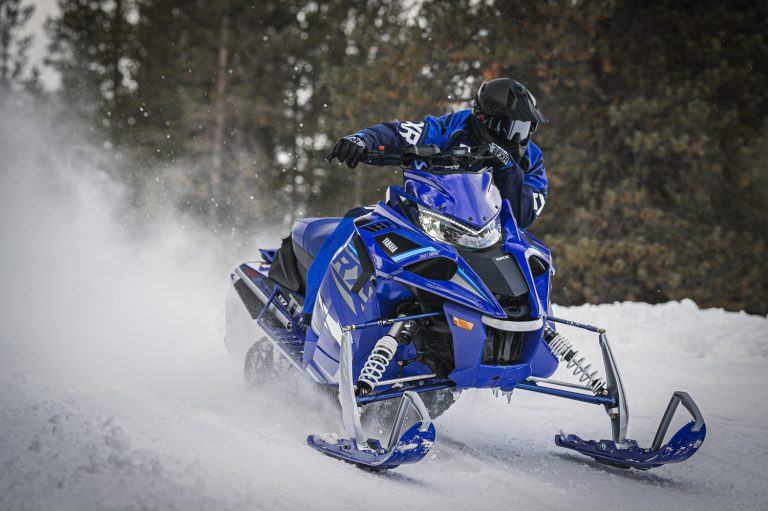
Now that the once-rumored 2-stroke Yamaha mountain sleds are a reality, we’ll jump in with both feet with another prediction: How about a 2-stroke Yamaha trail sled using the same 800 SDI twin putting out 160-ish HP? You don’t have to be a marketing expert to see Yamaha has a pretty large hole in its engine lineup on the trail side of the ledger.

The jump from the Viper’s 1049cc 4-stroke triple’s 130 ponies to the SideWinder turbo’s 180 ponies (cough) is a big one and it begs for an answer – particularly when Yamaha is doing much better in the sno-mo-biz than most predicted just three years ago.

Here’s another undeniable reality. The all-new entry level Venom, powered by a 400cc 2-stroke single sourced from AC is a complete twist in the road. Yamaha has had good success with this new model, carving out a new segment for this engine and chassis combination.

The new Mountain Max 800s have been an instant hit with few exceptions and have produced an impressive lack of horror stories surrounding engine performance and durability. Most of you know this; but for those who don’t, the 800 twin used by Yamaha is made by Arctic Cat. The engine is a good performer, efficient and tough. Yamaha has very high standards for everything it makes or buys from vendors. This engine is proof positive of these high standards.

Here’s what I’ll say about the potential for a high performance Yamaha 2-stroke trail sled – basically an SRX 137 with an 800 twin under the hood. If it happens, don’t look for a Yamaha-built engine. There are not the economies of scale for an engine manufacturer the size of Yamaha to tool and build a completely fresh 2-stroke engine profitably for a market this size.

Yamaha is a $15 billion (give or take a few million) engine OEM that builds engines to supply its own specific businesses. For example, did you know among Yamaha’s largest businesses is designing, engineering and manufacturing outboard engines? 4-stroke outboard engines. I’m afraid Yamaha’s entire snowmobile unit production would barely blip the meter on its total business profile.

I’m not saying I don’t think a 2-stroke trail sled powered by the Cat-derived 800 SDI twin is an impossibility. However, I will say you’re not going to see a Yamaha-built, 2-stroke snowmobile engine. Don’t even think of reminding me the VK 540 is a 2-stroke Yamaha. That engine was tooled over 35 years ago and is old, non-EPA-compliant technology.

So, I won’t say there isn’t hope for a high performance trail 2-stroke Yamaha, particularly when Yamaha has chosen to market the Venom with a 400cc 2-stroke and the Transporter lineup with a 2-stroke SDI 800 from AC. I don’t think it’s much of a leap from the utility market (Transporter) to the trail market – or to even the X-Over market.

One thing is for sure; there is a different attitude toward 2-stroke power at Yamaha in 2021. This new attitude makes me reluctant to make any absolute proclamations regarding what Yamaha might or might not do next with its continued access to a full-on, high performance 800 2-stroke engine.

POLARIS INDY VR1 OR INDY XCR?

0

***ADVERTORIAL***

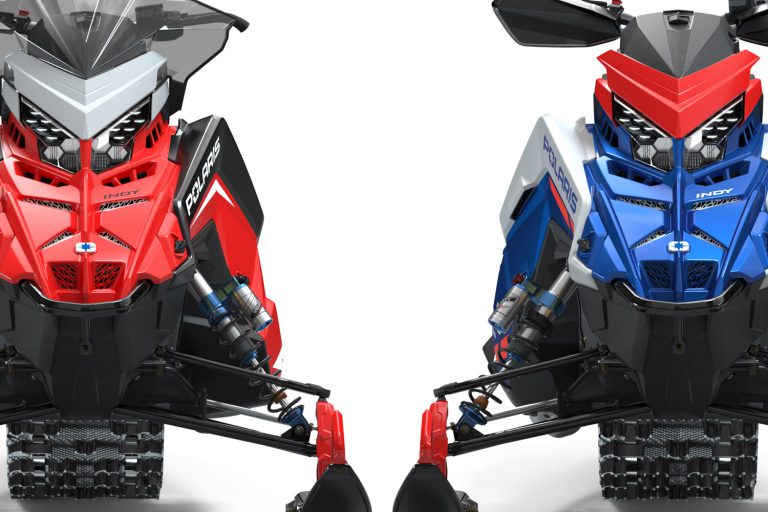
With the arrival of the new MATRYX platform, the Polaris faithful and those shopping Polaris for the first time may find they need some direction weighing out the features and benefits of this revolutionary Indy chassis.

Find The Right Indy For You!

What’s A VR1?

It’s not difficult to identify and understand an XCR. Its name is synonymous with legendary Polaris handling and rough trail prowess. Frankly, the label “XCR” is legitimately iconic. So how do you rationalize the Indy VR1 and come to an understanding of what makes it uniquely different from the XCR? Let’s cover off what’s different and what’s the same.

The VR1 comes with premium trail-calibrated WER (Walker Evans Racing) rebound and compression adjustable Velocity Shocks all the way around in a fully coupled ProCC skidframe with rail doublers. There’s also Polaris’ incomparable 7S gauge set with Ride Command, the amazing Group Ride feature and the ability to text your riding companions with or without cellphone service.

Polaris’ ergonomically correct SmartWarmers that automatically adjust grip temperature are also standard on the VR1. The VR1 shares identical rider ergonomics with the XCR, providing a 3-inch narrower seat at the critical seat/tank junction and a 4.8-inch width reduction at the console. Both the VR1 and the XCR can be ordered with choices of 1.25, 1.35 or 1.5-inch-deep tracks.

If you take trail riding seriously and appreciate predictable handling, near-telepathic turn-in and ultimate control at speed with razor clean response in the twisties, you’ll want the VR1!

Find The Right Indy For You!

What’s An XCR?

The XCR brand is synonymous with incomparable rough trail handling, big bump suspension compliance and rider-first control! It delivers those traits using top drawer Walker Evans Racing, 2-inch compression and rebound adjustable piggyback reservoir shocks in a coupled ProCC skid. The performance of these dampers under the most gruelling ditch banging and rough trail navigation has to be experienced to be believed!

The XCR comes factory-equipped with a full-on Polaris Race Technology larger diameter brake rotor, larger brake pads and a dedicated exterior brake cooling duct. The rear suspension includes a CNC machined rear coupler stop as well as rail doublers.

Every XCR comes with the 7S interactive digital display with Ride Command and Group Ride toggled three ways: You can control the 7S from the left side switchgear cluster by using a joy stick on the 7S gauge or by simply touching the screen. Again, the MATRYX XCR’s ultra-narrow rider ergonomics and incomparable underhood storage are included.

All XCRs come with Polaris’ new Magnetic Tether. If you get excited when you hear the trails were not groomed last night and quantify snowmobile ride and handling by how fast you can run whoops, ditches and portages, the XCR is definitely your ride!

Find The Right Indy For You!

Halfway Haven Reopening Averts Major Trail Closures

0

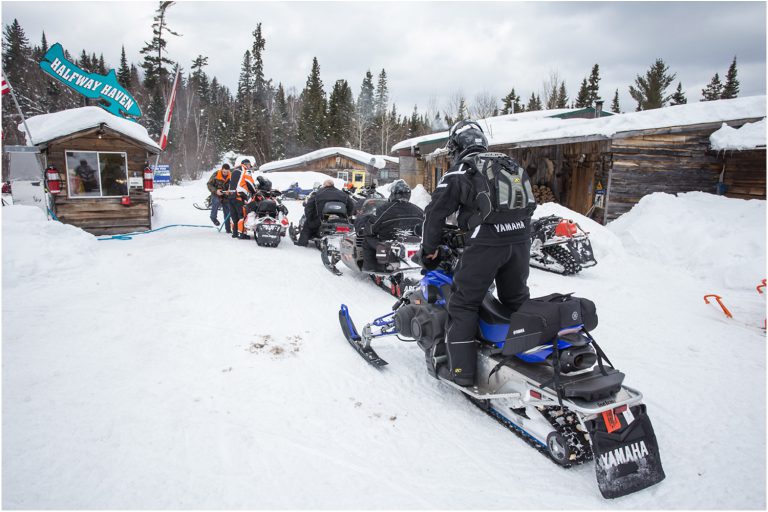
Communities and businesses in Northern Ontario’s Algoma Country can join touring snowmobilers in breathing a sigh of relief. The owners of Halfway Haven have announced their re-opening, at least for the coming winter.

This good news averts the looming closure or disruption of almost 1,000 kilometres of the last remaining Algoma Country trail link between Sault Ste Marie and Hearst. It’s a link well-known to American snowmobilers as their gateway to the rest of Northeastern Ontario, and the Halfway Haven re-opening coincides with the re-opening of the international border, just in time to welcome American snowmobilers back to Ontario for the coming winter.

Halfway Haven is located north of Sault Ste. Marie, on a remote stretch of Trans Ontario Provincial (TOP) Trail D between Searchmont and Wawa. The fuel, food and lodgings available at Halfway Haven make it possible for groomers coming from Searchmont, Wawa and Chapleau (on TOP C101D) to do their long runs through this vast territory. Stopping at this iconic midway point also provides touring riders with the fuel essential to complete this breathtaking section of trail.

The closure of Halfway Haven, announced on their Facebook page last April 30th, would have resulted in trail closures this winter due to no gas availability in the area. It would also have cut off snowmobile access to many communities north of Halfway Haven.

Readers of Supertrax Magazine and viewers of SnowTrax TV are familiar of this amazing trail between Sault Ste. Marie and Hearst from previous coverage. If you need a reminder, check out their tour article and television episodes. They provide many good reasons why this remains a favourite Northern Ontario ride. So now that Halfway Haven is open, why not plan your own Algoma Country tour for this winter?

But the announced re-opening is only a stop-gap measure for the coming winter. It postpones a potential future closing of Halfway Haven by only a year. Hopefully, that will buy enough time for area stakeholders to champion a more permanent solution that takes the season to season guesswork out of Halfway’s shaky existence as the only viable service operation on this trail.

To help this happen and keep trails open, Supertrax Media is covering the story and has produced the Halfway Haven video below to emphasize its importance to snowmobiling in Northern Ontario. Let’s keep our fingers crossed that Halfway Haven survives beyond this winter and is with us for many more years to come!

RESURGENCE OF NORTH AMERICAN MANUFACTURING

0

It’s easy to get caught up in the awfulness of the current pandemic the world is experiencing. The ongoing disruption in the supply chain, nearly two years of labor shortages, increased shipping costs and the shortage of energy supply in China is of major concern.

Sure, if we stop this story right here, the current picture looks pretty bleak – but depending on your point of view, there is a silver lining and there are some really epic good things happening in spite of all the bad news you might be hearing.

Some background: We’ve recently had a number of discussions with aftermarket companies about the current state of the industry. While on one side it’s disheartening to learn of the uncertainly they are facing; it’s equally encouraging to learn of what they are committing to ensure the continuing existence of their companies.

Here’s an example: One aftermarket company used to pay $3,500 for a shipping container. We’re talking about those jumbo-sized containers that fit onto a container ship for transport across the ocean from China or Asia to North America. Where the price was $3,500 not long ago, they have to pay $22,000 now. You can imagine the impact an increase like that has on the wholesale and retail prices of every item inside those containers.

This is just the start. Trucking fees have doubled and manufacturing operations in China are being curtailed due to the energy shortages there so factories are being forced to shut down for portions of the week. Add in COVID-19 related labor disruptions and there is no longer any advantage whatsoever for North American firms to outsource to China. As result, many of those North American companies are now resorting back to local production.

The good news is, in the big picture this situation is really good for North American manufacturing. More goods will definitely be produced on this side of the ocean and more people on these shores will be employed to work in those affected factories. Unfortunately, the same goods will undoubtedly cost more than they did a few years ago.

Get used to it, though. Incredible demand for goods has caused prices to jump upwards on all kinds of things – including automobiles, ATVs and snowmobiles.

Working in our favor are the quicker turnaround times we could be getting, as components can now be delivered to production lines much faster, and the fact engineering designs can be converted to final product in less time.

Let’s also not discount good ‘ol North American ingenuity. Increased efficiencies in manufacturing operations have been integral to the North American automotive sector remaining competitive and there is lots to benchmark.

Combine this with better quality products resulting in fewer warranty costs and it’s just a matter of time for the cost differential between offshore made goods to be less consequential.

Yes, in the short-term you can complain about the high cost of our sport – however, it’s simply a hard reality – and a sign of the times. The good news is this: if the movement towards more North American manufacturing continues, so will our ability of controlling our own destiny.

Are you a North American manufacturer facing the same challenges? Do you know of any more success stories of the return to North American Manufacturing? Leave a comment below and let us know what you think.

Is There Really Potential For Electric Sleds?

0

One thing’s for sure. When Taiga launched its electric snowmobile late last winter, the company opened the lid on Pandora’s Box.

Here’s why: No snowmobile OEM can afford not to watch and respond to what is going on in the automotive world.

Let’s just suppose the “Super Battery of the future” happens in the not-too-distant future. I’m talking about a battery with the potential to power a car in cold weather at least 350 miles (580 kms) per charge and with a charge time of 15 minutes.

Yep, that’s what I think needs to happen for electric power to replace the internal combustion engine (ICE).

IT HAPPENS

If you make stuff that moves by ICE power you better be ready to switch a significant portion of your products to electric power. Here’s the problem: There is a ton of misinformation and blow-hard rhetoric in the general media slanted to make one think electric cars have already achieved the above performance and re-charge goals. Fact: They haven’t.

In cold weather locales like the top one third of the US and all of Canada, battery capacity is severely reduced in the winter. Recharge times are still about an hour to achieve 80-percent capacity using the most expensive Level 3 chargers. Think about that reality.

So here’s the inevitable question: BRP announced about six months ago its intention to offer an electric power option for all of its recreational products. That’s Ski-Doo, Can-Am, Sea-Doo and Spyder. A bold statement. However, achieving this goal may not be as complicated as it sounds provided expectations of battery performance are not high.

All these motorized power products offer relatively small space for batteries with the exception of Can-Am’s popular SxS models. That being said, electric motors (not engines!) require much less space than ICEs. To convert a familiar Gen-4 Ski-Doo to electric power would seem to be a fairly straightforward exercise. What it would weigh is a mystery. Taiga did not divulge any weight estimates for the Atlas or the Nomad.

GASOLINE VS ELECTRICTY

Here’s my point. When Taiga landed the Atlas and the Nomad the company got the powersports world’s attention. What they haven’t even whispered as yet is the range these vehicles can achieve using a battery that arguably occupies about the same real estate as a gas-powered sled’s fuel tank.

Without going too deep into this, take a look online at how much space the batteries occupy in any current electric-only powered automobile. As a percentage of the vehicle’s total size, the batteries take up a lot of room in a car. Battery packs for snowmobiles have to fit in a relatively small location and ideally should not be heavy. Right now, that last sentence is an inescapable contradiction.

X-RS EV?

Taiga has set the bar high for any other snowmobile OEM to come to market with an electric snowmobile. However, if you stand back and look at the sophistication and refinement in a Ski-Doo ICE powered sled, it would be pretty cool to take an electric powered X-RS G4 for a good pull. Unfortunately, with today’s current battery technology we think that “pull” would be pretty short.

Seems to me everyone is standing on the sidelines cheering on electric powered transportation devices like they’re equal to and better than ICE powered comparable vehicles. They aren’t – not yet. Will they be in the near future? How much change is in my pocket? Simply put – dunno?

INESCAPABLE HURDLES: RANGE AND TIME TO RECHARGE

So, is BRP’s bold electric announcement bread on the water aimed at hedging bets a super battery will come along in the next couple years? We think it’s smart for BRP to be where it is with a dedicated EV program – at least for the time being.

However, unless the entire electric powered transportation world collectively discovers the “Super Battery”, range and time to recharge – not to mention availability of recharging – will remain powerful deterrents to widespread acceptance of electric powersports vehicles.

2022 Ski-Doo Renegade Enduro: FOR RIDERS WHO KNOW WHO THEY ARE!

0

**ADVERTORIAL**

Okay, let’s not mistake the obvious here for something we only think exists. Renegade Enduro riders know their rides are essentially Renegades loaded with more abundant standard features. So why don’t these hardcore “adventure touring” pilots just pony up for a standard Renegade, accessorize it and get on with it?

Easy, my friend. Enduro Renegades come stock with a ton of must-have options mere mortal Renegades must be optioned-out with to be comparable.

Check out the 2022 Ski-Doo Renegade Enduro

Here’s the laundry list: Custom Nav-equipped 7.8 -inch-wide gauge cluster, RAS X front end with Pilot TX tunable skis, heated seat, double LINQ attachments, Ski-Doo’s unique Air Control rMotion skid, KYB aluminum IFP gassers, 12-volt charge port, a 137-inch, 1.25-inch deep Ice Ripper and a bare chested, welded aluminum front bumper looking like it could knock over a house.

This good stuff is pretty much all included when you check the Enduro box. Here’s what else you need to decide on: The Enduro can be equipped with a 95-hp ACE 900 triple, a 130-hp turbo ACE or, also new this year, a 180-hp ACE Turbo R if 4-stroke power is your game.

For the record, last year’s 150-hp ACE Turbo is gone in MY 22. If you’re a committed 2-stroke aficionado, there’s the smooth-as-silk 125-hp 600R E-TEC twin or the potent 165-hp E-TEC 850. This many motor options leaves our throttle thumbs twitching at the possibilities.

Check out the 2022 Ski-Doo Renegade Enduro

When you order up a Renegade Enduro with any of the above powerplants you get the appealing “wide body” front facia – in either 4-stroke or 2-stroke trim. All other G4 2-stroke Renegades use the familiar, slimmer 2-stroke skin.

Here’s what stands out about the Enduro: The standard Ski-Doo Air Control rMotion X skid delivers a ride rivalled by only two other sleds in 2022 – the MX-Z X-RS and Renegade X-RS equipped with Smart-Shox.

Ski-Doo’s air suspension system is easy to use, too. You can make all your adjustments on the fly with an immediate response to terrain and rider (and passenger) weight. In fact, when you equip an Enduro with a LINQ optional 2-up seat you need do nothing more than push a button to increase rear suspension preload and thus deliver a superb ride for not just the pilot but the passenger as well.

Give this scenario serious consideration if you are looking at a Gen4 Ski-Doo model and intend to carry a passenger.

Check out the 2022 Ski-Doo Renegade Enduro

The goodies included with the Enduro are especially interesting to big-mile trail riders. Even the hefty (and also very appealing) front bumper speaks to a hardcore rider’s demand for functionality. Pilot TX tunable skis mean no matter what you wake up to three days into a 2000 klick excursion, snow and temperature conditions will not make the ride less enjoyable.

Six inches of fresh fluff overnight? Dial the Pilot TX skis to max carbide depth and you’re miles down the trail in a flash – suffering none of the annoying understeer fresh snow invokes.

If we had to make a call on the Ski-Doo Enduro’s identity it would be similar to the identity of an Enduro buyer. Ski-Doo’s Enduro knows what it is and as a result brings a plethora of standard stuff to the table that validates its predisposition to delivering big-digit trail pleasure with zero compromise.

Check out the 2022 Ski-Doo Renegade Enduro

CRISIS ON OUR TRAILS

0

Last winter, I was riding a familiar trail without a care in the world. Abruptly, it came to a dead end at a road crossing. Where the trail used to continue on the other side, I spotted a new gate with a large sign saying “Trail Closed”. Then another one that read: “Detour – Follow Road To Trail” with an arrow pointing right. More than five minutes of bare pavement later, I picked up another trail and continued on my way.

Somewhere in the back of my lizard brain, another closed trail registered. But frankly, it didn’t really hit home until I was planning a tour to re-visit a favourite destination and discovered a major connecting trail missing from their online map. With that trail gone, I’d either have to re-route far out of my way or go someplace else. What a pain!

Then I noticed more social media posts from snowmobile clubs and other riders alerting about recent trail closures in various parts of the snowbelt. Most occurred because snowmobilers had wandered off trail to track fresh powder, ignored signs, cut corners, taken shortcuts, run down stake lines, broken through fences and closed gates, damaged crops, or harassed livestock. Some shut downs were even caused by noisy pipes.

Taking Trails For Granted:

That’s when I realized why it’s becoming more difficult to get from here to there by trail in some regions. It seems the snowmobile trails we’ve always counted on and even taken for granted are increasingly uncertain, with more closing every season. Sure, trails appear as if by magic and few snowmobilers really appreciate the massive, behind the scenes effort to keep them happening every winter. Small wonder, when only a small percentage of riders volunteer for their local club. Those that do soon discover just how hard it is to keep trails in place. Much less to try to replace closed ones.

Most of us don’t appreciate the inevitable consequence of continuing closures. Because once trails go, they’re usually gone forever. So I began to wonder, what would winter be like without groomed snowmobile trails to ride? What if we could only ride on roads, in ditches, across lakes or on unmaintained (and ungroomed) road allowances, old trappers’ tracks and other cow paths?

Impact of Closures:

It wouldn’t happen all at once; more like death by a thousand cuts. Typically, when a designated trail or section of trail closes, the most immediate impact is local. Snowmobilers in the area who previously used that closed trail frequently are upset and inconvenienced. The local snowmobile club has to deal with an angry landowner and complaining riders, while also trying to find a workaround detour if available.

But make no mistake. The repetition of this local closure scenario across every part of the snowbelt is building like an invisible tsunami. Its leading edge is already eroding the underpinnings of organized snowmobile trail networks across North America. So what are the many consequences of trail closures and how will they affect you?

Riding Restrictions:

One closure can prompt other local landowners to reconsider a trail on their own land. That can initiate a domino effect resulting in many other shut downs, fewer places to ride and more trailering, thanks to broken links and loss of critical connections. We’ll see an increase in “pocket riding”, with snowmobilers confined to local areas cut off from others by closed trails – maybe still good for short day rides, but heralding the demise of multi-day touring, weekend overnighters and many loop rides. Either way, snowmobiling will involve lots more road running, with more wear and tear on sleds and less safety for riders.

Less Reliable Grooming: Clubs will have greater difficulty grooming because closed trails can block groomer access to open trails. Sometimes a groomer can detour there by road. But that can involve more risk, more wear & tear, and extra travel time that could have been used actually grooming another trail. So even one trail closure can impair grooming consistency, quality and effectiveness.

What’s more, when a trail closure occurs, club volunteers are called away from their other trail responsibilities to find, get permission for, and prepare a new route, if possible. Then the club has to ante-up the additional cost for creating the new trail, while swallowing the trail pass dollars wasted on improvements already made to the now closed trail.

To say nothing of the volunteer burnout caused by the frustration, anger and extra work required to try to fix a problem that should never have happened in the first place. Indeed, how many trail closures can organized snowmobiling itself survive? But that’s not all being threatened.

Economic Fallout:

Snowmobile trails are laid out to access services on route and link communities. So another consequence when a trail connection disappears is that some may be cut off from their winter livelihood. When enough trails close, spending by snowmobilers may dry to a trickle in some areas. As a consequence, we could see shorter business hours, fewer days open, loss of winter jobs and even business shutdowns. So now where are you going to find gas, food and lodgings?

Let’s not overlook the fact that plenty of other businesses depend on spending by trail-riding snowmobilers. From the snowmobile OEM’s and aftermarket companies to tow vehicle and trailer manufacturers to gas companies and tourism regions, snowmobile trails generate big dollars annually. Given that as many as 90% of so-called “flatlander” snowmobilers self-identify primarily as trail riders, how much will their spending decrease with fewer trails to ride? How many of your relatives or neighbours would lose their jobs?

Fewer trails to ride also means riskier snowmobiling. You can bet that the insurance industry, already skittish about the rising cost of snowmobile-related claims, will raise sled premiums. At worst, insurers could stop offering sled coverage altogether. In some jurisdictions, higher risk could also threaten the ability of snowmobile associations to get affordable trail liability coverage for their trails, clubs, volunteers and landowners. And without it, there couldn’t be any trails at all.

Why We Have Trails:

When snowmobile sales took off in the 1960’s, there were no designated or groomed snowmobile trails. As a result, snowmobilers rode willy-nilly wherever there was snow and soon snowmobiling developed a bad rap for trespassing and dangerous behaviour.

To secure safe, legal and permanent places to ride, early snowmobilers formed clubs and began identifying and building local trail corridors for winter use only by snowmobiles. Typically, they approached friends and neighbours for land use permission and access to private property, as well as local municipalities for access to appropriate public land. Having designated trails was certainly a big step forward that enabled snowmobilers to stay on approved routes, while considerably reducing many safety and trespass issues. At least until now.

What Landowners Expect:

Over the next 60 years, local trails became part of regional networks and then the interconnected trail systems we enjoy today. But virtually all the land currently being used for snowmobile trails is owned by some person or entity, mostly without any compensation. Each landowner has the ultimate say about when, if and where their property is available for a snowmobile trail.

Their expectation – and right – is that every snowmobiler will respect their land and property, by not wandering off the designated trail or ignoring the rules. How would you feel if someone trespassed on your land? Too many riders are not living up to our end of the bargain anymore and trail closures are the price all of us pay.

What’s more, too many snowmobile-only trails are being lost because other trespassing users, especially ATV operators, ride them in the spring, summer and fall, when they are closed until the following winter. ATVs illegally entering snowmobile trails in the winter is also an ongoing problem.

Why Private Land Access is Crucial: In many snowbelt areas, 60% or more of snowmobile trails are on private land. This makes private land crucial as the cement that holds integrated trail systems together. Even in regions with a higher percentage of public land, access to trails is often dependent on being able to ride across some portion of private property. So any section of private land trail that gets closed creates a ripple effect on surrounding trails, whittling away at the overall system.

The sad and unfortunate truth is that no one makes new land. So every lost trail is one that likely can’t be replaced or can only be substituted by a less desirable alternative. That’s why our best and only choice is to act now to stop the creeping erosion of our riding opportunities before it’s too late.

What Riders Can Do:

Snowmobilers can take personal and collective action against trespass by ensuring that we always stay on trail ourselves, making sure our families and friends do too – and by calling out anyone who doesn’t, while refusing to ride with habitual offenders.

Snowmobiling families must also teach their children why it’s important to stay on trail, as should snowmobile training courses. And if you know any newbies or returning riders, please ask them to read this article before they ride.

One simple way for snowmobilers to protect our trails is to instal a set of scratchers. They will help keep your sled from overheating on hard-packed, icy or low snow trails, thereby avoiding any thought of jumping off trail to cool down in snow beside it. Similarly, don’t ride purpose-built mountain sleds on the trails.

Not only do their super long tracks and deep lugs tear up any groomed surface, but these powder-loving sleds tend to overheat more quickly during trail use.
In recent years, drinking and driving have become socially unacceptable. Breathing second hand smoke has become a no-no. Now it’s time for the entire snowmobiling community to stop tolerating abuse of anyone’s property by also making it socially unacceptable to stray off any approved snowmobile trail.

Now that the snowmobile industry is supporting a stand against trespassing with its Take The Pledge initiative, riders can demonstrate their commitment to stay on trail in a concrete way. Without these united, concerted efforts, we’re doomed to be riding trails that disappear out from under us like snow melting in the spring. Until they’re all gone. And that’s certainly not a future I want to imagine. What about you?

2021 SNOWMOBILE HALL OF FAME INDUCTEES

0

The Snowmobile Hall of Fame (SHOF) and Museum in St. Germain, Wis., announce its four inductees for 2021: John Faeo, Dale Loritz, Craig Marchbank, and Brian Sturgeon.

These honorees will be inducted into the SHOF during a two-day induction ceremony weekend, February 18-19, 2022 in St. Germain, coinciding with the 38th Annual Ride With The Champs and other events, presented by Livingston’s Arctic Cat. All snowmobile enthusiasts and race fans are invited.

The inductees for 2021 are:

John Faeo (Racer)

John Faeo is synonymous with the famed 2,000-mile Iron Dog through the Alaska’s rugged and remote wilderness, winning this grueling multi-day event seven times between 1984 and 1996. In addition to his record-tying number of victories, the Wasilla, AK, legend also finished the Iron Dog race 23 consecutive times, with 13 podium finishes.

Fast, smart and consistent beyond measure, Faeo is also a 9-time Alaska Motor Musher XC race champion; a 6-time winner of the Talkeetna-to-Anchorage XC, and an 11-time Alaska Calcutta 120 XC Champ. He raced on Polaris snowmobiles for the majority of his career.

Dale Loritz (Racer)

One of the most enduring oval racers of his generation, Dale Loritz of Green Bay, WI, scored innumerable wins—in a range of classes—at all levels of the sport. He qualified for the Eagle River World Championships an astounding 18 times, and won the pinnacle event in 1994 and 1995.

Racing for Ski-Doo throughout his career, Loritz notched 14 USSA high-point class championships, including seven Formula 1 titles. He was the USSA and Snow Week magazine Driver of the year in 1989, as well as USSA Oval Racer of the Year (2003) and a 2-time Sportsman of the Year.

Craig Marchbank (Racer)

Motivated, focused and unwavering in his pursuit of success, Craig Marchbank of New Lennox, IL, set benchmarks and records in snowmobile drag racing that may never be exceeded.

In a 30-year career that began in 1982, Marchbank claimed more than 2,200 class final victories en route to 26 High Point Championships in Pro Stock and 24 High Point Championships in Improved Stock, all aboard Ski-Doo snowmobiles. He was the Minnesota Cup Champion a record nine times; a 5-time Michigan Cup Champion; and 3-time Wisconsin Cup Champion. He was the 2005 Snow Week magazine Racer of the Year, as well as the ISR Woody’s Traction Racer of the Year.

Brian Sturgeon (Racer)

Team Arctic’s Brian Sturgeon of Thief River Falls, MN, achieved remarkable success in snowmobile oval and terrain competitions. In ovals, Sturgeon won 12 Eagle River World Championship class titles, including the Formula III win in 1995. He also earned nine USSA High Point Championships, including eight in Stock classes and one in Formula III.

In ice lemans he won two MRP Formula III high-point championship and World Series titles, and he scored two snocross Pro Class wins at the Duluth National. He was awarded Racer of the Year honors by Snow Week magazine, SnoWest magazine, and MIRA. After retiring from racing, Sturgeon became the Arctic Cat Race Manager beginning in 1999.

Snowmobile racing fans and enthusiasts are invited to the 38th Annual Ride with The Champs and induction ceremony weekend, presented by Livingston’s Arctic Cat, February 18-19, 2022. The expanded two-day event features guest speakers, vintage and modern trail riding opportunities, a meet-and-greet with past and current SHOF inductees along with other snowmobile industry celebrities, and a formal induction ceremony with dinner. In addition, the Snowmobile Hall of Fame Museum will be open throughout the weekend.

Learn more details on the complete weekend schedule and purchase advance tickets at snowmobilehalloffame.com.

WILL CAT AND YAMAHA BUILD TRULY DIFFERENT MODELS?

0

This is a big question that continues to lurk in the minds of certain snowmobilers.

Frankly, it’s our observation that Yamaha riders are much more concerned about Arctic Cat providing platforms for their fave brand than Arctic Cat owners are about Yamaha providing engines for AC snowmobiles.

Most Cat owners we’ve spoken to love the marriage and love the 4-stroke triples Yamaha provides in either naturally aspirated form or turbocharged.

Keep in mind, this union has been ongoing now for almost a decade – and both companies have prospered because of it.

What seems to stick in the craw of Yamaha enthusiasts is that Yamaha sleds look so much like Arctic Cats. No argument, that is a fact. Although there are subtle aesthetic differences, if you stand back and squint at them, the two brands are unmistakably similar.

Yamaha has specified certain differences in, say, the SideWinder. Comparing the SW to a T-Cat, although there are subtle variations in the hood and windshield designs, the tech differences are limited to the SideWinder’s unique Yamaha-engineered primary and roller secondary clutches.

The Yamaha has also added its Stryke skis to the mix with good success. Other than those two technical differences there may be some differences in suspension packages on certain parallel models to Arctic Cat – but that’s pretty much it.

If you check out the whole Yamaha model line-up from value sleds to mountain to trail, the similarities between Yamaha and Cat are unavoidable. However, touring and utility sleds are considerably different with Yamaha still offering some models on the RS platform and the Viking Professional as a pure Yamaha offering. So far Yamaha has no 2-stroke crossover sled and presents the turbocharged SideWinder X-TX as its primary X-Over.

The bonus for Yamaha owners is the evolved nature of the Cat chassis. Yamaha owners are the beneficiaries of excellent handing and very good ride characteristics on pretty much every model now.

Could Yamaha do more to make Yamahas look uniquely Yamaha-ish? Certainly. The seat and tail-over-the-tunnel design could be redesigned to perhaps offer more comfort and a different side view. Both companies have done a good job with unique branded paint colors and graphics, but maybe a new set of hoods and windshields would be in order on some models.

One thing we’re holding our breath for is the long-rumored chassis change Arctic Cat has supposedly been working on. If there is a new ProCross II chassis in the works up ahead, would Yamaha sleds suddenly adopt that platform or stick with the original?

It seems to us that based on the way things have gone, manufacturing economies of scale would dictate that a ProCross II would become a new SR II right away. Maybe both companies would be missing the boat if that were the case.

Snowmobilers are proud, brand-loyal people and don’t always cotton to the idea their sled could be mistaken for something else. Hey, it doesn’t make any sense to us when you study how the co-operative manufacturing process has been such a boon to both parties.

It’s a strange world out there in sno-mo-land!