Home Blog Page 55

LYNX COMES TO NORTH AMERICA

0

BRP (TSX: DOO; NASDAQ: DOOO) is now exporting Lynx snowmobiles, its best-selling European snowmobile brand, to North America.

The move marks the first time in decades that a new sled brand has been introduced to the region, and it brings with it an entirely new Nordic riding style – something that many advanced riders have been craving for years.

Initially, BRP is bringing two high-end Lynx snowmobile models to North America, the Lynx RAVE RE, built to enhance the thrill of trail riding, and the Lynx Boondocker DS, made to conquer the deep snow. Each of the models is for experienced, passionate riders looking for a totally new and exhilarating on-snow experience.

“For the past decade, I have dreamed of bringing Lynx to the North American market not only to expand riders’ snowmobile options, but also to give them the opportunity to enjoy a very different riding experience,” said José Boisjoli, President and CEO.

“This is an exciting new chapter in snowmobiling history: we’re not just introducing a new model; we’re introducing a whole new brand to North America, which is something that hasn’t happened for several decades,” he added.

Geared toward hardcore enthusiasts, Nordic snowmobiling is a very active riding style without a lot of cruising or relaxed riding. It’s about exploring the unexplored.

The Lynx RAVE RE and Boondocker DS models match that style with unique, high-end features that provide excellent handling characteristics to match the conditions of the ride.

“Lynx riders live to take on the unknown, striving to be the first on and the last off the snow every year,” said Janne Tapio, former Scandinavian Snocross World Champion and Lynx Snowmobile Project Leader. “They believe that the best trails are made by nature, and they’re ready to take on the toughest challenges with a modern, active riding experience. That’s what the Lynx brand delivers.”

The Lynx mystique is born from its deep Nordic heritage, that of a community with “Sisu” – a rugged and tough grit to persevere and conquer.

The demanding conditions of riding in or near the Arctic Circle shaped the design and engineering to withstand punishment where trail groomers don’t exist and to allow for Lynx snowmobiles to thrive in all snow conditions. Riders that try it will quickly become advocates and know that the difference is real.

The Lynx RAVE RE and two different length Lynx Boondocker DS models are now available for purchase this spring only, with a retail program that requires a deposit at select BRP dealers in North America.

For more information on availability, as well as in-depth product information and technical specifications, visit brplynx.com.

ANNOUNCING THE 2022 SKI DOO LINEUP

0

BRP (TSX: DOO; NASDAQ: DOOO) designs its Ski-Doo Snowmobiles to deliver experiences that defy expectations – continually pushing innovation to enhance the riding experience.

That continues for the 2022 model lineup, which includes the introduction of Smart-Shox, an industry first semi-active suspension system1 for new levels of handling and comfort, as well as two new Rotax 4-stroke turbo engine options, one of which being the most powerful ever offered in a Ski-Doo.

“The popularity of snowmobiling is on the rise as an influx of riders – from rookies to seasoned experts – look to maximize wintertime fun,” said Annick Lauzon, Director, Global Marketing, Ski-Doo at BRP. “The thrill of riding a Ski-Doo is undeniable, and our 2022 lineup continues to provide the best possible on-snow experience for riders of all skill levels.”

Superb Handling, More Power

New for 2022, Ski-Doo is introducing Smart-Shox, the industry’s first semi-active suspension, on select models.

The technology represents a quantum leap forward with automatic adjustments for both rebound and compression, providing optimal handling in all conditions.

With three ride modes to choose from – Comfort, Sport and Sport+ – riders can quickly and easily change sled behavior on the fly, maximizing riding time and eliminating the hassle of manual adjustments.

And trail riders are getting an expanded choice of Rotax 4-stroke engines with the introduction of the 900 ACE Turbo R, the most powerful Ski-Doo engine ever at 180hp, and a new 900 ACE Turbo powerpack that produces 130hp. Riders can now choose from fuel efficient, reliable ACE 4-stroke engines offered in 62, 95, 130 and 180hp to meet their needs.

“Ski-Doo continues to be a leader with handling and power,” stated Pascal Vincent, Director, Global Product Strategy, Snowmobiles. “Smart-Shox is incredible. It’s proven technology with our Can-Am Off-Road brand, and I’ve had a chance to test it in the snow. It’s an absolute gamechanger for comfort and handling. You need to experience it to see what it’s all about!”

The Return of a Legend

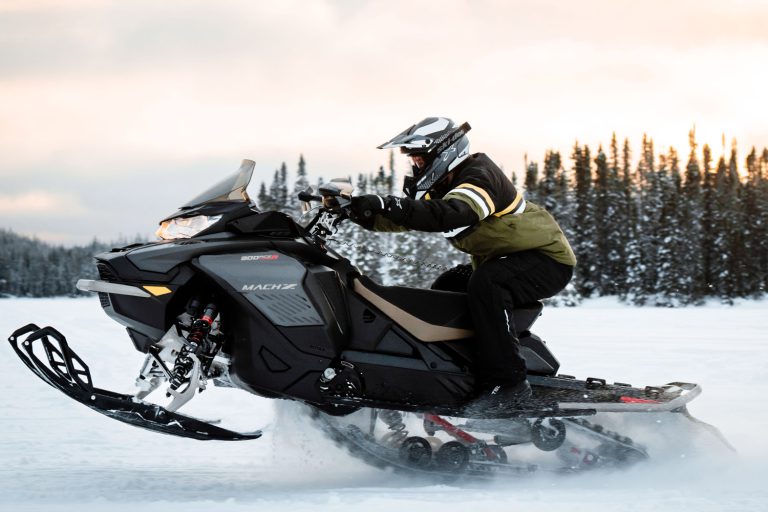
To help showcase its renowned handling and power, Ski-Doo is bringing back its legendary Mach Z muscle sled for a limited run in 2022.

The all-new Mach Z redefines what a muscle sled should be and what it can do. It’s built for speed, including the all-new 180hp engine, as well as an industry exclusive “Launch Mode” that will have riders grinning from ear to ear as they mash the throttle.

The Mach Z is also packed with the latest technology, including Smart-Shox and a large digital display so riders can hit the trails every day without a second thought.

Enhanced Agility

And for advanced riders who like to play in deep powder, the Ski-Doo Summit X with Expert Package now features a narrower adjustable ski stance (34-36 Inches), making it even more nimble in tight technical terrain.

Riders will appreciate the agile handling it delivers, allowing them endless fun in the powder.

For more information about the entire 2022 Ski-Doo model lineup, including vehicle specs and technical information, visit Ski-Doo.com.

2021 SKI-DOO 600R RENEGADE X

0

We’ve had a 600R Renegade in our fleet a while now and have had the opportunity to ride it in in all sorts of situations and in different temperatures and snow conditions.

From a reliability perspective it’s been flawless, always starting instantly as only an E-TEC can, and performing great with excellent acceleration and surprising top end.

This particular Rennie is an X model, not equipped with running board mounted spring and damping adjusters or Ski-Doo’s latest cell phone connected digital instrument package. Frankly, we miss the external adjustment feature a lot more than the dash whiz-bang which takes a lot of concentration to use comfortably.

Speaking of comfortable, this sled’s rMotion skid never fails to blow us away! This version is called “rMotion X” and features longer front and rear arms and a weight transfer adjuster so you can make the skid transfer more or less on acceleration.

Be warned, if you choose to dial in more transfer you will inevitably lose some of the Renegade X’s flat cornering demeanor. We left the setting stock, as delivered, so we could get a better idea of how the new RAS X front end worked.

RAS X features a long list of new front end parts, including spindles, upper and lower A-rms and longer tie rods, sway bar etc. The extra 1.8-inch width delivers more travel and, combined with the skidframe mods, turns the X into a very flat-cornering sled that has almost no inside or outside ski-lift on all snow surfaces, no matter how hard you crank the bars.

As we continued to put more miles on this Renegade, we grew a bit more doubtful about the effectiveness of the RAS X setup. Despite the bag of new parts applied to this design we found the X had a noticeable tendency to plow or oversteer on groomed trails in medium hard-packed snow and especially, on loose snow, as speeds increased. We experimented with longer and deeper carbides but the tendency was still there and steering effort, of course, was increased noticeably with the bigger carbides.

We’re still working on this and after a brief meeting, decided we’d like to try the RAS X on this sled with the Weight Transfer Adjuster set so there’s more weighting of the outside ski on cornering and less flatness. We’ll let you know how that turns out (it’s not a very simple process to change the WTA and requires shop time to disassemble and re-assemble the cam-style adjuster).

One other observation we registered about the 600R, especially after putting a different group of riders on the seat, was its relatively abrupt belt engagement both on low-speed take-off and while riding rough trails at low speeds. We wanted to blame the pDrive’s roller primary for this but after speaking to some SK engineers, discovered it has more to do with the E-TEC’s mapping program at low RPM than with anything to do with clutching. Probably a lot of experienced riders will actually like this jerky response and feel it makes the sled act like a racer on the starting line – but put a novice rider on the seat and it scares the beans out of them.

We think this whole effect is less pronounced on the 850s than on the 600 – maybe because of the giant lump of torque the 850 makes off engagement – however, it’s still noticeable on both engines. Keep in mind, this trait only evidences itself off-engagement or on rough trails when you’re nursing the throttle over deeper moguls. Get into the midrange and the E-TEC is nothing less than silky smooth.

Overall, as the snow depth increased and the trails got smoother, we started to love the Rennie X. With a high level of riding comfort and an impressive performing engine, this sled has found a place in our hearts.

2021 Yamaha SRViper LT-X GT Review

0

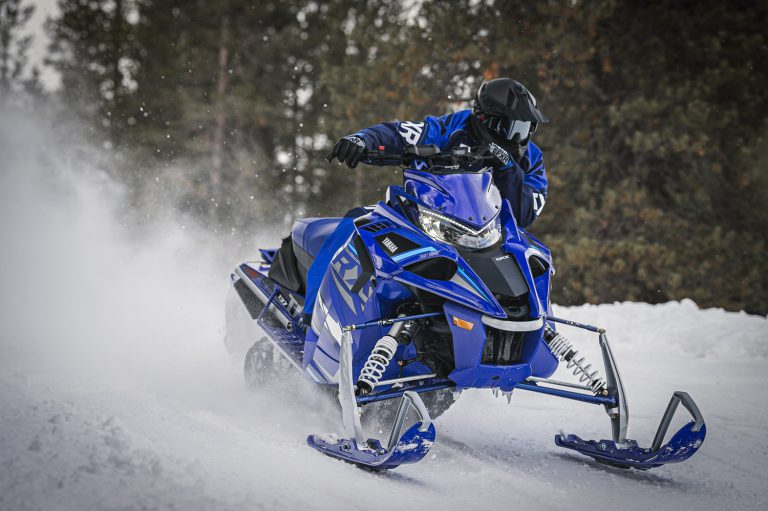
Luke evaluates Yamaha’s 2021 SRVIPER LT-X GT featuring the stellar 1049cc 4-stroke triple, spinning a belt-friendly YXRC clutch combo, Fox QS3 shocks and Yamaha’s new Stryke skis and tweaked spindles.

Subscribe to our YouTube Channel!

2021 SKI-DOO MX-Z X 850

0

We have two 850 E-TECs in our fleet this year – one a Renegade and the other an MX-Z. Both are very well equipped and have given us a well-rounded opinion on their performance and ride-ability.

First, the MX-Z. This one is an “X” version and when we first rode it we were saying to ourselves: “This 29-inch version is great and I actually prefer it over the 137-inch Renegade!”

The shorter track allows snappier handling with slightly quicker turning (than the Renegade) and the sled just feels lighter. We know, it is lighter but that sensation is clearly delivered to the rider.

No complaints with the power here on either sled. This Direct Injected 850 starts instantaneously, doesn’t smoke and runs flawlessly – no matter what the temperature or humidity. Power feels pretty endless whether you’re accelerating from corner to corner or just taping the flipper to the bars out on a frozen lake.

This version of both the 137 and the 129-inch length rMotion performs admirably. There was no time when we were surprised by an invisible square-edger or pothole in the trail for one of those “oh-no” moments. The skid just sucks it up and asks for more. Great technology!

The big deal here, and the truly new tech on this sled is its front end handling change. Ski-Doo’s newest “RAS X” front end offers a wider-by-1.8-inches ski-stance, new upper and lower A-arms and new spindles. However, you could be misled into thinking the handling change is just all about the front end. It isn’t.

Ski-Doo has completely changed the rMotion (now called rMotion X) out back to work in compliance with the RAS X front end. There’s a new 13mm longer front arm and where the front arm mounts to the skid rail there’s a cam adjuster (Ski-Doo calls this the “Weight Transfer Adjuster”. It’s designed to vary the amount of transfer the sled has on acceleration by changing the leverage of the front arm. The rear arm is also a few mms longer – and Ski-Doo claims the whole unit is about 5-lbs lighter.

Apparently, this year the goal of Ski-Doo’s engineers was to make the Ski-Doo chassis corner flatter. There had been complaints about ski-lift and non-linear responses up to the apex of corners with the old RAS 3 setup.

The new front end tech and the fairly major changes to the skid have resulted in a very flat, skis-planted-on-the-snow demeanor. As we mentioned, ride compliance hasn’t been compromised.

We noticed with both sleds, the front end does stay much better planted – even to the point of both skis pushing or understeering sometimes, depending on the type of snow you’re riding on (this was more pronounced on the Renegade). We got the best turning results on medium-loose snow using the adjustable skag Pilot X skis with the carbides dialled really deep. This, unfortunately, increased steering effort considerably.

Our sleds are equipped with Ski-Doo’s “panoramic” 6.8-inch digital display with a rotator knob located ahead of the rider’s left knee. Although the info was helpful, we found the operation of this setup to be lacking. Best to set it up thoroughly before you ride and not mess with it enroute unless you’re completely used to how it works.

One further comment: Both our Renny and MXZ have rear shock damping and spring adjusters mounted on the running boards. We have made good use of these and honestly, it’s one of the best options you can add to a Ski-Doo. It’s especially useful when different sized riders are piloting the sleds and you want to max out ride compliance.

We should also mention we haven’t found a great deal of difference in the ride, handling or performance of the X versus the X-RS. Yes, the XR-S has a slightly different range between full soft and full hard when you’re dialling in damping but because of the aforementioned tune-ability of the running board adjusters, you can get exactly the level of compliance you’re wanting.

The X has less front end adjustability, however, because of the difference between the X-RS’s premium front end and the X’s KYB gassers with no damping adjusters.

In conclusion, we have to say the X is a very nice package and although the X-RS offers a more sophisticated shock package, depending on how you ride, they’re both pretty close.

Indy EVO Stud and Carbide Installation

0

AJ adds some necessary traction productions from Woody’s to not only balance the handling of the Polaris EVO but also instil confidence and provide an additional layer of safety and control for the younger pilots of this popular sled.

Subscribe to our YouTube Channel!

Woody’s Traction Options for Crossover Sleds

0

Today’s factory options allow snowmobilers to have any number of tracks on 144 or 146-inch Crossover sleds, so what’s the right choice for studs? Well, it really comes down to overall balanced traction.

This means the happy balance is not too much bite up front with your carbides, making it heavy-steering and awkward, and likewise not too much studded or paddled grip out back causing the sled to push in the corners. The key is finding the harmony between those two things.

Woody’s Traction is always innovating and designing new and helpful products, from their multi patterned stud guides to track drills marking tools and even shallow sockets and easy to hold round head Allen-keys for installing studs.

Woody’s Grand Master or Grand Master Pro studs work great on Cobra track options with 1.3 or 1.6 inch lugs. They are designed to be used in single ply tracks, and the GM Pro is now available with a much more pronounced sharpened carbide tip for even better traction. You can buy Woodys stud kits with the nuts and backers all in one package or customize the backer shape and color to match your ride or accent it accordingly.

If you have another track option and have opted for studs you’re going to need to make sure you proportion the grip you’re getting up front so you don’t mess up your sled’s handling and cause it to push too much.

To accomplish this, check out Woody’s Ace carbides because they feature a unique host bar design that are excellent help in keeping your long track, deep lug or studded 50/50 sled tracking where you want it to go without becoming too heavy up front.

Visit woodystraction.com to see all of Woody’s products.

MBRP Exhaust Race Teams

0

Luke pays a visit to the test grounds of MBRP sponsored snocross teams, St. Onge and Blackriver Racing. While on the ground he gets a first hand look at the development of their race sleds and gains new found level respect for MBRP’s Race Inspired – Trail Proven design philosophy.

Subscribe to our YouTube Channel!

2021 Polaris Switchback Assault 144

0

Few new snowmobile models have dominated any class in the past five years like the Polaris AXYS Switchback Assault. What’s remarkable about this accomplishment is how many really good sleds there are in this segment.

Even though there are competitive differences that allow for picking winners in SNOWTRAX comparos and shootouts, there’s one sled that has continued to stand at the front of the X-Over class year after year.

Yes, my snow obsessed friends, Polaris has been slaying the rabidly popular X-Over class steadily with the AXYS-based Switchback Assault in either 600 or 850cc flavors. So successful at doing dual duty is the Assault, Polaris elected to continue production of the AXYS-based ride in MY 2021, in the face of the all-new MATRYX based Assault 146.

So maybe you’re wondering why and how the 144 Assault continues to capture the approval of the highly selective SnowTrax and Supertrax crew? FYI, we have both a 144 AXYS Assault 850 and a 146 MATRYX Assault 650 at World HQ this winter.

Here’s the simplest way of explaining why, in the face of formidable competition, including the excellent Ski-Doo BackCountry X-RS and Arctic Cat’s RIOT, the Polaris Assault continues to be our pick for best sled in this class. It’s not about doing one thing well; it’s about doing two things well and minimizing compromises. We’ll explain.

This class is not solely a deep snow, freeriding segment – although the expectation of buyers in this segment is they definitely will be riding off-trail.

Okay, we’re not going to posit a diatribe on the wrongness of off-trail riding. For the sake of this report we’ll assume everyone who rides a X-Over sled only goes off-trail where it’s 100 percent copasetic. Back to the sleds…

Clearly the Switchback Assault 144 850 is a capable boondocker/freerider. The sled, when equipped with a 2-inch Camo-shredder (our favorite shoe for this ride) is exceptionally potent and can, in some situations, run with full-on shorter tracked mountain rides. However, the Assault is not targeted at the vert crowd – it’s positioned precisely as a deep snow flatland and groomed trail ride.

Here’s my point: The Assault always pleases when taken off-trail, however, the G4 based Backcountry XRS Ski-Doo with 850 power is just as capable – arguably more capable – than the Assault off-trail.

So if we just admitted that reality, why do we think the Switchback Assault is the ultimate X-over ride? Simple again. The Assault is a really good trail sled with its IGX uncoupled skid, variable castor IFS and light weight.

Did we mention the Assault’s dual purpose ergonomics? You can ride this sled all day on trails and not feel the least bit strained by excessive body roll, understeer, unrepentant skid-frame ride quality or a too-tall bar riser.

This is where Polaris makes hay with the AXYS Switchback Assault. It’s really good off trail and its really good on trail. Being better at one of these two riding disciplines isn’t what its about.

The class is called Crossover – and that quite simply means a sled of this designation should be able to cross over between two riding disciplines – a dozen times a day if necessary, delivering top performance in both riding genres.

So there you have it: The Polaris Switchback Assault 850 144 is still the king of this hill.

2021 Polaris Indy 850 MATRYX VR1 Review

0

Luke evaluates the 2021 Polaris Indy VR1 featuring the 850 Patriot engine.

Subscribe to our YouTube Channel!