Home Blog Page 57

Globalstar Canada and CCSO Urge Riders to Get Gear Ready Earlier this Season

0

Globalstar Canada Satellite Co., a wholly owned subsidiary of Globalstar Inc. (NYSE MKT: GSAT) and a leader in satellite messaging and emergency notification technologies, in partnership with the Canadian Council of Snowmobile Organizations (CCSO), launched an awareness campaign today urging Canada’s estimated 1.5 million riders to get ‘gear ready’ earlier this season.

The campaign coincides with the Sled Season International Kickoff taking place on October 29-30, 2021 which brings snowmobile clubs and riders together in preparation for the start of the winter season.

According to the International Snowmobile Manufacturers Association, riders spend an average of $2,600 CAD per year on snowmobile riding products, gear and related services. Craig Nicholson, The Intrepid Snowmobiler, says that much of this spending occurs in the fall and always advises snowmobilers to complete their ride preparations before the snow flies. But Nicholson is now warning riders to get ‘gear ready’ earlier than ever, and the sooner the better:

“Supply chain issues are already creating challenges when it comes to getting snowmobiles, parts and accessories. So don’t wait until it’s too late, especially when it comes to SPOT Satellite Messenger, which I recommend as an essential communications, tracking, and safety tool because it provides snowmobilers proven reliability and peace of mind – even in the most remote areas – without relying on cell service.”

SPOT is trusted by thousands of people around the world who prioritize safety and connectivity for work and play beyond cellular. In a recent survey, 96% of SPOT users agreed on the importance of maintaining 24/7 access to 9-1-1 / SOS emergency service; 92% said they’d recommend SPOT to family or friends.

For the growing community of snowmobile riders in Canada, SPOT provides the safety and peace of mind of staying found via satellite technology, completely independent of cellular networks which may be unreliable or unavailable on Canada’s 121,000 kilometers of trails.

To date, more than 8,000 rescues have been initiated around the world with SPOT satellite technology, with Canada comprising approximately 30% of all rescues. Within Canada, British Columbia accounts for the majority of SPOT rescues (38%), followed by Quebec (18%), the North including Yukon, Northwest Territories and Nunavut (17%), Ontario (11%) and Alberta (9%).

The majority of SPOT winter rescue incidents in Canada encompass activities such as snowmobiling, motor vehicle travel, medical emergencies, mountain sports and hiking. The new SPOT Infographic provides a breakdown of SPOT rescues in Canada, by province and incident type.

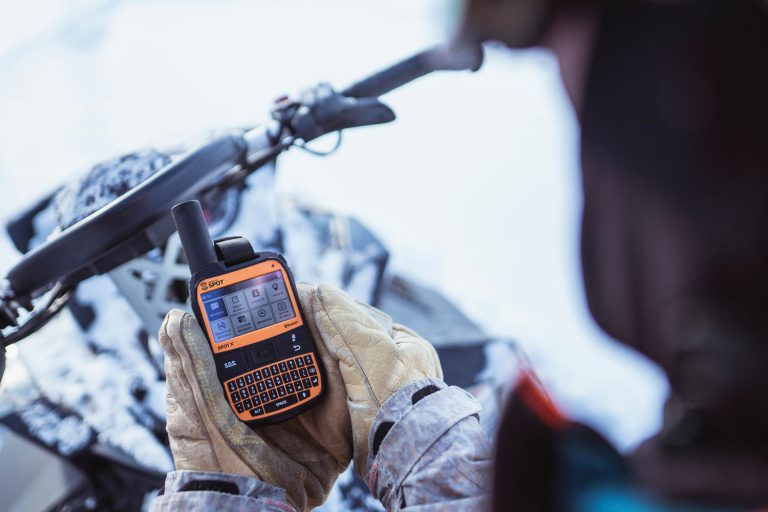
The centrepiece of the SPOT family is the SPOT X 2-Way Satellite Messenger with Bluetooth wireless technology. SPOT X provides two-way satellite messaging, tracking and emergency notification technology for reliable connectivity beyond cellular coverage with family, friends and co-workers. For those outdoor adventurers who only need one-way messaging to stay in touch with family and friends, along with 24/7 access to emergency services and GPS tracking, the SPOT Gen4 Satellite Messenger is the device of choice.

SPOT Mapping services are available across all SPOT devices, providing easy sharing of location positions, storing historical waypoints for reference, setting alerts and creating geofences along outdoor journeys.

It includes mobile responsive and sharable maps, longer data storage, and various map displays, including satellite, road and terrain options. Users also have the option to view maps in live or history mode, for tracking in real-time or to review previous trips.

For additional information on the SPOT family of satellite communications devices and list of retailers, or to purchase online, visit findmespot.ca.

About CCSO – The Canadian Council of Snowmobile Organizations is a national not-for-profit organization which provides the unified voice of organized snowmobiling across Canada. It envisions that organized snowmobile trail networks and riding areas provide a lasting legacy of responsible riding experiences that are highly valued, safe, enjoyable, sustainable and environmentally friendly.

About SPOT – SPOT LLC, a subsidiary of Globalstar, Inc., provides affordable satellite communication and tracking devices for recreational and business use. SPOT messaging devices use both the GPS satellite network and the Globalstar satellite network to transmit and receive text messages and GPS coordinates. Since 2007, SPOT has provided peace of mind by allowing customers to remain in contact with family, friends and co-workers, completely independent of cellular coverage and has helped initiate over 8,000 rescues worldwide. Note that all SPOT products described in this press release are the products of SPOT LLC, which is not affiliated in any manner with Spot Image of Toulouse, France or Spot Image Corporation of Chantilly, Virginia. SPOT Connect is a trademark of Spot LLC. All other trademarks are the property of their respective owners.
FACTORY TURBO 2-STROKE TRAIL SLED

0

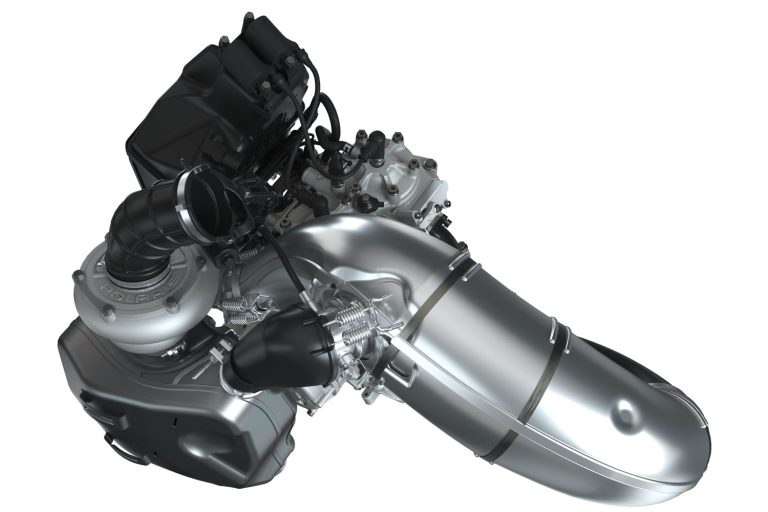
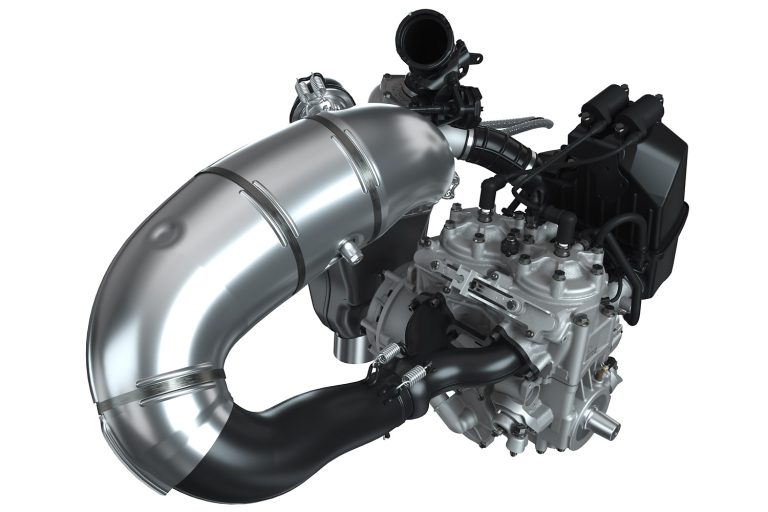
So, Polaris has a turbocharged, factory built and factory warranted 850 twin, which was launched last winter for 2021 Snow Check buyers only. RMK models ordered with the new Patriot Boost 850 sold out in a matter of hours.

Ski-Doo experienced this exact reaction a year ago when it introduced the Summit with Rotax 2-stroke Turbo power. To say the mountain market wants turbo-2-strokes or maybe more accurately, more power would be an understatement of Olympic proportions.

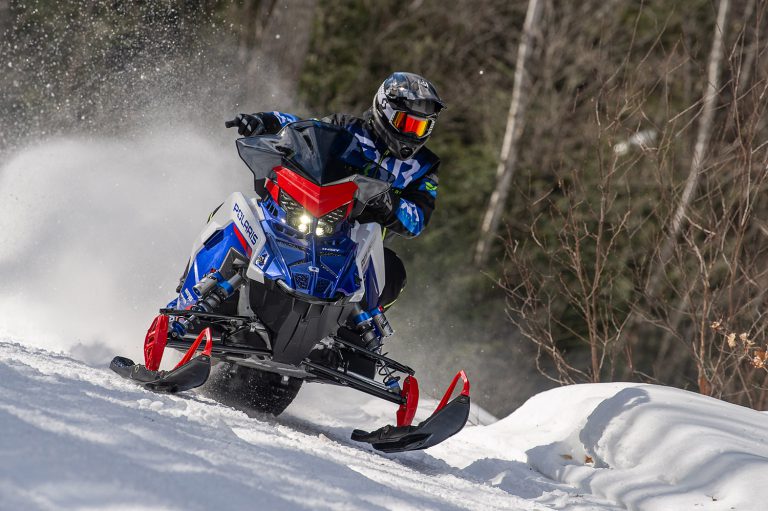
So where am I going with this discussion? I’m going where you’re going. The inevitable question not even 30 seconds after the sheets were pulled off these two innovative sleds was: When will there be a turbocharged 2-stroke trail sled?

Let’s try to bring some perspective to this burning question. Does it make any sense for these two OEMs to offer trail sleds with 2-stroke turbocharged engines? Right out of the gate I suspect there’s a pretty hard ceiling on the number of turbos Polaris can build. EPA emission certifications are not some willie nillie procedure an OEM can side-step – not without penalty.

That being said the “penalties” for messing up the model mix of snowmobile (engines) an OEM offers can be reconciled by using clean snowmobile engine “credits” (if they have any).

In other words, a sled-maker that sells a disproportionate number of clean engines can bank certification credits to carry along models that do not EPA certify or are at the threshold of certification cleanliness. If you get where I’m going, it might be possible to use EPA credits to offer less-clean 2-stroke turbos. However that only applies if you don’t exceed your “available credits”.

This whole system is cumbersome, hard to explain and hard to understand. In simple terms, we doubt Polaris would be able to build enough trail targeted, certified trail Turbos to make such an effort profitable.

Lets say I’m wrong about all of this and there are no EPA restrictions holding back Polaris from building as many turbo 850 Indys as the market (that’s you) wants. Would Polaris do that? My suspicion is they would not.

In the not too distant future, Polaris is going to pull the sheets off a 4-stroke engine package that will satisfy buyers of sleds producing multiple levels of performance. Do I know this for sure? No. However, I‘d bet the farm on it happening.

I’d also put money on Polaris including a turbocharged version of this 4-stroke engine package. It has not gone unnoticed Ski-Doo is making hay with its turbocharged ACE 900 (4-stroke) in two power variants. Also, both Yamaha and Arctic Cat have 180 (plus) horsepower 4-strokes for the trail.

If Ski-Doo doesn’t do a turbo-trail 850 2-stroke then we would not anticipate Polaris taking its Liberty 850 Boost to the trails. Ski-Doo gets 180 ponies (or thereabout) out of the ACE Turbo R triple. Fact: they can’t build enough of these engines. It would make way more sense for Polaris to continue its predicted development of a versatile 4-stroke triple cylinder power pack with the potential to be turbocharged up to 180 (or more) HP.

One thing’s for sure – there’s a lot of money being invested in snowmobile internal combustion engines at this point in history. Next time, we’ll talk about electric powered snowmobiles. Seriously.

Will We See A MATRYX Featuring DYNAMIX?

0

Who would’ve ever guessed we’d be talking about the arrival of fully active suspension on snowmobiles?

Clearly, Ski-Doo aced the sno-mo market with the introduction of its proprietary “Smart-Shox” active suspension system this year. Smart-Shox will see its first consumer use this coming winter and I predict it’s going to be an overwhelmingly positive experience for those buyers who anted up for a first-year copy of this game-changing tech.

Sound like I’m impressed? Yes – and no. Let’s deal with the “no” first.

Fully active suspension in an off-road application has been available from Polaris for over two years now. The RZR PRO XP can be factory ordered with Polaris’ proprietary “DYNAMIX” system. So, the “no” part of my question has already been answered.

I knew 100 percent from firsthand experience with DYNAMIX, in a snowmobile application this technology would do the same thing it does on the RZR – it would reinvent snowmobile riding.

The “yes” part of the question is simple. You have never ridden a better riding snowmobile than a new G4 Ski-Doo with Smart-Shox. I said never.

It’s interesting to discover Can-Am’s inclusion of Smart-Shox technology on the Maverick XRS in July 2020. Why? Because Ski-Doo and Can-Am got fully active ride control at almost the same time. I gotta think Polaris will share DYNAMIX with the snowmobile division in the very near future.

Say what you like about the complexity of active suspension and yes, what will the system work like after 10,000 miles of mogul bashing and multiple seasons of cold weather use? I can’t definitively answer that question. However, I will say this: I remember oh-so-clearly when EFI systems appeared first on Polaris snowmobiles back in the 1991 model year.

There was profound and prolific doubt about the longterm durability and reliability of the Polaris JECS EFI system on the piston port Fuji 650 triple and Fuji 500 twin. Guess what? The system was mostly bulletproof with few exceptions. Don’t forget this: These simple 2-stroke engines equipped with EFI benefitted from a tangible injection of refinement and operated infinitely better than their carbed cousins.

I think Polaris is calibrating and mapping a full-on DYNAMIX active suspension system right now as you read this. I will be profoundly shocked if we don’t see DYNAMIX this spring. Polaris knows much about fully active technology having developed DYNAMIX in lock step with Fox for side-x-side use.

Interestingly, Ski-Doo’s Smart-Shox uses KYB dampers while the Can-Am off-roader uses Fox shocks. We think Polaris will stick with Fox on a snowmobile DYNAMIX system even though Walker Evans is the company’s premium brand for sleds.

There you have it. Fully active suspension is only a quick pressing of your credit card away. We can’t wait to see what it looks like from an OEM that has pioneered the technology for off-road use.

KLIM RELEASES NEW SNOWBIKE ONE-PIECE

0

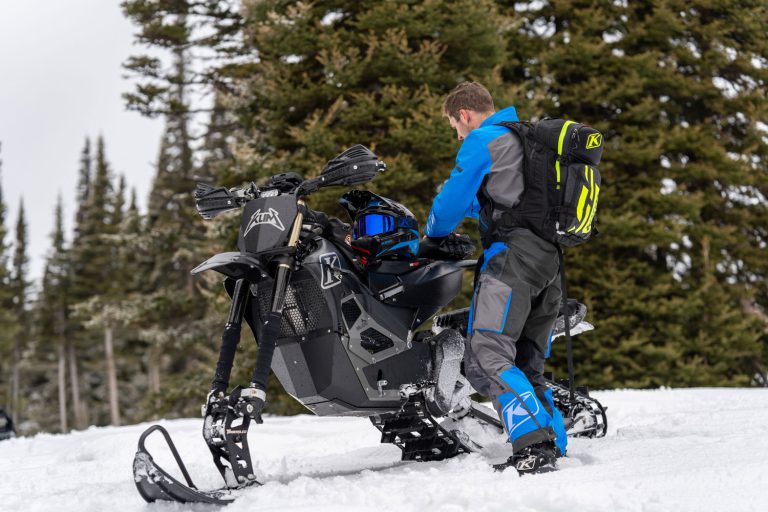
KLIM is excited to release the new Scout One-Piece, designed specifically as a streamlined solution for the harsh conditions of snowbiking.

Building off KLIM’s experience engineering snowbike bibs and boots, they’ve entered the snowbike one-piece market with a unique suit to provide the necessary durability and mobility for snowbiking.

Inspired by the industry-first Havoc Snowbike Bib, the Scout One-Piece combines KLIM’s legendary one-piece construction with innovative snowbike technologies that have stood the test of time.

Footpegs, headers and aggressive seats are all part of the extreme conditions facing backcountry snowbike riders, requiring unique approaches to design. Key differences between regular snowmobile one-pieces and the Scout One-Piece include more durable seat construction to handle aggressive seats and special burn-resistant panels inside the legs for protection against engine components.

The design principle is simple: durability where it’s required by the machine and flexibility where it’s appreciated by the rider. The lower half of the one-piece mirrors KLIM’s Havoc Bibs, while the upper half is made up of lower-bulk materials for comfort and flexibility.

Compared to the popular snowbike combo of a Valdez Jacket and Havoc Bib, the Scout One-Piece offers lower bulk and better mobility by using lighter fabrics in certain areas and reducing the total amount of layers. The Valdez/Havoc create the most durable snowbike gear setup, while the Scout is most mobile – these give riders options to choose snowbike-specific gear for their riding conditions.

As with all of KLIM’s mountain snow gear, the Scout uses Gore-Tex waterproof breathable membrane plus a series of vents to keep you dry and comfortable in changing conditions.

For storage, in addition to normal hand pockets, the Scout features KLIM’s new AMP Electronics Pocket. The AMP pocket is an Aerogel-insulated, fully waterproof electronics pocket designed to keep your phone dry and protected from cold temperatures to prolong battery life.

With durable materials, purpose-built fabric layouts and new storage technologies, KLIM’s new Scout One-Piece is the most intuitive snowbike experience possible.

SCOUT ONE-PIECE TOP BENEFITS

• LOW BULK FOR EXCELLENT MOBILITY ON SNOWBIKES
• DURABILITY IN KEY AREAS FOR EXHAUST/FOOTPEGS/SEAT
• SPECIAL FEATURES SPECIFIC FOR SNOWBIKES

COLORS: GRAY/BLACK, BLUE/GRAY, ORANGE/GRAY

MSRP $799.99

Learn more at KLIM.com

About KLIM – KLIM Technical Riding Gear is a global leader in designing, developing, sourcing and distributing the most advanced powersports apparel for snowmobile, motorcycle and off-road riding. Utilizing the world’s most premium technologies in waterproof, breathable, durable and comfortable materials, KLIM creates gear for the most demanding riders. Driven by the continual feedback and input from dedicated test riders and passionate customers, KLIM strives to do one thing above all – enhance the riding experience.

2022 Patriot Boost Detailed Overview

0

AJ’s in the Polaris booth at Hay Days last month taking a few minutes with Ricky Jaeger, Director of Snow Powertrain at Polaris Industries to get some detailed information about the all-new Patriot Boost turbocharged snowmobile engine and what’s different about it compared to the Ski-Doo turbo.

Subscribe to our YouTube Channel!

ARCTIC CAT UPDATE

0

Maybe the most asked question we field here at Trax Media World HQ is: “What is Arctic Cat up to?” It’s no secret there have been a myriad of changes at the Thief River Falls based OEM since Arctic Cat was sold to the giant Textron Corporation more than three years ago. So, sit back and get the straight goods from Heidi McNary, the new Senior VP and General Manager, Powersports.

In our discussion with Heidi McNary at Hay Days we asked her to drill down on a number of issues she is focused on. First, Arctic Cat is maximizing production of existing products, then ensuring the customer is first – delivering Arctic Cat products reflecting what they want. Finally, Arctic Cat wants to develop their dealer network – both snow and dirt – to ensure they are vibrant and profitable.

McNary reported with enthusiasm Arctic Cat’s success with their early order sled program last spring. Interestingly, youth and mid-size models showed strong growth – likely an indicator of new and younger enthusiasts entering and returning to the market.

To grow “Snowmageddon” orders in MY23, McNary has given the command to ensure the early order process is easier to understand and reflects accurately what early order buyers want. Just to make this perfectly clear – Arctic Cat will fulfill every MY22 early order before year end. The model mixes on this season’s early orders has been a challenge, however Arctic Cat is on a path to fill each and every order. An issue plaguing every manufacturer is supply chain shortages. It’s why huge OEMs like GM and Ford cannot meet customer and dealer orders. Arctic Cat is a smaller but intimately similar example of this Covid rooted problem.

McNary surprised us with her open admission she regularly walks the production line in TRF so she can listen to the challenges facing the production team. Arctic Cat is prioritizing all Snowmageddon orders for production by year end and will switch to in-season orders as quickly as possible.

McNary makes it clear both loyal Arctic Cat snowmobile customers and new snow customers are important to her team. The success of the BLAST is proof Arctic Cat is attracting new riders and the Riot is clearly meeting the needs of the faithful, hardcore Arctic Cat aficionados. Both these successful products give customers a reason to visit their local Arctic Cat store and website.

Heidi McNary has nothing but praise for the team she has in place right now. Troy Halvorson – Director of Product Strategy, Snow, has a lifetime of experience with Arctic Cat snowmobiles. Trenton Munsell, Director of Product Strategy, Dirt, brings years of powersports industry knowledge and strategic thinking, and Peter Keppler, Vice President of Sales, joins the team from Harley and Brunswick Boats, and comes from a long history of channel development.

This team positions Arctic Cat to meet the challenges of the near- and longer-term future. Heidi commented on the changes in the leadership team by saying this: “A fresh perspective is never a bad thing”. She is not oblivious to the legacy of Arctic Cat employees and customers.

Arctic Cat is on an aggressive hiring program in TRF. As one can imagine, Arctic Cat’s employees have a profound effect on the economy of TRF. The company is actively pursuing assemblers, welders, Engineers, ISC professionals and more. The intent is to expand the Arctic Cat workforce by up to 300 employees over the next five years. Finding enough qualified, skilled employees has always been the challenge in Northern Minnesota but Arctic Cat’s drive to add headcount shows their commitment to the brand and continued investment in the products they sell.

McNary is one busy individual with her hands-on Production, Engineering, Product Strategy, Marketing and Sales. Clearly this is one dedicated Arctic Cat executive reporting directly to the Textron mother ship in Augusta, Georgia.

McClure and Kincaid

It is true Dave McClure and Riley Kincaid the son of the legendary, late Rob Kincaid, have left the Motorfist camp and signed a support deal with Klim. Of course, Klim is owned by Polaris and our readers want to know where this leaves Dave and Riley.

Arctic Cat wants nothing but the best for their careers as athletes and support them in all of their endeavors. While they are sad to see them go on the apparel side of the sponsorship, Arctic Cat understands that Klim’s immense focus on avalanche awareness is near and dear to both of them. However, they made it very clear that Dave and Riley will remain integral parts of the Arctic Cat family and you’ll see them still riding Arctic Cat mountain sleds this season.

Turbo Questions

Arctic Cat mountain enthusiasts are clamoring for a turbo charged mountain model in response to turbocharged vert rides from both Ski-Doo and Polaris. McNary made it clear the company knows where they’re going. Specifically, flatland models are receiving heavy product investment and attention addressing both suspension and handling.

The company cannot move ahead with new stuff in every segment all at the same time. Rest assured, Arctic Cat knows what their customers – all of them – are looking for.

Phantom Teth-Air Wireless Tethering System

0

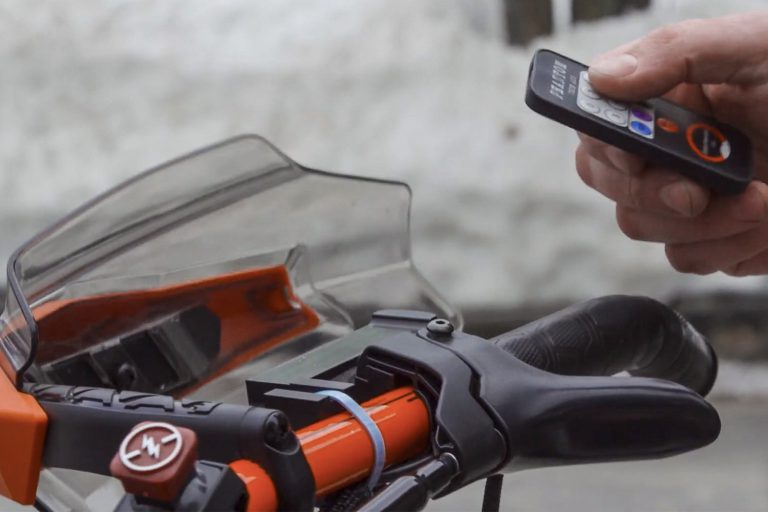
The Phantom Teth-Air is an advanced, wireless tethering system by Source Innovations. Many riders forget to clip their wired tethers to their jackets or just can’t be bothered, which can be a costly and dangerous mistake. The Phantom Teth-Air uses wireless laser technology to automatically stop the engine once the rider’s hands leave the handlebars.

Subscribe to our YouTube Channel!

Taiga Nomad 2-Up Utility Sled Detailed Overview

0

This past spring the folks from Taiga visited our home turf with a few Taiga electric snowmobiles and Motorhead Mark got a chance to ride Taiga’s 2-up utility sled offering called the Nomad. Here’s his detailed overview of this sled along with some first impressions after having it out on our local trails for the day.

Subscribe to our YouTube Channel!

HOW WILL LYNX IMPACT NORTH AMERICA?

0

Let’s make this perfectly clear. The arrival of the Lynx brand on these shores is a profoundly important event.

Yes, Lynx is a BRP brand built in Finland and yes, the new Lynx models available for 2022 share significant Ski-Doo and Rotax technology.

Understanding this, it is no less important to have a fifth OEM in this biz – particularly at this juncture in sno-mo history.

WHAT’S THE BIG DEAL?

For José Boisjoli, the now iconic CEO of all things BRP, to pull the trigger and bring Lynx to North America makes a huge statement about the health and potential of our sport.

Don’t forget it was Boisjoli who had the foresight to launch a snowmobile which completely obsoleted everything in the market – radically changing the modern snowmobile with the intro of the original REV platform in 2003. This was incredibly risky and amounted to Boisjoli having the guts to go all-in and make the biggest gamble in the history of the sport – at that time.

Launching Lynx with full force into the North American market is a gamble on a similar level (but not quite as risky) as was the launch of the 2003 REV.

WHAT DOES BOISJOLI SEE?

BRP, under Boisjoli’s leadership did not bring Lynx to North America without enormous soul searching. In fact, I had the privilege of participating in a top secret evaluation of specific Lynx models over four years ago in a remote northern locale.

At that time the participants in attendance pretty much determined the Lynx brand had significant, tangible cache. I felt there was at the very least Corvette appeal if not something more exotic like Porsche exclusivity.

I was interviewed and surveyed out the wazoo over the one day we had to sample Lynx models and compare them to existing Ski-Doos and other brand;s current sleds. The volume of data collected that day was nothing in comparison to the information accumulated and assimilated by BRP in the ensuing time leading up to the 2022 intro.

SKI-DOO VS LYNX?

Sources at BRP have indicated a contingent was concerned if Lynx was positioned as a “premium” brand it might undermine Ski-Doo’s solid number one market share position. Boisjoli was faced with an “either-or” decision and obviously pulled the trigger on bringing Lynx to this side of the pond and deliberately positioning it as a premium, pricier brand.

Seems José should buy more lottery tickets because the instant Lynx hit the ground in North America late last winter the entire allotted production for Lynx sleds was early-ordered by rabid, foaming-at-the- mouth-with-cash-in-hand buyers. The gamble paid off – again.

WHAT’S NEXT?

We thought BRP would sign up Lynx-only dealers in markets where all the brands are currently represented, including Ski-Doo. This might still happen, however, as we understand it, approved, high volume, high profile Ski-Doo dealers are among the first to hang a Lynx sign on their businesses.

WHO IS PAULIE PIIPPOLA?

I’ll close by answering this provocative question. Think Roger Skime. Pauli Piippola is the brains behind many Lynx innovations not the least of which is his PPS uncoupled, dual shock, rising rate rear skid. Piippola also has a very unique front IFS design used on older Lynx models – maybe we’ll see a variant in the future.

Simply put, Piippola is a genuine icon and the reverence and respect he is afforded by his engineering team in Finland is measurable.

BTW, I got to ride with him four years ago when he was only 70 years old and just like Skime, he can rip.

When Is Something All-New Coming From Arctic Cat?

0

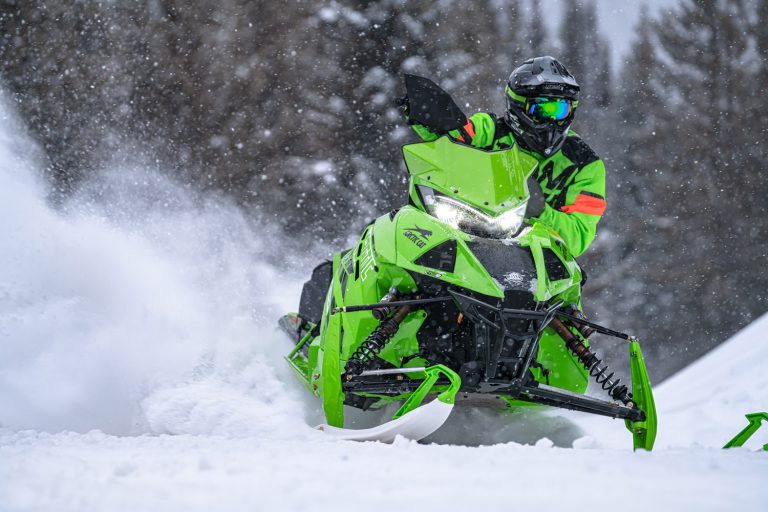
Cat’s ProCross platform has been around for ten model years now. This would seem pretty ominous if the chassis had been less effective.

As it is, the wide-spaced A-arm design has proven to be an excellent handler and its ability to house a complement of different engines – everything from a 500cc 2-stroke to a bevy of 4-strokes – some with turbochargers – and still maintain excellent ride and handling manners is nothing short of miraculous.

It’s a credit to the fine engineering people Arctic Cat has employed over the years. These squads of innovators have seen the company through some pretty rough years and have still been able to deliver great, competitive and contemporary sleds, not only to serve the Cat market, but Yamaha’s unique blend of owners as well.

When the 2022 models were revealed last January with a new, narrower clutch design, we immediately began to speculate Cat had some intentions to introduce a fresh snowmobile platform sometime soon.

Although we hesitate to guess what new features a Generation 2 ProCross platform would have, we can stab into what a new chassis will have, though. We can almost guarantee Arctic Cat will stay with the wide spaced A-arm design it’s used for a while now. Simply, there’s no reason to change something that has worked so well for so long. Handling has always been sharp and predictable and whatever theory the engineers came up with last decade has proven flawless.

New styling? We think this is absolutely a possibility! Cats have looked similar for a long time now – and although there was an update to sleeker looks and better panel removal a few years ago, it wasn’t a radical change in appearance.

We think, in order for Cat to get the full attention of prospective buyers – and to move buyers over from other brands – it’s time for something big in the looks department.

Why the narrow clutches? Certainly, in the mountain and crossover deep-snow markets, narrow is good. Cat’s narrowed Ascender vertical platform has preached narrowness and it really does make a difference lessening “paneling” on sidehills and reducing drag in deep fluff.

Focusing on narrow sleds may be an indication Cat sees the future of snowmobiling will be toward sleds with deep snow capabilities prioritized over trail use. The market kinda looks like that right now, doesn’t it?

Narrowness as a design goal may be a bit challenging with Cat’s current menu of turbocharged sleds. Check under the hood of a T-Cat and it already looks like a miracle of tightly crammed packaging. Would all that hardware fit and stay cool?

For sure, narrow is lighter. One guaranteed way to hack weight is to make sleds a couple of inches narrower. It also perks up aerodynamics and reduces drag at high speeds.

Ergonomics is another benefit. A narrower sled at the running boards and the front of the seat is more maneuverable and way more comfortable, standing or sitting, than one that’s porky in the middle. Polaris has learned this and applied it with huge success to its MATRYX platform.

Although Cat sleds offer competitive skidframe ride results, one way to blow by the competition would be with a new ride innovation that reduced unsprung weight and gave even more compliance.

It would involve the same kind of inventive thinking that dreamed up the slide-rail suspension in 1960s or coupled skidframes in the 1990s. Once again, Cat would need to rely on its engineering depth to come up with concepts that achieve these goals.

We’re taking a “wait and see” attitude right now, but the elephant standing in the corner of the room is a product that is long overdue for a radical update.