Home Blog Page 153

North America’s Top Snowmobiler Champion

0

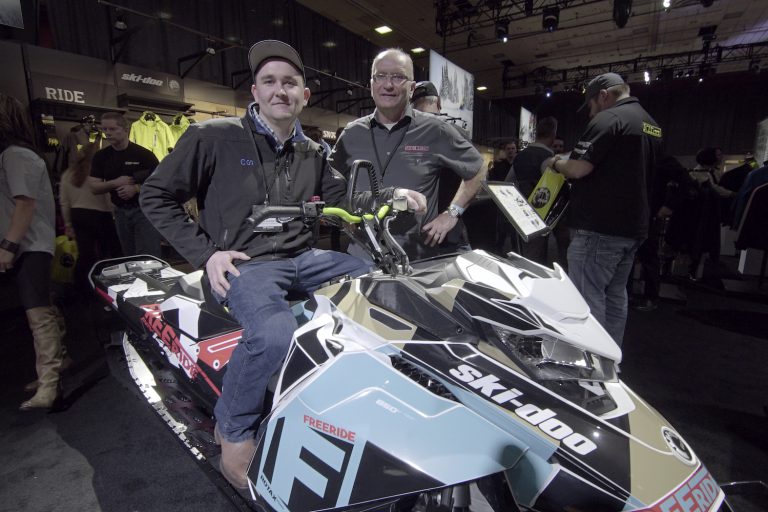
After 9 rounds of competition spanning over 18 weeks and with over 100,000 votes cast, Justin Evan’s, the winner of North America’s Top Snowmobiler, was finally able to pick his sled of choice while attending Club BRP in Reno Nevada. Congratulations again to Justin and his pick of a 2018 Ski-Doo G4 Freeride 850 165.

On behalf of Ski-Doo and Supertrax Media we want to say a hearty thank you to all the contestants who participated in this year’s search for North America’s Top Snowmobiler along with all those who supported the contestants along the way.

Special thanks also goes out to North America’s Top Snowmobiler Competition sponsors; Makita Power Tools, Woody’s, Superclamp, Cyclops Gear Action Cameras and Ski-Doo Accessories. All awarded great prizes throughout the duration of the competition.

2017 BEST ON-OFF TRAIL SNOWMOBILE

0

Mark and Kent Lester battle it out over their picks for the 2017 BEST IN CLASS AWARDS. THE ARGUMENT: A New Definition of the Category Means Old Opinions Must Go!

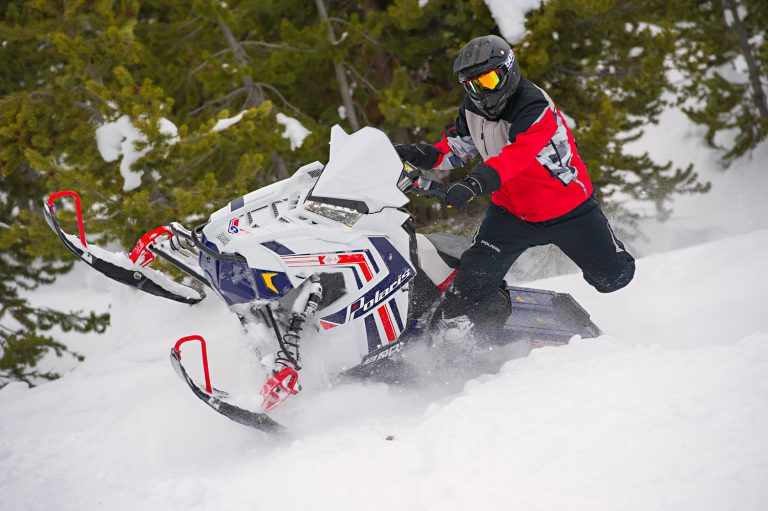
WINNER: POLARIS SWITCHBACK 144

For the past few years we’ve seen on-off trail sleds morph into more specialty “on” trail sleds capable of deep snow navigation but that work better on trails. Then there’ve been “off” trail-trail sleds that kinda suck on trails but totally rip in the deep. None of these sleds are targeted mountain rippers but rather, trail-capable flatland boondockers and deep snow navigators.

This paradigm just got re-jiggered in a profound way. You can now have competent deep snow ability and excellent, all-day trail riding talent in one sled. Polaris’ all-new AXYS-based Switchback Assault, available with 600 and 800 Cleanfire power, breaks the preconceived notion that you have to compromise when buying a serious X-over ride.

Kent, X-Over means Cross-Over – as in dual purpose. It’s a pretty common phrase. The all new uncoupled, 144-inch skid in the Switchback uses a super-long torque arm from the Pro-XC skid to generate an on-trail ride that’s stupid plush and transfer-reactive.

Conversely, the uncoupled skid allows the Switchback to climb on- top of untramped snow and literally float.

Intelligent pick, if I do say so.

– Mark

RUNNER-UP: YAMAHA SIDEWINDER B-TX LE (1.75)

Well, I gotta say the totally revised and AXYS-based Switchback 144 is a great sled and a worthy winner in this category. Somehow, surely by accident, you figured that out, Mark.

There’s another sled in this category, though, and it’s really impressive this year, too: The Yamaha SideWinder B-TX LE.

Sure, any SideWinder dazzles with its extreme power and the techy nature of its engine and new drivetrain. However, riding the B-TX LE earlier this year blew me away with its suspension upgrades. Both Yamaha and Cat have gone to school with improvements to the ride quality of this mountain-based uncoupled skidframe and its new shock and spring calibration.

Frankly, we were convinced this suspension could not ride anywhere near as well as a coupled trail skid…and we were wrong! We’re glad to admit that fact (probably not Mark, though. He’s never wrong).

Ride quality comes from the combo of the mogul-bridging benefit of a 153-inch track combined with a set of Fox FLOAT 3 EVOL adjustable air shocks (the skidframe’s rear arm shock is rebound and compression adjustable). Lug depth on that 153-inch PowerClaw is 1.75-inches and that’s exactly what you need to get that 998cc turbo to hook up.

Okay, Mark will tell you the track’s too long and the lugs are too deep. Ride it, Mark! This thing handles and rides incredibly good on trails and its dimensions ensure it works like a mountain sled in powder. Awesome!

– Kent

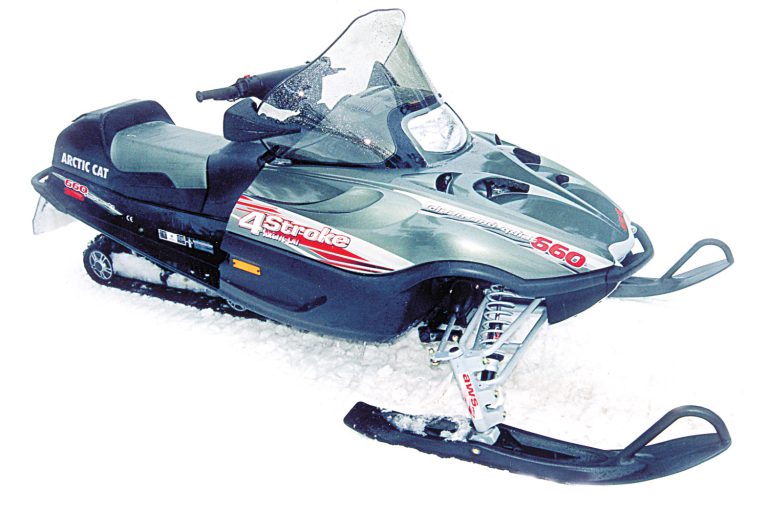
Arctic Cat 660: First Modern-Era 4-Stroke

0

11 SLEDS THAT CHANGED EVERYTHING…AND HOW…

In West Yellowstone, Montana, when Supertrax first laid eyes on the new 4-stroke from Cat, the big question was… why? What you need to realize is that in early 2001, there were only rumors of impending EPA restrictions on snowmobiles, particularly on the tight Yellowstone Park rental market.

Obviously, the OEMs had a much clearer idea of what was going to be necessary ten years down the road because they were already tooling up new SDI 2-stroke technology and getting ready to build 4-stroke sleds.

4-strokes? At the time, because no one had built one yet, the idea seemed absurd. Who would buy such a thing? They were heavy and needed enormous displacement to match the performance of 2-strokes.

Even if it could be done, their weight would destroy the handling of what we then knew as a modern snowmobile.

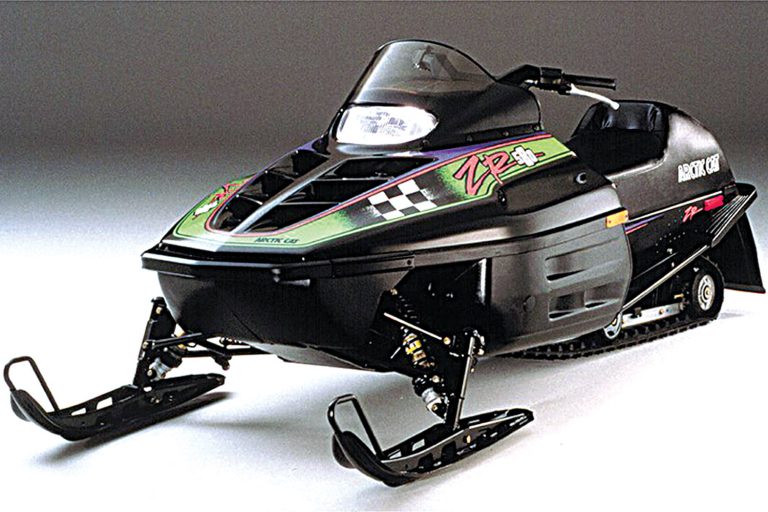
Frankly, the first versions of the 660 4-stroke weren’t very convincing evidence those fears were not true. The sled, built on a modified ZR platform, was heavy and the engine only wheezed out a very sedate and smooth 60-hp.

Our memory of that sled was that it was capable of about 70-mph on a flat, hard surface but if you hit some snow or slush it would drag your speed down about 20-mph in a fraction of a second.

The 660 4-stroke was a Suzuki-built automobile engine used mostly in Japan. This dimensionally small 660cc DOHC triple with EFI turned out to be as reliable as a slab of granite and with some deft chassis tuning, Arctic Cat was able to turn it into a very pleasurable, albeit tame sled to ride. It hit its stride when Cat turbocharged it.

That’s another story.

2017 BEST MOUNTAIN SNOWMOBILE

0

Mark and Kent Lester battle it out over their picks for the 2017 BEST IN CLASS AWARDS. THE ARGUMENT: Who’s First Might Not Always Mean Who’s Best.

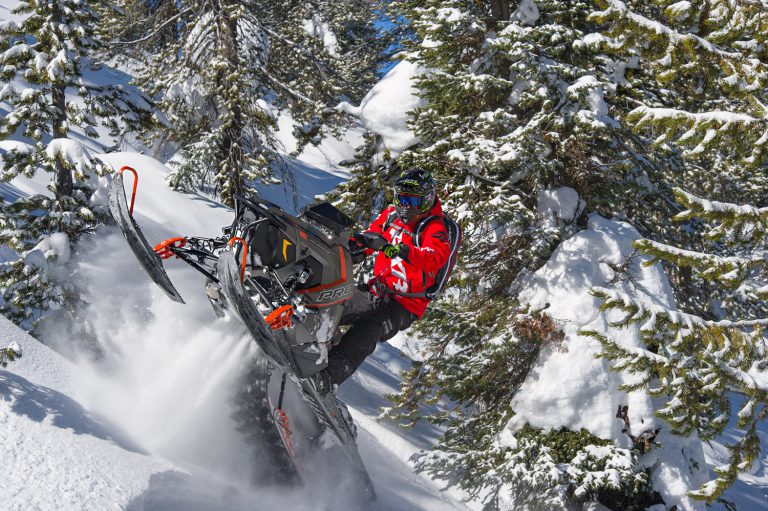
WINNER: POLARIS PRO RMK 800 174

Mark gets all gushy talking about the new Gen 4 Summit but who the heck knows how that sled will work this winter? Certainly not Mark.

Oh, I see he’s selling the Summit 800 XM here. Nice swerve, Mark. If you’re comparing that sled to the Pro RMK 174, good luck.

Sure, Polaris did respond to Ski-Doo’s lead when it debuted its Pro RMK with a 174 this year, but the AXYS-based Polaris mountain sleds were simply way down the road ahead of the competition from the beginning.

Want lightness? The Pro RMK delivers with significant weight loss in the places that count most. Want power? The 800HO hits like a 22-lb sledge with instantaneous throttle response and track-stretching torque.

Want deep snow handling? The RMK’s higher stance and svelte body panels clear snow like a Sheffield through yogurt. All the while this sled flat-out feels right, never taking the rider on its own path, listening and then responding with pinpoint accuracy to every flick of the bars or adjustment to your body positioning.

The Pro-RMK makes you a better rider. Sure, it will take you anywhere on any terrain and in any amount of snow. Frankly, there are a few other sleds that can make that claim, too, but none with the credibility of this Polaris. The Pro-RMK is an extension of its handler’s torso. It is part of you and so attentive to your commands it’s like a living thing – all you have to do is think it and it’s done.

This sled is magic in the mountains and no other even comes close.

– Kent

RUNNER-UP: SKI-DOO SUMMIT SP 800 174

Uh, Kent, tune in here, Bud. The only reason there’s a 174 RMK is because Ski-Doo poked a stick in Polaris’ eye when it introduced the Summit 174 a full year before the RMK 174 arrived. Can you say “copycat”? Okay, no argument, the archetypical RMK is the benchmark for vert performance. However, Ski-Doo de-bugged and perfected this 174 x 3-inch lugger first.

Wake up, Dude. The 174 Summit uses Ski-Doo’s trademark t-Motion skid and FlexEdge sneaker. On top of this reality the 174 segment is owned by Ski-Doo – ask the macho mountain men who ride these amazing, unstoppable Summits.

The RMK walked right past Ski-Doo’s innovative technologies – and I might add – groundbreaking technologies at that. Polaris needs to sell its 174 for a full season to catch up to Ski-Doo’s finer points on the Summit 174.

Sheesh, you should know this kinda stuff.

– Mark

Polaris Indy XTRA 12: Long Travel, Long Wait

0

11 SLEDS THAT CHANGED EVERYTHING…AND HOW…

In the 1980s and early 90s snowmobile ride quality was at best, elusive. Sure, the OEM brochures claimed incredible improvements in the way their brand handled moguls. The unfortunate reality was this: 5 to 7 inches of skidframe travel was simply not enough to produce a truly plush ride.

During this time the aftermarket produced Gerard Karpik’s M10 replacement skid. While the M10 did deliver a remarkable ride, there was and still is a limited market for pricey accessories. The M10 wasn’t cheap.

Polaris was in an incredible growth mode that saw the company produce 100,000 sleds annually during the 90s.

They took a wild stab in the dark and built an Indy with an unheard-of 12 inches of rear travel – slightly less in the front.

The Indy XLT and Indy RX-L were the first recipients of XTRA 12 and they hit the ground running, establishing a level of ride compliance no production snowmobile had ever achieved.

Our first exposure to XTRA 12 was overwhelmingly favorable, save one wrinkle. The Indy’s low friction, free rolling character was significantly degraded by the obtuse angle-of-attack necessary to produce a foot of rail travel.

Some of the early XTRA 12s came with only one shock however, Polaris wisely inserted an “anti-bottoming” coil-over on the rear arm. XTRA 12 was a falling rate suspension requiring proper set up, particularly the need to allow for copious ride-in or drop-out.

Those who spun up the preload collars too far front and rear experienced a tippy, unpredictable ride.

Because the venerable Indy chassis was used, the increased travel XTRA 12 produced a tangible measure of bump steer at the front end.

In the end, the XTRA 12 Indy is remembered as a love-hate snowmobile, however, the XTRA 12 suspension system inextricably altered snowmobilers expectations for improved ride quality.

The Indy XTRA 12 gets the nod for raising the industry benchmark for snowmobile comfort.

2017 BEST TRAIL PERFORMANCE SNOWMOBILE

0

Mark and Kent Lester battle it out over their picks for the 2017 BEST IN CLASS AWARDS. THE ARGUMENT: Serious Equipment for Trails Means Serious Reasoning is Needed.

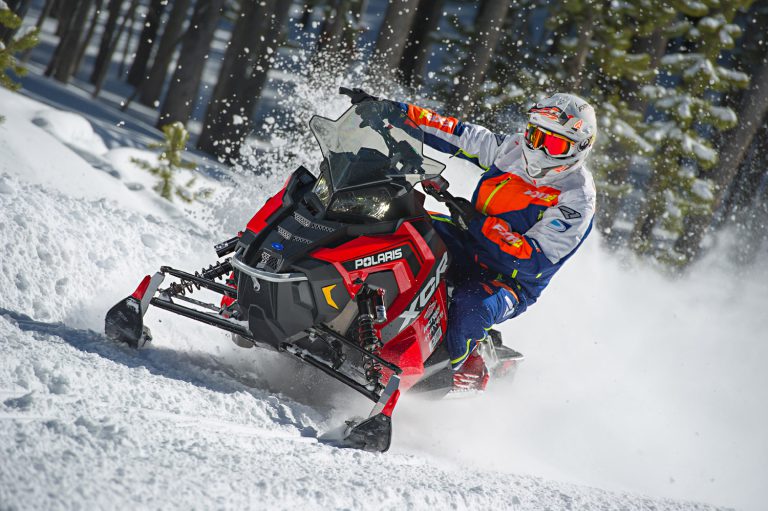
WINNER: POLARIS RUSH XCR

Polaris has broken from its usual tradition of marching to its own drummer to deliver what I think is the best trail sled of the year…and they’ve gotten it right the first time!

Yes, Cat and Ski-doo have had their own racer-focused consumer-available hi-perf sleds, the ProCross RR and the MX-Z X-RS, for a while now but Polaris simply didn’t join the club until this year. Once in, it has created a very serious performing sled that can run the wheels off the competition.

The basic elements of the AXYS Pro-S are all there but Polaris has taken everything up a notch with Walker-Evans suspension upgrades, smart clutch calibration and an aggressive 1.35-inch Cobra track. The XCR skid adds rail doublers and chromoly rear suspension parts along with heavy duty idlers. Brakes were improved to handle the heat from cross country racing, V-Force reeds were added plus there’s a Pro-X handlebar riser to help with quicker ergo transitions for the rider.

I know Mark will say Polaris pulled up short with a 120-inch track but this thing pivots like a cue ball and although the changes are subtle, the XCR is all business. At 125-hp, this engine and drive setup feels like it’s been doing bicep exercises and pumping steroids. Its response on the trail is absolutely telepathic.

The good news is, even though this sled is targeted at the most aggressive and serious trail riding customers, its ride compliance is excellent and it never feels harsh or choppy, no matter how insane you get.

Mark calls these types of sleds wannabes. I disagree. The XCR is the real deal!

– Kent

RUNNER-UP: ARCTIC CAT ZR6000 RR 129

Well Kenny, on the rarest of occasions you make credible BIC selections – or I should say you make lucky BIC selections that actually have some credibility. The operative word here is rarest – and I don’t mean your preference for filet mignon tenderness.

The new RUSH XCR is a good, maybe great, sled in its first year. However, we have to qualify your gushing kudos (big word here for Kent – get out your Funk & Wagnall) with this ever present and undeniable reality: Polaris took its sweet time before giving us a wannabe-racer AXYS!

My thinking goes like this: Arctic Cat’s ProCross RR has been hitting the Trail Performance class target dead-on for years. Two seasons ago Cat elected to shoehorn its sweet sounding, bulletproof Dual Stage Injection (DSI) 600 under the hood and… Whamo! It’s my pick for best Trail Performance ride.

Kent, in case you’re confused again, this intelligent choice is a result of rational, deductive reasoning.

Yeah, more big words.

– Mark

Arctic Cat ZR: A Better Working Front End

0

11 SLEDS THAT CHANGED EVERYTHING…AND HOW…

It defied reason. The bent-at-the-boot-stirrups double A-arm ZR 580 was the hands down best handling snowmobile we’d ever ridden up to that time.

Here’s the issue. Arctic Cat developed its sleds in the windswept ditches of Northern Minnesota, not the tight and twisty trails of Michigan’s UP.

How did Arctic Cat achieve handling prowess that quickly became the stuff of legend?

Here’s how: The ZR was built with one over-arching mantra: Keep the center of gravity low. The engine was hammered deep into the “rubber overshoe” tub-like belly pan.

The all-new A-frame IFS was tilted toward the bumps, a trick that would be copied over and over by the competition. The spindles moved up and back as much as up and down while the ZR cycled through bumps.

The skidframe was stuffed deep in the tunnel and looked like the running boards would bottom out. They did.

The sled was the first of two Arctic Cat models that year, the Thundercat being the other, to use a hydraulic brake. The first limited build 580’s and T-Cats used a single piston caliper and a floating disc that pounded the pads back into the caliper and made the first squeeze on the brake lever a life changing experience from a 100-mph pull down Kevlar Lake.

Two things those early ZR’s didn’t display was quality-of-finish or style. The ZR worked like a dream but some owners put two covers on the original 580 at night in case one blew off and the neighbors had to look at it.

How many sleds use A-arms today? All of them.

2017 BEST MAX POWER SNOWMOBILE

0

Mark and Kent Lester battle it out over their picks for the 2017 BEST IN CLASS AWARDS: Everything Is New But That Doesn’t Mean It’s Best

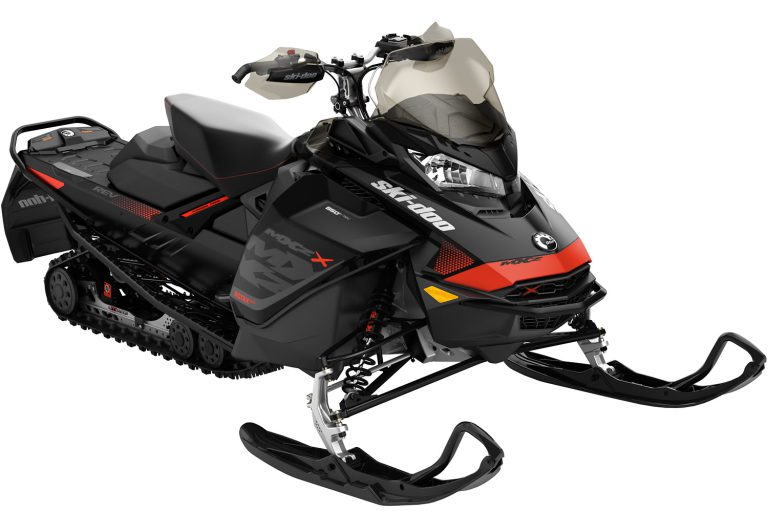
WINNER: SKI-DOO REV X GEN 4 850

Here’s what has to be the easiest pick I’ve ever made in this yearly clash of egos.

The new Gen-4 platform debuts so much new tech I can well imagine Kent is overwhelmed and as a result randomly selected the Yama-turbo.

Come on. Yes, the new Turbo is fast, but it’s bolted into a too-familiar chassis. The Gen 4 employs groundbreaking ideas like side-to-side centralized mass, a pyramidal tunnel using a totally integrated heat exchanger and there’s the new cast bulkhead that drastically improves chassis strength.

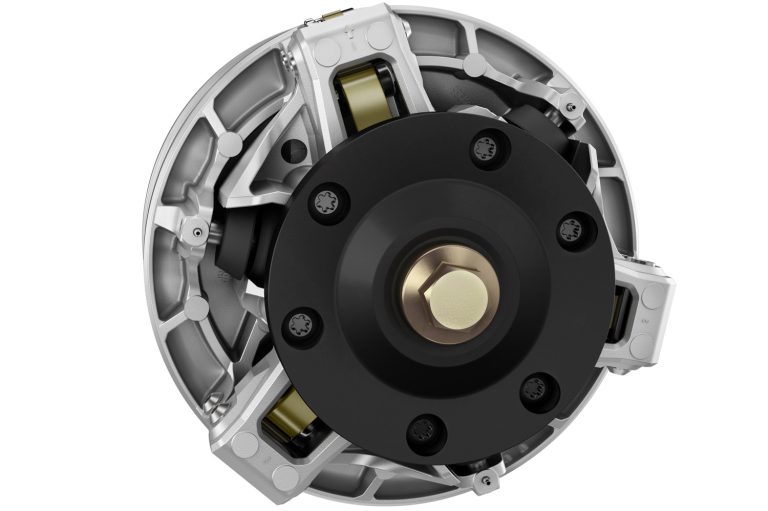
Even better than all this, the most revolutionary and innovative primary clutch ever is part of the G-4’s techno-wizardry. The new roller-tower P-drive is among the most sought after, overdue technologies in the history of modern snowmobiling.

This innovation alone is enough to propel the G-4 to Best In Class status. I’m out of room but I can tell you for sure, Kent is just plain out of luck with his BIC pic in this all-important segment.

– Mark

RUNNER-UP: SideWinder L-TX LE 137

Okay, okay, Mark; I know the Gen 4 Ski-Doo has all the shiny, new stuff this year! Good on Ski-Doo for bringing a new engine and chassis to the market all at once.

I have to disagree on your choice of it as Best In Class when it’s so new, though. Sure, we put it through its paces for a week last February and it seems to be solid and looks like it will be really reliable, too. But who knows?

On the other hand, we’ve ridden versions of the new Sidewinder Turbo and are completely familiar with the 1049cc Yammer triple, the engine the new 998 Turbo is based on.

Furthermore, two companies known for their incredible engineering resources, Yamaha and Arctic Cat, conspired to build the Sidewinder and its mirror reflection, the 9000 Cat series and have placed that engine in one of the industry’s most proven platforms. You just gotta believe that sled will be flawlessly reliable.

Here’s the other thing: In this category, 180-hp always trumps 165! Poor reasoning, Mark.

– Kent

P-DRIVE CHANGES THE RULES

0

We don’t want to sound over the top here, however, we have to give it up to Ski-Doo for taking the snowmobile industry in a new CVT direction.

The revolutionary P-Drive primary uses rollers on the spider fingers to transfer power to the torque towers and onto the moveable sheave.

No informed snowmobile clutch wizard is truly content with the current, industry wide sliding button system used to transfer power to the moveable sheave.

Inherent friction and wear causes myriad problems and compromises performance, particularly as horsepower numbers rise. The P-Drive roller principle is 100-percent sound and the execution appears excellent.

We can attest to the tangible improvement in primary clutch shift response under every load condition we encountered.

Simply put, the competition will ultimately copy this technology.

Composit Talon 38 Track Installation

0

AJ’s in the TRAIL TECH shop installing a Composit Talon 38 Track on one of our sleds gaining a ton of performance while staying within his budget.

Subscribe to our YouTube Channel!