Home Blog Page 152

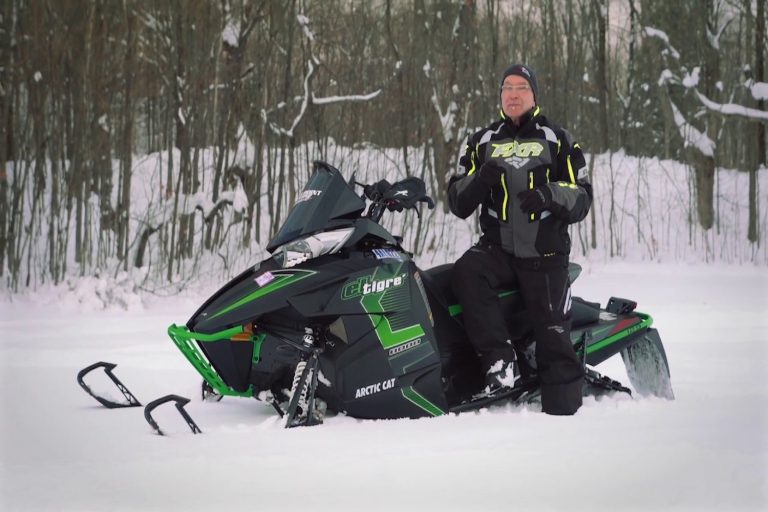
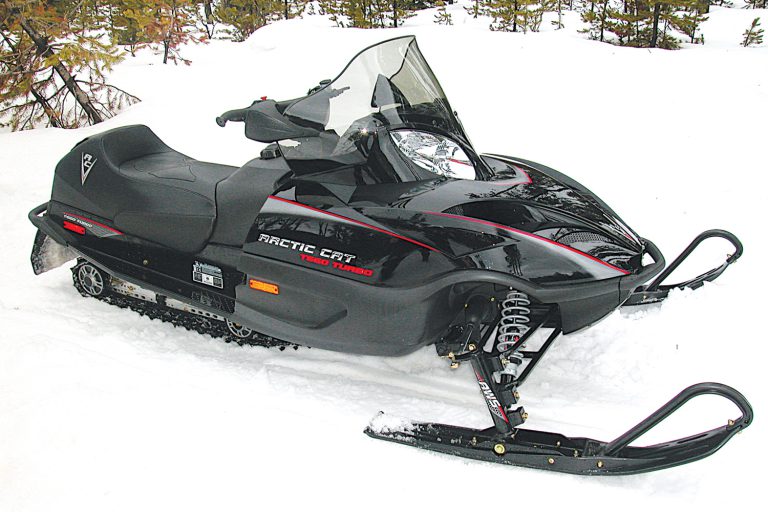
Arctic Cat T660 Turbo: First Production Turbo

0

11 SLEDS THAT CHANGED EVERYTHING…AND HOW…

While the intro of the first Arctic Cat 660 triple cylinder 4-stroke barely blipped the meter, the exact opposite was true when the first factory turbocharged 4-stroke landed.

It sent shock waves through the entire business. The chatter was intense as power-hungry buyers anticipated stratospheric horsepower from the teeny-weeny 660 Suzuki automobile engine. Yep, car engine!

Amazingly, the braintrust at Cat figured a way to shoehorn a complete built-for-automobile-use power pack into the ZR chassis.

The turbo sat high-up, just under the windshield and glowed like a jack-o-lantern on WOT pulls down Kevlar Lake.

The reality of the T660 Turbo was this: The 110-hp triple produced enough turbo lag to allow for a light nap between whacking the flipper and feeling the boosted response.

Even though the engine didn’t produce the gargantuan HP the faithful dreamed of, the T660 worked its way into our hearts. I can remember giggling every time the boost finally lit up in the combustion chamber and the full 110-hp surge hit the clutches. At that moment the sled would rock back into the rear arm and haul!

The turbo surge was an experience snowmobilers were unfamiliar with and thus the T660 proved a very important point: Turbocharging could work on snowmobiles. It was only the beginning.

Later in its career the turbo 660 found a home in the Turbo Touring two-upper. This turned out to be a great place for the engine as these sleds became legendary for both high mileage, durability and stellar fuel economy.

We’ve met 660 Turbo owners with more than 25,000 miles on their Suzuki engines. As a result they still command respectable jing.

Timbersled VS Polaris Assault

0

AJ provides his thoughts on whether snow bikes will become the dominant form of playing in the powder in the future. Will snowmobiles see a new form of competition in snow bikes in the years to come?

Let us know your thoughts!

Subscribe to our YouTube Channel!

YAMAHA TURBO HORSEPOWER

0

When we first rode the new Yamaha Turbo triple in the SideWinder and in Cat’s ZR9000 we were told the engine makes 180-hp.

This sounded realistic as the old Suzuki twin generated 177-hp with a turbocharger.

Here’s where things get strange. Two years ago we talked to a dynomometer operator who had tested numerous Cat-Suzukis and he told us only a few actually made 177-hp.

Don’t worry, the majority of the turbos he tested made more than that. Some made as much as 183-hp in completely stock form. None made less than Cat’s claimed 177-hp.

Why the inconsistency? Hard to say but he told us some engines, due to clearances and volume differences – even differences in boost ratios and CPU programming – are just capable of generating more power than other ones.

Sure, they all go down the same assembly line and care is taken to make every one the same, but the net result is always slightly different.

Plumb a turbocharger into the mix and you get an amplification of those tiny differences. In the case of the “old” Suzuki turbo it could get as high as five or six ponies over the claimed numbers on some dynos. Kinda explains why some of those turbos were faster than others, doesn’t it!

With the new Yamaha 998 turbo, we suspect the same thing is happening. Some of our readers claim this engine is making 200-hp, about 20 horses more than claimed (180).

It could be, but we doubt the difference in a stock SideWinder is that much. Sure, there are some supposed credible dyno numbers reported that will swear truth to the fact this engine is putting out 200 dead-stock.

However, there are differences in dynos and Yamaha, ever conservative, does not want its customers feeling short-changed.

Our best guess is that the 998 turbo does make more than the claimed 180. We think Yamaha has taken out reputation insurance to make sure no SideWinder (or Cat 9000) is producing less than the claimed 180. 200-hp, though?

There may be one somewhere that makes that kind of power, stock, but we’re betting it’s an anomaly and most will average between 180 and 190-hp.

TEST RIDE: 2017 Arctic Cat’s El Tigre 8000

0

Mark takes out the El Tigre 8000 in this edition of TEST RIDE from Episode 8 of SnowTrax Television.

Find out his thoughts of Arctic Cat’s iconic vehicle.

Subscribe to our YouTube Channel!

2017 BEST ADVENTURE TOURING SLED

0

Mark and Kent Lester battle it out over their picks for the 2017 BEST IN CLASS AWARDS. THE ARGUMENT: Utter Versatility Means You Have To Look At Everything!

WINNER: ARCTIC CAT XF6000 CROSSTREK

Okay, I admit it – I love the ZR chassis. Simply, these sleds respond on the trail so perfectly, no matter what engine you choose, they are a pleasure to ride. Mark will tell you a ProCross is heavier than an AXYS or a Ski-Doo, and for once, he’s right.

I say this: Who cares? If there’s a couple pounds more weight with this sled, it sure has been used in the right places and besides, that DI 600 is awesome and makes enough power and torque to put other 600s in the rearview mirror…every time!

Okay, my argument for making the CrossTrek Best in Class in this category: It’s all about gearing up for a long ride and fearing neither long days on the trails nor detours into the powder. No, it’s not about mountain climbing or high-marking, it’s about carrying stuff, rider comfort and maybe even the occasional attendance of a second passenger. The latter is really optional.

The past two winters we’ve learned any 137-inch ProCross rides great, no exceptions, so the CrossTrek falls right into line. This fully coupled skid with a blend of 1.5 and 2.0 IFP gassers, delivers incredibly good compliance and even when the factory-included bags are loaded and other gear is stowed on board, it rides on trails with the smoothness of a Bentley Arnage.

Here’s the kicker for me: A 1.6-inch lugged Cobra track! I love this track and frankly, after riding one last year on a Yamaha, I never want to go back to a 1.25. 1.6 should be the industry standard for all tracks and although the hook-up benefit is great, its stopping power is incredible!

The CrossTrek 600 is one of those sleds you can keep for years and never get tired of. Its versatility as a trail sled and as flatland powder runner is ideal. Definitely the best!

– Kent

RUNNER-UP: POLARIS 600 SWITCHBACK ADVENTURE

Kent is actually making me nervous. Some of his BIC winners are credible this year. I think the Ginko-Biloba supplement I told him to take is finally working. Note to self: Tell him it kills libido. I don’t know if that’s actually true but it should scare him off the stuff.

Okay, the CrossTrek is an interesting adventure touring ride and I’m not going to say anything neg about the DSI 600 mill. However, I would be remiss if I didn’t point out the Adventure Touring segment leader is the sled that coined the handle: Polaris Switchback Adventure.

Clearly, the SB Adventure delivers everything a hardcore rider wants: Superb flotation and deep snow-mobility, CleanFire 600 instantaneous power, perfect rider ergos and a flat-top seat that’s the industry benchmark for comfort and gymnastic rider mobility. I could go on, however, Kent’s confusion with my eloquent reasoning will only increase.

The SB started the whole tube bumper and industrial caliber rear rack thing. These welded aluminum pieces scream “I’m a hairy chested tough guy” while providing unequalled functionality.

Let’s say it succinctly, precisely and with sincerity: Polaris will forget more about the Adventure touring segment than Arctic Cat will ever know.

– Mark

Ski-Doo REV: Completely Different Ergos

0

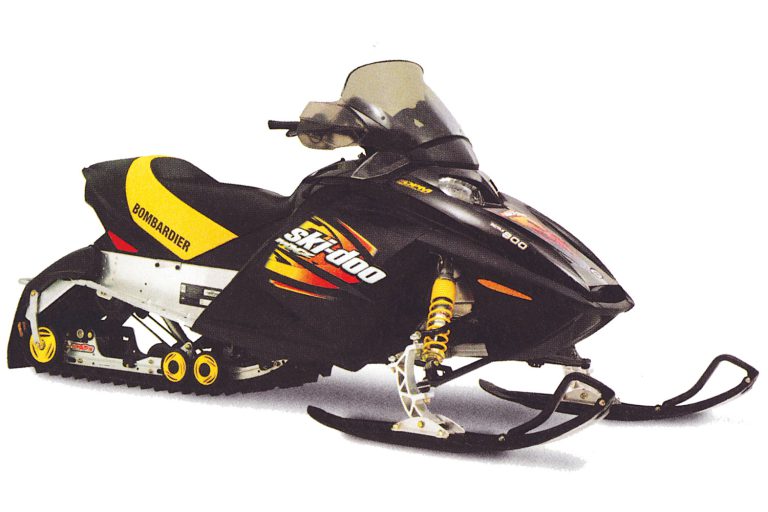
Ski-Doo took a huge swipe at its competition when it unwrapped the original “beaver tail” REV.

Up to that point snowmobiles had become pretty much carbon copies of one another from brand to brand.

The standard was: Sit-down ergonomics, independent front ends (three of the OEMs were using trailing arms and only “radical” Arctic Cat offered double A-arms) and long travel skidframes with the driver sitting over the skid’s rear arm.

The new REV not only looked different, it really was different from tip to tail. The rider sat way forward, hugging the gas tank in a configuration similar to riding a motorcycle. The engine was moved rearward, closer to the middle of the sled to “centralize mass”, a concept only talked about and never executed until that point.

What stirred the public’s imagination was the fact Ski-Doo had been running REV prototype racers in snocross previous to the sled’s introduction and those sleds were cleaning up. The competition just couldn’t be as fast using conventional chassis layouts.

In 2002, when we had our first rides on prototype REVs in Quebec and Utah, we benchmarked them against several sit-down Ski-Doos on pretty aggressive trail rides. There was simply no comparison.

The REV could go faster over rougher terrain, could corner better (and the early version didn’t corner as well as it would later) and the rider was flat-out more comfortable on long rides, alternating easily between sitting and stand-up riding.

The REV was an unqualified win for Ski-Doo and rocketed the brand to first place in an eye-blink. It’s still there.

2018 SKI-DOO SHOT TECHNOLOGY

0

There’s a ton of new stuff on display at Ski-Doo’s annual dealer show and new product unveil in Reno, Nevada. In fact I had the privilege of riding and experiencing the new stuff a week ago in Valcourt.

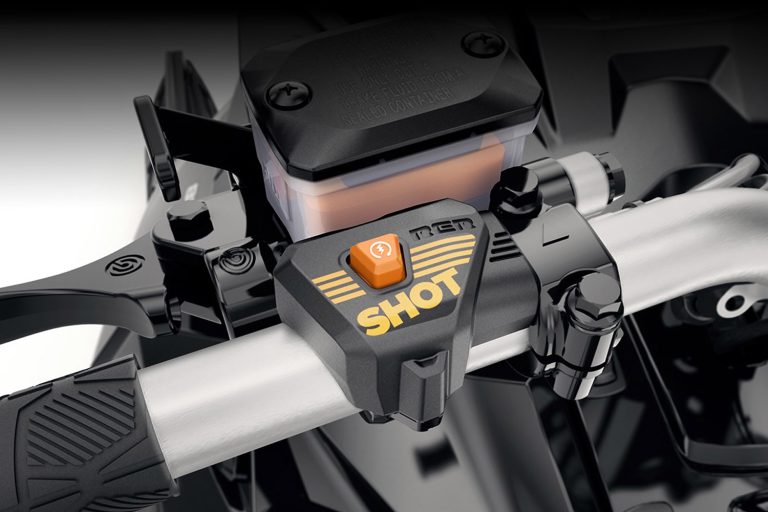
So here’s what stands out to me – SHOT. It’s Ski-Doo’s (and Rotax) proprietary, never-been-done-before battery-less, motor-less electric starting system, which is so unique it’s a little confounding and mind boggling all at once.

Think of this reality. The SHOT system provides functional (with a couple limitations) push button start for just 2 pounds of extra weight. There’s no heavy lead acid battery, starter motors and associated brackets, which currently weigh in at 20-22 pounds on an average Ski-Doo.

The SHOT system arrives as a “Summit-only” mountain model factory option (the system cannot be dealer added). The limitations – at this point in history – are as follows…

You must rope start your 850 E-TEC in the morning and give it 2 minutes to charge the 2 pound capacitor. After this initial charge, the capacitor will re-charge after each subsequent re-start in about 20 seconds. The system only works on E-TEC engines as they always start (when warm) in less than a half crankshaft rotation. The capacitor will hold it’s charge for 30-45 minutes after shutting the sled off. Essentially, mountain riders who do a lot of fiddling, digging, rolling and otherwise helping each other in a day’s riding will only rope their 850 once each day.

Why do I think the ground is shaking? My immediate question to the engineers at Ski-Doo was: “If the capacitor weighed 4 pounds could it maintain a charge all night and become the new way to start any E-TEC?”.

I’m sure this issue is on the minds of the brain trust at Ski-Doo, but can SHOT follow the same development path the very first RER system did when it first reversed a humble single cylinder Tundra way back in the 90’s?

If this technology – which uses the stator as the electric starter motor – can be honed and further developed, the day may not be far off when push button start weighs in at 2 pounds.

Think I’m crazy? When that first RER hit the ground I heard tons of comments how it wouldn’t work with a twin, a triple, with exhaust valves, with certain clutches and secondary’s and the list went on.

Now, RER and its licensed variants on Arctic Cat and Polaris sleds is standard across all 2 stroke models. Arguably 20-30 pound mechanical reverse gear systems are history – gone and forgotten.

These guys at Ski-Doo are pushing the boundaries of sno-mo-technology. Yes, the ground is shaking and there is most certainly more to come from this mysterious, revolutionary and effective starting system.

2017 BEST 2-UP LONG DISTANCE SLED

0

Mark and Kent Lester battle it out over their picks for the 2017 BEST IN CLASS AWARDS. THE ARGUMENT: One Thing Is for Sure Here: It’s All about the Rider.

WINNER: SKI-DOO GTSE 1200 4-TEC

I know, Kent’s going to give me a hard time with this selection, particularly as a result of the level of competence Cat’s Pantera 7000 displays in this segment. I must say this: While the Pantera is a credible ride, Ski-Doo has been doing this 2-up thing for decades and, doggone it, does it well.

The GTSE with 1200 4-TEC power makes no excuses for its ability to rock a trail. The XS-based chassis rides like its shocks are filled with warm butter. Handling is akin to a sno-mo-Maserati.

Comfort amenities have been designed to please both pilot and passenger and are so effective and so complete, no sane individual could ever doubt my insightful selection of the GTSE as this year’s BIC winner in the two-fer segment.

One must also realize the recently (last year) updated 1170cc 4-TEC triple uses a sophisticated DBW (drive by wire) automotive throttle system with three selectable modes. More importantly, DBW deals with the age-old throttle lag issue the 1200 previously suffered from.

The GTSE is a techno wonder in a class Ski-Doo and Arctic Cat compete in with ferocity. This year, the BIC goes to the GTSE 1200.

– Mark

RUNNER-UP: ARCTIC CAT PANTERA 7000 LIMITED

Once again, Mark, you’ve gone for the glitz and glamor and overlooked substance. Things like remote adjustable air suspension, adjustable skis and confusing electronics may seem trendy and cool but when it comes to delivering what snowmobilers really can use, the Pantera 7000 Limited is a homerun.

Example? The Limited comes with an incredibly versatile luggage and rack-space package that offers single person ride comfort, 2-person ride comfort and amazing cargo area. The bags look like high-class portable luggage and if you remove the rear seat/backrest there’s enough space in the back to plant rows of corn.

All the comfort features like heated seat and front and rear heated grips are included and its 146-inch track guarantees ride comfort, deep snow capability and plenty of bite. The Slide-Action suspension out back with fiberglass helper springs rides incredibly well with either one or two passengers. Hey, who needs air suspension when you get ride results like this?

The other feature that’s an absolute mind-blower is Cat’s inclusion of a 4.3 gallon auxiliary gas tank at the rear.

Now Mark, please try to understand, that’s exactly what touring is all about. You can go further while enjoying fabulous comfort. I think this sled is the best; why can’t you see that?

– Kent

Yamaha RX-1: First High Performance 4-stroke

0

11 SLEDS THAT CHANGED EVERYTHING…AND HOW…

By 2003, snowmobilers were well aware EPA regulations were looming. Since the industry’s only solutions up to that point had been SDI 2-strokes (these did not completely meet the EPA’s standards for the end of the decade yet) and low-performance 4-stroke snowmobiles, many high performance riders were afraid for the future.

Amid much 4-stroke doubt and trepidation, Yamaha introduced its RX-1. What set it apart and raised the hopes of horsepower-addicted snowmobilers was its power.

Using a 4-cylinder, carbureted DOHC engine in an all-new aluminum chassis, the RX-1 defied the norm and produced convincing evidence a 4-stroke could be a viable performance snowmobile.

Perform it did – at least in top speed and acceleration. Although the RX-1 was disappointing in its handling and ride, out on a lakes against almost any other 2-stroke sled the RX-1 was truly formidable.

It was built like a battleship and not at all light but besides its power, had two undeniable things going for it: The sweetest exhaust note since the first Indy triple and jewel-like production quality.

The RX-1 set the competition back on its heels and sent them back to their drawing boards. The possibility of 4-stroke sleds capturing the performance market was suddenly a threat and the RX-1 started a rabid march into new territory.

The rest is history.

4 WAYS POLARIS IS DOMINATING

0

We’re pretty sure we’re going to eat some criticism for this article but we’ve gotta give you the facts.

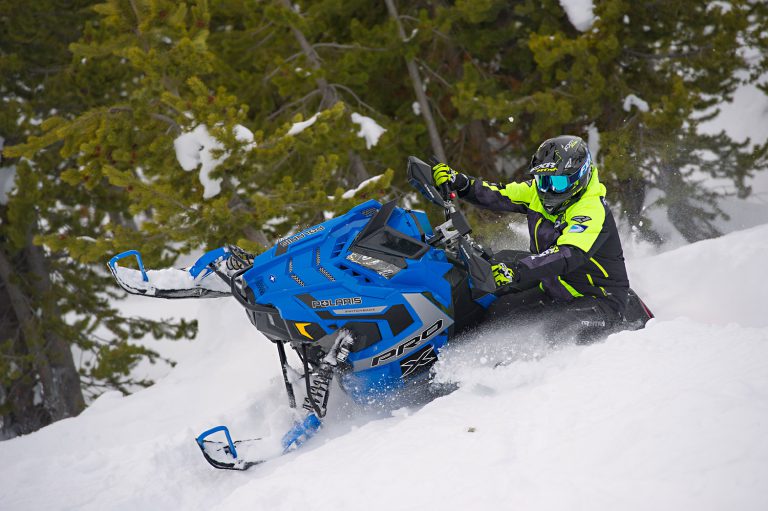
Polaris has been on the job the last couple of years and their list of industry homeruns is stacking up significantly.

Here’s some noteworthy observations:

RMK:

This mountain sled has been the lightest, best handling mountain sled the last two years (and led the industry before that).

LIBERTY 800HO:

So far, this is the best 800 2-stroke in the biz when you combine EPA cleanness, power output, power delivery and rideability. Sure, Ski-Doo has an 850 E-TEC now and Cat just introduced a new slot-injected 800, but for the last three years, when it comes to 800s, the Polaris 800 HO has been IT!

SWITCHBACK:

The new 144 Switchback has put our entire team on “stun”. Never before has a sled like this combined on-trail comfort with off-trail prowess. The SW bar has been set super-high and the competition has to really work hard to match this sled’s abilities.

AXYS:

The super-light AXYS platform, especially its front clip, has proven to handle as precisely as a triple blade Gillette, be adaptable to many different model variations while improving every one of them and has dominated the competition whatever it’s used with.

Okay, I know we sound like we’re sucking up to Polaris, but when you add up the wins, it’s awfully hard to deny this company is kicking some butts.

We’re getting anxious to find out what they’ve got for 2018.