Home Blog Page 151

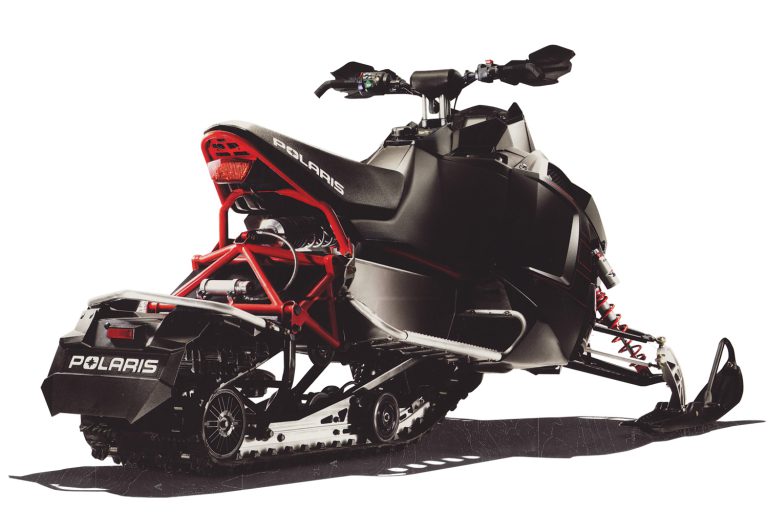
POLARIS INDY XLT TRIPLE

THE 10 BEST SNOWMOBILE ENGINES OF ALL TIME! This list of 10 encapsulates all that is great in snowmobile powerplants going back several decades.

It started as a 580cc triple and eventually grew to 600. Although this “Extra-Lite Triple” wasn’t a performance powerhouse, it established itself as a reliable, reasonably light 3-cylinder engine in an era where the whole industry was shifting to 2-stroke triples.

The key to the XLT was its “monoblock” construction that placed the water jackets and cylinders very close together to conserve space and weight.

We used to comment this engine played the “National Anthem of Snowmobiling” out its exhaust.

Tens of thousands were sold and thousands still remain.

2-Stroke Engine Battle

0

It’s a triple-threat engine battle between Arctic Cat’s 8000 Series, Ski-Doo’s 850 E-TEC and Polaris’ Cleanfire 800 H.O. Which engine will be crowned king?

Subscribe to our YouTube Channel!

TEST RIDE: 2017 Polaris 800 PRO-RMK 174

0

Luke takes the Polaris 800 PRO-RMK 174 for a rip and details his thoughts on the sled.

Subscribe to our YouTube Channel!

POLARIS FUJI 400-488 TWIN

0

THE 10 BEST SNOWMOBILE ENGINES OF ALL TIME! This list of 10 encapsulates all that is great in snowmobile powerplants going back several decades.

First introduced in the 1980s as a 400 and then inflated to 488ccs in 1989, this very basic piston port twin engraved its place in history, lasting in production until the early 2000s.

It found a home in at least a half dozen different Polaris platforms and offered consistent, reliable 80-range horsepower to the masses.

The engine was known for its lack of bells and whistles – no reed valves, no exhaust valves. Its last versions stepped up to flatslide carbs and that was about as hi-tech as it got.

We have fond memories of the first Indy 500 twin in 1989. That over-achiever blew away sleds 100ccs larger and there wasn’t any good explanation why.

Yamaha Viper: A Joint Effort That Works

0

11 SLEDS THAT CHANGED EVERYTHING…AND HOW…

Although it wasn’t the first time two snowmobile companies ever entered into a manufacturing agreement, the 2013 deal between Yamaha and Arctic Cat was a blockbuster move.

The world economy had been struggling with a deeply-rooted recession since 2008 and budgets for design, research & development and tooling had slapped many companies, not necessarily just in powersports, upside the head.

Since the worldwide snowmobile business is arguably less than 200,00 units a year, it just didn’t make sense for Yamaha, given its market share grasp of that 200,000 at the time, to go crazy designing a whole new fleet of snowmobile platforms.

At the same time Arctic Cat’s longtime agreement with Suzuki to build its snowmobile engines was drawing to a close and Cat needed a new and innovative engine supplier.

Events were merging perfectly for the two companies: Cat needed an engine supplier and Yamaha needed up-to-date chassis tech. Thus the Viper and the 7000 series were born.

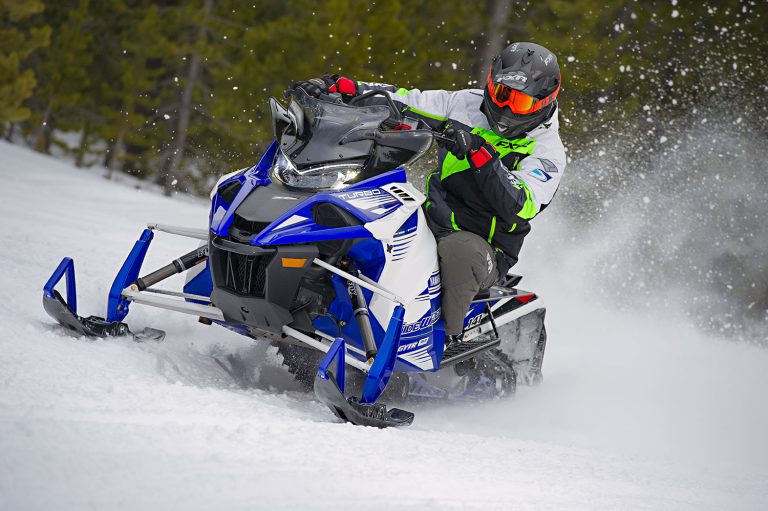
From the first time we rode them we loved these two 4-strokes. Handling was excellent and the Yamaha 1049cc EFI triple made the most seamless 4-stroke power we’d ever experienced.

Certainly there had already been faster 4-strokes offered, but this 130-hp engine in the ProCross chassis was and still is, simply a fabulous combination.

Four model years in, the Viper has evolved itself into an even better product and Yamaha hardcores have to admit they like it and that was Yamaha’s greatest fear, initially. By working together, two great companies built something that will keep their customers happy for a long time.

FXR Racing F.A.S.T. Snowmobile Gear

0

Concerned about safety while riding on the lake? Want to put these fears to rest? Check out FXR’s lineup of suits with built in Flotation Assist Safety Technology (F.A.S.T.) and ride with confidence and assurance for the remainder of this and future snowmobile seasons.

Stay afloat with these suits as they offer two hours of buoyancy, provide escape assistance as well as self-draining technology that prevents you from being waterlogged. Available in a variety of designs and sizes for women, men and child riders.

Visit FXR’s website here at: https://www.fxrracing.com/

Subscribe to our YouTube Channel!

Polaris RUSH: A Successful Rear Suspension

0

11 SLEDS THAT CHANGED EVERYTHING…AND HOW…

Polaris would like to forget about the 2000s. That decade saw the company lose its focus – and its market share lead.

Near the end of the decade the company clearly experienced a rebirth – more literally a re-enlightenment and as a result a new identity.

The lines intersected when Polaris landed the 2010 RUSH ProRide with the sport’s first production levered, external rear arm shock suspension (Yes, the Snow Scoot arguably had a similar design, but we’re not counting it).

The RUSH was more than a new rear skid, it was a completely new snowmobile chassis using myriad innovations that capably demonstrated Polaris was on the cutting edge of technology and was fully committed to taking back leadership in the industry.

The use of glue in lieu of welds, carbon fiber and aluminum spars supporting the handlepole and a beautifully crafted cast aluminum bulkhead were cutting edge designs that laid the groundwork for more innovation.

Specifically? The Pro-Ride suspension defined the 2010 RUSH. The rear suspension was the first major departure from shock-in-skid designs used since the 1970s.

The idea was marketed on this Polaris engineering claim: The only way to generate a true rising rate response to impacts with a snowmobile rear suspension is to move the rear arm shock out of the tunnel and connect it with the now famous “crank” to a shock mounted on top of the tunnel, under the seat.

The first versions of ProRide were good to their calling. They were truly rising rate and resisted bottoming in a way we hadn’t experienced on a snowmobile.

However, the word plush was not often associated with the original ProRide setup. Polaris listened carefully and altered the design of the ProRide’s moving parts to produce improvements in the system.

These efforts have culminated in the second generation Pro XC external shock suspension used in the all-new AXYS chassis.

Polaris wanted to define its sleds and draw a line in the snow with a unique way of doing suspension. Clearly it accomplished this goal.

Developing Yamaha’s Turbo Snowmobile Engine

0

Motorhead Mark sits down with Yamaha’s John Blaicher Jr. to get some insight into Yamaha’s motivation behind building the triple cylinder Genesis turbocharged snowmobile powerplant.

Subscribe to our YouTube Channel!

REV XP: Light, Light, Lighter

0

11 SLEDS THAT CHANGED EVERYTHING…AND HOW…

By 2009 the REV phenomenon had taken firm hold and if a snowmobiler wasn’t riding a REV by then, they certainly were riding a competing brand with rider-forward ergonomics.

The original REV had seated Ski-Doo in first place market share territory and its biggest problem was the marketing people felt owners might be growing tired of it.

In the works was an all-new REV that was going to take all the good of the old version and package it up in a sled that was lighter and more agile.

Ski-Doo claimed the new REV XP was going to be 50-lbs lighter than the former. To quantify that claim, the marketing department sent out 50-lb weights to members of the snowmobile media. It was an impressive claim and with an all-new bulkhead and ounces trimmed everywhere possible, the sled delivered.

Weight was a hallmark of the snowmobile industry in 2008 and everyone was convinced sleds should be lighter. It started a drive by all competitors to make claims they had pared down weight in their products.

Everyone’s subsequent designs were and still are planned today with weight management a priority, all because of the XP.

Here’s the kicker: Ski-Doo added-in an E-TEC 600 direct injection 2-stroke engine. This new-concept and completely revolutionary engine in this featherweight chassis simply put the competition in the rearview mirror.

2017 BEST VALUE SNOWMOBILE

0

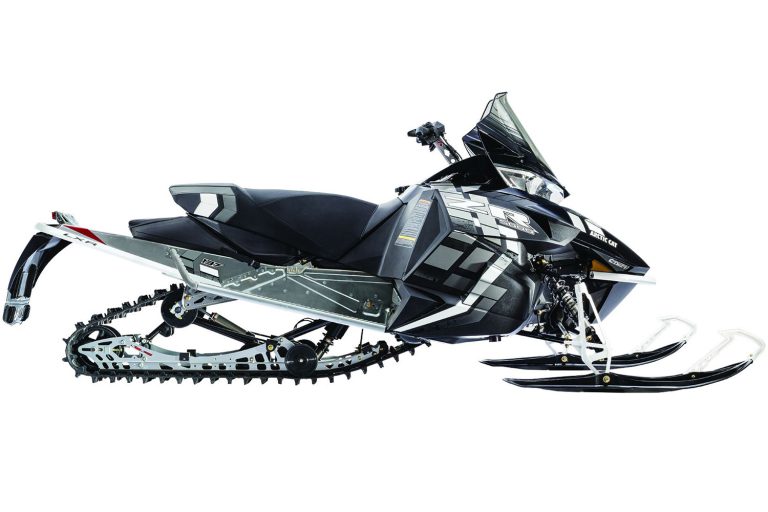
WINNER: ARCTIC CAT ZR5000 LXR

The definition of value is really changing in the snowmobile world. At one time, it was all about barebones sleds, stripped of goodies and priced to sell for pocket change. These days it’s different; snowmobilers want it all…versatility, electronics, gas mileage, power and luxury features… all at a body-slammed price.

Sounds impossible, doesn’t it? Mark will tell you it is impossible because sleds that offer the above are all crippled by some kind of flaw. Easy for him to say; he only comments on sleds with every conceivable extra, priced just slightly on the outskirts of Uranus.

There is one sled that stands out from all the rest and I’ve been telling you about it for the last three years: The ProCross-based ZR 5000 is an amazing sled. It comes with full instrumentation, a 137-inch track, great ZR handling and an EFI 1056cc 4-stroke twin as strong as the USS Nimitz. This Suzuki-built twin makes 123-hp and drives through a set of TEAM clutches to deliver 2-stroke-competitive power with an ample dose of torque thrown in. Its reputation for durability is flawless.

Sure, Mark will tell you it only uses downgraded shocks… but what kind of a downgrade is a set of 1.5-inch IFP gassers blessed with all the attributes of Cat’s coupled Slide Action with torque links? Only Cat’s latest and best technology!

Even this sled’s track choice is an upgrade: A 137 RipSaw II with 1.25 lugs – and it makes the 5000 extremely agile both in powder and on hard-packed trails.

The 5000 LXR sells for thousands less than comparably equipped 4-strokes in its power range and many hundreds less than equal-output 2-strokes with long tracks. People, this is a true bargain in a culture racked with high prices. Mark, pay attention!

– Kent

RUNNER-UP: SKI-DOO RENEGADE SPORT 600 CARB 137

Yikes! Kent’s trying to hang you out with Cat’s geriatric, log-heavy, 1056 even-firing Suzuki twin powered ZR5000. Kent, why do you think Arctic Cat prices this sled so low and throws in so much standard equipment? Maybe because no one wants it?

Try being a little more insightful. That Suzuki twin is making its last trip through the brochure this year. It’s generator-esque, even-firing auditory cadence is old school. The time has come for a lithe, lightweight, perky and fuel-efficient 2-stroke alternative to your long-in-the-tooth 4-stroke selection.

The right answer to the value seeker’s search is the Ski-Doo 600 Renny Sport 137. This featherweight XP based ride is the real deal in deep, untramped snow, unlike your pick that requires Sikorski retrieval from even shallow boondocking adventures.

The Renegade platform has proven effective in deep snow, rides superbly on groomed or ungroomed trails while its carbed 110-hp Rotax mill makes the lead-filled 1056 look slow, even if it does have more horsepower out of the box.

This selection – that is, my selection – required maturity, discernment and a modicum of sno-mo-knowledge to completely understand.

Also: Try to not use the word “Uranus” in this fine publication.

– Mark