Home Blog Page 135

PERSONAL FAVES: 1994 ZR 700

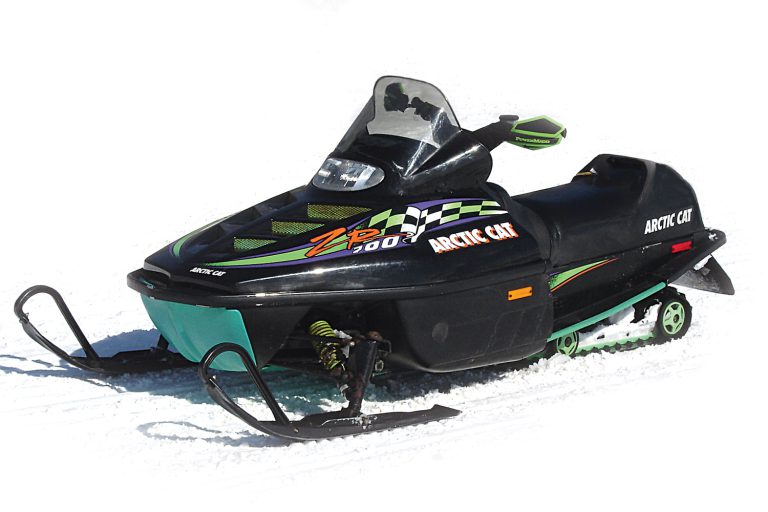
Everybody’s had that one sled that stands out from the rest. It defines the fun of snowmobiling and every time you reflect back on it, there’s a little twitch in your heart. In this series we asked our staffers to share their most memorable sleds. Read what Motorhead Mark Lester has to say about the 1994 Arctic Cat ZR 700.

In the 90’s Arctic Cat built a ZR chassis powered by a hogged-out version of the original Wildcat 650 from the 80’s. The sled was called the ZR 700.

In it’s first iteration it used the cobby “rubber overshoe” ZR skin but was later re-introduced in the svelte late 90’s ZR bodywork.

I have many memories shredding tight trails, launching from corner to corner with skis in the air, surgically plying that legendary ZR handling to position the sled perfectly for the next slice of white top. The chassis was, IMO, remarkable.

Even better was Cummins caliber torque emanating from ridiculously rumbly, non-counterbalanced, juice-can sized pistons. This kind of NVH would never ever be acceptable today.

However, when the ZR 700 was popular we forgave its unrefined oscillations – so intense at idle they seemed like they could shake the chassis right off the trail and into the ditch.

Thus the ZR 700’s “Freddie Krueger” handle was popularized on the pages of Supertrax. My tolerance for this raucous behavior was rooted in a 3,500-rpm engagement that threw the skis high in the air for the first 100 feet while stretching your arms like a 1000 T-Cat.

The sled was insanely potent down low and often produced wet Depends on your first pull down Kevlar Lake.

Alas, refinement and political correctness invaded snowmobile marketing and so the ZR 700 in its last rendition, dressed up in a suit and tie, was put out to pasture.
2018 Ski-Doo Freeride 137 850 E-TEC

0

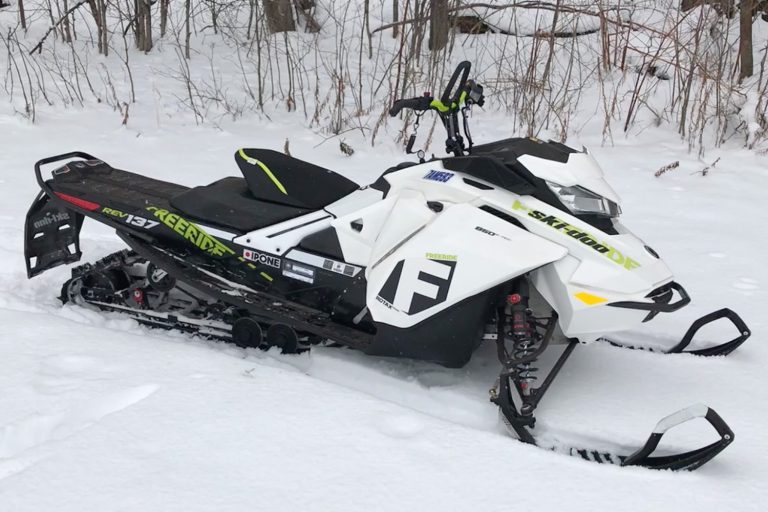
A closer look at the 2018 Ski-Doo Freeride 137 850 E-TEC.

Subscribe to our YouTube Channel!

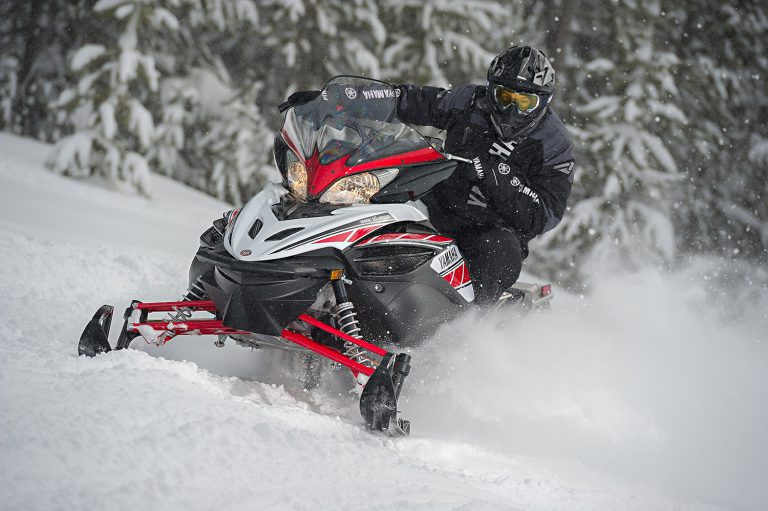
SUSPENSION PART 2: YAMAHA SINGLESHOT

0

In this series, Supertrax takes a look at some of the most popular skidframe designs and evaluates their performance.

Yamaha birthed the SingleShot, used exclusively in RS-Series Yamahas like the Apex and Vector a couple years ago. It was designed to offer a better long travel ride while paring weight from an already too heavy snowmobile. It is available in two lengths, a 129-incher and a 146-inch version.

It is unique in that it uses couplers with a single shock system. Thus, the coupling depends solely on the rail unlike most coupled skids that couple with the middle and the rear shocks and their related arms involved to get either or both ends of the rail to actuate when necessary.

Since one shock is definitely lighter than two, unsprung weight is less than most 2-shock skids but the downside is there’s less adjustability with one shock than there is with two.

We like the way this skidframe rides and Yamaha has done a really good job of maintaining ride compliance whether using an IFP gas shock or an air shock. One of the challenges with a single shock back end is track deflection (loosening and tightening of the track as it cycles through its travel) and by carefully mounting the shock angled forward in the skidframe and using big pull-rods and separate front and rear arms, deflection is not much of an issue here.

We’ve also noted the SingleShot uses a fairly long front arm with a rather high mounting point at the base of the front arm where it attaches to the rail. This up-to-date thinking is likely one of the reasons this skid works so well despite its relative simplicity.

We think there’s a future for the SingleShot in SR Yamahas like the Viper and SideWinder – whether or not Yamaha will go in that direction remains a big question.

THE ARGO SUPER SHARK

0

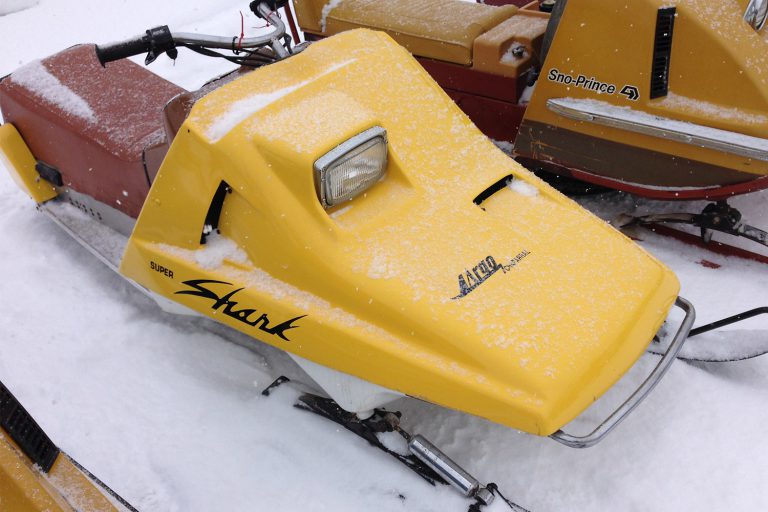
For 50 years Ontario Drive and Gear (Argo) has been building amphibious 6 and 8-wheeled off-road vehicles for outdoor enthusiasts, but raise your hand if you knew Argo built snowmobiles in the mid-70s!

A few years ago I went to visit an acquaintance of mine, Don Richardson, who over the years had built up quite a collection of vintage sleds. He was selling off the majority of his collection and I was curious to see just what he had.

As I was looking around I noticed an unusual sled off in a corner of his property. As I walked over to it I found myself looking at a long nosed Argo Super Shark.

I was immediately intrigued and asked Don how he came to own it. I learned he’d found it in a boathouse where it had been sitting for over 30 years. I must say it was a far cry from being a pretty sled by any stretch of the imagination, yet it was in very decent shape.

My good friend Rob Rickward who is a local Polaris dealer ended up buying this Super Shark. Turns out Rob knew of these sleds and back in the 70’s when Rob and I raced, he was riding an SSX Chaparral and it had the same liquid-cooled Chaparral Xenoah engine as the Super Shark.

Long Nosed Shark

Argo produced sleds from 1973 to 1977 with the first sleds produced in 1974 called Sharks that featured two engine options – a 400 and a 440 Kioritz fan-cooled, reed valve engine.

In Argo’s first year of sled production, 500 units rolled off the line. That year Argo stated its main promotional thrust would be through race participation in stock classes. Personally, though, I can’t remember ever racing against one.

The first Super Sharks appeared in 1975 with liquid cooled Xenoah reed valve engines. The 340 produced 40 horsepower and the 440 produced over 50. Argo carried on production in 1976 and from what I’ve learned; a limited build model was produced in 1977 called the Argo/Chaparral Super Shark. It weighed in at a svelte 353-pounds and had an internal 15.5-inch track with duo-flex slide rails, tuned exhaust and dual Mikuni BNO carbs. The tag line for this model year was, “Slide in behind the long, sleek nose of the Argo/Chaparral Super Shark”.

Argo was no different than so many companies in the 70’s trying to be players in the snowmobile industry. Despite the company’s best efforts its sleds were not moneymakers and like many other brands of the day had a short life span.

How well the Argo Super Shark actually ran I couldn’t really say. I do know my buddy Rob has his running and this winter I may actually get a chance to try it. Better yet, maybe he’ll haul out his SSX Chaparral and we can have ourselves a 2-lap feature!

SUSPENSION PART 1: POLARIS PRO-XC

0

In this series, Supertrax takes a look at some of the most popular skidframe designs and evaluates their performance.

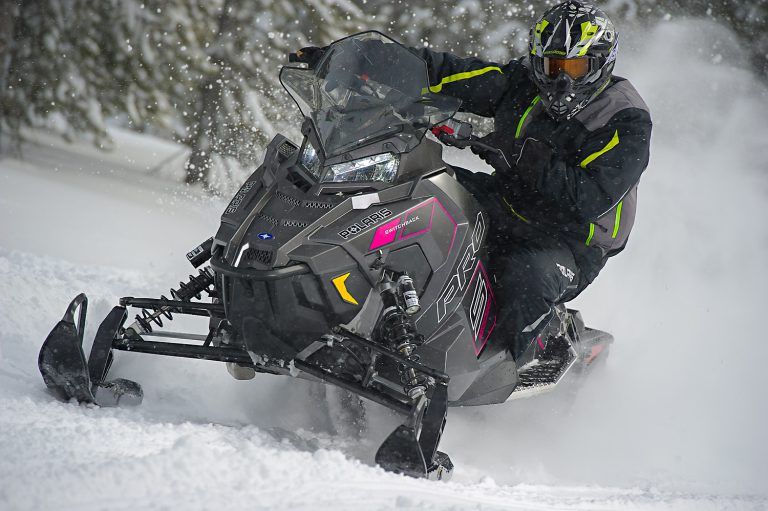
The Pro-XC rear suspension used on the RUSH and Switchback 136 is probably the most technically unique back end in the business.

What makes it so different is the way it separates the main shock from the skidframe. The main shock is mounted at the rear of the snowmobile tunnel, actually under the seat, and through a system of levers, transfers the rear half of the suspension’s movement down to the track and skid.

At the front of the skidframe is a conventional coilover shock that damps initial inputs into the front of the track suspension. There are no couplers present.

Polaris feels the only road to a completely rising rate rear end is to separate the two shock functions, much like a motocross bike does. Their opinion is this provides more range, better use of the suspension’s travel and eliminates any possibility of bottoming out.

One of the big advantages of this setup is, because there’s only one shock in the skid and the bigger primary shock is outside the skidframe, there’s a significant reduction in unsprung weight as the suspension moves through its travel. Thus the shock is able to respond to impacts more precisely with a lighter skid.

This same strength was actually a bit of a weakness with the original Pro-Ride (prior to the AXYS) as its rear shock and coilover spring was very sensitive to rider weight and the speed and type of terrain the sled was ridden over. If spring settings were too soft and compression damping not fine-tuned, the sled would bottom out and, if set too stiff, ride compliance was compromised. To some riders, the complexity and sensitivity was too difficult to get right.

The new Pro-XC version, now in AXYS based Polarii, rides much better while still maintaining good adjustability. We like the way this setup resists bottoming but its ride compliance, although very good, is certainly no better than some coupled shock-in-skid systems like Ski-Doo’s rMotion and Cat’s Slide Action.

Shock and spring adjustment is super-easy on the Pro-XC because clickers and the rear coil spring are easy to get at, since they’re mounted outside the tunnel.

SnowTrax Television 2018 Teaser 2

0

An all-new season of SnowTrax Television begins January 1, 2018!

Get ready for some insane travel adventures, sweet modifications and full reviews on the latest vehicles from all the major manufacturers in what will be a thrilling season of SnowTrax!

SnowTrax 2018 will be airing on OLN and WILD TV in Canada and Outdoor Channel in the United States.

Check out below for air times on network television:

OLN:
Season Begins: January 6
Weekly Airings:
Saturdays: 8:00 AM ET
Sundays: 9:00 AM ET

Wild TV:
Season Begins: January 1
Weekly Airings:
Mondays: 9:00 PM ET
Wednesdays: 10:30 AM ET
Fridays: 7:30 AM ET
Saturdays: 2:00 AM ET
Sundays: 9 :00 AM ET

Outdoor Channel:
Week #1 Starts January 2
Week # 1 airings are the following:
Tuesday: 2:30 PM ET
Thursday: 8:30 AM ET
Sunday: 3:00 PM ET

Airings for the remainder of the Season will be posted following week one.

New content will go live on our YouTube channel beginning January 7, 2018!

Subscribe to our YouTube Channel!

WHICH ULTRA-PERFORMER IS BEST IN 2018?

0

There are actually five hypersleds to choose from this year and it’s a tough decision to decide which one matches the best combo of value, rideability and flat-out power dominance.

When it comes to pure power, it’s impossible to deny the two turbocharged 4-strokes, Yamaha’s SideWinder and Cat’s 9000-Series turbos, dominate the category. Simply stated, 180 to 200-hp (whichever “experts” you believe) flat-out trumps any 800 or 850 at the end of the lake.

However, rideability and handling come into question when you compare the heavier 4-strokes to the way-lighter 2-strokes. Day-in, day-out riding on all types of terrain will soon tell you the big turbos, although wickedly fast, are a handful.

The other thing is price. The two turbos are expensive. They’re so expensive, they may be right at the borderline cost level where most high performance buyers simply walk past them. Depending on the turbo model you’re choosing and the 800 you’re comparing it to, the difference can be 4 to 5,000 dollars. Lots of moolah – but maybe justifiably, the price of buying speed!

The two 800s, Cats new DSI 800 and the Polaris Cleanfire, are formidable performers and offer all the benefits of lightness and power-to-weight that makes them genuine powerhouses.

Pricing and model selection are both reasonable and when it comes to acceleration and top speed, although not as fast up top as the turbos, both of these sleds are still very, very quick accelerating and carry considerable top speed. Same goes with the 850 E-TEC. Statistically it may be slightly faster than the 800s but quicker mid-range acceleration may be more due to Ski-Doo’s pDrive primary clutch than with the 850’s raw power.

Here’s the bottom line: Line all five up on the same day, in the same snow, same temperature, same track, no studs and at the end of one mile, the turbos will be ahead. Out of the hole and for the first 500 feet, the 800-850s may be in the lead due to either better hook-up (the turbos will be spinning their tracks for the whole mile) or more efficient clutching.

After 500 feet, the 850 will pull a sled-length or two over the 800s (both of which will be about dead-even). At the end of the mile, the turbos will be far ahead as they continue to get more bite and their raw horsepower shifts up the clutches quicker, but their actual top speed may not exceed the top end speed of either the 800s or the 850 by more than a few mph.

That last statement is the reason why, if you’re having a friendly drag race out on the lake between a turbo and an 800-850, you may want to roll on the throttles when you’re at about 60-mph instead of from a dead start.

BOONDOCKING

0

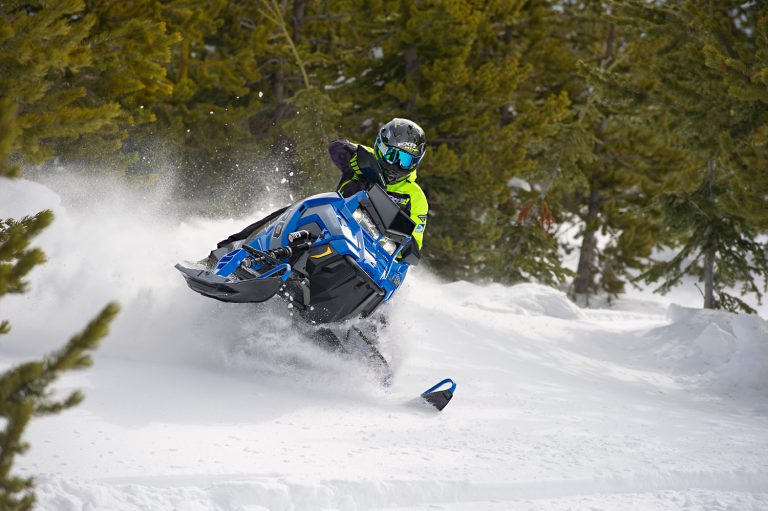
I could call it boondocking or flatland freeriding or, dare I use expletives like off-trail riding, but it all means the same thing.

Here in the flats, it’s riding where the trail isn’t. Hardcore trail folks get really worked up over this subject. Some for good reason and some because they’re just crusty old-schoolers who need a dose of perspective. No matter your stance, with this subject, conversation gets to the redline pretty quickly.

I’ll just say this – yet again – for what must be the 36th time, we absolutely do not support reckless off-trail riding. We have always been proponents of sticking to the trails where they cross private property, or utilize farmers’ fields, or if it’s signed and telling you to keep off. Those who abuse this are in the same category as trail riders who drink and ride – the 10-percent who spoil it for the 90-percent.

A group I ride with frequently, the Lake Effect Slayers, are a band of riders who seek premium powder, epic hill climbs, gnarly drops and natural-shaped jumps and transitions that are all located on land we have access and permission to ride. We all buy trail permits and support the sport, but we’re getting frustrated with the lack of tolerance from some trail-only riders.

Did you know when J. Armand Bombardier first built his snow traveling machine there was no such thing as a trail? While the sport has evolved and changed since its inception, we must begin to realize there will be new views and new ideas on how to use a sled. If we cut them off, we’ll have two scenarios:

1) Riders will do what they want and not support trails with a permit purchase.

2) They will go to other sports and quit buying sleds.

Those narrow-minded ones who say good riddance to off-trail riding are the problem, not the solution.

So what’s the answer? Right now we know it’s not to have freeride zones on the map. That option is not going to be endorsed, patrolled or insured and no organization will put their stamp on it. But it may mean including highlighted areas on a map showing where there is government or Crown land. No endorsement, but an understanding this area is open for use to anyone (snow-shoers, crosscountry skiers, backcountry snowboarders and the like) because, as a citizen, this is their land too.

It’s easy to pass this off and say: “Well, most freeriders don’t ride government land and one of them tore up a farmers field last year!” Guess what? Lots of trail riders kill other trail riders because of drinking and riding, running on the wrong side of the trail or stopping for a smoke in a blind corner. We cannot convict all trail riders because of those few who are idiots.

When I ride with a crew where the trail ends, we call-out and self-police anyone we see coloring outside the lines, and while we’ll never be able to get rid of the 10-percent in society who cause everyone grief, the sooner we realize the actions of one does not represent all, then the sooner we can start to work together with local clubs, governing bodies and the general snowmobiling populous.

Long live snowmobiling, no matter how you ride!

2018 Ski-Doo MXZ X-RS 850

0

Our Behind The Scenes series continues as AJ looks at the 2018 Ski-Doo MXZ XRS. Full Review coming at you on this upcoming season of SnowTrax Television 2018!

Subscribe to our YouTube Channel!

2018 SKI-DOO SUMMIT X 175

0

I’m going to start this piece off with an inflammatory statement. Ready?

I don’t like 174-inch mountain sleds!

Now, after you’ve had a second to calm down, I’ll go ahead and quantify that statement with some rational thoughts. It’s not that I think 174-inch mountain sleds are bad sleds or don’t work.

They simply haven’t worked for me. No question, the extra length provides extra traction, but to me, they just don’t feel as manoeuvrable and, being the intermediate mountain rider I am, I get stuck a lot – and I really, really hate digging out a 174.

This is why Ski-Doo’s new G4 based Summit X 175 surprised me. I fully anticipated not being fond of it, but ended up liking it a lot. The question I obviously had to ask myself was: Why?

Moving the 2018 Summit 175 into the G4 chassis was an obvious move that surprised no one. The shorter G4 based summits were so good in 2017 there was no way Ski-doo could afford to miss out on offering that same kind of stellar mountain performance to guys with the longest of track fetishes.

The 175 Summit carries over all the positive traits of the 154 and 164-inchers but, why would simply converting to the G4 chassis make a long mountain sled feel shorter to me? Honestly, I don’t know.

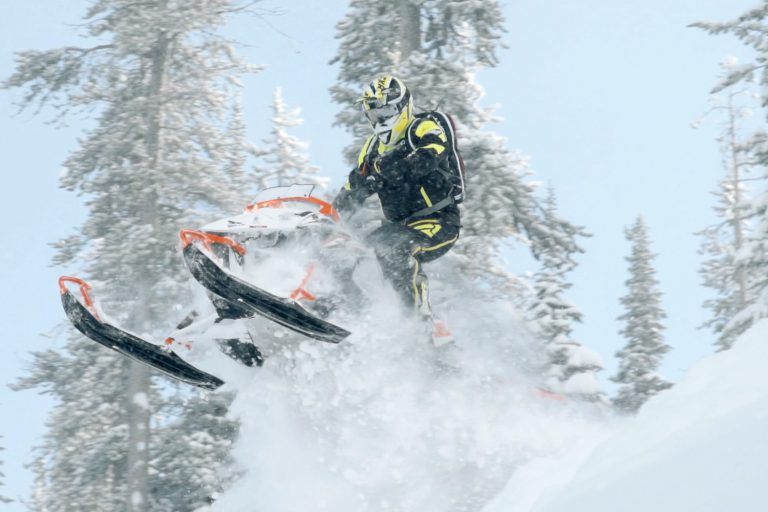
What I do know is that tMotion is impressive. Sure it’s a bit heavier than a traditional mountain skid, but it easily makes up for the small amount of extra girth by making the sled so incredibly easy to lay over and keep on its side. To put it simply, sidehilling any tMotion equipped G4 Summit is a piece of cake. It requires so little effort, the sled actually ends up feeling lighter than it is.

Ergonomically, the 175 Summit starts out feeling a bit strange. The footwells at the front of the running boards are wide open so you can literally stand right beside, if not slightly in front of, the drive axle. It feels very unnatural to be standing that far forward and it looks pretty weird when you turn around and see that much sled sticking out behind you. But, somehow this ergonomic package works really well. It just takes some getting used to.

Riding with guys like Carl Kuster and Rob Alford only proves the point further, you can do things and go places with a G4 based Summit 175 you would have struggled to do with the former XM based Summit.

Speaking of going places, the effectiveness of a 175-inch track with a 3-inch paddle can’t be understated. Combine that level of traction with Ski-Doo’s outstanding E-TEC 850 powerplant and the only places you won’t be able to go will be the ones restricted by the CIA. This power package produces so much bottom end, the track never seems to get bogged down. Of course this is also thanks in a big way to the pDrive primary that squeezes super hard and upshifts lightning fast while maintaining optimal engine RPM. Perfect!

However, one thing I think deserves criticism is the shock package. This sled actually rides really well on the trail for a mountain sled and its shocks aren’t set up bad for average mountain riding. But this isn’t an average mountain sled. If you want to push this Summit as hard as it’s capable of being pushed, you’re going to appreciate the ability to tune the suspension to suite your preferences. With the Summit X, you can’t; its shock package is, for the most part, non-adjustable.

Ski-Doo’s decision to include shocks that don’t have compression and rebound adjustability on a sled like the Summit X 175 is one that’s baffling to us. I’m not going to say it’s a deal-breaker…it’s definitely not. But it’s something we don’t like on a sled that we, otherwise, like everything about.

Bottom line on the 2018 Summit X 175: This is the longest production mountain sled ever built. It comes with all the capability of any other 174 with a 3-inch paddle but for some reason, lacks the extra long, difficult to manoeuvre feel you get when you extend a skidframe this far.

tMotion makes the sled incredibly easy to ride, the ergonomics are great once you get used to them and the engine is something dreams are made of. A lackluster shock package is disappointing but not at all enough to make me think twice about recommending it. This sled makes me a better rider and takes me places I’ve never been able to go before. It can do the same for you, too.