Home Blog Page 136

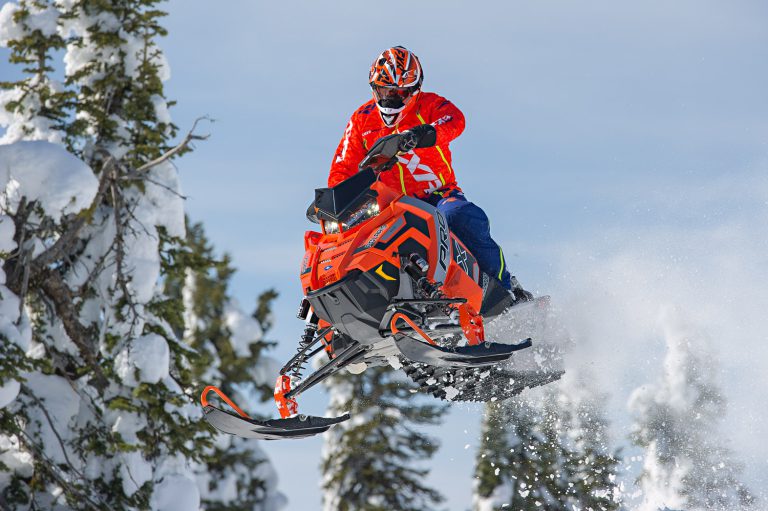
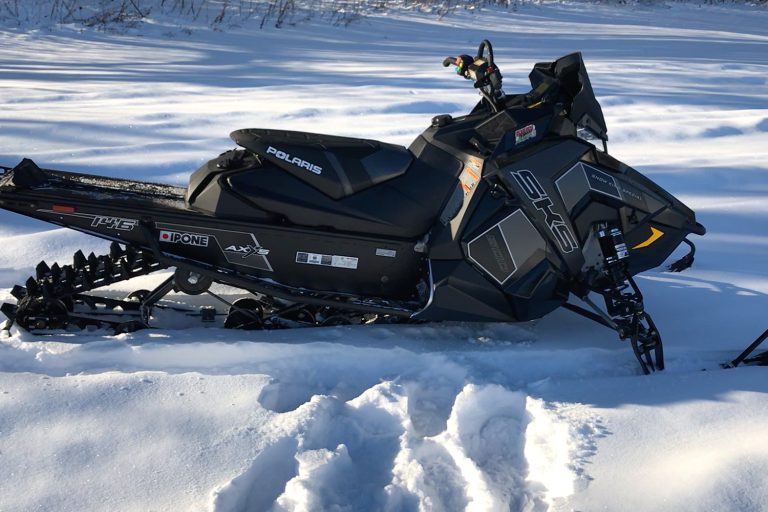
2018 Polaris 800 SKS 146

0

AJ is here with a inside look at the 2018 Polaris 800 SKS 146. Full Review to come later on this upcoming season of SnowTrax Television!

Subscribe to our YouTube Channel!

SNOWMOBILE CLUB VOLUNTEERS

0

If you already have plenty of volunteers for your club activities, just go on to the next story. If not, maybe it’s time to have a discussion.

I hear people (at the local, state, national and international levels) talking about members and other riders who don’t volunteer, even though the same people complain about a trail if there’s a single mogul on it. While I understand it, I don’t think it’s totally their fault.

Yeah, this is going to offend some people, but if we keep doing the same stuff, saying the same things, complaining about the same things and finding that we still have the same problems; isn’t it time we reconsider our approach?

From my experience, some common problems crop up:

1. “Hey, I have a new idea!”

Often, the standard response is: “We don’t do it that way; we do it this way”. In reality, all new processes and procedures started with a new idea someone had.

If someone wants to be involved and has ideas, approach them with an open mind, welcome their input and openly discuss it to see if the idea has merit – or you can show them why the idea wouldn’t work.

Shut them down for what you consider a stupid idea and they will likely never raise their hand again.

2. Sign-up sheets

When you have a sign-up sheet for a club work party, call everyone on the list that signed up, don’t just call the people you know.

Here’s an example: “My Trail Co-Captain on our 16 miles of trail asked me to call people about our upcoming trail party. Usually we’d get 4 to 6 people to show up and it would take two workdays to complete.

I called all the familiar names on the list. After that, I started calling people on the list whose name I didn’’t recognize, and many said they’d been signing up for three years and this was the first time they ever got a call.

Whose fault is that? Not the volunteers…it was our fault. I called everyone and we had 15 people show up. We created three teams and marked all our trails in half a day.

3. You wasted their time

Everyone’s time is important; we lead busy lives. When someone shows up for a work party, find them something to do.

A friend of mine relayed to me why he quit his club. He was active, he volunteered, he attended a groomer training workshop and brought his completion certificate back to the groomer manager for his club.

The guy looked at him and said: “You ain’t driving my groomer”. My friend left the club and eventually snowmobiling. The club lost. My friend is actively involved in several volunteer organizations to this day, but won’t stay where his efforts are not wanted or appreciated.

People’s time is as valuable to them as yours is to you. Waste their time and you likely will never see them again.

4. Cliques

Every club has them, even if you don’t think so. But what is a clique? Generally, a group of people who are longtime friends or co-workers who are comfortable with each other.

Is it a harmful group? No, but it looks daunting to the new guy who just walked through the door. If you can make an effort to welcome that person, learn about them, include them, you may have a volunteer. Better than that, you may have a new friend.

5. Gravely Serious

Why do we snowmobile? Because it’s fun. That’s the bottom line. If you aren’t having fun, you’re doing it wrong. One of the functions of a club is to have fun with other people who love our sport.

We’re all snowmobilers, every part of our experience should be fun, including working with other members.
If your work details don’t have an element of fun, add some. We buy our work crews lunch after a trail party.

It’s a way to thank them, which leads to my last point:

6. Say Thank You

Do it often, do it in public. You have a much better chance to see them again if they know you appreciate them.

My club has had some success with gaining volunteers (though, we always want more) because we’ve taken some time to think about how we act as a club instead of complaining about how ‘they’ don’t volunteer.

So, if you’re short of volunteers, take some time to consider these ideas and share them with your club leadership. At this point, what do you have to lose?

Gary Broderick is a Contributing Editor and Sales Representative at Supertrax International, Chairman, Northeast Chapter of the International Snowmobile Council, Former President of the NY State Snowmobile Association and President of the Shawnee Sno-Chiefs in Western New York State.

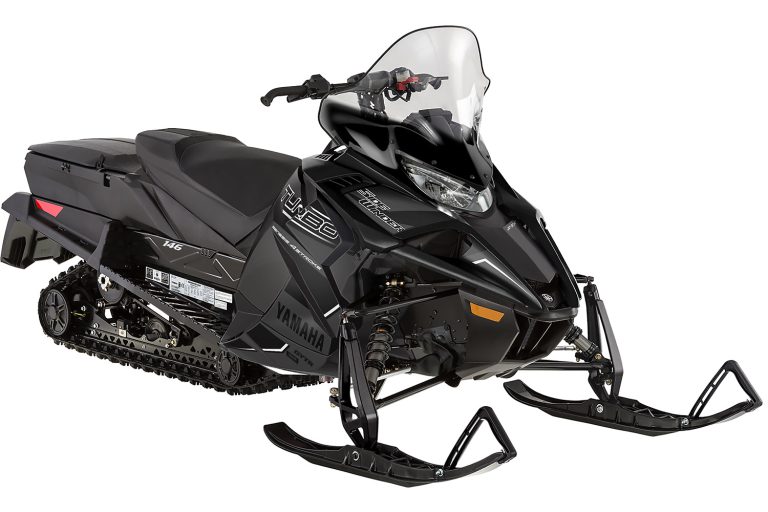
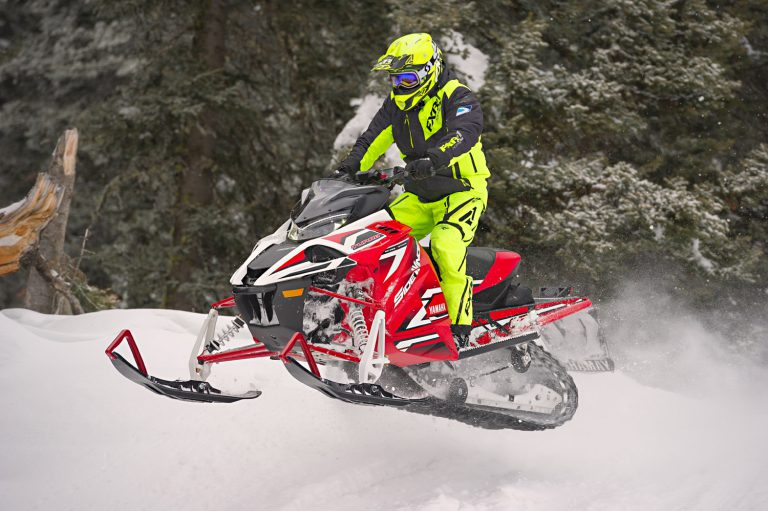
2018 SIDEWINDER S-TX DX 146

When an OEM intros a new top-of-the-market high performance platform, there’s a sweet spot in the sales window for the sled. In other words, when a new rocket lands, the faithful line up in droves to get a copy, the first year.

Clearly Yamaha does not want the SideWinder to be a here-today-and-gone-tomorrow sales story. The company has invested huge jing (in co-operation with Arctic Cat) to produce the most powerful snowmobile engine in history.

A one-year spike in sales is not going to pay for the development and tooling of the Sidewinder’s engine and driveline. This year Yamaha has upped the availability of the SideWinder to include a new segment – Sport Touring – and the timing may be perfect.

The new Sport Touring SideWinder is called the STX-DX. If you’re like many ultimate performance shoppers, you might confine your search for top performance to a 129 with no windshield, stiff shocks and loud graphics.

Fine, at the price level of a new SideWinder you’re entitled to show off when you pull into Larry’s Burger Pit and Poutine. However, there is a significant number of snowmobilers whose egos remain fully intact arriving on a less gregarious sled on which form follows function. Enter the new STX DX ‘Winder.

The Straight Goods

Get this: The STX-DX’s 146 x 1.25 track may make this SideWinder faster than the top-of-the-line RTX. Why? Traction. Among all the SideWinder variants I’ve ridden the past two seasons, this 146-incher is able to handle the imposing, relentless power of the 998 turbo best (excluding mountain variants).

From initial take-off to screaming past the C-note, the STX DX delivers an arm stretching rush that’s absolutely grin inducing. The best part might be how stealthy the sled presents itself. Coloration and graphics are understated and the jinormous windshield is actually a little humorous – not because it doesn’t look good but because it both looks good and works really well. How about that? You don’t have to freeze to look good.

Those concerned about understeer because of this long sneaker can take a deep breath. The STX-DX’s 146 incher steers predictably, turning-in with authority under virtually all trail conditions. We found the fore/aft weight balance was actually good.

Here’s what I mean: Put 146 inches under a sled with a 600 2-stroke and the predisposition to push might be more noticeable. However, the DX is not a light sled by virtue of that 180-plus-hp turbocharged and intercooled reactor out front. In short, there’s enough ski-pressure to completely erase understeer.

Check out the standard stuff the STX-DX includes: Example: a 4-plus gallon fuel tank, just what’s needed for transcontinental tours. The big turbo can achieve over 120 miles on a fill up.

The option of throwing a 2-up seat on the back means versatility. In this case it may mean purchase justification to your significant other. The other stuff on the STX-DX forms a list as long as your arm. Simply put, the sled is well equipped.

The Sidewinder STX-DX may be my fave ‘Winder this year because it not only provides all the amenities including the best trail ride compliance among all Yamaha sleds, but it also delivers mind-boggling acceleration and top speed.

The ultimate Sidewinder in MY18? Don’t bet against it.

2018 Arctic Cat ZR 8000 137

0

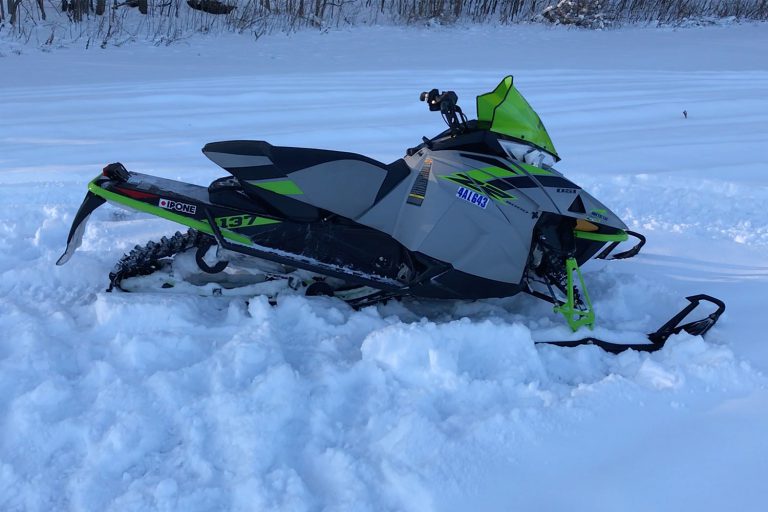
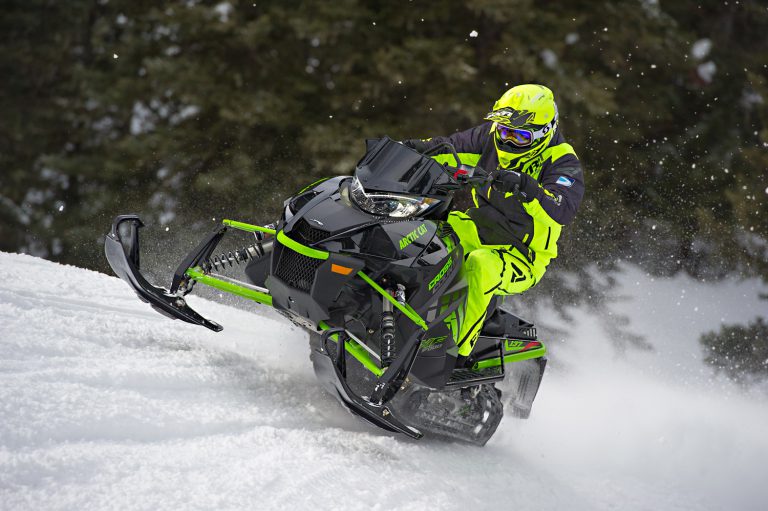
Follow AJ Lester as he walks us around the 2018 Arctic Cat ZR 8000 with a 137-inch track and Cat’s all-new 800 C-TEC2 engine. Full Review heading your way in a few weeks on the upcoming season of SnowTrax Television!

Subscribe to our YouTube Channel!

WHO WILL BE NEXT WITH A TURBO?

0

There’s been a tremendous amount of hype about the turbocharged SideWinder and 9000-Series Cats’ power output and appeal to a power-rabid high performance marketplace.

We’re sure Polaris and Ski-Doo are less than happy about the way these two boosted 4-strokes are stealing the limelight from the 800 and 850 class sleds they build. So what do you think they’ll be doing about it?

It’s interesting both Polaris and Ski-Doo have turbocharged products in their off-road sales brochures and both are highly regarded, dearly loved and deliver pretty much what turbo-snow customers would want if they were offered.

Polaris’ RZR 1000cc turbocharged twin makes somewhere around 155-160 horses and has proven to be reliable. Because the engine is 1000ccs, we strongly suspect it is capable of matching Yamaha’s 998 triple’s power output once it gets the right mapping and the boost amped up.

Can-Am uses a triple-cylinder 900cc turbocharged engine in its Maverick X3 and although it’s power output is less than the other three, we feel it could also be competitive, especially if displacement was upped to 1000ccs.

Frankly, we’ve been a bit puzzled why Polaris and Ski-Doo have held off offering these power packages for two years. Meanwhile, the Cat and Yamaha turbo reputation has grown into a legend.

There’s always this: Both the price range and the buyer profile of the 4-stroke turbo limit the market to a fairly small segment of the business.

Sure, you can offer these extreme sleds, but does that mean there are enough customers out there with the jing and the will to buy them in big quantities? Why invest zillions in a sled that might be selling into a glutted marketplace?

Here’s another thing: There are 2-stroke customers and there are 4-stroke customers. Converting one over to the other could jeopardize the sale of, we suspect, much more profitable 800 and 850 2-strokes.

Maybe the math just doesn’t work!

IS THE CLEANFIRE 800 ENOUGH FOR POLARIS?

0

Sure, there’s plenty of talk out there about Polaris and Cat bumping their 800 2-strokes up to 850ccs to match Ski-Doo.

Seems logical the whole industry would follow suit and inflate displacements so everything is uniform.

The other side of the argument asks: Why bother? Those two 800s are making power so close to the E-TEC 850, it seems like an unnecessary bother to try to match it with same-displacement.

I mean really, it’s not like the 850 E-TEC is running away and hiding from either the Cleanfire or Cat DSI down the lake.

Ski-Doo set the bar at 162-hp and whether you’re checking independent dyno numbers or manufacturer’s claims, the end result is a set of three engines that deliver very similar results.

Considering the above, when asked if the 800 Polaris is enough, we have to say it really is – and here’s why:

First, if you’ve ever ridden this 800 in a long tracked chassis in the powder, you’ll know how responsive it is to throttle input. Frankly, we don’t know of any other engine that tips-in better than this one.

It feels like a snocross open class engine, with immediate throttle response and zero lag or hesitation as it climbs up to its redline.

It is the definition of strong, with a rat-a-tat power delivery gnawing big chunks of torque that makes you feel like some kind of Herculean rider when you tap it.

Second, considering it’s a big-inch twin, the 800 Cleanfire is very smooth and because Polaris has done its homework with engine mounting and harmonics, it doesn’t transfer nasty vibes up into the bars, running boards or seat.

No one ever talks about smoothness with this engine but it really is surprisingly polite and refined. This is a very good trait for trail riders stacking up big miles.

Third, in every AXYS chassis this 800 is planted in, it delivers excellent, low-friction top end and monster acceleration.

Sure, some of it is due to Polaris clutching, but the big thing to consider is how everything, engine, clutches and chassis works together to generate power.

We wonder if Polaris bumped displacement the extra 6-percent to get to 850ccs, it might not make much difference at all.

2018 Ski-Doo Renegade Backcountry X 850

0

SnowTrax 2018 is just around the corner and AJ is here to give you a behind the camera look at the 2018 Ski-Doo Backcountry X 850.

Subscribe to our YouTube Channel!

IS IT TIME FOR A YAMAHA 2-STROKE?

0

Someone actually asked us this question and, at first, we dismissed it as crazy. But then we got thinking more about it.

Back in 2003, the company made public its announcement to wean 2-strokes out of its product line and only offer 4-stroke engines in its sleds.

This was radical thinking at the time; but over the last 15-years Yamaha has proven it can be done and still maintain reasonable appeal across the snowmobile marketplace.

When that proclamation was made in 2003 there was great fear and trembling about the future of snowmobile 2-stroke engines in general.

Because clean-air technology for 2-strokes was not yet fully developed, it was logical for Yamaha to pursue 4-strokes as the prime powerplants for snowmobiles.

After all, why not take an engine type that was already proven cleaner and bypass all the development costs and time involved inventing 2-stoke induction systems to match the exhaust results of a 4-stroke?

So, it was a perfectly logical decision for Yamaha, an extremely advanced engine builder, to turn its focus away from 2-strokes and put it onto 4-stroke power.

Does this mean Yamaha has a “hate thing” for 2-strokes? Not likely.

What it means is fifteen years of product development and market acceptance has put Yamaha at a point where it feels it no longer needs 2-stroke tech in its sleds.

The problem with this thinking is that there are still hordes of Yamaha enthusiasts who would buy a revisited Yamaha 2-stroke in a heartbeat but have migrated somewhere else.

The company’s footprint in specialty markets like Mountain and Freestyle, and to some degree, Crossover, is relatively small compared to the competition.

With the snowmobile market moving towards longer tracked sleds and multiplicity of purpose, a new, clean air Yamaha 2-stroke could rock the sno-mo-biz.

Yamaha already owns proven direct injection 2-stroke patents and has a stellar history of building reliable, fast 2-strokes back in the days of yore (if anyone still remembers).

Will they do it again? Although it seems unlikely, it would not be surprising for Yamaha to flex its engineering muscles and get back into the 2-stroke business, perhaps just in the weight-obsessed mountain segment at first.

There’s a lot to be gained and not that much to be lost.

2018 Polaris 800 Switchback Assault 144

0

So what is a crossover? To me, it’s a sled that performs equally, or at least very close to equally, on and off the trail. It can’t just be a trail sled that is able to go off-trail or a mountain sled that can go on the trial. It has to be capable of doing both, well.

The industry’s best example of a true crossover sled is Polaris’ Switchback Assault – however – this wasn’t always the case. When it was first introduced the Switchback Assault fell into that “mountain sled that could go on the trail” category, and it wasn’t fully evolved. Last season, Polaris made some significant changes to the Switchback Assault and the results were nothing short of amazing.

The most important change is the IGX 144 skid. Plain and simple, on trails, mountain skids ride like crap. They all do, even the best of them. So any sled that has a mountain-derived skidframe is going to have a hard time getting my nod as a true crossover.

The IGX 144 is a hybrid skidframe that includes aspects of a mountain skid that help it perform in deep snow, and aspects of a trail skid that provide excellent ride quality. No, this isn’t just some gimmicky claim by Polaris.

We’ve ridden thuousands of miles on Switchback Assaults the past two seasons and can say with 100-percent certainty, the IGX 144 doesn’t just ride good, it rides great and puts many dedicated trail sleds to shame. Off-trail, it’s equally as good and can hang with converted mountain sleds all day long.

You already know how highly we praise Polaris’ AXYS front end setup and know how much we love how it rides and handles. It’s every bit as good when mated to the IGX 144 skid with its tipped rails that help make it handle like a 136 while still providing the traction of a 144.

But what about off trail? Interestingly enough, even with a full-width trail front end, the Assault is still very capable off-trail. Lets be honest here: A crossover sled isn’t intended to be a mountain sled. Its purpose is to be a capable boondocker and off-trail explorer.

So, while the full width AXYS front end on the Switchback Assault isn’t as good off-trail as a narrower mountain front end, it’s absolutely good enough for powder riding.

The only area we think the Switchback Assault forces a compromise in any way is in the track option department. It’s definitely nice Polaris offers early season buyers the option of a Cobra 1.35 inch or a Series 4 2.0 inch track. But in our opinion, these options are too biased one way or the other. Yes, you can take a 1.35-inch lug off- trail, but you’re sacrificing significant traction in the deep snow.

You can definitely ride a 2.0 inch lug on the trail, but you better hope you don’t run into low snow conditions or a frozen trail surface or you’ll be melting Hi-fax really quick. If there’s one thing we think could be improved on the Switchback Assault, it would be a 1.6-inch-lug track option. We’ve found this to be an excellent compromise in lug height with few drawbacks either way.

I think the best way to sum up the Switchback Assault is to give examples of riders who make no qualms about how much they love this sled. First up, the Motorhead himself, Mark Lester: Many people wear a suit to work… so does Mark, but his 3-piece includes bibs, an insulated jacket and a Tekvest.

I bet you’ve never seen someone sitting at a computer all day wearing all their riding gear. Mark does, just in case he finds an extra five minutes to go for a quick ride. All of this is to say Mark is a hardcore trail rider and he rides a lot. However, nearly all his riding is on the trail.

I won’t say he “hates” off-trail riding, but he certainly avoids it if he can. Want to know what one of this top two favourite sleds last season was? The Switchback Assault!

Our next case study is another familiar face for most of you: AJ Lester. Anyone who watches SnowTrax TV or reads Supertrax Magazine knows AJ’s idea of a perfect day riding rarely involves any trail at all. He loves off-trail riding and spends most of his time in the deep snow.

Yes, he likes trail riding too, but there’s no question his favorite way to enjoy this sport is back in the woods going where no man has gone before. I’ll give you one guess what AJ’s, hands down, favorite sled was last season… Yup, the Switchback Assault. How is this possible?

The answer is simple. The Switchback Assault is the industry’s first true crossover sled that performs equally as well on the trail as it does off the trail.

In fact, it out-performs many dedicated trail sleds on the trail and many much more off-trail biased sleds off the trail. Its not just good at both; it’s great at both. End of story.

Don’t miss Luke’s full TEST RIDE of the 2018 Polaris 800 Switchback Assault 144 coming up this season on SnowTrax Television!

QUÉBEC MARITIMES GASPESIE REGION

0

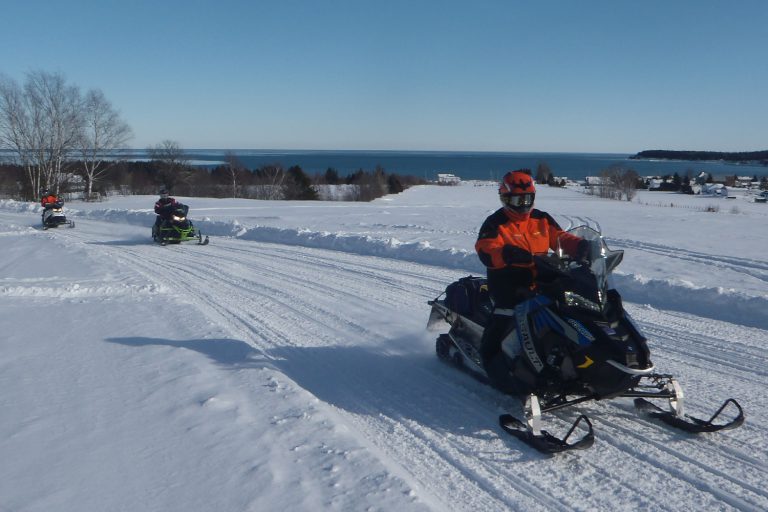
Working with Supertrax for the past 21 years I’ve had the opportunity to visit, ride and experience snowmobiling all over North America and what a ride it’s been.

One question I’m often asked is, of all the places I’ve ridden, which is my favorite. Most often, my response is, “Québec’s GASPESIE has to be at the top of the list”!

This region has it all, starting snowfall measured in feet, not inches. The on-trail amenities include gas stations, restaurants and full service clubhouses. The hospitality is amazing and the trails and scenic vistas surrounding the Chic Choc Mountains are world-renowned.

Last winter we experienced a 6-day snowmobile tour that would take us through the Baie St. Laurent and Gaspesie Regions. Our ride started on the heels of another major 3-day deluge of snow with over 3 feet of accumulation.

Our trip started in Rivier-du-Loup with an overnight stay at Hotel Universal, which features heated storage, plenty of parking, 24-hour security, gas next door and Trans Québec Trail 85 out the back parking lot. Our mapped-out 275 km ride day ended up being over 300 km (200 miles) as someone missed a trail (that would be me) and because of this, we arrived a little late to our night’s lodging at Domaine Valga in Saint-Gabriel-de-Rimouski.

This beautiful log Auberge is a perfect example of the many hidden gems you’ll find only in Québec. It turns out this is a very popular destination for Timbersledders as well!

On the second day the sky was clear and blue and the trails were freshly groomed. Our 200 mile day had us riding 579 South, 587 South and Trans Québec 5 to Motel Baie Bleue in Carl-sur-Mer and, once again, a full parking lot of sleds.

Day 3 was our shortest, taking us on a 220 km ride to Motel Fraser in Chandler. The Fraser was packed with snowmobilers and interesting enough it was 50/50 split with folks from Eastern USA and Ontario. We had a great night with lots of good-natured banter from the snowmobile fraternity.

We changed things up a bit on Day 4 with a side trip into the village of Perce to check out the legendary Perce Rock, an incredible sight to behold. As we pulled into Murdochville the height of the snow banks from the previous week’s storm was amazing. Our night’s stay was Auberge Chic-Choc.

We were looking forward to our next day of riding through the Chic Choc Mountains and it doesn’t get any better than this part of the Québec Maritimes. Unfortunately, the weather was rainy and foggy with freezing rain – a shame because you’ll have a hard time finding more exhilarating riding than there!

Here’s the good news: The Riotel Matane is just what the doctor ordered. Great atmosphere, great food and a very large clothes dryer just down the hall from our room that inhaled 20 well-spent dollars to dry out all my gear.

Our final day of riding back to Riviere-du-Loup is more lowland riding along the St. Lawrence River. It’s fast paced and a hoot to ride and a great way to end another fantastic Québec Maritime ride.

I love riding here and never tire of telling snowmobile enthusiasts to experience this incredible region. Am I going back to the Québec Maritimes? Without a doubt!

I have yet to visit and ride the COTE-NORD Region on the north side of the St. Lawrence River, and it sounds like a great place to ride this March and one more to check off my bucket list.

For more information visit snowmobilequebecmaritime.ca