Home Blog Page 65

BEST 10-YEAR-OLD SLEDS: TURBO LXR 128 OR EXT 144

0

We’ve selected four 10-year-old sleds we think would be good choices to look for as used sled buys this winter. We’ve deliberately chosen sleds with longer tracks to more accurately reflect the type of riding enthusiasts are doing in this decade.

One advantage is we’ve been able to make our selections based on the track records of both performance and reliability these sleds have exhibited down through the last ten seasons. Take a look and let us know what you think!

2011 ARCTIC CAT TURBO LXR 128 OR EXT 144

MARK SEZ:

Arctic Cat pioneered turbocharged snowmobiles. It’s been nearly 16 years since the first 660 Suzuki car engines, complete with teeny-weeny little turbos, were somehow shoehorned into a modified ZR sit-down-ergo chassis.

Following the T660 era the move to insert a purpose-built 1056cc even firing parallel twin avec turbocharger in the new Twin Spar chassis was completely in character with the bravado Arctic Cat displayed at this time in sno-mo-history.

These sleds were out-of-the-box crotch rockets the aftermarket immediately modified to deliver way, way more than 200 ponies. Unfortunately, these modified Suzuki powered sno-missiles experienced amazing – sometimes heroic – ejection of drive belts along with secondary clutches and belt guards when honing a lake at WOT.

I personally had my left foot compressed by a 100-mph secondary pulley flying around under the hood of a Twin Spar turbo. The noise was similar to 35 flying ball bearings inside a galvanized garbage can.

The good news is this: If you can find a used Twin Spar Turbo that hasn’t been chipped and/or the waste gate modified you can own a sled that’ll give a new Pro Cross Arctic Cat Thundercat Turbo a good run.

While it is wise to use boost judiciously – that means not holding the sled wide open for 90 seconds at a time – you can still zoom past the C-note with your hair on fire. Speed is speed and horsepower is horsepower. Despite being 10 years old these sleds are revered for their top end and acceleration to this day.

KENT SEZ:

I mostly agree with Mark’s choice here, mainly because the big 1056cc Suzuki 4-stroke twin was so reliable.

However, an easier-to-find and equally reliable answer would have been the 2011 F8 using Suzuki’s famous 800 twin. The fact is, this 800 was the most trouble-free and reliable 800 of this era.

Yes, it smoked like a radio emcee and had some faults like excess vibes and not the best gas mileage but it could take abuse and outlive the competition’s 800s on the long haul.

It also made that particular Cat chassis feel reasonably light – especially lighter than the bulky Twin Spar Z1Turbo.

BEST 10-YEAR-OLD SLEDS: VECTOR LTX GT

0

We’ve selected four 10-year-old sleds we think would be good choices to look for as used sled buys this winter. We’ve deliberately chosen sleds with longer tracks to more accurately reflect the type of riding enthusiasts are doing in this decade.

One advantage is we’ve been able to make our selections based on the track records of both performance and reliability these sleds have exhibited down through the last ten seasons. Take a look and let us know what you think!

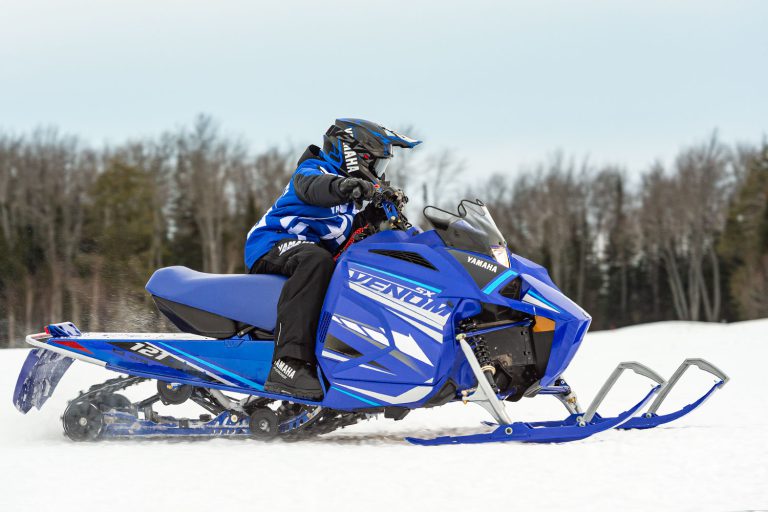
2011 YAMAHA VECTOR LTX GT

KENT SEZ:

This may be a bit of a rare find because there weren’t a lot of them sold with a 137-inch track; most were the vanilla Vectors with a 121. Back in the day, Supertrax argued the Vector LTX was more of a long distance trail sled than a crossover because of its 4-stroke weight.

Probably true, but ten years later, who cares? You’re going to be buying a sled this old for its condition and its reputation for reliability. That’s where the Veck delivers in spades!

Yamaha kept building this sled for a long time after 2011 and probably the sum total of all the years it was offered adds up to a significant number of them still being available.

They were as tough as anvils and built to last and the later EFI 1049cc Vector models like this one were fuel efficient and strong running triples. They used KYB piggyback gassers up front with clickers and a single KYB gasser in the Monoshock RA136 skidframe with an adjustable damping dial on the tunnel to fine-tune the ride. There was also a 1.5-inch-deep RipSaw out back.

These sleds rode great, were reasonable handlers despite their extra mass and the 1049 never failed to impress.

Any Vector from 2011 is a safe buy and we can almost guarantee it will still have a lot of great service years ahead of it.

MARK SEZ:

I have to say I apologize to all our manly, hairy chested readers for allowing my eyes to well up with tears while discussing this iconic Yamaha.

Here’s where I lost control of my otherwise steely emotional posture – it was when Kent mentioned the single shock 136 inch, remote adjustable rear skid. Why Yamaha walked away from this amazing – and I do mean amazing – rear suspension I’ll never know.

The left side tunnel mounted compression clicker was not just slick – it was the best idea ever for rear suspension adjustability. Vecks rode like moguls were just puffy white clouds flowing between its skis. A truly remarkable sled.

I must mention the 1049cc triple 4-stroke used in every Vector model. This engine is pretty much the same piece of Yama-reliability and performance as we see today in new Viper models. The engine delivers immediate and crisp throttle response from engagement to full whack and is still easily the nicest running quad-stroke in the biz.

One issue you will no doubt uncover relating to this sled is its resale value. You will find these high quality, made-in-Japan Vectors command a sizable premium over their competition. Take cash – and happy hunting!

CHANGING ATTITUDE TOWARDS YAMAHA

0

When we say attitudes, it sounds a little negative. The fact is, there are hardcore Yamaha owners who would never consider the brand anything less than the absolute best. This a good thing for snowmobiling and brand loyalty is super-important.

What we’re getting at is this: Many of those same hardcore Yamaha owners are considerably miffed that the new 800 Mountain Max appears to be not just slightly like an Arctic Cat, but really, is an Arctic Cat with blue paint.

We’ve heard countless laments from long term Yamaha owners about how, since Yamaha is one of the best engine builders in the world, the company should be able to come up with a super EPA-clean 2-stroke of its own without using Cat’s SDI 800. Others are convinced Yamaha should come up with its own new chassis to house whatever 2-stroke it chooses to use.

We understand these cries for Yamaha-independence and can identify with the struggles some Yamaha owners are experiencing buying a product that is seemingly designed and built by someone who at one time was a fierce competitor.

What we’re wondering is this: As a good number of Mountain Max Yamahas hit the snow this winter (and we’ve heard they are really selling well at this point in time), and consumers start to enjoy the goodness of how well they perform in the mountains, if those laments from the faithful will die down.

The fact is, the Mountain Max is a very good snowmobile and utilizes some of the most unique technology in the business to satisfy the demands of an extremely particular market segment. Using a single rail skidframe, dry weight is under control, snow accumulation is very low, so running weight is low, the 800 SDI is exactly the kind of engine that performs strongly in powder and has plenty of climbing power – even considering the larger displacement of the competition’s 850s. Throw in the fact Yamaha has had a lot of input into the production and design process.

It’s highly likely this 2-stroke project started at least three years ago and Yamaha clearly knew then it would be offering a 2-stroke Mountain Max in the future. Well, the future is right now – and those sleds are in showrooms today.

You can almost look at things this way: Going back to the beginning of this mountain sled project, today there’s a strong chance there’s as much pure Yamaha in the Max as there is Arctic Cat. Remember, the switch to an SDI 800 from the original Cat Dual Stage Injected 800 only took place about two years ago. How much did Yamaha have to do with that decision? We think Yamaha had a lot of input into that choice – and it’s a part of this joint venture project that becomes more and more clear as time goes on.

It’s common knowledge Yamaha has completely streamlined and renovated Arctic Cat’s production and quality control systems. The fingerprint of Yamaha’s perfectionist demands in what is being built and what its customers are buying has rubbed off in the Arctic Cat production process and Cat is simply miles ahead of where it was six or seven years ago when it comes to offering a high-quality product.

So, Yama-fans, you can choose to look at the Mountain Max from a negative perspective – as though your beloved brand has been “invaded” by a competitor or you can consider all the behind-the-scenes work Yamaha has done to deliver the best mountain snowmobile it’s ever offered. Your choice.

CAN SKI-DOO IGNORE THE PATRIOT 650?

0

In case you hadn’t noticed, Polaris is in fighting trim these days, delivering segment shattering products demanding a response.

Here’s the deal. It’s no secret back in MY 2017 when Ski-Doo intro’d the G4 REV chassis with a class disrupting 850cc Rotax, the competition had a big decision to make.

The competition in this scenario was Polaris. Could Polaris have ignored the new 850 Rotax and just continued to market the potent Liberty 800 proclaiming it was capable of dealing with the new Ski-Doo 850?

We’ll never know the answer to this assertion but, so you’ll know we’re still on our game, we’ll hazard a guess. No, Polaris could not ignore the market leader’s bar-raising 850. Even if the shoe was on the other foot and Polaris had been first with an 850, Ski-Doo would have had to respond. The issue here is this: As the sales leader, can Ski-Doo afford to ignore the new Patriot 650?

WHISTLING IN THE DARK

Here’s the problem. The onus is doubly on Ski-Doo to step up with a 650 because Ski-Doo is the market leader! Acting like the Patriot 650 Polaris is not worthy of a response would literally be whistling in the dark. Leaders have to behave like leaders when thrust into a situation that leaves the leader’s gun a little less loaded.

Here’s another scenario worthy of our intelligent comments. What if the new Patriot 650 isn’t the real deal and doesn’t up-the-ante conclusively in the most popular engine segment in the market, the 600 class? Then, for sure, Ski-Doo (and Arctic) could afford to stand back and watch.

Unfortunately (or fortunately, depending on your brand affiliation) the new Patriot 650 is 100-percent triple-A beef. From initial engagement through the midrange the new mill pulls strong – we mean 800 strong and the top end leaves nothing for the competition’s 600’s to brag about – unless they want to brag about who came second. The new 650 Patriot is the real deal – a game changer in the same way the Rotax 850 was in 2017.

WHAT HAPPENS IF SKI-DOO DOESN’T RESPOND?

Pretty simple. Polaris will increase market share and that share will mostly come from Ski-Doo. We’ve said this before: Ski-Doo has the most brand switchers in their owner profiles. Brand switchers switch brands when the game changes – and it has. Six-fifty ccs is the new 600 class. No going back now.

WHAT ABOUT ARCTIC CAT?

Arctic Cat is the other 2-stroke competitor in the 600 class. Clearly, AC is due for a tune-up on its dual stage injection 600 twin. We’re not engineers and can’t comment on whether or not the current DSI 600 could become a 650 with an over-bore. However, if it can, Cat would be wise to get a 6-pack of line hones and carve out some bigger holes in the current DSI engine.

WHAT’S TO LEARN HERE?

What goes around comes around, my sno-mo-demented friends. The times are changing. The new Polaris Patriot 650 engine not only delivers more torque and an immense kick in peak horsepower, it does it on significantly less fuel than the current Liberty 600.

We fully expect to hear voices from Valcourt saying they’ve tested the Polaris 650 Patriot at the first sign of snow this fall. Those voices will say the Rotax 600 can match the Patriot 650 in the all-new MATRYX chassis. An understandable response, under the circumstances. Unfortunately that posture will not work for long.

OUR TAKE

Frankly, we’re surprised Ski-Doo didn’t see this coming when it was tooling the new Rotax 600R. Snowtrax TV and Supertrax Magazine were predicting a 650 Polaris literal moments after the 850 Rotax was unveiled. But hey, what do we know?

We think chances are good Ski-Doo has a new 650 under development as you read this article.

BEST 10-YEAR-OLD SLEDS: 600 SWITCHBACK 136

0

We’ve selected four 10-year-old sleds we think would be good choices to look for as used sled buys this winter. We’ve deliberately chosen sleds with longer tracks to more accurately reflect the type of riding enthusiasts are doing in this decade.

One advantage is we’ve been able to make our selections based on the track records of both performance and reliability these sleds have exhibited down through the last ten seasons. Take a look and let us know what you think!

2011 POLARIS 600 SWITCHBACK 136

KENT SEZ:

Yes, this is an old chassis – the IQ – but as a ten-year-old sled, it makes for a very reliable, readily available used ride – especially with a 600 under the hood.

We chose the Liberty 600 Semi-Direct injection twin here because it’s proven to be bug-free and has aged extremely well. Its 125-hp is more than adequate for both boondocking and trail use and its coupled skid with 14-inches of travel and Walker Evans adjustable gassers will still work well today. These shocks are rebuildable and can either be replaced or refurbed at a reasonable price, if necessary.

If you’ll recall, the IQ used an early version of Polaris’ trademark non-parallel double A-arm front end and although it didn’t handle quite as well as the lighter Pro-Ride front end (already introduced in 2010) or especially the later AXYS design, it was still a magnificent handling sled and a pleasure to ply on trails. By 2011 all the ills had been worked out of the IQ platform and this is among the last of the models using that chassis.

We’re focusing on the 136-incher here because Polaris had already replaced its shorter 121-inch tracked IQ trail sleds with Pro-Ride RUSH models by MY2011. Those, too, would be a good used sled investment but we strongly suggest you stick with the 600 Liberty in any Polaris from that age group.

MARK SEZ:

It’s amazing to me how much maturation can take place in just 10 years! Kent has really come into the mainstream with his endorsement of this fine snowmobile. I too agree this was likely the best IQ based sled Polaris built and it does make a great platform for a stellar used sled purchase. I also agree the 600 Liberty engine – which is as tough as an anvil – is the correct choice when combing the web for a used SB 136.

In MY2011 Polaris’ legendary variable castor IFS delivered what it delivers today – the best handling in the biz. There are some interesting subtleties with the original IQ. One particularly desirable feature is the chassis’ use of a clam shell hood. Remember when you could swap a plug in like 30 seconds without grinding your hands up like you stuck them in a garbage disposal?

Inasmuch as the new 3-piece bodywork on both the AXYS and MATRYX are the easiest in the biz to remove and remount, underhood access cannot be compared to a good old clam shell IQ.

Polaris Launches Inaugural Empowersports Women’s Riding Council

Whether on snow, dirt, asphalt or sand, women are participating in powersports more than ever before and helping to expand and diversify the industry. To champion and sustain this growth, Polaris Inc. (NYSE: PII) created the Empowersports Women’s Riding Council made of 12 powerful women from all backgrounds to uplift the passions that fuel women and put forth deliberate efforts for increased representation, inclusion and participation of women in powersports.

“For over 65 years, Polaris has created new ways to connect riders with the outdoors on all terrains, and we are committed to inviting more people to join powersports for work and for play,” said Polaris Chief Customer Engagement and Growth Officer Pam Kermisch. “We are so honored to have these trailblazing women join in this initiative, not only to inspire and empower more adventure-inclined women to enter the space, but also to lead industry improvements for the women already immersed in powersports culture.”

The Empowersports Women’s Riding Council is composed of distinguished women who are riders, adventurers, leaders and entrepreneurs who bring unique perspectives and insights to the powersports space. They are champions for advocacy, empowering women, building community, sparking adventure and fostering safety.

They include:

Michelle Barraza
RZR Racer

Carrie Barton
Klim & Timbersled Brand Ambassador, Dirt Bike Racer & Tour of Idaho Finisher

Julie-Ann Chapman
She Shreds Mountain Adventures Founder & Professional Snowmobiler, Team Polaris Athlete

Amy David
Professional Mountain Athlete, Skier, Guide, Polaris Snowmobile Ambassador & Content Creator

Gevin Fax
Actor, Musician, Educator & Speakers Bureau Ambassador

Vicki Gray
International Female Ride Day® & Motoress.com Founder, Road & Race Instructor

Lisa Lockhart
Rodeo Champion, Rancher & Polaris Ranger Ambassador

Kristen Matlock
Professional RZR racer & SCORE Baja 1000 Champ

Jody Perewitz
Racer & Sturgis Motorcycle Hall of Famer

Porsche Taylor
Black Girls Ride Magazine Founder And Cross-Country Rider

Jolene Van Vugt
Stuntwoman, Nitro Circus Action Sports Athlete, Canadian Woman’s National Motocross Champion & RZR Ambassador

Kelly Yazdi
Wild Gypsy Tour Creator, Polaris Adventures Ambassador, Actor & Host

“I am honored and thrilled to join my fellow council members in this movement to champion self-empowerment, community, adventure and safety,” Matlock said. “For me, riding is a form of expression and freedom that every woman should get the chance to experience. Women have always been a force within the world of powersports, but we haven’t always been a part of the narrative. This council allows us to tell our stories and provide our perspectives our way.”

The Empowersports Women’s Riding Council will meet regularly with Polaris leaders to discuss breaking down barriers including increasing diverse female representation, vehicle and gear considerations, safety practices, combating biases and demystifying the sport for more women.

Polaris’ Focus on Customer Growth

The creation of the Empowersports Women’s Riding Council is part of Polaris’ broader growth initiative, which aims to grow their customer base by nearly 50% over the next 10 years through introducing new customers to Polaris and continuing their commitment to supporting diverse riders. During its second quarter the company saw an influx of new riders with nearly 75% of off-road and motorcycle buyers being new to Polaris, fueled by significant increases with women and families as well as younger and multicultural customers.

The increasing presence of women in powersports is an industry-wide trend. Female motorcycle ownership has doubled in the last decade, according to the Motorcycle Industry Council. With a 2018 MRI-Simmons survey showing nearly half of all off-road vehicle-owning households having women in them and Black women outnumbering their male counterparts in snowmobiling by 61%, Polaris is focused on sustaining and growing this movement in a way that uplifts both new and experienced female riders.

“As the leader in our industry, we have a responsibility to ensure diverse voices in the powersports space are heard to drive action and make the industry even stronger,” Kermisch said. “While we are proud of the efforts made thus far, we also recognize there is room for improvement. We look forward to having these honest conversations and instilling actionable change, so all women feel empowered, no matter the terrain or vehicle.”

As Polaris continues to see record numbers of new customers and a more diverse mix of customers, the company has committed to creating an inviting, inclusive experience for new Polaris riders. Polaris is proud to partner with organizations that align with this mission, such as Black Girls Ride, Outdoor Women, Wild Gypsy Tour, International Female Ride Day® and Women Riders World Relay.

ABOUT POLARIS INC. – As the global leader in Powersports, Polaris Inc. (NYSE: PII) pioneers product breakthroughs and enriching experiences and services that have invited people to discover the joy of being outdoors since our founding in 1954. With annual 2019 sales of $6.8 billion, Polaris’ high-quality product line-up includes the Polaris RANGER, RZR and GENERAL side-by-side off-road vehicles; Sportsman all-terrain off-road vehicles; Indian Motorcycle mid-size and heavyweight motorcycles; Slingshot moto-roadsters; snowmobiles; and deck, cruiser and pontoon boats, including industry-leading Bennington pontoons. Polaris enhances the riding experience with parts, garments and accessories, along with a growing aftermarket portfolio, including Transamerican Auto Parts. Polaris’ presence in adjacent markets includes military and commercial off-road vehicles, quadricycles, and electric vehicles. Proudly headquartered in Minnesota, Polaris serves more than 100 countries across the globe.

New Yamaha Stryke Ski Is A Homerun!

0

For those of you who regularly read Supertrax Magazine, watch SnowTrax Television and/or subscribe to our You Tube channel you’re gonna be shocked with this news.

Yamaha has ditched its confusing “Tuner Ski” and built an all-new, highly effective, handling enhancing, predictable steering ski for virtually all trail targeted Yamaha sleds in MY 2021.

YAHOO!

Need to say this right out of the gate: Thank you Yamaha! We have been one of a few media outlets who have not mixed words about how poorly the former tuner boards worked. Essentially the dual skag “tunnel” design of the Tuner Ski created huge issues with understeer and sometimes outright plowing of the front end.

Compounding this persistent suite of issues was the propensity for the Tuner to “clean out” suddenly and transition in the blink of an eye from understeer to profound, ski-lift inducing oversteer. We regularly fiddled with Yamaha’s tuners and regularly came away frustrated.

STRYKE IT!

As soon as we rolled our first Stryke equipped SideWinder out of the pits in Yellowstone last spring, we felt a difference. Turning up the Winder’s formidable wick while carrying a solid measure of turbo-jam deep into a high speed sweeper proved Yamaha got it right.

The Stryke uses a single, deep keel with a rocker and a dual carbide setup that positions the runners on a common plate with a leading and trailing rod. Throttle on or off – even dragging the brakes – Yamaha’s wide spaced A-arm IFS bit like an under-fed shark all the way through the center of turns.

Particularly satisfying and definitely confidence-inspiring was the new ski’s ability to maintain strong on-center feel with virtually no darting. You can drop the throttle at over a hundred per and the front end stays laser straight, generating tons of confidence with no head shake.

Go ahead, grab a handful of brake and back it into a tight turn as you head for the next apex. At last you are in complete control of the world’s fastest production snowmobile!

There is a measure of tune-ability in the new Stryke boards. Yamaha has simplified tweaking the fore/aft angle of the skis with a shim system under the ski saddle. The rubber saddle biscuit can be biased to put more pressure on the front of the ski, the back of the ski or to have the ski level and un-preloaded.

The effect of having the ski push down harder at the front is heavier steering – something some pilots appreciate. Pre-loading the tail of the ski will produce lighter steering effort with a little more darting. We found the ski to be near perfect in its response when it was set up level with even fore and aft preload.

UPDATE YOUR YAMA-ROCKET

Yamaha is making noises they will offer the new Stryke skis in fitments for late model ARC IFS sleds. We’ll give our gold-plated recommendation to hightail it down to your Yama-store with a fully loaded MasterCard and procure a set of these excellent skis.

Polaris Announces 10-Year Partnership with Zero Motorcycles

0

Polaris Inc. (NYSE: PII) today announced it has signed a 10-year partnership with Zero Motorcycles, a global leader in electric motorcycle powertrains and technology.

This exclusive partnership in off-road vehicles (ORV) and snowmobiles is a cornerstone component of rEV’d up, Polaris’ long-term strategy to position the Company as the leader in powersports electrification. Through rEV’d up, Polaris aims to offer customers an electric vehicle option within each of its core product segments by 2025, with the first vehicle from the Zero-Polaris partnership debuting by the end of 2021.

“Thanks to advancements in power, pricing and performance over the last several years, and with customer interest surging, now is the right time for Polaris, with Zero Motorcycles as a key strategic partner, to implement our rEV’d up initiative and aggressively accelerate our position in powersports electrification,” said Scott Wine, chairman and CEO of Polaris. “Zero Motorcycles’ pioneering electrification experience, proven leadership, and electric powertrain technologies are unmatched in the market. We believe this transformative partnership will enable us to leapfrog technological hurdles around range and cost while providing a tremendous speed-to-market advantage – an instant offense. Leveraging the strengths of our teams and a shared culture of innovation and passion for this industry, Polaris and Zero will collaborate to shape the future of powersports.”

“All of us at Zero Motorcycles are delighted and honored to be a part of this industry-changing strategic relationship with Polaris as we collaborate and co-develop the technologies and vehicle platforms that will power the future of electrification in powersports,” said Zero Motorcycles CEO Sam Paschel. “This revolutionary partnership is bringing together two incredibly talented teams aimed at dramatically expanding the electric options in powersports. Our EV expertise and millions of miles of real-world, rubber-meets-the-road EV experience, coupled with Polaris’ broad product portfolio, scale, supply chain and market leadership, makes this a game-changer for every powersports enthusiast.”

With Polaris’ scale and broad product lineup, this strategic partnership will be the largest in Zero Motorcycles’ history. Under this 10-year exclusive agreement, Polaris will develop, manufacture and sell electrified ORVs and snowmobiles using Zero’s powertrain technology, hardware and software.

Zero Motorcycles has been designing, manufacturing and advancing electric motorcycles since 2006, and this partnership gives Polaris access to more than 14 years of unmatched experience and intellectual property. Zero Motorcycles is the only motorcycle company to successfully bring an entire electric product line to market and is regarded as the leader in motorcycle EV technologies, subsystems, components, and designs.

Polaris – Leading Powersports Electrification

As the global leader in powersports with nearly a decade in the electric vehicle space, Polaris is well positioned to accelerate the development of its premium electric vehicle offering across its product lines and to lead the powersports industry in electrification. Building on Polaris’ past experience in electric, rEV’d up will accelerate Polaris’ positioning within the industry by launching a new electric option to customers across each of its core business segments by 2025.

“rEV’d up is about more than just having a presence in the electric vehicle space; this is about leveraging the next generation of technology to develop industry-leading electric offerings within the right vehicle segments for our riders and our business. This is about taking a bold step to do big things,” said Wine. “With over $1 billion in electric vehicle sales over the past decade, we have built a valuable foundation in both the commercial and passenger vehicle markets. By leveraging capable partners, like Zero, we will expand on that groundwork to profitably deliver electric vehicles with the range, value and performance characteristics that both existing and prospective customers want.”

Polaris’ past and current product portfolio includes several electric options. In 2011, Polaris acquired both Goupil, a French manufacturer of on-road, commercial light duty electric vehicles for the European market, and GEM, the street-legal passenger and utility electric vehicles.

Four years later, the Company acquired Brammo Electric Motorcycles whose technology was leveraged in the RANGER EV. The RANGER EV was one of the first electric vehicles in the off-road industry and is the No. 1 selling electric off-road vehicle in North America to date. With its broad range of electric commercial and industrial vehicles, Taylor-Dunn was acquired by Polaris in 2016.

About Polaris – As the global leader in powersports, Polaris Inc. (NYSE: PII) pioneers product breakthroughs and enriching experiences and services that have invited people to discover the joy of being outdoors since our founding in 1954. With annual 2019 sales of $6.8 billion, Polaris’ high-quality product line-up includes the Polaris RANGER, RZR and GENERAL side-by-side off-road vehicles; Sportsman all-terrain off-road vehicles; Indian Motorcycle mid-size and heavyweight motorcycles; Slingshot moto-roadsters; snowmobiles; and deck, cruiser and pontoon boats, including industry-leading Bennington pontoons. Polaris enhances the riding experience with parts, garments and accessories, along with a growing aftermarket portfolio, including Transamerican Auto Parts. Polaris’ presence in adjacent markets includes military and commercial off-road vehicles, quadricycles, and electric vehicles. Proudly headquartered in Minnesota, Polaris serves more than 100 countries across the globe. 

polaris.com.

About Zero Motorcycles – Zero Motorcycles is the global leader in electric motorcycles and powertrains. Designed and crafted by hand in California, Zero Motorcycles combines Silicon Valley tech with traditional motorcycle soul to elevate the motorcycling experience for intelligent, innovative riders around the world.

Forward-Looking Statements – Except for historical information contained herein, the matters set forth in this news release, including management’s expectations for the electric off-road and snowmobile market, are forward-looking statements that involve certain risks and uncertainties that could cause actual results to differ materially from those forward-looking statements. Potential risks and uncertainties include such factors as the severity and duration of the COVID-19 pandemic and the resulting impact on the Company’s business and the global economy; consumer demand for electric off-road vehicles and snowmobiles; the Company’s ability to successfully implement vehicle designs and manufacturing operations for its electric vehicles, including expanding its supply chain for electric vehicle components; the ability of Zero Motorcycles and the Company to successfully develop, implement and maintain superior technology for the Company’s electric off-road vehicles; economic conditions that impact consumer spending; product recalls; warranty expenses; environmental and product safety regulatory activity; effects of weather; commodity and input costs; freight and tariff costs; changes to international trade policies and agreements; uncertainty in the retail and wholesale credit markets; performance of affiliate partners, including Zero Motorcycles; relationships with dealers and suppliers; and the general overall economic, social and political environment. Investors are also directed to consider other risks and uncertainties discussed in documents filed by the Company with the Securities and Exchange Commission. The Company does not undertake any duty to any person to provide updates to its forward-looking statements. The data source for retail sales figures included in this release is registration information provided by Polaris dealers in North America compiled by the Company or Company estimates and other industry data sources. The Company must rely on information that its dealers supply concerning retail sales, and other retail sales data sources related to Polaris and the powersports industry, and this information is subject to revision. Retail sales references to total Company retail sales includes only ORV, snowmobiles and motorcycles in North America unless otherwise noted.

SKI-DOO 2-STROKE TURBO TRAIL SLED

0

The most asked question so far this year is this: “When will Ski-Doo drop the new Summit turbocharged 850 into a trail sled?”

Inasmuch as just mouthing this question in earshot of a factory BRP rep draws a strong denial and a sort-of suggestion they would appreciate it if we didn’t even approach this topic, we think the question deserves an answer!

Let’s take this one piece at a time.

It must be understood the new turbo 850 2-stroke is purpose-built with some limiting issues precluding practical sea level use. Here’s a big one: At any altitude the maximum factory boost and resultant HP the new 850 turbo generates is intended to replace available horsepower, not increase it, as elevation increases.

Here’s what I mean. It’s generally accepted naturally aspirated (non-turbo) 2-strokes lose between three and five percent of their power for every 1000 feet of altitude above sea level. This rudimentary calculation presents an interesting argument. If true, at 10,000 feet elevation there would be no horsepower. Let’s not get into that. The new Rotax 850 turbo does not lose HP as it climbs.

For those who have experienced altitude-induced horsepower loss you know really powerful sleds can feel pretty anemic at altitude.

It’s a simple product of air density. Air is thinner (less oxygen) the higher you climb and less dense air makes smaller explosions when it’s sucked into a cylinder and lit off. However, if you pump air into a cylinder at altitude you can make an engine think it’s at sea level. The Ski-Doo 850 turbo 2-stroke is programmed to do exactly that.

The maximum boost the turbo is allowed to generate will never make the engine produce more than its 165 sea level peak horsepower. So, the Rotax designed and engineered turbo system does not demand more net power from the 850 twin than it would otherwise produce at sea-level.

Okay. You’re thinking that’s all fine and good but why not build a Mach-Z 850 turbo and turn up the boost to produce a nice round horsepower number like, say, 200?

Obviously a sea level 850 Ski-Doo does not need a turbo to produce 165 HP. While I’m convinced a 200 HP Rotax turbo 850 2-stroke could be built, the cost to do so versus the return in sales might not justify it. The 850 twin would likely have to undergo a complete top to bottom beefing up: Rods, crank, pistons and maybe even cases.

Today’s high output, low weight snowmobile engines are built to optimally deliver a specific amount of peak HP reliably. Exceeding the designed output could have a negative effect on reliability.

A complete re-do of the 850 could cost millions and the sales of a trail turbo 200 HP Mach-Z, IMO, may not justify such a move. However, I have been wrong before. That was when I thought I was wrong but it actually turned out I was right.

There is undeniably a contingent of diehard, yellow underwear turbo groupies who are crowing for Ski-Doo to power up what would amount to a new lake shredding “Turbo Mach Z”, fastest production snowmobile. We understand their predisposition for max power. In fact, we might actually agree with them.

The way things look right now, we just don’t see a 850 Turbo Mach Z on the horizon.

However, next time, lets talk about a Rotax 900 4-stroke 200 HP Turbo.

SKI-DOO 2021 MXZx 600RS

0

It’s rare that one brand so thoroughly dominates snocross racing like Ski-Doo with its MXZx 600RS did for the past two seasons.

Winning the Pro, Pro-Lite and Pro Women and multiple amateur points championships in the ISOC snocross series – the undisputed most contested circuit – the last two years, speaks volumes about the strength of the racing-specific MXZx 600RS.

Most people would tell Ski-Doo not to mess with a good thing, but this is racing and nothing stands still.

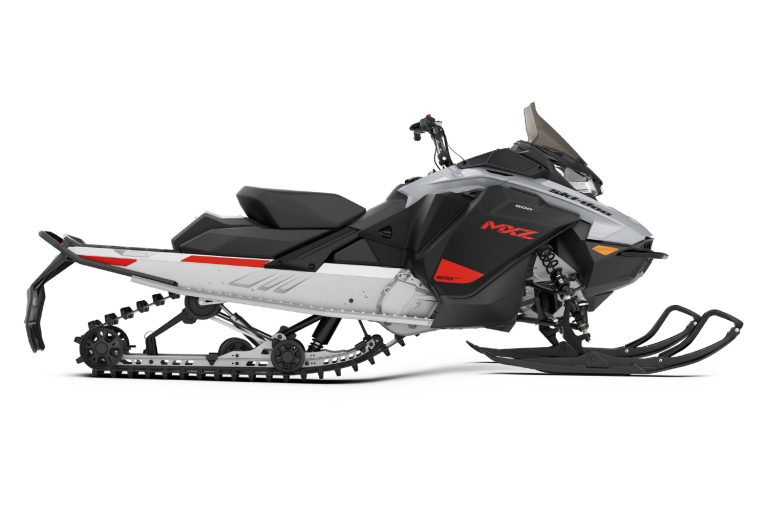
The MXZx 600RS E-TEC uses the industry leading REV Gen4 platform with its open cockpit design and centrally balanced engine for superior rider ergonomics and handling in rough conditions.

The Gen4 layout delivers agility and responsiveness while the Ergo Step side panels and beveled tunnel allow racers the room they need to attack the course – without interference from the chassis.

For 2021 the visible changes are with the front shocks as they upgrade to the 46 mm KYB Pro Series that typically have been available only on a limited basis to the Super teams. Integral Base Valves on all shocks add the ability to adjust not only High and Low Speed Compression but also High Speed rebound.

Suspension calibration has changed to match the new shocks with the rest of chassis and is based on direct rider feedback to further handling benefits.

The changes from last year all carry forward; rear of chassis with a re-designed tunnel, heat exchanger, bumper and now new taillight that meets SSCC standards. All shocks, including the new fronts, use the Integral Base Valve that was originally developed on the factory shocks.
The 137 rMotion rear suspension features a sturdy rail design, unique racing geometry and a proven holeshot device.

The RAS 3 front suspension features a long spindle that allows high cornering speeds and a unique race sled only power steering system that provides ultra-precise handling with less effort.

The Rotax 600RS E-TEC engine features E-TEC direct injection, that always delivers quick response and perfect calibration no matter the altitude or weather conditions so racers and their crew have less to worry about.

New calibrations for 2021 further refine the holeshot and mid-range power. Other features include booster injectors first deployed on the Rotax 850 E-TEC, a short intake tract with double reeds and digital eRAVE.

HIGHLIGHTS:

REV Gen4 Platform

• Taper/tilt tunnel design
• Short heat exchanger with internal loop
• 137″ Track
• Lightweight Lexan Hood
• LED Lightweight Headlights
• Reinforced E and S modules
• MX inspired seat
• NEW taillight – SSCC compliant
• Racing foot box
• 5-gallon fuel tank
• Lower center of gravity
• High Air Flow Left Vent

RAS 3 Front Suspension

• NEW Kashima coated 46mm KYB Pro R Series shocks (High Speed /Low Speed compression and High Speed / Low Speed Rebound adjustments)
• NEW shock calibration
• Integral Base Valve Adjuster
• Rack steering with power assist
• Long Spindle design (Stronger + better speed cornering)
• Lightweight Pilot R2 Ski – Reinforced

Racing rMotion Rear Suspension

• Race proven rail design – stronger
• Integral Base Valve Adjuster
• NEW shock calibration
• 137″ length
• Lightweight Front and rear arms
• Kashima coated 46mm KYB Pro Series piggy back center shock w/ High Speed / Low Speed compression and High Speed Rebound adjustment
• Kashima coated 46mm KYB Pro Series piggy back rear shock w/ High Speed / Low Speed compression and High Speed / Low Speed rebound adjustment
• Optimized geometry (race proven motion Ratio front and back)

Rotax 600RS E-TEC Engine (599.4 cc)

• E-TEC direct injection
• Mono block cylinder design with Plasma coating- delivering more horsepower
• NEW engine calibration
• Intake booster injectors (850-inspired)
• Shorter intake length (850-inspired)
• Double reed valves (850-inspired)
• eRAVE (850-inspired)
• Lightweight exhaust system (Stainless steel tuned pipe)
• Racing Throttle Block – Ready for 50% throttle applications
• Reinforced engine mounts
• Hot Start Button

Drivetrain

• Larger brake backing plate
• Brembo Brake System – large diameter rotor, easy maintenance caliper
• pDrive primary clutch
• TEAM TSS-04 secondary clutch
• Revised slip gear – Better durability, less maintenance
• RS drive axle (Lighter)
• Lightweight belt guard – better air flow