Home Blog Page 41

BIGGEST QUESTION ABOUT THE CATALYST: WHAT ABOUT YAMAHA?

0

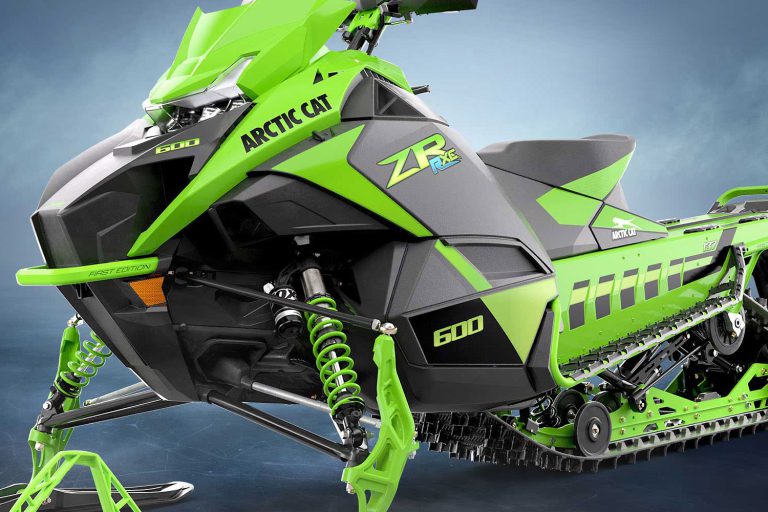
Coming close to the “most asked question this fall” at Supertrax/SnowTrax World HQ has to be: “Will Yamaha get the Catalyst platform?”.

This is among the most asked Qs for good reason. We all know it is much more efficient (read: profitable) for an OEM to build as many models on a common chassis as possible. At this point in time, Arctic Cat has neither said it would or wouldn’t equip the Catalyst with a 4-stroke mill. The company has given off fairly strong vibes about this: For right now the Catalyst is “Arctic Cat’s” platform.

Okay, we get that. However, the complexity of continuing to build the ProCross platform for Yamaha and maybe one or two AC models using a Yamaha 4-stroke engine for power, then switch the entire production facility over to Catalyst 2- stroke powered models, seems exceptionally cumbersome.

To clarify this train of thought we do believe this will happen for at least the first year of Catalyst production. However, we don’t believe AC will continue to do this for long.

So what position is Yamaha in with AC’s inevitable shift to Catalyst manufacturing? I think the issue comes down to this: “Can the combined engineering expertise of Arctic Cat and Yamaha figure out how to shoehorn a 4-stroke Yamaha mill into the new Catalyst?”.

Here are some items to consider surrounding the new Catalyst. As of December 6th Arctic Cat put out a detailed press release covering a plethora of Catalyst details – many of which the media was warned not to release until Cat gave the call. Did I just say “Cat Call”? Never mind. Now that we have a little more latitude to talk about what’s under the Catalyst’s svelte bodywork we can speculate on what Yamaha’s future may look like.

First, Yamaha may continue to have AC build its current specific Yamaha powered ProCross models. We think this only makes sense in the short term. At some point in time Yamaha will want the latest and greatest for their sleds.

Consider this as well. Arctic Cat has got to be pleased with the relationship they enjoy with Yamaha. Just the economies of scale from building sleds for Yamaha has to make their production facility in TRF significantly more profitable.

Next, Yamaha might work with AC to engineer, tool and build a Catalyst variant with a bulkhead capable of swallowing not only a 1049 triple 4-stroke but a 998 triple turbo 4-stroke, too. This would – IMO – require the fabrication of an entirely different front bulkhead.

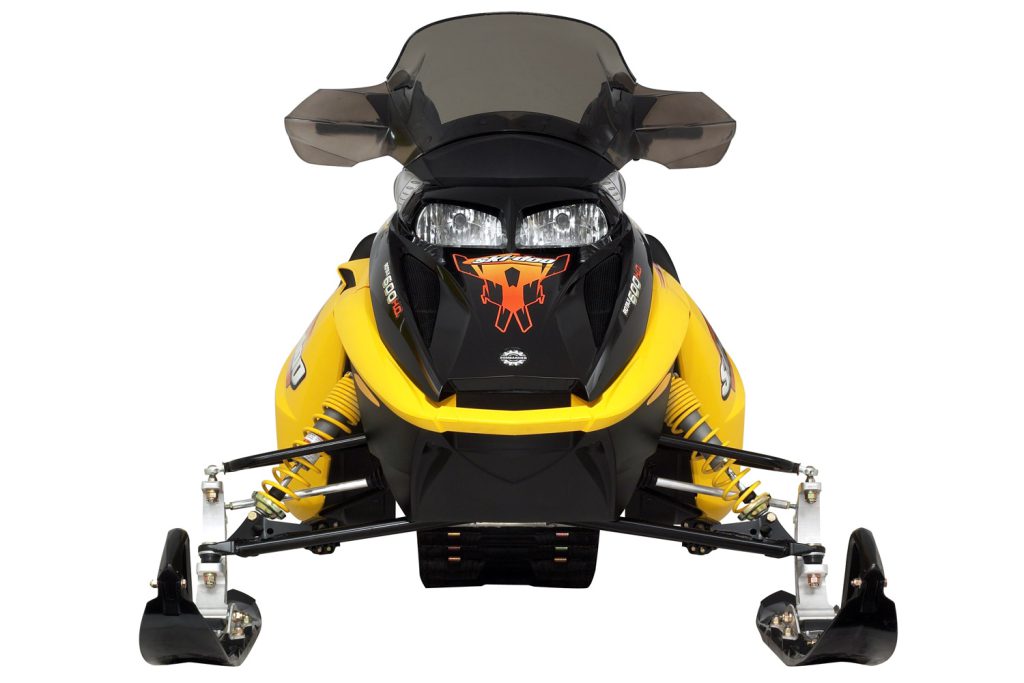
This is not something out of the realm of possibility. Look at Ski-Doo’s current 4-stroke “Wide-Body” REV. The front clip and all the bodywork are specific to Ski-Doo’s ACE 900 engine in both N/A and turbocharged iterations.

Keep in mind too, Arctic Cat is not likely to walk away from the legendary turbo 4-stroke Thundercat. Currently the Yamaha SRX and the Thundercat with their clothes off, are very similar snowmobiles. I would venture to guess there is no other single model that’s as profitable in AC’s or Yamaha’s model profile as these two rockets.

Certainly, a Catalyst variant would need to accommodate a 4-stroke mill in both N/A and boosted trim. Think about this rationale: For almost a decade Suzuki produced the even-firing 1,100 4-stroke twin for use in an Arctic Cat chassis. This particular engine is still revered to this day as one of the most formidable turbocharged powerplants in the history of the sport.

Notably, it was a twin and fit hand and glove in the then-current Arctic Cat “F” chassis without a major retooling. Even though the Catalyst appears quite small up front, Yamaha is an engine company with unrivaled expertise in 4-stroke power. They are supremely resourceful.

There’s still much to be learned about the future of both Yamaha and Arctic Cat snowmobiles. We would love to be a fly on the wall at a product planning meeting at either Arctic Cat or Yamaha. Stay tuned.
2023 Ski Doo MXZ Blizzard Detailed Overview

0

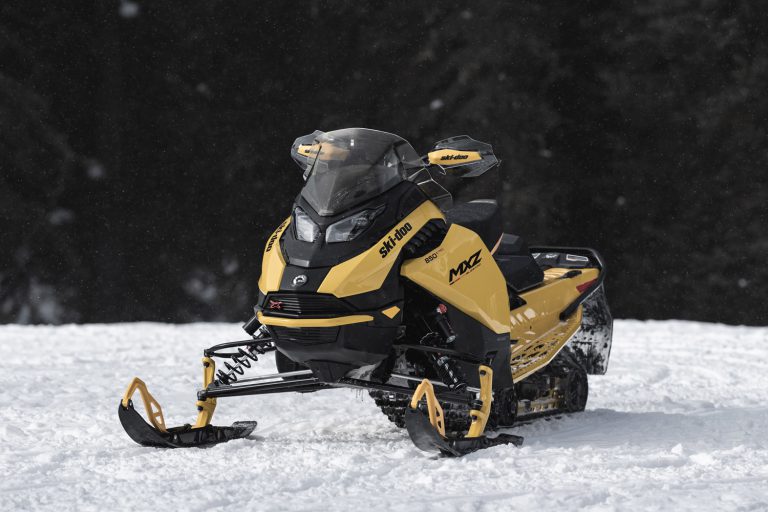
Motorhead Mark gives probably one of his most detailed overviews ever, this time focusing on the 2023 Ski Doo MXZ Blizzard featuring the 850 ETEC engine. Lots of info here, folks. Get the popcorn ready and get cozy…

WHY ARE SLEDS SO EXPENSIVE?

0

Before you send hate mail in response to the title of this report I will give you the answer to my question right off the top: Yes.

We get a lot of mail griping about the cost of snowmobiles so I thought I would take a run at explaining what’s still going on in the sno-mo retail marketplace.

Here’s the real issue: The COVID reality the past two and half years created never-seen-before pressure on both the new sled and used sled marketplace. When the COVID lockdown came into effect, people went nuts buying up powersports vehicles. The reality of being trapped at home for an indeterminate time made people seek out other forms of recreation to replace cancelled warm weather vaycays.

While the powersports industry literally reeled at the volume of early orders that first year of COVID, the real estate industry completely blew itself off the Richter scale with rapidly accelerating, then skyrocketing prices – particularly on properties located in what might affectionately be referred to as “Cottage Country” which, coincidentally is most often “Snowmobile Country”.

Where I live in Central Ontario, prices on recreational lakefront properties pretty much doubled in less than one year. Cottages would go up for sale and literally dozens of offers above the asking price would roll in so fast buyers were in a spin. This real estate reality was and to some degree still is (in some locales), unprecedented. It has been a 100-percent seller’s market for almost three years just about everywhere.

Back to snowmobiles. While this unprecedented demand for sleds was ramping up so were used resale values. I can say this with conviction: Never have I seen people pay such inflated prices for a used sled.

We get a fair number of asks around here about what we think a certain sled (used) should sell for. We are not the “Auto Trader” of the sno-mo-biz but do have a pretty good view of what the market looks like and what it will bring for used iron. The numbers we have seen are incredible.

Stuff that’s five years old has been selling for often just a few hundred bucks less than a comparable brand new sled. Why? Because there are so few unsold new sleds available. Supply in the snowmobile-biz has been outstripped by demand for three years and, in fact, still seems artificially strong (not enough supply) again this fall sales season.

So yes, the price of sleds is going up – but there are some hopeful signs. First, if you’re in the game – that is you own late model sleds – you are no doubt finding you can pretty much get what you paid for your rides. I have a good friend who took his 2020 sled to his dealer to use as a trade on a new 2023.

The dealer offered him $9500 as a trade. Under normal market conditions this would have been a generous offer. He took the sled home and posted it on a local buy-and-sell site for $12,500 and sold it in hours. Actually, he claims he could have sold it more than once.

As you can see dealers are challenged to get sufficient trade-ins because owners can sell their trades for more themselves. This means dealers are putting bigger money into trades than makes sense – or maybe it does make sense? In any case, I’m confident you can see how this incredible upscaling of prices is being fuelled.

If you want to get into the sport and are looking at used (or new) sleds, things do look kinda pricey. If you’re already in and negotiating a deal to move up to a new or newer ride, the cost to do so isn’t as prohibitive as you might think when considering the upscale value of your trade.

Make sure you shop wisely. This is a volatile marketplace.

CKX CONTACT HELMET

0

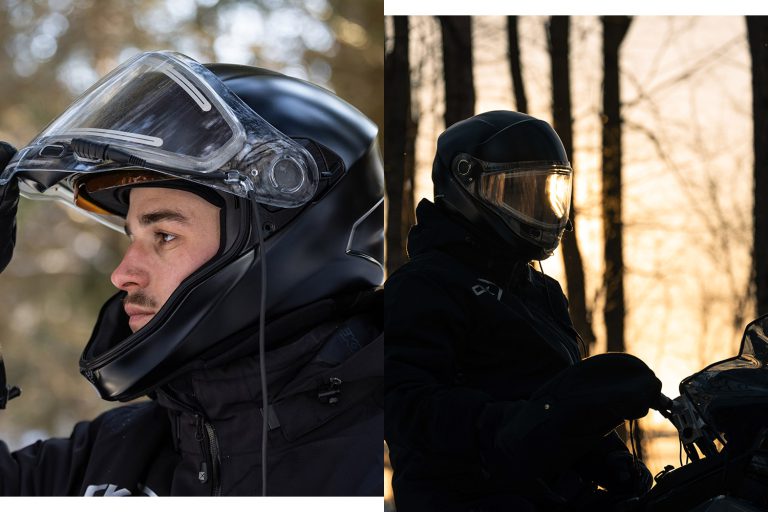
The CONTACT, which is the latest CKX helmet to hit the market, is both minimalist and functional in design and features an electric face shield with a lightweight and sleek construction that sets it apart from its competition.

The heated and oversized double lens includes a built-in strain relief and a power indicator visible at all time and features an integrated amber-tinted sun visor that helps reduce glare on sunny days so you can see clearly.

In addition to its broad field of vision, the shield opens easily to allow for conversation or to grab a quick sip of water after a vigorous ride down your favourite trail system.

FEATURES:

  • Shock resistant, injection moulded plastic shell
  • Weight: 1510g ± 50g
  • 4 shell sizes (XS-L/XL-3XL)
  • 4 EPS sizes
  • Interchange liners to reach sizes 4XL and 5XL
  • Suitable for eyeglasses
  • Electric double lens with panoramic vision
  • Power indicator visible at all times
  • Built-in strain relief
  • Oversized opening freeing the face and the mouth
  • Amber retractable sun visor
  • No face contact breath guard installed on the shield
  • Removable long chin curtain
  • Shield can be removed without tools
  • ProClip quick release mechanism chin strap
  • Inner lining and removable, washable cheek pads
  • Protective case and user’s guide included
  • Ready to receive communication system headset
  • Canadian design
  • 5-year warranty
  • Meets or exceeds DOT FMVSS218

For more information and to order, visit kimpex.com

2023 Ski Doo Expedition Xtreme 900 ACE Turbo R Overview

0

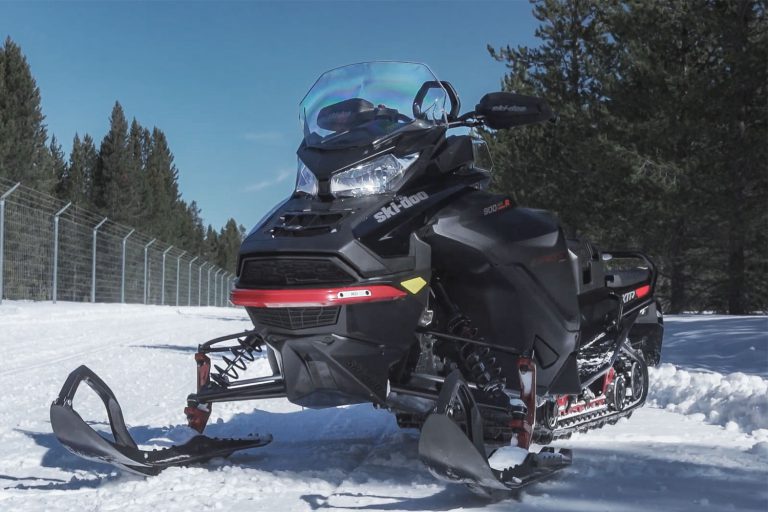
Luke walks us through the finer points of Ski-Doo’s 2023 Expedition Xtreme featuring the ROTAX 900 ACE Turbo R 4-stroke engine.

WHAT WOULD IT TAKE TO MAKE YOU SWITCH BRANDS?

0

We get asked this a lot. It’s Interesting because it’s one of the biggest questions the OEMs ask themselves. As a matter of fact, it’s in the back of every product and marketing exec’s mind from every brand every year as they lay out plans for upcoming sleds.

You see, in this business, the only way to increase profitability is to grab a bigger piece of the pie. And that pie is limited because of the relatively narrow proportions of the sno-mo-market – although there has been growth during the pandemic.

So… if you were in charge, what would you do?

Try this: Build the fastest, best riding best handling sled in the biz! Okay, both Yamaha and Arctic Cat have been on this page for several years now with the Thundercat and the SideWinder and the sales results speak for themselves – but not in an earth-shaking fashion as far as brand switching goes.

Okay then, let’s look at the possibility of building low-cost models that will get entry level customers interested in your brand – and then keep them in your fold so in the future they will buy your products instead of the competition’s.

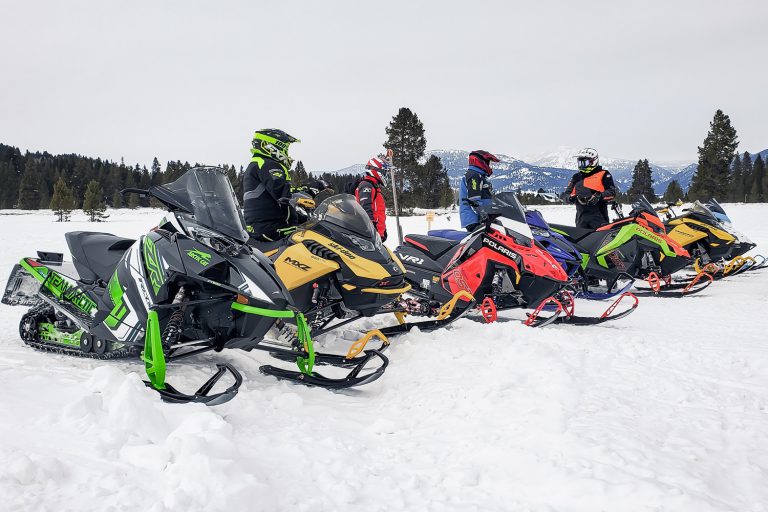
The current high-value Venom/Blast sleds, although solid entries, haven’t set the world on fire and converted masses of buyers over to their respective brands. At the same time both Ski-Doo and Polaris continue to hold or even grow their market share numbers.

Well, what if an OEM just cut MSRPs way low – and still offer their premium models with all the bells and whistles at a price that is ridiculously rock bottom low? Some OEMs tried this a couple of years ago with some early-order sleds – and although there was good activity for a while in showrooms, there was no significant, lasting gain on the rest of the market.

We think the most successful approach is to come to the market with cutting-edge brand-new technology – something the competition doesn’t offer and is the kind of tech that is completely fresh in the marketplace.

Once again, we have to look at Arctic Cat. By allowing us to get a sneak peek at the new 2024 Catalyst, all eyes were pointed straight at the Thief River Falls, Minnesota sled-maker.

This ploy has likely done much to perk the imaginations of buying customers who may be predisposed to Ski-Doo, Polaris or Yamaha. I mean, how cool would it be to show a new Catalyst off to your buds for the first time next winter? Way cool, we think.

BTW: This kind of marketing in the sno-mo-biz isn’t anything really new. Well, maybe revealing a sled this early is new, but it’s not new to bring out new tech when the stuff you already have is good. It’s the reason Ski-Doo has a Gen5 now and Polaris replaced the AXYS with the new MATRYX.

New is better, and in this biz, you better be bringing new stuff out every couple years or you’ll be quagmired at the bottom of the market. Yup, no matter how good the current model is in your brochure, you better have something radically new – whether engine, electronics, handling, ride, turbocharging… whatever.

Today’s snowmobile OEMs simply cannot sit still: you’ll stagnate to the point of no return if you do – worse yet, the competition will continue to leave you in their snow dust!!

THE SLED THAT CHANGED EVERYTHING

0

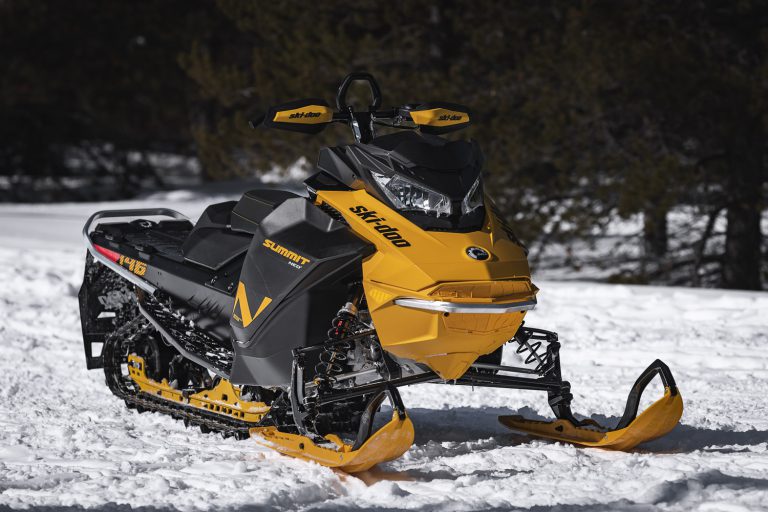
Believe it or not, the iconic Ski-Doo REV platform is 20 years old! That’s not to say the REV Gen 5 we see today is the same sled as the 2003 “Beaver Tail” REV. It is not. However, there’s a stunning amount of original 2003 REV DNA in the current G-5.

Something we find a little strange is Ski-Doo’s relative silence surrounding this industry milestone. After all it was the 2003 REV that led Ski-Doo to capture the number one market share status they’ve not only held but grown substantially over the past 20 years. Doesn’t matter, we’ll take on the job of celebrating this important event.

Why is the 20th birthday of the REV so important? In snowmobiling’s glorious history there have been a very small number of innovations that have shifted the snowmobile paradigm. Here’s my list.

  1. The front-mounted engine debuted on the original Arctic Cat Panther circa late 1960’s.
  2. The slide rail suspension. Same lineage and same inventor – Arctic Cat and Roger Skime.
  3. The Indy IFS popularized by Polaris who birthed this technology on the ice ovals in the late 70’s.
  4. The Ski-Doo “Rider Forward” REV chassis.

Of all of these innovations, none caused such a violent and radical paradigm shift in the market as did the REV’s intro in the early 00’s.

The idea of completely re-engineering a snowmobile’s ergonomics to closely resemble those of an off-road motorcycle was earth shattering. I’m not overstating this!

My first ride on a 2003 limited-build MX-Z REV 800 is an event I will never, ever forget. The whole idea of allowing the rider to make sitting-to-standing transitions so intuitive and easy made riding trails a brand new experience.

The REV allowed me to simply stand up – at 60 MPH if I wanted – and run whoops, sucker bumps and craters at previously unsafe and uncomfortable velocities. It was just way too cool.

Here’s more. After just my first pull, everything else wasn’t as good. It literally happened that fast. It was like the REV was coated in magic dust.

The way Ski-Doo packaged up the new REV was flat-out smart. The re-jiggering of every major component on the sled’s chassis required a lot of expensive tooling – specifically body and tunnel re-thinking.

Despite this challenge, Ski-Doo was able to pretty much use its Series III 800 carb engine, TRA clutch and ZX chaincase with minimal modification. That stuff is really expensive to retool at the same time as the body and chassis.

Here’s maybe the most important issue with the launch of the REV 20 years ago. The guy who had it all on the line – literally his future as the CEO of the BRP recreational products division – was being wagered here. I’m talking about none other than BRP visionary, leader, risk-taker and entrepreneur – Jose Boisjoli.

Jose Boisjoli – President and CEO of BRP since December 2003, when BRP became a standalone company.

Boisjoli is all of the aforementioned things and more. He’s as honest as the day is long and as unassuming as any leader I’ve known (and I have known just about all of them) in the powersports industry. Jose comes across pretty-much ego-less. He’s super approachable and transparent. He does not need to be pretentious – his track record speaks for itself.

What stands out about the REV’s introduction versus those other three innovations is this: There was no going back once the REV was sent to production. If it didn’t capture the market and receive resounding approval and acceptance, Boisjoli would have been in a world of trouble. However, when Boisjoli got the nod from Laurent Beaudoin – the Father of BRP (Canada’s equivalent to a Rockefeller) to pull the trigger and take the radical REV to the market, there was no going back, no “Oops, sorry about that” or any exit strategy. It was go all-in and trust your instincts.

Frankly, I know precious few individuals who have the guts to take a risk as big as the REV was. I also know precious few leaders with the instincts of Boisjoli – and the unbridled respect his lieutenants have for him.

There’s a whole lot more to this story so stay tuned for a closer look at the birth of the REV.

CAN’T WAIT TO RIDE THE ALL-NEW CATALYST

0

Obviously, this pick for my “Can’t Wait…” feature is a complete no-brainer. Everyone who bleeds green and all of the enthusiast media are drooling at the thought of getting a pull on the first fundamentally all-new Arctic Cat since the early 20-Teens.

The sled oozes cool and brings with it a claimed ten percent weight reduction. This claim leads us to believe this all-new platform – the CATALYST – is considerably lighter than former comparable ProCross models.

If this is true then the CATALYST is going to be a bonafide trail rocket in ZR trim. Shedding weight requires huge cost and lots of hard work. To move seriously into the realm of shaving weight is, for sure, a gargantuan task taking significant time and serious jing.

The centralized mass principle employed on the CATALYST chassis (in all its iterations) is paramount to taking advantage of the aforementioned weight reduction.

When the drive axle, jackshaft and crankshaft are in tight proximity to one another, the ability to throw the sled around is greatly improved and the feeling of “oneness” the rider gets with the sled is hugely multiplied.

All these nifty engineering nuances and breakthroughs are more or less expected at this juncture in snowmobile history. However, the more ethereal and visual aspects of the CATALYST platform cause us to break into a cold sweat.

The sled is genuinely radical looking and no one at Larry’s Burger Pit and Poutine will stay inside when you roll up on a CATALYST. You’ll be signing autographs.

The Catalyst has a seriously “pared down”, rationalized look that’s aggressive, serious and threatening – all at once. Simply put it’s a Bad Boy.

We’re hoping to get a chance to ride the CATALYST early in the new year. Yep – we can’t wait!

CAN’T WAIT TO RIDE THE YAMAHA VIPER!

0

It’s been a long time since we’ve had a non-turbo Yamaha PR unit. Kinda makes sense because Yamaha makes a lot of turbo Sidewinder variants and not so many non-turbo sleds.

The Viper is interesting to us because it’s Yamaha’s full frontal assault on the meat-of-the-market 600 – 650cc 2-stroke class.

I better qualify that last statement: The 600-650 2-stroke class can also be identified as the 125-135 horsepower class except for the Polaris Matryx 650. It may be as high as 140 ponies. Anyway, you see where I’m going.

The 600-650 marketplace is huge, especially in flatland, trail based markets. Yamaha needs to be in this segment and the 130 HP 4-stroke, 1049cc triple used in the Viper is among the most proven and potent normally aspirated (EFI) engines in the biz.

The venerable 1049cc triple in this proven chassis is a superb combination of strong acceleration, confoundingly intuitive handling and impressive big end performance down the lake.

Why do I say the handling is confounding? There’s no hiding the reality the Viper is heaviest in the 600-650 class. That’s a 4-stroke engine, my friends, and it makes no excuses for this reality.

However, among all the Sidewinder turbocharged variants, this normally aspirated triple is the most fun to throw around on tight, twisty and wide-open trails.

So inevitably we’ll be comparing the Viper to 600-650cc 2-strokes around here and we think that’ll be fun and enlightening all at the same time.

45 YEARS APART AND STILL COMPARABLE!

0

Recently, I was thinking about the intro of Ski-Doo’s NEO high-value snowmobile. At some point in my pondering a revelation hit me squarely between the eyes.

I have to admit the concept of and target market for the NEO is exceptionally similar to one of snowmobiling’s truly iconic models from over 45 years ago.

The 1978 Yamaha Enticer 250

Stay with me here – this is an interesting bunny trail we’re about to walk (hop?) down. When the 1977 (limited build) Enticer 250 landed, it broke the mold of what a high value, low cost snowmobile could be at the end of the 1970s.

The ET 250 in its first full-build year, 1978, came with so many innovations it was overwhelming. Start with an oil injected 250cc, 23 horsepower engine, matched die molded hood, molded rubber track with imbedded fiberglass rods, super plush molded foam seat, push to open fuel cap, long travel rear suspension set up for ultimate weight transfer, fuel and oil sight gauges, an electrical system capable of powering hot grips, and an aluminum tunnel and fenders.

The Enticer’s fit and finish was unrivaled in the industry in 1978. I won’t get into detail on how the ET 250’s innovations compared to what was considered a “high-value” sled at the time. That’s a story for another day.

Consider this: The 1978 ET 250 had a US MSRP in the $999.00 range and a CDN MSRP of $1249.00. Even by the standards of the day, in the 70’s this was crazy low. Here’s what happened. The first two years of ET 250 sales were insane. After I got my first ride on a 250 Enticer, my brother Kent and I initiated a day long phone canvas of southwestern and central Ontario Yamaha dealers and finally found an unsold 1978 250. It was a four hour round trip to get the sled and the dealer told me he had other calls from serious buyers who were on their way. We jumped in the truck and ran WOT to get our ET 250. As it turned out we barely beat another buyer to the dealership for the last one in captivity.

That first ET 250 impressed every single person who rode it and I am sure it sold more Enticer 250’s that first winter. The next winter we acquired another ET 250 and two ET 340’s then an ET 300 and on it went throughout the Yamaha model line-up for more than 5 years.

The interesting part was how many of our friends bought new Yamahas during that 5-year span. The ET 250 was a huge success for Yamaha and propelled them into the early 80’s as the most innovative, highest quality OEM in the sled biz.

The 2023 Ski-Doo NEO

So, here’s where the story gets more interesting if you are too young to remember the Yamaha Enticer 250. The new Ski-Doo NEO (for this diatribe we’ll stick with the base NEO not the NEO +) is an amazing high value snowmobile with a ton of innovative features you would never see on a sled with an MSRP this low in MY 2023.

The NEO is not a three quarter sled. It is built on Ski-Doo’s Gen 4 platform with a 120 by 14 wide, one-inch lug track. It uses a built-for-NEO single shock skid with lots of travel and Ski-Doo’s proprietary RAS-X front IFS.

There’s a full-on hydraulic brake with a braided steel hose and a spin cast torque-tower primary clutch and big-sled secondary. The sled uses Ski-doo’s tunnel-sandwich cooling system.

Underhood, there’s a Rotax cylinder-reed 600cc EFI 40-HP oil injected, E-start, 2-stroke twin with RER. The riding position is slightly narrower for smaller riders but still pure G-4 and the sled looks just like a Gen-4. The uninitiated could mistake it for a 600 E-TEC MX-Z.

The entire issue here and the point I am about to make revolves around the value these two sleds represent. The 40-HP NEO retails for $6,399 in the US and in Canada for $7,999. These are very low MSRP’s considering the features the NEO brings to the table. Way back in 1978 the ET 250 represented similar value. Nothing came close to the ET 250 for ultimate value 45 years ago.

The success of the ET 250 is rooted in more than just snowmobile sales. It was about new people and returning people picking up an ET 250 and getting (back) into snowmobiling. It was also about brand building. Today there are still snowmobilers who bleed Yamaha and have their roots in the Enticer series.

Ski-Doo deserves to do well and make hay on the NEO. This sled is bringing back riders and getting lots of attention from new riders. The demand for NEOs this model year has been like a tsunami. Simply put, if SD had built twice as many NEOs there likely wouldn’t be enough to go around.

So, there you have it. Turns out a story about two snowmobiles spanning more than 45 years has tremendous similarities. Let me know what you think.