Home Blog Page 42

SKI-DOO SAYS RIDE RESPONSIBLY THIS WINTER

BRP Inc. (TSX:DOO; NASDAQ:DOOO) is committed to promoting responsible riding and increasing its efforts to empower all riders in the powersports communities to ride responsibly and rethink the way they approach safety, environment, and riding etiquette.

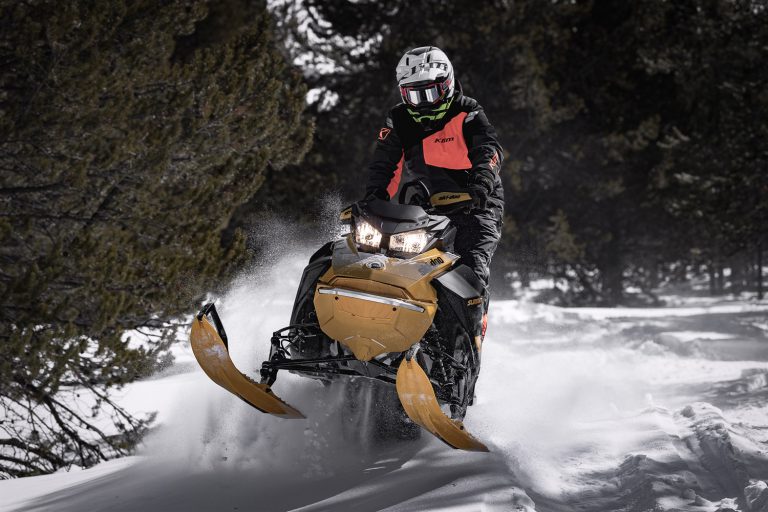
Ski-Doo, a BRP brand, is doing that by engaging riders on four unique fronts focused on improving rider safety and preserving our sport for years to come: Take the Pledge, Avalanche Awareness Seminars and Safety Partnerships, Snow P.A.S.S., and International Snowmobile Safety Week.

“As a leader in the snowmobile industry, we have a responsibility to grow the community of responsible riders, educate our community on preserving our winter playgrounds and generate positive experiences. Every action and initiative we take at Ski-Doo is to ensure our sport flourishes today and for future generations of riders.” said Jérémi Doyon-Roch, Manager, Global Marketing, Snowmobile and Cross Brand Initiatives at BRP. “In addition, by working with local organizations, associations and clubs throughout all of our programs, we are helping to ensure riders know where they can safely enjoy the snow and, most importantly, return home to do it all again the next day.”

Take the Pledge for our Playgrounds

Ski-Doo calls on the entire snowmobiling community to “Take the Pledge” ⎯ a collective effort to preserve access to trails on private and public lands and backcountry winter playgrounds. Trespassing and illegal off-trail riding is threatening snowmobile access.

The brand encourages all snowmobilers to be responsible, and pledge their commitment to ensure the sport continues to flourish today and for future generations of riders.

Strength in the Knowledge

Ski-Doo believes in creating safe experiences for all riders and embarks on its fourteenth year of backcountry rider education with free avalanche awareness and avoidance seminars for snowmobilers.

From October 4th to November 30th, riders of all brands, at all levels of experience, are welcomed and encouraged to attend the in-person events with their fellow backcountry explorers to increase or refresh their knowledge in a fun atmosphere.

In addition to offering free seminars, Ski-Doo partnered with associations in Canada and in the United States, and lent 14 snowmobiles last year, and will again this year, to help provide avalanche reports and real world data to all riders. View the video here to learn more.

Protect. Access. Sustain. Support.

For a second year in a row, the Ski-Doo Snow P.A.S.S program returned to help fund community-led projects that improve the sport of snowmobiling. As of today, it has provided $881,000 CAD in funding towards more than 175 projects. In partnership with its incredible network of dealers, the grant program offers up to $5,000 in matching funds to grassroots associations and clubs engaged in the many activities that ensure the health of the sport.

The 2023 International Snowmobile Safety Week

From January 14 to the 22nd, Ski-Doo and BCA will piggyback on safety week awareness messages to educate the riders on code of conduct to protect the social acceptability of the sport. To do so, ambassadors of the brands will be asked to create and share content with their communities, and reinforce the key pillars of Responsible Rider: safety – get the gear, environment – get the forecast, and etiquette – get out of harm’s way. Stay tuned on Ski-Doo social platforms to view the content.

About BRP – We are a global leader in the world of powersports products, propulsion systems and boats built on 80 years of ingenuity and intensive consumer focus. Our portfolio of industry-leading and distinctive products includes Ski-Doo and Lynx snowmobiles, Sea-Doo watercraft and pontoons, Can-Am on and off-road vehicles, Alumacraft and Quintrex boats, Manitou pontoons and Rotax marine propulsion systems as well as Rotax engines for karts and recreational aircraft. We complete our lines of products with a dedicated parts, accessories and apparel portfolio to fully enhance the riding experience. With annual sales of CA$7.6 billion from over 120 countries, our global workforce includes close to 20,000 driven, resourceful people.

brp.com

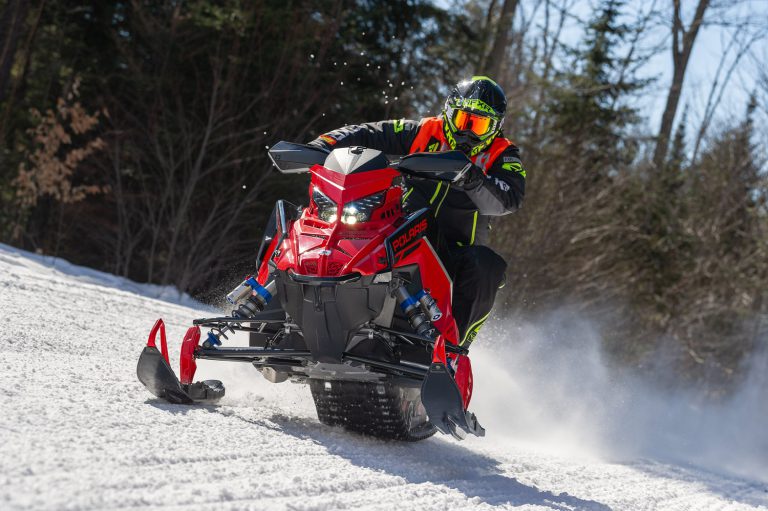
2023 POLARIS INDY BOOST VR1

0

Yeah, I’ve already ridden the Boost, once in Cook, Minnesota last January and again in West Yellowstone in February.

I’d say I was impressed but that just falls way short of describing the reality of squeezing the loud handle while sitting on that much power.

However, both these riding locales are not in my backyard and I really want to sample the new trail-targeted turbo 850 Patriot Indy VR1 on familiar trails and lakes.

The reason I want to ride the new VR1 Boost on our trails here at SnowTrax/Supertrax World Headquarters is this: I want to experience (again) what felt like lightweight handling in a turbocharged sled.

It’s not that this wasn’t obvious on my first rides but simply put, it’s what I need to expand my frame of reference in terms of how this comparatively lightweight turbo plays out.

If you’re talking turbocharged snowmobiles built for trails then the Indy Boost stands by itself as the only 2-stroke powered offering in a fairly busy pack of 4-stroke turbos from Ski-Doo, Arctic Cat and Yamaha.

It’s no secret 4-stroke sleds are heavier than 2-strokes, but throw a turbocharger on a big displacement 4-stroke and that weight becomes tangible to experienced riders.

What I experienced with the Indy Boost runs counter to the current weight penalty you feel with 4-stroke turbos.

Unfortunately, it looks like I may have to wait until January to experience the Indy Turbo. Polaris has to satisfy its paying customers before members of the media get their gloves on a Boost and we totally understand.

I can tell you this: Cook, Minnesota is not at any substantial elevation so when I rode the Boost there last January it was in sea-level grade air. The surge of power from the Patriot 850 turbo reset my seat-of-the-pants meter and left me mostly speechless. The power was truly impressive.

So, stay tuned and as soon as we get our hands on a VR1 Boost we’ll report back.

2023 G5 RENEGADE X-RS WITH SMART SHOX

0

I know Smart Shox has been available for over a year from Ski-Doo and to be completely transparent we had a limited build Gen4 Renegade with Smart Shox over a year ago. However, there’s a small wrinkle to this story.

The Smart Shox equipped Renny did not have the Smart Shox compatible ECU “chip”. Why? The same reason about a bi-jillion cars and trucks are running around missing “chips” which run all manner of accessories: Supply chain and Vendor problems!

So… we rode a Renny X-RS all last season that was defaulted to a “get home” setting on its adjustable KYB dampers. Let me tell you about the “get home” default compression damping setting. It feels like the shocks are filled with cement instead of oil!

This, of course, is not anything like the ride quality we experienced at Snow Shoot. Knowing Ski-Doo’s Smart Shox are revolutionary in their ability to semi-actively adjust to terrain you are riding over, we did not pass any opinions on the PR model Renegade we rode last winter.

This is why I can’t wait to ride the new Gen5 Renegade X-RS with Smart Shox (with a chip installed!) What we experienced in Yellowstone was nothing short of remarkable when riding deep and fast into moguled, choppy and rolling trail surfaces.

To make this all ring true you must realize Ski-Doo’s current rMotion 137-inch skid provides the best ride in the biz without Smart Shox. One would think to discern an improvement over the current rMotion set up would require a huge improvement in overall ride quality. Correct?

Here’s the beef. Smart Shox do tangibly improve on the rMotion’s amazing compliance. It’s the kind of improvement that has you getting off the sled, standing back and saying: “This can’t be right, can it?”.

At the end of the day – to use an overworked expression – I need to get on a Smart Shox equipped Ski-doo and let it swallow some high quality, gnarly trail surfaces. Like I said at the beginning of this commentary. I can’t wait!

SNOWMOBILE MARKET UPDATE

0

To say the snowmobile business has changed over the past two-and-a-half years would be a huge understatement.

Entering model year 2023, the industry is selling oh-so-close to 100-percent current model year sleds. This means the OEMs have not been “carrying” unsold past models all summer. In fact, in a number of situations OEMs are unable to meet consumer demand for 2023 sleds.

Last spring’s early order programs were categorically the most successful programs of this type ever run by the manufacturers. Essentially, model year 2023 was sold out in a matter of days. Yes, the OEMs are building some 2023 sleds for in-season sale, however, that number is – as we’ve been told – relatively small. Factor in this stunning reality: There are literally no non-current (MY 2022 and older) snowmobiles lying around at the factories or at dealers.

Consider how good this is for the four sled-makers. They are building an enormous percentage of their current 2023 sleds for an end user with a name and address. The sleds are deposit-paid and when they arrive at their respective dealerships they get paid in full by you. No, or very little, messy and expensive wholesale financing costs are required. No carry-over costs for 2022’s either.

The specter of wholesale financing is a costly, much maligned and genuinely disliked part of the retail snowmobile business. It is a cost that’s been built into the actual manufacturing and marketing budgets of the OEMs for decades. However, not anymore. Or at least not this year.

It’s no secret to any of us that the COVID lockdown induced “stay in your own country” mentality the past two years has created demand for all kinds of luxury items. Here’s a weird one: The hot tub industry has not been able to meet demand for hot tubs. People couldn’t go on their warm weather vaycays so they upgraded their homes with stuff like, you guessed it… hot tubs.

The powersport industry as a whole has been under the same sort of never-seen-before demand for snowmobiles, ATVs, SxS, motorcycles, boats, RVs, motorhomes and more. People work to play and when the lockdowns took away some of our freedom, people responded with the highest demand the industry has ever seen for new product.

The big question is this: Is this sustainable? More succinctly, can this go on for another year or years? It is a great question and as yet it cannot be answered.

The very first issue going forward is an age-old one. Many OEMs in this industry ran their businesses on the principle of overbuilding every year. In other words, build more than you can sell this year and allow some crates to stack up at the factory and at dealers. Wholesale financing costs of carrying these past models ahead for a year was mostly covered by the manufacturers who would then load up dealers with a mixture of non-current and current sleds at the annual dealer show.

This kind of approach to selling all powersports vehicles was entrenched in the industry. It was the way things operated. Now, as a result of COVID, the OEMs are openly expressing it’s a new day in the business and that it doesn’t have to go back to the old model if all four of them can resist the temptation to overbuild.

However, there is a fly in the ointment: Inflation and the predicted arrival of an economic recession. If the economy slides backward to a minimal degree the business’s excellent demographic profile is strong enough to sustain the good times. However, if there is a serious recession in the free world it may mean the OEM’s and dealers could be forced to carry (wholesale finance) more unsold sleds in inventory and go back to the old model.

There are other significant forces at play here as well. Is it possible the amazing spike in sled interest might slow as people go back to spending their money on fair weather vacations and other recreational activities? Dunno for sure.

I mentioned that our demography is a significant contributor to the success the snowmobile biz has and is still enjoying. Snowmobilers are avid and committed to this winter recreation. Overall they have the money to participate in the sport at a very high level.

Another distinctive is the high percentage of self-employed participants. It’s a great place to do business because of the relative financial strength of the snowmobiling public.

If I did not answer your specific questions here it’s because this whole situation is largely moving in uncharted waters. I can’t, and a surprisingly large number of industry participants cannot definitively say what’s next.

OFF TRAIL? NO TRAILS

0

Time for another trip into the reality of the cost associated with off-trail riding in areas where it is prohibited.

I know, I’ve been harping on this topic for a long time. About 10 years actually, when you count the editorials and stories we’ve covered in Supertrax and the online contributions on this website we’ve made.

In any case, I am not convinced we are making enough progress in this department. The International Snowmobile Manufacturers Association (ISMA) launched a public awareness campaign called “Take the Pledge” which was based on snowmobilers taking responsibility for spreading the word about off-trail riding to their peers and pledging to not transgress themselves. It was, well, a public awareness campaign.

Did it or any other associated communication about how serious the problem of trespassing is in our sport right now make any difference? Some sanctioning groups felt the fact a lot of people got the message – albeit force fed – helped with the problem.

What do I mean? The Ontario Federation of Snowmobile Clubs (OFSC) made it mandatory – when snowmobilers were contacting the OFSC – to listen and watch a video before being able to move forward with a Trail Permit purchase.

Sure, the number of views the video got was impressive. You know what else is impressive? The number of crossover on/off trail snowmobiles being sold that carry a marketing message expounding the free-riding capabilities of these models.

To the OFSC’s credit they felt their home-grown video and awareness campaign helped trim some of the trespassing associated with free-riding numerically. Unfortunately, it’s literally impossible to statistically quantify what “trim” represents.

So, here’s the skinny. I’m not going to come down on the OEMs for continuing to produce more and better X-over snowmobiles. Not a chance. Why? Because the OEMs are responding to you – the buyer – and your preferences.

To fundamentally stay in the snowmobile manufacturing biz a manufacturer absolutely must build and offer for sale snowmobiles that meet the market’s preferences head-on. That my friends, is called “Market Driven Capitalism”.

Here is the root problem. It’s the continuing profound lack of understanding too many snowmobilers have about the consequences of off-trail riding – particularly in flatland, trail-oriented locales.

Here’s what continues to go on: Despite exposure to the ISMA promoted video, the serious consequences of riding off-trail on private land persists. In some jurisdictions it’s getting worse. What does worse mean? It means private landowners with trails on their property are saying loud and clear they’ve had enough with snowmobiles riding off the prescribed trail on their lands. They’re kicking us off their land in both the US and Canada.

This reality has been our Achilles heel for too long. We simply cannot sustain what is considered to be the off-road industry’s largest and most developed interconnecting trail system in the world. Let me say it again. “We can’t sustain persistent off-trail riding”.

Yes, there are places in some jurisdictions where off-trail riding is allowed on certain lands. Specifically, there are some places to free-ride in the US and Canada. However, an ever-increasing number of free-ride predisposed riders are continuing to trespass on land with prescribed trails crossing them. This problem continues to be the biggest threat to organized snowmobiling’s continued viability. Sound serious? It is.

There is nothing wrong with free-riding on lands where you have permission. Conversely, it is absolutely the sno-mo-equivalent of suicide to free-ride on public or private lands where free-riding is not allowed. This goes for any land with a marked and groomed established snowmobile trail. No mixing of words here. You must stay on the prescribed trail at all times. You must not deviate from this discipline.

If you own a X-Over sled do some research this fall into the availability of land where you can legally free-ride. It’s out there. Trouble is its way easier to just follow the groomed and marked trail until you reach a clearing, pull off the trail and rip it up. Isn’t it?

Invariably, that kind of action produces a zero end game. It’s happening right now and it is going to continue to happen if we don’t pull up our snow pants and get serious about protecting the incredible snowmobile trail resources we have in North America.

Listen and watch the ISMA “Take the Pledge” video. Tell your friends to read this article and talk meaningfully about altering your riding parameters to not include free-riding – unless it is specifically allowed.

It’s a big challenge.

WILL THIS MAKE A DIFFERENCE?

0

In a snowmobile marketplace characterized the past two years by a dramatic inability to supply enough product to satisfy buyers, there are some exceptionally interesting all-new vehicles we might not have expected this fall.

The past two seasons have seen wild increases in new sled sales as buyers simply could not get enough snowmobiles to satisfy their needs. This led to a “take what you can get” mentality for both new and used sleds.

This never-seen-before reality has put the sno-mo OEMs in an enviable position. Truthfully, I can’t ever remember a time when there have been literally no unsold, non-current sleds.

Here’s what I think is a little weird, but exciting nonetheless: Unexpectedly, there is a significant amount of all-new 2023 product launching into key segments this season. Here are two:

THE SKI DOO NEO PLATFORM

The issue here cannot be overstated: Snowmobiling desperately needs more credible, truly value-priced models to inject increased participation and generate growth. Yes, the OEMs are selling snowmobiles in relatively large and highly profitable segments and these sales are occurring at near stratospheric price levels.

Most of a sled-builder’s profit comes from selling big power, full-featured models. The lower you go on the price scale, the less money OEMs make. It’s a fact that low MSRP sleds are a lot less profitable as a percentage of the revenue they generate.

I want to be careful in saying this but the new NEO series from Ski-Doo is from every measurable metric the sled we’ve been waiting for. The NEO is fully equipped with a 600cc liquid cooled, twin cylinder EFI engine, real clutches, full size dimensions, up-to-date front IFS and a never seen before long travel, single shock skid.

There’s a Brembo hydraulic brake, a 121-inch track and high quality bodywork that comes right from the G4 platform. Most importantly, check the MSRP of the NEO and NEO Plus.

These sleds are priced at a level that defies common sense but underscores how an OEM with the biggest market share, producing the most units, is capable of building a realistically equipped sled and selling it at an amazing price.

For the record, the NEO was a complete sell-out in just the first few days of Spring Break last April. I predict Ski-Doo will not be able to meet demand for these sleds again this year. Is this the snowmobile equivalent of the Sea-Doo Spark Personal Watercraft? Stay tuned.

THE NEW POLARIS S4

Suffice it to say the S-4 engine package is available in multiple models and its advent is significant in a big way. This new 4-stroke ticks virtually all the boxes, including every important piece of technology needed to compete with 4-stroke market leader, Ski-Doo. At first sight I quickly realized Polaris has not taken on this important segment without great thought and attention to detail.

The S-4 engine is – as expected – a derivative of the Pro-Star engine series used in Polaris’ off-road products. This makes great sense as Polaris has a stranglehold on the off-road biz, particularly the Side X Side segment.

This 1000cc Pro Star variant has a stellar rep for power and tough-as-nails durability. Most importantly, the engine can be produced in snowmobile trim, all the while piggybacking economies of scale created by the off-road division’s huge production volumes.

What needs to be emphasized here is this: Polaris is credibly in the 4-stroke snowmobile biz in a big way. How long before they add a turbocharger and produce 130, 150 and 180-hp variants? The bulk of the development work required to do this has already been done in the off-road biz.

In its first iteration, the new S-4 sits solidly in the 80 to 90-hp 4-stroke segment. This is a smart place for Polaris to start its 4-stroke program because, clearly, Ski-Doo sells a ridiculous number of ACE 900 95-hp sleds.

So, will these two technical developments generate robust sales to new buyers and brand switching? Hard to answer decisively at this point in the sales season. Because of COVID, new snowmobiles have sold to the bare walls the past two seasons.

With the market pressures of the pandemic now usurped by a relentlessly predicted recession, it’s hard to know what the next six months will look like and more importantly what will end up driving sales in MY 2023.

ENOUGH ABOUT “FAST” – LET’S JUST HAVE SOME FUN!

0

For as long as we can remember “fun” when it comes to snowmobiling always refers to mega engine performance: Bigger displacement, bigger horsepower, the turbocharging of already blistering fast engines, life-altering top-end speeds and blinding acceleration.

Yes, you’re right, we’ve pushed this imagery for years and have been dead-guilty of poo-pooing snowmobiles that have less than the maximum amount of power under their hoods. The fact is, we’ve been driven by your demands as much as by ours.

Snowmobilers love power and it’s one of the reasons sales are so strong amongst sleds that meet that somewhat narrow, power-hungry criteria. Power is something every snowmobiler craves and it’s the reason why you see grandmothers ordering brand new turbocharged touring sleds.

Okay, no guilt trip here. We love power, you love power – even grandma tourers love power. So, what’s wrong with that? Nuttin’, is what!

Just to blow-out your perspective though, have you tried out any of the new generation of lesser engine performance sleds out there? I’m talking sleds like the EVO, BLAST, MX-Z NEO and Yamaha’s SXVenom. Wait! Keep reading! We have a point here.

Yes, all of these sleds max out at about 65-horsepower, even less – and that isn’t enough power to cause concussive cranial acceleration or induce nosebleeds. No claim has ever been made that this is the intention of these models; rather their whole reason to exist is about “fun”.

No, we’re not talking about the kind of fun you have hitting triple digits out on a lake or blasting past your buddy’s kitted turbo SRX. As a matter of fact, the aforementioned sleds absolutely will not deliver the same level of fun when ridden with big-inchers and hypersleds.

We’re talking about a different type of fun that includes riders of all different ages and varying experience levels on power matched equipment experiencing snowmobiling together. We’re talking about fun that includes challenging your skills to ride in deep snow without climbing a near vertical precipice, to outhandle your buddies on a local snowmobile trail at legal speeds and to do all this while sipping tiny amounts of fuel.

The fact is, when you’re on the trails, riding any of these snowmobiles is every bit as much fun as riding a hyper-powered sled on the same terrain. Any trail speed you give up – and, surprisingly, it isn’t really that much on tight trails – is gained back in the gobbed-smacked realization you’re actually going a lot faster than you expected.

Each of these sleds is offered with excellent chassis engineering, decent suspension tech and enough comfort features to make a long day’s ride achievable. The very fact an experienced rider can toss any one of them around with abandon, makes them even more appealing.

They’re light and nimble, with agile handling that just dares you to have maximum fun. A seasoned rider can ride with a less experienced spouse or one of the kids and have an incredibly enjoyable day of giggles, whether riding on-trail or off.

Yes, back at work on Monday your macho image around the water cooler might take a hit, but you can find comfort in the fact you have experienced all that snowmobiling has to offer – and what you experienced was unembarrassed, unbridled, no-excuses “fun”!

POLARIS RECALL UPDATE

0

By now you’re familiar with the Polaris snowmobile recall affecting some 230,000 Polaris MATRYX, AXYS and certain Pro-Ride models manufactured and sold since MY 2013.

Our last update on this issue contained pretty broad strokes of information designed to notify Polaris owners of the affected models Polaris has imposed a stop ride/stop sale order on and that the company was working at full speed to announce a fix, a time table and how to find out if your Polaris was part of the Stop Ride/Stop Sale communication.

As of October 20th a validated repair is available initially on an allocation basis. Owners of affected Polaris snowmobiles have been notified repair kits are available including repair instructions, and training materials.

Dealers have the ability to order repair kits now. Initially kits will be shipped to dealers on an allocation basis. If you are not sure if your snowmobile is included in this recall because you’re a second or third owner you should contact your local authorized Polaris Snowmobile dealer and have your snowmobile’s VIN (Serial Number) in hand.

If you received notice from Polaris your snowmobile is included in the repair you should immediately contact your authorized Polaris Dealer and arrange a time for this free service to be done to your snowmobile.

Under no circumstances should any owner attempt to perform this work. It must be done by an authorized Polaris dealer.

Equally important is not attempting to run your snowmobile – even to load it to take to your dealer for the recall work. If you absolutely must run the engine fill the snowmobile with fresh gas before attempting to start the engine.

As well as implementing the fix on the past model snowmobiles identified here, Polaris has addressed this issue on MY 23 Snow Check snowmobile models currently in production. Shipping of these new sleds resumed in October.

The message hasn’t changed much since our last update on this issue. However, with the repair kits being assembled and shipped regularly, as parts come available, the goal line is now clearly in sight.

WHAT’S NEW, WHAT’S NEXT?

0

About five years ago Ski-Doo had an interesting byline associated with the company’s marketing and advertising. Remember this: “What’s New Is What’s Next”? When I first read that catchy byline I paused for a moment to digest the real meaning of the phrase.

Go ahead and do as I did and you’ll get to the same spot. The byline is 100-percent accurate. What’s new in the sno-mo-biz is precisely what is next. There’s little doubt some of the stuff we’ve seen on the ground for model year 22 and 23 is definitely “new”.

From a technology standpoint you’ve got semi-active suspension with Ski-Doo’s Smart-Shox technology. A similar system that’s a little less developed right now is available from both Arctic Cat and Yamaha. Electronic “connectivity” is increasing every year. Polaris 7S and Ski-Doo’s latest nav system are pushing the envelope of what a cold weather recreational vehicle like a snowmobile can do when technology is integrated. Turbocharging is rampant in the sport right now. When it comes to boosted induction, nothing is more interesting than the Polaris Indy VR1 Boost 2-stroke turbo for trails and Ski-Doo’s 850 2-stroke turbo for the vert market.

Okay, that’s a quick trip around the “whats new” technology aspect of snowmobiles circa 2023. I have more thoughts on what’s next – actually what’s next from the big vantage point. So, seriously – what is next?

We have 180 to 200 horsepower production snowmobiles equipped at the factory with turbochargers. These sleds eclipse the performance of aftermarket modified sleds popular just five years ago.

We have mountain sleds with 3-inch lug, 175-inch tracks, which in the hands of an experienced pilot can literally climb until you run out of mountain. These sleds – in many cases – are unstoppable.

We have a growing fleet of entry level sleds which appear to be carrying lower prices with each subsequent introduction. There is truly remarkable value and credible trail performance in these targeted-at-newbies snowmobiles.

So, here’s my question: What’s the next big thing? Honestly, it’s getting harder to predict where we might be going through the next decade. Let me say this first. I am convinced at this writing electrified sleds are not the next big deal. They will and are entering the market but until they can go 175 miles (280 kilometers) without a charge this method of powering a modern sled will remain useful only to specialized operators.

What’s really happening is this. The snowmobile marketplace is among the most “mature” off-road businesses. Snowmobiles have been around for a long time and OEMs have been able to respond and develop a plethora of variant snowmobiles and ground-breaking tech. Snowmobile makers have been doing this – as I said – for a long time.

Look at emerging SxS off-road platforms and you’ll see segment breaking vehicles are introduced regularly. That’s because the SxS marketplace is still very young. There are lots of places for OEMs to insert new and innovative, targeted products.

So, what’s next? Maybe you have some thoughts on this topic? If you do let me know what you think is next for the sno-mo-biz.

TURBO FEAR

0

As factory turbocharged induction continues to spread in the sno-mo-biz, you have to accept the reality a substantial number of high performance snowmobile buyers may have some anxiety about laying down copious jing for this technology.

What do I mean by anxiety? For years hypersled buyers have been satisfied to accept that if you trade-in your EFI 600 on an 800 you will go faster. Same goes for trading in your 800 for an 850. More cc’s equal more power equals more speed up Kevlar Lake. Simple.

The equation is different today. Yes, the 4-stroke turbos currently in play from Ski-Doo, Arctic Cat and Yamaha have been generally easy to understand by shifting the power metric to horsepower rather than cc’s. Ski-Doo has offered the ACE 900 4-stroke turbocharged triple in 130, 150 and 180 HP variants. Pay more and you get more HP. Again, simple.

Where it gets complicated and maybe a little scary is when aftermarket tuners tweak these 4-stroke turbocharged triples with the use of a waste gate controller.

This is pretty standard stuff in the automotive aftermarket and for the most part the guys who own sno-mo-4-stroke turbo powered rides know what they’re getting into. In the case of the Yamaha triple turbo used in both the SRX and the T-Cat there is a high degree of confidence in the durability of these engines even with a tweaked waste gate controller.

So, with more turbos being offered than ever before in this biz do you want to jump in and do a waste gate modification or have someone else do this kind of steroid injection on your shiny new Sno-Bullet? It’s widely accepted that high performance sled buyers are the most prolific modification buyers.

Truthfully, back in the day, the modification of choice for power crazed snowmobilers was an aftermarket exhaust system. I don’t mean an aftermarket silencer affectionately referred to as a “can”. Cans are still very popular and relatively easy to install. I’m talking about the installation of full-on dual and triple expansion chambers.

Sadly, the aftermarket pipe business has all but disappeared mostly because of across-the-board implementation of EFI, SDI and DI fuel delivery along with EPA emission mandates. Thankfully, there’s an easier and relatively cost-efficient way to get more power if you’ve got a turbo: An adjustable waste gate controller.

With the recent arrival of factory-built turbocharged 850 2-stroke twins, the plot thickens. These engines from Ski-Doo and Polaris deliver righteous performance with little weight penalty and no discernible drive-ability issues whatsoever. They both produce 165 to 170 (arguably) HP without turbochargers and when using what amounts to a very small amount of boost – just three pounds on the Patriot Boost Indy – those three pounds of boost push available HP upwards almost 15 percent. Not an insignificant number.

Will the aftermarket produce waste gate controllers for these new generation 2-stroke turbo engines? Yep. In fact, this work is likely underway right now. The aftermarket will never shy away from an opportunity to tweak new technologies and offer the public instant HP.

Truthfully, if there’s anything to fear about turbos or turbo-enhancing mods in this proliferation of turbocharged power for snowmobiles it’s this: Manufacturers Retail Suggested Prices. The new fleet of turbocharged snowmobiles (both 2-stoke and 4-stroke) are among the most expensive sleds we’ve seen in the history of the sport.