Home Blog Page 314

More About The Apex Yamacharger

0

By Kent Lester

We forgot to mention the best part about the Yamacharger. Not only does it ramp up the peak horsepower of the Genesis, but it can be installed without having to re-map or re-chip the Apex’s EFI processor.

Furthermore you don’t need to add high performance or non-restrictive pipes (you can do it if you want) to get the horsepower increase.

The whole kit is super sano and comes with molded plastic underhood plumbing routing pressurized air into a G-Force provided airbox. It all fits under the Apex’s bodywork so slick and unobtrusively it never hints to your pals you’ve added twenty pounds of horsepressure.

Here’s what we don’t know:

1. How much boost the Yamacharger actually makes and when it comes in.

There appears to be no waste gate so it’s likely making boost right off idle, although not as much as a conventional exhaust driven turbo.

2. The final turbo RPM the charger is actually spinning at full whack.

We initially thought it was only 10 grand (same as the crank speed) but it could be more if the compressor vanes freewheel.

Sure works, though.

WHY THE SKI-DOO 800 E-TEC WILL LIVE

0

By Kent Lester

We’ve been dealing with rumors about a new 800 E-TEC so long now it seems like the drum has been beaten to death.

Here are a few facts, for a change:

First, there’s a real and very serious need for Ski-Doo to offer this engine in MY2011. High performance Ski-Doo people are not about to ante up for another carbed PowerTEK mill in any volume again in 2011.

We’ve seen many diehard Ski-Doo performance buyers who would normally ride nothing less than an 800, opt for a 600 E-TEC this year just because of its great mileage, trick tech and considerable power.

Second, everything is there to make this engine work. There’s absolutely nothing wrong with the current 800’s liquid cooled cases and the transfer of technology from a Ficht 600 to an 800 is practically an engineering no-brainer.

We think all the attributes of the 600 will make for an improved 800, without question. It will run cleaner, have better throttle response, lighter throttle pull, be less ragged in its power delivery (yes, sorry Ski-Doo saints, the 800 P-TEK is a ragged engine with plenty of vibes and raw-edged manners) and get segment leading gas mileage.

Finally, bragging rights are at stake. While Ski-Doo has held the 800 E-TEC back for one year too long, the competition has been wide awake and watching. In 2011 and 2012 there will be some slick engine technology from the others and it’s going to make Ski-Doo a back shelf company if it doesn’t step up.

Leadership is just that. First to the start line, first out of the gate and hold it wide open into the first corner. If Ski-Doo doesn’t git ‘er done, someone else will and they’ll be looking at taillights for another year!

CLASSIC SNOWTRAX SEGMENTS ONLINE

0

If you’re looking for some classic segments of SnowTrax, go over to snowtraxtv.com now and click on “Ontario Destinations” on the Woody’s Video Portal.

You’ll find great features from the SnowTrax crew including one from legendary creator of SnowTrax himself, John Massingberd.

Relive the episodes that captured your interest from previous seasons and see why you should Go Ride Ontario.

Visit www.snowtraxtv.com to watch these and current episodes of SnowTrax featuring the RUSH documentary! All available for free 24 hours a day!!

ARCTIVA INSULATOR SOCK

0

There are few things snowmobilers like less than being cold while riding. Plus, if your wife or girlfriend gets a chill while out on the trail, your day is pretty much shot!

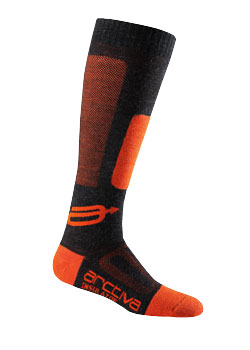
One of the most effective and affordable ways we’ve discovered of combating the cold is with Arctiva’s Insulator sock.

This isn’t a plain old ordinary gym sock. It’s made from Merino wool so you know its going to keep your toes toasty and its Coolmax lined to wick away moisture to keep your feet dry.

The thing that’s unique about the design is its multi-panel make-up. Oddly, its more fitted than an ordinary sock and actually stay up so it doesn’t bunch up or slide down leaving skin exposed or causing discomfort while you’re focusing on the blur of pine trees whizzing past you.

We’ve worn the Insulator socks in minus twenty-Celsius temperatures (-4 F) on 100-mile rides without experiencing any discomfort. When paired with a good boot, you can rest assured your feet will stay warm.

Pair these socks with an Insulator jersey and pants for the ultimate protection from the cold in sub-zero temperatures.

Visit www.arctiva.com to find your perfect combination.

Ski-Doo MX-Z E-TEC 600

0

Technical Take-Away: Engine Efficiency

We’ve written much about E-TEC the last 20 months or so and Ski-Doo’s latest 2-stroke engine technology continues to impress us with its incredible EPA cleanliness, astonishing fuel economy and impressive power.

When it comes to 2-strokes, no one is on the same game board as Ski-Doo and likely won’t get there anytime soon.

The keynote technology with E-TEC is direct injection. DI uses similar engine mapping principles to EFI or SDI systems and even a series of sensors to report pertinent data on throttle position, engine load and temperature back to a common computer processor.

The difference is that E-TEC has its injectors positioned at the very top of the combustion chamber on the cylinder head. These unique voice coil activated injectors are programmed to inject fuel within a 15-degree window of the 2-stroke cycle, at the precise, optimum millisecond of scavenging.

The results are threefold: A very strong power stroke, a very clean and thorough burn and the lowest fuel-to-oxygen-ratio possible. The last benefit means you use less fuel to get the same pop you would with a higher ratio of fuel-to- air.

The 600 E-TEC also features a liquid cooled crankcase. This is important technology when you’re dealing with extremely lean burning 2-strokes (Remember, all the fuel is being injected at the top of the engine – 2-strokes normally scavenge their fuel from the crankcase upward, via transfer ports).

On a DI engine, because there’s no gasoline getting into the bottom end to cool it, crankcase temperatures skyrocket. By liquid cooling the engine’s bottom half as well as the top, temperatures are kept at acceptable levels and the engine’s lifespan is much more secure.

As mentioned, we’ve had about 20 months of real world testing with E-TEC and, despite it’s impressive beginnings, it continues to get better and better. Fuel economy is absolutely amazing – our E-TEC 600s have all reset the dial on mileage figures we originally thought snowmobiles should be able to get to.

2009 E- TECs were remapped from the original prototypes we rode and, with a very slight compromise in gas mileage, delivered class leading performance. This engine already exceeds 2012 EPA standards and is raising the bar very high for the competition.

We’re waiting impatiently for more E-TEC engines to arrive on Ski-Doo’s roster – especially an 800 E-TEC.

Click here for specs

YAMACHARGER IS THE REAL DEAL!

0

Supertrax had the opportunity to ride a 2010 Apex a couple of weeks ago equipped with a G-Force Yamahacharger and came away totally impressed with it.

Unless you haven’t heard, the Yamacharger is a turbocharger that runs off the end of the Apex’s crankshaft. It doesn’t rely on exhaust forces to turn a turbine like a regular turbocharger but instead runs at the ten thousand-plus RPM the high revving Genesis 5-valver’s crank spins at peak RPM.

It’s actually half a turbo with no turbine side but it does have a conventional compressor, which provides considerable boost. Keep in mind; an exhaust driven turbo spins upwards of 150,000 RPM while this one is spinning much slower.

However, the compressor does generate enough pressure that it adds about 20 horses to the Apex at top end. This puts the mill mighty close to Arctic Cat’s turbo, which claim about 175-177 ponies.

What’s amazing is you can trail ride a Yamacharged Apex all day and never notice anything different – except for a mighty big kick in the pants when you wind it out. There’s no whine, absolutely no lag, no difference in throttle pull, throttle tip in, idle or start-up.

The price is a bargain, too. You can get one of these setups for about two grand and it’s definitely worth every penny.

Martin Takes Lead In Pro Open After Western Nation

Press Release –

Polaris snocross racer Ross Martin (Judnick Motorsports) used a second-place finish in Pro Open at the ISOC Western Nationals to leapfrog into the points lead after the season’s first three events. Robbie Malinoski (Amsoil/Air Force/Makita) also reached the podium in Pro Open and is currently third in points.

Polaris racer Mike Bauer (Judnick Motorsports) won Semi-Pro Super Stock 1 at the event held January 9 at Rio Tinto Stadium in Sandy, Utah, and is first in class points, followed by seven other Polaris racers in the top 11. Bauer has won all three races so far this season.

PRO OPEN: Ross Martin Surges to the Points Lead

Ross Martin headed to Utah second in Pro Open points, eight points behind the leader. He ran strong in the competitive, action-packed final on the stadium circuit to finish second, which boosted him to first in points by three points.

Malinoski finished third in the final to strengthen his grip on third place in the points standings. Levi LaVallee (Team LaVallee) is sixth in points after the Utah event, Brett Bender (Hentges Racing) is in seventh, Andrew Johnstad (AMSOIL/Air Force/Makita) is 11th and Matt Judnick (Judnick Motorsports) is 13th.

Four Polaris racers finished in the top 10 in the Pro Super Stock final, led by Martin, who finished fifth and dropped one spot to fifth in class points. LaVallee finished sixth, Malinoski was ninth and Johnstad was 11th. LaVallee (seventh), Malinoski (eighth) and Judnick (ninth) join Martin in the top 10 in class points.

Semi-Pro: Bauer Sets the Pace

Mike Bauer remained unbeaten this season in Semi-Pro Super Stock 1, winning his third-straight race to give himself a 10-point cushion as the points leader.

A parade of seven more Polaris racers finished in the top 10 in Semi-Pro Super Stock 1 at Sandy. They were: Chris Kafka (Team LaVallee) in third, Andrew Lieders (Lieders Racing) in fourth, Derek Ellis (Star Performance) in fifth, Joe Fallen (Scheuring Speed Sports) in sixth, Kyle Fiebelkorn (Star Performance) in eighth, Matt Bristow (Bristow’s Racing) in ninth and Colby Crapo (Leighton Motorsports) in 10th. All of them are in the top 11 in class points.

Andrew Lieders won the Semi-Pro Super Stock 2 final, and was joined in the top 10 by Crapo in fourth, Bauer in sixth, Fallen in eighth and Kafka in 10th.

In racing sanctioned by the host association, Mountain West Racing (MWR), James Johnstad won both Semi-Pro Open and Super Stock and Justin Ochsner (Bristow’s Racing) finished second in Open. In Super Stock, Trevor Leighton (Leighton Motorsports) was second and Ochsner was third for an all-Polaris podium.

Pro Women’s Super Stock was not run in Idaho. Polaris racer Kylie Abrahamson (Abe Racing) leads the class in points after two races, and Nikiya Adomatis (Colorado Sledstyle) is third in points.

The next race on the ISOC schedule is the Air Force National, scheduled for January 22-23, at Canterbury Park in Shakopee, Minnesota.


BEST SNOWMOBILE FLICK EVER

0

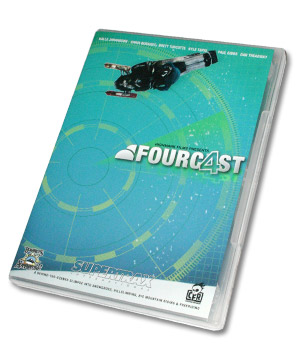
If you’re a fan of snowmobiling films of any kind – heck, if you’re a snowmobiler in any capacity whatsoever, you absolutely must check out Fourc4st presented by Highmark Films.

Fourc4st is a behind the scenes look at snowcross, hillclimbing and big mountain and freeriding featuring such moguls as Chris Burandt, Brett Turcotte, the Tapio Brothers and many more.

This film is absolutely awesome and a cinematic work of brilliance by die-hard snowmobile enthusiast and gifted Director Jorli Ricker that captures the excitement and thrill all snowmobilers feel when the pistons start firing and the track starts grabbing white.

The entire industry and the snowmobiling community as a whole must support Jorli Ricker and his pursuits. Believe me, you want him to make another film and by the first throttle squeeze; you’ll see why.

Seriously go out and buy this DVD – don’t rent or borrow, lay down your hard earned cash and pick up your very own copy of Fourc4st. You won’t be sorry.

Visit www.highmarkfilms.com to grab your copy.

Trail Updates for Two Popular Ontario Regions

**ANNOUNCEMENT**

Muskoka: Despite some rumours to the contrary, snowmobile trails in Ontario’s Muskoka region will be open this winter.

Although a few disgruntled landowners have closed a handful of trails, most property owners are continuing to welcome snowmobile trails and local clubs have developed re-routes around any closed sections.

Bancroft/Mazinaw: Just as they were set to open, a recent ice storm has temporarily made a few trails in the Bancroft and Mazinaw areas impassable.

Club volunteers are working hard to clear downed trees and debris, but advise riders to check the trail status reports at wwww.ofsc.on.ca for futher updates.

OFSC Declares Zero Alcohol

Press Release –

International Snowmobile Safety Week, January 10 to 16

The Ontario Federation of Snowmobile Clubs (OFSC) wants all sledders to ride alcohol-free. On the occasion of International Snowmobile Safety Week, January 11 to 16, the OFSC announces its new Zero Alcohol Campaign, which urges every snowmobiler to take personal responsibility for choosing to be 100% alcohol-free prior to going snowmobiling or during any ride.

Zero Alcohol is especially timely for Ontario snowmobilers given the increased likelihood of automatic licence suspensions on the trail with new enforcement of the .05 to .08 warn range.

“Zero Alcohol is primarily a peer-pressure campaign. Most snowmobilers ride responsibly and alcohol-free, and return home safely after every ride,” said Eric Sanuter, OFSC safety manager. “Our Zero Alcohol position recognizes and supports this existing behaviour and formalizes a Blood Alcohol Concentration (BAC) level of .00% while riding as a clear and acceptable choice for the entire snowmobiling community.”

According to incident data, alcohol consumption is a major contributor to many snowmobiling tragedies. Thus, the OFSC also strongly encourages every snowmobiler to commit to riding only with companions who practice Zero Alcohol as part of their own regular safe riding habit.

Although Zero Alcohol is not a legal requirement, the OFSC points out that unlike driving an automobile on engineered roads, snowmobiling is an off road activity that occurs in an unpredictable and uncontrollable natural setting. Consequently, operating a snowmobile requires peak concentration and reaction at all times and even a small amount of alcohol can cause tragedy.

Studies show that impairment starts from the first drink and that a person with a BAC level of .08%, is 11 times more likely to get killed while driving a car than at .00% BAC. When applied to operating a snow machine, these facts alone make Zero Alcohol the smart choice for safer snowmobiling.