Home Blog Page 297

More LX Models and Switchbacks

Although the RUSH LX is only available as a 600, there’s an IQ-based Turbo LX and, just so you’ll be confused, it has a 136-inch track.

Pay attention because there are also three LX-T (Touring) IQ twofer models including a Turbo, a 600 Cleanfire and a 550. All have the expected amenities touring sleds demand including heated rear passenger grips. Polaris does not offer a heated seat on any models, yet.

The other place you’ll find the IQ platform used next year is the IQ Switchback family. There are no Dragons offered in MY 11 and 600 Cleanfires power two 136s – a regular IQ Switchback and a Shift 136. There’s also a 136-inch tracked 550 Shift.

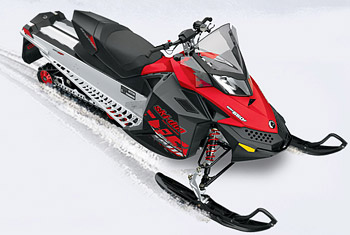
For those who live for 4-stroke power, the Switchback Turbo remains and is the only remaining IQ model with the original Rider Select moveable handlepole. The big news here is the aforementioned Assault Switchback built on the Blackjack platform.

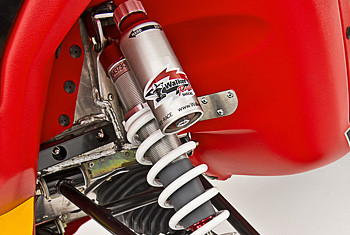
Included is a 144 tipped rail skid, Walker piggies and all the lightweight stuff RMKs sport. You may be asking why the Switchback platform isn’t using a stretched Pro-Ride rear suspension this year. Uh-huh, so are we. However, we suspect Pro-Ride can be used on a 136 and it’s only a matter of time until Polaris will bring it.

Clearly, Polaris is moving its entire fleet into RUSH/Blackjack clothes at a rapid pace. None of us expected the company to go this far with second year changes based on the RUSH/Blackjack chassis.

The new 800 engine in the RUSH is radically different from the IQ 800 four injector version. The RUSH platform has proven to be both super durable, reliable and flat cornering in a way that’s comparable only to Ski-Doo’s XP at this writing.

The Pro-Ride rear suspension has undergone a major revamping and we think Polaris is going to take Pro-Ride more places in the future after overwhelming rider acceptance and approval this season.

There’s still more to talk about from Polaris, however, we’re saving our opinions, insights and criticisms for the first issue of SUPERTRAX due out September 2010.

Read all about the 2011 Polaris sleds

FIRST LOOK: 2011 Polaris Lineup

0

AJ Lester checks out the 2011 Polaris Line Up.

Check out SnowTrax Television’s YouTube page for more Test Rides at YouTube.com/SnowTrax.

Visit www.snowtraxtv.com to watch full episodes of SnowTrax Television online!

PART 2: We Meet the Mystery Sled

We peered through the hood vents, laid down on the snow to inspect things in the tunnel and even stood back and squinted – my secret way of revealing deep truth and hidden data. No luck. Chris and Bryan weren’t talking and we’d have to form our own opinions based on our incredible perception and insight.

I reached for the key and with a tactile twist the engine came to life. There was something different about the engine note – different than an Apex, different than a Vector. Was that the sound of a new triple – or was it a 4-cylinder Genesis?

The twin, rear exiting exhaust finishers shot condensation and melodious tones skyward into the frigid atmosphere and only added to our puzzlement. It wasn’t until Mark stole Chris and Bryan away for a moment that I hopped aboard and took it for a quick zip around the Supertrax Cave compound. It was then my suspicions were heightened. A half hour later we were on the trails.

Mark and I switched back and forth on the candy-apple red mystery sled a couple of times and discussed on-trail what we were experiencing. It was kind of a fun game, this not knowing for sure and having to speculate.

Here’s where we were with our guesses: We had noticed the new exhaust sound – check. We observed the power delivery was stronger on this sled – check. We felt it handled much better than any Apex or Vector we’d ever ridden – and not by a slim margin, either. Check.

Here’s what we were thinking: A possible lowering of the engine in the bulkhead to get a better center of gravity; maybe a completely new, lighter engine (we were pretty sure this was a 4-cylinder mill, not a triple), possibly with Yamaha’s proprietary Cross-Plane design used in the R1 Yamaha road bike where the cylinders fire at 90-degrees; thus explaining the unique engine note. It could have been both.

Hmm. Certainly a lowered engine or an extremely light one would help with the Apex’s handling issues. We continued speculating but there was something else going on here and it was difficult to nail down.

Once I stopped second guessing myself and just began enjoying the ride, about twenty minutes in I began to notice how easy the Apex was steering. It felt like every front end component was greased slick and, when the sled was in motion, the handlebar effort was extremely light.

Despite the fact there was plenty of feel up through the bars and zero numbness, this thing tracked beautifully and resisted darting and hunting on hard packed snow like no Yamaha I’d ever ridden.

We stopped and I jumped off to check the skis. I took a look underneath and noticed a new ski profile – one designed to break the snow in front of the carbide and a much less aggressive looking ski-bottom. Good news and long overdue, but, was this the reason the sled handled so much better?

I moved the handlebars back and forth and then I knew: This was the new Apex and it had electronic power steering!

Read about the Yama-Charger

Yamaha Yama-Charger

The second sled Yamaha had loaded in the trailer that morning was a late model Apex painted bright metallic blue and laden with stock graphics.

Since Chris Reid from Yamaha could talk freely about it he was quick to give us details. This was a 2009 model with all the 2010 updates but it had something special under the hood.

We’re used to this kind of stuff from Chris. He has an aversion to outlandishly powerful, turbocharged Apexes and we’ve ridden some of his personal projects before, some spinning over 200 ponies around the corral.

This one was sporting a device called a Yama-charger. He explained it had been developed by Yamaha guru, Gilles Gagne, a brilliant Yamaha dealer in Quebec, who had been instrumental in putting together a team reaching beyond the 200mph barrier with a snowmobile at Bonneville last September (see the story in Supertrax Volume 21 #4).

When Chris peeled the hood panels back on the Apex we realized this was something far different than we’d seen before.

The Yamacharger works on the same principle as a conventional turbo except it has no turbine side driven off the exhaust.

The drive source for the boost was from the Apex engine’s 10,000-plus RPM crank spinning a compressor to generate only a few pounds of boost (anywhere from 2-5 lbs.). This boost level, produced at relatively low RPM for a turbocharger, is enough to generate an extra 15 to 20 horsepower on a stock Apex, bringing its peak level up into the 165 to 170 range.

We’re from Missouri but after riding it we had no doubt the Yamacharger was delivering a substantial kick in the pants to the Genesis 5. This thing could rock – especially up top.

The best part is the charger requires no reprogramming of the stock EFI module, no exhaust mods and very little trimming of plastic.

Its airbox is very compact and is designed to carry the low boost charge to the throttle bodies without taking up much space in the already cramped Apex engine compartment.

MX-Z and Renegade Madness

Ski-Doo has retired the MX-Z ‘Adrenaline’ model designation for 2011 and now merges the model into the TNT nomenclature.

There’s still the XRS, the early-season-only MX-ZX Series and now, the MX-Z Sport (a more basically equipped model with gas cell shocks and the old carbureted 600 Rotax 2-stroke).

It looks like the TNT will be the catch-all model for the MX-Z line as it has the most comprehensive engine selection of any other Ski-Doo model this year. Get this: It’s available with either the E-TEC 800 or the last year’s Power-TEK 800, either the carbed 600 Series II or the 600 E-TEC, or either the fan-cooled 550 or the new ACE 4-stroke.

You can even get a TNT with a 1200 4-TEC – same as last year. All TNTs come with upgraded KYB gas shocks, a handlebar riser, aluminum hookers, a one-inch lugged track, reverse and full gauges.

We’re not complaining about this amount of selection. We’ve found the TNT to offer premium handling and great ride quality no matter what you choose for power. There’s even a decent mid-height windshield on all TNTs this year. Yippee!

The XRS returns for 2011 with race-derived features like upgraded (with a bit stiffer calibration than a TNT) shocks, a 1.25-inch track, race sled brakes, chassis and slide rail reinforcement and a forward mounted steering post with a higher riser for stand-up riding.

All 2011 Renegades will be offered with a 16-wide 137-inch track and are available with the new E-TEC 800R powerplant. Early season Renegade X shoppers can choose from the 800 and 600 E-TEC engines as well as the 1200 4-TEC.

The Backcountry and Backcountry X Series Renegades return with lower gearing and 1.75 lugged tracks. Believe it or not, the carbed 800 Power-TEK is still available in many Renegade models in 2011. The thinking here is all about price.

Here’s a tip: Just ante up and get the E-TEC. You’ll be kicking yourself all winter if you settle for anything less.

What about the mountains?

4-Stroke Sno Pro

We mentioned earlier that Cat had dropped its baseline versions of some F-Series sleds in lieu of more fully equipped versions.

Both the F8 and the Z1 have been affected by this logic and now the naturally aspirated Z1 comes in two upgraded versions only, the LXR and the new Z1 Sno Pro. We’re not convinced of the rationale here but one thing is sure – we truly like the Z1 in any configuration and we’ve found it to be one of the best 4-stroke offerings on the market.

Another consideration is Cat’s lack of a solid line-up of models in the 600 class – or, in 4-stroke language, 120-125 horsepower range. We think the Z1 is a decent fit in this class and now being offered with more aggressive targeting, as a Sno-Pro, this new model makes some sense.

From an appearance perspective, the Z1 Sno Pro is a pretty strong statement. It’s got one of those hairnet sized low windshields we hate but it sure looks cool enough to turn some heads.

Cat dropped considerable weight by utilizing Fox Float 2 air shocks up front, thus eliminating heavy coilover springs. A 2-inch diameter IFP Fox gasser is used on the Sno-Pro’s rear arm.

The Sno-Pro also owns a 128×1.25-inch deep lug track and both the LXR and the Sno-Pro get the fully adjustable seat and handlebar combo.

The question remains to be answered: Is the Z1 Sno Pro sizzle or steak? At 123 hp it appears to be competing in pretty heady company beside Ski-Doo’s MX-Z 600 E-TEC and the Polaris 600 Rush, both faster, lighter sleds equipped with 2-strokes.

You could also line it up with 4-strokes like Yamaha’s Vector GT or the TNT 1200 4-TEC – but both those sleds are in the 130 hp range and faster. It comes down to equipment and this is where the Z1 Sno-Pro competes hardest.

It’s unique features are hard to match and potential buyers will need to weigh priorities carefully when showroom decisions are made this year.

PART1: YAMAHA 2011 APEX REACHES ITS ACME

On a crisp, cold morning in mid-January Yamaha’s Chris Reid rolled two snowmobiles out of his enclosed trailer. He had phoned Supertrax world headquarters a couple of days previously and queried if we were available to go for a friendly trail ride.

Always ready to oblige when it comes to snowmobiling activity and knowing Chris and Supertrax go back to the very early days, Mark and I scrubbed our usual really, really important schedules clean so we could accommodate.

Yamaha confederate, Bryan Hudgins was accompanying and as the two sleds cleared the ramp we noticed something oddly different about one of them. It was a candy-apple red version of either a Vector or an Apex and its appearance told us it was something completely different, although mysteriously similar.

When we began asking questions, Chris just shrugged his shoulders and said something like: “You guys tell me.” We flooded both him and Bryan with questions but there was to be no telling us anything. This was a top secret project and we were getting an early look. Problem was, we didn’t know what we were looking at.

Read more about the mystery Yamaha sled

Vintage Sled Ride To Waconia

0

SnowTrax Television Co-Host Luke Lester joins in on the WOBLE ride to the Waconia Vintage Snowmobile Event on his 1977 Scorpion Whip.

Subscribe to our YouTube Channel!

2011 Yamaha Apex

This year our Editor’s Choice selection from Yamaha is a complete no-brainer.

The EPS equipped Apex is such an improvement over what was already a great snowmobile, we can’t think of any other Yamaha choice we’d make.

It goes far beyond the fact there’s a new innovation like power steering added into the mix. The Apex’s EXUP exhaust valve smoothes out the engine pulses so effectively you’d think there was a different engine under the hood.

It’s still the Genesis 5-valve four but now it has different cam duration, EFI mapping and about five more ponies.

Extrovert drivers roll a new 128-inch track and it not only makes the Apex and Apex SE look better but adds considerable traction to a sled that can spin its track like a Top Fuel dragster slick.

Ergonomics have been improved with a taller seat and every piece of bodywork has been revised for a subtle and pleasing look.

The 2011 Apex is a great sled with, unfortunately, a great big price tag. Weighing in on all the positives, though, it’s hard to deny buyers will be getting their money’s worth.

Yamaha EPS

After one ride there was no looking back. Yamaha’s electronic power steering setup on the 2011 Apex is a ground breaking feature that will definitely be copied by the rest of the snowmobile industry.

The use of EPS along with some front end geometry tweaks and a new set of skis makes such a vast difference in the way the Apex handles, it’s an undeniable benefit.

Yamaha was first to put this feature on an ATV and it has revolutionized that industry to the point that nearly every OEM now offers power steering equipped models.

With the Apex, we’ve been surprised at how the biggest bonus is not just lighter steering effort. The fact is, the sled’s reaction to negative trail inputs is so much improved it feels like the engine has been dropped lower in the chassis.

There’s no twitching when your right or left ski hits something on the trail and the sled feels planted firmly with very linear feedback through the bars.

The system is variable ratio so steering effort increases as the speed goes up, leaving the rider with a nice, predictable in-control feeling all the time.

The downside? It adds a bit of weight – but we think it’s a good trade-off and well worth the extra cost, too.