Home Blog Page 245

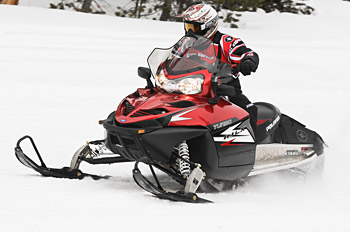
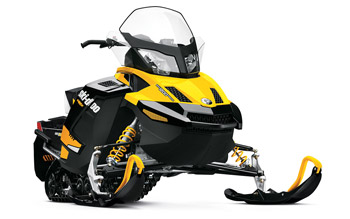
X-OVER THING: 2011 SKI-DOO 4-TEC RENEGADE X

0

Here’s one of four sleds compared in last season’s issue of Supertrax. Maybe you owned one, maybe you’re looking to buy a used one right now. Either way, have a read and let us know what you think…

For 2011 Ski-Doo morphed “Renegade” into it’s own brand. In other words, it’s no longer an MX-Z Renegade, it’s just Renegade all on its own.

Yes, all Renegades use the XP/XR chassis just like the GSX and GTX models use identical basic platforms for both 2-strokes and 4-strokes.

We believe Ski-Doo was wise making Renegade stand on its own as the X-Over thing continues to develop multiple identities. Again, the term is still not fully defined. In Ski-Doo’s case, the company is certainly attempting to cover every possible interpretation of what the “thing” might finally become.

In this case, the XR 4-TEC 4-stroke platform has been dipped in an X-package using a 16×137-inch sneaker, allowing Ski-Doo to explore some new turf.

This year the XR 4-TEC is looking like it wants to take on both bumpy trails and some boondocking as well as deep snow honing on lakes.

From a power perspective we applaud this 1200 but with some hesitation, literally. The 1170cc Rotax triple uses twin cams and some nice technology in the valve train to develop what is actually, according to the EPA’s own website, more than the claimed 130 ponies in the Ski-Doo brochure.

Seems the EPA’s dyno believes there’s almost 140 stallions available and for the record, we concur. In fact, since the first time we took a 4-TEC up Kevlar Lake at WOT we felt the 130 number was conservative.

To provide some contex, lets say it this way: The XR 4-TEC will outrun a Yamaha Nytro, a Vector and will stay scary close to 2010’s 150 HP Apex.

With this much power on tap the only other question that must be answered to qualify this Renegade as a more “purist” X-over than a mogul planer, is weight. Clearly the XP Renegade chassis fitted with either a 600 or 800 E-TEC mill is fully on the other side of the crossover equation.

Those lightweight, ultra powerful 2-strokes are capable of any kind of boondocking, freeriding or deep snow activity you can throw at them. When it comes to the XR variant with a heavier 4-stroke mill, the answer becomes less clear.

Note, we did not say the XR couldn’t boondock. However, it is heavier – significantly so than either of the E-TEC powered Renegades.

There’s more affecting our conclusion on the XR Renegade’s true calling. It has to do with the 1200 triple’s predisposition to low RPM throttle lag.

Yep, we’ve discussed it before on these pages and we can’t let it go unreported. Why? When running deep snow instant throttle response is mandatory.

There’s nothing worse than throwing a sled on its side in deep powder while grabbing a handful to find the engine is hesitating – waiting to grab Kevlar.

Sure, you can counter this trait with deft throttle pinching but we’re pretty sure no one who rides the deep would prefer laggy throttle response.

The other issue, 4-stroke weight, is somewhat neutralized by Ski-Doo’s XR chassis. The Renegade 4-TEC is lighter than any competing 4-stroke X-Over in this class.

This says a lot and it may be enough to get you on a 4-TEC Renegade X if your goal is deep snow riding rather than trail riding.

The XR Renegade’s 137×16 sneaker produces a footprint actually a few square inches larger than a 144×15. As a result of the skid’s shorter length the Renegade displays the least track-length induced understeer of any of the sleds we’ve tested here.

Handling on hardpack, the X Renny is hard to discern from a 120 inch XR. Initial turn-in is very precise and the sled holds a laser-guided line in the twisties.

When a few inches of fluff piles up on top of hardpack you’ll know you’ve got a 137 out back but the resultant understeer is manageable.

The XR 4-TEC Renegade X is a superb trail tool able to bridge moguls and carve apexes with the best of the 120/121 crowd.

It’s also fully capable of running deep snow on lakes and occasionally transferring its talents into the free-ride/boon-docking genre.

While the sled is not a 100-percent serious freerider-boondocker, it can play in the deep and stay afloat with a considerable measure of credibility.

2011 Ski-Doo 600 Renegade X Review

0

Luke provides a detailed review of Ski-Doo’s 2011 Renegade X featuring the ROTAX 600 E-TEC engine.

FOX and Levi LaVallee Reunited

0

FOX announces that Levi LaVallee has returned to their roster of world-class athletes after being away for just one season.

LaVallee’s 2011-2012 season will be action-packed with snocross, Winter X Games, and a New Year’s Eve distance jump over 300 feet of water in San Diego.

Levi has his sights set on breaking his own distance jumping record of 361 feet, set during practice for the same stunt in 2010.

“Being back on FOX shocks, I look at how can I redefine my limits and take it to the next level in freestyle, distance jumping, and snocross,” said LaVallee. “Riding on FOX gives me the confidence to push myself to go bigger, farther, and faster.”

“This is so much more than just a sponsorship deal; I’m once again part of a suspension family that supports me at every level on and off the track,” Levi went on to say.

Levi is the current snowmobile distance jump record holder at 361 feet, a 4-time Winter X Games gold medalist, and the first person to attempt a double backflip in competition during the 2009 Winter X Games.

“Levi is very driven and has a packed season across many disciplines,” said Rick Strobel, Snowmobile Race Manager at FOX. “We’re all excited to have him back on the FOX team and to help him achieve his ambitious goals.”

Along with Levi comes the entire LaVallee team owned by Levi and Glenn Kafka, which includes Bobby LePage and Jake Scott.

LaVallee’s bio: foxshox.info/lavallee

Team Jimmy John’s Duluth Update

0

The 20th annual running of the Duluth National Snocross event saw a number of firsts for Team Jimmy John’s/ Ski-Doo/ BOSS Racing.

Friday night Mathieu Morin (#14) was the first to take the Jimmy John’s sleds to the field for a 16 rider bracket challenge during the inaugural AMSOIL Dominator. Morin drew an early pick against Broberg and knocked him out of the running.

The next bracket saw Morin head to head against Tucker Hibbert— who took the holeshot and left Morin just 2 short laps to recover. It was not to be, Morin was left to focus on Saturday’s Pro Open as Ross Martin walked away with the $10,000 prize.

Saturday began with BOSS Pro Light Riders; Derek Ellis, Corey Watkinson and Petter Narsa showing astonishing speed, pulling holeshots and displaying soaring triples to a crowded grandstands. The team took four 1st place wins in the heat races— sending both Ellis and Narsa to the Main.

Host athlete, Petter Narsa (#271) was the undisputed fastest rider on the track and top qualifier headed into this final. At the start, Narsa pulled the holeshot and led the entire race to win the opening round of the ACSS Pro Light class— clearly displaying his internationally renowned talent.

When the Pro Mods screamed onto the track, the crowd was in a frenzy as a super fast Mathieu Morin advanced to pass leader Malinoski during the first heat in Pro Open qualifying.

A dislocated shoulder injury cut things short and sent Morin to the back leaving him with an 8th place result. Round 2 qualifying brought a 3rd place finish for Morin- leaving him 1 point shy of the LCQ and edging him out of the main.

Sunday’s Pro Light was a near perfect repeat of day one, with Ellis, Narsa and Watkinson taking 4 combined first place finishes during qualifying- this time sending all 3 riders into the Main, with Derek Ellis (#106) ranked as the number one qualifier.

Narsa came off the line in 2nd advancing on Kody Kamm, when he got tangled up in lap traffic only 2 laps left to go. Narsa continued to hold his 2nd place position taking the number 2 podium slot. Ellis took 4th overall.

Lead Pro, Mathieu Morin (#14) had a strange series of highs and lows during Sunday’s Pro Open qualifying rounds; he consistently exploded off the line moving to the 2nd place spot. Due to his earlier shoulder injury he could not sustain his position.

During all three rounds he left the crowd bewildered as he would move to pass the leader – then suddenly he appeared to slump over the sled and pull off the track- the result of his shoulder popping out of its socket and leaving him briefly unable to use his arm.

Mathieu has been equipped with a state-of-the-art brace and doctors have already given him the green light for the next race of the season.

For pictures and more info, please visit our website at www.teambossracing.com

Podium Finishes for Hayden at Calabogie Peaks

0

The CSRA Canadian Snowcross season opener at Calabogie Peaks Resort outside of Ottawa this past weekend proved to be a little light on the snow side, but the event proceeded anyway, albeit as a curtailed program.

Fortunately the rain that scoured the Ottawa area bypassed Calabogie and the machine-made snow was spared a total meltdown. Although muddy and gravely conditions were the operative words as the weekend progressed.

Team Rockstar Energy Polaris Racing was in full force at Round 1 with defending Pro Open Champion Iain Hayden, his teammate No.3 ranked Lee Butler, and their protégée, JB Dennis, who is campaigning the Pro Lite Open and Stock class.

Despite being roughed up in a crash one week earlier in Duluth, MN, Hayden showed no indication that he wasn’t feeling 100% at Calabogie. The Espanola, ON native totally dominated the Pro Open Invitational Dash For Cash on Saturday.

The four-time champ shot out of the gate on his Polaris IQ 600 racing sled, unleashing its awesome power to snare the holeshot and then put on a clinic all the way to the finish line.

On Sunday, Hayden easily won his first qualifier, but a bobble in his second qualifier saw him tip over his sled while going for a pass to take the lead. He was able to get back into the fray, however, and still take the checkered flag in third place.

In the final, starting in third position, Hayden was a bit too anxious to take control of the lead and ended up jumping off the track a few laps into the race. Having to come to a complete stop before re-entering the track, he lost some eight positions.

Undaunted, Hayden put his head down and set off to make up ground, logging laps that were four seconds faster than his rivals and picking off driver after driver to install himself into an impressive second place by the time it was all said and done.

“It’s a bit hard getting into a snowmobile racing mode when there isn’t much snow and it almost feels like t-shirt weather, but the organization did a great job to at least pull off the event,” said Hayden. “My IQ wasn’t too concerned about the poor snow conditions, however, and ran great all weekend. I got some points and that’s what counts.”

Butler’s weekend wasn’t quite on the same level as Hayden’s, especially on Saturday. In the Dash for Cash, he got tangled up with another driver in the first corner, relegating both of them to a back of the back remount. Butler still managed to pull off a top-10 finish, greeting the checkered in seventh place.

The former champ stepped up to the plate on Sunday, however, claiming 1-3 heat results and fifth at the finish line in the final.

“Saturday I was a bit trigger happy off the start and it proved to be counterproductive. Sunday I decided to ride a bit more conservatively, if you can call it that, because we were racing the track conditions as much as we were racing each other,” said Butler. “It was a real grind. It paid off, though. The qualifiers went well. I was aiming for a podium finish in the final but I had to take satisfaction with fifth.”

Meanwhile, JB Dennis, in his pro debut, hammered down top three finishes in the Pro Lite Open and Pro Lite Stock qualifiers. Unfortunately, in the Open final his sled succumbed to the gravel, sand, and snow mix. In the Stock division, the former amateur champ more than lived up to expectations by nailing down a noteworthy fourth in the final.

“The first race of the season is always a bit on the ragged edge and you’re dealing with a case of frayed nerves because you want to impress everybody,” said Dennis. “I was happy with my qualifying finishes, my sled handled awesome. It kind of sucked that I had to pull off in the Open final but the Stock went okay.”

Byers Motorsports Starts Season With Podium

0

Byers Motorsports / Supertrax / Polaris Race Team was full of excitement heading into the CSRA season opener at Calabogie Ski Resort in the Ottawa Valley.

This was one of three conjoined races with the Quebec SCM Snowcross circuit this season which meant for more riders and more competition.

The warm weather and rain heading into the weekend held off enough to allow the event to go. The event was changed to a One Day Points Event with Saturday being practice. With the lack of snow, the track was a smaller, tight track at the bottom of the ski hill.

Prior to the start of the CSRA Season, racers Jamie and Kyle Byers have been training hard, getting themselves ready for the start of the season. Jamie spent the week before Calabogie at Planet X in Minnesota getting seat time on the new Polaris IQ Race Sled and tuning the suspension. Kyle will be joining us for his first race in Lindsay, Ontario January 21-22, 2012 due to prior commitments.

Sunday Morning came early with a 7am drivers meeting before sunrise. With the SCM circuit and Sport racers jumping up, the Pro-Lite (formally Semi-Pro) Stock class saw 36 entries battling for the 15 position final. Jamie got a good start in Moto #1 and battled hard with the leader the whole race coming across the line in 2nd. In Moto # 2, he had an outside starting position which put him at a disadvantage going into turn one as he was held outside in the corner but was able to come out in 3rd.

He made the pass for 2nd down the pack straight and was charging for the leader but was passed back a few laps later. The top 3 had a good battle and Jamie finished 3rd. With a 2nd and 3rd qualifying finish, he qualified 6th for the final. Off the start, he was near the back going into the first corner but made up time on the inside and down the back straight getting up to 5th. Jamie rode a hard race and battled up to 3rd finishing on the Podium for the first Pro-Lite Stock race of the year.

The temperature started to warm up in the afternoon which made the snow soft and allowed the track to get down to dirt in some sections. The dirt played a huge factor with visibility from the roost from other sleds. Jamie placed 2nd in Open Moto 1. In Moto 2, the Dayco Belt and Woody’s studs hooked up and got Jamie into the corner top 2. He made a hard charge down the front stretch making the pass on Shawn Elmhirst’s #99 Arctic Cat.

From there, Jamie had clear vision and checked out from there taking the win with a 9 second lead over 2nd place. Qualifying 2nd for the final, Jamie lined up second from the inside. He didn’t get the start he wanted and found himself going into the first corner 10th. He made time up on the inside of the corner getting up to about 5th but made a bad line choice down the back stretch falling back to 8th. He had a hard time seeing with the mud roost but worked him way up to 6th for the finish.

“It was good to get the first weekend under our belt and get the finishes we did. After seeing the number of entries, we knew we needed consistent finishes to qualify for the final.” Jamie said after the races. “The Polaris IQ Race sled worked great once again this year.”

The next scheduled CSRA race for Byers Motorsports is January 14-15, 2012 in Rouyn-Noranda, Quebec for National Round 2.

X-OVER THING: 2011 ARCTIC CAT 800 EXT

0

Here’s one of four sleds compared in last season’s issue of Supertrax. Maybe you owned one, maybe you’re looking to buy a used one right now. Either way, have a read and let us know what you think…

Clearly, Arctic Cat’s F-8 EXT is positioned on the same turf as the Apex XTX. While this 800 2-stroke deep snow runner is lighter than the Yamaha, it’s not in the league of either the Polaris Switchback Assault or Ski-Doo Renegade 4-TEC.

Arctic Cat re-invented its 800cc 2-stroke twin last season and it hit the snow running with vastly improved performance and a formidable increase in peak horsepower and resultant top end speed.

The engine is now a worthy competitor to both the Ski-Doo E-TEC 800 and the Polaris Liberty single injector CFI 800. What it doesn’t do well yet is deliver good fuel economy or reduced exhaust smoke.

Hopefully, these key consumer issues will have been addressed by the time we get our production 800s on the snow this winter.

The F-Chassis has been through many tweaks and updates since its arrival mid- decade. At first the chassis was predisposed to understeer, a trait usually not in Arctic Cat’s vocabulary. Re-engineering has brought the F-Chassis to a point where Cat can be proud of its handling and, in particular, it’s exceptional ride quality.

The floating front arm skid used in the EXT gets stretched to 144 inches from 128. In this application, the F appears to win on almost every front.

Clearly, the floating front arm design benefits from the extra length of longer rails. The sled can be drilled into whoops and it simply swallows and digests them with ease. The double A-arm design up front is extremely capable at leveling moguls and keeps the skis in constant contact with white top in heavily moguled turns.

Sounds like a win-win deal, right? Mostly. Here’s where we get on our 144 versus 136-inch soapbox. On groomed hardpack with good carbides, initial turn-in is linear and predictable. However, if there’s an inch or two of fresh snow on top of hardpack you’ll notice a slight tendency for the sled to push and go to the outside (understeer). While this quality is easy to counter with a stab on the brake or dropping some throttle, it is evident.

Ergonomically, we can’t say enough about the EXT’s Infinite Rider Position (IRP) seat and handlebars. By combining seat height adjustability with handlebar fore, aft and rotational adjustments, there are limitless options available.

What we like most about IRP is juggling the ergos on a long ride, allowing legs to stretch and your back to rest while continuing to rail turns, bumps and varying terrain. This is just too good of an idea.

The EXT F-800 is a big sled and lightness has never been its calling card. In this 144-inch variation, the 800 EXT produces exceptional ride quality along with the ability to lift its nose on a snow-covered lake and haul booty past the C-note with measurable authority.

Simply put, the F-800 EXT hauls in deep snow and handles bumps better than a 128 F. What this platform does not do well is deep snow boondocking or freeriding.

It’s simply too much sled with ergonomics predisposed to trail duty to capably answer the freerider’s more tightly skewed demands.

Specs and Details:

2011 ARCTIC CAT F8 EXT

X-OVER THING: 2011 YAMAHA APEX EPS XTX

0

Here’s one of four sleds compared in last season’s issue of Supertrax. Maybe you owned one, maybe you’re looking to buy a used one right now. Either way, have a read and let us know what you think…

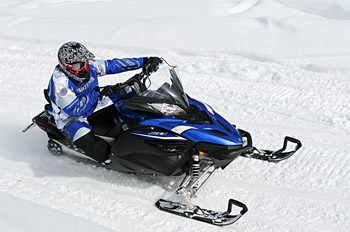
We don’t think the 2011 Apex XTX is what the purist crossover pilot is all about. This doesn’t mean we don’t like the Apex XTX or it isn’t a good sled in its proper place and in its own right. What we see here is a pretty blatant contradiction of the underlying X-Over principle.

The XTX uses Yamaha’s silken, ultra torquey 998cc 5-valve, 4-hole, 4-stroke producing what Yamaha sez is north of 160 ponies. Formidable power, right? We need not debate the level of jam on tap here; it’s not in question.

What is in question for 2011 is it’s increased weight. For MY10, this sled came stock as a 121-incher, but for 2011 base and SE-model Apexes got a 128, a good idea in our estimation.

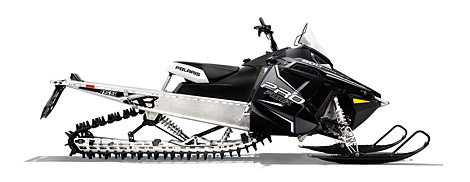
With the intro of a 144-inch Apex, the X-Over thing looms large. Yamaha wants this sled to float and hook up in deep snow and we believe that goal has been accomplished – when compared to a 128-inch Apex. However, next to a featherweight X-Over like the Polaris Assault, the Apex XTX’s deep snow performance simply cannot be compared.

So what is the Apex best suited for with its Electric Power Steering, EXUP exhaust valves and trail-friendly ergonomics? Clearly, this ride addresses the other crossover rider, the one we think is the meat of the X-Over market.

The biggest chunk of the crossover marketplace is dominated by buyers looking for more track length to improve flotation and increase traction. In particular, this buyer knows the mogul-bridging effect of extra track length delivers an improved ride on bumpy trails.

For this demographic, the XTX is among the top choices in this comparo. The inclusion of standard EPS on the XTX is without equal in the segment and its benefits are clearly pointed at the trail rider but of little value to the freerider.

The XTX skidframe, somewhat of a disappointment in the lightweight Nytro as a trail-plush suspension, becomes precisely that in the Apex XTX.

Another aspect of the XTX is its weight. While the lighter Nytro equipped with the 144-inch XTX bent-rail skid produced noticeable understeer on trails, the Apex benefits from its undeniably heavier front end, pushing its carbides into the white top and delivering what we felt was predictable initial turn-in and acceptably strong bite through the center of turns.

Throw in EPS, which produces ridiculously easy-to-modulate bar sawing and you’ve got a mount ready for serious trail duty. You’ve also got a ride that’s fully capable when you pull onto a snow covered lake and whack the loud handle.

The 144 meat under the XTX claws capably at fluff, lifting the Apex’s nose allowing for some nice high speed runs through fresh powder on Kevlar Lake. Without a doubt, here is where the Apex XTX is at home.

The Apex XTX is a crossover but not by the purist’s definition. If buyers get this issue sorted out in the showroom, everyone should be happy.

If a boondocking X-Over buyer is predisposed to a 4-stroke and it has to be a Yamaha, there’s only one Yamaha they should consider, the Nytro XTX.

If, on the other hand, a trail riding crossover buyer wants a 4-stroke and it has to be a Yamaha, the Apex XTX is the way to go.

Specs and Details:

2011 Yamaha Apex XTX

POLARIS CHOOSES PROGRESSIVE AS PREFERRED INSURER

0

Polaris has chosen Progressive Insurance as its preferred ATV, Side x Side, snowmobile and neighborhood vehicle insurer.

By joining forces, Progressive—one of the country’s leading insurance providers—and Polaris—a leader in the power sports industry—are making it easier for riders to get coverage that protects them and their vehicles, both on and off their property.

“We’re working together so it’s not only easier for Polaris owners to buy affordable insurance, but to really understand what they’re buying,” said Progressive Product Manager, Charlotte Elek. “We’re available anytime by phone; and our website is filled with information to help Polaris owners make even smarter choices about coverage that protects them and their vehicle.”

“We are very excited to partner with Progressive,” said Polaris Financial Services Manager Kelly Clawson. “They will be able to serve our riders with years of power sports knowledge and experience.”

In addition to making it easy to understand and buy coverage, Progressive helps Polaris owners save and manage their money through a variety of features:

A variety of discounts—Customers save if they own a home, have a clean driving record, complete a safety course, pay in full—and more.

Disappearing deductibles—Customers reward themselves with a 25 percent reduction in their deductible for each claim-free renewal period.

After four claim-free renewals, the deductible disappears altogether. Progressive offers this currently in 24 states, and will roll it out to all states in coming months.

Easy payment options—Customers can choose to pay in full; or pay in installments by electronic funds transfer, mail, online or over the phone.

To learn more and get a quote with Progressive, Polaris’ preferred insurer, visit progressive.com/polaris, or call 1-800-895-2880.

POLARIS NATIONAL DEMO TOUR

0

Riders from the heights of deep snow country to the trails of the Midwest and Northeast are signing up to experience Polaris Terrain Domination in real world riding situations during the Polaris National Demo Tour.

The Polaris National Demo Tour is offering 25 total stops throughout the winter from New Brunswick to British Columbia in Canada and from Oregon to Maine in the United States.

Riders get to take extended demo rides in real world conditions to experience legendary Polaris ride and handling.

“A demo ride in real-world conditions is the best way for riders to assess and appreciate the Terrain Dominating performance of the PRO-RIDE chassis,” said Mike Jonikas, VP Snowmobiles, Sales & Corporate Marketing. “The National Demo Tour lets people enjoy the great ride and handling Polaris snowmobiles deliver.”

Riders must be at least 18 years of age and must wear proper riding gear. Complete rider eligibility details are available online.

Riders must register at www.terraindomination.com to reserve a spot.