Home Blog Page 214

TEAM ARCTIC VICTORIOUS AT CLASH OF NATIONS

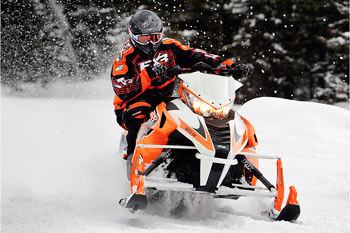
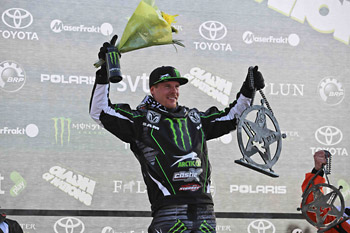
It’s been a season of snocross domination for Team Arctic’s Tucker Hibbert. After winning his sixth-consecutive X Games gold medal and then clinching the 2013 ISOC Pro Open National Championship, Tucker Hibbert solidified the season with a victory at Sweden’s Clash of Nations Super Snowcross event.

With 16 riders in the main event, including Logan Christian from Christian Bros. Racing, Hibbert ripped a monstrous holeshot and ran away with the win, while Logan Christian charged hard through the entire race finishing with a strong 3rd place podium.

Hibbert said, “It was awesome to come back to Sweden, take a win and finish the season healthy. It’s a great feeling flying across the world and having fans cheer for you. I’m always surprised by the amount of support and excitement from fans in Scandinavia.”

In the Pro Stock class, 16 year old Martin Moland from Norway had an outstanding win. Moland’s Clash of Nations win came shortly after he was crowned the 2013 bronze-medalist in the Norwegian snocross championship.

Luva Racing’s Alexander Berglund of Sweden rounded out the podium for Arctic Cat with a solid 3rd place finish.

Team Arctic Race Manager, Mike Kloety said, “Team Arctic has had a very successful 2013 snocross season and these wins and podium finishes at Clash of Nations make it an even better one! It’s truly fantastic to see the highest level of enthusiasm these snowmobile race fans have for Team Arctic.”

About Arctic Cat – Arctic Cat Inc., based in Thief River Falls, Minn., designs, engineers, manufactures and markets all-terrain vehicles (ATVs) and snowmobiles under the Arctic Cat brand name, as well as related parts, garments and accessories. Its common stock is traded on the NASDAQ National Market under the ticker symbol ACAT.

More information about Arctic Cat and its products is available on the Internet at www.arcticcat.com.

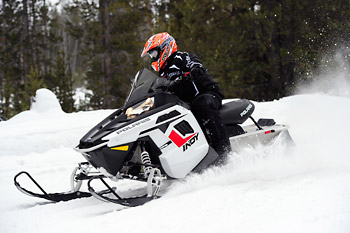
RIDE IMPRESSIONS: 2014 Polaris Indy 550

One of the reasons our expectations for fan coolers has been fairly low is due to the less than nosebleed velocities a 60-hp mill can produce.

Here’s the good news: Depending on how you equip your new Indy 550 (Adventure, Voyager, Indy LXT or Indy121) there’s as much as 50 pounds less weight carried.

There’s almost 30 pounds shaved from an IQ to a 121 Pro-Ride and it comes from the lightweight but much stronger cast bulkhead.

There are few rivets on the new Pro Ride chassis and there’s been an elimination of tons of stampings, braces and gussets from the use of a very sturdy clamshell bulkhead.

Obviously the weight savings are not realized in the rear of the Pro Ride 550. The skid and the tunnel appear nearly identical to the IQ 550. Don’t forget, Polaris uses its proprietary bonding system when assembling and this saves significant weight as well.

This familiar 60-horse twin has been around the Polaris parts book since the mid-1990’s. It’s a strong fan cooler but it wasn’t until it was inserted in the Pro-Ride that it impressed our pilots this much.

Frankly, the 121-inch tracked Indy 550 is a little rocket. From first squeeze the sled launches with authority shifting hard up to an indicated 75-mph top end.

The sled feels like a feather and you can throw it into turns with abandon knowing the front end will bite without a hint of understeer.

In bumps there’s no denying this chassis is happy with its light engine. The CVT Tech/PowerBloc primary is an uber-simple clutch that works exceptionally well here.

In fact, backshifts were really strong; the Invance secondary followed engine RPM in an almost telepathic way.

The new 550 uses a slightly laid back handlepole in comparison to its siblings. This more laid-back handlebar location is beneficial in the Voyageur and the Adventure models targeted at the utility, fur-hat crowd.

Ride quality is decent for this price range understanding those are pretty basic gas cell shocks all around. Again the sled’s inherent lightness gives a noticeably “athletic” feel to the 550.

Here’s the deal. Ski-Doo literally owns the utility snowmobile market with sales greater than all its competitors combined.

This assault (cough) into Ski-Doo’s turf with the new Indy Voyager and the Adventure along with the Indy LXT is going to be successful – guaranteed.

By just getting into this segment with credible product, Polaris will capture sales by being the alternative.

We think Polaris won’t be able to build enough 550’s this season for that reason alone.

Byers Motorsports Dayco National Season Recap

The Supertrax Magazine/ Byers Motorsports/ Polaris team was greeted to the largest track in CSRA history for the Dayco National Finale at Horseshoe Valley Ski Resort, just outside of their home town, with just under a mile long track.

Lap times for the just under mile long track were 1:35-1:45 mins. Large crowds filled the stands for the 3 days of Easter weekend racing action for the CSRA Finale including many Byers Motorsports family, friends and fans.

The finale weekend started off rough for Byers Motorsports as Jamie had a mechanical failure in Fridays practice, putting his machine out of commission for the weekend. The team worked hard swapping suspensions and components over to his back-up sled before the first Pro-Open qualifier.

Moto 1 took place at dusk and Jamie finished 4th. In Moto 2 under the lights, Jamie rode a great race finishing 4th. With long races, lap times and Vintage racing, the Pro Open final got under way at 11:20PM. Qualifying 7th for the final, Jamie lined up near the inside but got pinched out going into the first corner setting him near the back. When the checkered came out after the 14min+ final, he crossed the line just outside the Top 10 in 11th.

The weather for Saturdays racing was what the fans anticipated as normal for the Horseshoe event with 8*C and sun shining bright. In Moto 1, Jamie had a good race and battle going before hitting an ice edge in the berm at the top of the hill tearing the handlebars out of his hands and tossing him off the side of the sled.

Jamie got up quick and tried to get back on the sled but gravity took over and sent the sled to the berm at the three quarters of the way down the hill, finishing 6th. Jamie finished 6th in Moto 2. Starting back row in the final, Jamie was pelted with ice pellets off the start and rode smart for a 10th place finish.

Mother nature did a complete 360 on Sunday with cooler temperatures and the dreaded rain. Fortunately the rain lightened up before the main events. Finishing 6th in both qualifiers after struggling with the downhill section, Jamie lined up outside backrow in the final.

The track was very rough and the downhill section was all ice in the final. Jamie made a couple mistakes in the final, almost coming off the sled costing him some positions finishing 13th.

“It was a real bummer that we were unable to use our 2013 this weekend as we had it dialed in before the mechanical failure,” Jamie said after the weekend. “This season was a real learning curve in the Pro Class. We struggled throughout the year but know we can run near the top.”

This season Jamie was able to lead multiple laps of his first ISOC Pro-Lite qualifying race in Duluth, Minnesota as well as qualifying for the final. He battled head to head for the lead with 6-time CSRA Pro Open Champion Iain Hayden at the CSRA Kawartha Cup National as well as grabbing his first Pro Podium at the event. As a rookie Pro-Open racer, Jamie placed 6th overall in CSRA National Points.

For the last race of the season we had a couple other racers jump on the sled for the finale. Nick Micek made his snowcross debut in the Trail Sport 600 class grabbing multiple holeshots in his qualifying races finishing 7th and 10th in the finals.

Jeff Brand from TekVest, threw his leg over the Byers Motorsports Polaris for his first race this year on Sunday in the Pro-Lite Class after recovering from a broken femur last season. Jeff has been racing snowmobiles for 18 years and had not missed a year without racing.

For not being on a sled all year and racing this technical track, Jeff did well in his Motos and grabbed a lot of attention from the announcer.

Having some fun at the end of the season in the mechanics race, we had 2 first time racers; Nick Leigh and Jessica Brown. Nick had never raced before and won his race and Jessica placed 4th after never being on a race sled or racetrack before.

We would like to thank our sponsors for their great products and continued support as none of this would be possible without them; Supertrax Magazine, Byers Equipment Motorsports, Polaris Racing, Dayco Belts, Gamma Sales- Fly Racing, Coldwave, Dragon Optics, Amsoil, Woody’s, Creechers Design, CMSports/Clean Media, Powermadd, TekVest, Digatron USA

Which Sled Will Be Next Season’s Biggest Hit?

0

If you’ve voted or checked our poll results on this website, you likely have a pretty clear idea of which all-new sleds will be the biggest sellers next year.

Despite what the poll is telling us, since we’re gamblers at heart, we have a few contrary opinions.

The poll says (think of this as “survey says” from Family Feud) the new Yamaha Vipers will be the biggest sales success next year.

Yes, we would have to agree here and 44-percent think this to be true. We don’t think the numbers will be that high compared to say the number two finisher, though.

Poll says Arctic Cat’s new El-Tigre 6000 with its DSI 2-stroke comes in second with 26-percent. This is a pretty substantial prediction in that the El Tigre is only offered in one version, a 129-inch platform with the optimum suspension package at probably a fairly heavy cost.

Looking at the Yamaha you see three different track lengths, two completely different suspensions and two different model categories.

Also, you have to realize, tempering this, the 4-stroke market has not historically been as big a market as the 2-stroke. These things all come into play.

When you look at the bottom rung of the choices, the Polaris Indy 800, offered in only one model variation captures 15-percent as does the new Ski-Doo ACE 900 in all its variations. This is significant but we think it’s inaccurate.

We think the ACE will score second behind the Viper line – perhaps because of the multiplicity of many different models with the new engine. This would place the Indy and the El-Tigre closer together but with a higher percentage for both.

Despite the poll results, here’s where we predict the order will go with sales of new models:

1. Yamaha Viper (all): 33-percent
2. Ski-Doo ACE 900 (all): 26-percent
3. Arctic Cat El Tigre 6000: 21-percent
4. Polaris Indy 800: 20-percent

If you haven’t voted yet, there’s still a chance to do it. Click on and vote now.

Yamaha FX Nytro X-TX Track Upgrade

0

SnowTrax Television Co-Host AJ Lester fights through a cold to upgrade his Yamaha FX Nytro X-TX with a pre-studded Camoplast Ice Attack XT track.

Subscribe to our YouTube channel at YouTube.com/SnowTrax!

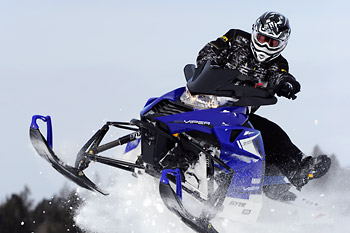
TEST RIDE: 2014 Yamaha SR Viper

0

SnowTrax Television Co-Host AJ Lester gives us a first look at Yamaha’s big news for 2014 – the SR Viper.

Subscribe to our YouTube channel at youtube.com/snowtrax!

Byers Motorsports Chicopee Snowcross Summary

After last seasons race was cancelled, the CSRA returned to Chicopee Ski Resort in Kitchener, Ontario to some of the most snow we’ve ever had at the event.

With more snow, the CSRA crew was able to extend the length of the track. Crowds filled the stands and along the track up the hill both days of the event.

In Saturday’s Pro Open action, Jamie hit the track in Moto 1 taking a 5th place finish. In Moto 2, he came off the sled halfway through the race in the down hill section, getting his foot caught in the toe-hold and dragged 40ft by the sled.

Jamie had injured his ankle a few weeks prior to this race and this brought it back. In the final, Jamie raced to a 10th place finish.

On Sunday, Jamie struggled with his ankle injury as the track had a lot of hard pounding landings and could not ride his normal race. In the motos, he finished 5th and 6th. In the final, he got a decent start and ran 6th for the first couple of laps before falling back finishing 10th.

The next stop is the CSRA Finale at Horseshoe Valley Ski Resort near Barrie for the Dayco National Championships. This is the home-town race for Byers Motorsports and the event always brings out a huge crowd to watch the races in the spring weather.

New for this year, the Pro and Pro-Lite class will be racing 3-days, starting with Friday night under the lights with the Vintage snowmobile races and Freestyle show. Currently Jamie is sitting 7th overall in Pro Open National Points.

Thanks to All our Great Sponsors: Supertrax Magazine, Byers Equipment Motorsports – Polaris, Dayco Belts, Gamma Sales- Fly Racing, Coldwave, Dragon Optics, Amsoil, Woody’s, Creechers Design, CMSports/Clean Media – Photography, Powermadd, TekVest, Digatron USA
PART II: 2014 ARCTIC CAT 7000 PROCROSS

0

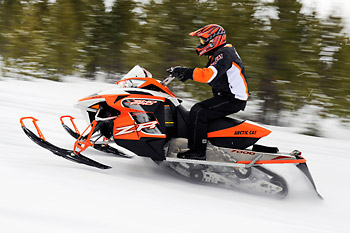
Our fave 7000 ZR was the ProCross 137 variant using Cat’s all-new 137-inch floating front arm, Torque Sensing Link (TSL) equipped, torsion spring skidframe.

This skid gives the perfect balance of traction and mogul bridging for any trail rider disposed to occasional forays into deeper fluff.

You can still get the XF 7000 with a 144-inch skid sans torsion springs and a floating front arm, however, unless you’re riding preference is more than 50-percent off trail, go with the 137. It is exceptional.

We anticipated handling with the 1049 in the ZR (Pro Cross) platform would be similar to the 5000 ZR (the new nomenclature for the Suzuki 1100 4-stroke twin in 2014), but the sled proved us wrong.

The Yamaha triple is actually 12 pounds lighter than the 1056cc Suzuki twin and you can feel it. Turn-in is precise with just a hint of understeer that’s easily controlled with the throttle and forward weighting.

What we’re saying is this: Turn-in is not so aggressive it would upset a less experienced rider, but intuitive enough to satisfy an apex clipping, aggressive rider.

At mid-turn, the triple loves to be whacked, even with the 137-incher biting white top. The resultant instantaneous, torquey response tails out the chassis, exiting with skis planted and snow dust in the air.

Arctic Cat’s suspension calibration has taken a quantum leap in 2014 with the new 137 FFA skid. The floating front arm concept is widely accepted as the best way to eliminate vibes from trail jigglers. With the extra length of a 137 the sled literally vacuums trail trash.

Rear torsion spring calibration on the protos we rode in West Yellowstone was a real departure for Arctic Cat. Obviously someone got the memo trail riders only occasionally, not regularly, clear 100-foot doubles. Cough!

XF 7000s with the 137 track were sweet riding and will definitely get Cat back in the mainstream with trail riders who prioritize plush ride over bottoming resistance.

Here’s the secret formula. Take a legendary engine, shoehorn it into a sweet chassis, clutch it for hard acceleration and top end, stick in a smooth riding, mogul bridging skid and guess what?

You get a really good snowmobile!

+ ARCTIC CAT 7000 PROCROSS: PART I

TEST RIDE: 2013 Ski-Doo MXZ-X 600 E-TEC

0

Supertrax Magazine Co-Publisher Motorhead Mark Lester evaluates Ski-Doo’s 2013 MXZ X featuring a liquid cooled, direct injected, cylinder reed 594cc E-TEC twin with RAVE controlled exhaust valves churning out a claimed 118 horsepower.

This sled is light as a feather. The new XS bodywork improves rider warmth and mobility while directing more air to the CVT for improved belt performance and durability.

Gloves-on compression clickers on the front shocks and the rMotion rear skid features compression and preload adjustability on the running boards.

Subscribe to our YouTube Channel!

PART I: 2014 Arctic Cat 7000 ProCross

0

There’s no question Arctic Cat has been making solid, strategic and successful moves the past two seasons. To prove the point they’re about to bend the rules and minds of the sno-mo-industry for a third year in a row.

Enter the Yamaha/Arctic Cat engine supply relationship. Yep, check out your 2014 Arctic Cat brochure and there proudly for everyone to see is the proclamation certain 2014 models will use a Yamaha 1049cc triple for motivation.

Really, seriously? And Cat ain’t shy about it either. Frankly, why would they be? In what is sure to go down in history as a landmark homerun for Arctic Cat it somehow negotiated itself into a position where Yamaha is selling them their best 4-stroke engine – and, IMO, the best 4-stroke powerplant in the biz. Nice.

So what have we got here? Clearly, this engine loves living in the ProCross chassis. While it’s mounting and plumbing appear unusual – the exhaust makes a complete 180 under the fuel tank, turning forward to the right fender well, the shoehorning of this potent mill into the AC chassis feels about as good as any quad stroke package we’ve ridden to date.

Cat elected to use its effective and very tunable primary and secondary clutches for the Series 7000 ZR models the 1049 resides in. This is a smart move.

Arctic Cat has more tuning parts available for their clutches than Yamaha does for their clutch duo and maybe most importantly, the Cat secondary is a roller cam unit. Yamaha’s driven is not.

The sound of the new 7000 ZR when first lit is audibly pleasing. The 120-degree firing cadence of the triple is genuine gearhead music.

The exhaust header is exposed to snow from the tunnel and did not produce any noticeable heating in the right footwell.

Throttle response from first blip to full whack is exactly what you’d expect from this 130-plus-hp triple. The engine responds with 2-stroke urgency and actually feels like it has a healthy mid-range hook where the motor stands up and beats its fist on its chest.

This is a pleasing engine to ply and to prove it the 7000 ZR package was an instantaneous hit with every one of our riders.

+ PART II: 2014 Arctic Cat 7000 ProCross