Home Blog Page 147

CAT IS SUPER-SERIOUS ABOUT THE MOUNTAINS

0

No doubt you’ve been aware that Arctic Cat has often been relegated to third place in the mountain wars behind Polaris and Ski-Doo.

It’s painful to say, especially if you’re an Arctic Cat fan, but despite the company’s best efforts, it’s M-sleds have just been a touch in arrears the last couple of years when compared to the other two.

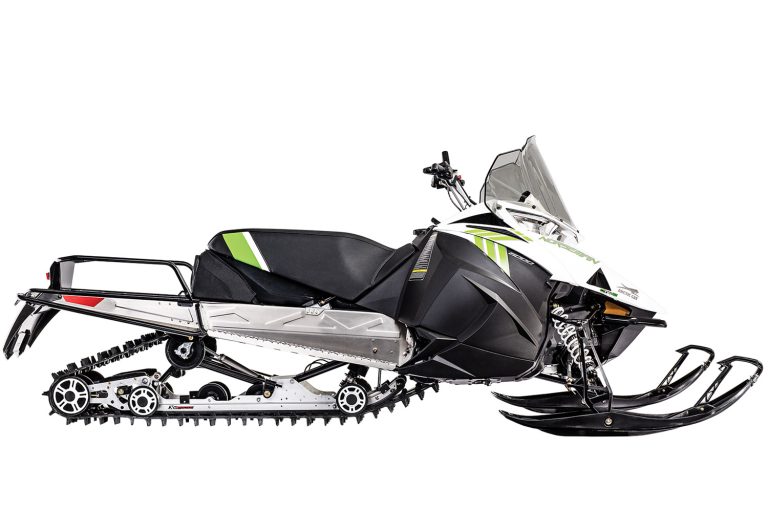
Everything is about to change with the new 2018 Ascender M-8000 Cat just debuted a week ago. New rules now and both Ski-Doo and Polaris have been served notice.

The new Ascender is lighter. Using aluminum cross shafts and a hollow driveshaft, ounces have been shaved nearly everywhere and the result is a sled Cat claims matches the weight of its key competitors and is even lighter than some models in certain variations.

The driveshaft has been dropped 1.25 inches for a better approach angle at the front of the track and to make room for 8-tooth sprockets and clearance for a 3-inch lugged track.

New narrower bodywork is designed to aid with “paneling-out” so the sled can sidehill more efficiently, climb-out and maneuver in deep powder better. Interestingly, the overall narrowness of the 2018, including its running boards, has been a key element in weight reduction.

Probably the biggest feature of the early-release M-8000 Sno Pro is Cat’s new 800 DSI 2-stroke. This slot-injected engine is light, efficient and has exactly the kind of bottom and mid-range torque mountain riders need. There’s a critical difference here and it’s what makes the new M-Cat very competitive.

Cat’s TEAM clutch combo, with a unique idler bearing between the primary sheaves, allows perfect and immediate engagement and reduces belt wear. It also keeps the belt at its optimum placement and deflection level when you’re railing powder.

There’s more to report on this sled but just let it be said: Arctic Cat is done with riding in the rumble seat. This new mountain beast is serious equipment and has been benchmarked against its competitors to be in first place!

CAMP CONEWANGO RE-OPENS

0

Conewango in Redbridge, Ontario Canada is back and under new ownership.

New owners Chris and Wendy welcome snowmobilers, ATVers and all others.

Great amenities, including a restaurant, premium gas sales and two winterized cottages, combined with a location near North Bay, on BF201 with links to A112A, Camp Conewango is the ideal place for your next snowmobile adventure.

For hours and information, visit campconewango.com

Adjusting Your Snowmobile Suspension

0

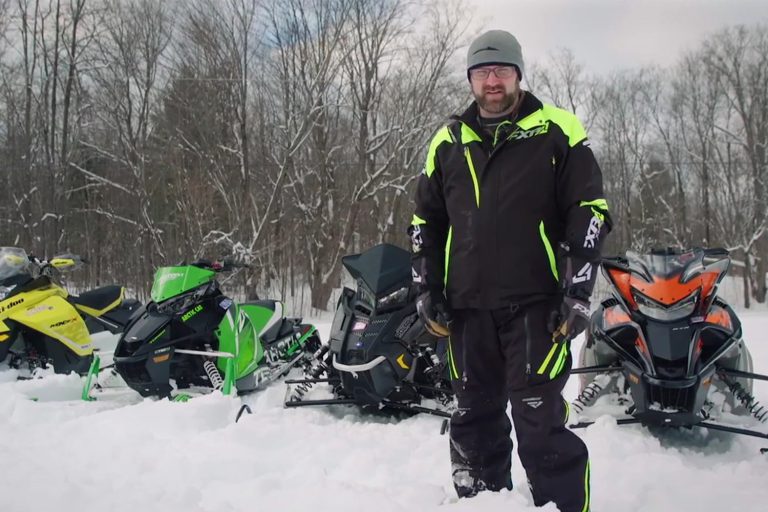
SnowTrax Television Co-Host Luke Lester offers some tips on adjusting your suspension to guarantee the best ride possible from your sled.

Subscribe to our YouTube Channel!

John Deere Driven By Passion

0

John Deere’s Horicon, Wisconsin plant began snowmobile production in 1971 producing two models, the 300 (339ccs) and 400 (463ccs). A new slogan was adopted: ”Nothing Runs Like A Deere”.

With aggressive marketing and an already-established dealer network in place, sales topped 12,740 units one year later.

In 1973 the large selling JDX was introduced and in 1978 came the price-point direct drive Spitfire. It is said about 225,000 John Deere sleds were built between 1971 and 1983.

Other John Deere model names were: Cyclone, Liquidator, Liquifire, Snowfire, Cross Country and Trailfire.

From the outset John Deere was passionate about racing and Executive Vice President, Robert Carlson, was its biggest fan.

“Enduro Team Deere” dominated cross-country racing from 1974 through to the end of the decade and Brian Nelson won the 1-500 in 1976 for the brand.

Due to lack of finances Deere’s official race program ended in 1977 but a contingency program for private J-D teams was continued.

John Deere used Kohler and Kioritz (CCW) engines for many years and later went to Kawasaki power. The company had its own clutch brand, the Duster, but used Comets on its highest performance models.

From 1982 to 1984, there was a deep recession and the snowmobile industry was suffering – too many makers, not enough buyers.

Robert Carlson had left Deere and the company merely faded out of the business. Polaris Industries bought the snowmobile-related assets and parts supply.

Scorpion Sold On Rubber

0

Scorpion, originally known as Trail-A-Sled, was founded in 1958, and began snowmobile production in 1963 in Crosby-Ironton, Minnesota.

From the beginning, Scorpion was focused on developing superior track technology.

Instead of the old rubber belt and steel grauser designs that were heavy and unreliable, Scorpion wanted the strength and consistency of a molded rubber track.

By 1966 the company employed 125 people and was producing 50 sleds a day.

In 1967, after the establishment of its rubber track manufacturing division, payroll was over $1 million and Scorpion was producing 85 units per day.

In 1971, production hit 200 a day and a second expansion of the Scorpion plant was added. 20,000 Scorpions were built that year.

Reality hit hard in 1972 when an unusually mild winter left all OEMs with huge inventories of unsold sleds.

The Fuqua Corporation sold the business back to its original management group after losing millions of dollars. Things revived and in 1974, the company purchased Rockwell Recreational Engine and renamed its engine the “Cuyuna”.

In 1978, Scorpion was purchased by Arctic Enterprises and operated as a co-brand until 1981.

That year, under extreme pressure from creditors, the company filed for Chapter 11 bankruptcy protection and although Arctic Cat was resurrected a couple of years later, Scorpion never survived.

Eventually Scorpion’s assets, including its licensing rights, were sold to Certified Parts Corporation of Janesville, Wisconsin.

BEST USED SLEDS

0

We’ve often been asked what are the best sleds to buy used? Without telling you the exact make and model of every good used sled, here are some general rules for making a good choice.

1. In 2003 Ski-Doo went rider forward and then was followed first by Polaris (2005) and then by Cat and Yamaha in about 2006.

Those early rider forward sleds are good sleds to own because they look modern, are more fun to ride and generally hold their value pretty well.

Although some of the older sit-down sleds are great, they’re pretty long-in-the-tooth (up to ten years old or more) for all day riding excursions especially if your riding buds are riding new stuff.

2. 4-strokes have been around since the early 00’s and there are plenty of them on the used market.

Generally, you need to check the odometer and make sure you’re not lulled into buying a 4-stroke that has enormous miles, thinking its engine will still not need work compared to a 2-stroke.

The problem is, if it does need work, it will kill you with the cost. Check condition and evaluate whether or not the owner has been diligent with maintenance.

3. Our opinion: Stay away from modified sleds unless they’re pretty new. In some cases, however, high performance riders who modify their sleds are real maintenance gurus who keep on top of things. Not always the case, though, so be careful.

4. Also our opinion: Big-inch 2-strokes (700, 800, 900 & 1000) tend to live a harder life than 500 & 600s. Just saying.

A good used 600, if it’s been maintained decently, will have more miles left in it, even with higher miles on the odometer than the bigger engine.

Kawasaki Always Exciting, Never Profitable

0

The history of both Sno-Jet and Kawasaki snowmobiles were irrevocably linked together.

Kawasaki Heavy Industries of Japan was under pressure from the USA Division of Kawasaki, desperate to get into the snowmobile business, to get a line of sleds ready for sale by 1977.

When Sno-Jet closed its doors in 1976 there were hundreds of dealers who needed sleds to sell.

Kawasaki saw the opportunity and by 1978 had come up with a model line-up of Kawasaki-powered Sno-Jets with new model names.

Here’s what’s interesting: A contract was signed with Arctic Cat to build many of those early Kawasakis in Thief River Falls, Minnesota, not in Thetford Mines, Quebec, the home of former Sno-Jet. Meanwhile, Kawasaki had opened a plant in Lincoln, Nebraska and was building two new models there, the Intruder and Invader, from 1977 to 1980.

Kawasaki was known for its slick, big-budget advertising and its performance claims that always seemed to work out better on paper than on the snow.

However, the sleds were very up-to-date, beautifully made and had a ton of sizzle, particularly the high performance Interceptor and Invader series.

Other model names associated with Kawasaki snowmobiles were: Intruder, Drifter, Inviter, Intriguer and LTD.

In early 1982, the Kawasaki dealer show was set to introduce the new 1983 models and just weeks before it Kawasaki Japan scheduled a meeting of its Board of Directors to examine the snowmobile division’s progress.

According to insiders, they were so shocked at the debt the company had accrued and the impossibility of paying it off in the future, they immediately voted to close the doors of that segment of Kawasaki USA. The rest is history.

4 PREDICTIONS FOR ARCTIC CAT

0

With the purchase of Arctic Cat by Textron Inc. there have been numerous questions raised, both positive and apprehensive.

We see the new owners as a well-run, well-managed group that will use a business plan that has been highly successful for decades.

Textron is a multi-national and owns several very stable entities that will likely benefit Arctic Cat both in the immediate future and long term.

Here are some predictions and possibilities:

ENGINE INVESTMENT

Arctic Cat’s St.Cloud, Minnesota engine plant is an absolute jewel and could easily be maximized as an engine supplier for Textron companies like Bad Boy Off-Road, Cushman and future military projects.

Cat’s state-of-the-art facility has much more capacity and real estate available and could easily grow into a giant force for Textron to supply future projects onshore in the USA.

FINANCING

One huge area Textron excels in is finance. As it is, the company supplies retail funding for aircraft like Beechcraft and Cessna.

We’re not sure if Textron has a wholesale finance arm for its other powersport related entities, but we wouldn’t be surprised if the company became a financier for both Cat dealers and its customers.

The upside for this is if the company controls its own financing, it is free to enable new and creative finance options for the sale of Arctic Cat products.

DEVELOPMENT

With deep pockets and a strong will to lead, Textron may be willing to invest in Arctic Cat to continue the company’s already-strong engineering prowess for the development of new products.

CROSSOVER

There’s unlimited potential for Cat’s off-road division to cross over products with Bad Boy and visa-versa.

Modified versions of the Prowler and Alterra could be adopted by Bad Boy and Bad Boy’s electric power innovations could easily be incorporated into Cat’s off-road Prowler line-up.

SKI-DOO EARNS 5 MEDALS AT X GAMES

BRP’s Ski-Doo X-Team riders claimed five medals led by Joe Parsons taking his second straight Gold Medal in Snowmobile Freestyle at ESPN’s Winter X-games in Aspen, Colorado.

Parsons made committed runs at the freestyle jumps, never hesitating in executing the tricks he had planned. His style and clean landings racked up points and on the last jump he threw in a new spin move to seal the gold. The victory makes him the only athlete to win back-to- back Freestyle Gold at this event. Parsons wasn’t done; he also picked up a bronze medal in the Best Trick competition – congrats to Joe on a superb weekend in what is freestyle’s biggest event.

In the Snocross Adaptive race Garrett Goodwin got off to a mid pack start but put his head down and charged through the first lap into third place. His pace was fast and using an outside line that took more distance, but kept up his speed up, he made the pass for second mid race and brought home the Silver Medal.

The snocross event always attracts a big crowd when the mod sleds fire up their 160 Horse Power engines and this year was no exception. The X-games course was extremely tight – and short – with 20-second lap times, so the start was important. Adam Renheim and Lincoln Lemieux both got off the line fast and made the first turn moves needed to get within the top three spots with Renheim actually leading briefly. But a couple small bobbles by Renheim on that first lap moved him back to second where he would finish. Lemieux held his third place start throughout race as the X-teamers took home Silver and Bronze Medals.

Moto-Ski Not Known As An Innovator

0

In 1963, Jean Yves Belanger and Raoul Pelletier began production of the Moto-Ski snowmobile in La Pocatiere, Quebec.

For some unknown reason, the name “Moto-Ski” was chosen as a result of a naming contest at a local school.

In the early days, model names associated with the brand were Zephyr, Capri and the infamous Cadet, the first mini-sled ever (actually, more of a mid-size).

Engines used through the 1960s were JLO and Hirth. Incredibly, one 300cc Hirth produced a stunning 12-hp! Ouch.

Tunnel mounted engines and fiberglass hoods were standard issue and by the end of the 1960s, as sales and competition kept rising, styling and more power became key selling points.

In those days, unlike companies like Rupp and Chaparral, Moto-Ski was never known for its technical innovation. The sleds were pretty tame and very popular with the family market.

In 1968, a struggling Moto-Ski was sold to Griffin Industries of Florida and was operated for the next several model years without much in the way of technical advancement.

Many felt that Griffin was merely milking the company for cash and by 1978 Moto-Ski was in financial trouble.

Eventually, Bombardier (Ski-Doo) bought the assets, patents and brand names and continued to build Moto-Ski snowmobiles on Valcourt, Quebec production lines until 1985.

Those sleds, except for paint and graphics, were mirror images of popular Ski-Doo models, sold and serviced by Moto-Ski’s dealer network.