Home Blog Page 115

AN ALL-NEW VIPER

0

Other than the SideWinder SRX there hasn’t been a lot of new stuff from Yamaha for 2019. The company’s focus has clearly been on getting rid of non-current sleds and rationalizing its product line by deep-sixing some long established models like the Vector, Apex and Phazer.

Last year we wrote an article about what we’d like to see done to the next-Gen Viper (THE NEXT VIPER.

When the topic came up in discussion this year, we found it interesting how strong our opinions remained. Maybe we’re onto something – maybe not!

We’ve been in a bit of a quandary about the Viper. This 1049cc 4-stroke triple powered sled has been very popular with trail riders for several years but for some reason Yamaha has resisted upping its tech-load with new features. This year’s version is pretty much the same sled as it was in 2014.

This has been particularly puzzling because Yamaha’s inventory of unique design stuff is bursting at the seams for this sled. Here’s a few examples:

Drive-by-Wire:

Yamaha perfected YCCT electronic throttle control on the now-discontinued Vector, also used it on the 2-up RS Venture and it is excellent. There’s no throttle lag at all with it and it’s completely transparent and seamless in its operation. We can’t help but think Viper customers would love this – and it’s been field tested to perfection on the same 1049cc triple as the Viper.

Yamaha Roller Secondary:

The roller secondary developed for the SideWinder would be a welcome addition to the 1049 Viper, once recalibrated. This would put the Viper right into the wheelhouse of other trail-targeted 4-strokes and its excellent performance and backshift would no doubt improve overall performance without doing major engine tuning.

Up-to-date Bodywork:

It’s a no-brainer that the same quick-remove plastic the Arctic Cat 7000 uses should be used on the next Viper. Why not this year? Dunno!

EXUP Exhaust Valve:

This smart technology netted the Apex better bottom end and a significant boost in performance a few years ago. Why not adapt it to the 1049? The tragedy is, this technology is pretty much wasted now that the Apex is gone.

More Power:

With a new Viper, Yamaha needs to up the HP sauce. There needs to be a jump of about 5-10 horsepower in the next iteration and here’s proof: Guess what Ski-Doo did with the 2019 version of the 900 ACE in the G4 chassis? Yep, they added 5 more ponies and made every 900 ACE customer out there jealous and hungry to get at the newer, faster version.

Here’s a couple of things that are a bit of a stretch but could be adapted to a new Viper:

SingleShot Skidframe:

Some have told us we’re nuts to even think about this but it makes sense from a weight-saving perspective: The 129 and 146-inch Vectors and Apexes with this skid worked very well and it’s a lighter skidframe. This change would also make the Viper more distinctive from the Arctic Cat 7000 versions – something Yamaha purists seem to be barking about.

Power Steering

Certain upgraded models (Viper LTD) of the Viper and the new Venture SR could adopt EPS. This long-tested Yamaha-tech is well proven and makes a deluxe version of the Viper pretty appealing.

No matter how you cut it, it’s time for Yamaha to breathe new life into the Viper. Right now the Viper is the only 130-hp-class 4-stroke on the market that hasn’t been updated. We think customers are waiting for the next generation and will jump on it like a cat on tuna.

How to Prep Your Snowmobile for Winter: Expert Tips to Get Your Sled Ready

0

We asked our friend Cody Sandmann, team technician for Warnert Racing, to share some expert tips on how to prep your snowmobile for winter.

Cody gave us tons of great information to get your season off to a great start. As always, be sure to consult your user’s manual or dealer before performing any maintenance on your snowmobile.

What should you do with the old fuel?
Depending on how you stored the sled there are a few things you can do. If you used an additive you can top off your sled with fresh non-ethanol premium and run it low on the first tank. If you didn’t use an additive, you can drain your fuel system and flush the lines and put some fresh fuel in the tank. In some cases, your carbs, lines, and fuel pump may need to be cleaned if the fuel has gummed up during the summer.

Chain case oil – Do you really need to change it annually? How to tell if it’s time to replace?
Chain case oil breaks down with time while being used or even sitting. Depending how many miles you put on your sled or how you ride are factors that can come into play. For the average rider, yearly chaincase drain is a great way to help the life of the parts. For best results it’s ideal to drain the oil, pull your chaincase cover, inspect for any rust (on bearings or chain) along with looking for kinked chain links. If you find a bad chain or chunks inside the chaincase it’s a good idea to replace parts as necessary. Please refer to your owners manual on lube type and bolt torque specs.

Belt – How can you tell if its smoked from last season or if there is still life left?
Easiest things to look for are cracking, splitting, Kevlar® strands protruding from the belt side or look for discoloration on the belt edge. An overly dark area can show a burn mark from giving throttle while the track is frozen.

Steering – There always seems to be some slop in the handlebars to the tie rods. Is that normal or should I replace bushings?
There will always be a certain level of slop in the steering system from the factory. But sometimes there is a point where too much play is a concern. As you have pressure on the front end of the sled move the handlebars back and forth and note the amount of play. Trace the steering system from the post to the steering linkage to the tie rod and tie rod ends. If you find an “egged out area” or an area that has excessive play its time to replace the part. In some cases a tight steering system can have its problems. Rusty tie rod ends and linkage can pose tight steering and increased steering effort upon the rider.

Power valves – How do I clean those things? Do they need any maintenance?
Cleaning your power valves is a great way to help maintain the peak level of performance. Each brand has their own way of removing the valve system but in most cases it involves removing 2 bolts and removing the power valve housing that contains the guillotines (the metal parts that look like wood chisels) when removed you will inspect for excess carbon buildup on the guillotines and within the housing. With the assemblies out you’ll remove the excess oil from the moving parts and the port that goes into the cylinder via brake clean and heavy duty paper towel. Once you have removed all the carbon and oil you will need to replace the valve gasket (the gasket that butts up to the cylinder). Before installing the valve into the cylinder lightly coat with guillotine with the brand oil that you are using in the injection system. Refer to your owners manual and torque the mounting bolts down to spec.

Ski dampeners – How do I know if it’s time to replace them and how do I check for wear?
Easiest ways of finding a bad ski rubber is lifting the front end in the air (by the bumper or sturdy part of the a-arms) and move the ski up and down. If you have excessive play or a “floppy” ski, your ski dampeners will need replacing. Also look for cracks and missing chunks.

Carbides – How can I tell if they should be replaced prior to wearing off all the teeth?
Best way to identify if the carbide need replacing are looking for bends, chips, or missing mounting studs while lifting up on the ski.

Studs – Do I need to check the tightness of the nut? Or do you set it and forget it like the Ronco Pressure cookers that are for sale on late night TV?
Checking the tightness of studs really isn’t necessary unless you just installed them. With time, after installing new studs, the stud base and the backer compress the track and can sometimes be snugged up. If you just installed them (with 0 miles) ride with them for a few hundred miles and do a re-check of the stud tightness (via the nut or the stud base depending on the brand).

Hyfax/Slides – how do you tell when they are wore out?
Slides have wear indicators on them. It is a small line that is molded into the plastic and when they are wore down enough you will not be able to see it. Other ways are looking for pieces missing and to look for non-uniform wear.

Recoil Rope. Do I need to do anything with this?
Recoil ropes with time do wear and tear. Some things to look for are fraying and hard spots in the rope. If you have either its time to remove the recoil assembly and replace the rope. If you do find areas of fraying look for sharp areas that the rope could possibly rub on.

My sled will not start after sitting all winter. What should I do to get it going?
First of all look for the obvious; key turned to the on position, tether plugged in all the way, kill switch is in the ON position, and be sure your main fuel valve (if you have one) is on. If your sled doesn’t start, you first need to look at your mechanical abilities and start with the basics. Replace your spark plugs (maybe they fouled out or are wet after pulling the engine over so many times. if that doesn’t work take a small spray bottle with 32:1 mix and spray a small amount of fuel into the airbox (sometimes a fuel system needs that initial jump start to fill the lines up again and remove the air bubbles. And as a last resort pull your carbs off along with your fuel pump (if mechanical) and give it a good cleaning. For those of you with fuel injection a quick inspection of fuses wouldn’t be a bad idea as sometimes fuses do blow and they do control your fuel system.

Lastly – If you failed to put your sled to bed properly last winter, what are some steps you should take before you go out for your first ride?
Give that sled a quick once over. Look for leaks, worn parts, bent studs, bent carbides, etc. Check all your fluids and top off as needed. If you notice one of your fluids having a significant lower amount maybe look into seeing if there is a problem. Check to make sure your throttle lever moves freely and returns when you let off. Also take note of your brake fluid (or cable) and make sure that system is working properly also. Check that air box for mouse nests. No matter how hard or little you prepare your sled those little critters have a way of making your toy their home.

Is any other cleaning or lubricating required?
Give that sled a good wipe down with your preferred brand of cleaner or I suggest going into your cleaning supplies in your house and give the sled a good wipe down with Pledge®. Windex® your windshield, give the tie rod ends a quick shot of WD-40® and off you go. A word from the wise; don’t wipe your seat down with any sort of slippery cleaner or polish. That will just make the sled hard to ride overall. Wipe it down or clean it with soapy water.

Any other comments?
When starting your sled for the first time always have a fire extinguisher handy. I’ve had multiple accounts where the mice have made a home way up in the exhaust and a flaming ball of mouse nest leave at a high speed after you start the sled. Don’t run your sled in a closed area. I love the smell of snowmobiles as much as the next snow geek but those fumes after a prolong amount of time can burn your eyes and lungs. Let that sled warm up for a min before you go and mash the throttle. Be sure to wear all the gear all the time (gloves, helmets, boots, pants, etc.). Carry a map of the trail system your planning to ride in. If you ride in multiple areas keep those maps (up-to-date ones) in a dry Ziploc® bag. Lastly support your local snowmobile club. The people of the snowmobile clubs are the ones volunteering countless hours to make sure you can enjoy your favorite winter pastime safely.

ROTAX 900 ACE NON-TURBO

0

There’s been so much hype written about Ski-Doo’s 2019 ACE 900 Turbo, the all-new naturally-aspirated EFI version of the ACE 900 has been overlooked.

Although it’s not available in any MX-Z this year, it’s available in the 137-inch Renegade Enduro and Adrenaline platforms plus the new Expedition Sport and Grand Touring Limited.

First, it’s notable that this is the first time this compact 4-stroke has been used in the G4 chassis.

The new, wider-at-the-front G4 has a distinctive look and has been specially designed to accommodate the 900 ACE triple.

Our test riders have confirmed there’s a clearly identifiable uptick in the handling of this 4-stroke platform compared to the former XR.

With the extra 4-stroke weight up front, the skis stay more firmly planted under aggressive cornering with the “very rider-forward” ergonomics of the G4 and the sled tracks so that the tail comes around much more easily, putting the rider in a predictable oversteer situation (this is good with a snowmobile).

The ACE 900 engine has had a 5-hp bump in horsepower for 2019 and now registers 95-hp. Although that doesn’t seem earth-shattering, it is noticeable and adds to the sled’s on-trail manners.

Frankly, based on the power output of some 600 2-strokes of bygone eras, that power output is completely adequate for a big cross-section of trail riders.

All the standard features you’d get with a 137-inch 2-stroke G4 are included: RAS 3 front end, pDrive clutches, rMotion skidframe, a wide assortment of shocks including the Air-Ride system on the Enduro and the same gauge packages as you’ll get with any of the model designations of the Rennie and MX-Z you choose.

It was important for Ski-Doo to get this new iteration of the 900 right. This engine has become one of the largest sellers in the Ski-Doo line-up and constitutes a big chunk of the company’s sales volume.

Furthermore, there’s a herd of riders out there who have owned their current ACE 900 XS and XR for a few years and are probably looking to trade into something new.

This sled will definitely do the job for them.

Vote For North America’s Top Snowmobiler! – ROUND 1

0

Vote daily at https://www.supertraxmag.com/NATS and win awesome prizes!!

In collaboration with Ski-Doo, we’re on the search again to find North America’s Top Snowmobiler and we need your help!

Review the current group of contestants. Watch their videos; check out their photos and vote for the snowmobiler who you think should move onto the next round of earning the coveted title of North America’s Top Snowmobiler!

Each round we will be giving away prizes from Woody’s, Superclamp, XPS Lubricants and Ski-Doo Accessories to lucky voters such as yourself. Vote daily and vote often because every time you vote, you’ll be entered to WIN!

The more you vote the better your chances to win these great prizes so continue to vote daily and help us find North America’s Top Snowmobiler!

Check out the 2019 Ski-Doo sleds at http://www.skidoo.com

Learn more about CKMP at https://www.carlkuster.com

#skidoo #thatskidoofeeling #CKMP

Subscribe to our YouTube Channel!

Elka Suspension Announces New Line of High Performance Shocks

November 2nd, 2018 – Boucherville, Quebec, Canada

Elka Suspension is announcing its new line of high performance shocks for the 2019 Polaris Pro RMK with the 600, 800 or 850 engine. Always one of the most capable and best selling backcountry sled on the market, the Polaris Pro RMK now offers more engine options than ever. Elka’s first to market to release high performance shock upgrades for this machine. Enjoy deep snow riding at its best with a set of Elka shocks built for you!

For more information, visit www.elkasuspension.com or check out their Facebook page at: www.facebook.com/ElkaSuspension.

About ELKA SUSPENSION: Leaders in powersports aftermarket shock absorbers, Elka Suspension offers impressive performance and comfort improvements for both racing and recreational applications. The company has earned a solid reputation in the industry by providing premium-quality products at a competitive price within fast turnaround time. Its innovative shock absorbers have been used worldwide by many professional racers to win numerous races and championship titles.

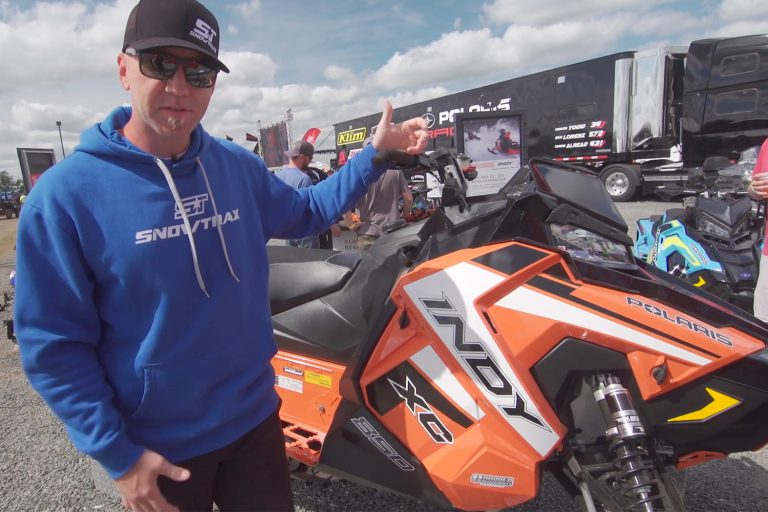
2019 Polaris 850 INDY XC 129 Walk Around & First Impressions | Hay Days 2018

0

AJ’s at Hay Days 2018 sharing his opinion of the 2019 Polaris 850 INDY XC after logging some solid mileage aboard this new sled this past spring.

Full Review of this snowmobile coming up on an all-new season of SnowTrax Television returning December 2018!

Subscribe to our YouTube Channel!

IN-SEASON VALUE SLEDS

0

Maybe you missed the boat when the opportunity came to early-order a new sled last year and now the old blister sadly sagging in your garage is looking pretty outdated.

Also, all your buddies are taking delivery of shiny new iron this month and you’re feeling left out.

The future looks bleak riding your 5-year-old beater all winter, trying to keep up, and now you’ve changed your mind and want a new sled… ASAP.

Problem is, all the specially equipped new stuff is accounted for at dealers and you don’t want to pay a premium price to get less.

Cheer up. There are deals out there. Here’s a few of our 2019 high-value favorites you should check out:

2019 POLARIS INDY 600 SP

All the sizzle is on the new Walker-Evans shock equipped Indy XC this year, but Polaris has mass produced an excellent 600 SP that is really well equipped and has all the appeal of the higher priced, highly touted-on-Snow-Check XC.

The difference? Basically, just the shocks. Although the 600 SP is only available as a 600, its 125-hp Cleanfire twin rocks and you get all the goodness of the new Indy chassis: Lightness, a 129-inch track, full AXYS platform with the new Pro-CC coupled skidframe and excellent, pre-load adjustable IFP gas shocks.

Best part? You’ll pay $10,999 USD for a brand new, completely up-to-date sled.

2019 SKI-DOO MXZ TNT

It’s tough to look through the Ski-Doo brochure past the ultra-equipped X-RS and X-Series models and fall in love with the TNT. The truth is, however, the mainstream TNT has a lot to offer for a reasonable price.

This is Ski-Doo’s bread-and butter in-season model and there are likely still some in supply at dealers. It’s available with both 600R and 850 E-TEC power, too, so that’s a good thing depending on what engine size your friends have bought.

Once again, this sled has all the up-to-date tech of the G4 platform with a 129-incher, rMotion with gas shocks and all the goodness of E-TEC. Keep in mind, the 600R is a completely new engine this year and claims about 125-hp.

The 600 will set you back about $11,399 USD and the 850, $12,749 USD.

2019 ARCTIC CAT ZR 7000 & ZR 6000

The ZR 7000 was updated this year with new bodywork and still has that bulletproof 1049cc Yamaha 4-stroke driving a TEAM primary and a roller secondary under its hood.

This is a super-reliable 130-hp, 137-inch sled that rides really good and is completely up-to date. You’ll pay $11,999 USD.

Don’t want a 4-stroke? You can get the 129-inch ZR 6000 with its proven DSI 2-stroke for $11,249 USD. It also has the latest plastic, same clutching combo as the 7000 and its engine makes power in the 125-range.

ANY NON-CURRENT 2018 or 2017 YAMAHA

If you’re lucky, you still might be able to find a brand new-still-in-the-crate 2017 or 2018 Yamaha. These sleds are discounted to clear the decks this year and constitute excellent value.

There are few changes across the board compared to new ones and these sleds ride, handle and perform pretty much the same as the 2019s, depending on the model.

Think about it. You can save hundreds, maybe even thousands of bucks locating one of these brand-new non-current Yammers. Definitely worth going on a hunt for the one you like.

Good luck!

2019 SKI-DOO ENDURO TURBO

0

Last March we received a 2019 Ski-Doo G4 Enduro at Supertrax headquarters and had a chance to long term test ride it.

This version of the Enduro was particularly interesting to us because it came with Ski-Doo’s new 900 ACE Turbo engine. Keep in mind, the Enduro is available with four engine options: 600 and 850 2-strokes, the naturally aspirated 900 ACE and this turbocharged one.

We had experienced an abbreviated sampling of the sled in West Yellowstone in February but did not have the opportunity to thoroughly wring it out at real-world altitudes and snow conditions until we had this particular one in March.

The Enduro represents a sled appealing to a specific market segment and that segment has been changing the last few years. Once shunned by ultimate performance riders, the Enduro, equipped with top performing engines, is definitely a sled those hardcores are considering today.

Adding-in all the sizzle of the G4 platform and suspension adjustability makes the sled more appealing. Frankly, its ride and handling so closely mirrors a conventional 137-inch Renegade, there’s no difference.

What is different is a bit of extra weight from the air suspension apparatus – and that is definitely worth every ounce considering the comfort and adjustability it adds!

Yes, the G4 Turbo is heavier than the 2-stroke equipped Enduros but with the modified chassis (wider to accommodate the 4-stroke) and other engineering tweaks, the extra mass is well camouflaged.

If anything, as a trail-honer, the 150-hp Turbo, with its mountainous torque, may actually be first choice for the Enduro rider. We heard someone tell us, “This sled was designed to be a 4-stroke sled and actually acts best in that format”.

Those points are all arguable – especially if you’re a 2-stroke addict – but we think 4-TEC graduates are going to be very pleased with the handling and overall demeanor or this turbocharged Enduro.

The first question you’ll ask is: “Is this sled fast enough to justify a transition from a naturally aspirated 4-TEC to this pricier, more complex sled?”

Frankly, it’s difficult to compare the 2019 G4 Enduro to a 2018 XS Enduro with a 4-TEC. The two platforms are completely different and although equipped with the same rMotion air-ride and a RAS2 front end, behave completely different.

Some of it is simple ergonomics, the rest is engine placement and chassis balance. The fact this turbo engine weighs very close to the 4-TEC without a turbo is significant and means you can make a better evaluation.

This version of the G4 Enduro tracks great on twisty trails and its skis stay planted well, probably due to its 4-stroke weight. There’s almost no push in the corners and, if anything, the forward-weighted chassis tends toward oversteer. This is good for predictability and it’s easy to get the rear end to tail-out with the skis set.

One thing you won’t notice is the 2-stroke’s tendency to more easily transfer its weight with aggressive throttle application. Certainly, the wheelie thing is less common with either because of rMotion’s fully-coupled design, but there is no front end lightness response at all with the Turbo. Those skis stay put!

Ski-Doo isn’t exaggerating when it tells us it has pretty much eliminated turbo lag. There is none detectable off-idle or even when the engine is wound out, backshifts and then the throttle is tipped in again.

Honestly, we were not aware of any significant turbo misbehavior and thought the engine behaved very close to an inflated 4-TEC. The 20 extra horsepower shows itself in bottom end punch – when you’re running about 40mph and hit the throttle.

If you’ve got any kind of traction (or traction studs), this sled jumps to attention and catapults the rider with a significant kick in the ribs – noticeably stronger than the 4-TEC.

Sorry, but we’re not huge fans of the throttle thumb control on the 4-stroke turbo. It needs more spring and there’s a learning curve required to control the turbo’s off-idle, low RPM behavior. It’s not a problem once you’re underway, but this is a low-speed problem that shouldn’t exist.

Is it a logical move-up for former 4-TEC customers? We think so, but there are those who will complain about the price and those who will complain it should perform closer to the Yamaha and Cat turbos.

We still think it will be a big seller this year and a long list of staunch 4-TEC customers will move into turbo-world.

2019 Arctic Cat M 8000 Alpha One Walk Around & Impressions | Hay Days 2018

0

Luke gives you the low-down on the all-new 2019 Arctic Cat M 8000 Alpha One. Full Review coming straight to you on the upcoming brand new season of SnowTrax Television, which begins December 2018!

Subscribe to our YouTube Channel!

IS IT TIME FOR A YAMAHA 2-STROKE?: WE RESPOND

0

About a week ago we re-posted a Yamaha story asking: “IS IT TIME FOR A YAMAHA 2-STROKE?“. The response was incredible, with over 40,000 views, nearly 1000 likes and a ton of comments. Here are some of the comments and our responses:

Warren Garton: If anyone can address the longevity of the 2 stroke it would be Yamaha. This is still the number one difference of 4 vs 2 strokes.

SUPERTRAX: Warren, you got it right. The Yamaha 2-strokes built over 15 years ago were some of the most reliable ever – regardless of their displacement or class.

John Sissenah: They brought back the old 540, so I imagine they will wander into the 2 stroke segment once again.

Don Corty: They certainly have the technology and the pockets to produce a two stroke. Just wonder if the market is really there.

SUPERTRAX: Don, the 2-stroke market is definitely still healthy and accounts for over 70-percent of all snowmobile sales.

Russell Canfield: I would so buy a 2 stroke 800-850 Yamaha … but only a 2 stroke.

Brock Bolin: I find it far more likely if they did build a 2 stroke it would be powered by the c-tech 800 from cat.

SUPERTRAX: Brock: Hmm, not Yamaha’s way of doing things!

Claude Gosselin: I have owned an SR 440 racing sled and a1981 srx 440, loved them both. Would buy Yamaha again if they would build a lightweight 2 stroke sled. How many more people are thinking like me? Come on Yamaha, flex your engineering might!

Jon Bertolino: Everyone I ride with used to ride Yamaha’s. Everyone I ride with including me now drives ski doo. This story is repeated over and over-just insert a different group of friends and a different brand they moved over to. yamaha has lost almost all its customer base since 2003. No racing, nothing but rebadged arctic cats with yamaha motors. The nytro and apex worked for some but not many hence market share loss. No one wants a sled that has a motor that will run to 100,000 miles! Um – 1000-2000 miles a year average – 10 years 20,000 miles. Who wants a ten year old sled that is actively buying state of the art technology every couple years. The sled will be junk everywhere else less the motor. Guys who buy new sleds want hi performance and light sleds.

SUPERTRAX: Jon, don’t ever sell engine longevity short! It’s a huge deal.

Dave Mijal: Yamaha stated when they released the 2019 sleds that they have been in the snowmobile business for 51 years now and have no plans on getting out of it! they also stated that everyone should pay close attention to the 2020 model year sleds as they have something big up their sleeves! I do honestly believe it will be a 2 stroke sled! for everyone saying yamaha is done with 2 strokes for sleds what do you call the vk540?????? yamaha isn’t done with anything and their plan on turning the whole snowmobile world into 4 strokes like they did with motocross backfired on them and they do want to stay in the game and they will offer 1 to 2 more 2 stroke sleds! and my guess is since the new sno scoot was one of the best selling sleds of 2018 yamaha and cat both completely sold out of every one made! that yamaha will offer a sled anywhere from 300-500cc as a step up from the sno scoot to keep young riders interested and give them options that other brands don’t have!

Andrew Hill: Personally, I wouldn’t buy a Yamaha until they do, but I don’t see any 2-strokes coming anytime soon. I wish Yamaha would build their own chassis so there is truly 4 manufacturing companies still in the snowmobile business. I’m afraid Yamaha’s days may be numbered as far as sleds go.

Mike McNulty: Remember folks first and foremost Yamaha is a motor company. Some friends in the motorsports business have told me 2020 will be a marquee year for Yamaha. Wait and see, right? I just hope they decide to build their own sleds again. I have owned several Yamaha sleds in the past and would love to see new all Yamaha models.

SUPERTRAX: Mike, Although it’s true the newest Yamahas are based on Arctic Cats, Yamaha has had a huge affect on the quality and engineering of both products and Yamaha R&D has not been silent since the 2013 manufacturing agreement. The Yamaha sleds offered today are very much Yamahas, not just Yamaha engines.

Edward Hipkens: They need a 850 2 stroke. I think it would help their sales.

Roy Brough: Yamaha was my favourite brand of snowmobile until they ended the two stroke sled in Canada so I switched to Polaris.

SUPERTRAX: Obviously, this is a red-hot topic and there are plenty of opinions on whether Yamaha should build a 2-stroke 850 – or anything else 2-stroke.

Frankly, we think it would be an intelligent way for Yamaha to get into certain segments of the industry they’re not playing in with a lot of success.

For instance: The Mountain market – a Yamaha 850 in the Cat-based chassis would be an immediate winner and Yamaha already owns the Direct Injection clean technology to build an amazing 2-stroke of this magnitude (HPDI). Same with the very busy Crossover and Free-Ride markets where weight is the issue.

Also, in our opinion, Yamaha is not so set in its ways it would completely write-off the opportunity to be more profitable.

Remember, as one of our web commentators stated in a response: “Yamaha is first an engine company!” That is so true, and building a revolutionary 2-stroke is something that plays right into their wheelhouse.

We’ll be watching carefully!