Home Blog Page 114

SNOWMOBILE PRICES

0

It’s tough to talk logic to snowmobile buyers who are shopping showrooms and checking out price tags.

Obviously, the first goal of any buyer is to get the best snowmobile for the least amount of money. No matter how you argue it, price is always king.

If you’re a snowmobile manufacturer, it looks a bit different. The first priority of any sled-maker is to be profitable. I know, that statement makes it sound like it’s all about greed. Not necessarily so. It’s really about viability (is this a good business to be in?) and survival.

The fact is, corporations don’t put their money on losers. If profits are thin or invisible, why not focus on other divisions making money?

The above statement applies to every single snowmobile manufacturer. All four have tentacles reaching into other powersport mediums – some are extremely profitable, others not so much.

The fact is, the snowmobile biz hasn’t exhibited much growth the last decade. Although a couple of companies have been able to ring up considerable profits, the others have struggled. How does this filter down to snowmobile customers?

It’s no surprise industry observers have noticed the bulk of sales are snowmobiles in the upper middle to high price range. In some categories, these sleds are surpassing or getting mighty close to the 20K playground. No matter how you cut it, that’s a considerable recreational investment and getting close to what you’d pay for a car, boat or RV.

Some of our readers and viewers have asked us: “Why can’t they build cheaper sleds with decent equipment on them?” Another way to put it is: “Why do they always build so much of the expensive stuff?”

Based on our observation of this industry for thirty years, here’s our best stab at a response.

First, when you cycle through the brochures and see the focus on expensive sleds, there are two big reasons they’re highlighted.

Number one: The most technical, advanced and fastest sleds are the ones that build excitement in potential buyers and motivate us to get out our wallets. This is what drives buyers to make highly emotional decisions, often spending beyond their means or beyond what they intended – to get what they want, not necessarily what they need.

Second, from a manufacturer’s perspective this is exactly what’s necessary for profitability. The fact is, there’s more profit per unit in a big-inch, hugely equipped, highly technical model than in a baseline, stripped down, bare-bones one. If the company can invest in great technology and amortize the repayment of that investment over a reasonably short time, the bottom line looks good.

Fortunately, in the snowmobile business, buyers are deep into product and crave the latest shiny thing. Here’s an example: The current focus on turbocharged snowmobiles is an interesting study. If you do the math, compared to building a 2-stroke hypersled, it costs a lot more to make a 4-stroke snowmobile – especially if it has a turbocharger.

The 4-stroke has about three times more parts in its engine and then add the extra cost to supply a turbo. Less profit in that if you try to sell it for the same price as a 2-stroke.

A better comparison is to look at the list price of a turbo compared to a naturally aspirated 4-stroke. The cost to build the basic non-turbo engine is the same as the turbo model but the extra cost of the turbocharger is more than covered in the way-high list price of the turbo. The difference is profit – and that’s why the companies want you to shop turbo.

Likewise, with 2-strokes, the manufacturer would prefer you buy an 800 or 850 over a 600cc or smaller sled. The cost to build a 600 is probably very close to what it costs to develop and build the larger sled, but the bottom line is better when you buy the big one.

Don’t get me wrong; I’m not making the OEMs out to be money-grubbers. Frankly, they’re giving us exactly what we’re asking for: More, more and we’re willing to pay more to get it.

We want these companies to remain in the business and that means being profitable. Meanwhile, we’re sure having fun riding those high-tech, high priced sleds.
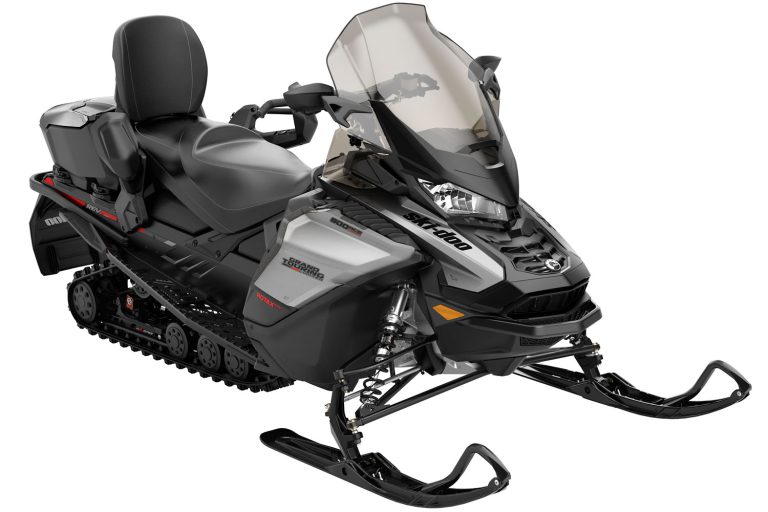
FIRST RIDE: 2019 GRAND TOURING TURBO

0

There’s been so much talk about the new Ski-Doo Turbo as a performance power package, interest in a 2-up application of the new driveline hasn’t exactly been in the headlines.

We had a chance to sample the new Grand touring Turbo for over 200 miles last weekend and got a pretty good feel for it as an all-new model.
“All-new” is hardly adequate to describe this sled. It uses the G4 chassis this year for the first time and combines the 900 ACE Turbo power package with a pDrive clutch combo and air suspension.

The GT is a 137-incher, short by comparison to other 2-uppers in the business and that means quick, responsive handling pretty much comparable to a Renegade.

We were surprised Ski-Doo kept the GT this length, considering space limitations when an extra passenger is on board. However, the seating layout, driver ergonomics and excellent luggage package is extremely well thought-out and thus, the sled never feels crowded or cumbersome.

When it comes to drive-ability, your first striking impression is the transparency of the turbocharged 900 engine. There’s absolutely no turbo lag and the engine spools up as smooth as a Rolls-Royce turbine.

Frankly, if you didn’t know its specifications, you’d never guess it was a turbo. Not until you tap the throttle and get into its power do you realize this thing is actually a monster. Seamless acceleration, near-perfect backshift and smooth, quiet operation are its hallmarks.

Oh, and just for the record, we hate the throttle. This too-soft-to-the-touch electronic flipper needs more spring to give the rider a better feel for the position its at.

There’s a lot of power on tap here and it takes a long time to adjust to it when you’re riding over rough terrain or making throttle transitions.

Unless your focus is lazer-sharp on holding the throttle steady, you’re jerking around like a rag doll. So simple, so basic – how did they miss it?

The GT’s comfort level is absolutely premium and the air suspension system is fabulous! It’s easy to toggle more comfort from the left handgrip and it all happens quickly and efficiently. Those numbers on the dash display really do signal noticeable change in ride compliance and it’s a wonderful thing when you’re hauling gear and an extra passenger.

Our verdict? The new G4 Grand Touring is an incredible improvement over the past and probably the most exciting 2-upper we’ve ever sampled!

FXR RACING BLACK FRIDAY SALE EARLY ACCESS

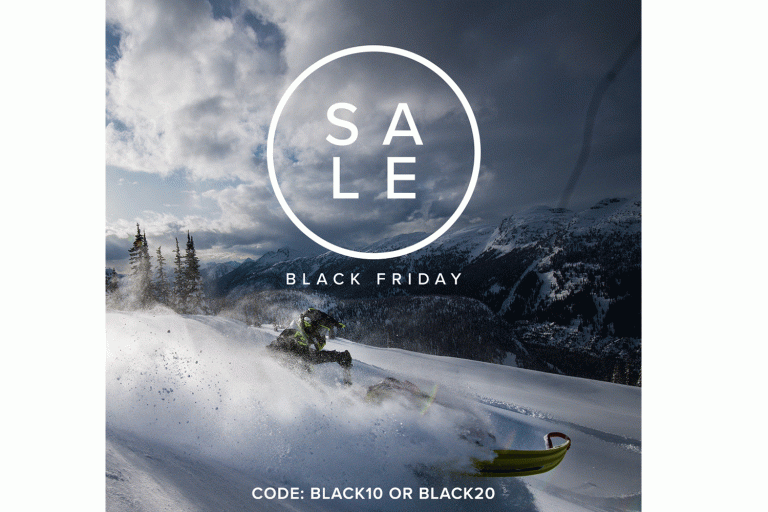
We wanted to give our subscribers early access to the FXR Black Friday Sale. Use Code BLACK10 for 10% OFF our entire site, use code BLACK20 for 20% OFF Clearance Items, only one code can be used per order.

We are offering FREE SHIPPING ON ALL ORDERS!

SHOP NOW at: https://www.fxrracing.com

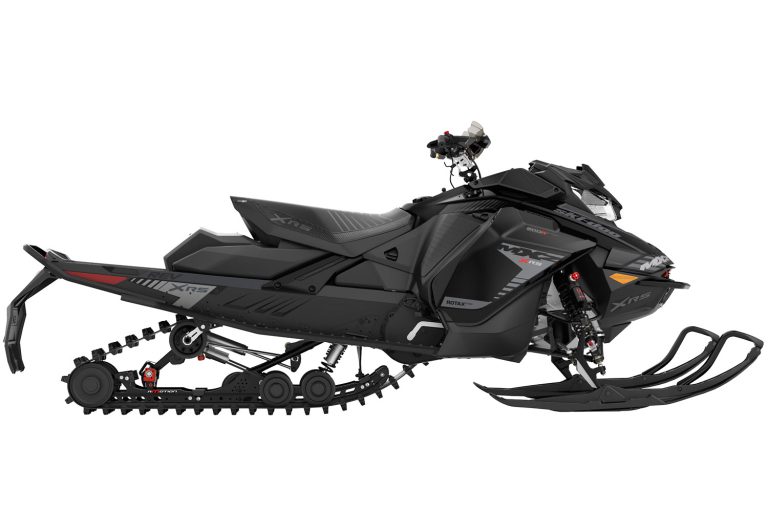
FIRST RIDE: SKI-DOO MX-Z X-RS 600R

0

We’ve been blessed with a huge dump of early season snow at the top-secret SnowTrax and Supertrax World Headquarters and proving grounds.

November snow is not uncommon here but this much snow the middle of November is epic. As a result, we’ve been able to pile miles on a few of the PR units we’ll be riding all winter.

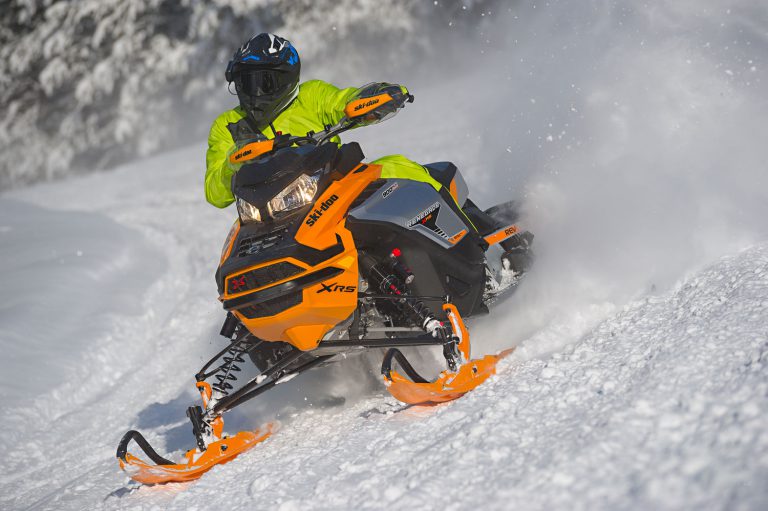
Here’s my first impression of the full-on production MXZ X-RS 600R:

This sled is all about the motor. The brand new Rotax 600R E-TEC is ultra-smooth and crisp when you whack it mid throttle or just drive away from a stop.

Engagement is positive at 3500 rpm and the new pDrive primary (this is the first time it’s been used on a production 600) provides the most linear, buttery and predictable engagement of any clutch in the biz.

At trail speeds the engine is settled without being edgy – and noticeably smooth in response to incremental throttle inputs. There’s a detectable increase in mid-range torque (4500-6500 rpm) over the old Series III 600.

As revs rise the lid comes off the 600R’s civility as the intake noticeably howls from 6500 to full shift at just over 8000 rpm. It’s a satisfying and urgent wail that is, quite frankly, addictive.

Trail power feels strong however we need to mention the break-in clock is still in play, even though we’ve carded over 350 kms (210-miles) on the sled. Ski-Doo’s programmed break-in is a long and arduous affair and we often wonder if it could be a little bit shorter.

The new E-TEC system used on the 600R does not use boost injectors as does the 850. While it’s too early to get you boilerplate data we suspect the 600R is getting better mileage than the Series III E-TEC 600 it replaces.

If you’re a former 600 Series III owner and are salivating for your first pull on a new 600R I’m confident you’re going to be impressed.

This new engine is a tangible step up in power, smoothness and trail-usable torque compared to the long-in-the-tooth Series III 600.

WHAT SNOWMOBILERS WANT

0

Here at Supertrax World HQ, editorializing about snowmobiles requires digging deeper into the background stories on sleds, technology, new models, vintage models or completely different vehicles like Snow Bikes.

It’s not good for either you or ourselves if we just pen a commentary on the spec sheet associated with something new. We crave inside info on the “why” behind new stuff, not just the “what”. Providing our readers and Snowtrax Television viewers with deeper insights is something we take great pleasure in delivering to you.

You already know this, but you can go to any OEM website and get length, width and height info. What we believe makes reading this mag or watching Snowtrax TV a must-do for snowmobilers is the story behind the specifications.

A recent example was our trip to Austria to witness the very first Turbo ACE and 600R engines being born at Rotax. We described to our readers and viewers the brand new in-house technology Rotax developed for manufacturing the new turbocharged and intercooled ACE engine – specifically the exhaustively precise and sanitary processes required to build a completely proprietary turbocharger unit.

Delivering information like this to our readers and viewers is what we do best, and make no mistake, we love being the source you use to get inside info and opinion.

There’s that word: Opinion. We regularly develop opinions on new stuff as soon as we see it and sample it. We believe it’s imperative we give you our informed opinion on every new idea in the biz – not because you should always agree with us and make our opinion your opinion, but more than that, we hope you’ll shape your opinion by critiquing ours.

In case you hadn’t noticed, snowmobiles are getting increasingly similar as we move deeper into the new millennium. Yes, competitive differences are sometimes competitive advantages. However, being able to decipher what’s really a good idea and what’s being pandered as better simply because it’s different is increasingly challenging.

The need for us to talk to the engineers behind the ideas is paramount. The companies that make their product people available to us contribute tangibly to the formation of our opinions on these pages.

Another great example of a back-story is the Polaris Patriot 850 engine. Clearly, Polaris needs to be competitive with Ski-Doo at every juncture and the 850 Patriot gives Polaris faithful exactly what they need to shred Kevlar Lake ski-to-ski with the 850 Rotax.

You don’t need us to tell you that! What you do need us to tell you is the background story on the Patriot’s lack of NVH compared to the Rotax 850. Polaris engineers dug deep and changed their own rules by re-thinking traditional snowmobile engine mounting designs. The result is a thunderous 850cc powerplant that is smoother than the Liberty 800 and the Rotax 850. There’s more on this inside this issue.

Here’s something else we’ve learned about you. One of our techniques aimed at keeping readers and viewers informed about stuff that interests them most is to regularly survey our readers.

Recently we asked what would make you switch brands on your next sled purchase. Surprisingly it wasn’t all about horsepower and whiz-bang features. A common theme was a closer interaction with the OEM of choice – like a real relationship. We’ll let the OEM marketing gurus chew on that idea for a while.

Moving ahead, we want our readers and viewers to know we’re constantly digging and prying for information from all corners of the sno-mo-biz that we’ll ultimately expound on these pages.

It’s what snowmobilers like you, want.

MOST POPULAR CROSSOVER SLED

0

We recently ran a poll on our SnowTrax Television YouTube channel and got some interesting results.

It was no surprise Ski-Doo led the poll in most categories but one question we were particularly surprised about was: “Which Crossover sled would you want to ride this season?”

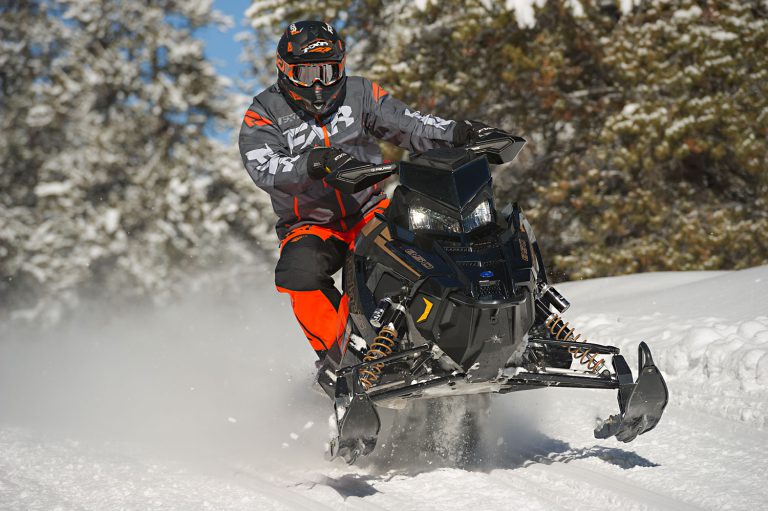
The 850 Polaris Switchback Assault 144 killed it in this segment, scoring a 44-percent positive rating, and rated significantly higher than the other very good sleds it was compared to.

We were a bit surprised at this result because the competition has really been stepping up to the plate with updates, upgrades and improvements to their crossover iron the last two years.

Meanwhile, the Switchback Assault is pretty much the same sled it was three years ago but now has a new engine – the Patriot 850.

The fact Polaris nailed it with the original Switch is pretty undeniable. There were over 1,600 poll responses and the closest the competition got was 34-percent (Ski-Doo Backcountry 850). 10-percent over anyone else is a pretty big margin and sends a strong message Polaris has got this category figured out.

We think one of the sled’s biggest assets is the Assault’s combo of good trail ride and a reasonably deep track. Polaris has leaned a bit more toward the trail-worthiness of the Switchback and kept the formula on track with true dual purpose targeting.

The others in the comparison have gone way far toward off-trail, offering deeper tracks (some to the extent you can barely ride them on trails) in an attempt to capture the love of wannabe mountain riders.

In our opinion, the crossover market is still a strong trail market and requires comfort and trail versatility over hardcore powder prowess. Obviously, Polaris gets this.

Subscribe to our YouTube channel at YouTube.com/SNOWTRAX

Vote for North America’s Top Snowmobiler! – ROUND 2

0

Vote daily at https://www.supertraxmag.com/NATS and win awesome prizes!!

In collaboration with Ski-Doo, we’re on the search again to find North America’s Top Snowmobiler and we need your help!

Review the current group of contestants. Watch their videos; check out their photos and vote for the snowmobiler who you think should move onto the next round of earning the coveted title of North America’s Top Snowmobiler!

Each round we will be giving away prizes from Woody’s, Superclamp, XPS Lubricants and Ski-Doo Accessories to lucky voters such as yourself. Vote daily and vote often because every time you vote, you’ll be entered to WIN!

The more you vote the better your chances to win these great prizes so continue to vote daily and help us find North America’s Top Snowmobiler!

Check out the 2019 Ski-Doo sleds at http://www.skidoo.com

Learn more about CKMP at https://www.carlkuster.com

#skidoo #thatskidoofeeling #CKMP

Subscribe to our YouTube Channel!

Tips for Buying a Used Snowmobile

0

Winter is coming and your buddies will be out riding soon. Don’t be left out of the fun! You can get some great deals on a used snowmobile!

But before you hook up that trailer, become an informed buyer so you don’t get stuck with someone else’s problem sled.

Read Warnert Racing Team Technician Cody Sandmann’s helpful tips for buying a used snowmobile.

What are the most important things I should check to make sure the sled is in good shape and safely operable? What should I look for in the suspension, skis, tunnel/body and track, headlights, etc.?

First of all talk to the owner and get a history of the sled. Ask questions such as “has it ever been wrecked,” “how long have you owned it,” “have you ever had any issues with it,” “do you have any service records?” From there, give the sled a once over. Take note of how many miles a machine has. DO REASERCH. I can’t stress this part enough. Each brand has had bad years and good years of sleds. Search forums, articles, and talk to your local dealer. Once you’ve decided you want to take a look at it, check to see the owner was correct on the odometer reading. Look for large damage to the tunnel and bulkhead. Look at the sled from the front and the rear and see if everything is straight. Bring a flashlight to look in those dark areas. Inspect that there are no leaks. Look for bad paint jobs or touch ups. Before looking at the sled ask the owner to not start the sled the same day your coming to look at it. When you get there, first put your hand on the engine to ensure they haven’t already ran it. Try starting the sled up. If it fires up with ease that’s a good sign, if it doesn’t you may have a problem that needs to be addressed. Not starting the sled the same day can prevent a shady owner from hiding a hard starting sled and can cost you $$$ in the future.

How do I know if the engine is healthy or if it’s wore out?

If you didn’t bring a compression gauge look for leaks in the engine (leaking crank seal, carb boot cracks or rips, and coolant leak). Does the sled start hard and pull over easily? This could be a sign of low compression. Look at the miles and look at the rest of the sled. General rule is that if the rest of the sled wasn’t taken car of the engine was probably treated the same way. If you did bring a compression gauge you’ll screw it into the spark plug hole and pull the engine over (with the throttle open and key off) about 4-5 times or until the gauge has stabilized. Anything less than 120 psi indicates lower compression. If you’re below 100, you’re guaranteed a rebuild.

What should I be watching for and listening for during a test ride?

Listen to the engine and drivetrain. The engine should be smooth running with no knocking, pinging, rattling, clunking. The drivetrain should also be smooth. Any ratcheting noises, high pitch whines, low rumble rubbing noises can signal a bad bearing, worn bushings, or some worn parts in the drive or track. Make sure all of your lights work, all of the switches function properly, and that you run the sled long enough to ensure the handwarmers (if the sled has them) work.

What are some red flags I should look for that would indicate the sled wasn’t properly maintained, took a beating, was in an accident or took a swim?

Look for cracks in the bulkhead and in the tunnel near your suspension mounting points. These are the first areas of a beat sled to fail. Look for high levels of corrosion, rust, etc. Ask the owner what they used to transport the sled. If they say an enclosed trailer or open trailer with a cover it’s a safe bet there wouldn’t be a ton of corrosion. If they say on a trailer uncovered I’d really examine the sled carefully as salt does its damage quick to sled, and with rust and corrosion the value of the sled goes down and your looking at future problems. As for taking a swim it’s hard to tell but look to see if there are high levels of corrosion in hidden places and maybe pull back some of the wire insulation and see if there is hidden corrosion.

If I decide to buy a used sled, what should I do for maintenance and inspection before I take it out for that first ride?

Inspect it from front to back. I’ve found in many cases what the owner said they did and what they actually did can differ significantly. Park the sled on cement overnight (or if no access to cement place a clean board under the sled) and look for those leaks.

Read Cody’s tips on how to get your snowmobile ready for winter.

DEFINING THE HYPERSLED

0

So, when we talk about hypersleds, what do we mean? In our Supertrax vocabulary it merely means “ultimate”, “top drawer performance”, “extreme”.

Really, even that description is not completely descriptive of what we mean. Some of our readers and viewers think it only refers to a snowmobile’s top speed or acceleration.

As you know, these results are only part of what makes a snowmobile an extreme performer. Frankly, if it was only about top speed and getting up there, the Yamaha and Cat Turbos would win the class every time. However, they don’t complete the whole performance story.

When we talk about hypersleds we mean it has to be about the performance of the whole sled – and that means handling, ergonomics and ride, too. This is one of the reasons the 800 and 850 2-strokes do so well in comparison to the super-powerful turbos.

The fact a 2-stroke’s low weight has so much to do with the overall performance of a sled is difficult to overlook. You can run an 850 2-stroke down a trail against a turbo and the 2-stroke will outperform the 4-stroke every time. It’s only on the wide open lakes and forest access trails the 4-stroke runs away – and not by that much.

Weight, or “power-to-weight”, is the great equalizer with snowmobiles and since snowmobiles are ridden in all kinds of situations: Powder, hard packed snow and tight, twisting trails, a hypersled has to outperform in every situation.

It really comes down to the type of rider you are and how you want to use your high performance sled. If you’re exclusively a groomed trail rider who likes to get out on the lakes once in a while and exercise the tach needle, the turbo is an excellent choice and will give you exactly what you want.

If you’re a trail rider who likes to run tight, groomed trails, play in powder, do some lowland hill climbing, grab some air or just use the sled in a hundred different ways, the big-inch 2-strokes will satisfy you better.

Ultimate is ultimate and it means it has to do everything well. Tough to compare the category when results are so radically different!

WILL POLARIS BUILD A 4-STROKE?

0

We’ve bantered the idea of a Polaris 4-stroke equipped sled back and forth for a couple of years now. Here’s some of our current thinking:

COST

The cost to develop an all-new snowmobile 4-stroke is high.

We’ve often speculated that Polaris could use a variation of its strong running off-road RZR 1000 4-stroke twin as a snowmobile engine. As time rolls on and the competition brings out new stuff, this seems less likely as the trend in performance snow engines tends to be toward triples.

The competition is doing a too-good job of marketing turbocharged and EFI triples and consumers like them. No matter how good a Polaris RZR twin is, will it have the sizzle of the current 3-cylinder competition?

How about this: What if a new 4-stroke Polaris was a triple? Yes, it would be a big dollar investment in a completely new engine for a relatively small market – unless of course, if it could be adapted for off-road use, too.

This brings up another point: The self imposed industry displacement limit for off-road stuff is agreed to be 1000ccs maximum. That would mean Polaris would be offering both a 1000cc twin and a 1000cc triple. Hmm.

MARKET

4-strokes only account for about 25-percent of the market. If half the potential buyers in the snowmobile biz were shopping 4-strokes, Polaris would be on it.

However, the sales numbers seem to plateau around 25-percent. Polaris would be entering a wedge of the market that is already dominated by many happy customers – and it’s only a quarter of the whole market.

What would be the potential for Polaris to own credible market share? Not that good unless the new engine was absolutely killer!

CHATTER

Nobody’s talking and every time we ask, Polaris has been pretty evasive about the viability of the 4-stroke market. There’s been no firm confession its design and engineering people are working on 4-stroke snowmobiles – and as you know, we’re pretty good at espionage.

What they do is quote us the sales numbers and the potential for growth in the industry in the 4-stroke sector. They claim it makes more sense to focus on building really good 2-strokes and applying their engineering efforts to dominating in that engine choice.

They’ve been very good at this and every model the company has brought out the last five years has been a homerun.