Home Blog Page 116

HOW TURBOS CAN MAKE MORE POWER

0

There’s been so much feedback on the fact Ski-Doo’s new turbocharged G4s net out less power than Yamaha and Cat’s Turbos, it puts a lot of focus on turbochargers in general.

Here are a few points to consider:

1. Turbochargers, which spin in the 100,000 RPM range, are actually air compressors that cram pressurized oxygen (air is mostly oxygen) into an engine’s combustion chamber. Simply stated, the result is there’s a lot more oxygen in the cylinder and when the spark plug lights it off in the presence of gasoline, it makes a bigger bang.

2. This bigger bang effect mostly affects torque. There is a horsepower increase, but the most substantial benefit is that the torque generated by a turbocharged engine is higher than one that is naturally aspirated (carb or EFI).

3. Not only is the amount of torque higher when a turbo is used but it stays relatively consistent across the whole power curve. Thus turbo engines deliver more torque from just off idle right up to max RPM. This makes for some very interesting opportunities for clutching and gearing.

4. In modern engines, turbo pressure, or boost, is regulated by a valve-like device called an electronic wastegate. This system stops the turbo pressure from getting too high – or too low. These electronic wastegates are the reason the newer turbocharged engines maintain such consistent torque as the engine spools up revs – the boost is close to the same all the time.

Older turbo engines used to have mechanical wastegates to control boost, popping off pressure when it went beyond the regulated boost level. These were pretty inconsistent at operating across the full RPM range but did well at higher RPMs.

5. Most snowmobile OEMs set turbo pressure at realistic (low) levels to conserve engine life. Even a 2-pound boost can completely change the way a turbo engine makes power.

6. Usually, modifying the amount of boost a turbo engine makes requires a change to the engine’s ECU (computer). There are aftermarket computer chips that mess with fuel flow, boost pressure and the wastegate and then adjust the engine’s timing to accommodate.

These are actually pretty reliable (get references) and as long as you don’t go too crazy with the boost, will not harm your engine.

7. After making an ECU mod (new computer chip) you’ll likely need to modify your clutching – and maybe even your gearing – to get full benefit from the power increase.

8. Have fun!
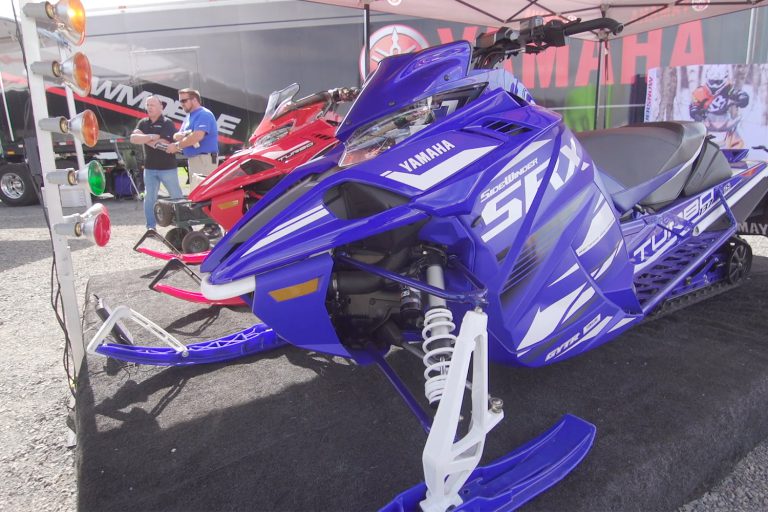
2019 Yamaha Sidewinder SRX Walk Around & First Impressions – Hay Days 2018

0

Luke gives the SnowTrax Nation a quick overview of the 2019 Yamaha Sidewinder SRX. Full Review heading your way on an all-new season of SnowTrax Television, beginning December 2018!

Subscribe to our YouTube Channel!

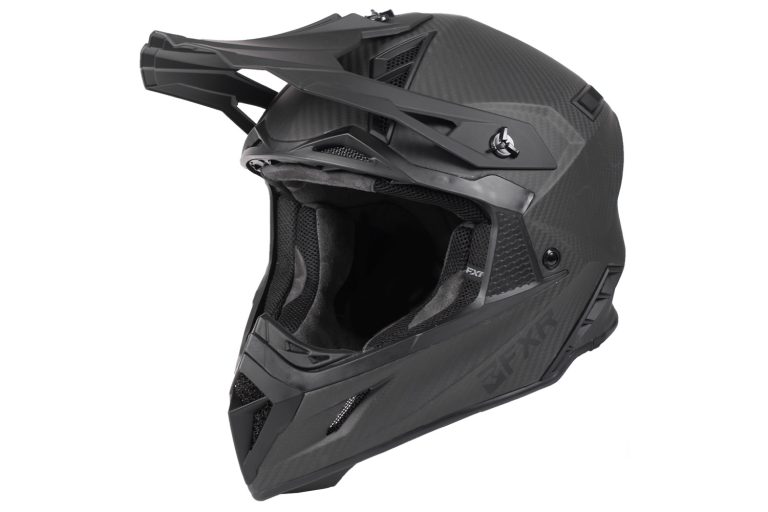
FXR HELIUM HELMET

0

This low profile, ultra-lightweight, technical backcountry helmet provides riders with superb lightweight protection and excellent ventilation.

FXR’s Helium Carbon bucket has a cool impact absorbing chin composite and dual density EPS safety core to further protect your melon.

Other features include adjustable peak, 3-point break-away screws and a wide range of sizing to fit different sized brains.

Also available in composite fibre alloy.

Visit fxrracing.com to check out FXR’s full line of helmets and snowmobile gear.

SNOWMOBILE TRENDS WE’RE WATCHING

0

There are a few new and developing trends we’re watching with curiosity in the snowmobile industry at the moment.

First, 600cc 2-strokes are becoming ever more appealing than they were a few years ago. We think this may be because of the increasing price levels of the big-inch rides.

Frankly, Polaris, Cat and Ski-Doo have tremendous technology in this engine variation and these sleds are as much fun and in some cases, more fun to ride than an 800 or an 850.

The savings to be had buying a 600 are significant as well and you’re usually getting the same chassis features as you’d get on the bigger-inch sleds.

The nimble handling and inherent agility of a 600 is really appealing and on trail rides and even in powder, these engines can deliver the goods.

Another big development is the growing acceptance of 4-strokes among a herd of snowmobilers who would never have considered riding one a decade ago.

The 4-stroke image probably got a big boost (literally) with the advent of Yamaha and Cat’s velvety smooth, rideable but raucous 9000 and SideWinder turbos. When handling and rideability got amped up, these sleds suddenly got the eye of otherwise 2-stroke-focused performance riders.

There’s more to this than meets the eye, however. At the other end of the model selection, sales of 4-strokes making 100-hp or less are really booming.

ACE 900 and 600 and Cat’s 3000 continue to have strong sales pull and customers looking to keep their sled for a long time are really liking the appeal of a medium performance 4-stroke.

Another trend we’re watching – and this one depends on the OEM’s willingness to build them – is the increasing demand for value-priced snowmobiles.

Snowmobilers have had a life-long reputation for being buyers who worship the crispiest, newest technology and will trade up to get it no matter the cost. Times may be changing though and the rising cost of new high-tech iron may severely limit the number of potential customers shopping them.

Baseline models with some, but not all the latest tech may be becoming increasingly important to the sled-makers’ marketing strategies.

Instead of offering sleds like Ski-Doo’s MX-Z and Renegade Sport 600 Carb and Polaris’ 600 Indy (121) at the back of the sales brochure, it might be time to modernize them a bit but keep the feature lists more conservative and the price low. You could call that idea: “Offer less, for less bucks”. The trick, of course, is to not make the sleds so unappealing no one wants them.

It goes without saying, there are new challenges building sleds in this era but, most certainly, the OEMs have the goods and the innovative ability to succeed. We’ll be watching.

SLEDDER MAIL

0

We get so many responses to our web articles we’ve decided to repost some of our recent favorites from both supertraxmag.com and FaceBook. We’ll try to do this weekly, so send in your responses whenever you can!

Responding to “Low cost of Snowmobiling”

Branden Vovanovich: Trail permits and registration are pennies compared to the absurd amount that snowmobiles and accessories are starting to cost. A belt costs more than a season pass and registration, even for out of state residents.

SUPERTRAX: Branden, it’s not only a concern to you. Thanks for putting permit costs in perspective. Meanwhile, the associations and organizations are going crazy trying to keep costs in line. Grooming is really expensive.

Denis Gionet: We pay to play … 3 permits in our household… 2 seasonal and 1 classic. We ride 99% on trail with the odd excursion on nearby lakes or private property (friends and family).

I also help brush a nearby section of trail each fall before grooming starts, to lend a hand to a neighbouring club with limited resources and manpower. The little bit I do helps them get started, it gives me a day in the bush with a sled and a saw, and I spend time with a friend from our neighbouring club.

The little bit I do is minimal in the grand scheme of things, but if more people helped that little bit, trails would be opened quicker, the major club volunteers would be less burned out and the clubs in general would benefit. I certainly appreciate the efforts of the clubs, volunteers and landowners that permit us to enjoy our sport so much.

SUPERTRAX: Denis, we just want to say thank you for the extra stuff you do!

Responding to Supertrax evaluation of the 2019 SRX:

Aaron Shiferi: I own 2 yamaha btx sidewinders, WAY MORE YAMAHA than arctic cat in these machines than the Vipers. Too all the people who are bashing yamaha I would say go ride one of these sleds yourself. I know that I love my two way more than any other sled ive owned or operated. I still believe there are great things to come of yamaha in the next few years.

SUPERTRAX: Aaron, we agree. We think Yamaha is very committed to the business and is working on some new stuff that will impress. Actually, Yamaha still has a pretty serious team working on product development.

Franck St. Rock: Basically, it has the same configuration as the Thundercat. How can it be claimed as the fastest production snowmobile? There will be an identical model from “another manufacturer” with the exact same setup. Maybe clutching is different, but from what I can grasp from the previews, they are pretty much identical in all other aspects. Maybe they upped the boost pressure on the SRX vs ThunderCat?

SUPERTRAX: Franck, you’re absolutely right. At the end of the lake there’s a toilet paper thickness distance between the 9000 and the SideWinder. No turbo pressure differences we know of.

Responding to Supertrax evaluation of the 2019 Indy 850:

Charlie Ferrell: Guys I love you, but why would you reprint the polaris press release. Everything you’ve said here is the same stuff that has already said many times. This is nothing more then a polaris press release, come on…

SUPERTRAX: Charlie: We rode it. What else can we say?

Allison Day: Maybe a game changer for polaris but the other 3 have had 129’s for the last 4-6 years.

SUPERTRAX: Allison, there’s a lot more to the new Indy than just a 129 that makes it a game-changer.

Responding to Supertrax evaluation of the 2019 Ski-Doo Turbo:

Dave Earl Bilzerian: Could you guys be more Skidoo biased? The competition isn’t “already at 180” they were over 200 ten years ago.

SUPERTRAX: Earl, we’re aware the stock Cat Turbo made about 177-hp back then. It was only aftermarket modified & re-chipped 1056cc Cats that made over 200.

Dennis Barbier: How much money did BRP pay for this line? “The first shock was Ski-Doo’s move away from an engine (the 4-TEC) that has placed the company squarely in the lead in the 4-stroke realm.” What exactly puts them in the lead over say, Yamaha?

SUPERTRAX: Dennis, you need to check out the sale numbers. That’s what we were referring to, not the quality or performance of either Yam or Doo.

2019 Ski-Doo Renegade X-RS 900 ACE Turbo Walk Around & First Impressions – Hay Days 2018

0

AJ gets some seat time on the 2019 Ski-Doo Renegade X-RS 900 ACE Turbo and let’s you know his early thoughts on the sled. Full Review to come on SnowTrax 2019 which begins in December!

Visit ski-doo.com/snowmobiles/renegade.html for more details.

Subscribe to our YouTube Channel!

WILL CAT MAKE AN 850?

0

If that question hasn’t been verbalized in the press, it’s certainly on the lips of many performance enthusiasts this year.

To re-state, the question being asked is: Will the slot-injected 800 Cat get its ticket punched by the new Polaris Patriot 850 and Ski-Doo’s 850 E-TEC?

Although the math says 800ccs should never be as fast as 850, we fully expect the DSI Cat’s actual performance to be fairly close. Why?

The fact is, no snowmobile engine delivers all of its power to the snow and extreme high performance production engines tend to hold back some of their potential for reliability reasons – especially early-on in product introductions to the consumer market.

Keep this in mind, too: Cat has known about the 850 wave for a while now and the key to matching on-the-snow performance will have everything to do with clutching, friction and perhaps, intentionally extending the 800’s power potential a bit further than last year. Last season, this 800 was making a claimed 162-hp and that’s mighty close to what the 850s are postulating.

The truth is, Cat only needs to make one 800cc ZR model that can run with the 850s. Think we’re wrong? Look at Yamaha’s new SideWinder SRX.

In the power department this sled is virtually the same as other SideWinders, but the SRX uses a low friction, one-inch deep track to get its top speed up into the twilight zone.

Sure, traction is an issue but, wound out on a hard-packed lake, that track enables the SRX to pull as much as two or three more mph up top. Technically faster? Yup. Making more horsepower? Nope.

When it comes right down to it, bragging rights are always about who gets to the end of the lake first, not who’s making more power in the garage.

Word is, Cat is working on a bigger 800-based engine for the future, but this year, in MY2019, Cat knows exactly what it has to work with – and work against. We’d put money on surprising performance from any 800 Cat this year.

Will the DSI 800 be faster than the 850s? We doubt it. However, we’re pretty sure this year’s 800 will be faster than last year’s.

HERE’S WHAT WOULD MAKE YOU SWITCH BRANDS

0

We read your online responses to the question with great interest and we’re very sure many of the marketing people from the snowmobile manufacturers had a good, long look, too.

We were really impressed with both the quantity and the quality of the answers and the long-term involvement of the respondents, many who have owned several different brands over their years of snowmobiling.

Based on the most frequently mentioned issues, here are a few observations we’ve summarized from your responses:

PART 1: 2-STROKE VERSUS 4-STROKE

1. Although there were a few riders who did the opposite, we were surprised how many of you have converted from 2-strokes to 4-strokes the last few years and are determined to stay.

2. The reasons for remaining with 4-strokes are:

a) Smoothness and vibration-free behavior of a 4-stroke (didn’t really see that one coming – mentioned often).
b) No 2-stroke oil smell on clothing.
c) Convenience of not having to carry or top-up oil supply. Also oil costs.
d) Perceived longer life and higher attainable reliable mileage with a 4-stroke.

3. The reasons for remaining with a 2-stroke are:

a) Lighter weight.
b) Perceived better handling (because of lightness).
c) Nice exhaust sound.
d) Perceived better acceleration.

4. Why You’d Change To a 4-stroke

a) Perception that the 2-stroke will need to be rebuilt more frequently.
b) Exhaust smell, even with today’s super-clean 2-strokes.
c) Noise, vibration and harshness levels of a 2-stroke.

Frequent comment: “If they made a really light 4-stroke (comparable to a 2-stroke) I’d buy it in an instant”.

5. Why You’d Change to a 2-stroke

a) Fear of expensive 4-stroke engine repairs long-term.
b) Extra 4-stroke weight affecting handling & get-stuck situations.
c) Perception 4-strokes limit off-trail capability.

PART 2: CHANGING BRANDS

Here are a few of the things responders said about changing brands and why they would do it:

1. Technical advancement by the OEMs is critical and complete chassis revamps are timely. The companies building the same vehicles over and over too long motivate the consumer’s desire to make a brand change to get something new and different.

2. Impersonal or “corporate” attitude of the manufacturer. Consumers want to feel a part of the brand and feel they have an attachment or perceived personal relationship either with the dealer or the corporation itself.

3. Racing and public persona. A brand with recent or past success in racing or a reputation for speed and innovation makes the consumer want to be part of it.

4. Riding demonstrations: Some consumers made a change simply because the dealer let them ride a different brand.

5. Recommendation of someone else. This can range from a trusted friend to a media review to a group of riders they know who have made the change to something new.

6. Availability. If the company makes only 2-strokes or makes only 4-strokes, those particular preferences can’t be served and those owners will not switch brands. (ie: “The leap is too big to buy a Yamaha if I can’t replace my preference for a 2-stroke”. Likewise, the same with Polaris making only 2-strokes.

TAKE-AWAYS:

1. We were surprised how few current owners were disappointed with the reliability of their current brand. Likewise, few of the respondents voiced concern about warranty work or bad treatment by a dealer. This speaks well for the level of quality control and customer service in the industry (exceptions, of course!).

2. Overall, we were surprised at the willingness of the consumer to change. It was almost “give me a good enough reason and I’ll switch brands”. It looks like this is an evolving trend in a business that has been entrenched in rabid brand loyalty for decades.

3. Choice: It appears manufacturers who wish to increase market share would be wise to expand into offering both 2-stroke and 4-stroke choices in their product menus. Certainly, embracing all the different categories of sleds gives the OEM a better shot at reaching the widest base of buyers and may be holding back consumers from making a switch even though they have respect for the brand.

4. It looks like 4-stroke customers are 4-stroke customers and 2-stroke customers are 2-stroke and never the twain shall meet. However, as mentioned above, it looks like there are more 2-stroke buyers who would make the switch to a 4-stroke than visa-versa.

NORTH AMERICA’S TOP SNOWMOBILER EAST vs WEST

0

Enter at: Enter at: https://www.supertraxmag.com/NATS

We’re on the search again for North America’s Top Snowmobiler and this time it’s a showdown between East vs West!

Capture all the glory by entering the North America’s Top Snowmobiler Competition! The 2019 WINNER will be awarded a 2020 Ski-Doo snowmobile of their choice as well as an all-expenses-paid mountain riding adventure to CKMP where you’ll hang out and rub shoulders with Carl Kuster and star in a feature story on SnowTrax Television as well as being the focus of an article in Supertrax Magazine.

To make the pot even sweeter in this winner take all battle the person crowned champion will also walk away with over $2500 in prizes furnished by Ski-Doo, Woody’s and Superclamp!

If you feel you have what it takes to win North America’s Top Snowmobiler in 2019 spark up your video camera, mobile device or whatever else you have to record a video and SHOW and TELL us why you are North America’s Top Snowmobiler.

Subscribe to our YouTube Channel!

Iron Dog board hires new executive director

Iron Dog Inc. has selected John Woodbury to be the executive director of the “World’s Longest, Toughest Snowmobile Race.”

Now in its 36th year, the Iron Dog attracts some of the best snowmachine athletes in the nation, who compete for cash and prizes as they navigate some of the toughest terrain in the state.

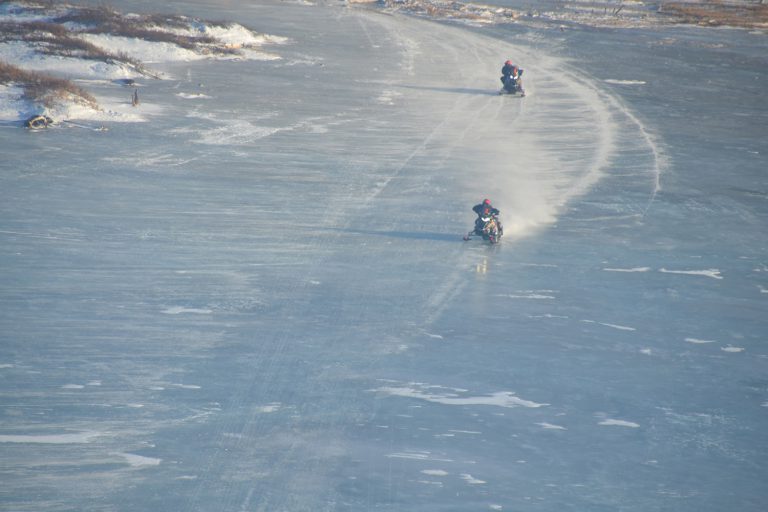
The Iron Dog Pro Class starts Feb. 17, 2019 on Big Lake and finishes Feb. 23 in Fairbanks. Racers travel more than 2,000 miles from Big Lake to Nome, then to the Fairbanks finish.

Woodbury is a lifelong Alaskan who has followed, reported on or participated in the race since its inception in 1984. He has run the Trail Class twice as part of the Iron Dog media pool, and has also covered the race via airplane. That coverage from land and air has allowed Woodbury to visit every checkpoint and gain unique insight into the workings of the Iron Dog race, and he’s made good friends along the way.

“Some of my best experiences as a journalist have occurred while covering the Iron Dog,” Woodbury said. “The checkpoints are filled with enthusiastic fans who are beyond generous with their time, their housing and their spare sled parts. But, I’ve got to say, the highlight in every checkpoint for me has been the folks you meet…and the delicious food they provide as the racers roar through. I’ve gained friends – and pounds – at every checkpoint.”

Iron Dog’s continued success as a legacy event in Alaska is due to the passion of its fans, supporters, sponsors and racers, Woodbury said.
“The thing about the Iron Dog is, if you already know about it, you love it. If you’re just learning about it, you’re going to love it,” he said. “It’s an event that is charged with the intensity of high-speed racing and tempered with chess-like contemplation. It’s a rollercoaster of emotions played out in a minefield of backcountry Alaska. You can’t help but become absorbed with the race.”

Woodbury said he plans to build on the passionate support base, and tap into the experience of the board.

Also new for the 2019 Iron Dog are a fresh slate of new board members. With four members recently elected to the board of directors, there is a solid mix of institutional knowledge and fresh new ideas, said Iron Dog board President Jeff Johnson.

“Iron Dog has been fortunate to have a stable and decisive board of directors for decades,” Johnson said. “There’s nothing more advantageous than surrounding yourself with experts in their fields who are willing to sacrifice their time and energy to create and maintain an event such as Iron Dog.

“Thanks to all the sponsors, volunteers, and fans who support Iron Dog,” Johnson said. “Your financial resources, endless hours of work and support are essential and appreciated.

“The board is excited to bring John on as our executive director. Having worked with him in the past, the board was confident that John was the right person to lead Iron Dog into the future,” Johnson said. “Thanks again to all the volunteers who help put on such an amazing race. It’s going to be another exciting year for Iron Dog.”

The Iron Dog board is comprised of the following members: Jeff Johnson, Eagle River, President; Roger Brown, North Pole, Vice President; Lee Butterfield, Anchorage, Secretary; Ginny Emmons, Nome; Jake Goodell, Anchorage; Penny McKibbon, Wasilla; Keith Manternach, Anchorage; Steve Mattila, Anchorage; Micah Huss, Big Lake; Dennis Falldorf, Anchorage; Doug Dixon, Anchorage; Unch Schuerch, Wasilla.

Woodbury owns Alaska Adventure Media, which publishes Alaska SnowRider and Coast magazines, among other titles. To focus on the Iron Dog executive director tasks, he has put those two publications on hiatus until May.