Home Blog Page 117

SKI-DOO TURBO LOGIC

0

We’ve been accused of being completely Ski-Doo-biased because we didn’t poo-poo the new Rotax turbo for making less power than a Yamaha or Cat turbo. Well, as Rowdy (Kyle) Bush says: “Haters will be haters”.

Yes, it’s true; the new Rotax 900 ACE turbo claims about 30 less ponies than either of its competitors (150 versus 180). We can’t deny it, nor do we really care.

The idea behind the new turbo was to give the hordes of now-deleted 1200 4-TEC 4-stroke owners a place to put their money when they decided to move up. The 4-TEC made a conservative 130-hp and mountains of torque – and yes, was a potent, much-loved powerplant.

So, logic would say: “Why spend all that money, design all that complexity and make the consumer spend more money to get a jump of 20-horses?” Good question.

We think there’s a bigger picture here and you need to look a couple of years into the future to understand it.

This engine and turbo combo already makes over 170-hp in the off-road world. Yes, the production Maverick X3 uses the same engine with an outsourced turbo (the snowmobile uses a Rotax-built one) to deliver a claimed 173 ponies.

As you know, when it comes to turbochargers, to make big lumps of increased power, it’s not much more complicated than increasing boost and doing some mapping changes. Do you really think Ski-Doo engineers haven’t already been experimenting with doing just that?

So, if you’re Ski-Doo, why not lay all the cards on the table and come with the biggest gun possible from the outset? We think there’s a place in the ‘Doo brochures for a conservative turbo (150-hp) and a no-holds-barred turbo (180-plus) sometime in the future. Maybe Ski-Doo sees it as two separate markets – and there’s a lot of sense in that premise.

Many high performance buyers aren’t interested in having the ultimate, king-of-the-hill rocket ship lake racer that may be compromised in other areas. The 150 Turbo makes sense for those buyers – and, no, they won’t feel ripped-off because they got passed by a Yamaha on the lake.

Furthermore, we don’t think this new SD turbo constitutes Ski-Doo’s way of using consumers to “test” its new product. We see this a well-thought-out strategy intended to change the marketplace. Wait, has Ski-Doo ever done that before?

IS ACTIVE SUSPENSION THE FUTURE?

0

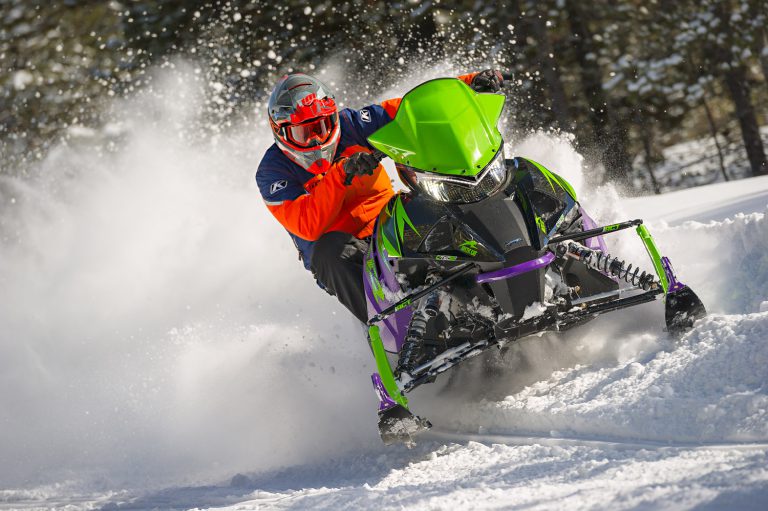
If there’s any one development this year that has stirred our imaginations it has to be Arctic Cat’s iACT suspension.

I know, you’re probably thinking, what about the Ski-Doo Turbo or the new 850 Patriot? True, those are biggies, but the concept of what we would call “semi-active suspension” speaks much more loudly for the future of snowmobiling.

Suddenly, we can envision a day when rider adjustability advances to the point where you don’t even have to think about the condition of the trails you’re riding over: The sled just automatically adjusts shock damping (maybe even the springs) to adapt to the terrain.

This concept was a pipe dream until we got into the details of iACT.

iACT does require the rider to input adjustments from the handlebars so the sled will adapt to washboard or medium moguls – but the fact you can simultaneously adjust both the front and the rear suspensions within a second is a giant leap ahead in ride compliance.

Here’s where we can easily see things going: Polaris already uses an advanced active suspension system on its off-road RZR side-by-sides. It’s called DYNAMIX and it’s capable of adjusting all corners of the vehicle at once – only without any input from the driver.

DYNAMIX uses sensors to determine the condition of the terrain you’re riding over – while you’re riding over it. It then automatically selects the correct amount of damping, sends the info to the shocks and they tune themselves to conditions almost instantaneously.

As you’re riding, the system keeps adjusting. Hit a jump and while you’re in the air the compression damping automatically goes to Firm for the best possible landing, then automatically returns to its preset level.

Our test riders have sampled DYNAMIX and claim it is not merely impressive but earth-shattering! The ride results are life-changing and simply exceed anything else available – at least as far as production vehicles go.

So, Polaris already owns this very impressive technology. How long do you think it will be before it shows up on a sled?

Polaris would be wise to jump all over DYNAMIX for snowmobiles before the competition gets going on copycat technology.

We think the proof will be in the riding this year and those who ante-up the cost for iACT will be so happy with it, it will open the door for even more competitive systems.

Walking Through The Swap Meet at Hay Days 2018

0

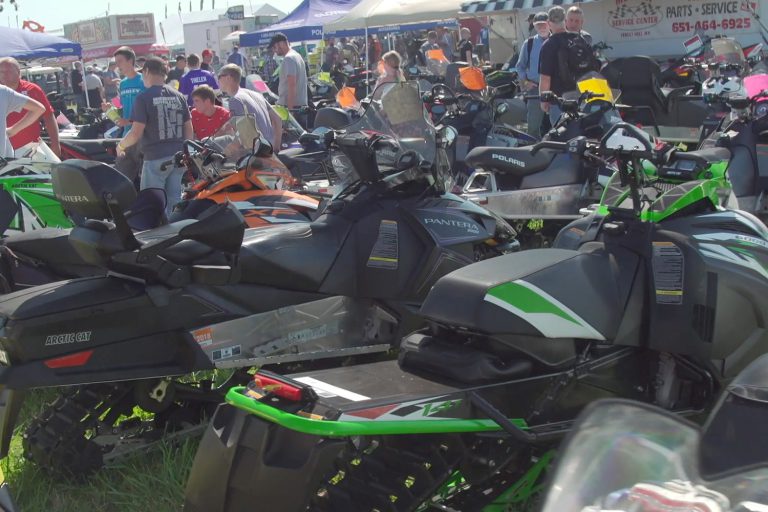
Luke and AJ venture through the endless aisles of Swap Meet while in attendance at Hay Days 2018 over the summer and Luke goes on a quest to buy that ‘special something’.

Subscribe to our YouTube Channel!

509 – 2019 Gear Line

0

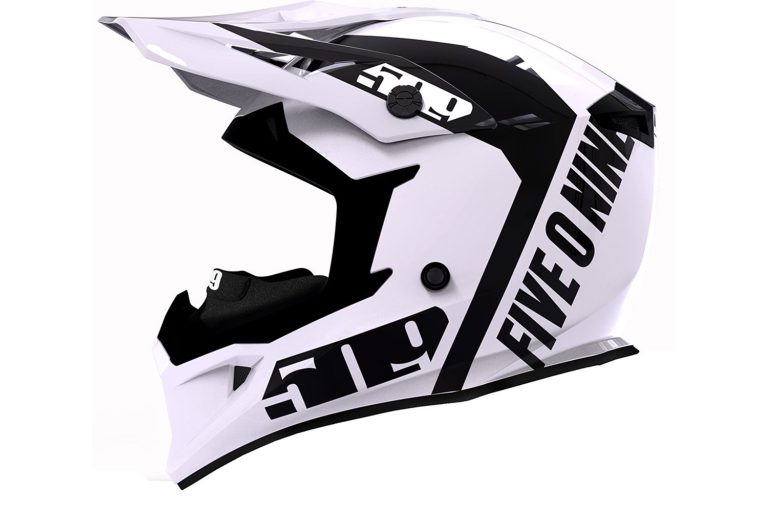
For the past 14 years, we’ve made it our mission to design and develop the absolute best in technical snowmobile gear. Introducing the 2019 gear line from 509.

Now available at your local 509 dealer or at www.ride509.com.

https://youtu.be/XS0-BSnoj94

850 Switchback XCR vs. Renegade XRS

Dear Motorhead:

If you were choosing between the XCR 850 Switchback and the XRS Renegade which sled would you go with?

Comment from Facebook

Thanks for your inquiry!

This is a question we’ll be asked a hundred times this fall!

First, even though we’ve had lots of exposure to the new Polaris Patriot 850 we have not been able to run the Ski-Doo 850 nose-to-nose against it. This would help us answer your question because ultimately the comparo will come down to which is fastest (top end and acceleration).

Here’s what I can say from the exposure we’ve had to both 850’s individually. The Polaris feels softer at engagement and trail speeds. Not slower – just a more easy power curve while the Ski-Doo “feels” more abrupt and edgy.

As speeds rise – and according to my seat-of-the-pants-o-meter the Polaris feels stronger. At mid throttle north of 6500RPM the Patriot Polaris beats its fist on its chest and pulls as hard as anything I’ve felt right to shift RPM and past the C-Note.

Is this top end surge stronger than the Ski-Doo’s? Honestly – there was no way to quantify that unless we had both sleds at sea-level. The OEM’s frown on head-to-head drag races at Snow Shoot in West Yellowstone and at the 6600 foot minimum altitude there comparisons are not boiler plate verifiable.

I know I’ve left you with the impression the Polaris feels less powerful at low speeds compared to the Ski-Doo and the Ski-Doo feels less powerful at high speeds. This is my opinion based on very limited testing.

I can tell you this – we have both of these 850’s in varying platforms in our Press Fleet this winter and we will report on the results of heads-up comparison here at sea-level as soon as the snow is down and Kevlar Lake tightens up.

In terms of NVH it is immediately apparent Polaris has done its homework with its new and different engine mounting system. The 850 Patriot is buttery smooth – smoother than the Rotax.

In the meantime, here’s some opinion. Both these 850’s deliver more power than any normally aspirated snowmobile engine ever built. They both make at least 160 HP (probably more) and they both are blistering fast – right past 100 per.

I would also suggest you consider this reality. If you were Polaris – admittedly second to arrive in the 850 game, would you come to market with less or more power than the Ski-Doo?

Thanks,

Motorhead Mark

Arctiva introduces the new Pivot 2 Jacket

0

Janesville, Wisconsin – September 25, 2018 – Janesville, WI – Finding a unicorn used to be easier than finding performance snowmobile gear at an entry-level price. That changed when we released our Pivot line of gear. With its 100% waterproof construction and 200 grams of insulation throughout, the Pivot jacket and bib offer excellent protection from the elements without breaking the bank. New for 2018-19 is the Pivot 2 jacket. Offering all of the same features with an updated look, the Pivot 2 provides another option for the budget minded rider looking for performance outerwear. Sizes S-5XL. Suggested retail $149.95-159.95.

KLIM Backcountry Team Ride 2018

0

KLIM just released the latest 2018 Backcountry Team Ride video, where their mountain athletes spend two days riding epic Rocky Mountain terrain in KLIM’s testing grounds.

There’s really nothing like it. When KLIM takes premier snow athletes to the mountain west, it’s nonstop action. The third annual Backcountry Team Ride was yet another excellent opportunity for these athletes to ride together, push each other, and learn the constant improvements in gear. The level of riding skill here is truly unmatched, so it’s a chance for the pros to challenge each other with bigger climbs, jumps and aggressive riding.

It’s not just games and playtime, though. The KLIM Backcountry Team Ride is a perfect place for KLIM to continue gathering feedback on new gear. These athletes are extremely hard on their equipment, so KLIM greatly values the ability to get real, live feedback on the newest products.

The Backcountry Team Ride is also a chance for KLIM to sit down with the athletes and update them on the latest gear technologies, as well as train them on the differences between KLIM and any other snowmobile gear company. Constant development means it’s important to show these riders why gear is made the way it is, and how it’s built to further improve their time on the snow.

KLIM gear is engineered from real world experience and by listening closely to rider feedback. This continued drive to enhance the riders experience wouldn’t be the same without a dedicated team of backcountry riders pushing sleds and gear to the limits.

https://www.youtube.com/watch?v=ycThkrWdH-E&t=339s

https://www.facebook.com/KlimUSA/videos/1878388005579409/

HYPERSLED ENGINES: Polaris Patriot 850

0

Polaris saw the writing on the wall with Ski-Doo’s 850 E-TEC being such a big hit when it was introduced.

Although Polaris’ Liberty 800 was and still is a formidable powerhouse, from a marketing perspective it just flat-out wasn’t an 850.

Enter the Polaris Patriot 850. This big-inch Cleanfire Semi-Direct injected 2-stroke addresses the wants of the marketplace with increased power and torque and all the sizzle ownership of “King of The Hill” status can bring.

Obviously, Polaris knew what it had to deliver with the Patriot 850. While Ski-Doo was enjoying sales success with their new engine, Polaris had a distinct advantage bringing the Patriot to market.

They began developing their 850 before they introduced the Liberty 800 in 2015 and long before anyone saw the Rotax 850! Important issues like NVH and ensuring belt durability with the Patriot’s huge power had time to be thoroughly tested and fully vetted.

The bullet is in the chamber and Polaris has the 850 Rotax in their cross hairs. Get ready – it’s time for you to pull the trigger.

Producing power wasn’t Polaris’ first concern: This engine had to be as reliable as a Supreme Court judge and live a long, trouble-free life for its owners.

Thus, all 2019 Polaris snowmobiles powered by an 850 Patriot come with a transferable 4-year engine warranty. That level of confidence in an engine looks to us like long-term value. However, in order to give consumers this kind of coverage there had to be some differences.

Polaris started at the bottom end with humongous crank bearings and a beefier crankshaft. The crank bearings measure 40 x 80mms compared to the 800’s 35 x 72mm!

Power transfers into the primary clutch via an enlarged taper where a much larger drive belt, distinct to the 850, lies. Belt life is a big deal and something Ski-Doo has struggled with. Polaris engineers have expressed a high level of confidence in both belt durability and clutch performance.

A lot of this confidence comes from new engine mounts that do an incredible job of cancelling vibrations throughout the chassis without the use of a torque stop.

Externally, the 850 is surprisingly compact and despite all of its strength-enhancing architecture only weighs 6.5-lbs more than the Liberty 800. Huge 50mm throttle bodies are used and the claimed uptick in horsepower (over the 800 Liberty) is rated between 7 and 9-percent with a noticeable increase in torque.

By casting water passages internally, external cooling hoses have been eliminated and new electronically controlled exhaust valves use a “smart” servo-operated actuator for better accuracy.

Our early appraisal says this engine impresses with its incredible smoothness, kick-in-the-butt bottom end and its ability to pull tall gearing because of its ample power.

Is it faster than an 850 E-TEC? We’ll let you know as soon as the snow flies.

HYPERSLED ENGINES: Ski-Doo 900 ACE Turbo

0

There’s been plenty of scuttle circulating about Ski-Doo’s new 900 ACE turbocharged engine available in almost ever segment of snowmobiling this year.

First we need to explain that the 150-hp rating of this engine is a bit of an understatement.

Although the dynamometer may read 150, the copious amounts of torque this engine generates makes it feel and perform like a much bigger engine.

We don’t have access to that particular torque info yet, but in comparison to 150-hp 2-strokes, this engine pulls way harder and can easily take advantage of taller gearing without an eyeblink.

Although the 900 ACE engine has been around a few years, this version has been considerably beefed internally to handle the extra pressure of the turbo.

It uses new, beefier connecting rods and different pistons with strength added on top where combustion happens and in the wrist pin area.

Naturally there have been adjustments to camshaft profiles, cooling, oil circulation and timing to deal with the estimated 55-horse increase over the naturally aspirated 900.

The big story is the turbocharger itself. This liquid-cooled, oil lubricated unit is wholly manufactured by Rotax and is not an import from another supplier.

The advantage here is that Rotax was able to control the specifications of what was required and did not have to adapt someone else’s design to get exactly what it wanted. We’re told it is engineered to operate in the 100,000 to 170,000 RPM range (that’s a pretty big range).

The turbo is actually mounted within the exhaust manifold very close to the exhaust ports so the compressor vanes can spool much more quickly as engine RPMs increase, thus reducing lag.

The compressed air charge is then routed through an intercooler, dropping the temperature of the compressed air entering the engine (cooler air has more oxygen). Boost is controlled by an electronic wastegate.

For those who are disappointed in Ski-Doo’s claims of 150-hp when the competition are already at 180, be encouraged by the fact the same engine and turbo already make a claimed 175-ponies in production Can-Am X3 side-by-sides.

This evidence tells us the whole story hasn’t been told on this engine and Ski-Doo is carefully field-testing it this year to ensure there are no glitches before it unleashes its full power potential, probably next year, in an all-new model.

2019 SKI-DOO MXZx 600RS

0

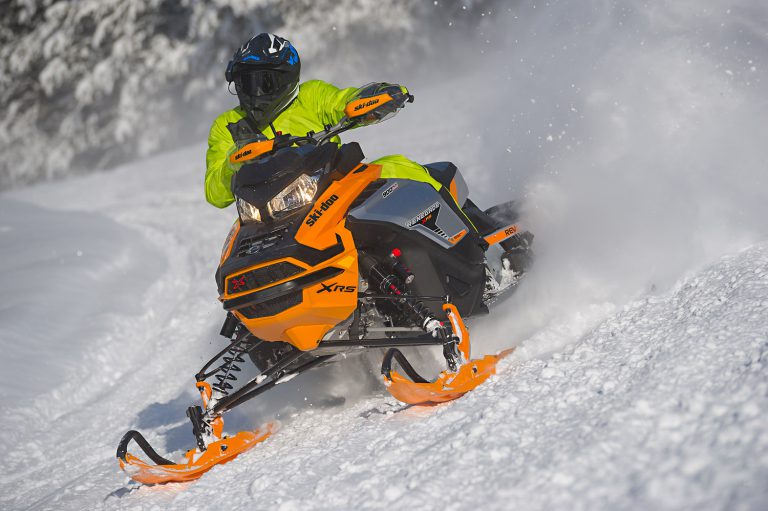
BRP introduces the 2019 Ski-Doo MXZx 600RS E-TEC racing snowmobile with a new look, lighter weight and longer track designed specifically for snocross racing in North America.

The 2019 MXZx 600RS E-TEC, which is based on the REV Gen4 platform for superior rider ergonomics and handling in rough conditions, features significant changes designed to provide better race starts, faster turning, better bump absorption and a weight reduction.

The Gen4 layout retains the narrow design featuring centralized mass for agility and responsiveness while the Ergo Step side panels and beveled tunnel gives racers enormous freedom to ride the way they want – without interference from the chassis.

New this year will be a 137” track length for more traction and better holeshots, a lightweight hood, new lighter LED headlight, larger and newly Kashima coated KYB Pro shocks. Additional refinements to many systems result in more power at the track, a lower center of gravity and even sharper handling.

The RAS 3 front suspension will feature a new longer, stronger spindle that allows higher cornering speeds and a unique power steering system that provides ultra precise handling with less effort so racers can change lines easily. The Pilot R ski, first introduced last year, is further reinforced in 2019 for more durability and features a very aggressive profile.

The Racing rMotion skid frame in back is completely redesigned for the 137” length track with new motion ratio geometry for both front and rear arms. All four KYB Pro shocks (40 mm front and 46mm for both rear) will be Kashima coated for less friction, longer life and consistent performance. All shocks have new calibrations and the rear shock adds rebound adjustment to the high and low speed compression adjustments.

Also introduced last year, the very special – for racing only – Rotax 600RS E-TEC engine gets updated with new calibrations, new hot start button and new stainless steel tuned pipe. The Rotax engine features E-TEC direct injection, that always delivers quick response and perfect calibration no matter the altitude or weather conditions so racers and their crew have one less thing to worry about.

Other features include booster injectors first deployed on the Rotax 850 E-TEC, a short intake tract with double reeds and digital eRAVE. The new calibrations focus on improved acceleration, mid range power and easier use of the hot start feature. The new stainless steel tuned pipe contributes to the weight savings.

New in 2019 will be a throttle block with two positions that coincides with ECM updates allowing easy changes for Junior classes where the throttle is limited to 50%.

With all the power the MXZx 600RS produces, racers also need great brakes and the Brembo four-piston brake caliper mated to a stainless steel rotor delivers. For 2019 the rotor is 20mm larger in diameter for 15% more stopping power and better consistency in long races. The caliper is also repositioned for easier maintenance.

Chassis changes in addition to the lightweight Lexan hood and LED light include new engine mounts, new lighter belt cover with better airflow and new high flow left footrest vent.

The drive line is updated with a new, lighter drive axle, revised slip gear for better durability and new pDrive calibrations ready for the snocross track.

2019 MXZx 600RS Highlights

• REV Gen4 Platform –
• NEW 137” Track
• NEW Lightweight Lexan Hood
• NEW LED Lightweight Headlights
• Reinforced E and S modules
• Taper/tilt tunnel
• Short heat exchanger (Replaceable rear part of the tunnel)
• MX inspired seat with New foam for durability
• Racing foot box
• 5-gallon fuel tank
• Lower center of gravity
• NEW High Air Flow Left Vent
• RAS 3 Front Suspension
• NEW Kashima coated 40mm KYB Pro R Series shocks (High Speed /Low Speed compression and Rebound adjustments)
• NEW shock calibration
• Rack steering with power assist
• NEW longer Spindle design (Stronger + better speed cornering)
• Lightweight Pilot R2 Ski – Reinforced

Racing rMotion Rear Suspension

• NEW 137” length
• NEW Lightweight Front and rear arms
• NEW Kashima coated 46mm KYB Pro Series piggy back center shock w/ compression adjustment (High Speed – Low Speed)
• NEW Kashima coated 46mm KYB Pro Series piggy back rear shock w/ rebound and compression adjustment (High Speed – Low Speed)
• Revised geometry (New motion Ratio front and back)
• Rotax 600RS E-TEC Engine (599.4 cc)
• E-TEC direct injection
• Intake booster injectors (850-inspired)
• Shorter intake length (850-inspired)
• Double reed valves (850-inspired)
• Mono block cylinder design with Plasma coating
• eRAVE (850-inspired)
• NEW lightweight exhaust system (Stainless steel tuned pipe)
• NEW engine calibration
• NEW Throttle Block – Ready for 50% throttle applications
• NEW engine mounts
• NEW Hot Start Button (Easier to use)
• Drivetrain
• pDrive primary clutch
• TEAM TSS-04 secondary clutch
• Revised slip gear – Better durability
• NEW RS drive axle (Lighter)
• Brembo Brake System – 20mm larger diameter rotor, better consistency – Relocated for easier maintenance
• NEW lightweight belt guard – better air flow