Home Blog Page 69

NEW INNOVATIVE TOW-BEHIND TRAIL GROOMER

0

Luke provides an overview on Homestead Legacy’s new product that solves the problem of worn-out feeder trails on your personal property or on land you have permission to access with your snowmobile, ATV or Side x Side.

Subscribe to our YouTube Channel!

MIDRANGE TRAIL SLEDS: 2021 SRViper L-TX GT

0

The big question is this: How much power do you really need?

Sure, a lot of snowmobile shoppers would argue, “If you’re in for a penny, you’re in for a pound”; meaning if you’ve got your wallet out, why go for a 95-130 horsepower sled if you can spend a few more bucks and get a 160-200-hp one?

The hard truth is this – and it’s challenging to get power-hungry buyers to fully understand what we’re proposing here – not everyone wants or most certainly, needs more than the 130-hp ceiling this line-up offers.

Here’s a look at some of the most popular (and largest selling) trail sleds that fall splat into the middle of the power wars.

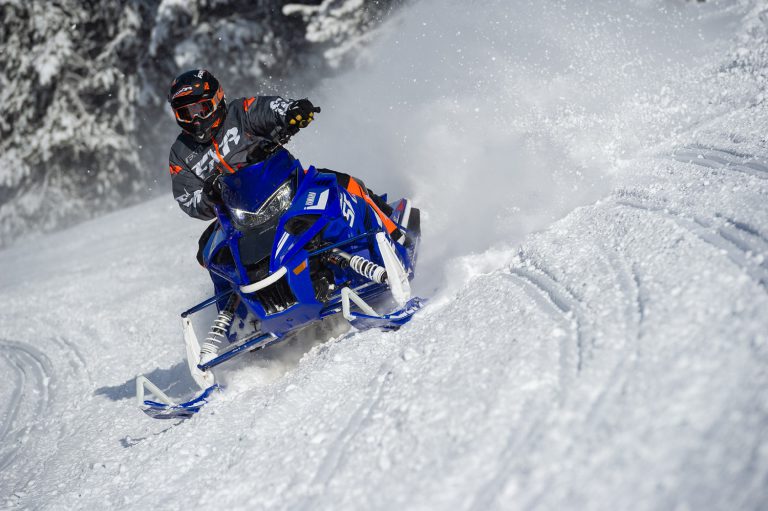
Yamaha SRViper L-TX GT: Feels Even More Like A 2-stroke!

Yamaha has stepped up with improvements to the Viper. This model had remained mostly unchanged. The updates are welcome and show Yamaha is committed to the Viper paradigm.

Not that a lot needed changing. This sled always produced nice linear power and the combo of the SR chassis with a 1,049cc 4-stroke triple was about as close to magic as you can get with a 4-stroke.

By remapping the ECU, Yamaha has delivered something that feels broader than the 130-hp the 1049 claims. This change, along with offering only a 137-inch track (no 129), has brought new life to the Viper. QS-3 shocks were added, a heated seat and a brand new pair of skis.

The new Stryke skis are very big news and have virtually eliminated darting and hunting on hard-packed surfaces. More importantly these new skis completely eliminate understeer providing predictable initial turn-in and apex biting control through the center of turns. The Stryke has hit the goal-line dead-on.

Last year the Viper got fresh, new easy-to-remove bodywork and an aesthetic makeover to amp up its appeal.

This sled is a longterm keeper and that 1049 triple has acquired a reputation for heroic durability. There are no complaints about belt longevity or any other mechanical deficiencies.

The main thing is, this is a truly fun sled to ride long distances. It’s quiet while producing a compelling, throaty exhaust cadence.

It’s undeniably good on gas, rides nicely, handles good and has all the benefits a 4-stroke offers in a sled that feels like a 2-stroke.

Keep this in mind as well – there’s no other comparable to it in the marketplace.

Arctic Cat Supports AIARE to Commemorate Rob Kincaid

0

To commemorate Rob Kincaid and his passion for safety in the backcountry, Arctic Cat is supporting The American Institute for Avalanche Research and Education (AIARE) by offering a custom, Kincaid-inspired 2021 M 8000 Mountain Cat ALPHA ONE 165 ATAC.

All proceeds from the donation-based sweepstakes will go to the Kincaid family and AIARE to continue avalanche safety initiatives.

The Wild West Customs-built sled is based off a Kincaid original design that he considered his dream sled. It features a unique Octane Ink wrap and loads of premium accessories and upgrades.

Enthusiasts interested in the sweepstakes can visit AIARE’s official sweepstakes webpage for more information.

Donations start at $25 up to $2,000; the higher the donation, the more chances to win. The sweepstakes runs from Monday, December 14, 2020 at 10:30 a.m. EST through Monday, March 1, 2021 at 12:00 a.m. EST.

AIARE will announce the winner and take questions about avalanche awareness on Facebook Live on March 1 from Kincaid’s hometown of Victor, Idaho.

Links will be posted on Arctic Cat social media when available so stay tuned for more information!

MIDRANGE TRAIL SLEDS: POLARIS INDY MATRYX 650

0

The big question is this: How much power do you really need?

Sure, a lot of snowmobile shoppers would argue, “If you’re in for a penny, you’re in for a pound”; meaning if you’ve got your wallet out, why go for a 95-130 horsepower sled if you can spend a few more bucks and get a 160-200-hp one?

The hard truth is this – and it’s challenging to get power-hungry buyers to fully understand what we’re proposing here – not everyone wants or most certainly, needs more than the 130-hp ceiling this line-up offers.

Here’s a look at some of the most popular (and largest selling) trail sleds that fall splat into the middle of the power wars.

POLARIS INDY MATRYX: New, Improved and Faster!

It looks like Polaris intends to own the midrange trail class of sleds this year. The company’s selection of sleds powered by either a 600 Liberty 2-stroke or the new and much talked-about Patriot 650 actually comes close to exceeding the total of all sleds from every other OEM in this class.

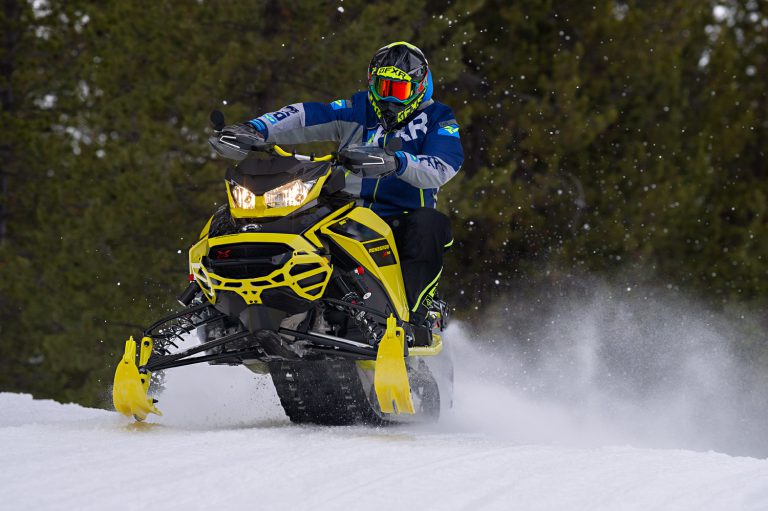
The MATRYX is at the top of everyone’s inspection list at dealerships this year. For its debut year in this category Polaris has offered two models on the MATRYX platform and they’re both available with choices of 129 and 137-inch tracks.

The premium MATRYX is the VR1 and it comes with all the new MATRYX amenities: A new and dazzling digital instrument layout with a GPS you don’t need a cell phone to operate, a new and more powerful headlight, auto-adjustable hand and thumb warmers and cavernous storage in more than one location on the sled.

The seating ergonomics have been rethought (rider sits lower and seat is narrower at the front), there’s new bodywork offering better underhood ventilation and wind protection for the rider and the biggest deal of all: A completely new 650cc Patriot 2-stroke twin based on the bones of the Patriot 850!

The VR1 differs from the Indy XC Launch Edition in that the Launch’s gauge features are a bit more in line with last year’s Polaris Indys (you can still upgrade if you like) and the shock package. Otherwise all the good stuff remains: Storage, bodywork, 650, hand-warmers and headlight.

Back to the 650 Patriot engine. This SDI 2-stroke has changed all the rules with its giant upgrade in both horsepower and torque. Simply, there is no comparison to it in the midrange class.

Many of our riders felt it was so strong it could actually affect sales of the Patriot 850. Not likely this year with so many dealers sold out, but still a pretty strong endorsement of this new engine.

The VR1 uses Walker Evans WER Velocity rebound and compression adjustable shocks and the XC Launch uses compression adjustable and rebuildable WE units all around.

It should be noted that Polaris has also been tweaking and tuning both the front end and the Pro-CC skid-frame to deliver ride and handling improvements compared to the already-stellar AXYS platform.

Sure, you want one, but the sad news is supply. There probably just aren’t enough at dealers and everyone who could possibly buy a MATRYX early, did so. Better get in line for next year.

TRACKJACK – GETS YOUR SLED UNSTUCK

0

We’ve all been there. Your snowmobile track digs a trench and you’re hung up, not moving. Yup, you’re stuck. Now you’re in for some serious grunt work and heavy lifting at the very least.

Depending on where you are and who you’re with, this situation can even be dangerous. A few years ago, David Wright and his young son Luka were snowmobiling in Northern Ontario near the Quebec border when their sled got stuck in deep snow. Conditions were frigid with no cell service and the nearest town a long way away.

Working alone and with his son to worry about, it was nearly two hours of exhausting work in the freezing cold before the machine was finally back on the trail. David was spooked, to say the least, and couldn’t help thinking “what if he couldn’t get un-stuck”?

The next day, David set out to buy the tool needed to lift the back end of his sled the next time he got stuck but to his surprise, nothing on the market existed. So he and his two boys took the initiative and designed one themselves.

David had several objectives in the design process:

1. It should easily lift the back end of a stuck sled
2. It should conveniently be assembled and dissembled
3. It must be conveniently carried on a sled
4. It needs to be cost-effective

The result was a tool his son coined as a TRACKJACK. Save your back, use a TRACKJACK ($145 CAD/$113 USD).

For more info – www.trackjack.ca

2021 Digital Display Overview: BRP Connect vs Polaris 7S

0

AJ’s in the TRAIL TECH shop giving you a detailed overview of the BRP Connect Display compared to the Polaris 7S display outlining the key features of each and what each one is capable of.

Subscribe to our YouTube Channel!

4-STROKE VALUE

0

If you are a regular follower of this insightful forum here at SnowTrax TV and Supertrax Magazine you’ve no doubt read some or all of our opinion pieces on what the market, during a worldwide pandemic, looks like.

I won’t belabor the point here – the market has been crazy for both new and late model snowmobiles through the entire fall sales season.

People want to go snowmobiling this winter and are prepared to lay down serious jing to achieve that goal. What’s really interesting to me is the amount of cha-ching sellers are asking and buyers are paying for late model snowmobiles.

I won’t even comment on the prices buyers are paying for the limited number of new MY 2021 iron. Let me qualify this description. There are almost no new unsold snowmobiles in the market either side of the border. If you can find one, how much are they selling for? Full pop, my friends. And everything else that can be charged on top of it.

So here’s an observation that Yamaha owners in particular will be happy to learn about. 4-stroke sleds are undeniably leading the way in resale value.

Recent data indicates two-year-old Yamaha 4-stroke models are bringing up to ninety percent of original MSRP. That’s good news for Yamaha owners and even better news for Yamaha dealers looking for late model Yamaha trade-ins.

One might be inclined to say this kind of resale value is COVID linked and isn’t sustainable. Maybe… but here’s what we think. Sure COVID is playing a part in all powersports product values, however, the sustained escalation of Yamaha 4-stroke snowmobile resale prices looks to us like a trend. Lets face it, 4-strokes bend the life span curve of the modern snowmobile in a pretty profound way.

Simply put, 4-strokes last a long time. Check out the asking prices for 2003 to 2010 RX-1, Apex and Vector models. Most, if not all Yamaha’s of this vintage are bringing amazing bucks and almost all of these sleds have what most would consider high miles (when compared to a 2-stroke). Many 2-stroke sleds are due for costly engine work at the 10,000 mile mark while 4-strokes are barely hitting their stride.

Some in the industry are saying a 4-stroke sled is a better investment – knowing you can roll over your sled every couple years for pretty ridiculously small change. We wouldn’t disagree. In fact, its been 20 years since we’ve seen resale values like late model 4-strokes are commanding right now.

Keep in mind, even though 4-stroke sleds are – in some model comparisons – more expensive when new than a comparable 2-stroke, the extra jing you lay down for the 4-stroke is increasingly becoming a safer investment.

Clearly, 4-stroke resale is the envy of the sno-mo-biz right now.

WHEN WILL WE SEE A NEXT-GEN SKI-DOO?

0

What we’re asking here is if the current Gen-4 will be replaced now that Polaris has come with its new MATRYX platform?

The reason we’re wondering if there will be something offered beyond a potential Gen-5 (a G-5 and a G-6) is a bit more technical.

Since its introduction, one of the Gen-4’s hallmarks has been the mass centralization of the company’s 2-stroke engines in its bulkhead.

When the 850 E-TEC was first announced, it was fascinating how Ski-Doo had redesigned the conventional 2-stroke so the engine was much narrower – particularly by using a “flat” stator so the engine could be positioned more to the middle of the sled. This was a pretty big innovation at the time and was deemed to solve all handling problems because now the sled was designed with weight distribution perfectly in balance.

Certainly, the design of two Rotax 2-strokes since the 850 reflect the same narrow design – the 125-hp 600R and the 80-hp EFI 600.

We’re pretty convinced Ski-Doo will stay with this “centralized” design innovation on all future 2-stroke platforms – thus, a new Gen-5 with these above listed engines under the hood will likely be similar in layout to the G4. We would gamble there will be a body-plastic restyle but not much else.

Whether or not the engine positioning change cured all handling ills is still up for debate and is really a moot point anyway since Ski-Doo has already brought out a new “X” design front end for MY2021.

The Gen-6 concept is all ours – and just addresses a problem we’ve been mulling over. It’s this: Ski-Doo’s strong selling 4-stroke line-up, comprised mostly of the ACE 900 EFI triple and the turbo version of the same engine, doesn’t appear to utilize the same science as the 2-stroke G4 chassis.

The 900 ACE 4-strokes are comparatively wider (at least 30-percent) compared to Ski-Doo’s 2-strokes and have different front bodywork that includes wider belly pan “jowls”, obviously to accommodate the extra width of the triple. The unofficial nickname for this 4-stroke design is the “Wide-Body”.

Although these Ski-Doo 4-stroke sleds are decent handlers, we can’t help but think the centralized weight theory simply doesn’t apply the same way it does in the 2-stroke twins.

Thus said, we’re wondering if we’ll see a different version of the current Gen-4 based 4-stroke sleds – similar to the XR concept that housed the now-deleted 1170cc triple – intended to be a more 4-stroke specific design. We’ll call it the Gen-6.

Perhaps a “Gen-6” design will allow Ski-Doo to better apply its centralized mass theory to a 4-stroke.

You’ll also recall how the former XR series Ski-Doos were introduced a full year after the XS 2-stroke models. We’d guess when (and if) a Gen 5 lands, it will be a year or two later before we see a “Gen-6” 4-stroke chassis.

BANNING GAS-POWERED SLEDS

0

A recent news story in Canada has Francois Legault, Premier of the province of Quebec (for our US readers, that’s similar to a state Governor), posturing to ban the sale of internal combustion engine powered on-road vehicles by 2035.

His rationale is the same as every other blinkered politician: Save the environment. To the Premier’s credit, Quebec is rich in low environmental impact hydro-generated electricity.

Of course, this has to be framed with the reality that the incredible amount of land mass flooded many decades ago to provide a reservoir for waterfall turbines to generate said power, created what would today be considered an environmental apocalypse. Oops, can’t do anything about that now.

I digress. Consider the fall-out from such a drastic, unwise move. First off, the reason electric cars are selling in higher ratios in Quebec compared to other Canadian jurisdictions is the abundant government subsidies (rebates) buyers receive, both provincially and federally.

These subsidies, if they remain in place, are monetarily unsustainable when you extrapolate their cost over the total Quebec auto market – not just a few percent of the market.

In the meantime the money your neighbor received toward the purchase of the Tesla in his garage came from the taxes on your purchase of fossil fuels for the internal combustion engine propelling your car.

Here’s where I want to touch on how this kind of move by government can have a cascading, detrimental impact on many other industries, not the least of which is the powersport and snowmobile tourism biz.

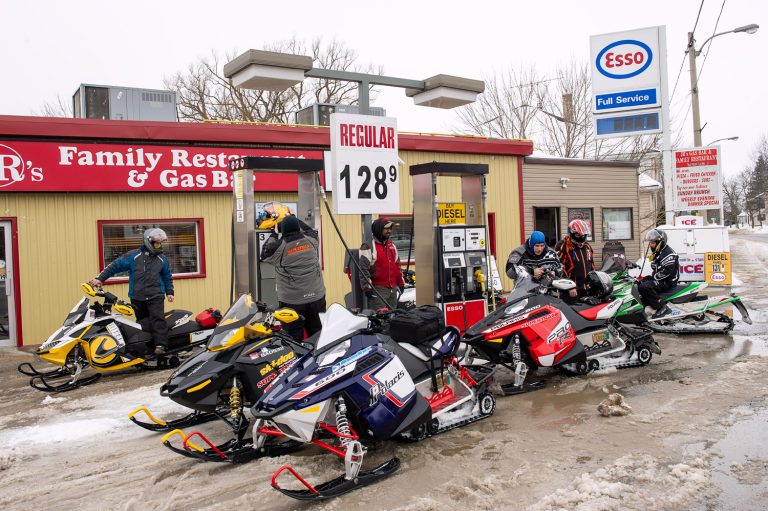
It’s no secret the number of gasoline retail outlets in pretty much every jurisdiction across North America is shrinking. In urban areas this isn’t a problem but in the rural and isolated places we ride our sleds, it is already a problem.

With an impending ban on gas powered on-road vehicles you can bet the number of gasoline retailers will shrink rapidly in Quebec, particularly in rural markets.

Yes, there will be an aging fleet of gas-powered vehicles for at least a dozen years after the ban, however, the trend will be to reduce fuel distribution and increase electric re-charge locations.

I need to say this about the ever-increasing predisposition of politicians to get ahead of themselves when it comes to electric transportation.

The three critical barriers to widespread replacement of fossil fuels with electricity haven’t changed in the last decade and frankly there hasn’t been much progress on any of them.

They are:

1. Range
2. Time to recharge
3. Availability of recharge retailers

For the record, we think the team at Taiga have been completely realistic with the development and targeted use of its new electric snowmobile models. Taiga is up front with its assertion its sleds are a better idea when it comes to rental fleets in places like West Yellowstone.

Snowmobile rental units are used on a completely predictable daily route by rental operators. Even mountain sled rental riders would be able to spend a day on a deep snow Taiga and have enough power to get home.

What isn’t about to happen in our sport until progress is made with the aforementioned three barriers (all three, not just two or one), is widespread consumer acceptance of electric powered sleds.

In the automotive world there are more than a few disillusioned electric car owners who have discovered they simply cannot get “there and back” without a hugely time consuming “fill up” with electricity. With an on-road electric vehicle the consequences of “running out” are relatively simple – get a tow to a charging station. With an off-road vehicle? Big trouble.

For snowmobilers and pretty much all powersport enthusiasts who don’t see themselves buying an electric powered off-road vehicle, Quebec’s move to all electric powered cars will create havoc.

With an inevitable reduction of gasoline retailers as a result of the sale of only electric cars, powersport enthusiasts will be stuck with carrying copious amounts of fuel when they ride in Quebec.

For the record, there’s no way a charging infrastructure supporting remote locations where off-road activity occurs year round, would be monetarily practical.

The cost for Level 3 charging stations capable of recharging an electric snowmobile to 80 percent in approximately 45 minutes (this is the fastest system available for electric powered vehicles) is huge.

Consider if just 5-percent of the sleds on trails in Quebec were electric powered. What would a local pit stop for lunch look like when six, eight or ten electric sleds needed charging to get home?

Don’t misinterpret what I’m saying here; I am in no way against electric powered snowmobiles. I think the integration of the current technology Taiga is pioneering and at the forefront of developing makes perfect sense. Ski-hill maintenance sleds, rental fleets and commercial operators like pole line and pipeline companies would all benefit from electric powered sleds.

If the big three detractors to electric powered off-road vehicles can be eliminated in the next ten years, then integration, not legislation of these vehicles into the market can provide an interesting alternative to current internal combustion powered sleds, ATVs, SxS and dirt bikes.

However, as it sits right now there’s a ton of work necessary to take electric power to the consumer off-road marketplace.

Snowmobile Helmet Safety Lights

0

Glenn Welch, President of Welch Manufacturing Technologies, Ltd., BITEHARDER’s parent company, has just announced that they have teamed up with Lenn Johnson and LJE Products, to market their “Snow-Dust-Buster Helmet Lights” under the BITEHARDER name.

“LJE Products helmet lights have proven their effectiveness over the past few years in helping to reduce accidents due to poor visibility on the trail”, explains Welch, who also went on to say, “the helmet lights fit perfectly with BITEHARDER’s continued commitment of bringing products to the market that improve the safety of snowmobiling.”

“We are very excited about the opportunity to work with BITEHARDER and be a part of their product line that keeps snowmobilers safe”, states Johnson, President of LJE Products and developer of the lights.

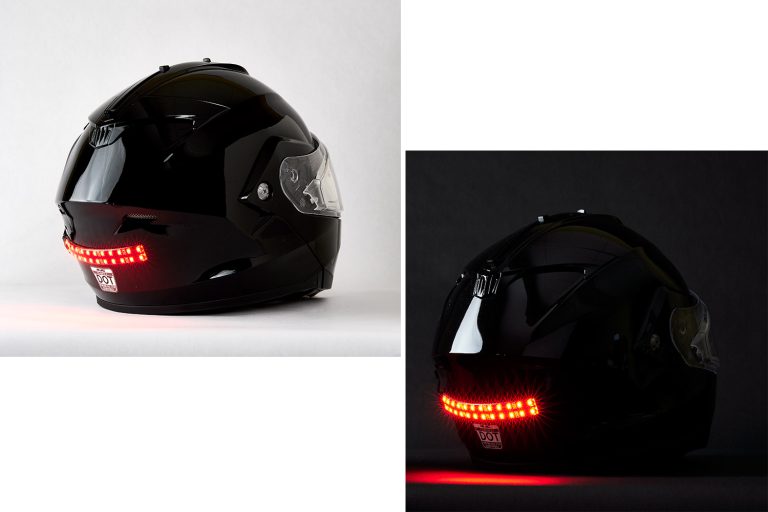
Using super bright LED technology, the helmet safety lights, which mount to the back of your helmet, improve visibility in all riding conditions including night riding, snow dust, snow storms, and fog, where often times your snowmobiles tail light is not visible.

Installation is simple, with no tools required. Power adapts from your helmets electric shield. Don’t use an electric shield? Power them independently using your snowmobiles accessory plug.

Made from the highest quality components available, for years of trouble-free operation, the lights come in five different colors – red, amber, blue, green and pink, allowing users to match their equipment, and easily identify other members of your group/family.

Sold under the name “BITEHARDER Helmet Safety Lights”, availability for the 2020/2021 season will be through BITEHARDER’s website and Amazon. Pricing for all color variations is $39.95 (U.S.) and $49.95 (Canadian).

As with all products sold by BITEHARDER, the helmet safety lights are included in their “Better Traction – Better Trails” program, where 10 percent of all sales are donated back to the state or province the sale originates from.

Founded by Glenn Welch in 1989, Welch Manufacturing Technologies, Ltd., a New Hampshire based company which specializes in the fabrication of machined components for the military, satellite, and commercial aerospace industries; developed a patented system of diamond coated tools for sharpening carbide traction products on snowmobiles. Since its introduction in 2013, BITEHARDER Products have revolutionized snowmobile performance and safety with “repeatable traction performance” all season long. Welch holds a B.S. degree in mechanical engineering from Northeastern University. An avid snowmobiler, he enjoys riding in New Hampshire and Canada where he logs more than 3,000 miles per season.

For more information about helmet safety lights, BITEHARDER’s “Better Traction – Better Trails” program, or their complete line of carbide traction sharpening tools and accessories, visit biteharder.com, or on their YouTube channel.