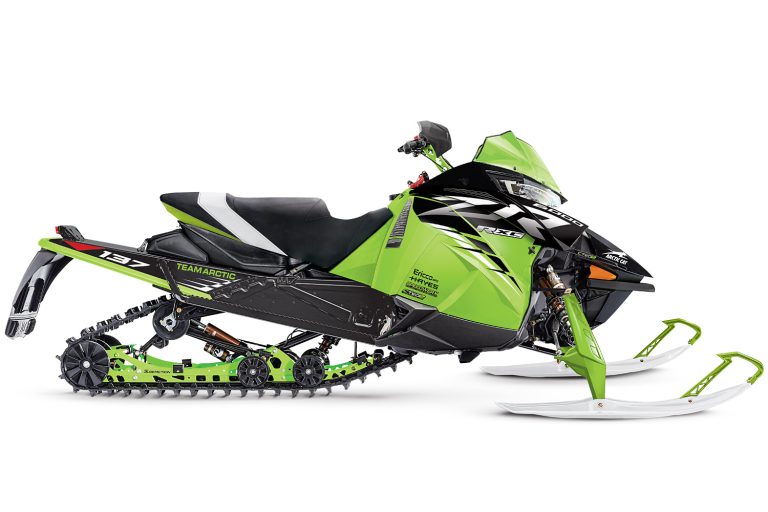
Home Blog Page 68

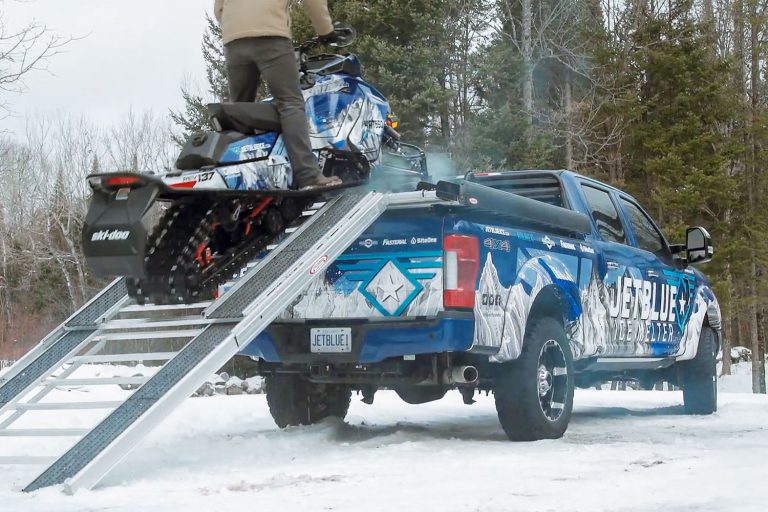
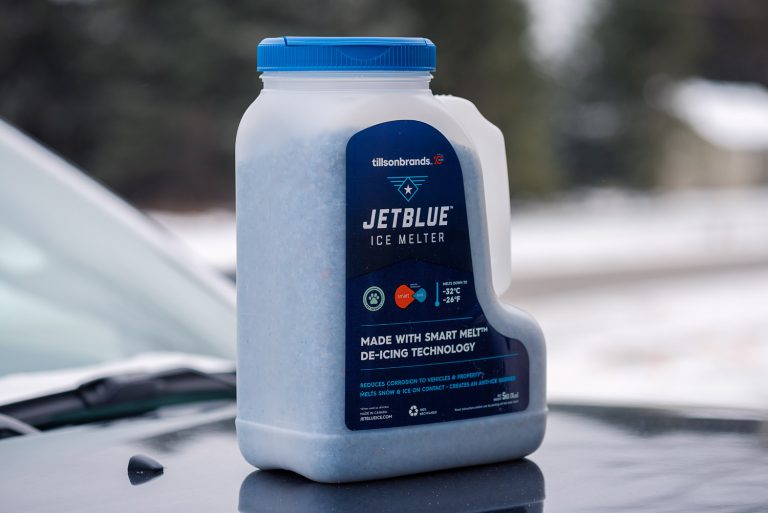
JetBlue Ice Melter by Tillsonbrands

0

Everybody uses some form of ice melter to deal with the winter climate pretty much anywhere temperatures drop below freezing.

Salt is certainly the most common product for these situations, however there are obvious downfalls to salt including inferior functionality in super low temps, environmental damage and of course, the messy staining to name a few.

We’ve discovered a product that does it all. It’s called JetBlue, manufactured by a company called Tillsonbrands.

JetBlue consists of a coating that’s a blend of polyols, organic salts and bio additives coating non-organic chloride pellets. It tackles ice fast and when sprinkled down, it actually gets started melting faster in temperatures as low as -32 Celsius.

If it’s really icy where you parked you can sprinkle some JetBlue in front of your truck’s tires so you can get a good launch in 4×4 to get your truck and trailer moving once you’re loaded with equipment.

Due to its super-melting properties, you use much less of it and when used properly you don’t damage the surfaces you’re spreading it on.

Sprinkle some in front of your trailer, loading ramp or just about anywhere around the outside of your home to reduce slips and falls.

Keep a convenient shaker in your truck and by the door to your house and you’ll never have to worry.

Visit tillsonbrands.com to find out where you can get yourself some of this superb product.

Why Snowmobilers Need JetBlue Ice Melter

0

AJ explains the benefits of JetBlue Ice Melter; a premium product every snowmobiler needs to have onboard when towing and trailering this winter.

Subscribe to our YouTube Channel!

MIDRANGE TRAIL SLEDS: 2021 POLARIS INDY XCR

0

The big question is this: How much power do you really need?

Sure, a lot of snowmobile shoppers would argue, “If you’re in for a penny, you’re in for a pound”; meaning if you’ve got your wallet out, why go for a 95-130 horsepower sled if you can spend a few more bucks and get a 160-200-hp one?

The hard truth is this – and it’s challenging to get power-hungry buyers to fully understand what we’re proposing here – not everyone wants or most certainly, needs more than the 130-hp ceiling this line-up offers.

Here’s a look at some of the most popular (and largest selling) trail sleds that fall splat into the middle of the power wars.

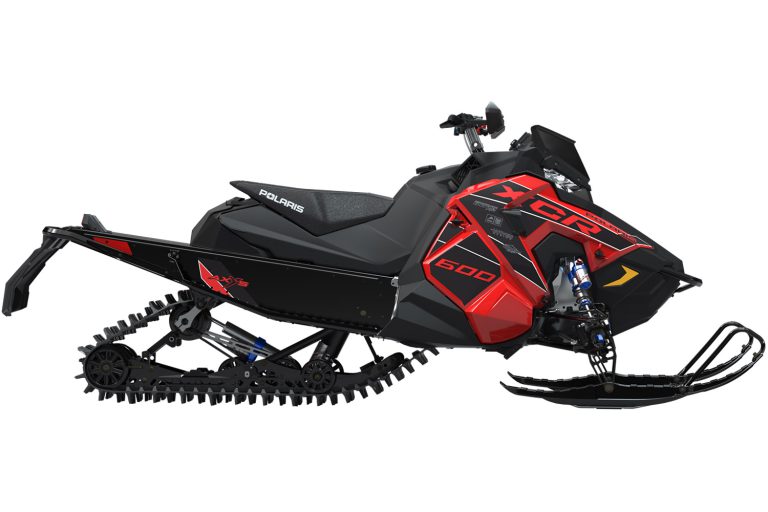
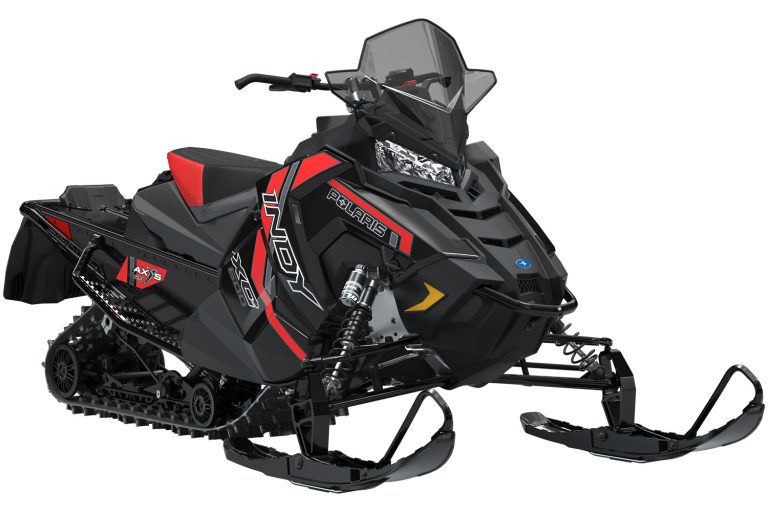
2021 POLARIS INDY XCR: Two Ways Get It Right!

When it comes to wannabe race sleds for actual trail riders, Polaris approaches the market in two distinctly different ways.

Both of the Polaris XCR models are targeted at the same market, but the company has chosen to offer the longer tracked Switchback XCR in the 137-inch Pro-Ride chassis using external shock technology and the 129-inch version of the XC in the Indy AXYS platform using conventional shock-in-tunnel tech.

We’re not sure why Polaris went this direction in MY 2021, but we tend to think it may have something to do with the intro of the new MATRYX platform this year.

Since either XCR is very, very close to being a competitive ditch warrior suitable for racing, we believe there just wasn’t enough time to get a new MATRYX calibrated to fit the bill of a very exclusive market.

Why continue with the Pro-Ride version in a 137-inch chassis? We think it has a lot to do with the past performance of this sled.

Frankly, The Switchback XCR is a fabulous example of the fine-tuning of an AXYS PRO-RIDE chassis and has proven its performance without any doubt in the past.

I guess the best answer is to ask another question: “Why mess with something that works so doggone good when it’s so likely there will be a completely clean sheet of paper in the next year or two?”

This brings up another interesting observation: If you want to know what the XCR future looks and performs like, borrow a ride on the 2021 Indy XCR 129.

This sled combines a jumbo set of Walker Evans WER compression and rebound adjustable piggybacks with a “race-inspired” Pro-CC coupled skid with rail doublers. There’s also a high performance brake with an external air scoop for cooling the brake pads when you’re running hard in tight areas.

We don’t even need to mention handling. Suffice to say, these two XCRs are at the top of the heap for knifing under your buddies in corners. Flat, predictable and accurate!

Both versions of the XCR use the SDI Liberty 600 Cleanfire and although this engine hasn’t been modified beyond subtle tweaks to the ECU and the clutching, it’s still the same efficient and reliable 2-stroke twin.

We can only guess if Polaris will go all-out in the future and make all XCRs Patriot 650s. We know what we’d do but that doesn’t mean Polaris will risk eliminating itself from some classes of competition. Hmm, I wonder what a 600cc Patriot would perform like?

As it is, Polaris will sell – or already has sold – every XCR it can roll off the assembly lines in Roseau this year. Good on them – and good on the riders who bought one. These two sleds are amazing!

MIDRANGE TRAIL SLEDS: 2021 ARCTIC CAT 6000 LIMITED

0

The big question is this: How much power do you really need?

Sure, a lot of snowmobile shoppers would argue, “If you’re in for a penny, you’re in for a pound”; meaning if you’ve got your wallet out, why go for a 95-130 horsepower sled if you can spend a few more bucks and get a 160-200-hp one?

The hard truth is this – and it’s challenging to get power-hungry buyers to fully understand what we’re proposing here – not everyone wants or most certainly, needs more than the 130-hp ceiling this line-up offers.

Here’s a look at some of the most popular (and largest selling) trail sleds that fall splat into the middle of the power wars.

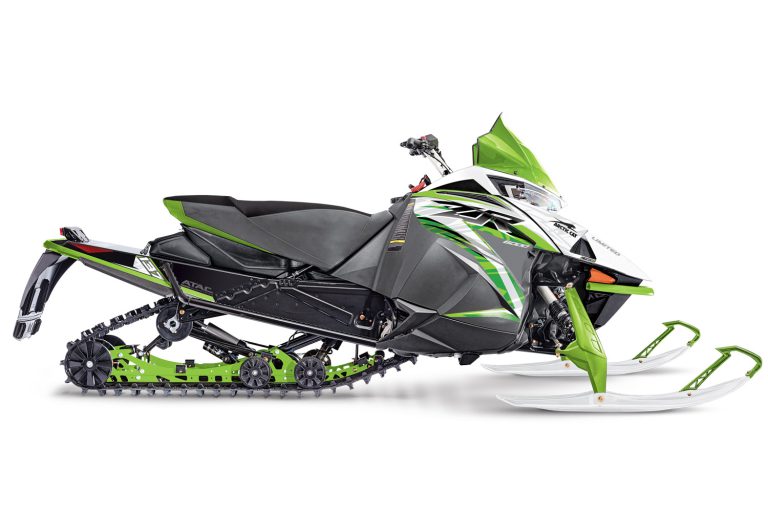
2021 ARCTIC CAT 6000 LIMITED: Incredible Adjustability!

Cat hasn’t been spending a lot of time or money promoting its snowmobile products these days and the most common question we’re asked is how the company is doing rather than what do we think about this or that model?

This is a shame because Cat has been working hard on its model line-up and has been trimming its selection and keeping prices down across the board.

One of our fave models this year is the 6000 Limited. This sled competes strongly in this midrange class and offers one feature you simply cannot get anywhere else in a 600 – ATAC.

ATAC is Arctic Cat’s acronym for a remote suspension adjustment system that allows you to fine-tune the sled’s shock dampening from the handlebars. This will be its third year in production and it’s an option worth every penny!

Even if you don’t spend extra for ATAC, the Limited still uses QS3 3-position adjustable compression damping shocks – and that’s always a good deal.

As far as the 6000’s 599cc Dual Stage or “slot” injected engine goes, it’s hard to find a better 600-class engine in the marketplace. Remember, this is the engine everyone else had to match a few years ago, and it still runs as strong as any other 600 out there.

Using a roller secondary and excellent clutch calibration, with 600ccs you’re pretty much guaranteed good belt life and solid shifting.

The 6000’s wide-spaced A-arm front end is also a strong point with this model. Cat has been tuning and tweaking this front end in harmony with skid-frame mods the last few years and the result is a very good handling sled that will not disappoint.

Probably the biggest area of improvement could be ergonomics. There have been complaints about the shape of the seat and the grade of foam being used, especially when the rider is seated far forward.

It might also be time to consider a more fully equipped digital gauge package on a high-end sled like the Limited.

Over all, the 6000 Limited is great value, and although its chassis is a bit long-in-the-tooth, Cat has been on a march to steadily improve the ProCross platform and this particular sled is still very competitive in this category.

Trails & Grooming Operations Allowed During Provincial Shutdown

0

Earlier today the Government of Ontario, on the advice of the Chief Medical Officer of Health, advised all Ontarians to stay home as much as possible with trips outside the home limited to necessities such as food, medication, medical appointments, or supporting vulnerable community members. Employers in all industries should make every effort to allow employees to work
from home.

“The number of daily cases continue to rise putting our hospitals and long-term care homes at risk,” said Premier Ford. “We need to stop the spread of this deadly virus. That’s why, on the advice of Dr. Williams and other health experts, we are taking the difficult but necessary decision to shutdown the province and ask people to stay home. Nothing is more important right now than the health and safety of all Ontarians.” (Government of Ontario News Release, December 21, 2020)

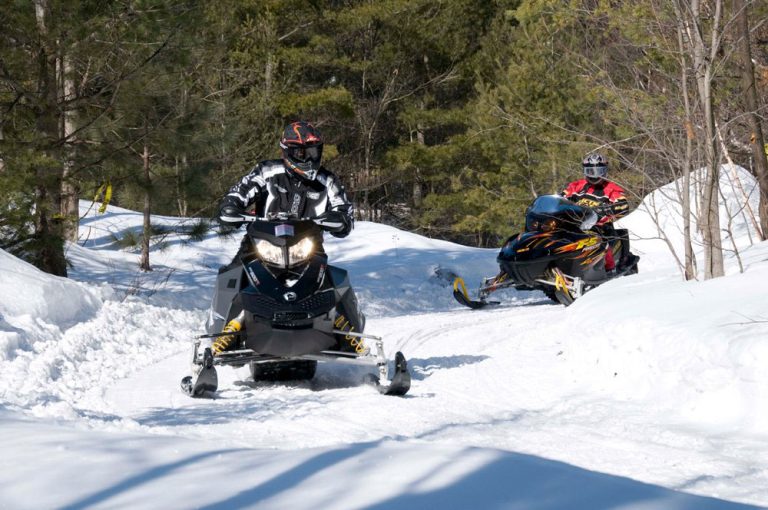
Given that physical activity is an important part of staying healthy, today’s announcement by the Government of Ontario stated that “trails servicing snowmobiles will be allowed to remain open.” This means that OFSC trails can open in accordance with all public health guidelines.

Being allowed to remain open allows the OFSC to proceed with trail and grooming operations, however snowmobilers are strongly encouraged to stay home and if they do ride, they need to be mindful of several other important factors related to the pandemic.

* Today’s announcement reinforced “that Ontarians should stay at home as much as possible to minimize transmission of the virus and prevent hospitals from becoming overwhelmed.” This means that during the shutdown, and when trails are in the Orange, Red or Grey Zones, trail riding will be local in keeping with public health restrictions. To facilitate this, the OFSC will implement Flex Trail options for local riding as and where appropriate. Check the Interactive Trail Guide before riding. Flex Trail options include trails within a public health region being available only for local residents.

* As the announcement also said: “Many businesses throughout the province will be faced with restrictions throughout the shutdown, including restaurants and bars, which will once again be limited to only take-out and delivery operations.” This means that snowmobilers may not have normal access to food services along the trails and should plan accordingly, although hotels and motels are permitted to operate.

* It is likely that all unattended buildings and washrooms (including outhouses and warm up shelters) on the trails will be closed with no access to riders. This is because public health measures demand that such structures “are subject to rigorous cleaning and sanitization protocols” which simply cannot be achieved frequently enough by volunteers, and thereby increase the risk of exposure and will likely close.

* OFSC trails connecting to another province (Quebec, Manitoba) or state (Michigan, Minnesota) will remain closed until further notice.

* The OFSC strongly encourages all snowmobilers follow current public health measures and practice our Ride Smart 2021 common sense approach to trail riding, including: Plan Ahead. Be Aware. Mask Up. Clean Often. Spread Out.

Even under these conditions, none of us can let our guard down. Only by continuing to demonstrate our willingness to be responsible riders and volunteers, and to cooperate with public health measures, can we protect each other and communities across Ontario.

The OFSC will continue to monitor the situation and communicate changes and status updates to permit holders regularly through our website, Interactive Trail Guide, Facebook page, weekly newsletter and Go Snowmobiling App alerts.

The Ontario Federation of Snowmobile Clubs (OFSC) is a volunteer led, not for profit association that provides the voice for organized snowmobiling in Ontario. OFSC snowmobile trails managed by 200 community based, member clubs generate up to $3.3 billion in economic activity in the province each year.

For questions or to schedule a media interview with the OFSC, please contact us at marketing@ofsc.on.ca or by phone at 705-739-7669

MIDRANGE TRAIL SLEDS: 2021 POLARIS INDY XC 600

0

The big question is this: How much power do you really need?

Sure, a lot of snowmobile shoppers would argue, “If you’re in for a penny, you’re in for a pound”; meaning if you’ve got your wallet out, why go for a 95-130 horsepower sled if you can spend a few more bucks and get a 160-200-hp one?

The hard truth is this – and it’s challenging to get power-hungry buyers to fully understand what we’re proposing here – not everyone wants or most certainly, needs more than the 130-hp ceiling this line-up offers.

Here’s a look at some of the most popular (and largest selling) trail sleds that fall splat into the middle of the power wars.

2021 POLARIS INDY XC 600: Max Performance At A Killer Price!

Polaris decided to double down on Indy offerings this year despite introducing the new MATRYX models.

We say… why not? This AXYS-based Indy represents the best of the best – up until this year.

It features, as mentioned, the AXYS platform in 129 and 137-inch track lengths with coupled Pro-CC skid-frames and Walker Evans compression and rebound adjustable piggyback shocks.

This is an excellent combo of handling and ride and to get anything better you have to go back to Polaris and look at the new MATRYX.

The SDI (Semi Direct Injected) 600 twin is the only noticeable shortcoming here – and only because the new Patriot 650 is so good!

With the 600 you’re getting less torque but a very strong running twin capable of running with the competition’s 600s and one that has been proven durable over more than a decade.

Track choices are abundant – everything from a 1.25 to a 1.35 to a 1.5-inch lug depth in either length, and choices with Ice Ripper studs, too.

Basically, the upgrade from the 600 SP to the XC 600 gives you a very premium WE adjustable shock package and better gauges. Everything else matches up pretty closely.

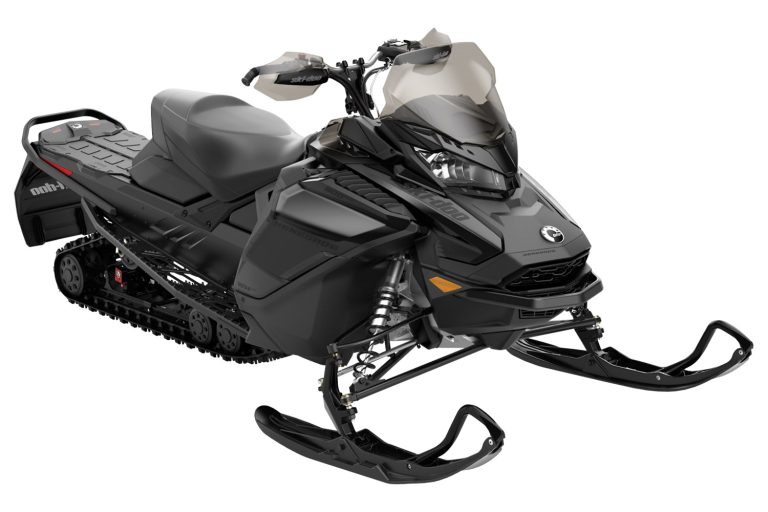
If you’re still shopping this year, and can find any new sleds at all, we’d advise you to look closely at a price comparison between the Ski-Doo Renegade X and MX-ZX versus the XC and also Arctic Cat’s 6000 Limited versus the XC.

You’ll find Polaris’ pricing on this sled is pretty incredible considering the equipment list is nearly the same as those competitors.

MIDRANGE TRAIL SLEDS: 2021 RENEGADE 900 ACE

0

The big question is this: How much power do you really need?

Sure, a lot of snowmobile shoppers would argue, “If you’re in for a penny, you’re in for a pound”; meaning if you’ve got your wallet out, why go for a 95-130 horsepower sled if you can spend a few more bucks and get a 160-200-hp one?

The hard truth is this – and it’s challenging to get power-hungry buyers to fully understand what we’re proposing here – not everyone wants or most certainly, needs more than the 130-hp ceiling this line-up offers.

Here’s a look at some of the most popular (and largest selling) trail sleds that fall splat into the middle of the power wars.

2021 SKI DOO RENEGADE 900 ACE: Over-Achiever!

Ski-Doos powered by a 95-hp 4-stroke, certainly fall at the bottom of the performance territory offered by the midrange trail sleds we’re looking at in this series of articles.

However, before getting too critical, you need to compare the power output of this 4-stroke triple to 2-stroke sleds that were being sold by the thousands a few years back.

The extremely popular Yamaha, Arctic Cat, Polaris and Ski-Doo 2-stroke triples and twins a generation ago were regarded as high performance sleds and they all made power very close to this range.

It’s only because we’ve gotten used to riding mid-performance sleds making upwards of 125-130-hp that some of us judge 95-hp as being anemic and insufficient to meet the demands of our current riding style.

The fact is, Ski-Doo is selling this engine in bucket loads and the people who are buying them have nothing but good to say about them. There has to be something to it!

Although the Renegade equipped with this 4-stroke does, in fact, weigh more than its 2-stroke counterparts – especially over the skis – Ski-Doo has done a good job of balancing the weight distribution so the negative attributes of heaviness are dumbed down.

The sleds aren’t plagued with understeer or plowing away from the apex and, in fact, feel quite light at the handlebars, requiring little effort to turn.

The 900 ACE uses the Renegade’s wide-body-style 4-stroke bodywork and the 900 EFI engine is only available in the Adrenaline and Enduro (air suspension on the Enduro) with 137-inch rMotion. The Adrenaline uses non-adjustable KYB gas shocks all around.

One of the reasons owners like this compact 4-stroke so much could have a lot to do with the kind of torque it delivers.

The engine engages its clutches low and builds a gob of power almost off-idle. Unlike 2-strokes, which take some time and RPM to build torque, the 900 ACE grabs the belt and keeps pulling from the time you engage the flipper.

It feels like this engine’s strongest performance takes place in the bottom 2/3s of its RPM range and to a trail rider, that is just about perfect.

MIDRANGE TRAIL SLEDS: 2021 POLARIS INDY SP

0

The big question is this: How much power do you really need?

Sure, a lot of snowmobile shoppers would argue, “If you’re in for a penny, you’re in for a pound”; meaning if you’ve got your wallet out, why go for a 95-130 horsepower sled if you can spend a few more bucks and get a 160-200-hp one?

The hard truth is this – and it’s challenging to get power-hungry buyers to fully understand what we’re proposing here – not everyone wants or most certainly, needs more than the 130-hp ceiling this line-up offers.

Here’s a look at some of the most popular (and largest selling) trail sleds that fall splat into the middle of the power wars.

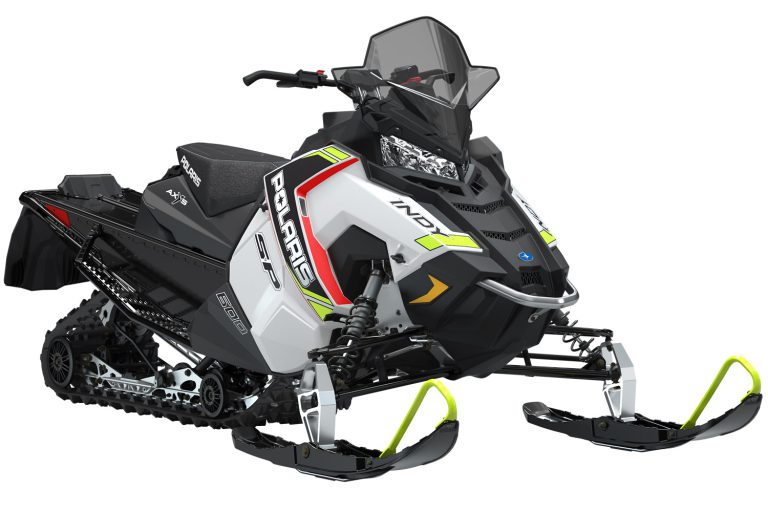
2021 POLARIS INDY SP: Real Value is Tough to Overlook!

There just isn’t much not to like about the Indy SP. Frankly, if this was the only Indy Polaris offered, it would still be very competitive with other sleds in the 600 class.

As it is, it’s been relegated to being a bargain priced sled that relies more on its bottom line than on its prowess as a great trail sled.

Furthermore, it’s been upstaged by the new MATRYX models and even sleds like the AXYS-based Indy XC and XCR.

The SP is built on the AXYS platform and comes in two track lengths – 129 and 137. Either one performs exceptionally well and combines lightness with great handling and a stellar ride.

Out back, the SP uses non-adjustable IFP gas shocks in its coupled ProCC skid-frame and the same gassers up front.

The tried and true Cleanfire 600 resides under its hood. This Semi-Direct-Injected 2-stroke twin is a strong performer and combined with Polaris clutching, delivers an honest 120-plus horsepower, EPA clean stats and good fuel economy. It even has a decent stock windshield.

Talking specifications with the SP is pretty moot until you’ve ridden it. Handling is razor sharp in either length chassis, the ride calibration is extremely good and the sled has a great “feel” from the handlebars.

The combination of clutching, engine power and the AXYS chassis is well-matched and it makes an even stronger point for shopping for this sled when you consider you’re saving hundreds of dollars compared to the next rung up on the Polaris ladder, the Indy XC 600.

Furthermore, price comparing the SP to a Ski-Doo MX-Z TNT reveals a saving on the 129-inch Indy SP of $1,100 CDN and $600.00 USD. This is pretty substantial considering these two sleds are the base models for each brand and are very similarly equipped. Just FYI, there is no base sled comparable from Arctic Cat.

It’s hard to walk past a sled like the SP that offers so much at such a reasonable price. It’s almost as though Polaris planned it that way!

MIDRANGE TRAIL SLEDS: 2021 Ski-Doo MX-Z 600R

0

The big question is this: How much power do you really need?

Sure, a lot of snowmobile shoppers would argue, “If you’re in for a penny, you’re in for a pound”; meaning if you’ve got your wallet out, why go for a 95-130 horsepower sled if you can spend a few more bucks and get a 160-200-hp one?

The hard truth is this – and it’s challenging to get power-hungry buyers to fully understand what we’re proposing here – not everyone wants or most certainly, needs more than the 130-hp ceiling this line-up offers.

Here’s a look at some of the most popular (and largest selling) trail sleds that fall splat into the middle of the power wars.

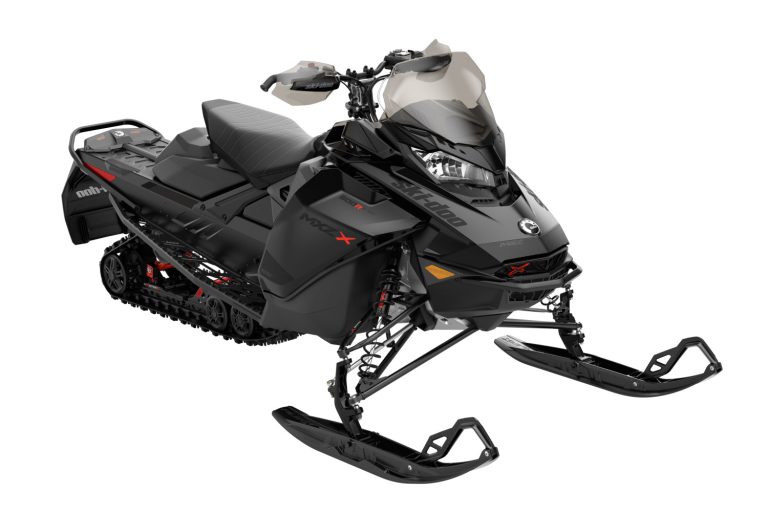
2021 Ski-Doo MX-Z 600R: Solid As A Rock!

The 129-inch version of this platform is sweet. Its 129-inch track allows the sled to pivot quickly and give agile feedback at the handlebars.

Although the MX-Z isn’t a whole bunch lighter than its 137-inch Renegade counterpart, it feels that way, and the fact is, this sled is light enough it can handle powder forays nicely even with a 129. The 137-inch Renegade is actually more of a dual-purpose crossover than the deep snow Backcountry.

It’s nearly impossible to be critical of the 600R E-TEC engine. This potent, 125-hp twin starts instantaneously, sips fuel and oil, never spews a wisp of smoke and generates muscular, linear power all across its considerably wide power band.

pDrive clutching is spot-on and with rollers running both the primary and the secondary, you just know this sled is maximizing its power. Upshifts are quick and consistent and backshifting is flawless.

Cap the benefits off with proven-excellent rMotion out back and a selection of gas shocks ranging from non-adjustable to multiple settings for both compression and rebound and, depending on the model MX-Z you choose (TNT, X or X-RS), you can pretty much dial up any suspension setting imaginable.

This year, the premium X and X-RS MX-Z and Renegade models come with Ski-Doo’s new, wider RAS X front end – and it makes the upgrade to those models worth every penny.

Perhaps the only concern with either the Renegade or the MX-Z is the fact Polaris is nipping at these sled’s heels with its new 650 Matryx.

Since the G4 chassis has been mostly unchanged for a few model years (yes, there’s been steady improvement), left unchanged, the buying public may be tempted to wander next year.

MIDRANGE TRAIL SLEDS: 2021 Arctic Cat 6000 R-XC

0

The big question is this: How much power do you really need?

Sure, a lot of snowmobile shoppers would argue, “If you’re in for a penny, you’re in for a pound”; meaning if you’ve got your wallet out, why go for a 95-130 horsepower sled if you can spend a few more bucks and get a 160-200-hp one?

The hard truth is this – and it’s challenging to get power-hungry buyers to fully understand what we’re proposing here – not everyone wants or most certainly, needs more than the 130-hp ceiling this line-up offers.

Here’s a look at some of the most popular (and largest selling) trail sleds that fall splat into the middle of the power wars.

2021 Arctic Cat 6000 R-XC: Shocking Shock Value!

The first thing you notice about this sled is that funky notch cut out of the seat at the seat/tank juncture. That notch is a dead giveaway this is a serious cross country-ditch banger.

Although it appears to be a full-on race sled, this is actually a full production sled, not produced in limited numbers. It replaces the RR-series Cats that were very popular but takes things up the ladder a bit with more serious shock equipment and more aggressive valving.

The X-RC’s strongest feature is a set of Fox QS3 Kashima coated compression and rebound adjustable piggyback shocks front and rear (yes, all four shocks!).

These shocks are absolutely top drawer and comprise a significant value. We’d hazard there are likely no better shocks offered on any snowmobile model from any company in the business right now.

The R-XC uses Cat’s coupled, 137-inch long sliding front arm skid-frame and recently tweaked ARS II front end. In combo with Cat’s trail-targeted skis, this sled knifes trails and hard-pack like a Ginsu.

At a claimed 126-hp, the slot-injected 600 twin provides plenty of power and very rapid throttle response at nearly any point in its power band. The usual Cat clutching, provided by a TEAM primary and a TEAM/Boss roller secondary squeezes every ounce of power out of that 600 and makes riding the R-XC pure joy.

The best part is Cat did not go overboard with suspension calibration and by using QS3 technology, allowed you to set the compression damping as hard or soft as is needed for the type of terrain or the speed you’re riding.

Those three settings are noticeably different and allow this serious sled to perform equally well as a trail sled or as a ditch runner, with just minimal clicker adjustment.

It’s amazing, but the 6000 R-XC – which appears to be all about racing – actually can fulfill the needs of a pretty wide range of riders. It certainly falls in line with the Polaris XCRs and Ski-Doo’s X-RS models.