Home Blog Page 237

BIG PODIUM FOR YAMAHA AT RMSHA FINALE

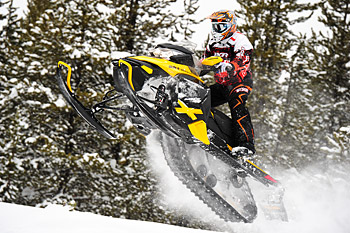
Aboard an FX Nytro MTX, Cable Willford became the first person in history to race a four-stroke snowmobile to a podium finish in RMSHA hillclimb competition at Schweitzer Mountain Resort in Sandpoint, Idaho on Saturday, April 14.

With a blazing run of 1 min. 2.937 sec., Willford topped six other pro drivers for the position while also giving Yamaha its first RMSHA podium in recent years.

Adding to the laurels, Willford and teammate Kody Malmborg both put their Yamahas into the finals in a total of seven different classes on Saturday, ultimately earning three additional top-five finishes along the way.

Simply put, the season-ender in Idaho was Yamaha’s strongest and most dramatic hillclimb showing this year, serving notice that its four-stroke snowmobile technology can match the best competing two-strokes.

At about a quarter-mile long with 500 feet of vertical gain, the run at Schweitzer Mountain was shorter than some hillclimbs, but it made up for this with a series of technical challenges including tight hairpin turns through the trees and lift towers.

Mastering these rapid-fire challenges required equal measures of power and handling, along with a boondocking-style technique that rewarded driver skill.

Fortunately weather conditions were terrific, with sunny skies for much of the weekend and well-packed snow that held up well. Willford and Malmborg both rose to the challenge on Friday, each qualifying their FX Nytro MTXs in five classes, the maximum number allowable, for the first time this season.

RMSHA racing is perhaps the most concentrated form of snowmobile competition, in that drivers get only one chance to qualify and then a single final run – that’s it.

When Willford lined his FX Nytro MTX up for the 600 Mod final, two racers had already run up the mountain and put good times on the clock. So he knew had to run hard and fast – with no mistakes – the entire way up.

But Willford had a few tricks up his sleeve, starting with the 1049cc four-stroke Yamaha engine, which launched his sled out of the starting trench like a Top-Fuel dragster.

He then jumped the course’s one downhill section, which many drivers simply rolled, picking up more time. From there on, Willford blasted through the corners and maintained as much speed as he could on his way up the mountain, setting the third-fastest time in class to earn the historic podium.

“After my run we had some tense moments waiting for the other racers to make their runs up the hill, and we had a giant celebration when my time held up,” Willford said. “It was a very rewarding moment and it put the competition on notice that we are here and getting better. This is definitely a building block to competing for overall wins.”

Yamaha’s Eric Josephsen added, “Our goal the whole year was to put both Cable and Kody in the finals. We knew that Yamaha’s four-stroke machines are capable, and we’re really happy with the way things turned out. Congratulations to the whole team, including Cable, Kody and our semi-pro rider Kolton Malmborg, our crew chief ‘Big Kody’ and Troy Johnson, who maintained and tuned Cable’s machine.”

How Far Will The TECH Revolution Go?

0

Snowmobiling was always built on the hands-on nature of the product’s mechanicals.

In the past, simpler was better and the more tuning, maintenance and modifications owners could perform themselves, in their own garages, the better.

Today’s sleds have become increasingly complex with a vast array of electronics and computer systems thrown into the mix.

Certainly, features like EPS, electronic EFI, remote adjustable suspensions and even the more complex design of DOHC and SOHC 4-strokes make 15-year-old carbureted 2-strokes look pretty primitive in comparison.

If you compare the ATV industry or even the motorcycle business, the march toward more and more technology seems to have gone to warp speed.

Features like ABS brakes, skid control, traction control and navigation systems are all available and although not all are rampant, the technology has been fully developed and is in play in those markets.

Apparently, some snowmobile manufacturers have been toying with ABS brakes and with the advancement of reliable digital snowmobile gauges, navigation has been on the table.

Certainly the downside is pricing. In our current economy, the consumer is looking for way more in terms of performance and long lifespan for their off-road vehicles.

We’re not sure the snowmobile industry needs or wants more technology driving prices higher but if the market demands it, the OEMs will build it.

We’re not sure the trend is a good one, especially if it takes the wrenches out of the consumers’ hands.

SKI-DOO TEAM WINS CAIN’S QUEST

BRP’s Ski-Doo team of Jean-Guy AuCoin and Steve Girard won this year’s Cain’s Quest, making it the third year in a row Ski-Doo X-Team riders have captured the top spot.

In just its seventh year, Cain’s Quest has quickly become one of the most coveted and grueling events in snowmobile racing.

Cain’s Quest features 1500-miles (2414 km) of racing across some of the most brutal and unforgiving terrain in North America.

It is considered one of the most challenging snowmobile races on the planet, testing a man’s endurance, navigational, winter, and sometimes mechanical skills, plus it requires a snowmobile that can traverse any kind of terrain; from deep snow to ice and back again, while maintaining speed, fuel economy and dependability.

Excellent snow conditions made this year’s Cain’s Quest one of the most daunting to date. Two-rider teams set out from Labrador City, NL, and rode a 1500-mile loop battling through ice fields, deep snow, mental and physical fatigue and mechanical challenges along the way.

Team 25 of AuCoin and Girard led the field of finishers into Labrador City on March 22, crossing the finish line at 9:21AM, 39-minutes ahead of the second place team.

After them came the Ski-Doo riders of Team 29 (Mark Nui/Joachim Nui) in third place and Ski-Doo riders of Team 26 (Lucy/Flowers) in fourth place.

In all, Ski-Doo teams claimed three of the Top 4 finishing spots in the race.

AuCoin and Girard chose Summit Freeride models because of their racing pedigree. The Freeride models share the reinforced REV XP RS chassis, racing brake and shocks of the Ski-Doo MX Zx 600RS snocross race sled, but with a longer track and rising rate SC-5M2 rear suspension.

It is built for deep snow like a Summit model, but with a wider front suspension and racing shocks, it can handle the demands of a cross-country race like Cain’s.

Powered by the Rotax E-TEC 800R engine, it posts superior fuel economy and oil consumption numbers while making a class-leading 163 horsepower.

“The Summit Freeride with the Rotax 800R E-TEC engine definitely gave us the advantage at this year’s Cain’s Quest,” said Steve Girard from Team 25. “And it wasn’t just us, 8 of the 14 finishers were on Ski-Doo Freeride sleds. I think that’s proof that if you want to finish Cain’s Quest and win, you better be on a Ski-Doo.”

Cain’s Quest Facts:

– 35 teams started the race, 23 teams were on Ski-Doo snowmobiles
– 14 teams finished the race, 11 were on Ski-Doo snowmobiles
– This year a woman finished Cain’s Quest for the first time – she was on a Ski-Doo snowmobile
– Team 67 finished 9th on Ski-Doo Freeride sleds – they rode them completely stock, straight out of the crate

For more information on Ski-Doo snowmobiles visit www.ski-doo.com

WILL THE NYTRO MAKE A COMEBACK IN 2013?

0

For 2013 Yamaha has placed a lot of focus on next year’s Nytro models, offering improvements in weight (about a 10-lb diet for the 2013 versions), better track selections and very effective new dual runner skis.

There’s also a ton of minor tweaks to skidframe and shock calibrations to make the Nytro more palatable to a larger audience.

Certainly, this refocusing of the Nytro by Yamaha will turn heads among the Yamaha faithful who are looking perhaps at an upgrade from a former version of the Nytro (it’s been offered since 2008). But, will it be a big enough revamp to move buyers over from other brands?

Only time will tell and in this lightweight 4-stroke segment, the Big Y faces some pretty serious competition it didn’t have gnawing at its 4-stroke dominance five model years ago.

You may have noticed at least two of Yamaha’s competitors are crowing that Yamaha is no longer the largest producer of 4-stroke snowmobiles.

Apparently, these numbers are verifiable and the intro of model selections from Ski-Doo and Cat offering turbocharged and EFI aspirated 4-strokes and even economy versions, some with all-new platforms, has put a dent in Yamaha’s former 4-stroke exclusivity.

We’ve ridden the 2013 Nytro and have to commend the engineers for a job well done in ironing out the kinks in its handling.

Its incredible 1049cc triple is still, in our opinion, one of the two finest 4-stroke snowmobile engines made (the other is the Apex’s 4-cylinder).

We think the proof will be in the riding and the Nytro will have to sell itself over the next year as consumers get a sampling and verify in their own minds whether or not it’s the right fit for them.

PREDICTIONS FOR THE 2013 SEASON

0

Polaris Indy:

Polaris has wisely targeted this sled in the low to mid-dollar range and offers two versions: A Plain Jane base model that is really very well equipped and an SP version with upgraded shocks and graphics.

The new Indy platform is built light and strong and offers very refined handling – almost exactly like the RUSH’s industry leading setup.

Although the Indy is only offered with one engine choice, it’s a very good one. The new liquid-cooled 2-injector SDI 600 twin is clean burning and extremely quick.

Better yet, this sled has styling cues reminiscent of the earlier trailing arm models that dominated snowmobile sales for almost two decades.

With this kind of engineering built-in and excellent pricing, we think you’ll be seeing a lot of these on the trails next year.

Ski-Doo Renegade rMotion

With rMotion being offered in more models this year and an unexplainable leaning of the marketplace toward longer tracked sleds, we think more buyers will be looking at the Renegade than even the solid selling MX-Z.

We’ve ridden the 137-inch version of the rMotion and have to confess it’s the best riding sled we’ve experienced.

The extra dollars shoppers will need to dish out for a Rennie can easily be justified with the vast versatility you get with a sled capable of honing groomed trails and running capably in powder.

The new XS bodywork available with most 2013 Renegade models is a real upgrade too, because of its improved storage and cooler styling. We’re betting this sled will be the best selling Ski-Doo next year.

Arctic Cat ProCross 1100

After a year filled with new model glitches, Arctic Cat is determined to respond with stellar reliability and iron-clad results.

Last year, the EFI version of the 1100 4-stroke was an instant hit but struggled with faulty reverse drive problems and under-achieving top end. After talking to Cat engineers, we’re convinced the company will deliver a rock solid 4-stroke sled next year.

Except for the above mentioned issues, Cat owners we’ve talked to loved this middle ground version of the ProCross, particularly in its LXR iteration, for its responsive, smooth running and economical engine and were impressed with the sled’s balance, lightweight riding responses and good handling.

With its great looking bodywork, the fact this particular model targets such a wide audience and the assurance these sleds will be trouble-free, we think buyers will be ready to order up.

POLARIS ISOC SEASON RECAP

Polaris snocross racer Kody Kamm (Hentges Racing) served notice that he will be a force in Pro-class racing next season as he clinched the Pro Lite points title, then moved up and won the final Pro race of the ISOC season March 17-18 at Lake Geneva, Wisconsin.

Kamm, who is from Kenosha, Wisconsin, used Polaris Terrain Domination to win the Pro Lite final on Saturday and clinch the season points title, then jumped up to the Pro class for Sunday’s finale and won in his first attempt against the sport’s best racers.

Past champion Ross Martin (Judnick Motorsports) finished second in the ISOC Pro points standings and Polaris racer Jennifer Pare (Leighton Motorsports) won the Pro-Am Women points title.

The final weekend of the season marked the end of an era as Polaris Pro racer TJ Gulla (Hentges Racing) announced he was retiring from racing after an outstanding snocross career that included multiple Pro points titles.

Saturday Racing: Martin Wins & Kamm Clinches

Ross Martin continued to battle for the Pro points title to the very end of the season and earned maximum points on Saturday, March 17, with a dominating performance in the day’s Pro final.

He grabbed the holeshot and stretched the lead so there was no question who was the class of the field. Bobby LePage (Team LaVallee) finished ninth and Brett Bender (Hentges Racing) was 12th.

Kody Kamm sewed up the Pro Lite title with a win in Saturday’s final. He got the holeshot and led throughout the race, but had to survive a restart after a late-lap red flag. He reclaimed the lead for the final sprint to the checkered flag and the win clinched the points title.

Polaris racers filled the Pro Lite podium as Colby Crapo (Leighton Motorsports) finished second and Andrew Lieders (Lieders Racing) was third. Jake Scott (Team LaVallee) was fifth, Andrew Carlson (Carlson Motorsports) was eighth and James Johnstad (Judnick Motorsports) finished ninth.

Jennifer Pare clinched the Pro-Am Women points title with a win at Lake Geneva, and she was joined on the podium by Polaris racer Stephanie Schmidt (Schmidt Racing), who finished second.

Tabitha Bode (Fort Fremont Marine Racing) was ninth, Jakki Farmer (Farmer Racing) finished 11th and Jennifer Martel was 13th.

Mike Pilotte won one of the weekend’s Sport-class finals and Dylan Jansen (Jansen Brothers Racing) finished third in both Sport races.

Sunday Racing: Kamm Serves Notice

Kody Kamm impressed everyone on Sunday, March 18, in his first Pro race. He immediately blasted into the lead, and won after withstanding a furious effort by Ross Martin. Kamm is expected to race full-time in the Pro class next winter.

“This is awesome,” Kamm said from atop the podium after his victory. “I never thought this would happen. I got the holeshot, stayed out front of Ross and rode my own race. I’m really happy to be up here.”

Martin’s aggressive riding cost him when he was bounced briefly from his sled after a rough landing. Yet he remounted and finished second to Kamm. “I made a mistake there on the downhill section and that was it,” Martin said. “Kody rode great… It’s going to be an exciting series next year for sure.”

Mike Bauer (Judnick Motorsports) finished 12th, Bobby LePage was 13th and TJ Gulla (Hentges Racing) finished 14th in the final race of his Pro career.

Pro Points: Martin Finishes Second

Martin, the three-time Pro Open points champion who finished second in both Pro classes last winter, finished second in ISOC Pro points for 2011-2012.

Other Polaris racers in the top 25 included: Brett Bender in ninth, Mike Bauer in 13th, Johan Lidman (Carlson Motorsports) of Sweden was 15th, Bobby LePage was 17th, TJ Gulla was 19th, and Levi LaVallee (Team LaVallee) finished an injury-shortened season in 22nd.

Pro Lite Points: Polaris Racers Dominate

Pro Lite points champion Kody Kamm was joined in the top five by three fellow Polaris racers as Jake Scott finished third in points, Andrew Lieders was fourth and James Johnstad was fifth.

Andrew Carlson was ninth, Colby Crapo was 10th, Brett Nastala (Redline Racing) was 11th, Matt Bristow (Bristow’s Racing) finished 15th, Joe Fallen (Fallen Racing) was 18th, Brian Ludwig (BLR Motorsports) was 19th and Dylan Martin (Team Southside Polaris) was 26th.

Three Polaris racers finished in the top five in Pro-Am Women points, with Jennifer Pare winning the title, Stephanie Schmidt (Schmidt Racing) finishing second and Tabitha Bode (Fort Fremont Marine Racing) taking fifth.

Jennifer Martel finished 11th, Jakki Farmer was 13th, Kendra Dallmann (LePage Racing) was 17th, and Melanie Acker (Team Southside) was 20th.

Trevor Leighton (Leighton Motorsports) finished second in the Sport-class points standings, while Dylan Jansen (Jansen Brothers Racing) was ninth, Dalton Johnson (Team Johnson Racing) was 10th, Luke Wollenberg (BLR Motorsports) was 12th and Jeremy Kuhn (Super J Racing) was 13th.

Former Champion TJ Gulla Retires

TJ Gulla, the Jericho, Vermont, racer who announced his retirement at Lake Geneva, was a major force in snocross racing over the past decade and helped lead the resurgence of Polaris racing dominance.

He won Pro Stock points titles in the 2004-2005 and 2006-2007 seasons, and in 2008-2009, he won the Pro Open title and was third in Pro Stock points.

About Polaris – Polaris is a recognized leader in the powersports industry with annual 2011 sales of $2.7 billion. Polaris designs, engineers, manufactures and markets innovative, high quality off-road vehicles (ORVs), including all-terrain vehicles (ATVs) and the Polaris RANGER side-by-side vehicles, snowmobiles, motorcycles and on-road electric/hybrid powered vehicles.

Polaris is among the global sales leaders for both snowmobiles and off-road vehicles and has established a presence in the heavyweight cruiser and touring motorcycle market with the Victory and Indian motorcycle brands. Additionally, Polaris continues to invest in the global on-road small electric/hybrid vehicle industry with Global Electric Motorcars (GEM) and Goupil Industrie SA, and internally developed vehicles. Polaris enhances the riding experience with a complete line of Pure Polaris apparel, accessories and parts, available at Polaris dealerships.

Polaris Industries Inc. trades on the New York Stock Exchange under the symbol PII, and the Company is included in the S&P Mid-Cap 400 stock price index.

Information about the complete line of Polaris products, apparel and vehicles accessories is available from authorized Polaris dealers or anytime at www.polarisindustries.com

Polaris Hill Climbers Win Seven Class Titles

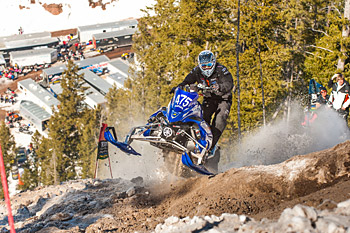
Polaris snowmobile hill climbers won seven class titles – more than any other brand – and Keith Curtis won Stock King of the Hill honors at the 2012 Jackson Hole World Championship Snowmobile Hill Climb.

Curtis won three class titles in addition to his Stock King title in competition held March 22-25 on Snow King Mountain in the scenic Wyoming resort city.

Curtis won the 1000 Stock, 800 Stock and Open Modified class titles, and was joined as a class champion by these Polaris hill climbers: Les Keller won the 700 Stock title, Erin Beukelman won in 1000 Improved Stock, Cole Willford won the 600 Modified crown and Charles Lopeman won the Pro Masters Modified title.

Polaris Terrain Domination was on full display all weekend as Polaris racers won seven class titles compared to a total of eight titles split among racers on two other brands of sleds.

Curtis and Keller won their Stock titles on sleds that are nearly identical to what recreational riders can purchase at their local Polaris dealerships.

“I raced a stock 2012 RMK Assault in Stock 800 and Stock 1000,” Curtis said. “For 800 Modified and Open Modified, I raced a modified 2012 RMK Assault 800.”

Curtis posted the weekend’s second-fastest time in a run to the summit, reaching the top in 59.723 seconds on his Mod sled in the Mod King of the Hill competition, just .47 seconds off the winning time.

Beukelman finished second in the Improved Stock King of the Hill runs, and Willford and Lopeman finished third and fourth, respectively, in the Mod King of the Hill competition. Keller finished fourth in Stock King of the Hill.

Along with the class winners, these Polaris racers earned podium positions with their top-three finishes:

– Dolan Phelps was second in Pro 700 Stock and third in Pro 1000 Improved Stock.
– Erin Beukelman was third in Pro 800 Improved Stock and second in Pro 700 Mod
– Aaron Sterck and Tyler Crockett were second and third, respectively, in Pro 600 Stock.
– Keith Curtis was second in Pro 800 Mod.

The Jackson Hole event was the third of five scheduled events on the 2012 Rocky Mountain Snowmobile Hillclimb Association (RMSHA) schedule. The next event is the Beaver Mountain Hillclimb, April 6-7, near Logan, Utah.

About Polaris – Polaris is a recognized leader in the powersports industry with annual 2011 sales of $2.7 billion. Polaris designs, engineers, manufactures and markets innovative, high quality off-road vehicles (ORVs), including all-terrain vehicles (ATVs) and the Polaris RANGER side-by-side vehicles, snowmobiles, motorcycles and on-road electric/hybrid powered vehicles.

Polaris is among the global sales leaders for both snowmobiles and off-road vehicles and has established a presence in the heavyweight cruiser and touring motorcycle market with the Victory and Indian motorcycle brands. Additionally, Polaris continues to invest in the global on-road small electric/hybrid vehicle industry with Global Electric Motorcars (GEM) and Goupil Industrie SA, and internally developed vehicles. Polaris enhances the riding experience with a complete line of Pure Polaris apparel, accessories and parts, available at Polaris dealerships.

Polaris Industries Inc. trades on the New York Stock Exchange under the symbol PII, and the Company is included in the S&P Mid-Cap 400 stock price index.

Information about the complete line of Polaris products, apparel and vehicles accessories is available from authorized Polaris dealers or anytime at www.polarisindustries.com
CAT IS KING AT HILLCLIMB WORLD CHAMPIONSHIPS

It was a beating of epic proportions at the World Championships of Hillclimbs in Jackson Hole, Wyo., as Team Arctic racers out-climbed the competition to score 10 victories by six different riders, including two podium sweeps.

The star of the weekend was Kyle Tapio, whose record-breaking performance aboard the 2012 Arctic Cat ProClimb produced two class wins; both the Improved and Mod King titles; and the ultimate King of Kings crown.

Facing the steep and wickedly-challenging Snow King mountain aboard Arctic Cat M sleds, Team Arctic racers notched victories in every category, from 600 to 800, and in Stock, Improved and Mod classes.

Jeremy Archibald started the ball rolling by leading a podium sweep with Chance Buckallew and Ben Adams in the 600 Improved class.

That was followed by another podium sweep in the 700 Improved final, this time by Rob Kincaid, David McClure and Archibald. Then Tony Zollinger claimed victory in the 700 Mod final.

Having dominated the Women’s classes for several years, Team Arctic’s Amy Zollinger, Jan Ottobre and Christy Frisby once again put on a winning clinic at Jackson Hole, with Zollinger claiming the Stock class (where Frisby took third) and Ottobre winning Mod and taking second in Improved, all on M8 HCRs.

In the big iron classes it was time for Kyle Tapio to reinforce his hillclimb legend status. Piloting his M8 HCR, Tapio won both 800 Improved and 800 Mod in convincing fashion.

If Tapio felt any disappointment for taking third in the Open Mod final, he more than made up for it in the King competition, where the class winners in each category race for overall status.

There, Tapio not only won the Improved and Mod King titles, he also scored the overall King of Kings crown as the best racer of the weekend.

“Team Arctic racers and crews did an outstanding job at the World Championship, especially the incredible performance of Kyle Tapio, who was in a class by himself at Jackson,” said Arctic Cat Hillclimb Coordinator, Al Shimpa. “Ten victories by six different racers is a testament to the depth of our team and the strength of our M machines.”

Shimpa went on to say, “In addition, I’m especially proud of Rob Kincaid, who finally knocked the monkey off his back to win his first-ever pro class World Championship in 15 years of competing at Jackson and I’d also like to thank the Speedwerx crew, who worked extra-hard to ensure the success of most of our Improved and Mod-class machines.”

About Arctic Cat – Arctic Cat Inc., based in Thief River Falls, Minn., designs, engineers, manufactures and markets all-terrain vehicles (ATVs) and snowmobiles under the Arctic Cat brand name, as well as related parts, garments and accessories. Its common stock is traded on the NASDAQ National Market under the ticker symbol “ACAT.” More information about Arctic Cat and its products is available on the Internet at www.arcticcat.com

MIGRATION TO LONGER TRACKS

0

Based on sales this year and the increasing interest in crossover models, we think you’ll be seeing more sleds sold in the 128 to 136-inch track range over the next couple of years.

Apparently, according to the industry reports we’re seeing, this is already happening.

Although sales of 120 and 121-inch performance sleds are stable, there has not been an increase in volume the last two years with shorter track models.

Meanwhile, the longer-tracked Crossover market has been showing an upward curve with burgeoning sales and shoppers appear to be willing to justify the extra cost of moving to a sled with the versatility, traction and ride improvement they can get with a longer shoe.

Here’s where we think it will be going: We would not be surprised to see some big-selling models like the MX-Z and the RUSH moving to a 128-inch track in the next couple of years.

This would follow the lead of Arctic Cat which has already been using 128-inch track lengths on its ultra-performance models since 2003.

Yamaha stepped up to 128-inches on the Apex a few years ago and with big power and torque extruding through the drive systems on these sleds, more bite on the snow is a welcome improvement.

Certainly, the down side is extra weight. The truth is most performance riders would gladly give up a few pounds to get the extra traction in powder and on hard pack.

An alternative view would be for the MX-Z to switch to a 16-wide track. This would enable a lot of extra traction with probably less weight than adding a 128.

The MX-Z is already so light its actual footprint (area of track on the snow in square inches divided by weight) puts it close to some of the best crossovers on the market sporting longer tracks.

The Indy Will Be A Huge Sales Success

0

There are still tons of snowmobilers out there who remember the sales vitality the original Indy enjoyed from the late Seventies through the Gen II and Edge era.

Certainly, the intro of the IQ platform was the end of an era and the beginning of a new one for Polaris.

However, the Indy dynasty stretched for 25-plus years and grew enthusiasm in the marketplace with hundreds of thousands of riders.

The dynasty is built around more than just a name, though. From the beginning, Indys signified value, great clutching, handling and overachieving power.

Certainly, the competition has been able to respond to those benefits very successfully the last decade and Polaris may have even been guilty of straying from its original winning formula.

The point is this: The new Indy is everything the original Indy was but with significant new millennium upgrades that will make it a success in this era in the same way it was in the last.

The sled combines incredibly lightweight construction with a new generation 2-injector SDI engine along with all the incredible handling gains from its non-parallel A-arm front end perfected on the IQ and re-perfected on the RUSH.

Even its build method, using Polaris’s bonding process to match together chassis parts, is new-age, super strong and completely state-of-the-art.

With a stiffer, lighter chassis, radically updated, clean-burning engines and industry leading front end handling, the Indy is everything it was in its hay day and much more.

Even the pricing on the 2013 Indy makes it a stunning attraction. We think it may be just what the snowmobile market has been waiting for.