Home Blog Page 231

IS THE LONG TRACK TAKING OVER?

0

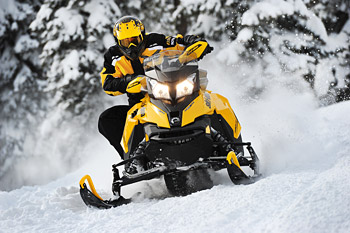
Industry stats are indicating sales of sleds with 136-inch and longer tracks are beginning to dominate. Does this mean buyers are moving away from 120-inch-range footprints to something more?

More specifically, does it mean the conventional short track, high performance buyer is losing traction (literally) in the marketplace?

Here’s what we think is happening. We think there are just as many high-perf focused buyers out there as ever. What is different is these same buyers are looking to increase the usability of their sleds over the course of the season.

Fact: If you’re paying 10-plus Gs for a new sled you want it to be usable in more conditions than just one venue, like groomed trail riding.

Furthermore, performance buyers demand the ultimate for their bucks these days. If they’re anteing up big dollars, they want acceleration, top speed, traction, gas mileage and a sled that won’t be made obsolete by EPA numbers anytime soon. A tall order.

The fact is, the very same rider who has owned 120 and 121-inch sleds the past decade may be opting for a longer tracked high-output sled that can be used off-trail once in a while or even adapted to 2-up riding with an aftermarket seat. For the price they’re paying, new-sled buyers want more than just an all-out lake rocket.

Another factor is the blasting of the theory longer tracked sleds are slower. This is simply untrue. You can often achieve the same acceleration and even higher top speeds with a 136-plus than with a short tracker.

It’s all about traction and, at the high end of your speedo, your sled is losing some. A longer track bites better and reduces track slippage so all the power is getting to the snow. More on this later.

MEDIUM INJECTED WINDSHIELD FOR REV-XS & REV-XM

0

BRP has added a new medium windshield for the just introduced REV-XS and REV-XM platform variations.

The windshield is 13.5 inches (34 cm) tall, providing an ideal fit for riders that want a little more protection while maintaining a great look.

The new injection moulded windshield includes side deflectors, which accommodate mirrors (part number 860200083), and a medium windshield support that completes the kit.

Using the injection process produces a clean, clear and consistent finish that allows for more complex shapes and contours to meet the design and quality standards riders expect form BRP.

Medium Injected Windshield and Deflector Kit 860200759 $134.99 USD/$154.99 CAD

For information on all the genuine BRP accessories to fit your ride visit www.store.ski-doo.com or your local Ski-Doo dealer.

Ram Truck Announces Tucker Hibbert Sponsorship

0

Ram Truck brand announced today an official multi-year sponsorship of two-time FIM Snowcross World champion, six-time national snocross champion and 10-time ESPN Winter X Games medalist Tucker Hibbert.

Hibbert, 28, is the most decorated snowmobile athlete in history. He is one of only three athletes to claim the gold (medal) five-peat and will compete for the first-ever gold six-peat at the 2013 Winter X Games in Aspen, Colo., Jan. 24-27.

“Wintertime capability and durability are fundamental Ram Truck attributes, so our involvement with America’s top snowmobiler is a natural association,” said Fred Diaz, President and CEO – Ram Truck Brand and Chrysler de Mexico. “Tucker Hibbert and his crew have been faithful Ram customers for many years and their Heavy Duty trucks have served them well.”

As part of the sponsorship, Ram will be recognized as the official truck partner of Hibbert and his Monster Energy/Arctic Cat team.

Ram trucks will support Hibbert and his team throughout the International Series of Champions (ISOC) season and the 2013 Winter X Games.

The snowmobile enthusiast market reflects a high proportion of truck owners and represents a new marketing and promotion venue for the Ram Truck brand.

“Ram is the perfect partner for my race team,” Hibbert said. “We need reliable trucks all season long for our races and events, and the hardworking Ram trucks will get the job done.” Each year, Hibbert’s team heads out in search for mountains with early snow to test their snowmobiles. Feet of snow cover the narrow mountain trails, but their Ram truck always powers through to get him and his crew to their testing destination.

“Folks up north are already gearing up for the winter season and pickup trucks are their No. 1 choice for transportation and towing,” Diaz said. “Tucker and his team will be able to cover more miles, more comfortably and more reliably in a Ram truck.”

Hibbert’s first race is the International Series of Champions (ISOC) National Snocross Series season open at Spirit Mountain in Duluth, Minn., Nov. 23-25.

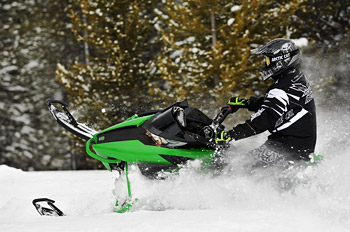
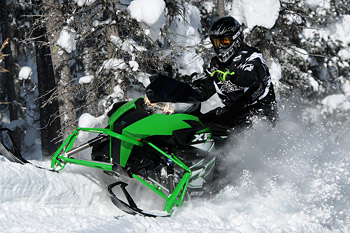
2013 Team Arctic Sno Pro 600

0

Arctic Cat is constantly at the forefront of race development and has a winning history that’s as long as the company is old.

As a result of their relentless testing and focus on building the most well-rounded race sled, a fine-tuned 2013 Sno Pro 600 will stick it to every competitor where it counts; with improvements to durability, precision cornering and unmatched suspension control.

Listed below are the winning key features of the 2013 Sno Pro 600 in the ProCross chassis. In addition, please read the list of updates that our racers have been raving about while testing in the off-season:

* 600R race engine with Heated 40mm Mikuni rack style TM carburetors w/TPS
* Front Arctic Race Suspension (ARS) – with Fox Float X Evol Shox
* Race Slide Action rear suspension equipped with Fox Racing Shox
* 1.7-in. Snocross track or 1.25-in. Cobra 2-ply Cross Country track
* Arctic Drive System (ADS) with magnesium chaincase and Torque Overload Sensing (TOS) bottom sprocket
* Torque Control Link (TCL) – Links the drive to the driven clutch
* Radial Master Cylinder brake system
* 5-gallon Snocross or 13-gallon Cross Country fuel tank

2013 600 Sno Pro Race Sled Updates

I. New Chassis Geometry

The added ground clearance improves predictability through the huge holes and allows the rider to attack the track with more confidence, all while scrubbing less speed.

a. 1.35-inch added ground clearance at foot pockets
b. Flatter running board angles
c. Single layer .080″ thick tunnel for increased strength
d. New rear suspension mounting positions give track drive more ground clearance

II. New front suspension/steering geometry

a. Improved caster angle
b. Increased ski stance to 43.5″ (1.2″ wider than 2012)
c. New steering ratio for sharper turning radius
d. New ski damper loads rear of ski for improved handling
e. New front arm shock eyelet for improved durability

III. New rear suspension

Both the front and rear suspension changes will improve the ability of the driver to steer and control the sled while on the gas.

a. Front arm mounting position moved rearward 2″ to improve transfer control
b. Increased Front arm suspension travel by approximately 1″
c. Added strength to both front arm and idler arm for improved durability
d. New Torsion spring for increased preload
e. New rear coupling position, give a wider range of usable adjustment

IV. Drive system updates – Last season Arctic Cat’s all-new Torque Overload Sensing (TOS) Bottom Sprocket found in the magnesium chaincase worked flawlessly to save the drive system from the pounding of harsh terrain.

a. New PTO engine plate for added durability
b. Increased stiffness in engine mounts for added durability
c. Modified dropcase for increased strength
d. New lightweight/high strength track drive shaft
e. New driven shaft with increased durability
f. New drive clutch spring
g. New drive belt

V. Brake system

Updates to the brake system will give the driver a more positive feel and control throughout the race.

a. New brake caliper and disk
i. Increased fastener size holding caliper halves together to decrease flex
ii. New deeper pistons to eliminate caulking
iii. Machining updates to improve bearing retention
iv. Increased ports for improved flow
v. New seal groove for improved piston retraction

VI. Other Items

a. Heated 40mm Mikuni rack style TM carburetors w/TPS
b. New 1/4 turn assembly, hood pin, and hold down strap to secure side panels
c. Added thickness to Snocross snow flap for increased durability
d. Modified front heat exchanger engine mount bracket for increased durability
e. Updated wire harness for improved routing
f. New throttle cable with increased temperature rating
g. New choke cable added
h. Snocross seat has narrower (1.5-in. each side) leg profile than Cross Country seat
i. Snocross has low-height windshield and Cross Country has mid-height
j. C&A XT Snocross or C&A ADX Cross Country Ski (Carbides NOT included)
k. New Team Arctic Green color

About Arctic Cat – Arctic Cat Inc., based in Thief River Falls, Minn., designs, engineers, manufactures and markets all-terrain vehicles (ATVs) and snowmobiles under the Arctic Cat® brand name, as well as related parts, garments and accessories. Its common stock is traded on the NASDAQ National Market under the ticker symbol “ACAT.”

More information about Arctic Cat and its products is available on the Internet at www.arcticcat.com.

INDY FEVER

0

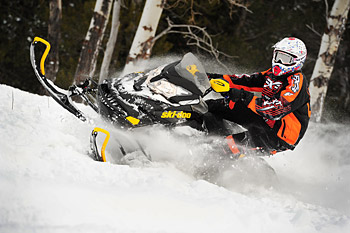
One of the most exciting industry developments this year is the rebirth of the iconic Indy nameplate.

In fact, a whole generation of snowmobilers has missed the fascination of the legendary Indy and unless an old one is sitting in a garage and still being used, those more recent buyers just won’t fully understand how important and influential those sleds were over a decade ago.

The truth is, a whole series of trailing arm IFS sleds from Ski-Doo and Yamaha broke out because the Indy was such a dominant sales force throughout the Eighties and Nineties.

The idea was: If you can’t beat ’em, join ’em and build your own version of the Indy. It wasn’t until the mold was broken by the REV all the rules changed.

This year, Polaris is taking back its own turf and, with the intro of the new Indy, has attempted to get back a lot of the hype and flavor of the original sled.

Certainly, it uses more up-to-date front end tech than the old trailing arm setup and the new Indy’s non-parallel A-arm system delivers way better control than the original’s trailing arms.

The lightweight, simplified, bonded bulkhead and fully evolved chassis technology is light years better than the old riveted setup or even the more recent IQ.

Where the old sensations start to come through, however, is in the riding. This sled is so reminiscent of the original it makes our eyes water with nostalgia.

This sled is the logical evolution of a sled that dominated our industry for a long time. It’s better in every way but hasn’t lost the original Indy tang.

We’re impressed.

ADJUSTABLE AIR SUSPENSION FOR THE FRONT!

0

Yeah, we know some of the things we write seem a bit “off-the-wall” sometimes, but there’s more than a little truth to this rumor.

We’re very sure at least one OEM has been experimenting with a remote adjustable air suspension for the front shocks on prototype sleds.

Although remote adjustment isn’t a new thing in the industry (Ski-Doo has used an adjustable-from-the-handlebars setup on its touring sleds for years), it’s always been focused on improving the rear suspension ride and not the front.

These systems deliver an almost uncanny ability to smooth out bumps and make the riding experience better.

Usually an onboard pump is employed and a gauge is used on the dashboard to monitor settings depending on the terrain the sled is being ridden over or the weight of the passengers and cargo onboard.

The difference here is a very similar setup being used on the front end of, not a touring snowmobile, but a performance sled.

Apparently the upside is the immediacy of recalibrating the suspension to handle different types of terrain while you’re in motion.

You can literally be riding smooth trails in comfort one moment, hit a bunch of deep whoops and barely lift off the gas while adjusting for the rougher trail – everything controlled by your left thumb. Get past the rough section and go back to the softer, plusher setting again instantly.

Another twist to this type of adjustment is being able to sync the front and rear air suspensions simultaneously or separately with two different controls.

For cross-country style riders this would be a distinct advantage and the benefits of a fully adjustable on-the-fly front and rear suspension would more than offset the extra weight of the air pump.

Front air shocks are certainly not new-tech (both Cat & Yamaha offer them) but on-the-fly adjustability could be a really big deal.

MORE POSSIBILITIES FOR CAT’S NEW 2-STROKES

0

Thanks goes out to one of our supertraxmag.com viewers (see post: Arctic Cat’s New 2-strokes) who sent us a link to a website describing another possibility for Cat licensing someone else’s Direct Injection technology instead of re-inventing the horse and coming up with a system of its own for its upcoming family of USA-built 2-strokes.

This version of 2-stroke DI technology was originally developed by small engine maker, Tohatsu, and has been in use on outboard motors since 2000.

Unlike Yamaha’s system, which delivers liquid gasoline to the injector under very high pressure (thus the name High Pressure Direct Injection), Tohatsu’s system delivers pre-vaporized fuel to the injector at relatively low pressure (80 psi compared to HPDI’s 700 psi).

Understandably, Tohatsu calls its DI setup TLDI, an acronym for Two-Stroke Low Pressure Direct Injection.

TLDI uses a compressor and a chamber to pre-vaporize the fuel and air mixture before it is distributed to each individual cylinder’s injectors via fuel rails.

One of the advantages of this system is an extremely fine spray (about 10 microns) is introduced into the cylinder at the optimum time to allow a very lean, clean burn.

All of this is controlled by an onboard computer that calculates throttle, position and other pertinent combustion data.

Apparently, these outboards produce very little smoke, idle smoothly, start really easily and make plenty of 2-stroke power. Another advantage is low oil consumption as oil is only metered into the engine as demand requires it.

Licensing TLDI is a very distinct possibility for Arctic Cat and would eliminate any cross-branding spats between two competitors in the snowmobile biz.

So far, we’re pretty sure Tohatsu isn’t thinking about getting into the snowmobile business with sleds of its own.

You can find out more on Tohatsu’s website here.

Arctic Cat Announces New Product Team Managers

0

Arctic Cat snowmobiles have always been built with the utmost of performance in mind. This stems from the hardworking engineers who live, eat and breathe beating the competition on the track, and the showroom floor.

To further ensure Arctic Cat Snowmobiles are at the engineering forefront, Troy Halvorson will shift roles from the Product Team Manager of the Performance and Racing segments, and assume the responsibility of Product Team Manager for the Mountain snowmobiles. Troy’s former role will be assumed by Team Arctic Cross Country racer/Engineer, Brian Dick.

“As a company, we are very excited to make this announcement. Both Troy and Brian are performance-minded individuals who are creative and enthusiastic, and will definitely raise the high-performance bar in their respective categories,” said Brad Darling VP/GM – Snowmobile Division.

Troy Halvorson is no stranger to performance snowmobiles at Arctic Cat. With 15years of experience starting as a project engineer for the late 90’s triples, then transitioning to the ZR Team to develop the Firecat and then adding race sled development to his plate, which included the Sno Pro 600.

An avid racer and race fan, Troy knows what it takes to build lightweight, high horsepower snowmobiles, and will be a welcome addition to the mountain team.

Brian Dick is well-known in racing circles as one of Team Arctic’s winning cross-country racers, who has also had a large influence on race sled and suspension design. Brian has 11 years of snowmobile engineering experience and will be sure to elevate this category in terms of performance output and continue Arctic Cat’s winning race heritage.

About Arctic Cat – Arctic Cat Inc., based in Thief River Falls, Minn., designs, engineers, manufactures and markets all-terrain vehicles (ATVs) and snowmobiles under the Arctic Cat brand name, as well as related parts, garments and accessories. Its common stock is traded on the Nasdaq National Market under the ticker symbol “ACAT.”

More information about Arctic Cat and its products is available on the Internet at www.arcticcat.com.
Trail Supercharger Kit for FX Nytro

0

Yamaha Motor Canada Ltd., in conjunction with Yamaha Motor Corporation U.S.A., has announced it will distribute the Trail Supercharger kit, a low-elevation bolt-on, premium pump-gas upgrade for its FX Nytro models and exclusive to Yamaha from Mountain Performance Inc. (MPI).

The supercharger provides instant throttle response and a power increase of up to 45 horsepower over stock.

The Trail Supercharger kit is designed and engineered to provide quality installation, fit and finish with no modifications to the Nytro’s hood or side panels.

All wiring uses stock-style connectors, eliminating the need to cut or splice the wiring harness.

MPI’s experts designed this kit to work seamlessly with Yamaha fuel injection system components and to use the stock exhaust. The result is a performance boost while delivering day to day operational characteristics similar to the stock sled.

Designed to fit 2008 – 2011 FX Nytro, Nytro RTX, Nytro RTX SE, and Nytro XTX snowmobiles, this kit includes a tunnel-mounted auxiliary cooler, a set of accessory ice scratchers, and all necessary clutch and gearing calibration components. The kit includes a one year limited warranty from the manufacturer.*

Base MSRP of the kit is $4,399.99 CDN and Yamaha Motor Canada expects to begin delivery by early November, 2012.

* Important: While installation of this kit will not ‘void’ the snowmobile’s warranty, specific failures determined by Yamaha to have resulted from installation of kit components or other modifications may not be covered by the Yamaha limited warranty or extended service coverage.

WILL THIS BE CAT’S 2-STROKE DI SYSTEM?

0

We’ve alluded to the idea an ideal solution for snowmobile companies looking to feature DI on their 2-strokes would be to license Yamaha’s marine outboard technology called HPDI (High Pressure Direct Injection).

We’re not sure whether this tech is even on the block for licensing agreements to other manufacturers but it sure would be an effective strategy for companies looking to gain an edge in the 2-stroke market.

The best part is, Yamaha has long ago made the decision to be an exclusively 4-stroke snowmobile company and will likely never use HPDI on 2-stroke engines in our sport. Kind of a waste, really.

Here’s how HPDI works. It is primarily a computer-electronic system that uses a very high-speed processor to monitor engine timing and the sequence of introducing a finely atomized, high pressure spray of fuel at very precise intervals during the combustion cycle.

There are actually two fuel pumps in the system. The first takes the fuel from the gas tank, via various filters, into a vapor separator which then directs liquid gasoline into a second high pressure pump that jacks fuel pressure to about 700 psi.

The highly pressurized fuel is pumped into a fuel rail (or rails, depending on the engine layout) where individual electronically controlled fuel injectors (one for each cylinder) squirt the atomized charge at precisely the correct window of time to optimize the burn.

Although HPDI is slightly more complex than Ski-Doo’s E-TEC system and employs more parts, it works really well and has been in use for a long time.

The benefits are smooth idling, easy start-up and extremely good emissions stats.