Home Blog Page 167

WE RIDE YAMAHA’S 2017 SIDEWINDER

0

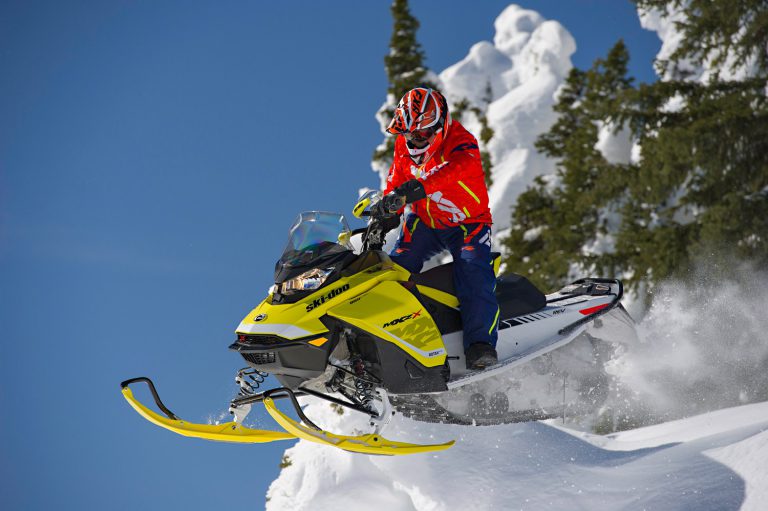
Supertrax had a chance to put some good miles on various versions of Yamaha’s new Sidewinder a week ago and came away impressed – not just with the new turbocharged sled but with Yamaha’s formerly quiet business demeanor now replaced with a genuine go-for-it mentality. Horsepower is now officially king at Yamaha.

We rode Sidewinders in 129 R-TX trim, a 137 L-TX and a new 141-inch version called the B-TX. We’re told the “B” in B-TX stands for Backcountry riding. The sled features the new 998cc counterbalanced triple based on the 1049 Viper engine (but in no way the same) equipped with a roller secondary clutch – a first for production Yamahas.

Regardless of which track length you choose, the Sidewinder rocks. There’s a claimed 180-ponies in the corral and this sled feels like it every time you dip into the throttle. The power comes on low and never feels laggy as it accelerates voraciously up to its redline.

Smooth? You bet. This mill thinks it’s running on electricity – no vibes in the footrests or at the bar ends – just velvety acceleration until your brain hits the panic overload button and you ease out. Crazy fast, and the new roller secondary responds intuitively to track loads, backshifting perfectly every time.

In fact, to compliment the roller, Yamaha is also using a new version of its stellar YXRC primary clutch. We didn’t hear much about it (still in final calibration) but we suspect it will be physically larger and beefier to handle the excessive horsepower of this bullet. We heard it will be called the YSRC but will confirm later.

In the conditions we rode, we got to sample how the sled handles in hard, frozen conditions and in powder snow. We liked the handling in the loose stuff better but found suspension calibrations to be very good in all models. Yamaha has definitely taken a step up in this department with all of its sleds this year.

Also, many Viper models are now using Fox QS-3, 3-position shocks up front in lieu of air shocks. We love this trend and it has made a world of difference not only to how these sleds ride but also in how they handle.

2017 ARCTIC CAT THUNDERCAT

0

Without question, the biggest news from Arctic Cat this model year is the new 9000 series of turbos.

As many would have already guessed, Yamaha and Cat collaborated on a completely new 3-cylinder engine and it is the smoothest turbo engine ever bolted into a snowmobile chassis.

First, the details on the new triple: This mill, from outward appearances, looks like the steadfast 1049 used in the Cat 7000. It’s true, some of its design facets are based on that engine, however, it now displaces 1000ccs and has a balance shaft.

Power output is a claimed 180-stallions and after riding it for a week, we believe it.

The engineers actually lowered compression to 9:1 and dished out the crowns of the pistons to accommodate the turbo’s voluminous air flow. It uses three throttle bodies, an intercooler and has a nifty cast exhaust manifold routing between the Yamaha-developed turbocharger and its necessary plumbing. Open up the hood panels and this baby is loaded with shiny pieces and offers not much of a view of the engine itself – a pretty amazing job of packaging.

Combined with the new engine and Cat’s new-last-year TEAM primary and secondary, the 9000s rock. The flagship model is the ThunderCat – a 137-inch tracked beast that can haul the mail, and do it with a velvet-smooth demeanor.

In fact, the most impressive result of the new turbo engine is its driveability. These sleds, along with improved suspension calibrations this year offer linear, predictable handling and, totally unlike the former 9000, are not plagued with laggy, sudden power delivery.

There’s been a claimed 10-lb weight drop up front and it actually feels like way more because the sled does not understeer or push in high speed corners and tracks nearly as well as an 800. Turbo addicts will immediately notice how refined this sled’s handling manners are.

We won’t spend much time discussing the new 9000 bodywork – we’ll let the photos tell the story – but suffice it to say, airflow has been a priority. We love the new look and we’re totally impressed with this sled.

We think there’s tremendous motivation for former Cat Turbo owners to move into this gentle-giant-carrying an AK-47’s turf.

We’ll give you more details on the other new Cats tomorrow.

ARCTIC CAT SVX 450

0

Introducing the all-new Arctic Cat SVX 450 ridden by professional riders Dave McClure, Rob Kincaid and Tucker Hibbert!

Subscribe to our YouTube Channel!

2017 POLARIS SNOWMOBILES

0

At first glance, the 2017 Polaris model line may be identified for what isn’t new. Huh? There’s no new engines, no new chassis platforms, no 4-stroke and no Indy 800.

The good news, however, is some fresh applications of the AXYS front clip have replaced some of the stalwart Polarii models that have been based on the former Pro-Ride. More later.

THE 2017 Switchback Assault 144 is way more than just a parts bin update using a combo of the former SW 144’s parts and stirring in the AXYS front end. The calibration team has worked wonders with this sled’s handling and suspension and you simply cannot believe how good it rides now. Note we did not say, “how good it rides for an uncoupled skidframe”. Nope, we’d put this sled’s ride right on par with some of the best coupled suspensions in the biz. A standard 1.75 track and great shocks combine with the longer front arm tech Polaris introduced to the industry with the RUSH. Results are absolutely stunning! You have to ride this sled. We wouldn’t have believed it, either.

Oh, and deep snow performance has been improved in about a dozen ways too, so it truly acts like a full bore crossover, dual purpose ride.

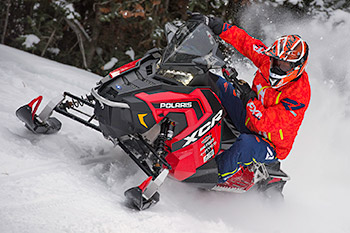
The resurrection of the historic Polaris XCR nomenclature is applied to two new 120-inch RUSH models: The XCR 800 and the XCR 600. These sleds are serious models targeted at all-out cross-country and ditch warriors.

Polaris started with the Pro S (not the Pro X) and proceeded to rework nearly every area of the chassis for stronger off-trail results: Rails are reinforced as are skidframe suspension arms.

There’s a new, larger front track shock. The front end’s Walker Evans have been recalibrated and feature rebound damping clickers. A huge drilled brake disc is used and a 1.5-inch track is featured. Rugged, solid idler wheels are used all around. Apparently all the parts used are right out of Polaris’ own race shop, so it goes without saying, this sled is suited for racing, pretty much right out of the box. In case you’re wondering, we’ve ridden it and were extremely impressed with how well it rides in chatter, stutters and rollers. Although a bit more serious than some of its competition’s wannabe race sleds, the XCR is totally manageable for trail riders.

The utility-targeted VOYAGEUR 600 has been heavily revamped and now uses the AXYS front clip in combo with a reworked shock-in-skid tunnel and skidframe.

There are no more Pro-Ride based RMKs in the mountain segment. All models are now using AXYS technology, including the all-new Pro RMK 174. This ultra-long vert sled has had many revisions made and was not just a tack-on of a longer track and skidframe to the former 162. The tunnel geometry where the tunnel meets the front bulkhead was radically reworked to accommodate the extra length so the sled would climb-out better and get on top quicker, at the same time without sacrificing deep snow maneuverability.

ROGER SKIME EDITION ZR 129

0

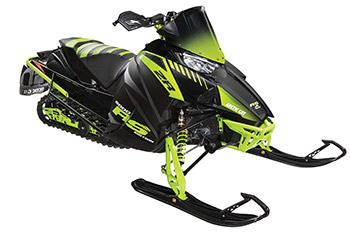
The new extremely limited-edition RS Edition 2017 Arctic Cat ZR 6000 is a celebration of the man whose passion for Arctic Cat snowmobiles spans 55 years and whose innovative spirit is immeasurable: the legendary Roger Skime.

For more than five decades Roger Skime spearheaded many of the most innovative snowmobiles and designs – all fueled by his competitive spirit and insatiable desire to build the best snowmobiles in the world. His is dedication to Arctic Cat has inspired generations of engineers and riders whose passion reflects his example. And through it all he became a living legend.

The RS Edition ZR 6000 reflects that legendary passion with a unique, commemorative styling design and component selection that grace the newest Arctic Cat snowmobile design. The RS Edition is as exclusive as it is unique, with production limited to orders taken only during Arctic Cat’s 2017 Snowmobile Dealer Show.

The foundation of the RS is the class-leading power of the popular Arctic Cat C-TEC2 600 2-stroke engine and the bump-taming ride of the light- weight ProCross chassis.

An engine that Skime loves dearly, the 6000-series 600 C-TEC2 2-stroke is designed, proven and manufactured by Arctic Cat. It features Dual-Stage Injection (DSI), batteryless EFI, APV electronic exhaust valves, exhaust pipe temperature sensor and electric oil injection. It’s the same engine that’s dominated cross-country racing for the past two years, a sport dear to Skime’s heart.

The lightweight, ultra-tough ProCross chassis delivers the intui- tive handling and optimal ergonomics that Skime and the engineering team have spent their careers pursuing. It’s matched by the ARS front suspension and a SLIDE-ACTION rear suspension combination that effortlessly carves corners and swallows bumps. Skime invented the slide-rail suspension, and the SLIDE-ACTION version on this 2017 ZR is the ultimate expression of that original design.

The RS Edition ZR 6000 comes with all-new body styling with in-creased airflow for optimal under-hood heat management. New side panels and hood are easily removed for simplified access to key compo- nents. New side panels and hood are easily removed for simplified access to key components. An LED headlight is visually distinctive while delivering optimal lighting performance.

Special livery for the RS edition includes graphics and a custom green-striped seat cover design executed in such a way that harkens back to classic Arctic Cat models from the past, yet that is also new and uniquely fresh.

Roger’s penchant for premium components is reflected in spec of his signature machine. Quick-switch FOX ZERO QS3R Kashima ski and rear track shocks (with QS3 Kashima on the front track) offer the ultimate in adjustability and performance. TEAM Rapid Re- sponse and Rapid Reaction clutches deliver optimal driveline performance and durability. A rear storage bag, hand guards, tunnel flares, curved Sno Pro brake lever and stout ProMountain front bumper are additional items that grace this special machine.

The Roger Skime Edition ZR 6000 is truly limited in production, all but ensuring its collectability now and in the future.

3-Inch Lug Mountain Sled Shootout

0

We shootout this season’s top mountain sleds featuring 3-inch lug tracks! These sleds include the 2016 Polaris Pro RMK 163, 2016 Ski-Doo Summit X 163, 2016 Yamaha M-TX 162 and 2016 Arctic Cat M8000 162.


Subscribe to our YouTube Channel!

2017 REV PLATFORM AND 850 E-TEC ENGINE

0

BRP (TSX:DOO), the number one snowmobile manufacturer in the world presented a new snowmobile platform and a new engine together for the first time in 20 years during its semi-annual dealer meeting in Dallas, Texas.

The combination delivers Ski-Doo snowmobiles that are effortless with precise handling and thrilling power.

This new platform/engine combination, available on 2017 Summit mountain, MXZ trail performance and Renegade crossover models, pushes the limits of innovation and creativity to unmatched levels.

“We revolutionized the snowmobile in 2003 with the original REV platform by completely changing how consumers rode. Once again, we challenged ourselves to re-think a snowmobile from a blank sheet of paper by designing it around the rider to give them the best experience on snow,” said José Boisjoli, BRP’s president and CEO. “The new Rotax 850 E-TEC engine is the most sophisticated snowmobile 2-stroke engine in the world, delivering an unmatched combination of power, responsiveness, fuel economy and oil economy, all in a lightweight, unique and durable package. The project’s code name was ICE, for Incredible Consumer Experience, and I am confident that is exactly what these new vehicles will be for snowmobilers.”

By specifically designing the engine and platform together, BRP is able to provide snowmobile riders with a host of benefits that redefine agility in deep snow and precision on the trails. The vehicle is extremely narrow and bodywork is minimized, giving the rider more room to maneuver.

The additional room combined with new ergonomic improvements such as a bevelled tunnel, Ergo-Step side panels, open toe holds and a unique forward-adjustable riser allow riders to customize their riding position to their style. The vehicle’s weight is also centralized from side-to-side, giving snowmobilers even more control over the sled.

Under the hood is the next generation of BRP’s E-TEC direct-injection technology in the form of the Rotax 850 E-TEC 2-stroke engine. It unleashes 165 horsepower, 10 more than its predecessor. Riders will also appreciate its 30% quicker response, which instantly delivers the extra power.

This new powerplant provides Ski-Doo sleds with the best power-to-weight ratio in the industry for both mountain and trail segments. Even with these improvements in performance, snowmobiles with this engine cover 40% more distance per litre of oil and maintain the same impressive fuel economy when compared to the Rotax 800R E-TEC engine.*

More than 90 new accessories will be available for the new Ski-Doo models when they go on sale in the fall, adding function, features and style. The collection includes everything from windshields to GPS systems to several new items for customizing the fit to a rider’s style.

Also of note are redesigned fuel caddy and tunnel bags using BRP’s exclusive and popular LinQ cargo system.

The cargo bag can be attached to the top of the fuel can, so owners of shorter- tracked sleds can now attach both items, a feature requested by consumers.

Much of the Ski-Doo riding gear line was also redesigned for 2017 with dynamic color offerings and improved fit and style.

Full details on the 2017 Ski-Doo snowmobiles, Spring Fever promotion and spring tours are available at the all-new ski-doo.com.

2017 SKI-DOO GEN 4

0

Ski-doo is openly admitting it is tired of acronyms. That’s good news although it does make the launch of a new REV a little less glitzy. The braintrust and marketing staff at Ski-Doo told us it’s okay to call the new REV, “Gen-4”.

The engine is all-new and comes with this claim: “This is the first 2-stroke snowmobile engine built to be as reliable, durable and long lasting as a 4 stroke”. Really?

Here’s why Ski-Doo is making this claim. The new 850 siamese cylinder, ultra-narrow twin uses forged aluminum pistons with forged steel ring lands. Each piston is encircled with a band of steel that carries the rings. Can you say ‘diesel’?

The bottom end of the new engine uses a forged three-piece crank with cracked cap rods. Very marine-like, very 4 stroke-ish.

Here’s what reminds us of diesel construction: The crankshaft is lubed with pressurized nozzles firing oil at the big end, small end and crank bearings including the double row, fully open bearings on the mag and PTO ends. No more hundred-buck-a-tube mystery goo lubing the PTO bearings!

Ski-Doo claims the engine’s new, precisely metered electric oil pump uses less oil while delivering vastly improved crank oiling.

That’s the durability story; here’s the beef. The new engine puts out, at Ski-Doo’s admission, a full 165-horsepower and after riding it, we believe it.

Polaris set the bar high with the Liberty HO the past two seasons but Ski-Doo knew what it were shooting for and has hit it dead-on. Bam! New king-of-the-hill.

The 850 is ultra-narrow – by over 4 inches – as a result of a new super skinny stator on the right end of the crank. The engine looks odd as the tubular mag end casting on all previous snow-mo 2-strokes is gone.

The engine is further narrowed by the use of the new, revolutionary P-Drive roller tower primary. The engineers also built in more lightness by using a – guess what? – 2-pound lighter crank. Where have we heard that idea before?

Fuel is delivered by new E-TEC lighter and more efficient injectors. Triple stage, cable activated (not pressure) RAVEs round out the package.

This one will bring tears of joy to hardcore XP/XS fans: A new cast aluminum bulkhead that’s tough enough to hold an updated RAS 3 double A-arm IFS.

Geometry up front has been altered, adding an extra inch of travel. The steering system (only on X packages) uses a bump-steer eliminating rack.

This one will bend your mind: The rider is moved ahead (yep, ahead) another 4-inches on the Gen 4 platform. This is accomplished because of the narrowed and centered engine, allowing the pilot to get their knees way, way forward – almost on top of the spindles – when carving white top.

The side panels are narrowed by about 2-inches per side and the sled’s nose is notably shorter. Ski-Doo claims to have further centralized mass by not only paying attention to the front-to-back plane but the side-to-side location of engine.

Moving to the back end and when viewed from the rear, the tunnel uses a pyramidal shape. This is an Arctic Cat trick making the sled feel narrower between the knees. The entire tunnel top is a smooth, stamped aluminum heat exchanger which looks very unusual because it has no fins. Ski-Doo claims it’s more resistant to stud penetration and will have tunnel protectors available.

The battery now resides in the rear of the seat. rMotion returns with minor tweaks but is essentially the same, excellent suspension we’ve come to love. The rider’s feet are now fully exposed allowing for contorted movements when railing twisties.
Ski-Doo is making available accessory toe-holds and close-off parts for more traditional riders.

This is where the Gen-4 departs from all previous REVs and every other sled in the biz. The rider is able to use the far-forward seating position to employ gymnastic– caliber body-english when railing.

The adjustable parallelogram handlebar riser pulls the rider forward and onto the unusually narrow front section of the seat. The seat also allows for traditional ergonomics with a large flat-top rear section. This idea is strangely similar to the Polaris flat top seat. When seated way-up front the sled responds with linear turn-in and an amazingly flat cornering posture.

The XS/XP’s nervous, heavy steering feel is gone. The sled is completely settled on-center – way beyond the XS RAS 2.

The side panels have a unique profile Ski-Doo calls “Ergo Step” and they’re designed to make it easier to get up on the front end. Instrumentation, switchgear and skis are the only carry-overs we could see from the XS. Virtually everything else is all-new. Ski-Doo is promising its LINQ accessories will interchange for the most part, however, look for a new LINQ 2-up seat.

After riding the Gen-4 REV we’ve come away both shocked and impressed. The shock? Incredible power and the P-Drive primary’s ability to get that power into the snow. The engine spools with lightning speed – like an extension of your synapses! Think it and you’re gone!

The P-Drive generates tangible benefits, not the least of which are immediate, fluid upshifts. In case anyone is wondering, the roller tower concept is not only the future for Ski-Doo, everyone needs to move in this direction over the next few years. The concept is mechanical art.

We were skeptical when Ski-Doo unveiled the Gen 4 to the international media earlier this winter. When we were told the rider has been moved another 4 inches forward, we thought Ski-Doo had lost its collective mind. It hasn’t. In fact, the new Gen-4 REV moves into a challenger position for best handling against the much loved Polaris variable castor IFS we’ve knighted best-in-biz.

Although we’re not prepared to say the new REV Gen 4 handles better than a Polaris, it does however, handle exponentially better than the XS. The experience is different than Polaris’ variable castor design – we won’t know if its better until we get these sleds nose to nose.

Stay tuned to hear more of our riding impressions and analysis of this very unique, very different snowmobile from the sport’s market share leader.

WHY YOU WON’T SEE A TURBOCHARGED 2-STROKE

0

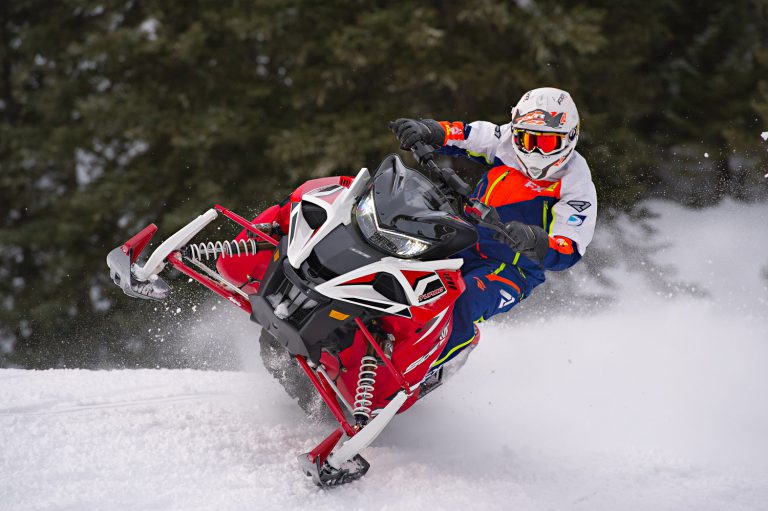
Our recent article on why the OEMs should think about bringing out an 800 2-stroke with a turbocharger generated more likes and views than any other story in recent history.

Obviously, there’s a lot of interest in a sled like this but we’re pretty sure it will never happen. Here’s why.

With any sled-maker, it’s pretty much about longevity. In order to tool a truly reliable, long-life, turbocharged 800 2-stroke they’d pretty much have to toss out the existing engine blueprints and start with a completely new block with a beefed up bottom end.

That would include bigger lower end bearings, stronger piston rods, different (probably lower compression) pistons and a new crank. This upsizing would likely mean new cases would need to be crafted and all the turbo plumbing would have to be specially adapted for a 2-stroke. Big bucks needed and maybe for a pretty limited market.

The fact is, turbocharging a 4-stroke just makes a lot more sense because you can get big power with existing technology and it’s already been proven how reliable these boosted 4-strokes are.

Naturally, the downside is weight. The weight penalty with a 4-stroke over a 2-stroke is still 50-plus pounds without the turbocharger. Add the pump and piping and your looking at at least 80-lbs – usually more.

We’re pretty sure a lot of buyers would love a 200-hp 800 that only weighed about 20-35 lbs. more. Don’t hold your breath, though. It looks like it’s up to the aftermarket to provide a sled like that.

The Real Story Behind Yamaha and Arctic Cat

0

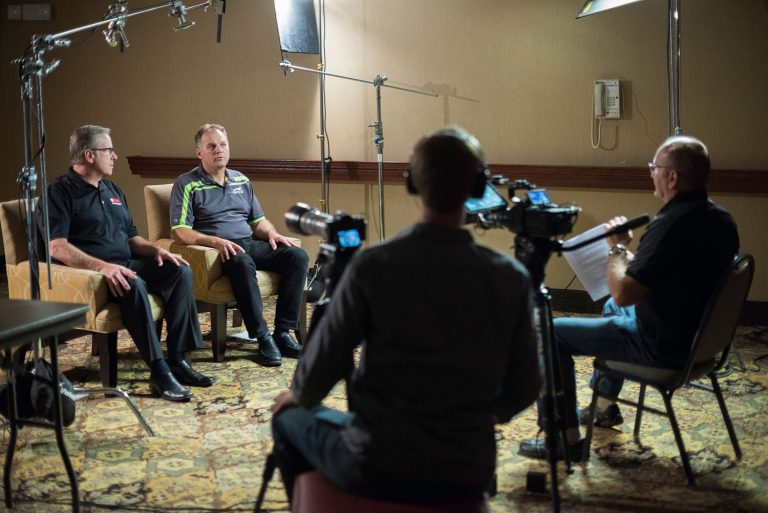
Motorhead Mark has the opportunity to sit down with two heavyweights in the snowmobile industry to discuss the cooperative engine supply and manufacturing agreement between Yamaha and Arctic Cat.

Subscribe to our YouTube Channel!