Home Blog Page 124

REACH FOR THE SUMMIT SHARED EXPERIENCES

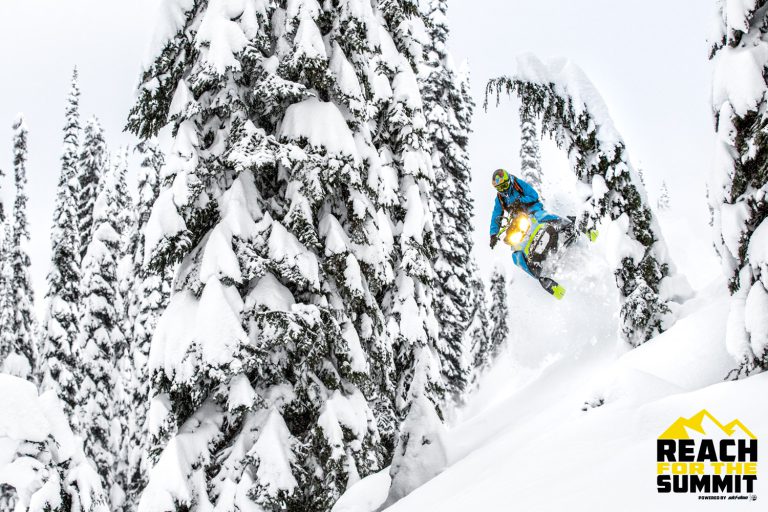
Congratulations to Ryan Gnenz for sharing his REACH FOR THE SUMMIT experiences! Ryan picks up the Cyclops GEAR CGX2 4K Wi-Fi Action Camera! A great camera for capturing your experiences!

Ryan writes:

“I have been snowmobiling since day one of my life. My first sled was a 2004 Ski-Doo Mini Z and I probably put 200 hours on it as a child. Then when I was 12 I inherited my grandfather’s 1978 John Deere 440 Liquifier and rode the crap out of that sled for 5 years. Then when it finally had its day about 5 years ago, I found myself a Renagade Sport and rode that to this current date.

Snowmobiling is my life and i love the people and culture that surround it. I ride mostly ride in Northern Alberta Canada, but have had a few mountain experiences. It would be the best experience of my life to go ride with you at CKMP. I have been watching SnowTrax Television since day 1.”

Submit your story, photos and videos at at supertraxmag.com/summit and you could WIN an all expenses paid mountain riding adventure at CKMP (Carl Kuster Mountain Park) in beautiful British Columbia, Canada.

While there you’ll not only enjoy 5 star accommodations, you’ll also get to hang out and ride with Ski-Doo Mountain Ambassadors Carl Kuster, Rob Alford and Tony Jenkins!

The lucky winner will also star alongside Luke and AJ Lester in a feature story on SnowTrax Television and be the focus of an article in Supertrax Magazine.

Full REVIEW: 2018 Arctic Cat ZR 8000 137

0

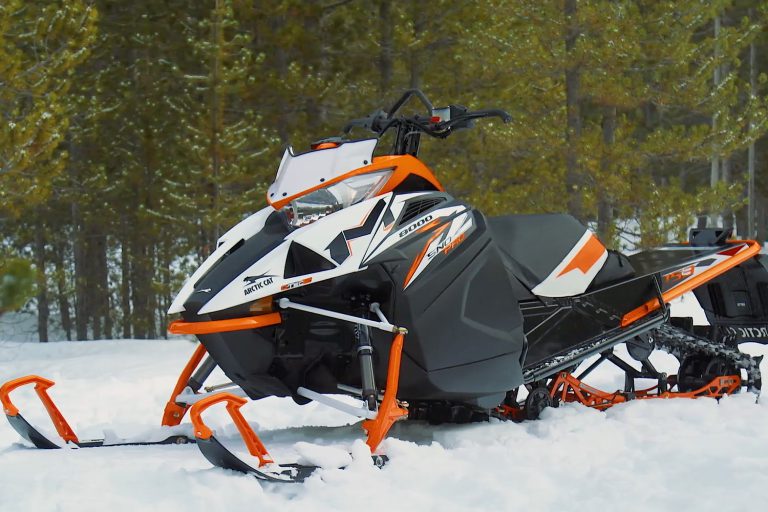
Luke rings out every ounce of joy there is to be had with the C-TEC2 800 DSI engine as he reviews the 2018 Arctic Cat ZR 8000 137.

Subscribe to our YouTube Channel!

THE SLED I WANNA GET STUCK WITH

0

Each season I get the luxury of riding the newest, most exciting iron. I don’t pass this off as something I’m due. I realize it’s a huge blessing to do this and I appreciate the opportunity each season.

While anything with a motor, track and two skis will get me excited about winter, I always have my top picks for the season and the sleds I’m most likely to fight the rest of the crew to be on once we have enough snow.

Lucky for me I pretty much have my pick of off-trail shredders as Mark and Luke tend to gravitate towards the flat-top category, leaving me with at least a couple of good deep-lug shovels to get digging with.

Strangely, this season I’m most excited for not just one sled but a whole host of sleds that fit my riding style. I guess I have to include bikes in there now too because we have two Aro Timbersleds with the Trio front shock set up.

Back to sleds: I think the most enlightenment I’ll get is comparing the SKS to the Backcountry X. I’m excited to use both and see which one comes out on top.

I already have a good understanding of the Switchback Assault and I think I know where the limitations of the Freeride 137 will come in, too. Truthfully though, I’m just plain excited to tear it up on all four of these mint sleds!

I just wanna be off in the untouched snow, watching the powder fly off the ski tips as I carve and find some good natural jumps and transitions where a little bit of shovel work and the coaxing of some good friends builds up the nerve.

Right now, it’s the kind of snow base we’ve been waiting for and last week we had a single day above freezing that really caused the snow to sink.

Most times that seems bad but at this point, with the powdery fluff we’ve had and the continued sub-zero temps, it really will help get us that crusty structure that’ll stick to the landscape and be the barrier between immovable frozen earth and the sled.

With a few decent snowfalls, the backcountry and off-trail routes will start to be traveled and new and unique features will start to emerge.

If the snow stays heavy I think the Freeride 137 will be my first choice, however, if we get hit hard with fluffy powder and the depth builds I think I’m going to be putting in the majority of my time on the SKS 146 and the Backcountry X 850.

I’ve been tempted to do a little behind-the-scenes swap of the Freeride suspension into the Backcountry X and see if we can’t build it the way ‘d like to see it from the factory.

No matter how you look at it, I’m excited for this winter, and all I can say is bring on the SNOW!

SnowTrax 2018 – Episode 2 Sneak Peek

0

Coming up on an all-new episode of SnowTrax Television:

We continue our adventure in Newfoundland alongside Troy Burt – winner of the 2016 North America’s Top Snowmobiler competition and 5 Toes riding ambassador – through the backcountry of the province. Watch as AJ and Troy go all out in the snow aboard Gen4 Ski-Doo Summits and push each other to their limits going beyond their comfort zone of riding. Insane hill climbing, jumps and trail ripping included!

AJ is installing a Super-Traction Grid from SUPERCLAMP on his trailer track which provides incredible additional grip and accommodates both snowmobiles and ATVs. Can be installed on both trailers and truck decks.

And Motorhead Mark is here to give his detailed impressions on the “anti-crossover” 2018 Yamaha Sidewinder S-TX DX 146.

Subscribe to our YouTube Channel!

IS E-TEC REALLY THAT FAR AHEAD?

0

One of our readers, Tyler Floyd, commented on an article we posted a couple of weeks ago that he thought Arctic Cat’s new DSI 800 was already five years behind the competition (Ski-Doo) when it introduced its new engine.

I’m sure many Cat riders were a bit offended by his comment (I;m also pretty sure Tyler owns at least one Ski-Doo) and will likely gang up on him online. However, I think Tyler’s comment is a valid perspective on where the industry is heading.

In my view, the perception with many snowmobilers is that the newer an engine is, the more technically advanced it is. I’m not taking anything away from Ski-Doo here but I think Cat’s C-TEC2 800 is every bit as up-to-date and advanced as any E-TEC.

The fact Cat has been able to achieve a clean, reliable 2-stroke that delivers gas mileage within a hair of E-TEC without the use of direct injection is a considerable accomplishment.

Another consideration is the history of the 800 E-TEC compared to the old Suzuki 800 Cat used for so many years. Certainly the old 800 was a relatively dirty engine – especially compared to E-TEC – but those twin plug 800 Suzuki Cats were as reliable as anvils and arguably have had a better durability history over the last seven years than the 800 E-TEC.

Yes, the new 850 E-TEC incorporates a lot of new technology that will ensure longevity – and you can also argue the old Cat 800 is a completely different engine than the new DSI 800, however, the principles of engine lubrication, crankshaft design and heat distribution are amazingly similar to the old Suzook.

In other words, Cat didn’t throw out the tech that works for the sake of creating something more complex.

Is Cat’s DSI a better design than E-TEC. Absolutely not. I would also submit that E-TEC is not a better design than C-TEC2. It’s simply two different ways of accomplishing a very similar result. We can argue all day about which one is faster on any given day, but the results are pretty similar.

Also, if Ski-Doo does have a new G4 600, I’m betting its higher performance might be more attributable to the pDrive clutch than the engine’s power output.

Yeah, more technology!

Hibbert Extends Point Lead at Snocross

January 8, 2018 – Tucker Hibbert extended his points lead in the ISOC National Snocross Pro points championship at rounds five and six in Shakopee, Minn. Hibbert had a strong weekend of racing at the Canterbury Park National winning all four of his qualifying rounds and the final event on night two.

Going 1-1 in qualifying Friday night, Hibbert had last pick on the start line for the 15-rider, 20-lap final due to the inverted start procedure. He got pinched off the start but slotted into a position he felt comfortable with going into the first corner. Moments later, a rider from the inside clipped him, sending him off the track and into the guardrail. Unharmed physically, he returned to his sled to find the handlebars broke in half. Knowing every point counts for the year-end championship, he re-entered the race and completed as many laps as he safely was able to finish a respectable 12th place.

Hibbert stormed into Saturday confident and focused on winning every time he hit the track. After winning both his qualifying rounds again, he took a cautious approach to the start of the 15-rider, 14-lap final. He grabbed a fifth place start and within a half of a lap moved into third. Searching for fast lines, he found a solid spot for passing and used the same move to get past the two riders in front of him on laps four and six. Once out front, he rode unchallenged to take the win.

Hibbert now has a 34-point lead over second place in the points championship. The ISOC National Snocross tour will take a weekend break before heading to Deadwood, SD January 19-20. To stay up-to-date with Hibbert, visit tucker-hibbert.com.

Tucker Hibbert – #68 Monster Energy / Arctic Cat / Ram Truck
“I’m really happy about the weekend. Extending my points lead is the main goal and we were able to do that. I didn’t have a great race on Friday in the main but other than that, I’m stoked on my performance and how I felt.”

Friday night recap:
“I won both my qualifiers so I had last pick on the front row. I was stuck on the outside. I didn’t get out front off the line but felt good about where I was going into the first turn. Then, all of a sudden, I got bumped by someone from the inside. It pushed me to the outside of the track and I crashed into the guardrail. I ran to my sled to try and get going right away and realized my handlebars were broken. It was a big disappointment and I didn’t know what to do. After thinking about it and talking to my dad quick, I decided to get on the track and see what I could do. I wasn’t able to race at full speed but still got around the track. It wasn’t the race I was looking for but I did what I had to do to salvage points.”

Saturday night recap:
“I had some extra motivation after what happened Friday night. I was really focused on my starts so I wouldn’t put myself in a bad position. I felt really good all night and charged hard to win the qualifiers and the final.”

Overall thoughts on the season:
“I feel really good. Extending my points lead each weekend is the main goal. We have a lot of racing left. I feel really confident in my sled, my team and my performances. We’re in a good position for the rest of the season and will be working hard to make sure we keep having success.”

Tucker Hibbert – Canterbury Park National Results
Friday, January 5– Pro Round 5
Round 1 Qualifying: 1st
Round 2 Qualifying: 1st
FINAL: 12th
Saturday, January 6 – Pro Round 6
Round 1 Qualifying: 1st
Round 2 Qualifying: 1st
FINAL: 1st

CBS Sports Network Broadcast 
Canterbury Park National Day 1: Saturday, January 13 – 11:00 am ET
Canterbury Park National Day 2: Saturday, January 20 – 10:00 am ET

2017/2018 ISOC National Snocross Tour Schedule
Duluth, MN // November 24-27, 2017
Jackson Hole, WY // December 8-9, 2017
Shakopee, MN // January 5-6, 2018
Deadwood, SD // January 19-20, 2018
Salamanca, NY // February 16-17, 2018
Mt. Pleasant, MI // February 23-24, 2018
Dubuque, IA // March 9-10, 2018
Lake Geneva, WI // March 16-17, 2018

About Tucker Hibbert
Tucker Hibbert, 33, entered his first race at the age of eight and today stands as the most decorated snowmobile snocross racer in history. He’s a two-time FIM World Snowcross champion, 14-time X Games medalist and 10-time national snocross champion. Now in his 18th professional season, he holds 132 Pro National victories. For more information on Hibbert, visit tucker-hibbert.com.

LaVallee to Perform Insane Super Bowl Stunt

MINNEAPOLIS – With Super Bowl LII just 30 days away and excitement building, the Minnesota Super Bowl Host Committee and Polaris Industries, the global powersports leader, announced another feature attraction at Super Bowl LIVE Presented by Verizon, where professional snowmobile athlete Levi LaVallee will perform a backflip over Nicollet Mall. Polaris UpsideDowntown will be open February 3, 2018 from 10AM – 10PM. It will include snowmobile stunts, meet and greets with snow athletes, giveaways and other outdoor fun in the Bold North. The snowmobile stunt show will take place at 1:30PM, finishing with a Levi LaVallee signature jump over Nicollet Mall at 11th Street.

“Polaris UpsideDowntown is going to put the bold in Bold North,” said Maureen Bausch, CEO for the MNSBHC. “Our goal is creating a Super Bowl experience in Minnesota that delivers unforgettable experiences for our guests, and Polaris and Levi LaVallee are going to put on a thrilling show for our visitors.”

“Polaris was founded in Minnesota, and we are proud of those roots and the bold spirit they embody,” said Scott Wine, Polaris Chairman and CEO. “Our company was born from a passion for adventure and enjoying the great outdoors, and we wanted to create a Super Bowl experience that honors that legacy. The result is Polaris UpsideDowntown, with longstanding Polaris partner and friend Levi LaVallee heading an adrenaline-pumping stunt show that is sure to entertain Minnesotans and Super Bowl visitors alike.”

The stunt show features LaVallee, along with three other professional snowmobile athletes, including Justin Hoyer and Fred Rasmussen. LaVallee will conclude the show with a backflip on his snowmobile, launching nearly 100 feet between two ramps. A native Minnesotan, LaVallee holds the world record for snowmobile distance jump and is a seven-time gold medalist at ESPN Winter X Games (11 total medals).

Super Bowl LIVE presented by Verizon will stretch six blocks on Nicollet Mall, from South 12th Street to South 6th Street, with each block offering unique and exciting Super Bowl opportunities. Fans will see larger-than-life ice sculptures, national broadcast sets, and the Verizon Up Stage at Ice Mountain, where both local and national acts will perform throughout the free 10-day festival. Super Bowl LIVE presented by Verizon will also be the public’s gateway to additional exciting events across the city, including Super Bowl Experience Driven by Genesis, the NFL’s interactive theme park which will be located at the Minneapolis Convention Center. Visit SuperBowl.com for more details.

With Super Bowl LII just 30 days away, fans can visit MNSuperBowl.com or SuperBowl.com for exciting announcements and event updates!

About the Minnesota Super Bowl Host Committee –
The Minnesota Super Bowl Host Committee is a private, non-profit corporation formed to plan and execute the festivities surrounding Super Bowl LII. For more information visit www.mnsuperbowl.com and follow @mnsuperbowl2018 on Facebook, Twitter, Instagram and Snapchat.

About Polaris –
Polaris Industries Inc. (NYSE: PII) is a global powersports leader that has been fueling the passion of riders, workers and outdoor enthusiasts for more than 60 years. With annual 2016 sales of $4.5 billion, Polaris’ innovative, high-quality product line-up includes the RANGER®, RZR® and Polaris GENERAL™ side-by-side off-road vehicles; the Sportsman® and Polaris ACE® all-terrain off-road vehicles; Indian Motorcycle® midsize and heavyweight motorcycles; Slingshot® moto-roadsters; and Polaris RMK®, INDY®, Switchback® and RUSH® snowmobiles. Polaris enhances the riding experience with parts, garments and accessories, along with a growing aftermarket portfolio, including Transamerican Auto Parts. Polaris’ presence in adjacent markets globally include military and commercial off-road vehicles, quadricycles, and electric vehicles. Proudly headquartered in Minnesota, Polaris serves more than 100 countries across the globe. Visit www.polaris.com for more information.

IPONE SNOWMOBILE OIL

0

IPONE has been around since 1985 and not only produces Group 5 ester-based synthetic oil, but is also dedicated to the powersports market.

Ester-based oils are made from 100-percent synthetic chemical compounds, free of any petroleum base.

The chemical reaction of colliding organic and alcohol-based atoms forms a complex molecule with less carbon atoms and is also free of the wax (paraffin) commonly found in other petroleum-based oils.

The less carbon atoms present, the shorter and stronger the molecule becomes, resulting in a higher flash point producing less smoke and less carbon build-up on exhaust valves.

Synthetics are free of petroleum waxes and the solvents normally needed in other oils to break down the waxes for a lower pour point in cold weather.

The problem with solvents is that they eventually burn off, so you may start with a 0W40 oil, but eventually it will turn into a 5W30 or worse.

Another problem is an oil that breaks down quickly is also consumed quickly, meaning more top-ups and more dollars out of your pocket.

If you own a 4-stroke snowmobile you know how frustrating it can sometimes be starting it in cold weather. Since ester-based oils are attracted to metal surfaces, IPONE literally coats and sticks to engine components like cylinder walls and piston skirts, resulting in less friction on start up and less dependence on the oil pump delivering the oil.

IPONE oil is low viscosity and contains additives resistant to breakdown over time. The result is significantly reduced friction and heat build-up in the engine, which means an engine that’s working more efficiently and putting more power to the crank.

IPONE’s synthetic ester-based racing oils are offered in 0W40 4T Stroke oil blend which is good down to -45°C/-65,2°F and a 2T Stroke injection oil recognized on the trail by its distinguished strawberry scent.

Learn more and find out where to buy IPONE oils at ipone.fr

LOW COST OF SNOWMOBILING

0

These days, anyone who talks about less government involvement in our world certainly gets my ear right away.

Over the last four decades (yes, I can still remember those days) government has become increasingly more controlling of everything we do as citizens, business people and recreationists.

The idea that we the people, the taxpayers, control things is certainly a distant memory and sometimes it feels like citizen-control has been replaced by a Big Brother who makes all our decisions for us. The worse thing is, we’re used to it.

I’m really not trying to be political here and I have to admit, in many cases North Americans do need the control of a larger governing body. I guess my biggest concern is that the government is our largest industry and human complacency has caused it to grow out of control.

Enough politics; lets relate this to snowmobiling.

North American snowmobiling has a consolidated group of governing bodies (governments) that control and support the sport by building places for us to ride. Without these governments our sport would shrivel into an out-of-control herd of renegades running roughshod over everyone else’s property. Sound extreme? That’s exactly what happened in the 1950s and 60s.

We’re a unique group that way. In order to sell snowmobiles, there has to be a place to ride them. In order to use snowmobiles, which are only functional for a brief, seasonal band of climate, there must be someone who creates the environment they can be used in. In order for the sport to grow, it needs a sustainable trail network that is safe and enjoyable to use. Flash report, right?

Here are the cold, hard facts: The above described trail system does not just happen by chance. Nor does it operate for free. Nor does it intend to control the sport for political reasons.

The fact is, these governing bodies that generate places for us to ride exist only to enhance the sport. The net result is an industry that continues to thrive based on the reality we have a place to enjoy the vehicles the industry designs and manufactures.

I challenge you to think about this for a minute: No volunteer organizations, no trails. No trails, no snowmobiles.

Sure, you could argue there are places you can ride that don’t require trails, maintenance or governance. For instance, mountain riding needs much less legislating than a trail network. Duh.

However, without some kind of parental control, trespassing in the hills would become a huge issue and the safety and respect of the sport would soon be called into question. Maybe it already is in some areas.

No other powersport medium is like snowmobiling. Street bikes operate on roads and highways intended to serve all motorists. Off-road motorcycles and ATVs operate on closed course tracks and trails that require little daily maintenance. Boats and personal watercraft function in an aquatic environment and, except for safety governance, don’t require a lot of outside management.

Snowmobiling, however requires constant maintenance, legal permissions for land use and the construction of infrastructure like trails, bridges, signs and maps. Yet, it thrives.

I’m writing this because I want you to consider how important it is to pay into this sport. You absolutely must support organized snowmobiling governments.

I know owning and riding sleds is expensive – you can spend thousands on this sport and never even buy a trail permit, pay a license fee or submit to an organizational membership.

However, rather than thinking of those costs as a nuisance, as unnecessary taxation or another government money-grab; think about this: No cost; no governance. No governance, no trails. No trails, no snowmobiles.

Sobering thought, isn’t it?

2-STROKE VS 4-STROKE DEBATE

0

As if I haven’t penned enough editorials on the subject of 2 and 4-strokes’ weaknesses and strengths, here we go again!

Actually, you can blame Ski-Doo and Rotax for this diatribe. It was Ski-Doo and its Rotax engine division that blew the lid off the whole “good motor – bad motor” argument in MY17.

You heard it, we heard it: Ski-Doo made the outlandish statement its new Rotax 850 2-stroke, the powerplant of the future for the all-new G4 chassis, would deliver durability rivaling an equivalent 4-stroke.

I don’t know about you but when I first heard this claim at the intro of the G4 in Riviere Du Loup, Quebec in January 2016, I was pumped. I am a bald faced proponent of 2-strokes. In my view, they are truly “snowmobile-centric” powerplants.

Conversely, 2-strokes are being replaced in virtually every other powersport genre by 4-stroke engines. Still, in our sport, the inherent advantages of 2-strokes are so compelling, investment in 2-stroke engine technology continues. Need proof? Polaris’ 800 HO, Arctic Cat’s DSI 600 and 800 and, of course, Ski-Doo’s successful E-TEC duo.

That’s not to say I’m anti-4-stroke. New stuff in the market like the imposing Yamaha/Arctic Cat turbocharged and intercooled 998cc triple definitely ignites my testosterone on an acetylene torch heat level. There are other 4-stroke engines that capture my interest no matter how much I resist, however, when they’re compared to similar output 2-strokes, in the back of my mind I’m thinking: “Why bother?”.

Lately, I’ve taken the opportunity to ask a number of movers and shakers in the engineering world what they perceive the future of snowmobile 2-strokes engines might look like.

One I asked is Rotax VP, Thomas Uhr, on a recent trip to Rotax’s home in Gunskirchen, Austria. Thomas is an insightful and likeable guy who answered my inquiry about the future of 2-strokes with this succinct and insightful quote: The 2-stroke engine is far from dead”!

The issues Rotax addressed that ultimately allowed Ski-Doo to make the almost outlandish claim of 4-stroke durability, when examined closely, make sense.

The 850 uses a forged crank, automotive in nature, and employs cast iron ring lands in its forged aluminum pistons: Diesel engine stuff. The 850 has pinpoint oiling nozzles shooting lubrication under the piston to the small end of the rods. This addresses a decades-old 2-stroke weakness. These features, when rolled together, make the Ski-Doo claim of 4-stroke durability entirely credible.

Despite the argument I’ve made for continued 2-stroke power in sleds, there are limitations. It’s pretty clear ultimate performance turbocharged snowmobile engines producing 180 to 200-horsepower in MY18 are the exclusive domain of 4-strokes.

Turbocharging 2-strokes, although possible, is not likely to happen in today’s world of EPA mandated exhaust emissions. The very nature of pressurized induction, whether achieved with an exhaust driven turbo or a gear driven supercharger, pushes too much unburned fuel charge out the 2-stroke’s exhaust port before the rising piston can close it off. The result is hopelessly dirty emissions. Yes, 2-stroke turbos do exist but none are consumer-available on production powersport engines.

I think snowmobile buyers value the inbred traits of both 2-strokes and 4-strokes using solid knowledge to make their purchase decisions. 2-stroke buyers appreciate light weight, low maintenance and imposing power-to-weight ratios. Many 4-stroke buyers line up behind the reliability-durability flag and appreciate not carrying oil when on tour.

What’s confounding is the amazing fuel economy Ski-Doo’s E-TEC 2-strokes consistently card. Arctic Cat’s Dual Stage Injection (DSI) 2-stroke also delivers strong mpg. Up until the arrival of the Ski-Doo ACE 4-strokes, the best fuel economy in any horsepower category was attributed to the Rotax 600 E-TEC.

Here’s the good news: It looks like this debate will rage on for some time to come. If Thomas Uhr is correct – and I wouldn’t bet against him – we should be enjoying 2-stroke power with improved durability for some time.