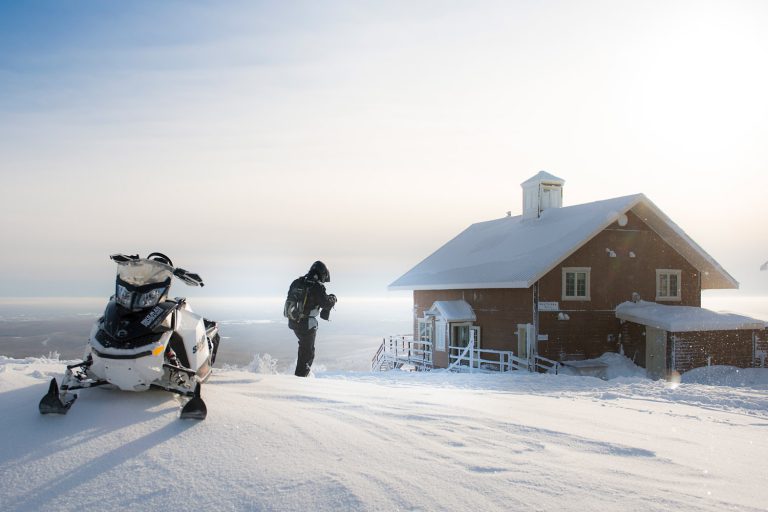
Take a moment, close your eyes and think of the most beautiful winter landscapes you could possibly imagine!
What you’d be imagining would look like Québec’s majestic Percé Rock, or maybe, the breathtaking Chic-Choc Mountains.
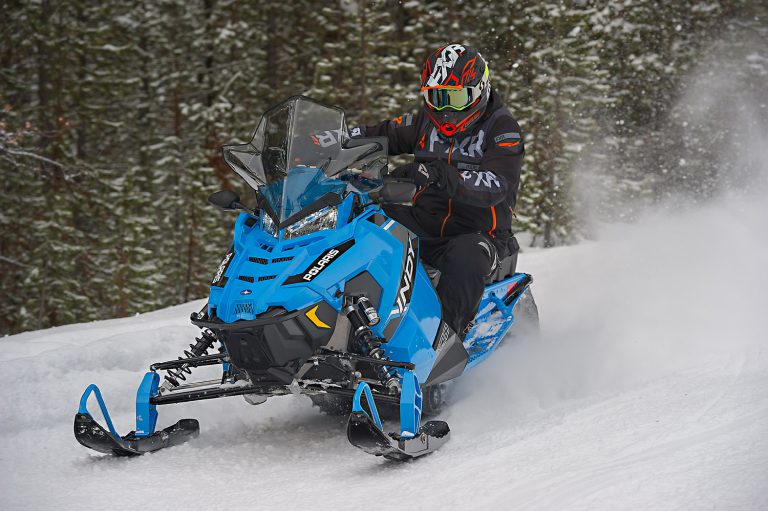
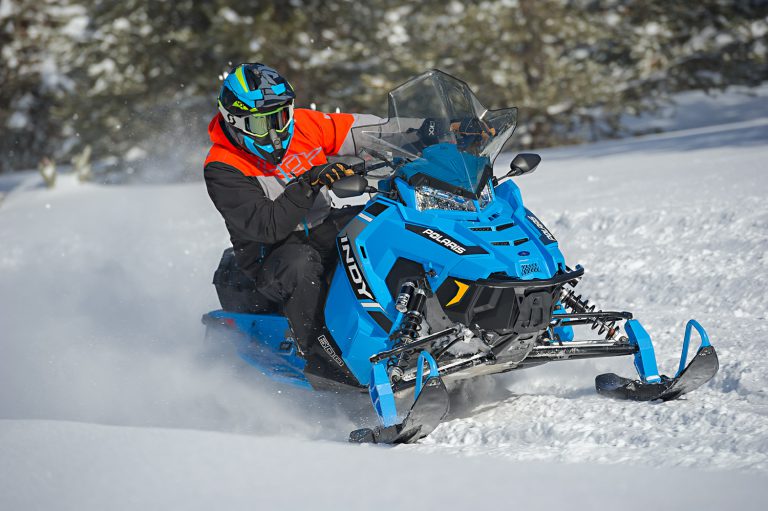
There’s never any shortage of exciting adventures and things to see when you visit Québec in the winter! The biggest thing is the amazing snowfall; it’s unlike any other place in North America! Trees covered top to bottom with it, snowmobile trails built on feet-depths of it.
There are more than 20,500 miles (33,000 km) of groomed trails in the province – all are safely routed and well-marked with clear trail signage.
The people? They’re great! Warm and friendly hosts who fully understand snowmobiling and go out of their way to make you feel comfortable and welcome.
Here’s the best part: You can ride Québec’s awesome trails for free the weekend of January 18 and 19, 2020!
Take a moment and check out Québec’s online APP: iMotoneige. There are more than 800 member services on the APP, all accessible by snowmobile trails. By using it, you’re able to view trail maps and put together all the info you need to plan the best snowmobile tour you’ve ever taken!
Here are a few of the places you should visit this winter:
Bas-Saint-Laurent – Gaspésie Snowmobile Tour (Bas-Saint-Laurent – Gaspésie – Côte-Nord)
Do you like sea views and quaint, comfortable inns with cozy rooms and great cuisine? The Bas-Saint-Laurent Gaspésie Snowmobile Tour is famous for excellent snow-depth, perfectly groomed trails and the scenery along the way is nothing short of breathtaking!
If you start in Rivière-du-Loup, follow Trans-Québec trail #5 (TQ5) it will take you through the mountains and you’ll experience magnificent vistas all along the St. Lawrence River all the way to the Gaspé Peninsula. Along the way you’ll get to see the unforgettable Percé Rock and the beautiful Chic-Choc Mountains.
With its snowy forest trails and frequent sighting of wildlife, this tour is what snowmobilers dream about!
Monts-Valin (Charlevoix – Saguenay–Lac-Saint-Jean – Québec City & area)
The Monts-Valin mountains are simply spectacular! Snowmobilers flock there with the first snow, often in November, and don’t leave until late spring. The trail network is exceptional, snowfall is guaranteed, maintenance is constant, services and accommodations are plentiful!
Discover the 5 Summits circuit that runs through the Monts-Valin mountains. You’ll be riding amidst five different peaks at an altitude of more than 770m (2,526 feet), offering an incredible view of the Saguenay-Lac-Saint-Jean region, and the breathtaking Saguenay Fjord in particular.
From certain spots on the trail, you can see a multitude of giant wind turbines generating power in the Parc des Laurentides, Lac Saint-Jean and the city of Saguenay.
One of Québec’s most famous landmarks, accessible by trail and located in La Malbaie in Charlevoix is the incomparable Fairmont Le Manoir Richelieu hotel. 5-Star all the way – and absolutely unforgettable!
Ski-Doo Adventure – Fairmont Le Manoir Richelieu (Charlevoix)
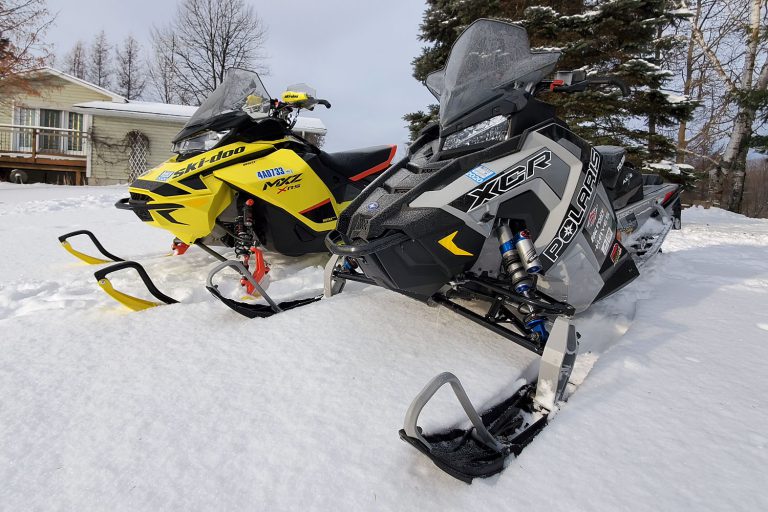
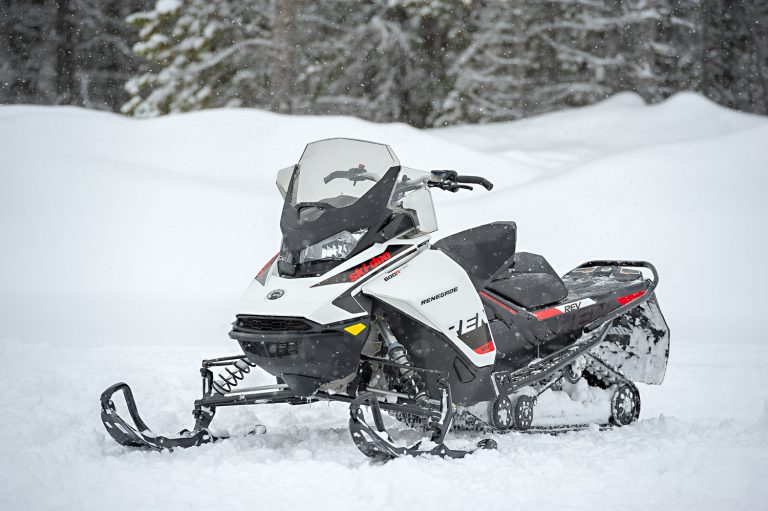
You’ll start your adventure at the stunning Le Manoir Richelieu hotel, located along the beautiful St. Lawrence River. In partnership with Nord Expe, the BRP Experience Centre offers different types of Ski-Doo snowmobile tours of one-half day to four day’s length on Québec’s beautiful trails.
The first thing you’ll experience is the incredible depth of snowfall, then you’ll immediately begin to see some of the most pleasing, pristine winter landscapes in North America. From there, where you want to go and what you want to see is up to you.
There are Ski-Doo adventure packages for all skill levels and it’s even possible to have customizable journeys. Learn more here: brpexperience.com.
Mount Saint-Magloire (Centre-du-Québec/Chaudière-Appalaches)
Here, you can easily ride loop trails without leaving the area or journey across Chaudiere-Appalaches to connect with other regions. Trails are meticulously maintained and all routes and signage are clearly designated.
The view at the top of the observation tower in the Massif du Sud regional park at a height of 3,000 feet is spectacular! On a clear day, you can even see the mountains all the way up to Maine, including Mount Katahdin. This magnificent viewing opportunity is located on trail 549.
The Montagne Noire at Saint-Donat (Lanaudière-Mauricie)
This region has been a snowmobiler’s must-see for generations offering hundreds of spectacular trails and unique inns and resorts featuring cozy rooms and excellent dining.
Riders can take a scenic trail at altitude that weaves to the highest points of Saint-Donat. Stop at lookouts with breathtaking views of the area. Feed birds directly from your hand – and don’t forget your camera!
The Montagne du Diable (Devil’s Mountain) (The Laurentians)
You can self-guide your ride on groomed trails here for hundreds of miles or book a guided tour to discover some of the many unique, hidden sights of the region.
The Relay at the top of Devil’s Mountain is the most popular meeting place for snowmobilers passing through the Upper Laurentians.
Long located at the very summit of Montagne du Diable, this restaurant-bar offers a thrilling ride to the top and the view when you get to the summit is a must-visit.
This definitely should be on of your primary destinations in this area. It truly feels like some kind of snowmobiling paradise!
The Pontiac Railroad (Outaouais)
This abandoned railway, groomed laser-smooth, allows you to take your snowmobile on the new bridge crossing from Ontario to the western part of the Outaouais Region. This formerly active railway, originally called the PPJ, was converted in the late 1970s into a 92 km (57 miles) multi-purpose recreational trail.
Discover the rich heritage of a part of the region well worth getting to know. You’ll see the longest covered bridge in Québec, a lumber baron’s estate, as well as the Chutes Coulonge Park with its magnificent canyon and a unique historical railroad museum.
Fourrure Grenier (Abitibi-Témiscamingue)
Snowmobiling is a cultural experience in Abitibi-Témiscamingue and here you’ll find hand-crafted accessories designed specifically for riders.
Why not make a stop at Fourrures Grenier, a family fur business, and buy yourself warm fur accessories such as boots, mitts and hats of exceptional quality? You’ll remember it for the rest of your life!
To get there take Trail 93 and then turn onto a local trail. You can also visit the manufacturing plant at Barraute or you can always stop at Val d’Or, where there’s a boutique very close the Hôtel Continental Centre-Ville.
There’s a long list of snowmobile-friendly inns in this region offering great cuisine guaranteed to give you relaxing comfort after a day of riding the region’s impeccable trail system and taking in its majestic scenery!
Link: fourruregrenier.ca
Festival Folifrets Baie-James (Eeyou Istchee Baie-James)
This region is famous for its incredible volumes of snow! It goes without saying the grooming is always flawless here. The fact is – and always has been – you can plan your trip with confidence knowing you’ll have excellent riding.
The Festival Folifrets Baie-James is a unique snowmobile competition held for over 50 years in Chibougamau, in the Nord-du-Québec region.
Two major events are the hallmark of this event: the “Randonnée du Président”, with nearly 650 participants, and the cross-country, a 345 km (215 miles) endurance race that welcomes some of the best recreational riders in Québec. The whole city vibrates to the rhythm of the festival during the event’s ten days! Plus, there’s $40,000 in cash and prizes to be given away!
Link: festivalfolifrets.com
For more information on snowmobiling in Québec go to snowmobileinquebec.com. The easy-to-navigate website acts as the perfect ambassador to every region and your personal assistant for planning your ultimate snowmobile adventure.