Home Blog Page 319

Renegade vs. Nytro

Comments:

Dear Motorhead,

I just read your latest Supertrax Vol. 21 No. 2. Always a good read. I own both a ’09 Doo Renegade and a ’09 Nytro RTX SE. Both have their strong & weak points. Both great sleds.

You state on pg. 36 that the weight difference is “an undeniable fact of life”. Very true.

You also state that the Nytro’s gauge package is “a bit lacking” compared to the Doo’s. Also very true.

You should also mention there is a gap in build quality & resale values. I’m looking to move my sleds & apples to apples there is a significant difference in depreciation between my 2 sleds. Check dealer black-book, I was amazed.

Apples to apples (factoring in mileage, upkeep, conditions ran in, etc.), or as close as we can keep to that model, there is about a 15% (or better) distinction between my 2 sleds with the Nytro having the clear advantage.

I think it is also objective fact that the consumer would like to know.

Thanks,

G. L. Fleenor
Saskatchewan, Canada

Reply:

Thanks for your email!

I have noted your comments and I think you’ll see an interesting result of them in our BIC Awards in the next issue of Supertrax.

Motorhead Mark

Trail Permits Remain A Great Value

By – Bruce Robinson

In July, I retired after almost 35 years at Statistics Canada (whew!), which makes me just another statistic, I guess. Now I must learn to live on my pension income — no more over time or promotions to help boost our household budget!

I used to plan the purchase of a new snowmobile with an occasional back-pay cheque. But the financial advisor that ran a seminar for we fixed income retirees says to keep a lid on our spending. Does this mean that I have to throttle back on some of the things I really enjoy, like fine restaurants, travel, and of course, snowmobiling? I wondered how my three favourite activities stacked up value-wise…

As you know, full season permits are up $20 this year, the first increase in more than five years. Each fall, I buy six of them: one for me, one for my wife, Liz, one each as Christmas presents for our daughters Sarah and Ann, and for Ann’s boyfriend, Ben, plus one for the fellow who looks after our pool (much too long story for this column!) Six permits @ $200 = $1,200, an increase of $120 over last season. I wonder if this will be money well spent, especially in this economic downturn.

So I sat down the other day and compared the cost of my snowmobiling fun to two of the other activities I enjoy. Dining out is at the top of that list as most frequent. The last few times Liz and ate out, we were in the restaurant about two hours and the average bill with two drinks each was $75 – $85. That works out to about $40/eating hour.

Another favourite is travel. To celebrate my retirement, we took a week-long cruise to Alaska. When the dust settled, that bill was close to $5,500. The cruise was 7 days x 16 waking hours a day = 112 hours (eight hours sleep per night excluded from the equation), which works out to about $49/waking hour.

So my other two favourite ways to spend leisure dollars cost me from $40 to $50 per hour.

Now let’s look at snowmobiling for the two of us. Two permits = $400. Insurance on our two sleds = $400. Fuel and maintenance depends on how much we travel — during a normal winter, we put 5,000 km on each sled, so let’s figure it out on 10,000 km. We get about 200 km on a tank of fuel, so about 50 tanks of fuel at $40 per tank = $2,000. One sled is a 4-stroke so one oil change per season = $50. The other is a 2-stroke, taking a litre per 200 km = 25 litres of oil at $5.00 each = $125. Add in $15 each for the license = $30, and finally depreciation works out to about 10% per year. Our sleds are about $15,000 in total value, so that’s $1,500 for depreciation. So the annual total for our two sleds is about $4,505.

To put 10,000 km on our sleds, we normally do about 200 km in an eight-hour day, that’s an average of 25 km/hour. If I take our 10,000 km and divide by 25 km per hour, this equals 400 hours of enjoyment, 200 hours for each of us. So if it costs $4,505 for our 400 hours of sledding and that calculates to just over $11.25/riding hour. Double that for two of us to $22.50/riding hour, and even if I figure in hard to estimate maintenance, I am still a long way from $49/waking hour for a holiday cruise or $40/eating hour for dining out.

Now consider that the OFSC prescribed trail is nearby my house. I can use it any time of any day or night all winter to travel anywhere in Ontario, not just at meal time or while vacationing (and certainly not while sleeping, although I do have some memorable sledding dreams!) Hands down, snowmobiling wins without question as being the best value for my leisure dollar!

Sure, maybe your sledding costs you a little more or less, depending on where you live, ride and what your sled is. And maybe you spend more for dining out or travel, or golfing or whatever else you do. But I think you’ll find that the equation always works out that sledding provides top value per hour of fun!

So maybe you’re thinking: I don’t have time to enjoy my snowmobile for 5,000 km per winter! Fair enough: take the fixed costs for one sled (permits, licence, insurance) at $430, and you only need to ride two eight-hour days to be ahead of the hourly rate mentioned above for travelling or dining out. After that, it’s all gravy!

Now I just have to break the news to Liz that wise financial planning during retirement means cutting back on travel and dining out, in favour of much more sledding! I think she’ll be okay with that as long as I don’t ask her to pack a lunch. A good restaurant meal is still a must for we Robinsons!

That’s all for now. Remember to get your permit at the pre-season price of $200 on or before December 1 to save 50 bucks — and by November 1st if you want the chance to win FREE GAS, too. And check out buying your permit online this fall!

Until next time, keep your skis on the snow.

Pipe Sensor Technology

0

Can an EFI 2-stroke using only a pipe sensor meet 2012 emission standards at the same level as, say, Ski-Doo’s E-TEC? According to Arctic Cat engine guru, engineer Greg Spaulding, the newest version of the 800 passes with flying colors.

Arctic Cat holds the patent on pipe sensor technology and although virtually every 2-stroke built, Cat or otherwise, uses pipe sensors to gain computer mapping data during its development cycle, the competition has been unable to use this technology in full production.

It’s a fact that most race sleds, even factory teams, use pipe sensors but you will not see this feature on full production sleds other than Arctic Cats without the company’s consent.

Pipe sensors read temperature data that interprets whether the engine’s ongoing fuel mixture is rich or lean. Since a lean engine is a clean engine and the mixture data is being sent to the EFI control module on a millisecond schedule, burn levels are regulated at virtually any RPM, under any load.

The trick was to remap the modified engine so it runs safe and secure at all levels while balancing the mixture so it is neither too lean nor EPA dirty. All this takes time and when you’re building an engine, the test and verification process can take a while.

Special Order Ski-Doo Summit

0

In what might seem like a strange move, Ski-Doo is offering factory installed flatland calibration for special order Summit models.

Why do this? According to Ski-Doo, the increase in flatland free riding in Quebec netted over 3000 Summit sales there last season – and there’s no real mountain riding anywhere in sight!

Clearly, the arrival of the Renegade Backcountry X is timely and destined to meet sales success.

Limited Build 800 Rush

0

Anyone whose head sucks air knows Polaris has just begun to massage the Rush platform.

Clearly we saw plenty of room in the chassis’s cast bulkhead to insert a torque-laden Liberty Cleanfire 800.

We suspect the first variants of the Rush will be 800s, possibly a limited build “teaser” appearing later this winter.

Lanaudiere, Quebec

0

Visit Europe Without Leaving the Continent

By Matt Lester

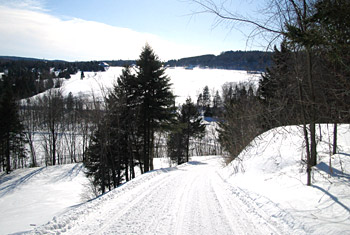
Quebec’s Lanaudiere Region is the poster child for incredible trail adventures.

Snowmobilers can begin riding from almost anywhere within the region to view amazing scenery and experience everything from fine dining, quaint overnight stays, to breathtaking trails.

The bottom of the region, located an easy drive north of Montreal, is not only close to one of Canada’s major population areas but also lies within easy reach of the US border. Snowfall is frequent and consistently abundant everywhere here throughout the snowmobile season.

Lanaudiere is an easy place to find and, for outsiders, an easy place to adventure to. The region’s trail maps are so thorough and easy to follow, even city slickers can roam its snow-covered highways with confidence. Don’t worry about looking too hard for a map either.

Every gas station, restaurant and pit stop stockpiles them in the lobby. Several color-coded tours specifying mileage and points of interest plus lodging, restaurants and service centers are mapped out. Lanaudiere is very security conscious and many hotels have excellent, secure parking for your truck, trailer and snowmobile.

On the trails you’ll find excellent signage, plenty of pit stops, warm hospitality and unforgettable scenery around every corner.

The accommodations in this region deliver a distinct Franco-European flare and it’s one thing visitors always comment on: This area makes you feel like you’re visiting a faraway country, doing what you love best – snowmobiling.

The restaurant and hotel industry in Lanaudiere relies largely on out-of-province winter tourism and goes out of its way to deliver a comfortable experience for visitors.

When you visit Lanaudiere you’ll meet US snowmobilers from New York, Pennsylvania, Vermont and Maine and Canadians from New Brunswick, Nova Scotia and Ontario – and plenty of them! Many of these folks return year after year. Why? Because this area knows how to do hospitality!

Many of the hotels feature in-house fine dining, professional spas and luxurious rooms and you can ride your snowmobile right to the door! If you’re looking for a snowmobiling adventure that will be engraved on your memory for years to come, the memories start pretty well anywhere in Lanaudiere.

Visit lanaudiere.ca and call 800-363-2788 for more information.

Chris Burandt Joins Polaris

Press Release –

Snowmobile Freestyle/Back Country Star’s Backcountry Adventure to Feature Polaris RMK Sleds

In making the switch to ride Polaris RMK snowmobiles, legendary big-air freestyle rider Chris Burandt joins the most terrain dominating team of freestyle riders, backcountry specialists and sno-cross racers in powersports.

From the snocross track to hillclimb slopes to the backcountry where Burandt feels most at home, the world’s premier snowmobilers are riding Polaris sleds, all built standard with Terrain Dominating Control.

Burandt will ripping his Polaris snowmobiles at the Winter X Games, tearing up the steep and deep for cameras shooting Slednecks and other industry videos and of course pushing his clients comfort zones at his adventure based company Burandt’s Backcountry Adventures.

Burandt is extremely pumped about his new sleds. “I have never been so excited for an upcoming season as I am for this one. The new challenge, the new people, the new sleds and my new team at Polaris… what a way to start the year!”

Burandt has been snowmobiling for more than 25 years, and has achieved great success in the back country, hillcross, hillclimb and especially freestyle competition.

He won the snowmobile freestyle gold medal at the 2007 Winter X Games, and has won multiple Red Bull Fuel & Fury championships. He is also a two-time Freestyle Sno-X (FSX) Rider of the Year.

Starting this winter, Burandt will take his extreme riding customers to new heights as he makes Polaris RMK Deep Snow models the sleds of choice in the Burandt’s Backcountry Adventures rental fleet.

“With the awesome power to weight ratio the RMK’s bring to the table, the rippy feel of the clean fire engines and the unmatched performance of the RMK suspension this will definitely be a year that not only my clients but myself as well will take backcountry riding to a whole new level!”

“With Colorado being blessed with early snow again I’ve been able to spend quite some time on my new ride. All I can say is that I truly feel the RMK has the ability to take me and my customers into areas where very few if any have dared to venture! I can’t wait for the deep stuff!”

Chris is also excited about bringing over with him his support crew that has helped him every step of the way throughout his career. These major industry players include VOHK Performance, Boondocker Performance, Slednecks and Monster Energy.

Be sure to check out the entire list of Chris Burandt’s support team atwww.burandtsbackcountryadventure.com

SASKATCHEWAN SNOWMOBILE ASSOCIATION FEE INCREASE

Press Release –

The Saskatchewan Snowmobile Association announced today, effective November 1, 2009, that the snowmobile registration fee will be increased to $70.

On behalf of our members, we approached the provincial government to consider an increase to the $40 snowmobile registration fee. Government took our request under advisement and engaged an independent consultant to review the recreational snowmobile sector.

After careful analysis, government has decided to increase the fee to $70 so that our Association can continue to maintain the snowmobile trail network in a safe and sustainable manner. Saskatchewan still continues to have the lowest fee in Canada to register a snowmobile and use a provincially groomed trail system.

“Snowmobiling is a cherished winter recreation activity for the people of Saskatchewan and our trail network is a big part of that,” Tourism, Parks, Culture and Sport Minister Dustin Duncan said. “Sustaining and managing grooming operations, maintaining safer trails and supporting safety programs benefit all riders and contribute to healthy lifestyles and economic development of our great province.”

“I would like to thank Tourism, Parks, Culture and Sport Minister Dustin Duncan and his officials from Tourism, Parks, Culture and Sport for working with the Saskatchewan Snowmobile Association to address the many issues that face the Saskatchewan snowmobile sector,” Saskatchewan Snowmobile Association Chairman Barry Bradshaw said. “Snowmobiling and our trails are not only important to the folks that head out and have fun on them, they are also very important to Saskatchewan communities as they provide an economic and tourism boost during the longest season in our province.”

The fee helps cover the cost of trail maintenance, replacing grooming equipment, additional safety training and promotion, assisting with upgrades to trail shelters, signs and provides long-term viability of the provincial snowmobile trail network.

Snowmobile safety is an important part of sustaining snowmobiling in Saskatchewan. The Saskatchewan Snowmobile Association will continue to work with the Saskatchewan Safety Council to promote snowmobile safety education and awareness.

OFSC Invests $4.3M for Economic Action Plan

Press Release –

47 Infrastructure Projects Underway Across Ontario

The Ontario Federation of Snowmobile Clubs (OFSC) has 47 new infrastructure projects worth $4.3 million presently underway on Ontario’s snowmobile trails.

These ambitious projects are part of Canada’s Economic Action Plan, through a $25 million investment to expand Canada’s national trail system announced by Prime Minister Stephen Harper last spring. The OFSC is adding to its $1.88 million federal stimulus allocation from this fund to deliver the $4.3 million investment in Ontario snowmobiling.

The stimulus money is flowing, so the OFSC work is already benefiting the Ontario economy. The 47 “shovel-ready” projects are creating jobs and opening up new opportunities for tourism businesses.

The trail improvements will also allow more Ontarians to go snowmobiling in a safe and responsible manner. The infrastructure projects occur in all 17 OFSC districts and include placing new signage on over 15,000 kilometres of trails, installing or repairing over 60 bridges and numerous culverts, and undertaking upgrade projects on almost 6,000 more kilometres of OFSC snowmobile trails.

“Many remarkable projects are underway, such as building a 240′ bridge near Gravenhurst (Muskoka) and an inter-district undertaking to revitalize the RAP Tour (Ride ‘Round Algonquin), Ontario’s premier signature loop for snowmobiling,” noted Mike Farr, OFSC trails manager. “Our clubs and districts have hit the ground running to ensure that every project delivers a significant return on investment for Canadian taxpayers.”

The 25 million stimulus dollars flow from the Government of Canada through the National Trails Coalition (NTC – www.ntc-canada.ca), a not-for-profit organization spearheaded by the Canadian Council of Snowmobile Organizations (CCSO), the Canadian Off-Highway Vehicle Distributors Council (COHV), and the Canadian Trails Federation (CTF). Through their affiliates across Canada, such as the OFSC, these parent bodies represent trail building, operating and maintenance organizations in every province and territory.

Most importantly, they provide trail infrastructure and a tourism product that is used by millions of Canadians and visitors to Canada. Under rigorous rules and requirements, the NTC has apportioned and is constantly monitoring the federal stimulus dollars for approved projects across Canada.

The Ontario Federation of Snowmobile Clubs is dedicated to providing strong leadership and support to member clubs and volunteers, to establishing and maintaining quality snowmobile trails which are used in a safe and environmentally responsible manner, and to furthering the enjoyment of organized snowmobiling.

Visit www.ofsc.on.ca to purchase your Ontario trail permit online!

LESS HASSLE, MORE WEEKEND

0

Press Release –

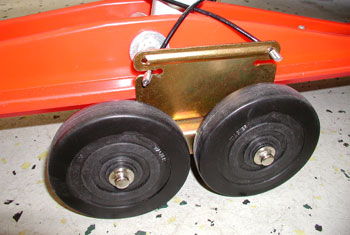
Sure Grip offers enhancements to its popular drivable dolly system that make life even easier for snowmobilers!

SURE GRIP drivable dollies once again enhance the range of drivable possibilities by adding new wider wheels and thicker, more durable wheel hubs to its unique Drivable Dolly system.

This improved system has met the strict demands of authorities such as the United States Marine Corp., Natural Resources Canada, US Border Patrol and many others.

SURE GRIP Drivable Dollies work like a wheel kit, allowing your snowmobile to be easily maneuvered around your shop or garage. Imagine eliminating any further heavy lifting to swing the backend of your sled around because you can’t steer on concrete or across smoother surfaces. SURE GRIP Drivable Dollies are an excellent tool for your shop, trailer or yard!

Visit www.suregripdolly.com to see an action video how to stretch out your weekends! Call (320)-252-0278 for more information.