Home Blog Page 311

Chris Burandt Joins Polaris

Press Release –

Snowmobile Freestyle/Back Country Star’s Backcountry Adventure to Feature Polaris RMK Sleds

In making the switch to ride Polaris RMK snowmobiles, legendary big-air freestyle rider Chris Burandt joins the most terrain dominating team of freestyle riders, backcountry specialists and sno-cross racers in powersports.

From the snocross track to hillclimb slopes to the backcountry where Burandt feels most at home, the world’s premier snowmobilers are riding Polaris sleds, all built standard with Terrain Dominating Control.

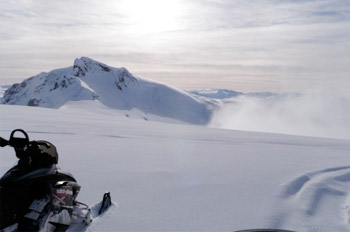
Burandt will ripping his Polaris snowmobiles at the Winter X Games, tearing up the steep and deep for cameras shooting Slednecks and other industry videos and of course pushing his clients comfort zones at his adventure based company Burandt’s Backcountry Adventures.

Burandt is extremely pumped about his new sleds. “I have never been so excited for an upcoming season as I am for this one. The new challenge, the new people, the new sleds and my new team at Polaris… what a way to start the year!”

Burandt has been snowmobiling for more than 25 years, and has achieved great success in the back country, hillcross, hillclimb and especially freestyle competition.

He won the snowmobile freestyle gold medal at the 2007 Winter X Games, and has won multiple Red Bull Fuel & Fury championships. He is also a two-time Freestyle Sno-X (FSX) Rider of the Year.

Starting this winter, Burandt will take his extreme riding customers to new heights as he makes Polaris RMK Deep Snow models the sleds of choice in the Burandt’s Backcountry Adventures rental fleet.

“With the awesome power to weight ratio the RMK’s bring to the table, the rippy feel of the clean fire engines and the unmatched performance of the RMK suspension this will definitely be a year that not only my clients but myself as well will take backcountry riding to a whole new level!”

“With Colorado being blessed with early snow again I’ve been able to spend quite some time on my new ride. All I can say is that I truly feel the RMK has the ability to take me and my customers into areas where very few if any have dared to venture! I can’t wait for the deep stuff!”

Chris is also excited about bringing over with him his support crew that has helped him every step of the way throughout his career. These major industry players include VOHK Performance, Boondocker Performance, Slednecks and Monster Energy.

Be sure to check out the entire list of Chris Burandt’s support team atwww.burandtsbackcountryadventure.com

SASKATCHEWAN SNOWMOBILE ASSOCIATION FEE INCREASE

Press Release –

The Saskatchewan Snowmobile Association announced today, effective November 1, 2009, that the snowmobile registration fee will be increased to $70.

On behalf of our members, we approached the provincial government to consider an increase to the $40 snowmobile registration fee. Government took our request under advisement and engaged an independent consultant to review the recreational snowmobile sector.

After careful analysis, government has decided to increase the fee to $70 so that our Association can continue to maintain the snowmobile trail network in a safe and sustainable manner. Saskatchewan still continues to have the lowest fee in Canada to register a snowmobile and use a provincially groomed trail system.

“Snowmobiling is a cherished winter recreation activity for the people of Saskatchewan and our trail network is a big part of that,” Tourism, Parks, Culture and Sport Minister Dustin Duncan said. “Sustaining and managing grooming operations, maintaining safer trails and supporting safety programs benefit all riders and contribute to healthy lifestyles and economic development of our great province.”

“I would like to thank Tourism, Parks, Culture and Sport Minister Dustin Duncan and his officials from Tourism, Parks, Culture and Sport for working with the Saskatchewan Snowmobile Association to address the many issues that face the Saskatchewan snowmobile sector,” Saskatchewan Snowmobile Association Chairman Barry Bradshaw said. “Snowmobiling and our trails are not only important to the folks that head out and have fun on them, they are also very important to Saskatchewan communities as they provide an economic and tourism boost during the longest season in our province.”

The fee helps cover the cost of trail maintenance, replacing grooming equipment, additional safety training and promotion, assisting with upgrades to trail shelters, signs and provides long-term viability of the provincial snowmobile trail network.

Snowmobile safety is an important part of sustaining snowmobiling in Saskatchewan. The Saskatchewan Snowmobile Association will continue to work with the Saskatchewan Safety Council to promote snowmobile safety education and awareness.

OFSC Invests $4.3M for Economic Action Plan

Press Release –

47 Infrastructure Projects Underway Across Ontario

The Ontario Federation of Snowmobile Clubs (OFSC) has 47 new infrastructure projects worth $4.3 million presently underway on Ontario’s snowmobile trails.

These ambitious projects are part of Canada’s Economic Action Plan, through a $25 million investment to expand Canada’s national trail system announced by Prime Minister Stephen Harper last spring. The OFSC is adding to its $1.88 million federal stimulus allocation from this fund to deliver the $4.3 million investment in Ontario snowmobiling.

The stimulus money is flowing, so the OFSC work is already benefiting the Ontario economy. The 47 “shovel-ready” projects are creating jobs and opening up new opportunities for tourism businesses.

The trail improvements will also allow more Ontarians to go snowmobiling in a safe and responsible manner. The infrastructure projects occur in all 17 OFSC districts and include placing new signage on over 15,000 kilometres of trails, installing or repairing over 60 bridges and numerous culverts, and undertaking upgrade projects on almost 6,000 more kilometres of OFSC snowmobile trails.

“Many remarkable projects are underway, such as building a 240′ bridge near Gravenhurst (Muskoka) and an inter-district undertaking to revitalize the RAP Tour (Ride ‘Round Algonquin), Ontario’s premier signature loop for snowmobiling,” noted Mike Farr, OFSC trails manager. “Our clubs and districts have hit the ground running to ensure that every project delivers a significant return on investment for Canadian taxpayers.”

The 25 million stimulus dollars flow from the Government of Canada through the National Trails Coalition (NTC – www.ntc-canada.ca), a not-for-profit organization spearheaded by the Canadian Council of Snowmobile Organizations (CCSO), the Canadian Off-Highway Vehicle Distributors Council (COHV), and the Canadian Trails Federation (CTF). Through their affiliates across Canada, such as the OFSC, these parent bodies represent trail building, operating and maintenance organizations in every province and territory.

Most importantly, they provide trail infrastructure and a tourism product that is used by millions of Canadians and visitors to Canada. Under rigorous rules and requirements, the NTC has apportioned and is constantly monitoring the federal stimulus dollars for approved projects across Canada.

The Ontario Federation of Snowmobile Clubs is dedicated to providing strong leadership and support to member clubs and volunteers, to establishing and maintaining quality snowmobile trails which are used in a safe and environmentally responsible manner, and to furthering the enjoyment of organized snowmobiling.

Visit www.ofsc.on.ca to purchase your Ontario trail permit online!

LESS HASSLE, MORE WEEKEND

0

Press Release –

Sure Grip offers enhancements to its popular drivable dolly system that make life even easier for snowmobilers!

SURE GRIP drivable dollies once again enhance the range of drivable possibilities by adding new wider wheels and thicker, more durable wheel hubs to its unique Drivable Dolly system.

This improved system has met the strict demands of authorities such as the United States Marine Corp., Natural Resources Canada, US Border Patrol and many others.

SURE GRIP Drivable Dollies work like a wheel kit, allowing your snowmobile to be easily maneuvered around your shop or garage. Imagine eliminating any further heavy lifting to swing the backend of your sled around because you can’t steer on concrete or across smoother surfaces. SURE GRIP Drivable Dollies are an excellent tool for your shop, trailer or yard!

Visit www.suregripdolly.com to see an action video how to stretch out your weekends! Call (320)-252-0278 for more information.

OFSC INSIGHT: Permit Buys Much More Than Grooming

By Craig Nicholson

Riders who purchase Snowmobile Trail Permits often think they are buying groomed trails…every time, everywhere. But is this reason-able? In fact, is grooming even what you’re really buying?

No doubt, having a smooth trail to ride is preferable. And grooming does take a whack of permit dollars each winter. But your permit buys many things far more important each winter – ensuring that legal trails exist in the first place, that they are open and maintained, and that you have access to them.

It buys the clubs and volunteers that make trails happen locally, and the OFSC that helps keep the provincial system running. But most of all, buying a permit is your vote for continuing to have snowmobile trails to ride, because they don’t just appear by magic.

Snowmobile trails exist because enough riders reaffirm they want them by purchasing a permit, winter after winter.

This desire is the motivation for the OFSC and its clubs to find, build, and secure trails. This is a huge job, involving land use permission from over 15,000 private landowners, plus many hydro, gas, forestry, mining and agricultural companies, First Nations Reserves, and the Ministry of Natural Resources. It’s also ongoing, because land use is always in flux.

What was available last winter may not be for the next. And when one trail changes, the links to others can go to pieces like falling dominoes. But it has to be done, because otherwise, we would have no legal place to ride our sleds. This alone may well be worth the price of your Snowmobile Trail Permit.

But not just any old trails are acceptable. Snowmobile trails need to be linked, land-based wherever possible, sustainable, and capable of connecting to towns, amenities and services.

After all, what use is a trail if it doesn’t go anywhere or you can’t get to it? So your permit is paying not only for having legal trails, but also for having them convenient. What’s that worth to you?

Next, your permit is paying to open the trails each winter and keep them cleared, marked, maintained and mapped. Mother Nature can be a most inhospitable hostess…she is continually trying her level best to fill in, overgrow, undermine, washout, blow away, bury or block every trail.

So clubs are in a constant, expensive (and not always successful) battle to keep Mother Nature at bay. They do this for you, because you buy a permit. Can you put a price on this service?

So now we have legal, convenient, open trails. They are trails for snowmobiles and only available for OFSC permit holders. And that’s the next reason you buy a Snowmobile Trail Permit. It’s your passport to enter any of these OFSC trails anywhere, and at any time they are open. Compare that to a ticket for almost any other recreational activity…you have to buy a new one each time in each different place and cannot enjoy the activity 24/7. Your permit is your permission to enjoy everything you have just read about… but permission to enter doesn’t speak to trail quality, it just confers the privilege of riding. What’s this unlimited access worth to you?

Now let’s talk trail quality. Each year, clubs invest countless dollars in trail upgrades and improvements before the snow falls.

Their goal is to make the ground underlying and surrounding their trails as accommodating as possible, so that snow falls on a prepared surface that will be easier to groom, hold a base well, and make the snow last longer.

Depending on terrain, this is easier to do some places than others. For instance, trail quality is usually more durable on logging roads and rail lines, than it is on forest trails through rugged Canadian Shield. Trail quality also speaks to how the trail is laid out up and down, tight and twisty, wide and curvy, on land or across water, in direct sun or protected by shade, or some combination of these characteristics and many others too. This is your permit dollars hard at work, and we haven’t even talked grooming yet.

Grooming is really just the tip of the permit iceberg… the icing on the cake that everyone sees. OFSC clubs use about 1.5 million litres of fuel and put 120,000 hours each winter into operating their fleet of 312 large industrial groomers.

Most clubs groom at least twice a week, many do it even more frequently. But snow isn’t concrete, so every passing sled degrades the trail surface, and that means it’s an unreasonable expectation for every trail to be tabletop smooth all the time.

So yes, your permit fee is also paying to keep the groomers rolling as often as possible, but not to guarantee perfection on every single kilometre for every ride.

Still, your permit does provide good assurance that trails will be groomed on some regular basis for your riding pleasure, which is a whole lot better than riding moguls all the time!

When you put it all together, your Snowmobile Trail Permit provides you with exceptional value far beyond mere grooming. And when you compare your permit cost to the fee for other activities, it’s a great bargain – and will continue to be, even if it costs a few dollars more this winter.

MOTORHEAD: Snapshot of The Future

0

By Mark Lester

As we emerge from the deepest economic slowdown this generation has seen, there’s an air of cautious optimism swirling around the sno-mo-biz.

Clearly, the snowmobile industry is emerging from the economic storm stronger than any other segment of the recreational powersports industry.

Along with this optimism there are some questions. Two years ago when the economy began to unravel, the industry was under intense pressure from increasing EPA emission standards being forcefully ushered in on a timetable that some OEMs felt was unrealistic.

At the same time, the sport had seen pressure from a couple of poor winters spread across the North American snowbelt. Interestingly, the past two seasons have produced mostly excellent winter weather in all corners of the snowmobiling world.

In the past two years we’ve seen new technology emerge that has diametrically altered the landscape. With clean, light and powerful 4-stroke technology gaining consumer acceptance and super clean, featherweight direct injection 2-strokes spreading in the market there’s reason to believe the EPA boogey-man era may have actually helped, not hindered, our industry.

How so? Clearly, the world is gaining environmental consciousness daily. While I still believe our sport was unfairly maligned by eco-freaks, it remains undeniable, 90s era smoky, inefficient 2-stroke mills were like an infected zit at a beauty pageant – not particularly welcome and hard to market to the masses.

Things have changed so much the past couple years I actually avoid riding behind older non-DI or non-4-stroke sleds so my clothes will remain smelling minty fresh. Clean snowmobile engines are good for us, good for the environment and good for promoting the snowmobile business.

What’s next? While current clean sled engines are having a powerful impact on the market, there are still some issues model year 2012 will present.

Here’s the deal. Ski-Doo meets and can exceed EPA 2012 emission standards right now with its mix of E-TEC 2-strokes and clean 4-stroke engines.

Certainly, Yamaha has nothing to worry about. Since the company has chosen to focus only on 4-strokes, it has been EPA-2012 compliant for some time now. However, there are some interesting twists in the road for both Polaris and Arctic Cat. Watch carefully for new and exciting engine breakthroughs from these two.

Polaris has been hard at work refining its proprietary semi-direct injection Clean Fire 2-stroke technology for about five years. However, SDI technology may not be good enough on its own to clear 2012. We‘ve heard Polaris is working at developing a direct injection 2-stroke that could potentially see limited production exposure in the next year.

Polaris has 2012 clean 4-stroke power right now with its Weber 750 motor in both turbo and normally aspirated versions. We wouldn’t be surprised if there’s another 4-stroke engine in the company’s future product plans as well. Keep in mind, as a result of the EPA’s hard-to-understand “credit” system, there will still be limited numbers of engines in 2012 that are not 2012 clean.

Sixty miles down the road in Thief River Falls, Minnesota, we suspect there’s even more ground breaking engine stuff going on. Arctic has put big stock in the Z-1 1100cc 4-stroke twin Suzuki builds for the company.

The engine has proven reliable, durable and most importantly, capable of producing huge power, evidenced by the Z-1 Turbo’s 175hp thrust. While this particular engine is carrying a lot of weight at Arctic Cat right now we think it’s safe to say the company needs another engine platform, most likely a clean 2-stroke, to meet 2012 and fill in the gaps in its product line.

Arctic Cat has been a champion of big performance and lightness for decades. While a clean 2-stroke makes sense to us, AC may be working with another DI technology different than Ski-Doo’s E-Tec and other proprietary technologies like Mercury Marine’s Orbital system, widely rumored to be on Polaris’ radar.

There’s little doubt, recession or not, time is waiting for no one and neither is the EPA. With the final level of allowable emissions (as of right now) looming for MY 2012, the next two years are going to be exceptionally interesting to observe and participate in.

Look for even more surprising innovation that will produce better power with improved mileage and, oh yeah… cleaner emissions.

INSIDE TRAX: Priceless Tips on Restoration Project

0

By Kent Lester

It’s been about nine months since we purchased a thoroughly flogged 1991 Indy 500 as a Supertrax project sled. You read about it in our March 2009 issue and many of you have been asking how it’s going.

I wish I could tell you we’re totally on top of this project and it’s gone along incredibly well. Fact is, it’s turned out to be a much bigger job than my son Mike and I anticipated and between trying to schedule the time to work on the Indy and magazine deadlines, we’ve been really crowded to make progress.

On the other hand, the time we’ve put in together has been a truly fun father and son experience and like most of these kinds of family deals, it’s made some great memories for the two of us.

It’s always memorable when you’re skinning your knuckles, drawing blood and throwing tools, straightening bent parts and fixing stuff that won’t, can’t and refuses to fit. Stripping threads is also high on the memory list.

We were discussing the project the other day and came to the conclusion we’d have done a few things differently if we were starting over again.

Here are some tips on restoration projects we think might help if you’re undertaking one.

Number one: Make up your mind in the beginning what type of restoration you want to end up with. Is this sled going to be a show sled or is it a driver? Maybe you want it to be both.

You need to know before you buy your “bargain”. The time you’ll need to put into a show sled is incredible. You’ll need a lot of genuine parts and that means visiting websites, flea markets and vintage shows to get the absolutely correct parts you’ll need.

If you’re going to restore the sled as a ride-only project, you can settle for parts from the aftermarket or you can refurb stuff that isn’t brand new. The rougher the beginner, the more work you’ve got ahead of you.

Number two: Pay more for something in better shape. The reason for this advice is it always helps if you start with something that’s pretty good instead of something that’s in terrible condition.

It may be worth spending a few hundred dollars extra to get a decent beginner. It’ll likely save you five times that amount in parts and extra time.

Our Indy was so rough we had to grind rust off every nut, washer, bolt and bushing. Every bearing had sandpaper in it. It was like this thing had been in the salt mines for the last decade and corrosion was an enormous problem for us. We eventually were forced to compromise and let the appearance details suffer a bit.

You just can’t get a mirror finish on skidframe parts if you’re trying to work on a deadline to get the project done.

We decided the most important thing was to make sure the sled runs and is as reliable as possible – we’ll make things look nicer once we get it on the snow.

Number three: Get to know someone in the used parts business. You’ll save a ton of money if you can buy used parts from a snowmobile wrecker who knows the product.

Our friend, Leon Wright at Indy Salvage in Minden has been an incredible source of help and information to us.

Number four: Think about buying a second sled as a parts pig. You’ll still need to buy a lot of new stuff, but you could end up saving big by scavenging from a second sled if you can find one.

Number five: Be in the snowmobile media. I can’t think of the number of times I’ve been so thankful we’ve had access to new parts and services, frankly, just because we’re well known and publish Supertrax.

Camoplast provided us with a track, Ryde FX gave us a set of shocks, Slydog gave us a pair of brand new composite skis! CV Tech has done a top to bottom engine rebuild for us and, yes, it all makes for good promotion and is even fodder for interesting magazine stories, but we’d have gone broke trying to get this Indy into decent condition without their help.

I know what you’re thinking: Yeah, you guys are lucky because you can leverage deals because of the mag. Well, you’re absolutely right. But it doesn’t mean you can’t take on a project like this, too, and stay within a reasonable budget. It all depends what you start with and where you want to end up.

We’ve had a blast working together on this sled and whether or not we can get it working well enough to report our success this season is still a big question.

One thing’s for sure. We’ve certainly lowered our expectations about the end product and, yes, we’re definitely willing to settle for less.

UTAH LANDS MAJOR WINTER ACTION SPORTS EVENT

Press Release –

Utah Sports Commission and Rio Tinto Stadium bring Nationally Televised Professional Snocross to Beehive State for the First Time

ISOC Racing’s AMSOIL Championship Snocross Series, the nation’s premier Snocross racing circuit, today announced that Rio Tinto Stadium, one of Utah’s world-class sports and entertainment venues, will host the Western Nationals on Saturday, January 9, 2010.

The first-time event is one of nine Nationals on the 2009-2010 schedule and the only one west of the Mississippi.

Utah Governor Gary Herbert said, “Adding Snocross to the growing list of action sports that Utah is hosting, which includes the Summer and Winter Dew Tours, Supercross, Red Bull Air Race and Red Bull Rampage, continues to showcase Utah as one of the premier action sports destinations in the world.”

“Utah will receive significant benefit from this new event providing an anticipated $3-4 million in economic impact and national and international media exposure through its televised broadcast on Versus.” said Jeff Robbins, president & CEO of the Utah Sports Commission.

The Western National at Rio Tinto Stadium will be the third National of the season. The first two events are the AMSOIL Duluth National in Duluth, MN and the Milwaukee Mile National in Milwaukee, WI.

The versatile dimensions of Rio Tinto Stadium, which has hosted major concerts, international and MLS soccer games as well as a monster truck show during its first year of operation, allow it to become the first stadium of its type to host a Snocross race.

While the main attraction will be professional snocross racers and freestyle athletes from across the country, regional race participants will be able to experience racing at a National event for the first time.

Prior to the 7:00 p.m. MT Main Event on Saturday night, amateur racers from ISOC Racing affiliate circuits MWR and XMR will compete in various classes from beginner racers to highly competitive regional classes.

Grant Program Supports the Snowmobiling

Press Release

In 2003, the snowmobile manufacturers – Arctic Cat, BRP, Polaris, and Yamaha collectively initiated and supported the International Snowmobile Manufacturers Association Grant Program.

The objective of the program is to provide grants to state and provincial snowmobile organizations in: the promotion of the Go Snowmobiling campaign, safety and environmental projects, improving and maintaining land access, conduct snowmobile related economic impact studies, and to support snowmobilers participation in precedent setting lawsuits on snowmobile land access issues.

Since 2003, over $400,000 dollars has been distributed by the manufacturers to participating organizations who, through their own efforts and contributions have generated another $1.2 million dollars worth of support. Over $1.6 million dollars has been invested in key snowmobile related issues across North America.

The associations/federations, in many creative ways, have promoted snowmobile safety through advanced snowmobile education efforts and the use of snowmobile safety trailers used across North America.

The trailers are used trailside and at trail heads to promote and expand the Safe Riders! safety campaign and highlight other educational opportunities for snowmobilers. Some are used as portable warming huts and highly visible rolling billboards.

Many organizations have conducted economic impact studies highlighting the importance of snowmobiling to the local and national economy. These economic impact studies are used effectively to help tell the story of the importance of snowmobiling as an important part of the winter economic engine throughout North America. Through these studies it has been determined that over 90,000 full-time jobs are generated because of snowmobiling in North America.

Radio and TV campaigns have been created through the ISMA Grant Program helping to expand the understanding of family snowmobiling in many regions of North America. Opportunities are available through public television, and network and cable programs to use the TV ready spots created by the snowmobile manufacturers in promoting snowmobiling as a fun family activity.

The manufacturers Grant Program has also been used in the creation and expansion of military personnel appreciation rides. Across the US and Canada, returning military personnel have been invited to enjoy snowmobiling and recognized for their service.

Numerous land access related studies have been conducted and coordinated by state and provincial organizations with the help of the ISMA Grant Program. Those land access studies would include Recreational Travel Management Studies, snow compaction studies, wildlife interaction studies and more.

A number of avalanche awareness education programs have also been initiated through the ISMA Grant program. The program has been recognized internationally for its support of customer education and positive recreational awareness.

Snowmobiling is a great, fun family activity that is recognized worldwide. The snowmobile manufacturers Grant Program helps to support our ongoing effort to tell the truth about snowmobiling and to support the efforts of organized snowmobiling associations across North America.

2010 NO BULL BUYER’S GUIDE NOW ONLINE!

0

The legendary Supertrax No Bull Buyer’s Guide is now available on this website.

You’ll find more than 100 sleds new for 2010 along with specifications and comments from the pros who have ridden them.

Sleds are broken out into the same great categories you find in the magazine:

* Hyperpower
* Trail Power
* Big Milers
* Value Rides
* Crossover
* 2-Up Touring
* Steep & Deep

Search by brand or search all to view all the sleds in that category.

Buying used this season? The No Bull Buyer’s Guide is archived back to 2007 so you can check out what your favorite writers had to say about your future purchase before you buy!

Click “FIELD GUIDE” in the navigation menus at the top or bottom of each page or use the NO BULL BUYER’S GUIDE menu to your right to find your sled!

Click here to search now!