Home Blog Page 145

2017 BEST MAX POWER SNOWMOBILE

0

Mark and Kent Lester battle it out over their picks for the 2017 BEST IN CLASS AWARDS: Everything Is New But That Doesn’t Mean It’s Best

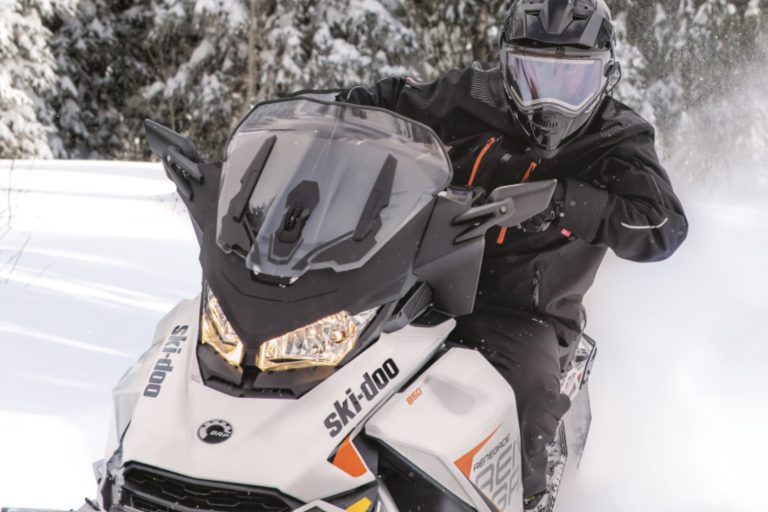
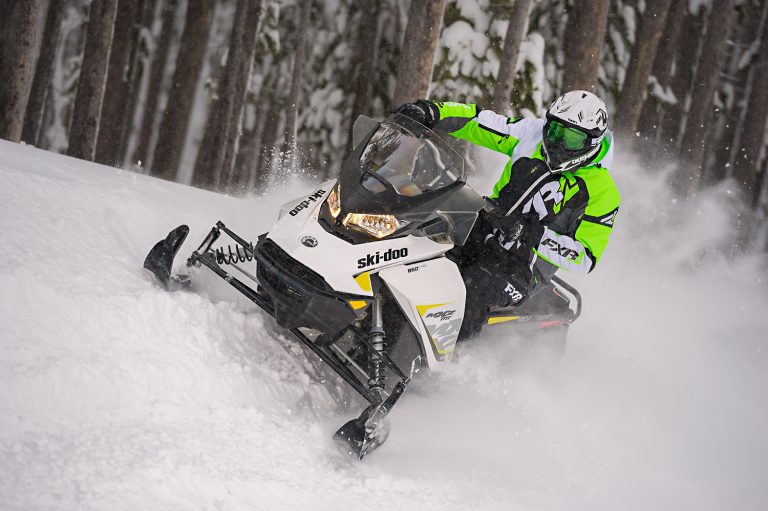
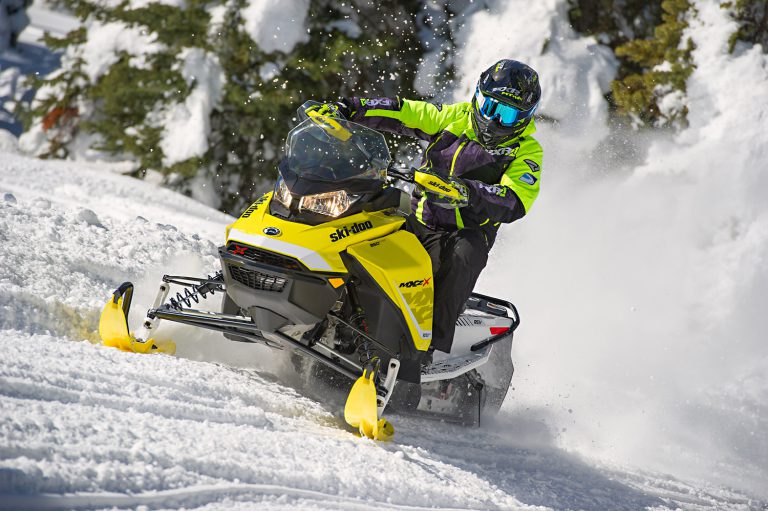
WINNER: SKI-DOO REV X GEN 4 850

Here’s what has to be the easiest pick I’ve ever made in this yearly clash of egos.

The new Gen-4 platform debuts so much new tech I can well imagine Kent is overwhelmed and as a result randomly selected the Yama-turbo.

Come on. Yes, the new Turbo is fast, but it’s bolted into a too-familiar chassis. The Gen 4 employs groundbreaking ideas like side-to-side centralized mass, a pyramidal tunnel using a totally integrated heat exchanger and there’s the new cast bulkhead that drastically improves chassis strength.

Even better than all this, the most revolutionary and innovative primary clutch ever is part of the G-4’s techno-wizardry. The new roller-tower P-drive is among the most sought after, overdue technologies in the history of modern snowmobiling.

This innovation alone is enough to propel the G-4 to Best In Class status. I’m out of room but I can tell you for sure, Kent is just plain out of luck with his BIC pic in this all-important segment.

– Mark

RUNNER-UP: SideWinder L-TX LE 137

Okay, okay, Mark; I know the Gen 4 Ski-Doo has all the shiny, new stuff this year! Good on Ski-Doo for bringing a new engine and chassis to the market all at once.

I have to disagree on your choice of it as Best In Class when it’s so new, though. Sure, we put it through its paces for a week last February and it seems to be solid and looks like it will be really reliable, too. But who knows?

On the other hand, we’ve ridden versions of the new Sidewinder Turbo and are completely familiar with the 1049cc Yammer triple, the engine the new 998 Turbo is based on.

Furthermore, two companies known for their incredible engineering resources, Yamaha and Arctic Cat, conspired to build the Sidewinder and its mirror reflection, the 9000 Cat series and have placed that engine in one of the industry’s most proven platforms. You just gotta believe that sled will be flawlessly reliable.

Here’s the other thing: In this category, 180-hp always trumps 165! Poor reasoning, Mark.

– Kent

P-DRIVE CHANGES THE RULES

0

We don’t want to sound over the top here, however, we have to give it up to Ski-Doo for taking the snowmobile industry in a new CVT direction.

The revolutionary P-Drive primary uses rollers on the spider fingers to transfer power to the torque towers and onto the moveable sheave.

No informed snowmobile clutch wizard is truly content with the current, industry wide sliding button system used to transfer power to the moveable sheave.

Inherent friction and wear causes myriad problems and compromises performance, particularly as horsepower numbers rise. The P-Drive roller principle is 100-percent sound and the execution appears excellent.

We can attest to the tangible improvement in primary clutch shift response under every load condition we encountered.

Simply put, the competition will ultimately copy this technology.

Composit Talon 38 Track Installation

0

AJ’s in the TRAIL TECH shop installing a Composit Talon 38 Track on one of our sleds gaining a ton of performance while staying within his budget.

Subscribe to our YouTube Channel!

2017 Yamaha Sidewinder S-TX DX

0

Luke’s evaluates the 2017 Yamaha Sidewinder S-TX DX.

The S-TX DX is built for the adventurous. Equipped with the industry’s highest horsepower engine, it is calibrated for long days in the saddle.

Features like semi-hard saddle bags, heated seat, 1.6 inch Cobra track and full windshield make the most of the journey. Super bright, LED headlights illuminate the way and the bright LED tail light helps your buddies keep you in sight.

The new Yamaha YSRC drive system, hooks you up with uncompromised V-belt durability and instant, precise shift response.

Subscribe to our YouTube Channel!

Trail Riding In Ontario’s Highlands

0

Luke’s riding out of his home turf in Ontario Canada on an adventure from Halliburton to Pembroke and back showcasing some of the beautiful trails Ontario’s Highlands has to offer.

Subscribe to our YouTube Channel!

Polaris Indy RXL: The Start of EFI

0

In 1990 the Polaris Indy ruled the roost and had done so for the better part of ten years.

Probably the most popular big-inch sled of the era was the Indy 650 powered by a carbureted 650cc piston port triple.

This somewhat unsophisticated 2-stroke made turbine-like power and, in combination with Polaris P-85 clutching, delivered performance way beyond expectations.

When Polaris announced its intention to build the same sled with electronic fuel injection, the naysayers were upset, probably because they felt it meant you could no longer make engine modifications to jack horsepower and performance beyond stock.

Remember, this was before the re-chipping of engine processors was a possibility and there were virtually no ”CPU kits” available in the aftermarket.

The naysaying continued until the day after the first person rode an RXL. The difference between it and the carbed 650 was profound. Why? There was no initial fatness on throttle tip-in; smooth, stumble-free acceleration every time and the best part: The RXL, at least in bone stock form, was noticeably faster!

Things moved quickly and it wasn’t long before any Indy with EFI (EFI was soon offered on the Indy 500 twin) was on everyone’s wish list.

EFI sales were booming but no one saw the shadow looming over Polaris and its EFI equipped snowmobiles.

In the mid 1990s a lawsuit was launched by Injection Research Services (IRS) and owner, Ron Chastain, who claimed Polaris had pirated its original 2-stroke EFI design.

Much legal wrangling took place and eventually Polaris ended up paying over $30 million to settle things.

Today, EFI is used on nearly every snowmobile built whether 2-stroke or 4-stroke.

Polaris Indy: First Full Production IFS

0

Changing everything is exactly what the TX-L Indy did in 1979 and 1980. At this time Polaris was a relatively small snowmobile OEM that somehow remained in business during the roughest period in snowmobiling history, the 70s.

Beyond any doubt the TX-L Indy was a direct byproduct of Polaris’ proud racing program.

The emergence of trailing arm IFS on the original RX-L ice oval racer was the archetype of the TX-L Indy. While other sledmakers fiddled with independent front suspension designs, Polaris built a durable and effective trailing arm IFS, then raced and won with it.

While it’s true the emergence of Polaris trailing arm IFS was pivotal for the entire industry and the TX-L drove every other OEM to launch their own IFS variant, it’s also true but not equally acknowledged the TX-L Indy had a few more things going for it. Most importantly was its extensive use of aluminum.

Yes, the TX-L Indy was immediately a terrain racing sensation and all eyes were on its suspension.

However, the sled’s underpinnings were super light, and ridiculously tough.

The entire sled, save the IFS, was really simple: No radiators, no oil injection, no bells and whistles. Truthfully, the TX-L Indy was built like a simple, lightweight tank.

Add in this reality: Its Fuji 340cc twin cylinder liquid cooled-mill produced a grossly underrated 56 horsepower, all of which benefited from the Indy’s friction-free driveline.

The sled was a freewheeler and lost little power to parasitic drag. Add in Polaris’ efficient torque tower primary clutch and you had a recipe for both amazing top speed and legendary ride and handling.

GREAT SLEDS FOR TWEENERS

0

We’ve often written about how kids need sleds to bridge the gap between mini-sleds like the ZR-120 and the 120 Indy once they’ve grown too big and too experienced to ride them anymore.

One of our Supertrax crew, Vern Putzer, recognized the problem and has two daughters, both experienced motocrossers – the oldest approaching her teens, who are really interested in riding snowmobiles.

Kaley is too old for a mini and not quite big enough for a full-sized sled so Vern scoured the classifieds until he found her a nice, used 2008 Ski-Doo FreeStyle.

This downsized sled is perfect for a 12-year-old and, with a few upgrades to the track and suspension, has put a big grin on Kaley’s face this winter and a jealous look on her sister Natalie’s face.

Kaley is now able to keep up with Mom and Dad on the trails (she’s legally licensed to ride in her locale) and can handle this sled comfortably. (Check link on this website to learn the details on this project)

Another sled you might consider as a transitional ride is a good, used Yamaha Phazer from the 1980s. These Darth Vader-look sleds with their handlebar fairing, strut front suspension and short 116-inch track had a sub-500cc fan-cooled 2-stroke twin and were nice performers and legendary for their reliability.

There are still plenty around and although even a decent one may need some work, companies like Kimpex and Dennis Kirk have a vast array of replacement parts still available for them. These old Yamahas are the perfect size and weight for teen riders.

Any money you have to put into one will give you a surprisingly good return when you eventually sell it.

Hibbert: 125th Pro National Snocross Win

0

Tucker Hibbert showed up in New York with on thing on his mind – winning.

Fuel was added to the fire Friday night after he finished a hard-fought second-place.

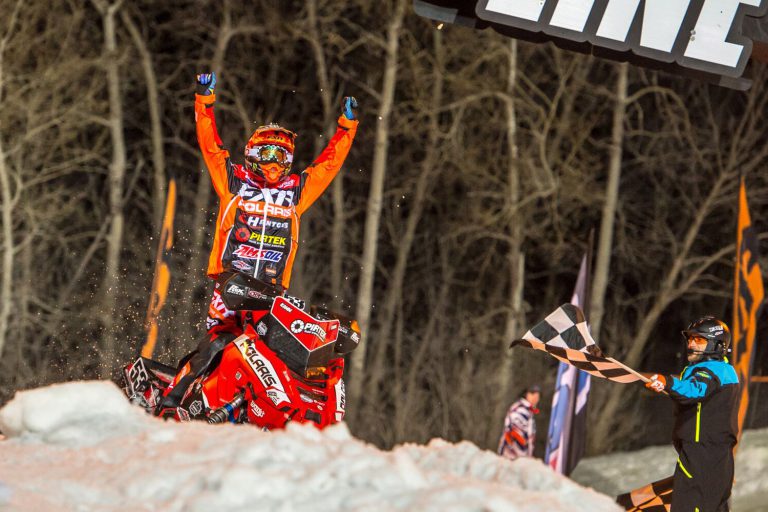
Saturday night, the 10-time defending champ came out swinging and laid down a dominating run to capture his 125th Pro National victory.

Push play to watch Hibbert and Team Monster Energy / Arctic Cat / Ram Truck add another milestone victory to the snocross record book!

SIDEWINDER’S TURBO

0

Yamaha focused on reducing rotating weight with its turbocharger – a strategy aimed at lag-reduction and quick spooling to build boost.

The turbo body itself is very light and efficiently cast while ceramic ball bearings are used on the lightweight turbine. Incorporated into the turbo-plumbing is a free-flowing, header-like cast aluminum exhaust manifold – no doubt to handle the voluminous heat generated by a pressurized engine.

This is an incredibly smooth engine. Its 120-degree firing, 3-cylinder design definitely contributes to that smoothness but this engine takes it skyward a whole notch.

Riding a 137-inch Sidewinder SE last winter, we immediately noticed how velvety this engine is at all RPM levels. It’s almost a paradox when you realize the track under you is churning like an Osterizer on nine and snow is being sand-blasted out the snowflap like a snow-Vesuvius.

Meanwhile, this engine is completely manageable and only gets crazy when you, the operator, feed in too much throttle or act stupid with it. Otherwise, it behaves like a neutered Schnauzer.

Here’s where this operating behavior pays off: If you’re riding medium rough trails at a brisk pace, with former turbocharged sleds in this power range we experienced some difficulties with throttle control as your body, in particular, your right thumb responded to the terrain.

The last thing you want is an unpredictable, sudden surge of 180 stallions when you’re off balance or negotiating a series of whoops. The Sidewinder is completely at ease here and it puts the rider at ease, too.

Second, we noticed the balance of the Sidewinder platform as a whole is very good in rough trail situations. Although there is significant weight at play compared to a big-inch 2-stroke, the engineering team has been able to find a sweet spot where the sled doesn’t feel overly heavy between the skis.

Yes, it does feel heavier than a 2-stroke, but not cumbersome or awkward – even when you’re drilling moguls. We suspect much of this is due to precise engine placement and maybe somewhat about balancing the skidframe’s front arm spring pressure to deal with the extra weight up front.

Either way, this sled is a pleasure to ride and it’s one of the reasons Yamaha has made it available in its first year with so many track variants, shock packages and market pigeon holes.

We also noticed the backshifting advantages of a roller secondary clutch on a Yamaha spewing so much power. The new primary is also a good design. It’s a bit larger than the former Yamaha primary and delivers an overdrive situation when the clutches are shifted out.

For sure, this engine will have no problem pulling the overdrive at max speed.