Home Blog Page 140

2018 SNO-SCOOT & ZR200

0

WHAT WE THINK ABOUT THE NEW TWEENIES

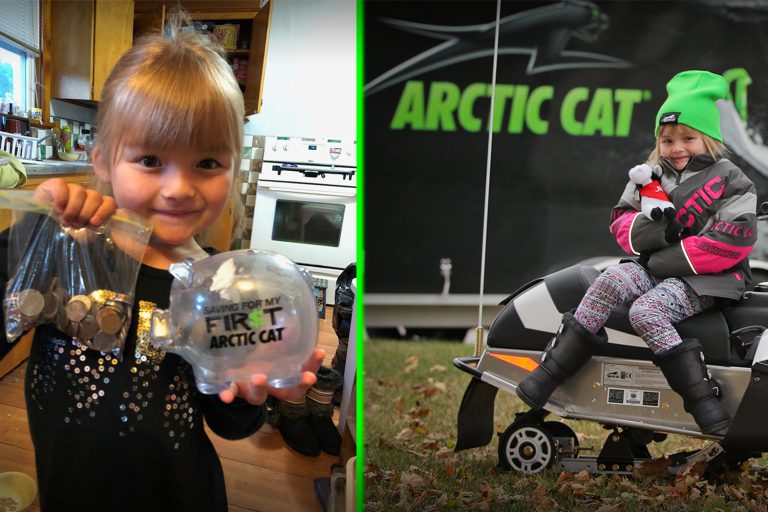
We’ve dubbed the new Yamaha Sno-Scoot and Arctic Cat ZR 200 “Tweenies” because they suit an overlooked class of snowmobilers who are avid but haven’t had anything to ride.

These snowmobilers are kids between the ages of nine and fourteen who may have owned and even raced a mini-sled when they were younger and littler but simply don’t fit on one anymore. At the same time, both they and their parents don’t feel comfortable with them riding a full-sized sled.

The Sno-Scoot and the ZR200 are both perfect sized sleds for these riders. The plus is that there is nice power on tap to keep things interesting and with a 30-mph top speed, they can participate in real trail rides with friends and parents.

Here’s our take: Both these sleds are way, way more fun than they look like they could possibly be. On our test rides we observed full-sized, corn-fed adults ripping around on them and absolutely falling off, giggling.

With dual A-arm front suspensions, real shocks and a mind-bending 9-hp, the sleds rip in powder and in hard packed snow. No, we’re not talking about 800-class rippage, rather, something way less that still keeps the rider interested and engaged.

Both sleds have pretty sophisticated clutching, comfortable, supportive seats and sensible ergonomics.

Kids and even novice riding adults will love these sleds and they will serve the purpose of getting people interested in the sport – often as a result of their kids loving to ride on of these tweenies.

Our great hope is that the industry will stay with this concept for a long time. Maybe sales won’t be huge the first year or so, but we think as they catch on, there will be a sustainable and considerably large market for sleds like this and future variations.

SKI-DOO E-TEC 600 TWIN

0

THE 10 BEST SNOWMOBILE ENGINES OF ALL TIME! This list of 10 encapsulates all that is great in snowmobile powerplants going back several decades.

This might be the most important 2-stroke of the modern era. Nobody was expecting Ski-Doo to launch a full-on Direct Injection 2-stroke in 2008.

The entry of this technology is now indelibly etched as a landmark event for both lightweight performance and clean, environmentally friendly operation.

Essentially, E-TEC saved the 2-stroke from the steamrolling assault of heavier 4-strokes. Without this obvious one-upmanship by Ski-Doo, hope might have been lost for the 2-stroke.

As it is, we know E-TEC DI technology can produce clean exhaust, outstanding power and most importantly, lightness.

Sure, 4-stroke power will continue to proliferate, however, the E-TEC 600 marches upstream with best-in-class fuel economy and smokeless operation.

YAMAHA 973-1049 TRIPLE

THE 10 BEST SNOWMOBILE ENGINES OF ALL TIME!

In the mid-2000s we experienced this amazing 4-stroke triple in its 973cc carbureted form in the first Vector.

Little did we know it would become one of the most popular snowmobile 4-strokes of all time.

It truly hit its stride when it grew to 1049ccs and got EFI in the early part of this decade.

At 130-hp it produces the kind of power snowmobilers need and want and is widely used in a plethora of both Yamaha and Arctic Cat models today.

We’ve commented this engine feels much like a 2-stroke in its response and driveability.

It’s true, and may be one of the industry’s best reasons for 2-stroke lovers to convert to a 4-stroke.

Woody’s Accessories Installation

0

AJ installs Woody’s Navigator Ski Protectors and Grand Master Snowmobile Studs and uses Woody’s Track Tension Tool to help increase overall traction and performance for his sled.

If you’re feeling inspired to modify your own sled using some of Woody’s products, visit:

Home

Subscribe to our YouTube Channel!

WILL WE SEE A TURBO 2-STROKE?

We frequently get asked whether any OEM has a turbocharged 2-stroke in the works.

Some would pass this off as a ridiculous proposal because the whole point of a 2-stroke is to build the lightest possible snowmobile for max handling prowess. Definitely a good evaluation, however, there are some considerations.

First, given the current EPA status in our sport, the industry has presently met and exceeded all the stipulations the organization has laid out over the last decade.

However, if there was ever a tightening of the existing rules, a new engine strategy for snowmobiles may have to be put into play. This is where a turbocharged 2-stroke would be a sensible possibility.

Fact: Today’s 2-strokes, like the Ski-Doo E-TEC, Polaris Cleanfire and C-TEC 2 Cat are very clean engines – even when compared to 4-strokes. All good.

But… what if the Government mandated strict regulations like engine displacement of snowmobiles couldn’t exceed, say, 450ccs? Think we’re crazy? Take a look at the auto industry right now. The future is for cars and trucks having very low displacement engines with less cylinders and… turbochargers to meet the 2021 standards the EPA is mandating.

2-strokes with turbochargers respond incredibly well to the additional boost and such small displacement mills could, in fact, generate power like we see from today’s 800 and 850 2-strokes – probably with a boost in torque.

We’re hoping it never happens but who knows where the industry will take us in the next ten years?

Good to know there’s contingency technology out there.

THE BEST MOUNTAIN TRACK LENGTH

Hey SnowTrax!

I wanted to ask about mountain sleds and how to choose a track length. I’m an avid viewer of the show (DirtTrax included), but I think sometimes there’s an assumption we already posess the foundational knowledge from years of riding experience.

Truth is, I’ve recently moved to Alberta and have been an avid skier all my life. I’ve done some slackcountry touring and want to invest in a motorized chairlift. Yeah, yeah. I’ve heard it all before. A ‘chairlift’? Well, I think even you guys are realizing that skiers and boarders are looking for ways to make fresh tracks without the $80 one-time lift-ticket or a $500 per day helicopter.

Thing is, I don’t know what the advantages of 15x, 16x, and now 17x track lengths are, which will be best for my intended purpose, my riding style (I’m a younger guy with a lot of motorized and racing experience), thin/athletic body-type (155-160lbs) and even what other factors to consider (I’ve read snow-type/geography can play into things).

I know it’ll be an 850 with a 3″, but beyond that….???? Perhaps you guys could incorporate a short segment in one of your upcoming episodes. A side-by-side-by-side comparison of the same sled.

Keep up the good work,

– Colin Watt

Hey Colin –

Thanks for writing to us and thanks for your nice words about the shows. We appreciate it. We also appreciate your perspective on the content in terms of assumptions of viewer knowledge. You’re absolutely right, often times we do assume viewers, mountain riders in particular, have a base understanding of things like track length and how that should effect their sled choice. This is because we know, based on demographic research, that mountain riders are among the most knowledgable buyers. With that said, I do agree going back to the basics is always a good idea from time to time.

In terms of track length for you, it’s hard to make a suggestion without knowing more specific info on where you plan to ride and what the conditions are likely to be. But here’s a short breakdown of what the different track lengths are best at.

A 154 is the shortest you’d want to go on a mountain sled IMO. For a beginner in the mountains the shorter track length can be easier to learn on in terms of maneuvering the sled but that comes at the cost of deep snow traction and flotation. The shorter sled will respond faster to the rider’s inputs and your body weight and where its positioned will have a greater effect on the attitude of the sled. If you’re riding in tight trees, a 154 might be more desirable. However, for a beginner, more traction and floatation can be a lifesaver when things are deep or steep. If you ride in the deep and steep stuff, even as a beginner, a 154 may not be your best choice.

A 175 is a LONG sled. I’ve found sleds this long can be more difficult to maneouver. On the other hand, you can’t get better traction or floatation when when things are steep and deep, the 175 can and will go places no other sled can go. For a beginner, the extra length can give you the ability to go places you’d need a lot more experience and technique to go on a shorter sled.

If climbing is what you’re after, the 175 is the best choice, but my feeling is that for a beginner in the mountains its too much sled. Also, when you do get stuck (and you will) the 175 will be WAY more stuck than a shorter sled. It takes more to get it stuck, but when it is, it’s more stuck than anything else.

The 165 really is the middle ground between being maneouverable but still maintaining excellent traction and floatation. This is my preferred length when I ride in the mountains. I can still get the sled to go where I want it to without excessive effort, but it still gets crazy traction and floatation.

Your body inputs into the sled won’t have as much of an effect on where the sled will go as on a 154, which can be good, especially on a G4 summit that is so effected by body positioning. However, they will have more of an effect than on the 175. A 165 is good in the steep and deep stuff, almost as good as the 175 which is only better when things are REALLY extreme.

By now I’m betting you’ve figured out my recommendation for you is the 165. It’s a good all round choice thats easy enough to handle, but capable enough to go anywhere. There’s lots of room on the tunnel for the Ski-Doo ski rack and lots of extra gear. I’d say you can’t really go wrong with a 165.

Hope that helped. Good luck with your buying decision and don’t be surprised if after you spend a few days on a G4 using it as a “chair lift” you find you don’t really want to put the skis on to go back down the hill anymore. I’ve talked to dozens of pro level mountain riders who started out as backcountry skiers, using their sleds to access more remote terrain, only to find once they made it out there, they’d rather keep riding than start skiing. Jeremy Mercier is the best example I can think of. He was an avid professional skier… barely skis at all anymore. Spends every day riding.

Thanks again for your message.

Luke

ARCTIC CAT 1056 TURBO TWIN

THE 10 BEST SNOWMOBILE ENGINES OF ALL TIME! This list of 10 encapsulates all that is great in snowmobile powerplants going back several decades.

When the 1056cc, even firing, turbocharged and intercooled Suzuki twin arrived mid-2000s there was nothing 2 or 4-stroke that was capable of matching the power output of this amazing, bulletproof motor.

177 relentless ponies and enough torque to power a Tyrex Titan was and still is its calling card. Proof of its output is the motor’s appearance in custom-built off road vehicles – some producing almost 300-hp!

For its first couple of seasons the motor was mounted in Cat’s Twin Spar chassis. In between frequent belt changes, pilots would experience horribly addictive speed euphoria.

Once inserted in the Pro-Cross platform, things became increasingly reliable. A legend in our time.

Aventure Chic-Chocs Mountain Riding

0

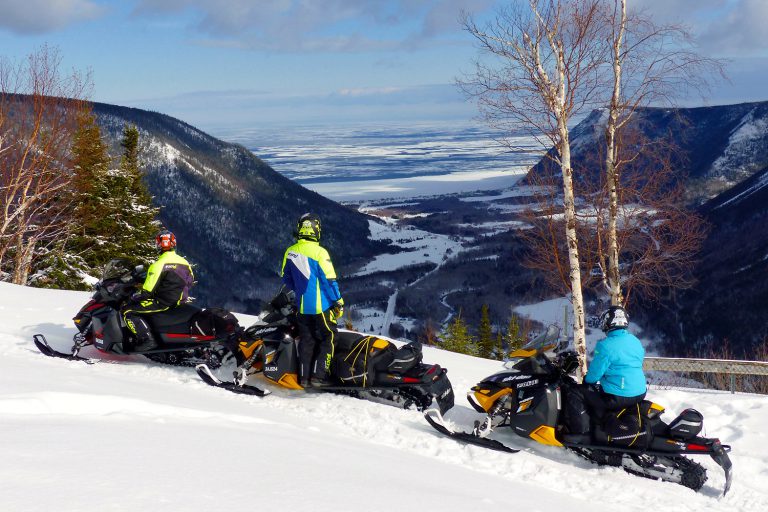
AJ Lester and Vern Putzer travel to Quebec to do some mountain riding with Jonathan Lefebvre and Aventure Chic-Chocs. To say they had a blast is an understatement! Polaris PRO-RMKs and Timbersleds included.

For more information on services offered by Jonathan visit:

aventurechicchocs.com

Subscribe to our YouTube Channel!

4 WAYS CAT COULD CHANGE THE FUTURE

We think Arctic Cat has a very bright future and will have a big effect on the snowmobile industry over the next ten years.

Here’s four reasons why:

C-TEC2 800

The largest selling engine segment appears to be the 800-850 2-stroke category. There’s a reason this engine size is included in so many models and Arctic Cat has wasted no time getting its new slot-injected engine into as many models as possible. If the new 800 proves to be as strong a performer as we think it will be, it will change Cat’s image in the industry in a big way.

ASCENDER

There’s tremendous focus on the mountain market and with a new engine and a thoroughly modified Ascender mountain platform, Cat could make big strides in that market segment, converting over both Polaris and Ski-Doo hardcores. Believe us, this new sled has the props to change perceptions.

ZR 200 SERIES

This new model segment is in its infancy and maybe sales numbers won’t knock the earth off its axis, initially. However, every new 200 sold will create a new enthusiast – probably several more, as riders share rides on these sleds. This is a big deal for the industry and bodes well for the future of snowmobiling.

ALLIANCES

Cat’s alliances with Yamaha, Kymco and Textron are providing a very diverse and secure set of resources for the future. Textron’s deep pockets and financial resources add a ton of security to the company. The engine alliances are fantastic because they allow Cat to produce a huge selection of very EPA clean engines in various segments without investing millions in R&D.

YAMAHA GENESIS 4

THE 10 BEST SNOWMOBILE ENGINES OF ALL TIME! This list of 10 encapsulates all that is great in snowmobile powerplants going back several decades.

Yamaha’s “Genesis” designation originally stood for 5-valves per cylinder. In early 2003, SuperTrax was first exposed to the new 20-valve DOHC carbureted 4-stroke in the RX-1.

This was the first pure performance 4-stroke we’d ever ridden and it was impressive. We ran 1000-ft. drag races down a Wisconsin lake against a fleet of SR-X 700s and the RX-1 was faster.

Later, this engine got EFI and found a home in the Apex. Certainly the most complex engine to ever grace a snowmobile chassis, its unique and sweet exhaust tone, its stellar driveability, strong performance and incredible durability are its hallmarks.