Home Blog Page 101

Experiencing the 2020 FXR Racing Dealer Event

0

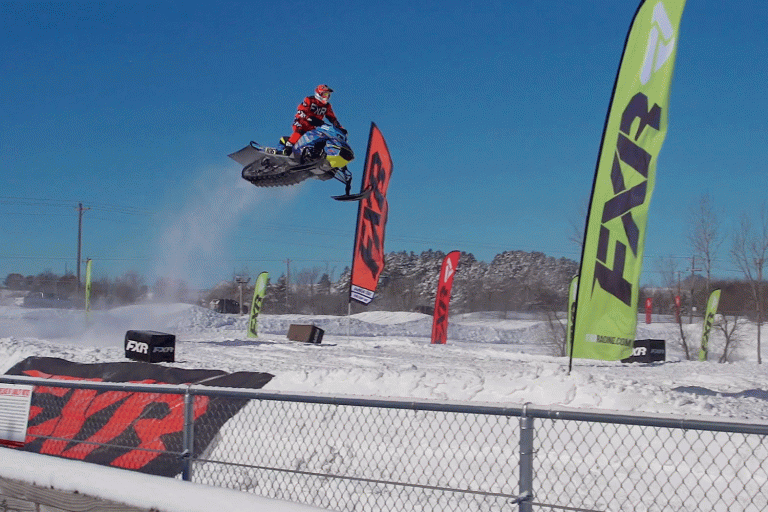
AJ attends the FXR Racing 2020 Dealer Show to get a look at the all-new gear including the Dri-LINK system being implemented into their snowmobile suits, their lineup of 6D helmets which provide a massive increase in safety as well as a live fashion show. Then, AJ hops on a sled and rips a Snocross track for the first time in over a decade with racing legend, Levi LaVallee.

Subscribe to our YouTube Channel!

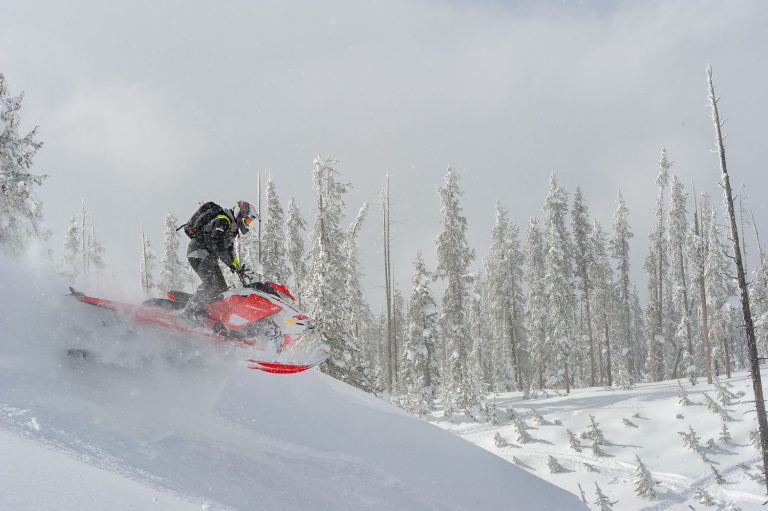
2020 SKI-DOO SUMMIT X EXPERT

0

Just to show you how hot the mountain market is, it seems like new technology and concepts are coming on a monthly basis.

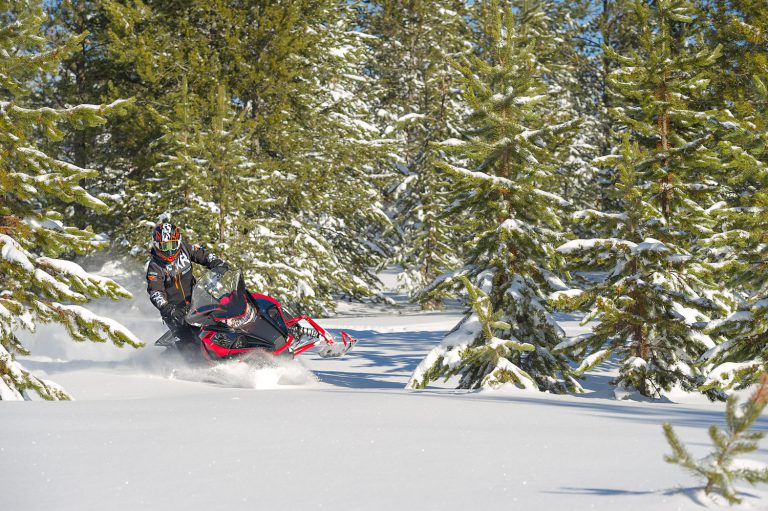
One just-introduced 2020 mountain ride we’re paying close attention to is Ski-Doo’s Summit X Expert.

There are a couple of things about the Expert that are truly ground-breaking and much of the conceptualization of this sled has come right from Ski-Doo mountain aficionado, Carl Kuster.

The first thing you notice is the tunnel and track are not the same length. Available in two track lengths – 154 and 165, the Expert uses a 146-inch tunnel on the 154 skid version and a 154-inch tunnel on the 165. All versions come with a 3-inch track. Also, there’s almost no visible snowflap at the rear of either Expert variation.

What? Here’s the story on these innovations. Apparently, when you’re navigating super-deep powder and the skid and tunnel are almost buried in fluff, the tunnel acts as a rudder. Unfortunately, the rudder is heading straight ahead, so if you try to turn while you’re pouring on throttle there’s extra resistance from a longer tunnel. If the tunnel is shorter it’s easier to pivot the sled in the deep stuff.

We were skeptical, but after riding it a couple of days in the mountains one of our test riders, Jon Legato, had this to say: “I feel like the shorter tunnel and longer track allow the sled to feel less cumbersome and long while climbing steep and deep areas. Jumping the sled felt significantly better too because of the shorter tunnel, it seemed to allow the sled to pop up better while maintaining control in the air.”

The better jumping response may be more because of the fact there’s only a tiny snowflap at the rear and the tunnel can clean out instantly, letting the track respond more quickly to engine power under less load. “There’s definitely potential with the “no snow flap” feature on the Expert. When trenching through the deep powder, it allowed the sled to power though without the chance of getting stuck compared to the normal snow flap holding snow inside the tunnel. Also, while in a wheelie climbing steep terrain, you have more control because nothing is dragging or grabbing the snow.”

Another couple of things Ski-Doo has “unlearned” is the Expert actually has a lower seat height than other Summits, skinnier handlebars (at the grips), a smaller grab strap and a lower handlebar riser (4.7 inches).

Most of this has to do with lowering the center of gravity when you’re climbing near-vertical slopes or maneuvering sidehills, but it also helps with agility in the deepest snow.

Not fully satisfied with the above changes, Ski-Doo altered the Expert’s front end geometry (modified spindles) and the ski-stops for less resistance when you hit submerged objects.

As it is, the sled reacts beautifully when there’s a ground impact in the middle of a climb or when you’re sidehilling. Some of this stellar response is undoubtedly because of the excellent and actually very expensive Kashima coated shocks up front on the Expert package.

Another critical innovation is the Expert’s tunnel mounted limiter strap adjuster. This allows the rider to simply and easily adjust how far the front of the skid is plunging into the snow – especially helpful with deep snow climb-out.

It goes without saying all Experts are equipped with Ski-Doo’s revolutionary SHOT starting system, use a narrowed RAS 3 front end (adjustable 42.5 to 43.7) and the Summit’s tMotion pivoting skidframe. Apparently there are a total of 14 unique changes that set the Expert apart from other Summits.

Here’s a crazy twist for you to contemplate. Ski-Doo and Polaris both have come to the 2020 marketplace with new, more highly specialized mountain sleds. The new RMK Khaos is very similar in its execution and purpose as the Expert. So who was looking over the fence?

Awesome Snowmobile Products from KIMPEX

0

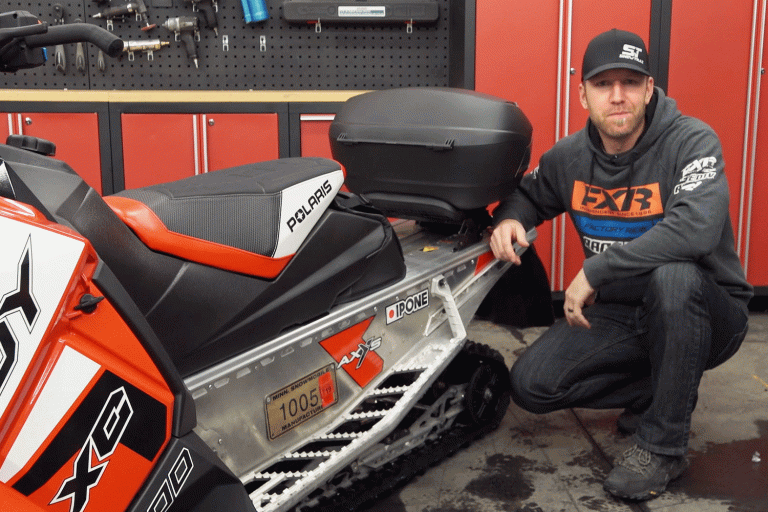
AJ returns to the Trail Tech shop to recommend the latest snowmobile products from KIMPEX that you need on a long day’s ride including the SHAD Box for all your storage needs, hand muffs and and sled cover.

Subscribe to our YouTube Channel!

WHAT’S UP WITH ARCTIC CAT IN 2020

0

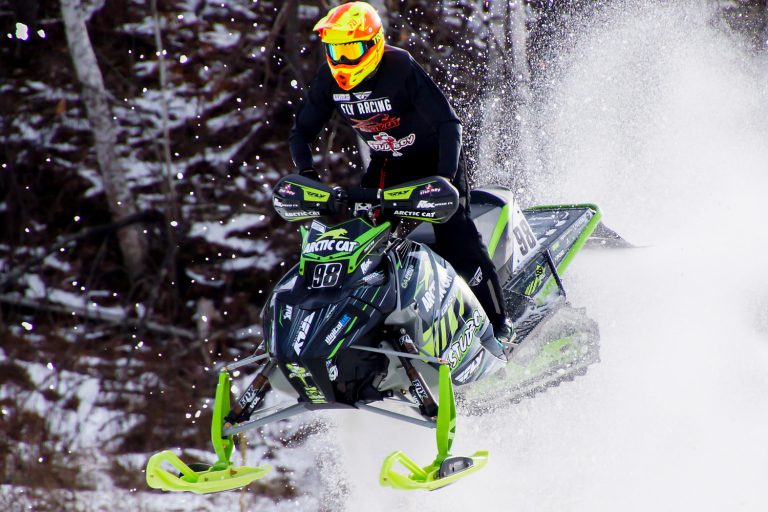
Now the Arctic Cat media embargo on information surrounding the 2020 models has been lifted, we thought we should bring you up to speed on some of the things we learned while at the annual Snow Shoot event in West Yellowstone, Montana, held the last week of February.

First, Arctic Cat looks quite a bit different these days from a personnel standpoint. Textron has been making changes that appear aimed at streamlining its off-road division from a product and a human resources standpoint.

Here are some of the comments engineering boss, Brian Dick (and others), made in their presentation to the media in West Yellowstone. Keep in mind, Brian is one of the most respected individuals at Arctic Cat – and quite frankly, in the whole sno-mo-biz.

“Arctic Cat is not for sale”. That this statement was even made is a clear indication Textron has been fielding a lot of questions similar to this. It’s important that it was Brian Dick saying this. He adds a mountain of credibility to the message and, as a result, these rumors should quiet down.

“Arctic Cat is committed to investing in new product”. Again, Brian would know if this was true or not and he made it clear there are new projects underway and the market will be seeing these innovations over the next few seasons. He was predictably light on a time line for new stuff to arrive.

“Arctic Cat must clear the decks of unsold, non-current sleds”. We thought that was what the last leadership team from Textron was doing this season. Apparently, there are still too many unsold sleds sitting in boxes. These sleds only go down in value every day (and every year) they sit unsold. While details are very sketchy about the total number of non-current unsold sleds, we believe it’s significant.

“If you want a 2020 Arctic Cat model you have to Spring Order it”. This was a biggy. While it seemed to take a couple tries to make this statement sink in with clarity to those in attendance, the reality appears to be this: Arctic Cat is offering a MY 2020 lineup of about 35 models – including variants. For the record, this is about half of what Arctic Cat would normally present for their new model launch.

Clearly, there are enough non-current sleds sitting around for dealers to order that a smaller 2020 model build should be able to enhance, or least add some sizzle to, these as-yet unsold non-currents.

It’s a complicated equation – and a bit risky. Clearly no OEM can get truly profitable until it’s selling mostly current year products. However, this is a weather driven business and the word “mostly” can swing wildly to include a lot of non-currents.

“There will be very attractive pricing on these limited production 2020’s”. Pricing we’ve seen released in the past couple days appears to validate that statement.

We won’t get into specifics as our readers are both Americans and Canadians which means the numbers are significantly different. You can look them up and evaluate for yourself. The issue of sweetening early order snowmobiles with exclusive pricing, extras and rebates is decades old. We’ll see how this program flies by sometime in April.

“The 800 CTEC is a 165-hp class engine”. This was a bit of a shocker to the press in attendance. Obviously, the Ski-Doo 850 E-TEC and Polaris’ 850 Patriot are both 165-hp engines. So, how did the 800 CTEC end up in the “165-hp class”?

Perhaps, here’s part of the answer. After letting it digest you may, as we did, find it confounding. Apparently the 2020 800 CTEC engine gets new cylinders, heads and pistons. The reason for this was not clearly explained.

When you let this simmer in your noodle for a couple minutes this inevitable question arises: If Arctic Cat was going to retool these engine parts (at substantial cost) why didn’t they just drill bigger holes and make the engine an 850? The reality is this: We were unable to quantify the 165-hp claim simply because West Yellowstone is 6,600 feet above sea level and everything feels pretty slow. Add this in: The OEM sponsored Snow Shoot event does not allow head-to-head performance comparisons.

We suspect these might have shown Arctic Cat is on its game with this re-invented 800 C-TEC engine. Just for the record – it did feel quite strong when jumping back and forth between the competitive 850s and the new version of the Arctic Cat 800.

Stay tuned!

Full Review of the 2019 Polaris 850 Switchback XCR

0

Mark reviews the successor to our 2018 Real World Sled of the Year choice: the 2019 Polaris 850 XCR Switchback.

Subscribe to our YouTube Channel!

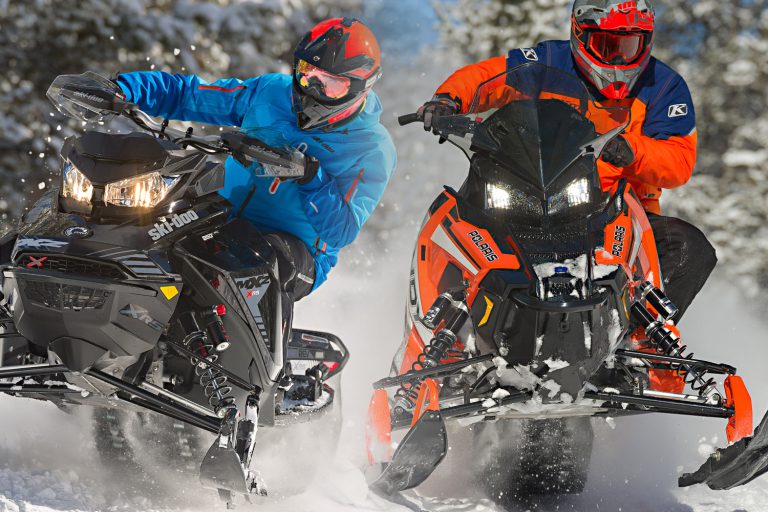
INDY XC 850 or MX-Z XRS 850?

Is there a more burning question in the sno-mo-biz in MY 2019?

Here’s the plan – we’re going to lay out some of the strengths and weaknesses of each sled and give you the opportunity to make an informed decision – knowing your brand loyalty will ultimately determine your conclusions.

SKI-DOO MX-Z XRS 850 129

QUALITY:

From a production quality and assembly standpoint, the X-RS 850 is a piece of watch-like precision. Nothing in the biz equals Ski-Doo’s attention to detail and high quality finish – in a showroom shoot-out, Ski-Doo wins every time.

SUSPENSION:

In our opinion, the legendary rMotion skid takes the nod by a sliver. Here’s why: The remote tunnel-mounted rear arm shock compression adjuster and rear torsion spring pre-load adjuster are incomparable making the Polaris’ traditional adjustment ritual – hands under the sled and in the skid – seem archaic.

However, we will say this – once you’ve got either sled dialed-in it’s unlikely you’ll make any changes throughout the season – unless your membership to Nutri-system put you in a different weight category during the riding season.

Front suspension? That’s a whole different story. The Ski-Doo pales in comparison to the Indy’s IFS. Ski-Doo’s rMotion skid simply overdrives Ski-Doo’s RAS 3 in this application.

ENGINE:

Ski-Doo’s 850 E-TEC gives full measure for its 850ccs and 165 HP. This thing is a rocket and we can’t say a bad word about it. E-TEC makes the 850 almost incomparable in the fuel economy category. When ridden sanely, it sips fuel.

We also give props to Ski-Doo’s pDrive roller tower primary. It is the future and enhances every single pony the 850 Rotax pumps out. pDrive shifts with buttery smoothness and the clutch follows engine RPM with incomparable accuracy.

HANDLING:

The Ski-Doo is a bit of a contradiction in this category. When equipped with SD’s TS tunable skis we find the G4 sometimes unpredictable, requiring the rider to “chase” the sweet spot for initial turn-in and mid-corner bite. With Pilot 5.7’s things are much more predictable and control is consistent.

POLARIS INDY XC 850 129

QUALITY:

Polaris has moved mountains to improve fit and finish quality on the latest AXYS sleds debuted for MY 19. Having said that the paint finish on areas of the bodywork is still a little orange peely while exposed Torx screw heads at the base of the handlebar opening through the hood look cobby. We have to give the nod to Polaris for style and cutting edge graphics, though.

Numerous responses to our wildly popular Indy walk-arounds taped earlier this season contain your comments about how visually appealing the AXYS chassis looks. Ski-Doo needs to get over the yellow thing and go off the grid like Polaris has with its coloration and graphics.

SUSPENSION:

We already knighted rMotion as the best rear suspension again. However, it’s worth noting that once adjusted the new Pro CC can go rail-to-rail with Ski-Doo’s rMotion. Getting your set-up takes more work with the Polaris.

Up front, there’s no question who owns suspension laurels. The AXYS chassis capably swallows everything from trail chatter to craters. You can run as fast as the new Pro CC will push the chassis and remain in control with consistent and linear feedback through the bars.

ENGINE:

The Patriot 850 was a clean sheet of paper this year but was targeted with laser precision to compete with the Rotax 850. From a pure loud handle evaluation, the Patriot makes no apologies. It’s crazy fast, yet incredibly trail-able. While fuel economy is not and won’t be comparable to E-TEC direct injection, the engine does scavenge cleanly and runs mostly smoke-free once warmed.

Of special note is the new drive belt used by the Patriot 850. Polaris claims up to 7500 miles of service! We’re watching our 850 press fleet carefully. One more thing about the 850 Patriot: It aces the SD 850 in the vibration category.

The Patriot’s new-design engine mounts virtually eliminate vibration at idle while the G4 Ski-Doo rattles and vibrates its hood and ski tips in a way not commensurate with the sophistication we have come to expect from Ski-Doo.

HANDLING:

The Polaris IFS is complimented by the new Pro CC and will make you look and feel like a better rider. Polaris got the handing equation figured out some time ago and subtle tweaking has only made it better. This system turns-in, and progressively cuts harder than anything in the biz with intuitive predictability. The Polaris variable castor IFS system is the setup all others must be judged by.

So go ahead and make your own conclusions and don’t forget to factor the all-important MSRP equation when you compare these two ultra-high-performance, superb snowmobiles.

SnowTrax Television 2019 – Episode 11 Sneak Peek

0

With the model year 2020 snowmobile lineups in full swing from all the major OEMs, we take a closer look at the all-new mountain riding Khaos RMK and 137-inch INDY XC from Polaris and the Expedition Xtreme from Ski-Doo. We then turn our focus and take a closer look at the all-new 2-stroke 600cc powered utility Transporter snowmobile along with the new Sidewinder S-TX GT and the expanded line up of Viper platforms from Yamaha. 

And then Mark tackles the exploding 600-class snowmobile market and reviews the 2019 Ski-Doo MXZ X 600R.

Subscribe to our YouTube Channel!

ROX PRO-TEC HANDGUARD AND MOUNT KIT

0

These handguards offer some serious protection! Their extra large size, Flex-Tec material and super-strong mounting system keeps your hands warm and deflects ice and snow roost in tight quarters – like when you’re racing in a crowd or riding in icy conditions.

These guards can be used with or without the foam extensions included and, if you’re a racer, provide plenty of extra space for sponsor logos.The 360-degree mount kit is made from rugged aircraft aluminum.

When ordering, include details of your sled to ensure you get the best possible mounting set-up.

Go to RoxSpeedFx.com

2020 YAMAHA TRANSPORTER SE 600

0

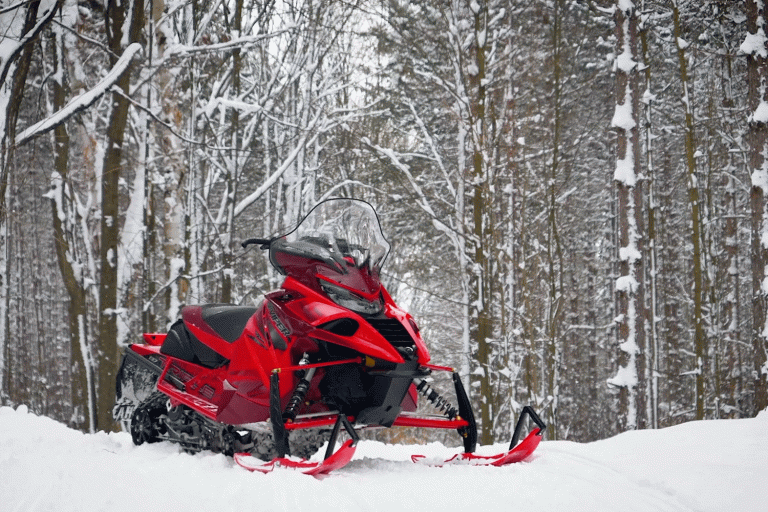
Despite other changes to the 2020 Yamaha product line, probably the company’s biggest news this year is the 600 Transporter.

This sled is the first viable 2-stroke Yamaha has offered in nearly fifteen years. Yes, we know about the Viking 540, but the Transporter is an all-encompassing sled that reaches into several markets at once, where the 2-stroke VK was specifically aimed at the utility buyer.

What are we talking about? First, the Transporter is powered by an Arctic Cat-derived DSI 600 2-stroke twin – but the story only begins there.

Obviously, the target is lightness and utilizing a 2-stroke provides plenty of deep snow agility without the extra front-end mass of a 4-stroke affecting powder handling. There’s way more to this, however.

Check out the Transporter’s features and dimensions: It comes with a long tunnel and a 153-inch track. Suddenly the picture gets clearer. This long, 2.25-inch-deep Powerclaw track, equipped with lugs, enables the Transporter to perform alongside some pretty formidable mountain sleds.

The skid is articulated for better reversing and improved ride but can be locked down so the whole 153 inches is biting in powder.

Yamaha uses a mountain seat, wide mountain skis, a fairly narrow 38-inch ski-stance and a tall 6.5-inch riser for comfortable stand-up handling.

There’s even a handlebar strap. Yes, this sled is a mountain performer disguised as a utility sled. Sure, mountain experts are going to want 800 power, but there are a lot of boondockers and foothill powder riders who love a 600. This sled is perfect for just that.

At the very least, you could call the Transporter a credible crossover. It uses the SRV trail front end geometry and spindles in combo with the mountain skis and gas shocks and although the 2.25 track is a bit too deep for continuous groomed trail use, it’s fine for short hauls from a staging area to a fave off-trail riding area.

It uses the SideWinder’s quick-remove bodywork and its narrow stance means you can lay it over and pull powder hooks – even sidehill some pretty steep slopes.

The Transporter makes use of a roller secondary and has a built-in belt-height adjuster.

Sure, the windshield is a bit tall for a pure mountain sled and there’s a utility style rack at the rear of the tunnel but if you’re riding slopes, it’s a perfect place to bungee down extra gear and a gas can.

So there you have it! The Transporter is presented as a utility sled, can double as a vert sled and even be used to ride freestyle or used as a crossover.

Yamaha riders are gonna love it and we’re betting next year Yamaha will offer this sled with even more goodies and maybe, an 800. Better yet, it has that “YAMAHA” logo on the body – and can play in the powder with the best of them!

2020 Polaris INDY XC 137 Walk Around & First Impressions

0

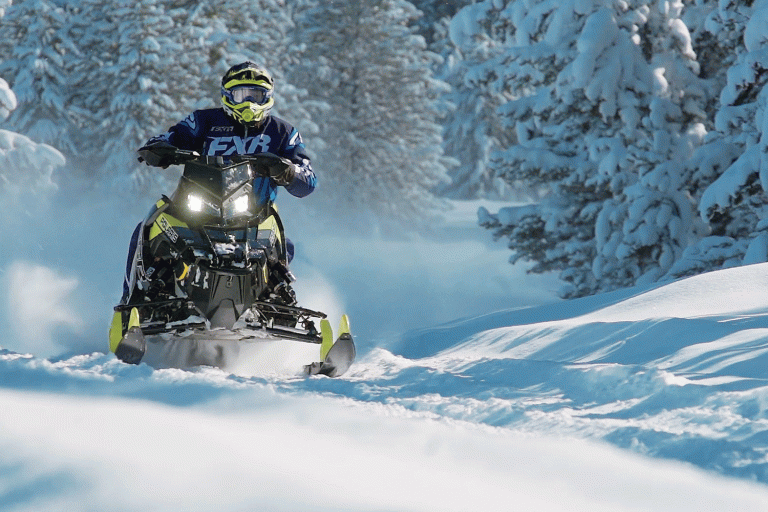
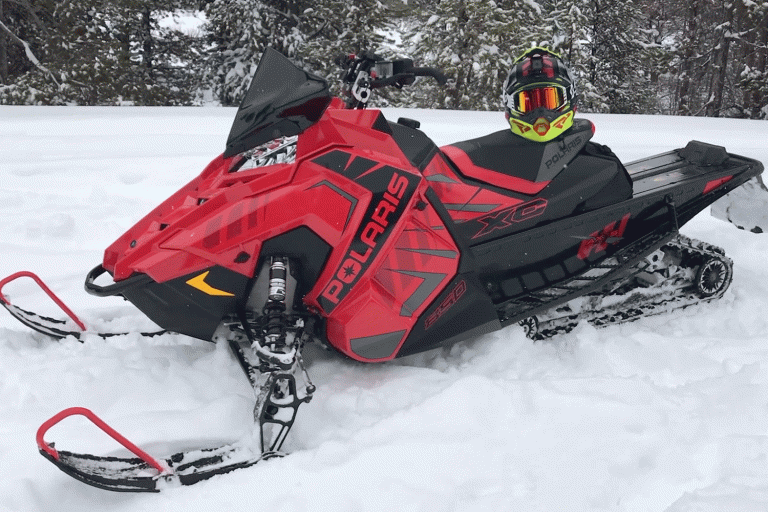
Our series of 2020 first impressions continues as AJ is here to talk about the Polaris INDY XC 137.

Subscribe to our YouTube Channel!