Home Blog Page 100

2020 Polaris Snowmobile Lineup

0

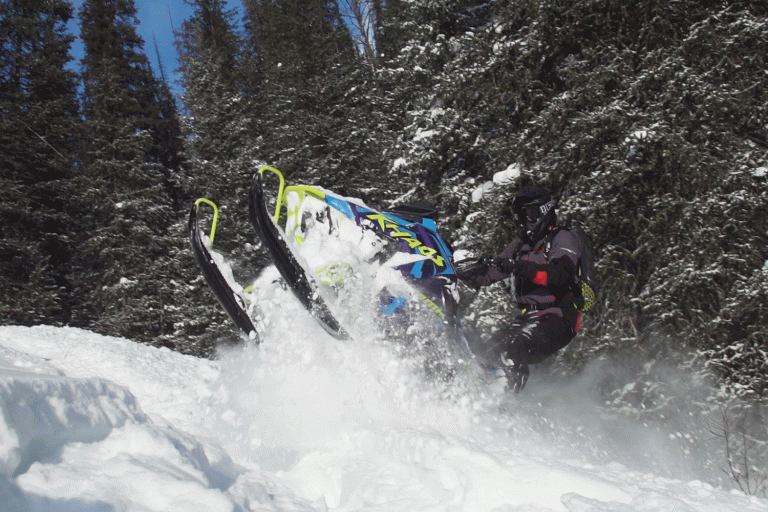
With the model year 2020 snowmobile lineups in full swing from all the major OEMs, we take a closer look at the all-new mountain riding Khaos RMK and 137-inch INDY XC from Polaris.

Subscribe to our YouTube Channel!

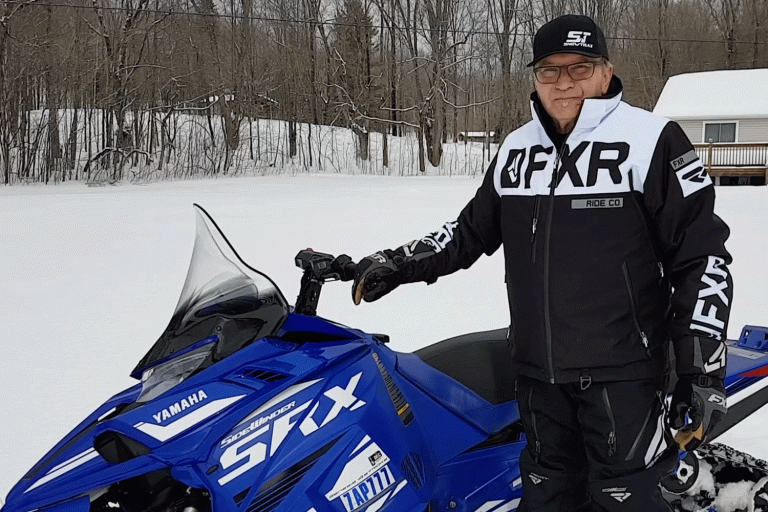
LATE SEASON REPORT ON THE 2019 SIDEWINDER SRX

0

About a week ago I got to sample our 2019 SRX press sled on a 100-mile ride. Snow conditions were great and we rode about 50 miles on frozen lakes and about 50 miles on nicely groomed trails. The fact everything about the conditions was ideal certainly shaped my opinion of the SRX.

We were able to run wide open on a couple of long lakes – BTW, I registered 109-mph (176km) on the SRX’s speedometer with the suspension set on Medium and 105-mph with it set on Soft. I’m not sure why the top speed is higher when you firm up the suspension – and I didn’t try it with the suspension set on Firm. Just a guess, but there may be something in the ECU program that wants you to have a firmer suspension set-up when you’re running tall speeds. Not sure – but that would be a Yamaha kind of thing. Or maybe it was just the path I ran on the hard-pack lake.

The 3-setting suspension deal is definitely for real and once I got used to using it, made the trail part of the ride very enjoyable. I mostly kept it on the Soft setting because everything was groomed up so well, but the few times I found some chop and stiffened up the suspension, the transitions worked really quickly and the difference in ride was noticeable.

Some of our test riders don’t find the SRX’s seat height the best but at 5-ft, 9-inches, I was really comfortable with the sled’s ergonomics.

You can’t talk about the SRX without commenting on its engine performance. As I already mentioned, it generates incredible top end speed – really, nothing like it in the industry with the exception of the Cat 9000, of course.

We had a Ski-Doo 850 and a new Polaris Indy 850 along on the ride and in side by side comparisons the acceleration went like this: At 40-mph, the very fast 1.6 inch lugged Polaris would pull away hard from the SRX which felt like it was just spinning its one-inch lugged track. The Polaris would continue its lead right up past to 80-mph and then the SRX would eventually claw its way into some grip and rocket past the Indy and keep on stretching its lead up beyond the C-Note.

At higher speed roll-ons (80-mph) there was less SRX track spin and the extra horsepower of the Yamaha allowed it to pull ahead with authority.

Based on our experience, an upgrade to a 1.6 on the SRX might cost a bit of top end (How much? Maybe 3- 4 mph?) but would let the track hook up and get you way better acceleration. At the very least, some traction studs would help the situation a ton.

Some things we quickly noticed: The smoothness of this engine and roller secondary is excellent. There’s very little vibration at idle, off-idle and at trail speeds and the engine spools up RPM like it’s built by General Electric. The Yamaha roller secondary is awesome and the SRX backshifts better than any other Yamaha I’ve ridden and always seems to be right in the meat of its powerband.

We also found very little darting with this version of the Tuner skis on the SRX. Whether it’s because of a ski improvement or the lower geometry of the SRX’s sagged-in ride height, we’re not sure, but on this day, in these conditions, the sled handled like a champ – even compared to the stellar handling of the Indy.

Frankly, I totally enjoyed riding the SRX in these conditions and that’s the key. Had the conditions been less smooth and the trails in the kind of condition they usually are, I may not have appreciated the sled’s extra weight up front or possibly, its perceived suspension limitations running whoops.

As it was on this day, the SRX impressed me big-time!

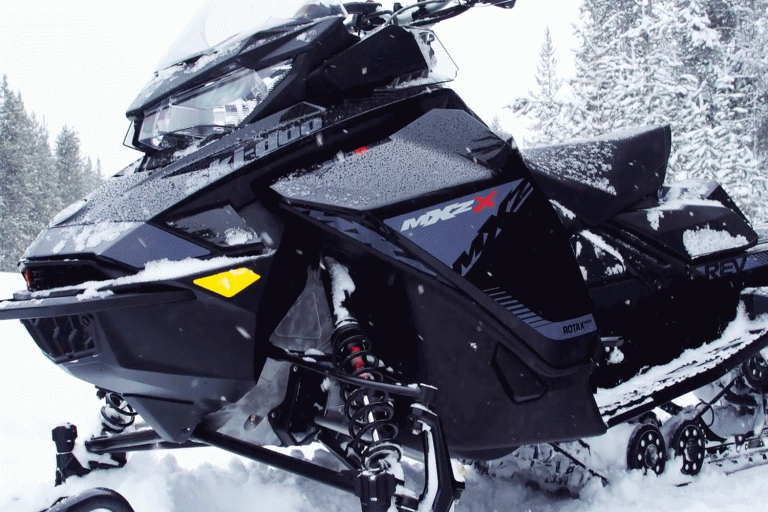
Full Review of the 2019 Ski-Doo MXZ X 600R

0

Mark tackles the exploding 600-class snowmobile market and reviews the 2019 Ski-Doo MXZ X 600R.

Subscribe to our YouTube Channel!

2020 POLARIS INDY XC 137

0

To say Polaris hit a home run last year with the intro of the conventional tunnel, shock-in-skid 129 Indy XC, would be a colossal understatement.

Rumor has it that at one point during the 2019 sales season, the Indy XC in all its variants (600, 800 and 850) was the number one selling snowmobile model in the biz.

We don’t doubt this assertion and, in fact, agree that the Polaris faithful were waiting – actually panting – for a conventional tunnel, shock-in-skid AXYS chassis.

So-o-o… If the new Indy XC 129 sold well, what might be the next variant on the Indy XC platform with Pro CC rear suspension? Correct! It would be a 137-inch version of the Indy XC! That’s exactly what Polaris is serving up for MY 2020 and we think it’s going to shake up the trail biased, longer track market.

HERE’S WHY

For several years, Polaris has been playing in the 137 category with models based on the Pro XC external shock AXYS. While there’s been success with the Switchback 137 we believe the same magic dust that’s all over the Indy XC 129 is in equal measure on the XC Indy 137.

Frankly it seems the timing of the “next thing” for Polaris – a move to a long front torque arm, coupled, shock-in-skid chassis, was about as perfect as any OEM’s launch of a new product in the past ten years.

THERE’S MORE?

Yes. The move to the Pro CC skid opened the door for a legion of riders who have been seated on other brands, in particular, on Ski-Doos. Using rMotion, Ski-Doo has grown its market share numbers to heroic levels the past five seasons.

Brand switching buyers who have taken Ski-Doo past the 50-percent share threshold are likely comprised of a fairly healthy dose of former Polaris pilots. The thing with brand switchers is this: They switch.

The truth is, there has been scuttle from the Polaris faithful they wanted a conventional tunnel, shock-in-skid sled and were not completely convinced about the Pro XC. Some of those Polaris-leaning riders may have made a move back to the Roseau camp.

ONE MORE THING

Pro CC has proven to be a worthy competitor to rMotion. Compared to the former Pro-XC, from chatter bumps to rollers to square edgers and sucker bumps, the Pro CC is our pick for best Polaris ride quality. The only missing feature with Pro CC compared to rMotion is the ability to adjust damping settings on the front and rear arm shock without tipping the sled on its side.

LONGER, BETTER?

As is always the case in the snowmobile biz, when you lengthen a trail sled’s footprint to 137 inches you get a corresponding improvement in ride quality. The new Indy XC 137 is no different.

Inasmuch as we heralded the XC 129 as the best riding sled Polaris builds, we have to update that proclamation: The new Indy XC 137 rides measurably smoother than the 129 without any penalty. In fact, the 137 XC turns in and holds a line as predictably as the 129 on virtually any trail surface.

What is immediately noticeable – particularly with the 800 and 850 engines – is the improvement in corner-to-corner acceleration and reduced track spin. The 137 can be plied easily on twisty trails with minimal understeer. Corner exits feel flatter, and the Pro CC’s double coupling contributes to this trait in both the 129 and the 137.

Jump on a lake and into 6-inches of fresh snow and the increased footprint pays off the moment your right thumb wiggles. Traction here is amazing and speeds climb quickly regardless of whether you follow a packed line or break out and rail untramped pow.

POLARIS IS THE COMPETITION

It becomes clearer every day that Polaris is Ski-Doo’s most formidable competitor. The company is making bold moves that are being received with open arms and obviously, improving sales success. It is and will continue to be interesting to watch these two iconic brands fully engage in a battle for market share.

While Polaris still has a way to go to rival Ski-Doo’s sales, imagine this for a moment: If Polaris comes out with a competitive 4-stroke, we think it’s game-on.

2019 Yamaha Sidewinder SRX Walk Around & Impressions

0

Following hundreds of miles ridden this season, Motorhead Mark delivers his final 2019 walk around with the Yamaha Sidewinder SRX.

Subscribe to our YouTube Channel!

SnowTrax Television 2019 – Episode 12 Sneak Peek

0

Based on close to 60 years of history, Mark, Luke and AJ have a sit-down discussion about the ongoing legacy of Arctic Cat Snowmobiles and how the iconic brand has shaped the snowmobile industry along with the Arctic Cat snowmobiles they felt were the most influential.

AJ is in the shop detailing the features of the CKX TITAN Helmet which stood out to the editors of Supertrax Magazine as being truly unique and innovative.

And Mark reviews Yamaha’s 50/50 cross over sled; the 2019 Yamaha Sidewinder X-TX 141.

Subscribe to our YouTube Channel!

2020 Arctic Cat ZR 8000 RR Walk Around & First Impressions

0

Mark is here to talk about the 2020 Arctic Cat ZR 8000 RR after a day’s ride. Full Review to come on SnowTrax Television 2020!

Subscribe to our YouTube Channel!

ARE SNOWMOBILE PRICES FAIR?

0

This season marks the 30th year Supertrax has been publishing snowmobile magazines. Over the course of those three decades there’s been a lot of change in our industry and fortunately, the sheer time of our involvement has given us a birds-eye view of things.

One factor we’ve taken alarming note of is the increased cost of participation in this sport. You’ve probably been reading our recent rationale on how sno-mo-related prices have been increasing as technology ramps up. It’s fair to say, progress is always good – but it comes at a steep price.

Going back in time three decades, we should probably ask ourselves: “Is it really more expensive to participate in this activity today than it was thirty years ago?”

Here’s what it looks like, but lets go back even further to a time when there was an explosion of enthusiasm for snowmobiling – the mid-1970s. This was a time when it seemed like everyone owned or at least, wanted to own, a snowmobile. Compared to today, sales stats and sheer demand was staggering.

Certainly, snowmobiles were not nearly as technically sophisticated as today’s are but the average price of one was about $1,400 and many baseline sleds could be purchased for under a G-Note. These seem like ridiculous prices when we look at new-sled prices today. But are they, really?

In the early to mid-1970s there was a real estate boom that put the price of an average home up to about $40,000 by 1975. Certainly, some geographical areas got higher prices but some others cost less. However, in the snow-belt, rural areas where snowmobilers mostly come from, that’s pretty much the average you paid for a house.

Today the same house would run you about ten times that much – somewhere around $400,000. Before you get yourself all in a knot about real estate values (most certainly some areas get a lot more for our sample house), but looking across the whole North American snow-belt in both the USA and Canada, the average is really close here.

How about the average cost of the pick-up truck sitting in your driveway? In 1975 you would have paid about $4,000 for the most commonly equipped full-sized pick-up brand. Today, the average price of a similar truck has risen to about $40,000. Once again, it’s fair to say the increase is close to tenfold.

Lets look at snowmobile prices. Today the average selling price of new sleds rolling out of showrooms north and south of the border is about $13,500. This takes into account high performance turbos pushing 20 grand and the lower volume, value stuff selling for under 10Gs. As mentioned, in 1975 the average was about $1,400. Hmm, close to ten times again.

To make any sense of a comparison like this, you have to look at other factors that have changed the way we live. The fact is, our product expectations are a lot different than they were in 1975. This doesn’t just go for snowmobiles – it tips over into the cars and trucks we purchase and the houses we live in.

Today, the truck in your driveway is likely a 4×4 with air conditioning, extra cab seating and copious electronics – wasn’t in 1975. The house you’re sitting in while reading this would have been smaller, wouldn’t have had three bathrooms, granite countertops and a designer kitchen in 1975.

What happened? Well, our demands increased. The bare minimum we required suddenly got much more full-featured.

That’s pretty much what has happened in the snowmobile biz. The Yamaha SL250 we would have loved in 1975 has given way to an E-TEC 600 with adjustable shocks and a digital dashboard. Yes, the cost has actually stayed in perspective but today the features and benefits of the average snowmobile have rocketed skyward.

So, are snowmobiles still fairly priced? Based on comparison, we’d have to say they are. Just like always, we’re the problem!

Maybe The Best Way To Load Your Sled

0

AJ looks at an innovative new way to load and unload your motorized toys into the back of your pick-up truck. This ingenious ramp and loading system, by DGRP, saves valuable time and effort so you can get your machine on the ground faster and get back on the road quickly when you’re all done playing.

Subscribe to our YouTube Channel!

THE HARD TRUTH ABOUT OFF-TRAIL RIDING

0

It looks like snocross racing has been supplanted as the identity of choice by the image of the deep snow freerider.

Iconic names like Haikonen, Morgan and Hibbert for two decades have given way to powder slaying, cornice jumping images of Chris Burandt, Carl Kuster, Dave McClure, Rob Kincaid and many others. More important, in showrooms the sought-after image of snocross sleds is increasingly shifting to deep-snow sleds.

Proof positive are comments coming from the OEMs indicating the sale of crossover and mountain sleds is the growth market in the snowmobile industry right now.

We would not dispute this assertion. Our contact with you, our readers, and Snowtrax Television viewers indicates not just a passing interest in off-trail riding but a determined desire to rip-up powder, ride without boundaries and generally go wherever you choose.

Although we’re not against this new, tweaked definition of snowmobiling, we must clearly state this reality: If snowmobiling keeps redefining itself away from groomed trail riding – and I’m speaking about flatland freeriding here – there’s going to be a huge price to be paid.

Sure, it’s great the OEMs are recording sales increases in deep snow, longer tracked crossover rides; I get that. However, there has to be a visible, coordinated move to educate these buyers their new way to participate has boundaries and subsequently, rules. If this doesn’t happen soon, we’re in for big trouble!

So, overall, this is good, right? I mean more sleds sold means more participants, more tourism impact, more justification for our sport’s continued acceptance and support by government and thus more monetary support for snowmobiling. This is correct thinking, right?

Honestly, I’m less sure about the above rationale than I’ve ever been. I’m concerned things are getting out of control. We attend all the big US consumer shows every fall and this year I was overwhelmed by the increase in people we spoke with who are buying sleds with the intent to use them off-trail in flatland, trail-based territory.

Like I said, I’m all about more participation and expansion. However, I’m becoming increasingly concerned about the consequences of this re-imagined type of riding.

You’ve likely heard, just like we have, about trail closures from sleds wandering off the prescribed signed and marked routes. Landowners are the backbone of North America’s state and provincial groomed trail systems. The desire to freeride using these trails as a springboard to “get to the pow” runs 180-degrees counter to the original idea behind groomed trails.

Therein lies the problem. This growing desire to ride deep-snow-capable sleds in deep snow has to be subject to some rules. Moreover, this new movement needs tourism destinations and riding locales to step up and recommend terrain and areas where this kind of riding can legally and considerately take place.

Those who build, maintain and groom our valuable trail systems can no longer just get angry at off-trail riders, because they’re most certainly not going away.

In fact, it appears these participants are going to grow again in numbers this winter. There has to be some solutions and some give-and-take in an effort to get this new genre of riding under the wing of established trail sanctioning groups.

One more thing: It’s probably time for the OEMs to step up with some ideas aimed at preserving the amazing access we enjoy to public and private land. As the main benefactors of the explosion in popularity of deep snow sleds, the manufacturers need, at the very least, to participate in and ideally help direct this conversation as well.

It’s time to get talking constructively about this no longer “emerging” but rather, ever-increasing fraternity of snowmobilers who see things differently than the status quo.