Home Blog Page 98

2020 Polaris Timbersled RIOT Conversion System Walk Around & First Impressions

0

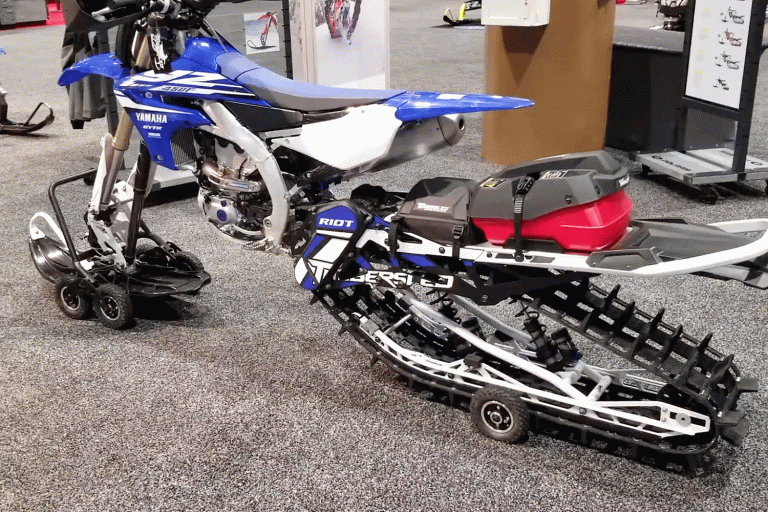
After a full day’s ride, Luke is at the Polaris dealer event detailing his first thoughts on the 2020 Polaris Timberlsed RIOT kit.

Subscribe to our YouTube Channel!

2019 REAL WORLD SLED OF THE YEAR ANNOUNCED

Trax Media Inc. and SnowTrax Television are pleased to announce the winner of the coveted annual Real World Sled Of The Year award.

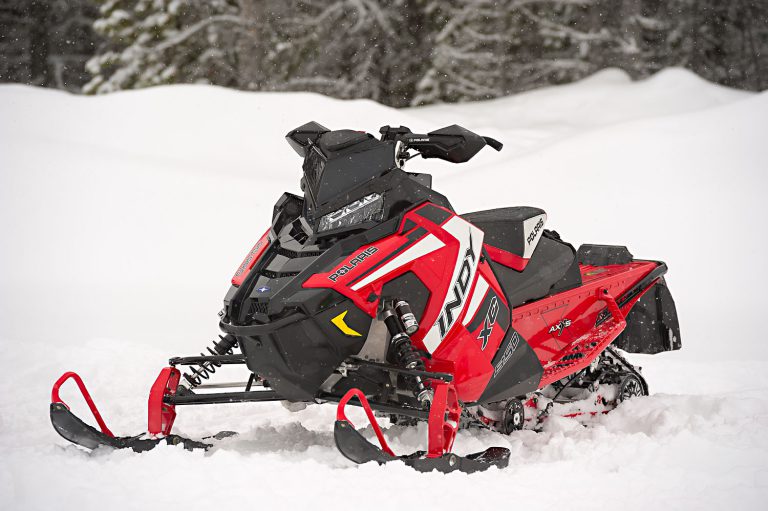
SnowTrax Television takes pride in the comprehensive and in-depth process the editors and hosts of snowmobiling’s most watched, longest running enthusiast television series employ to determine the Real World Sled of the Year award winner.This year’s winner is none other than Polaris’ new Indy XC 850 with Pro CC suspension.

From a competitive standpoint this season produced an incredibly close battle between the Indy XC 850 and Ski-Doo’s MX-Z XRS 600R. When push came to shove, according SnowTrax TV’s Luke Lester, the nod ultimately went to the Polaris. “The new Indy XC won over our critical and discerning riders with its amazing handling, rear skid ride compliance and the new Patriot 850 engine’s formidable, seamless and smooth power delivery.”

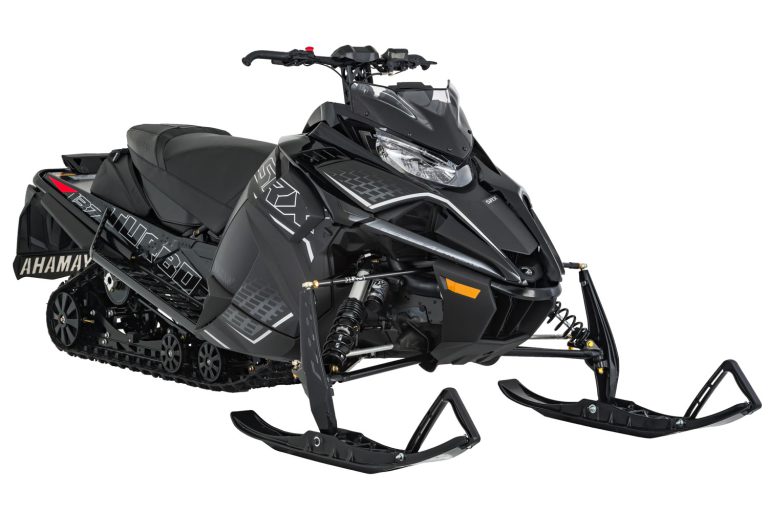
SnowTrax Co-Host AJ Lester went on to say this about the annual Real World Sled of the Year award, “It was not only a close battle between first and second place but a significant turn of events when perennial fourth place finisher Yamaha stepped up and carded a solid third place with their formidable 180 HP Sidewinder SRX Turbo.

Polaris offers multiple rear suspension options with its AXYS rider balanced platform. After wringing out the competition and Polaris’ own AXYS variants it was the Indy XC’s all-new Pro CC double coupled, long torque arm rear skid which turned the tables and won every SnowTrax staffer over.

The legendary Polaris variable castor double A-Arm IFS was also a key contributor to the Indy XC’s winning score. This front suspension system delivers what SnowTrax consistently proclaims as the industry’s best ride quality while generating the most intuitive handling of any modern snowmobile.

Finally, the all-new Patriot 850 engine puts Polaris in an enviable position in the 850 class with its imposing, yet easy-to-manage power at trail speeds and its remarkable lack of NVH as a result of a revolutionary proprietary engine mounting system. The Patriot 850 does not use torque stops to control engine movement.

Congratulations go out to Polaris for winning the industry’s most meaningful accolade – the 2019 SnowTrax Television Real World Sled Of The Year Award!

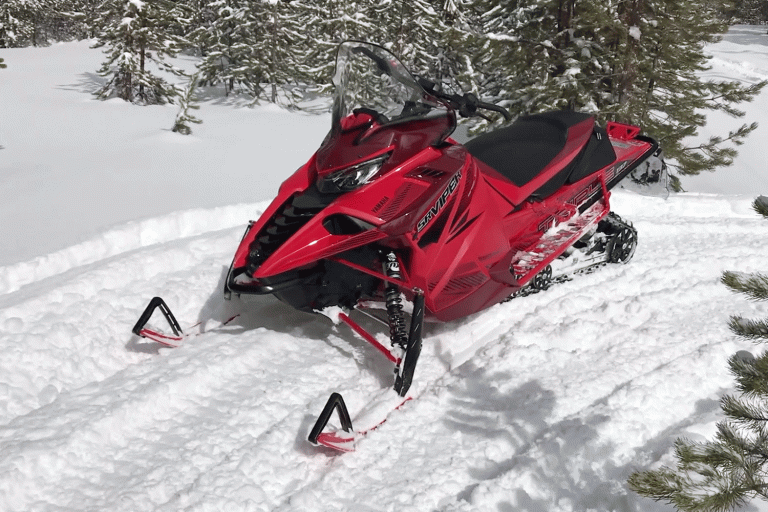
2020 Yamaha Viper L-TX GT Walk Around & First Impressions

0

AJ guides you through his initial thoughts on the 2020 Yamaha Viper L-TX GT following a ton of riding time.

Subscribe to our YouTube Channel!

2020 Polaris INDY XCR Walk Around & First Impressions

0

Luke is at a Polaris dealer event going through his initial impressions of the 2020 Polaris INDY XCR following a ton of seat time.

Subscribe to our YouTube Channel!

Will Yamaha Add Another 2-Stroke To Its Lineup?

0

We’ve already written our views on Yamaha’s decision to offer its 2020 Transporter this year.

This 153-inch sled, powered by a Dual Stage Injected Arctic Cat 600 2-stroke is certainly a departure from the entrenched 4-stroke-only mentality Yamaha has been sticking with the last 15 years.

The fact is, the Transporter’s deep snow capability as well as its entirely decent trail capability is a pretty good alternative for hardcore Yamaha customers looking for a semi-mountain, quasi-crossover sled that is light enough to give good deep powder performance and still be 100-percent appealing on trails. Oh, yeah, it can also be used as an ice-fish-hut tow-sled or a cargo hauler.

The question we’re asking ourselves right now is this: Is Yamaha’s decision to sell a 2-stroke model a look into the future and a confession the company is looking to expand its model menu to include more 2-strokes next year?

Lets just step back, stroke our chins and consider the possibilities. Suppose the 2020 Arctic Cat Sno-Pro was a harbinger of something Yamaha customers would be interested in.

This rethought Arctic Cat mirrors many of the design facets Yamaha has built into the SRX. With the suspension slammed lower because of increased ride-in and a one-inch track and using Cat’s CTEC engine, a tweaked-by-Yamaha version – lets call it the “Enticer” – could have some appeal to Yamaha customers who have been looking for a “Big Y” 2-stroke sled targeted for the trails.

Yamaha could use its excellent roller secondary from the SideWinder and add in some Yamaha-specific tweaks to give it a unique identity. Suddenly, the company would be a player in the 2-stroke market.

600 or 800 2-stroke? We’re guessing a 600 at first. Why? By next year Yamaha dealers would have familiarized themselves with the 600 and would have parts inventory in place from the Transporter without having to stock a lot of 800 parts.

Also, who knows where Cat will be two years down the road with its 800 C-TEC engine program. If it becomes an 850 within that time period, then Yamaha could intro a new version of the Enticer with big inch 2-stroke power.

Actually, the whole idea sounds kinda Enticing, doesn’t it?

The Legacy of Arctic Cat Snowmobiles

0

Based on close to 60 years of history, Mark, Luke and AJ have a sit-down discussion about the ongoing legacy of Arctic Cat Snowmobiles and how the iconic brand has shaped the snowmobile industry along with the Arctic Cat snowmobiles they felt were the most influential.

Subscribe to our YouTube Channel!

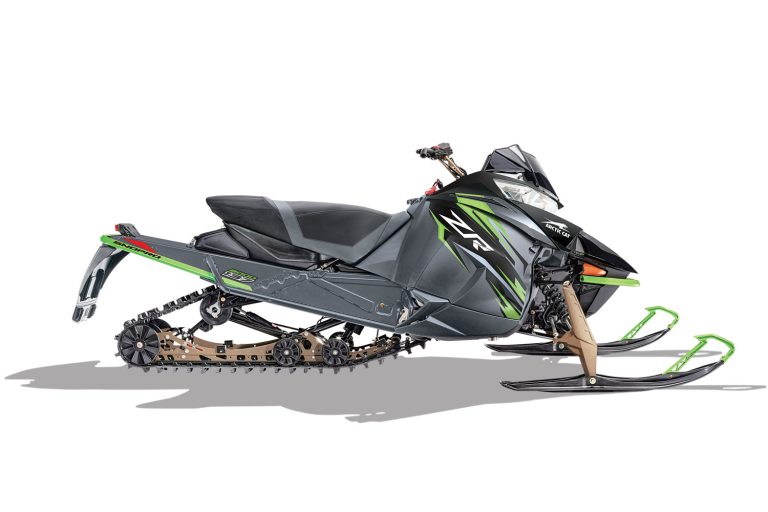
2020 ARCTIC CAT ZR 8000 SNO PRO

0

For years, the bread-and butter sled in the Arctic Cat line-up has been the Sno-Pro. This sled variation has been offered with 600 and 800 2-strokes and even some years with a 700cc or a 1049cc 4-stroke triple.

The idea behind the Sno-Pro seems to have always been that it’s a starting point for performance riders. Although its IFP gas shock package has been very good, more sophisticated dampers like FOX QS3s and Kashima coated high performance shocks have been reserved for the more expensive Cats like the RR and Limiteds.

As it is (or was) the Sno-Pro provided a lot of ideal trail riding features inherent with the ProCross chassis and was a versatile, fun ride for the masses. The 137-inch LTX version was especially appealing because of its excellent deep snow manners combined with its trail ability.

This year, it looks like Cat has re-targeted the Sno-Pro as a still-reasonably-priced sled but now one that offers some fairly serious high performance groomed trail capability.

Not only does the 2020 Sno-Pro offer the new ARS II front spindles and geometry but it has adopted the T-Cat and Limited’s lower ride height. The idea here is to lower the sled’s center of gravity and raise its roll center so handling is sharpened to a razor edge.

We can attest to this thinking after spending some hours on last year’s Yamaha SRX and ThunderCat. The idea is to maintain the same amount of travel but calibrate springs so the sled has more ride-in or sag at static position when the rider is seated. There’s also a change to the skid’s slide rail mount for the front arm. It’s now about an inch higher and the front arm sits much flatter at static.

The Thundercat and SRX relied on adjustable-on-the-fly 3-position damping to ensure no bottoming-out in the whoops, but the new Sno-Pro relies on dual rate springs and non-adjustable gas shocks to deliver a flatter, more stable trail riding stance in the corners.

Some of Cat’s marketing refers to the Sno-Pro’s ride as “firm”. This is actually a little misleading as the engineers have told us the shock damping and spring rates are pretty much the same as last year.

The actual spring rates and damping is somewhere between the former LX and the 2018 Sno-Pro except the springs now have the dual stage feature. For the last ten years sled-builders have been working to improve ride quality and offer consumers more and more plushness with more stable cornering. Cat’s intention is to deliver the best of both worlds.

Another clue the Sno-Pro is intended for high speed trail and ditch running is its one-inch deep track. This is definitely a departure as sleds in this class have always offered a minimum 1.25.

Here’s the contradiction: The Sno-Pro has a longer track – presumably for going off-trail – but has a shallow-lugged track which would appear to compromise off-trail performance. Hmm. Seems like a mix-up.

Here’s what we suspect is happening. Because Cat doesn’t offer an 850 (yet) there has probably been some pretty severe navel-gazing about horsepower and top end performance.

Cat has already shown us it has a new version of the 800 C-TEC for 2020 with new cylinders, pistons and rods – making arguably 165 horsepower.

Along with the suspension and track change, just like the T-Cat and SRX, it’s pretty much assured this 800 will pull as hard as the competition’s 850s at top end.

It’ll be up to the consumer to figure out how to get one of these monsters to hook up, though, and buyers will likely decide to stud-up that one-incher after a couple of pulls down Kevlar Lake with the track spinning past the C-note.

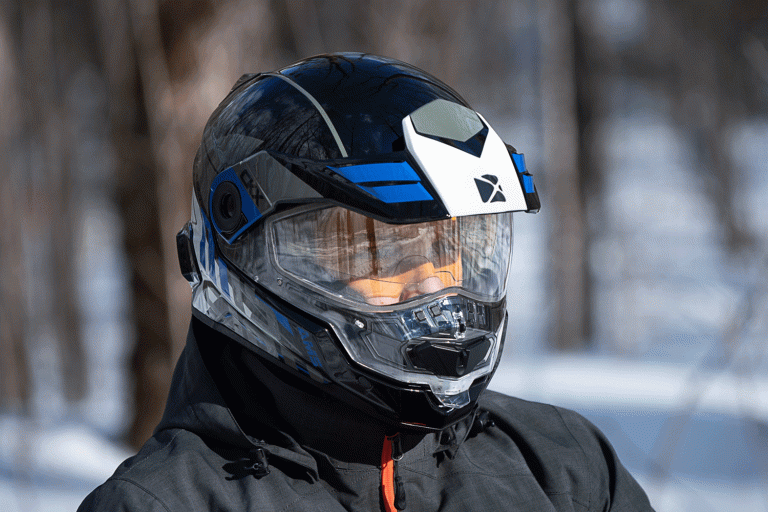
CKX TITAN Helmet Overview

0

AJ is in the shop detailing the features of the CKX TITAN Helmet which stood out to the editors of Supertrax Magazine as being truly unique and innovative.

Subscribe to our YouTube Channel!

SWITCHBACK 137 VERSUS INDY XC 137

There’s a burning question being asked thousands of times this spring as Polaris Snow Checkers prepare to lay down significant fresh on a 2020 Polarii.

It’s pretty obvious Polaris is heavy on choices in the 137 category. This whole paradigm became foggy when Polaris extended the new Indy XC 129 with rMotion quality Pro CC suspension by another 8 inches and launched the Indy XC 137 for 2020.

While the arrival of a 137 in the XC shock-in-skid AXYS chassis was a no brainer, it’s confounding the choice buyers must make between the Polaris Pro-XC external shock rear end on the familiar Switchback Pro S or the new Pro CC rear end on the Indy XC 137.

Okay, we’ll jump into the deep end here and make some proclamations.

The Pro S Switchback is at or near the top of best handling rides in MY 2020. The Pro S with a 137 rails the twisties. However, it is predisposed to on-trail action using its 137 incher out back to bridge moguls.

Conversely, the 137 Indy XC is an exceptional handler using the double coupling of the Pro CC to exit turns, power-on, and stay laser level. The Pro CC 137 is, officially the best riding rear suspension in the Polaris camp- hands down, running away!

Consider this as well. The XC Indy 137, while not our first choice for deep snow forays is as capable as Ski-Doo’s 137 Renegade when used off- trail with a 1.5 inch Cobra.

Consider this as well. You can order up either of these rides with 600 or 800 Cleanfire power or the new Patriot 850. Your call. The power options will have only a marginal affect on the inherent capabilities of these two similar but different chassis configurations.

Here’s a little known and little spoken advantage with the Pro S Switchback: If you ride minimal snow or icy surfaces regularly the Pro XC external shock skid cools better as a result of the rear snow-flap-mounted cooler taking advantage of every flake of cooling snow thrown-up by the track. On the other hand, the nod for ride quality conclusively goes to the Indy XC 137’s Pro CC skid.

For sure, the Indy XC, with its conventional closed tunnel, can haul touring gear with less fuss and in bigger quantities. While Polaris does have luggage specifically engineered to work with the Pro XC external shock system it can’t be considered as versatile as the Pro CC’s long, large tunnel that’s the perfect platform for mounting gear.

So there is our honest answer to a bunch of you who’ve been asking the burning question – which Polaris 137 is for me? Hope this helps.

NEW CKX MISSION HELMET

0

CKX, the makers of the widely popular Titan helmet, has expanded their line-up to include the new Mission full-face helmet. Key to its design is the (patent pending) AMS – Air Management System. Unlike the popular BV2S, the Mission helmet is a mask-less design that relies on rearward facing ducts to vent unwanted heat and moisture from the rider preventing fogging of the face shield. The face shield features two vent openings and its oversized design provides a panoramic field of vision, which in our experience is only matched by Ski-Doo’s new Oxygen helmet.

Top marks need to be awarded to the crystal clear clarity of the face shield. One might expect some distortion with such a wide view, but the optics is so good it seems like the face shield isn’t there. A retractable sun visor, which is activated by a lever located on the top left area of the helmet, also comes as a standard feature. The enduro inspired removable peak is adjustable to account for the suns location when wanting to cut additional glare and the sleek design does a great job at channeling air-flow when running down the lake or a long wide trail at high speed.

Another key attribute to the design of the Mission helmet is the enhanced noise reduction thanks to the cushioned ear pads. For those that want to reduce noise from the outside environment including the snowmobile the Mission helmet does an excellent job.

Available in a wide variety of colours, finishes and composite construction materials the Mission helmet retails in Canadian dollars between $549.99 – $749.99 for the non-heated double lens shield and $649.99 – $849 for an electric double lens.

For more information on mission helmet visit: ckxgear.info/mission/