Home Blog Page 94

ARCTIC CAT UNDERSTOOD

0

It’s no secret in the powersport media biz Arctic Cat has been taking it on the chin lately.

Multiple media entities in the powersports press – us included – have called out AC for stuff we don’t understand. Thankfully communication is flowing again from Arctic Cat and the news is good.

PRODUCT IS KING

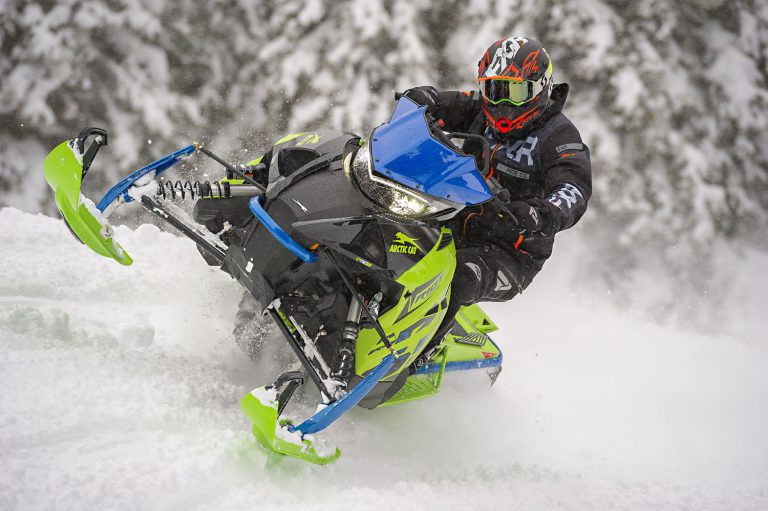
Let’s have another look at what Arctic Cat is doing in terms of product. First, the company unveiled one of the best new 50/50 X-over rides at last spring’s Snow Shoot event in West Yellowstone. The new Riot and Riot X got our crew of less-than-easy-to-convince Test Riders genuinely fired up.

The two versions of the Riot use a variety of Arctic Cat M-components – melding them together to form a potent, next-generation trail slaying / deep snow / boondocking ride. The two Riot models compliment the new Alpha single rail suspended M sleds (which appear to be replacing all previous non-Alpha models) with dual rail, deep snow skids.

The Riot is more trail targeted and the X more off trail targeted. The Riot twins are worthy competitors in the hotly contested crossover/boondocking category.

PERFORMANCE AND RELIABILITY

In the engine department, Arctic Cat has received repeated kudos from our team for the C-TEC 2 DSI (Dual Stage Injection) 600 and 800cc mills. These engines are among the cleanest running, most fuel efficient and powerful motors in the biz. We have continually knighted the 600 DSI as our fave 600 class mill as a result of its eager response and formidable top-end wail down Kevlar Lake. 

The 2020 version of the 800 receives new cylinders for 2020, and new pistons with the slot removed. New cylinder castings place the fuel injectors (one per cylinder) inside the transfer ports, very similar to a semi-direct setup. Even though the market is obsessed with 850’s the updated 800 C-TEC2 is a strong player in the top performance segment. A hallmark of both the DSI 600 and last year’s 800 continues to be drop-dead reliability.

GAME CHANGER

Big news comes in the form of the most significant improvement in Pro Cross handling since the platform’s intro. New spindles with new orientation in relation to the bulkhead provide the most turn-in and forward bite we’ve experienced on any Pro Cross model.

Gone is the chassis’ previous predisposition to shove its nose through the center of the turn and under steer past the apex. Turn-in is now strong, immediate and most importantly, reliably predictable through the entire corner. Part of the re-jiggering of the chassis includes moving the front arm’s mounting point lower in the tunnel.

PASSION AND PEOPLE

There’s a reason why Arctic Cat has stuff the faithful will appreciate for 2020. People. Many of the same people who have innovated, developed and raced Arctic Cat snowmobiles for years are still doing just that.

Of note is Engineering lead Brian Dick. Aside from being one of the nicest, most approachable guys in the industry, Brian leads a team which has their fingerprints all over Arctic Cat’s 2020 product.

Clearly there’s a renewed spirit of team work in TRF and it goes from the top of the Engineering department to a Crew of committed, hardcore snowmobile enthusiast’s who just happen to be engineers.

MORE TO COME?

Moving forward – not backward – there’s strong rumors Arctic Cat has some impressive new stuff close to introduction – including what’s rumored to be game changing technology in a new target market. Sounds good and you can be sure we’ll be there to learn all about it when it’s ready to release.

Yamaha’s 2-Stroke Transporter 600 Overview & Impressions

0

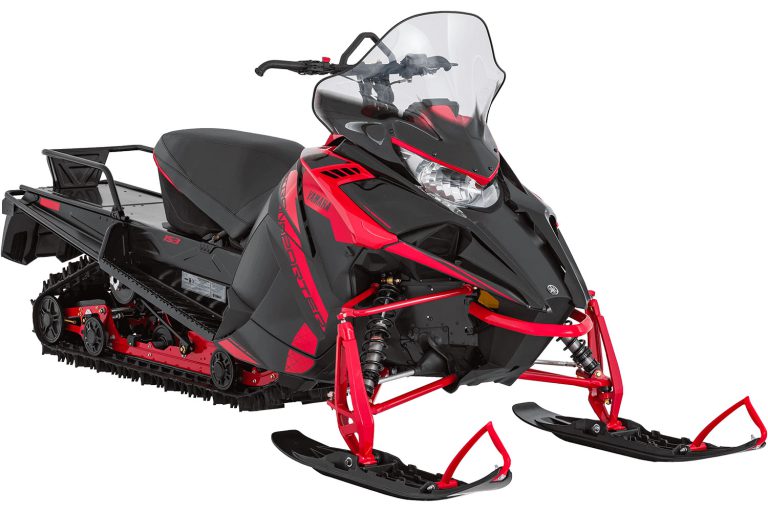
Luke got a chance to get up close and personal with Yamaha’s 2020 Transporter 600 in the Yamaha booth at Hay Days this year to get a fresh look at its only 2-stroke offering the entire Yamaha snowmobiles lineup.

Subscribe to our YouTube Channel!

OBVIOUS MARKET TRENDS

0

We were talking about industry trends the other day and this thought came up: If the years from 2000 to 2010 were all about EPA compliance, then this decade – 2011 to 2020 – is all about versatility!

If you go back 15 or 20 years, you’ll recall the snowmobile biz was in a state of panic about the new EPA regulations that many suspected could be the end of the 2-stroke engine and the possibility we could all be riding electric sleds in a few years.

As we now know, none of this happened and groundbreaking engine technology enabled 2-strokes to be as pollution-free as 4-strokes. The upside was that both 2-stroke and 4-stroke performance got better than before and the new, cleaner, more efficient powerplants have established the business for at least another couple of decades!

The last decade (2011-2020) has ushered in the age of versatility. Complete sled categories have been created, then revised so a buyer is able to do multiple things with one purchase.

For instance, if you look at crossover sleds, they’ve become extremely capable as semi-mountain climbers – certainly great in flatland powder – but even closer than ever to pure mountain rides. Naturally, new suspension developments have kept them capable as trail sleds, too.

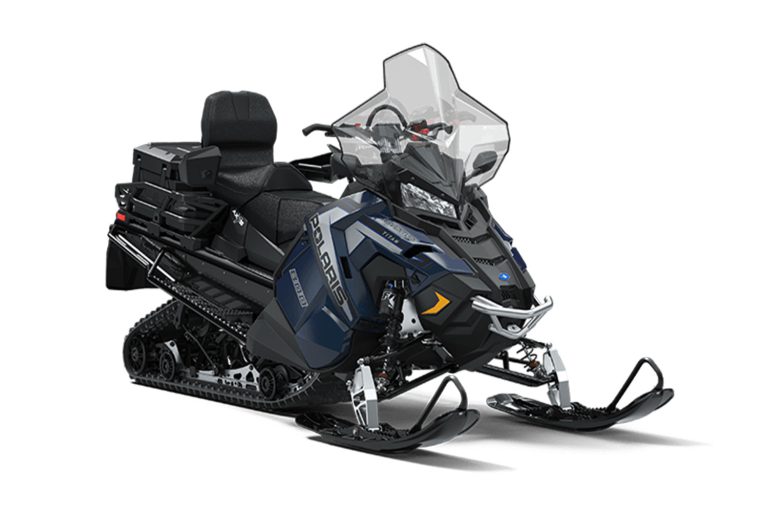
Sleds like the Titan and Expedition Extreme show off the versatility of hugely wide and long tracked sleds initially designed for utility use, still being great trail sleds.

Ten years ago, every OEM offered 2-uppers as a distinct category with a whole list of engine sizes and track lengths to satisfy this specialized multi-passenger market.

Today the 2-up Touring sled is quickly becoming a sled you can mechanically convert from a 2-passenger sled into a sport sled with, guess what (?) – a long track for going off-trail if you want!

It looks like today’s snowmobile consumers are looking for one-stop shopping and want sleds that can pretty much do it all. We’re waiting to see what the hallmark trend will be for the next ten years.

Arctiva introduces the Layering System

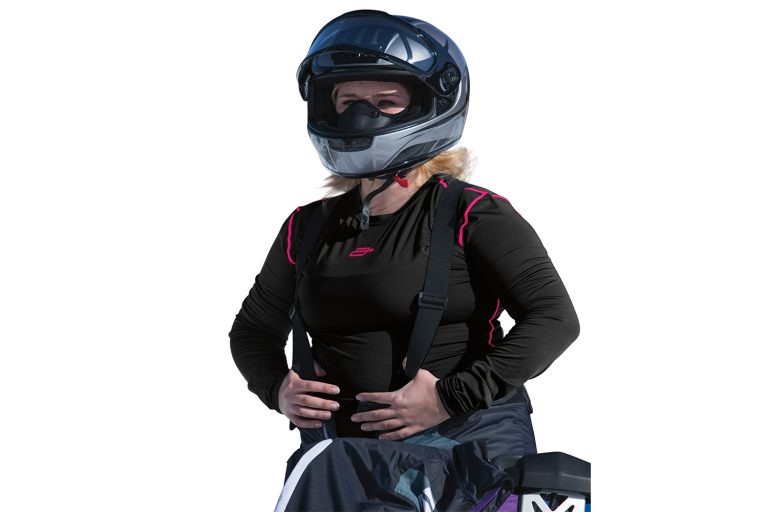
Janesville, Wisconsin – October 4, 2019 – The all new Arctiva layering system is one of the most important things a rider can wear to stay not only warm but dry. Offering a full line up of layering products, Arctiva has everything from your base layer all the way up to your heavier insulators. The Evaporator shirt and pant are designed to be your wicking base layer. It is constructed of a light-weight, extremely breathable, polyester material which helps keep the moisture away. The Regulator is the next step in the layering system. This mid-weight jersey insulation is made from a unique blend of polyester and spandex which results in an extremely soft touch. The warmest layering line is the Insulator shirt and pant. This again is considered a mid-weight but is constructed from a blend of micro polyester and spandex. Arctiva also offers two uniquely styled layering jackets, the Mech mid-layer and the Softshell jacket. Both of these can be worn with any of the mentioned layering kits to provide the ultimate protection against cold weather. Arctiva layering is offered in men’s and women’s. Prices for each piece varies, visit www.arctiva.com for more information.

Arctiva is dedicated to sport of snowmobiling. Countless hours are spent researching and designing performance outerwear and layering garments specifically for the power sports enthusiast. For more information visit us at www.arctiva.com. You can also follow us on Instagram @arctivagear and the @OfficalArctiva Facebook page.

2020 Polaris TITAN Adventure Overview & Impressions

0

Luke gets his chance to get up close and personal with the 2020 Polaris TITAN Adventure to show you all the details.

Subscribe to our YouTube Channel!

DIGITAL CYLINDER HEAD BREAKTHROUGH

0

From the first day there were 4-strokes in the snowmobile business, naysayers have used the same argument: “They’re too heavy”!

It’s true, 4-strokes have had a distinct weight disadvantage compared to 2-strokes but there have been other endearing factors for snowmobilers, not the least of which is the incredible power output you can gain by turbocharging them. Until now everyone has pretty much believed it was a problem that would never be solved.

There’s been a recent technology breakthrough, however, that may go a long way to changing the rules when it comes to the 4-stroke weight argument.

Engineers in Britain and Europe have developed a new 4-stroke cylinder head that is lighter and more compact than what current overhead valve and overhead cam engines use. Look it up online under “Freevalve” or “CamCon”.

The technology is referred to as Intelligent Valve Actuation and it eliminates the need for a timing belt or chain and associated pulleys or gears.

The deck height of an IVA engine is considerably lower because there’s no longer need for valve lifters or valve springs and no longitudinal camshaft sits atop the cylinder head.

Also, because the above-mentioned drive gear for a cam is gone, the engine is shorter.

Instead of the above valve and drive paraphernalia, there’s an electronic module sitting where a conventional cylinder head would be. Inside, all the valve timing is digitally controlled (there are still valves controlled by individual tiny cams for each cylinder in the module) and each cylinder can control valve “moments” separately.

The result is better fuel efficiency, up to 30-percent lower emissions and – wait for it – more power and torque.

The best news for snowmobilers is a significant weight reduction – 30 to 40 lbs. (15-20 kg) in a conventional 2000cc 4-cylinder engine. We’re thinking a 900 or 1000cc 4-stroke triple could come in about 20-lbs lighter.

This would definitely put a 4-stroke much closer to a same-displacement 2-stroke weight-wise and maybe change a lot of thinking in the business.

The inventors are still working with details and testing but the prospects are extremely strong this tech will appear on automobiles in the near future. Oh, and BTW, IVA works really well with turbocharging.

MBRP Aftermarket Snowmobile Exhaust Overview

0

Luke pays a visit to the MBRP booth at Hay Days this season to check out the latest exhausts available for your sled this year.

Subscribe to our YouTube Channel!

2020 FXR Pro Fish Clothing Line Overview

0

AJ pays a visit to our friends at FXR Racing to have a look at an all-new PRO FISH lineup of clothing launching this year.

Subscribe to our YouTube Channel!

Dave McClure’s Fully customized 220 Horsepower Alpha 1

0

Luke met up with Arctic Cat’s Factory Sponsored Rider, Dave McClure at the Fox Shocks booth at Hay Days this year to learn all about his new fully customized Speedwerx Alpha One sled that Dave feels puts out between 210 and 220 horsepower.

Subscribe to our YouTube Channel!

PLANNING YOUR SNOWMOBILE TOUR

0

I’ve been a touring rider for a long time, typically racking up more than 6,000 miles a season visiting a multitude of destinations. By trial and error, I’ve learned a lot about planning a trip and here are some of my best tips…

Snowmobile touring is not the same as spending time on your local trails with family and friends or even going on a long day ride with your buds. Snowmobile touring typically involves visiting a distant and unfamiliar destination, saddlebagging it from location to location over multiple days. At its best, snowmobile touring can be an incredible experience. At its worst, it can be a living hell. And good planning can be the difference.

PLANNING APPROACHES

I’ve found two approaches to planning. One, is to pick a destination and then make whatever plans are necessary to do a successful tour there. This works best for experienced touring riders. Two, is to determine first how many days you are able to ride and when, and then pick a destination that fits your availability. Frankly, number two is a better choice for most snowmobilers because you control your planning according to what best suits your schedule. Whereas a locked-in destination tends to control your planning and may limit your scheduling flexibility.

GET THE TIMING RIGHT

So I’m going with approach number two for this article. I advise getting started early with your planning, preferably well before Christmas. The first question to answer is: How much time do you have and when do you have it? Your destination choices are very different for a four-day weekend or a ten-day vacation.

The “when” is also important, because many destinations deliver their most reliable riding conditions in February (also tends to be the most crowded), while others are at their prime in March. Meanwhile, January tends to be more of a crapshoot for early conditions and definitely can be the coldest riding month.

Whichever time I choose, my preference is to build in an extra day if possible. This allows for an unexpected layover due to a winter storm, sled breakdown or simply to do some extra exploring of a particularly appealing place.

COMPANIONS MAKE IT OR BREAK IT

The second question to answer is: Who is going? The planning for your snowmobile tour varies considerably depending on whether it’s a family, couples’ or a guys’ ride. Also, what everyone’s expectations are and how experienced each rider is with touring. Remember, what your ride group is able to do will be determined to a large extent by the limited capability of any snowmobiler with less experience or ability.

So the “who is going” answer plays a major role in deciding how far to trailer to a destination, daily ride distances, number of pit stops each day, style of accommodations and the overall compatibility of participants. Deciding the “who” before Christmas makes it easier to complete all of your other planning.

Whatever your choice of riding companions, I recommend an absolute maximum of eight sleds. Four to six is more ideal, with an even number of riders for room sharing. Anything more than eight sleds presents extra logistical issues, such as longer to gas up every time, to get served at restaurants, and to get everyone started in the morning and after every stop.

If you have too many participants or riders with varying riding abilities, don’t count on riding as far each day. This may affect your destination decision and certainly your daily routing.

INSIST ON RELIABLE MACHINERY

There’s another huge determinant in deciding who’s going: Is each rider’s sled capable of doing the tour? As much as every sled may be able to complete local rides at home, a snowmobile on tour has to be in good enough condition to make the entire trip without incident.

Certainly there’s no guarantee even with new sleds, but why take the chance of all your best laid plans going down the dumper because someone’s sled is too old, always requires tinkering after each day’s ride, or is simply not well enough maintained? Another consideration is that even if a sled is in great shape, is it capable of keeping up with the others?

Along the same lines, you also want to ensure that towing and trailering won’t be a problem for any participants. So before confirming riders, verify there’s enough equipment in good working order for everyone to share the driving there and back safely and on time. Also, make sure each rider has the legalities in order well in advance, such as any necessary trail permits, sled and vehicle registration or insurance papers, and passports if required.

PICK A SUITABLE DESTINATION

Note that up until this point, you’ve decided how long, when and who, but not where. So why not make your destination a group choice? But don’t be lured into choosing one just because a rider really pushes to go there or everyone’s heard how popular it is. Instead, pick one that takes as little time as possible to drive to, offers a good staging location, has enough different trails and towns for the number of days you want to ride, and that has sufficient amenities and services available on route to satisfy everyone in your riding group.

So for example, a hardcore riding crew might choose a more remote region with greater distances between occasional towns. They might also be more willing to trailer many more hours to get there.

Meanwhile, a couples’ group might lean toward a more populated area that’s closer with numerous trailside towns and more choices for eating, accommodations and nightlife. Both are great choices if they fit your schedule and group expectations.

In either case, it’s important to select a destination that is more likely to have good snow and trail conditions during the time you’ve chosen to visit. But given the variable winters we’ve had recently, the destination decision may not be able to get finalized until early January. By this time, it’s more likely you’ll have better information available about how the winter’s shaping up in various regions to assist you with deciding where to go.

HEDGE YOUR DESTINATION BETS

Today, my inclination is to narrow the destinations down to three possibilities prior to Christmas, and then choose one and a back-up in early January. With my primary choice, I’d plan my staging location, tour route and book snowmobile friendly places to stay from those who advertise on trail maps and in snowmobile magazines.

I always reserve my lodgings ahead. This not only ensures I have a place for all of my group to stay, but also that it’s my first choice, with safe sled parking, on-site restaurant, fuel nearby and direct trail access.

For my back up location, I’d do all of the above except book the lodgings, so it’s ready to go if I need to make a switch closer to the planned start date. If you do have to make changes, please have the courtesy to cancel any previously booked accommodations right away.

Hopefully, the tips and advice in this article will help you plan a successful tour. But I’ve only been able to skim the surface with the space available, and so haven’t said enough about such considerations as actual route planning, choosing a staging location and nightly lodging, what to bring on tour or how to handle emergencies. But I guess that’s good fodder for future articles!