Home Blog Page 76

OFF-TRAIL RIDING IS NOT GOING AWAY!

0

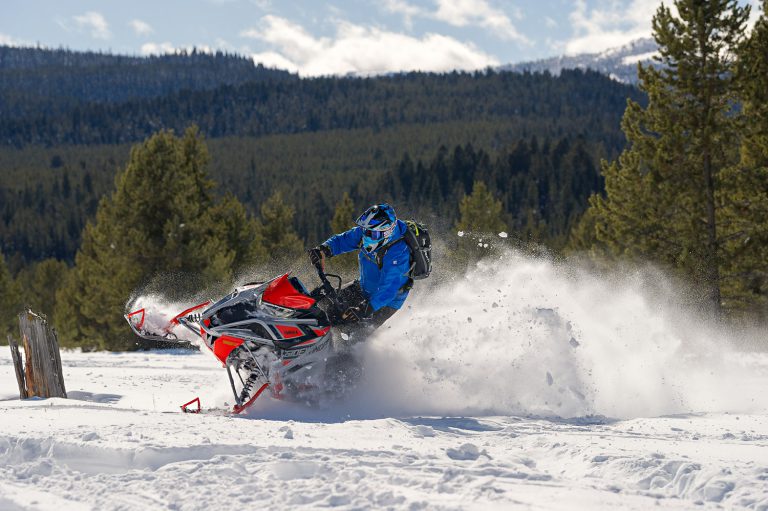
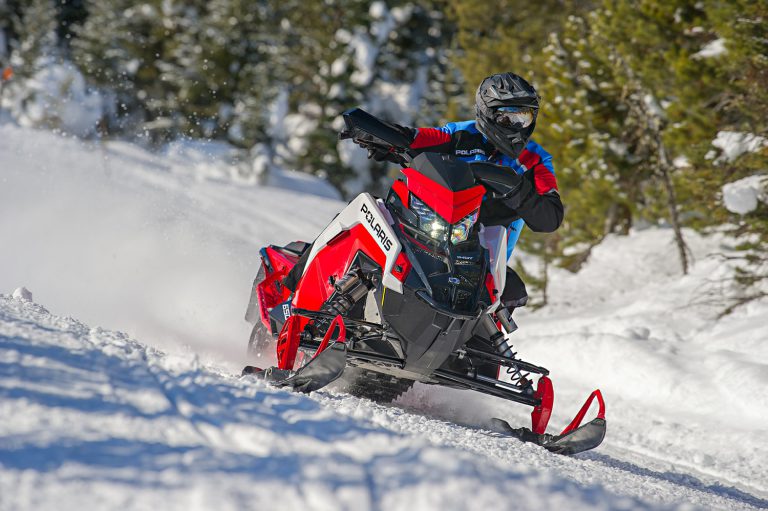
Since the early part of this decade, interest in and activity surrounding off-trail riding has been growing. That isn’t exactly true – it’s been exploding.

There’s no way you can deny this statement: The sale of longer track sleds that have morphed into purpose-built freerider sleds is the most significant shift the industry has seen since the intro of “wannabe” Sno-X sleds.

These extreme off-trail sleds have borrowed their DNA from pure vertical rides. The resemblance of most crossover, freerider snowmobiles to mountain rippers is not coincidental or unintentional. It is deliberate. The image of full-on mountain sleds tearing up fresh, unlimited pow at huge altitudes is at the core of the current X-over wave of popularity.

The percentage of new people entering our sport right now is in the low single digits. Most sales of snowmobiles come from a) brand-loyal owners upgrading and replacing their rides or b) brand switchers moving from one of the four brands. However, the highest percentile of current buyers are not looking to buy a single purpose trail sled – as would have been the case a dozen years ago.

The emails and social media comments we receive here clearly indicate the intended use for a new snowmobile is overwhelmingly directed at freeriding on flatland deep snow. Thus, most of the OEMs have more than one offering in this category.

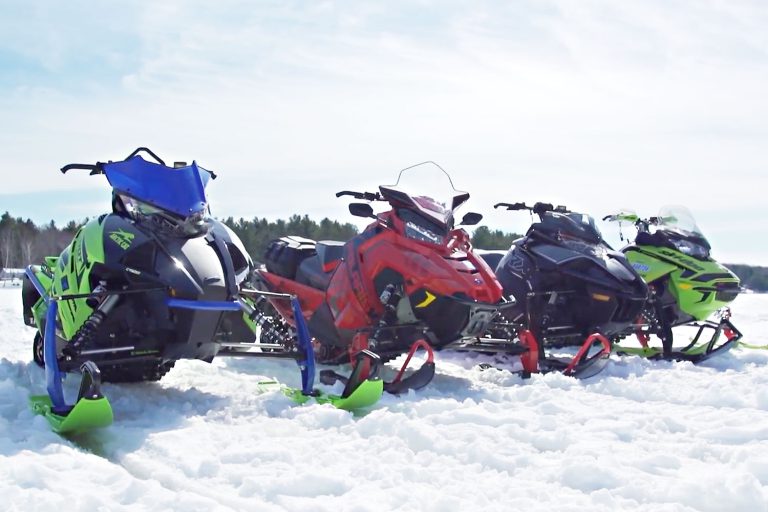
Now there are trail-biased off-trail sleds and off-trail biased on-trail sleds. Take your pick. There’s even a growing contingent of pure trail sleds with 137-inch rails.

Clearly, there’s a profound move toward off-trail snowmobiling going on in primarily on-trail regions of the North American snowbelt.

This leads me to my most recent thoughts. We’ve been crowing here for over five years there are inherent problems with this unbridled, unregulated activity.

The problem is easy to describe. Snowmobile trails are located mostly on private land in the central and eastern half of the North American continent. Usually, access to these trails is granted by those landowners for winter-season use only.

The over-arching condition for permission to use them is deeply rooted in users (that’s all of us) staying on the prescribed, signed and groomed trail.

Forays off the groomed trail into deep, untramped snow are frowned upon in a serious way. In fact, you cannot find a North American snowmobile club that has not had landowner trouble resulting in trails being lost due to off-trail riding. Frankly, this behavior is rampant. More importantly, why wouldn’t it be?

With the OEMs selling more sleds built to perform in deep snow every year, this situation was guaranteed to occur. The problem is this: The buyers and resultant users of off-trail-biased flatland, deep-snow sleds should not be vilified.

They have bought into a hugely marketed, ultra glorified snowmobile genre and have done what the OEMs precisely intended – taken their new sleds off- trail and had an amazing experience.

It’s as simple as one plus one. No one should be surprised freeriding’s growth has caused mayhem for North America’s snowmobile clubs. I don’t want to say “told you so” but we’ve been expecting exactly what has happened – and there’s more to come.

Unfortunately, the effects of this explosion of freeriding comes home to roost in the backyard of our mostly volunteer-run snowmobile clubs. I’m overwhelmed how often I’ve been button-holed by angry club volunteers complaining about the negative effects of freeriding’s increase. I sympathize with these people, however, I regularly remind them this is not going away.

Here’s the bottom line: A long overdue conversation between the OEMs, state and provincial snowmobile sanctioning bodies as well as the media should occur immediately. There are ideas on the table that if not acted on and implemented will see the loss of more trails. Without discussion and some action, the popularity of our sport is at risk.

Sound too serious? Time to wake up and smell the coffee.

Snowmobiling in Eeyou Istchee Baie-James Quebec

0

Luke heads to Quebec’s winter playground, Eeyou Istchee Baie-James to take advantage of the abundance of snow, over 1,100 km (680 miles) of well-groomed trails, limitless landscapes along with an amazing diversity of culture and wildlife!

Subscribe to our YouTube Channel!

Ski Doo Renegade 850 XRS Fully Jammed With LinQ Accessories!

0

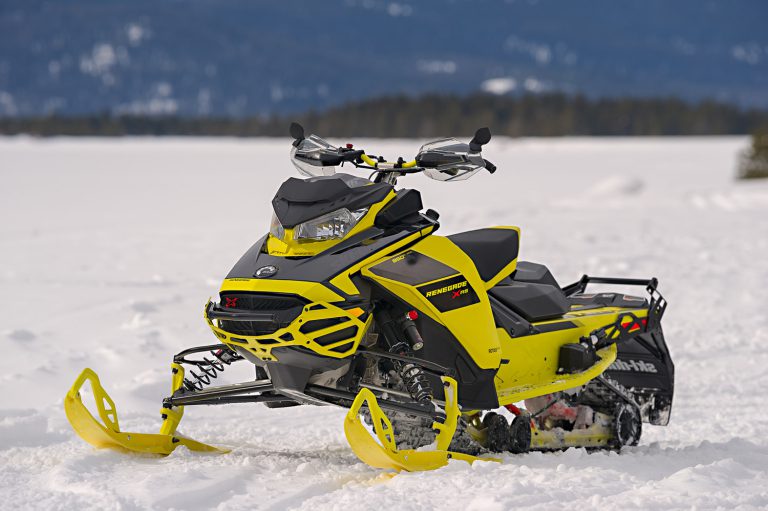
AJ turns his attention to creating the perfect multi-purpose two-up touring sled as he transforms our Ski-Doo Renegade X-RS into a family rocket by adding some quality Ski-Doo accessories such as the LinQ 1+1 Seat system, adjustable windshield and the adventure tunnel bag.

Subscribe to our YouTube Channel!

Full Review of Yamaha’s 2020 SideWinder XTX LE Turbo

0

Luke sets out to rediscover Yamaha’s Sidewinder XT-X LE with its new ARCS Front Suspension, Gen2 body work and narrower ski stance. Powered by the 998 Genesis Turbo High-Performance Engine the Sidewinder XT-X is the most powerful crossover sled on the snow.

Subscribe to our YouTube Channel!

FXR Heated Recon Gloves

0

February has arrived and the mercury will be hitting its lowest levels in snowmobile country. On those long, frigid trail rides few things are worse than uncomfortably and even painfully cold hands and fingers.

If this scenario sounds familiar, you’ll be thrilled to know the winter clothing geniuses at FXR have the perfect solution with these amazing heated gloves.

Features include:

Thinsulate® 300g back of hand/200g palm and forchettes
* 3 Stage thermal heat setting controlled by exterior gauntlet easy control button
* Heat element tracks around each finger on the backside of glove providing up to 5 Hours of heat (battery life depends on power setting and conditions)
* Durable nylon laminated shell construction
* Reinforced full grain leather palm and thumb waterproof breathable Hipora® membrane liner
* Polar fleece lining
* Wrist strap adjuster with shockcord adjustable storm cuff
* Aggressive pre-curved finger design for precision fit and dexterity
* High visibility 3m™ Scotchlite™ flat reflective
* Rechargeable 7.4V lithium polymer batteries and North American wall charger included
* Replacement batteries and chargers available

Visit fxrracing.com

SNOWTRAX TV 2020 – Episode 6 Sneak Peek

0

Coming up on the next episode of SNOWTRAX TV…

Motorhead Mark hits the trails aboard Ski-Doo’s 900 ACE Turbocharged 2020 Renegade Enduro reviewing Ski-Doo’s answer to the increasingly popular Adventure Touring segment.

Then AJ’s in the TRAIL TECH shop with Jared Heshka installing at two new exhausts from MBRP’s Quiet Series designed for the Polaris Patriot 850 and Ski-Doo E-TEC 850 & 600R power plants. These new decibel legal mufflers will change the way you look at aftermarket exhausts.

AJ then turns his attention in the TRAIL TECH SHOP and takes a closer look at the wide range of products IPONE offers across every category of Powersport recreation.

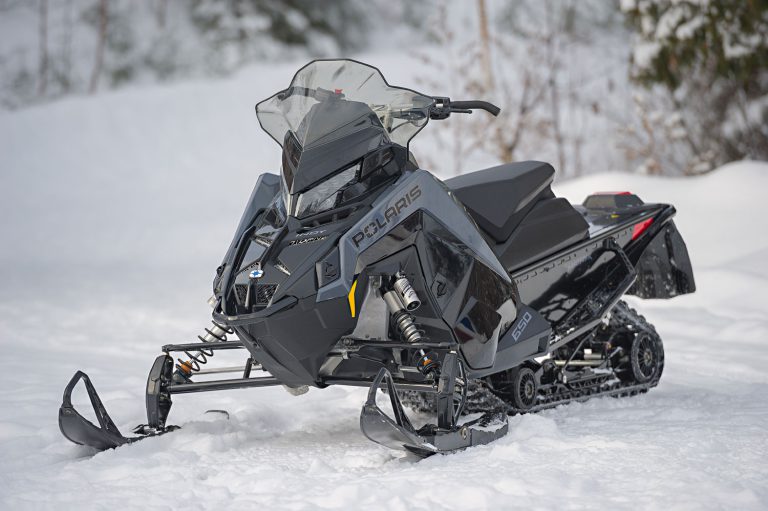
In TEST RIDE, Luke takes full advantage of this sleds mogul bashing prowess and tapes the throttle to the bars and see just what the race-inspired, 850 Patriot-powered 2020 Polaris Indy XCR is capable of.

BACK IN THE 700 ERA

0

It’s been a long time, but some of the most noteworthy and pure fun sleds ever built were offered in the late 1990s and early 2000s.

I’m talking about the 700 class and how good those sleds were. The top performers in that era were: Yamaha’s 700cc triple piped triple SRX, Arctic Cat’s Firecat 700 twin, Ski-Doo’s MX-Z 700 twin and Polaris Liberty 700 twin.

Yamaha 700 SRX

This sled was a rocket and still holds an aura of awe whenever it’s mentioned.

This SRX 2-stroke triple was mostly built for flat-out speed and groomed trail riding. Its suspension was okay but not great and it’s equal length trailing arm front end handled decently but not good enough to inspire sonnets.

However, tap the loud handle out on a lake and this sled just evaporated! That triple piped 3-cylinder could scream and many of us still wake up in the middle of the night hearing that wail in our memory banks.

Painted a candy apple blue metallic and with unmistakable styling, this sled had Yamaha quality written all over it – and delivered the kind of thrills it advertised.

It was nicknamed “devil in a blue dress” and still generates goose bumps just remembering it!

Arctic Cat Firecat 700

The Firecat was a mysterious enigma. No one ever figured out why this twin was so fast – it just was! Rather unconventionally, it had the intake and exhaust on the same side of the engine. Its “laydown” configuration wasn’t supposed to work, but did it ever!

We recall talking to Greg Spalding, one of Cat’s powerplant engineers at the time, and he told us the engine started out as kind of an experiment – and that experiment surprised everyone how well it worked.

Arctic Cat legend and early Cat engineer, Roger Skime told us, “Sometimes an engine is just perfect for its displacement. Add another 50ccs and it isn’t as good, take away 100ccs and make it into a 600 and it doesn’t deliver what you want in that category.”

Obviously, the Firecat 700 found a sweet spot and consistently ran with sleds in the 800 class.

Oh, and by the way, the Firecat 600 laydown twin variation was stupid fast, too.

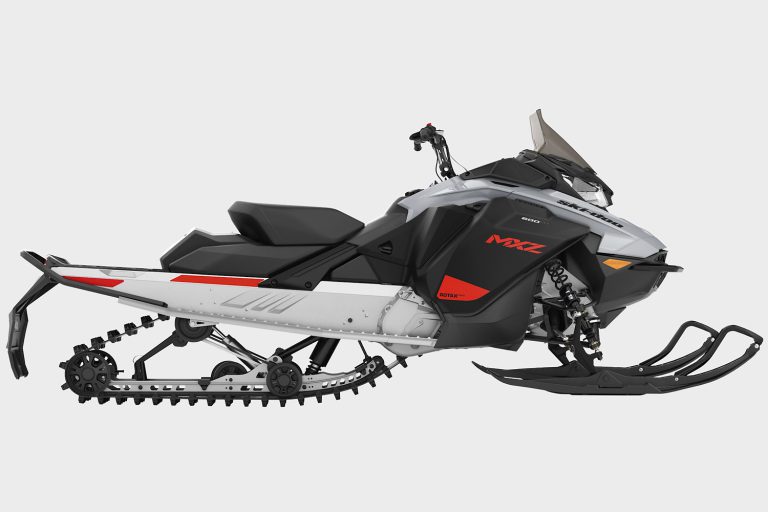
Ski-Doo MXZ 700

This 700 reed-valved twin with RAVE, vacuum-actuated exhaust valves was one of the most pleasant engines on Ski-Doo’s menu in the late 1990s.

The ZX sit-down chassis was ideal for this engine and the combo of a big-displacement (for that era), single piped twin and the easy pull-over when starting a 700 was an incredibly good combo.

Although this engine did not perform quite as strongly as the other two noted here, it was still formidable and delivered the kind of everyday strong performance trail riders loved.

As we think back, we actually liked this engine in the ZX platform much more than the 800 twin offered in that period and some of the big-inch triples Ski-Doo made in the scary CK chassis.

This 700 felt light and nimble and its throttle response was velvet smooth – somewhat due to its TRA clutches – and made it a pleasant – and very competitive big-inch trail sled at the time.

Polaris 700 Liberty Twin

This was another of those “just right” displacement-slash-bore and stroke wonders that was more than the sum of its parts.

This engine debuted in the first EDGE chassis trail sleds and was a cannon on the lakes and a formidable ride on any trail. Power was smooth, economy (for the day) was tolerable and its low-end squeeze was imposing.

To say it non-scientifically, the 700 Liberty simply ran really nice. Strangely, when Polaris brought out the Edge with the new (at that time) Liberty 800 it just wasn’t as good.

It looks like 700 cubes was a magic number – so maybe the OEMs should try another slate of 700s?

RIDING NORTHERN MAINE

0

I’ve never snowmobiled down a trail with stone markers in the middle. But I’m a law-abiding guy.

So I as we rode on that Border Trail between Maine and New Brunswick, I had visions of being pounced on by both U.S. and Canadian Customs & Immigration officers waiting in the woods.

That’s because Maine’s Trail 81, the “Border Trail”, travels through the forest directly along the International boundary between our two nations.

If you’re heading north, you’re mostly on the Canadian side of these three-foot high border markers, but you’re on the American side when travelling south. Fortunately, other than a few cameras, no one was lurking in the trees to stop us.

BANNER SNOW

Just as well, because last winter, snowmobilers flocked to Aroostook County Maine thanks to more than 12 feet of snow that fell – and stayed – from November to April. Our Supertrax crew heard rumours in January that this popular snowmobile New England destination was already on track for a banner season, so we planned a visit in March to enjoy their long riding season for ourselves. We certainly weren’t disappointed!

ABOUT AROOSTOOK

Aroostook County sits on top of Maine like its crown jewel of winter, thrusting up into Canada and bordered by Quebec to the north and west, and New Brunswick to the east. As such, Aroostook is the northern most county in the contiguous United States east of the Great Lakes. It also boasts the largest county landmass east of the Mississippi River.

This northerly positioning, enhanced by the Appalachian Mountain range, makes Aroostook a reliable and bountiful snow maker – and a snow magnet for riders from across New England and beyond. In Aroostook County they discover 2,300 miles of highly ranked, groomed trails, so there’s plenty for visiting sledders to enjoy here.

RIDING THE COUNTY

A quick review of Northern Maine Snowmobile Trails, a map produced by the Aroostook Chamber of Commerce, shows that an Interconnected Trail System anchors their network (as it does throughout the Maine Snowmobile Association sytsem.

Wanting to be in the centre of this action, we checked into the Caribou Inn & Convention Centre. Located in the Town of Caribou on the eastside of Aroostook County, this snowmobile-friendly hotel is well positioned for staging day ride loops in every direction.

For example, we snowmobiled south one day for 135 miles through Fort Fairfield, Presque Isle and Mapleton. Another 145-mile loop took us north via Limestone, Van Buren and Madawaska (don’t miss the lookout at the north end of Long Lake), while on a third day we got a late start and cruised west for 115 miles through Washburn, Ashford and Portage.

I should note that our relatively modest daily distances were due to time taken to explore, sight-see and take photos, not to any trail deficiencies. In fact, with regular grooming and no snowmobile trail speed limits in Maine, it’s easy to set a pace that really eats up the miles – as long as your speed remains reasonable for conditions and doesn’t endanger others.

GETTING AROUND

Besides, visitors to The County need to take their time at intersections to ensure they stay on their intended trail, not blow through hoping for the best. In my preparation for riding there, I’d heard that the trail signage was somewhat old fashioned and might not be up to snuff for inspiring confident visitor navigation.

So I was pleasantly surprised to see sufficient trail number signs, but quickly learned to check them carefully at intersections to check for small print directions.

AROOSTOOK SERVICES

Meanwhile, the Aroostook County trails are well served with fuel stops, hearty restaurants and rustic lodges catering to snowmobilers. Many of them are marked on The County trail map and also appear on the back as advertisers, making it easy for visitors to plan their rides.

There’s also a “Quick Travel Reference” chart showing approximate mileages between various county destinations, but like me, I bet most visiting riders would appreciate a map face that showed actual distances for every trail.

During our stay in Aroostook, we met avid snowmobiler and county sledding ambassador Gary Marquis, who issues the popular Aroostook County Trail Report. It’s a timely and valuable resource for visiting riders that details latest trail conditions and grooming reports in the region.

Whatever your choice, you’ll discover that Aroostook County offers a massive snowmobiling playground each winter with an exciting variety of terrain and a welcoming “down-home” feel. Best of all, with oodles of snow and its well-developed network of snowmobile trails, The County typically delivers top notch riding from as early as December to as late as early April.

So do yourself a favour and add Northern Maine to your sledding bucket list of new destinations to discover!

WHERE WE STAYED

* Caribou Inn & Convention Centre

MORE INFORMATION

* Maine Tourism

* Aroostook County Tourism (includes sled registration info)

* Aroostook Snowmobile Trail Report

* Maine Snowmobile Association

Full Speed 550 Indy EVO Evolution Kit Install

0

Then AJ turns his attention to EVOlutionizing our Indy EVO to keep up with the growth spurt of our junior sled-head. With the purchase of the EVOLUTION kit from Polaris your mid size Indy EVO can be easily transformed to a larger full-speed 550 Indy.

Subscribe to our YouTube Channel!

2020 Ski Doo Backcountry XRS Touring Conversion

0

AJ drags the 2020 Backcountry Xrs into the TRAIL TECH shop to make it a little bit more family friendly while preserving its macho appeal with the addition of some key accessories from Kimpex. Key to its multi-use transformation is the popular Seat Jack from Kimpex which includes heated hand grips, adjustable backrest and an RCA outlet which can accommodate the passenger rider’s heated helmet shield.

Further adding to its trail-ability, AJ installs a set of Kimpex RUSH style skis along with Kimpex Rouski Gen3 retractable ski wheels which make steering easy while at the same time protecting your skis and carbide runners from premature wear. Rounding out the transformation are some additional accessories to aid with visibility and comfort along with a review of the CKX Mission helmet with all new AMS technology.

Subscribe to our YouTube Channel!