Home Blog Page 354

World’s Fastest Snowmobile

Press Release –

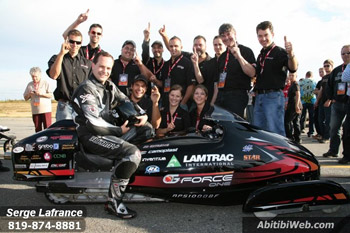
Team “Lamtrac G-force” shattered the world snowmobile land speed record a few weeks ago with just a single 1000cc engine.

Unable to convince Bonneville Salt Flats authorities to participate in one of their speed events with their snowmobile this past fall, but not giving up they attempted to break the record in Quebec.

September 27th marked a new world record at the international airport in Val-D’or. At the very first attempt, driver Francis Morin directed the G-Force-One down the strip and across the markers to achieve a clock reading of 210.28 mph, 338 kph.

ISR (International Snowmobile Racing) and SCM (Super Compétition Motorisée ) officials were present to confirm the speed record with the chronometer and land markers at mid track.

They also assisted in the removal of the head of the engine to confirm that is was in fact a 1000cc engine.

The main goal of “Lamtrac G-force” is to still participate at the Bonneville speed trials next fall, but with the goal to attain and hold a constant speed of 200 mph down the salt flats.

We will keep you posted with more details and photos of the G-force-One.

ARCTIVA Rolling Gear Bag

0

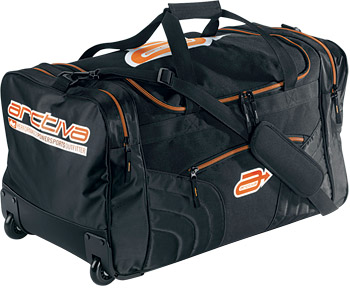
Arctiva’s durable and stylish rolling gear bag is made of tough 1000-denier nylon and provides an impressive 6,100 cubic inches of storage capacity.

The bag features a large zippered main compartment, two zippered boot pockets, a front zippered accessory pouch, a detachable shoulder strap and a non-slip diamond textured PVC base.

The wide roller wheels make hauling your gear a breeze.

Call 1-800-970-2309 or order from DennisKirk.com

New Goggles by SCOTT

0

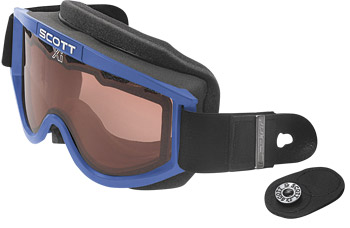
With a proven pivot design, Scott’s speed strap allows you to quickly remove or attach your goggles to your helmet.

Scott’s new 87 OTG Turbo goggles feature an Anti-Fog Coated (AFC) Amp Rose Turbo thermal Lexan® lens with an over-the-glass (OTG) fit.

The speed strap fits all helmets and can be adjusted for left or right handed riders.

They are available with black foam and black straps with black, blue or red frames.

Call 1-800-970-2309 or order from DennisKirk.com

TRUKKE Powersport III Boots

0

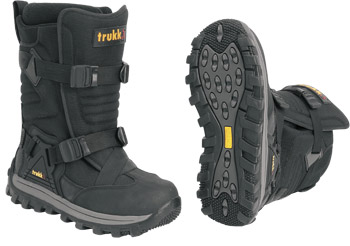
Trukke Powersport III boots will keep your feet feeling comfortable even if the temperature drops to -40 F.

The fleece lining wicks moisture away while the 200-gram DuPont Thermolite® removable, full-foot insulation traps in the heat.

The rigid-bottom sole provides great support while full-length internal EVA filler in-soles increase your comfort.

Advanced design buckles, pull tabs and hook-and-loop tongue closures ensure a secure customized fit.

Call 1-800-970-2309 or order from DennisKirk.com

KLIM Klimate Parka

0

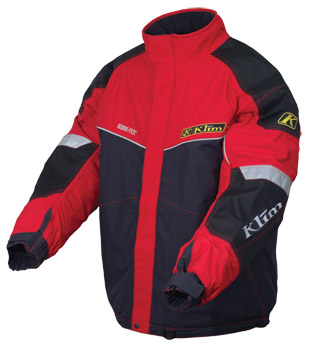
Known for stylish, quality-made equipment, KLIM introduces its new Klimate Parka featuring a layer of 200 gram Thinsulate™ for warmth without bulk, GORE-TEX™ fabric for warmth and dryness and ballistic nylon overlays on shoulders and elbows for added wear resistance.

Other features include double stitching, 3M Scotchlite reflective material and fleece lined pockets.

Visit www.KLIM.com

179.2 MPH Apex

With sleds at the core of every imaginable racing venue including snocross, pavement drag racing and watercross, it seems odd there hasn’t been more focus on setting a snowmobile land speed record. Although there have been unofficial attempts made over the past several years, the elusive 200mph goal line has not been officially crossed yet.

A group out of Quebec, G-Force Performance and Gagne Lessard Sports, working with Star Suspensions made an unofficial record attempt in early July this year using a supercharged and modified, stock bodied Yamaha Attak. The Yamaha reached a top speed of 179.2mph before hitting the rev limiter and running out of gearing.

Team member, Robert Veronneau told us: “Aerodynamics are very important to go fast. Let’s suppose a 100hp vehicle is able to go100mph. To reach 200mph you need about 400hp just to overcome the wind drag. In our case, to go from 180 to 200 MPH, an 11percent speed increase, we will need 44 percent more horsepower. The Godfather’s machine (nickname for the Attak shown on youtube) is estimated at 400 HP. This sled will need over 600hp to go 200mph with the original body. That’s why we will have modified aerodynamics on the record machine”.

As it stands, the new Bonneville contender will use a completely custom designed fiberglass streamliner body laid over the Attak engine and chassis. The blown and injected engine will be modified to produce about 450hp and a special hydraulic primary clutch will use a conventional drivebelt to run the power through a stock Yamaha secondary.

A Camoplast pavement drag racing track will be used and the gearing will be changed to allow the drive system to hold its final drive ratio before the engine hits its limiter. The Team is confident it can reach the 200mph plateau without much more modification to the engine and powertrain.

An official attempt at a snowmobile land speed record will be made in Bonneville in late September or early October. Since there are difficulties with the Bonnevile timing association classifying the sled (they’re not sure how to categorize a snowmobile for an official attempt), the official run may not happen until next year. However, the Team will be testing in September on an airstrip in Coaticook, Quebec and hopes to have an unofficial record of over 200mph soon.

Other sponsors of the effort are: Lamtrac, Camoplast, Inventium, Grebo Precision, ITL Imports, Nika-Tech and Suomy. For more info, go to starsuspensions.com

MOTORHEAD: Steak

0

By: Mark Lester

What is sizzle and what is steak when it comes to fuel efficiency? If you’re an avid snowmobiler you know and understand the effect EPA emission mandates have had on sleds the past five years. In advance of the 2009 model year, the OEMs have cleaned up exhaust emissions of many models they produce.

There’s been a degree of flexibility allowed by the EPA as a result of complicated and rather obtuse “corporate averaging and credit” systems for emission compliance. The net effect is this: The sled-builders have done an outstanding job of complying and in many cases exceeding EPA emission mandates.

There’s a bizarre twist to this story. The EPA hit the sno-mo-biz hard with emission targets many felt not commensurate with the short use cycle (season length) and number of sleds in service (when compared to outboards, ATVs and other power products). Considering the reality snowmobiles operate for about 12 weeks in a skewed geographical region, the targets seemed overly strict. The pry bar the enviro-lobby used on the EPA was US National Parks.

West Yellowstone Park, extremely popular with snowmobilers but also home to the largest rental fleet of sleds in the world, was the green movement’s grossly misrepresented example of how terrible snowmobile emissions are. Meanwhile, the good old 6 o’clock news media, consumed with ratings and influence above all else, helped fuel the issue.

I know this sounds cynical. Please understand, although I am not in favor of pollution of any kind, I am in favor of applying effort to causes capable of netting tangible results and, especially, keeping the big picture in focus.

To view snowmobile emissions as a significant contributor to the big air pollution picture, one would need a neutron microscope, figuratively speaking, to get even a tiny glimpse of our impact globally. My late associate CJ Ramstad put his inimitable spin on this topic by reporting snowmobile emissions could be calculated as less than .001 percent globally. Know this: Snowmobile emissions are not the big picture.

This is where the story gets interesting. We’ve observed that most snowmobilers are not obsessed with exhaust emissions. Truthfully, the issues the OEMs have wrestled with have little impact on sled sales or are criteria for what you consider a great sled – a sled you would buy.

What we’ve seen is this: You are buying snowmobiles based on their ability to deliver substantial improvements in fuel economy. The models delivering improvements in fuel economy, without exception, are sleds meeting or exceeding EPA requirements.

If the goal is to clean up the exhaust pipe, engineers have to control combustion and make it lean, whether 2 or 4-stroke. When combustion is leaned out, an engine inescapably uses less fuel in proportion to the volume of air being inducted. Less fuel means more mileage.

We’re staring down both barrels at model year 2009 and for the first time when the discussion moves to miles per gallon, I can honestly say it’s all about steak, not sizzle. The leading technology this year is the Ski-Doo E-Tec Direct Injection system.

The mpg numbers we generated last winter with two TNT 600 E-Tecs were unbelievable. We believe this engine can deliver 25 mpg. Here’s the caveat: Sleds don’t operate on a fixed medium like pavement; not even dirt.

Snow surfaces are radically varying and thus mpg is a moving target. However, it’s very clear sleds generating the highest mpg numbers on a given day will continue to be the best on any combination of days. Straight up, this year the E-Tec is easily the most fuel efficient snowmobile engine available. Steak, not sizzle.

4-strokes? Here’s an interesting twist: Currently Yamaha rules the 4-stroke category, both in sales and mpg numbers. We were unable to collect much data on Ski-Doo’s new 4-Tec 1200 engine last spring, however, there were promising indications this mill is good on fuel.

We believe 4-strokes can get even better mpg in the future if they employ the XP and Nytro lightness template. With Yamaha putting pressure the past four model years on the other OEM’s to build more fuel efficient sleds and the market responding with more 4-strokes, we’re more than a little intrigued by the results Ski-Doo has achieved using 2-stroke Direct Injection. In MY 2009, if mpg is paramount, it looks like the answer is a 2-stroke. Is that strange, or what?

Looking pragmatically at what has happened to the modern snowmobile as a result of the EPA’s fiddling with our sport, we have to wonder if buyers haven’t benefitted in a way we never thought possible at the turn of the century.

There’s little doubt Ski-Doo is setting the bar for a number of important buyer criteria these days. Light appears to be right and the XP is undeniable verification of this reality.

INSIDE TRAX: So You Bought a Used Sled.

0

By: Kent Lester

For us snowmobile junkies, last winter was just awesome! The snow came early, stayed late and fell in copious amounts nearly everywhere in the North American snowbelt. For the first time in recent memory, hordes of snowmobile dealers were sold out of sleds.

As the moldy one, two and even three-year-old crates were being evacuated from the rear yards at the dealerships, parts departments were being suctioned of all the dusty items that had been taking up space on the shelves. Traction supplies, lubricants and non-current mechanical and body parts were replaced, consumed and hunted down by rabid enthusiasts determined to enjoy the climate.

After several seasons of declining enrolment, club and snowmobile association memberships were topped up again and, best of all… snowmobilers were out there on the trails accumulating miles! Groomers worked overtime to keep the trails in shape and diesel was being pumped through the fuel injectors on the big machines at an alarming rate. Because of the increased costs related to oil prices and the extra grooming miles, some clubs tripled their fuel and maintenance budgets last year.

It was encouraging to see enthusiasts back in the sport, participating again. The past few years, at the industry level, there had been escalating discussion about declining enthusiasm for snowmobiling, about snowmobilers en masse becoming ATV users and about the future of the sport in general. Those fears were silenced by one extremely good winter.

Even the global warming advocates were quiet. It’s tough to sell that particular dogma when average temperatures are dropping all winter and the white stuff keeps accumulating across an entire continent.

One personal observation was the increased number of older sleds I saw on the trails last winter. It’s like they’d been sitting in dark corners of garages all across the country waiting for snow. Keep in mind the term ‘old’ is really pretty relative. Is a five-year-old sled ‘old’? Ten years ago it was. If the average sled accumulates about 1200 miles every winter, a five year-old sled will have between 6000 and 7000 miles on it. Be honest; if you’re checking odometers when making a used sled purchase, chances are you’ll walk past a sled with that mileage and opt for one with thousands less. Fact is: the 1200 mile-per-year sled is likely just a reflection of normal use.

Technology advances quickly in snowmobiling and that five-year-old sled, even in today’s terms, was and still is, a very advanced product. EFI systems had long been fully developed by 2004 – and even some EPA-clean 2-strokes were appearing in the marketplace. A number of OEMs had already moved into rider-forward design and suspensions had adopted long travel technology. Exceptional ride quality had already become a given in this sport for a number of years.

The performance 4-stroke revolution was deeply entrenched and had seen Yamaha and Arctic Cat building truly viable, high horsepower mills that had plenty of sizzle. Five years ago, the modern snowmobile had become an advanced product, producing reliable, overachieving power and suspension results – even by today’s standards. Furthermore, every individual component and system on the snowmobile was evolving quickly. Shock technology, track design and electronics had all become more reliable and offered much longer life than in the five years before MY2004.

If you bought a used sled last year, you likely got a pretty good bargain. Even late in the season, new sleds were emptying out of dealerships and the old saying always holds true: “For every new one sold, someone has to buy a used one”. The savings on a five-year-old are incredible. One friend I know bought a mint used REV with less than 40 miles on the odometer and paid half the price of a new one! Although that one was rare, there are great deals are out there if you look hard enough. Even purchasing a normal mileage, used sled built in the 2000’s is a good deal as long as it’s been well maintained.

Here’s the point: If you think you can’t afford to get back into snowmobiling, think again. You can buy some of the best snowbound equipment ever made for very reasonable bucks. I predict the used sled market will be even stronger this year simply because more sleds will become available as hardcore enthusiasts feel the urge to buy new ones. Jump onto Kijiji, Sleds2Buy or Craig’s List and check out the selection. Your showroom awaits.

Studding 700 Fusion

Question:

Dear Motorhead:

My question is regarding studs. How many, how long and what pattern? I have a 2006 Polaris 700 Fusion with 121x15x1.25 track.

Scott

Response:

Thanks for your email!
Here’s what I believe is the starting point for improved traction. Run at least 2 carbide tipped penetrator style studs per track pitch – that’s 96 for a standard 121 inch track on your Polaris.

Position the studs on the middle belt of the track for best reliability and track durability. The length will be determined by the lug depth of the track. 1.25 inch tracks require long studs which have to be precisely sized for your model.

You should refer to the stud makers guide for length as there are differing sizes from different makers and some sleds require specific lengths to allow for tunnel clearance. Use a quality aluminum backer or one of the new plastic backers from Stud Boy. They’re tough and light.

With the power output of your sled you will still experience a small to moderate amount of track spin on very hard surfaces with 2 studs per pitch. However, 2 studs per pitch will not upset the handling balance and will produce vastly improved cornering grip and traction while underway.

If you go to a 2/3 pattern (2 on one pitch, 3 on the next) you may find your sled will push slightly (understeer) in turns on solid trail surfaces. If you move up to 3 studs every pitch this trait becomes more prevalent.

The answer is to increase carbide runner length. I would highly recommend you use at least 4 inches of steering carbide with any stud combination but be prepared to go to 6 inches of carbide beyond 2 studs per pitch.

Finally, check with your dealer about tunnel protection on this model. This is very important as not all sleds come with tunnel protection and many require it be added when studding.

Hope this helps.

Motorhead Mark

Break-In Procedure

Question:

Dear Motorhead:

I will be picking up a new 800 SP in the near future and was wondering about the break in procedure.

I know not to go full throtle right out of the gate but was wondering how long milage wise to take it easy.

Thanks,

Andrew

Response:

Thanks for your email!

I would read your owners manual for Polaris recommended break-in procedure and adhere to it.

If I’m not mistaken Polaris still requires extra oil to be mixed in the tank – check to see if this is true – for the first tank of gas.

Any break-in is dependent on short bursts of steady throttle. In other words, don’t give it a full pull down the lake outside the dealership your picking it up from.

Varying throttle allows for the best B-in. Again, stick to Polaris advice on the topic and you’ll be in good shape.

Motorhead Mark